We had a morning flight back to Cape Town on Feb. 14th so we stayed at the Kruger Gate Hotel on Feb 13th. This way we didn’t miss our last morning Inyati safari drive. The Kruger Gate is a large, busy hotel – not usually the kind we stay at – but it was clean, friendly staff, and not far from the airport. It worked out well for a 1-night stay.
Deb and Lauchlyn joined us at Hout Bay Manor on Feb 15th, one day later than planned due to flight delays. So nice to have them here. A few more pictures of the Hout Bay Manor – we are all very comfortable here.
We’ve had lots of fun exploring the Cape Town area together. Thanks Deb for driving.
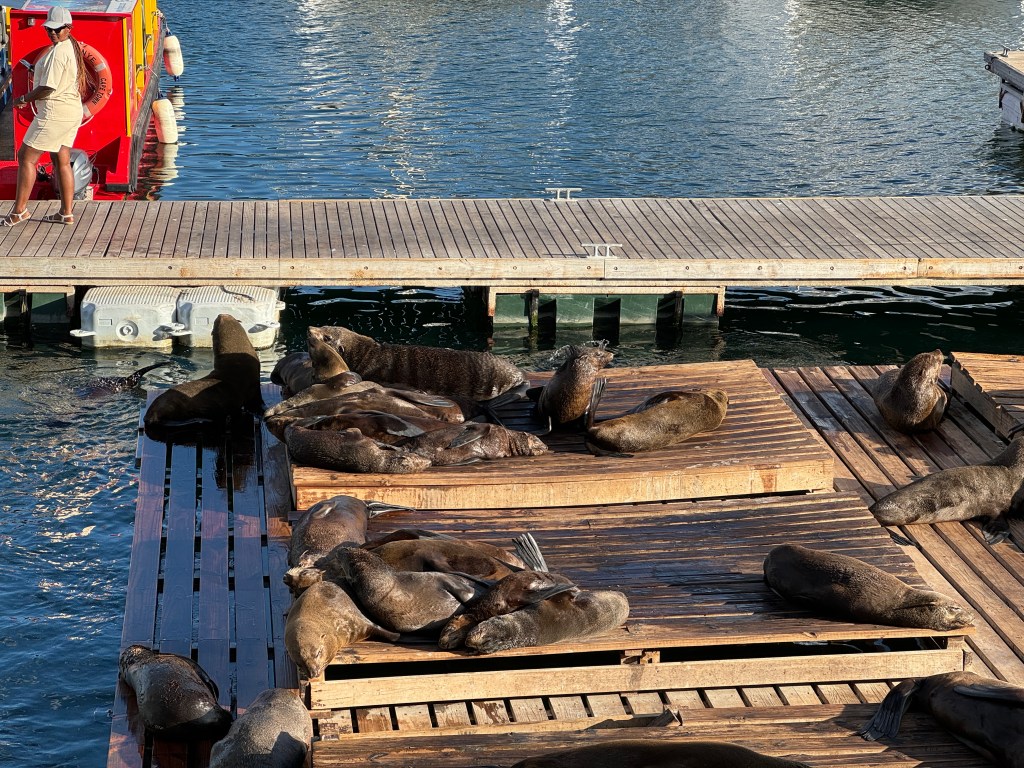
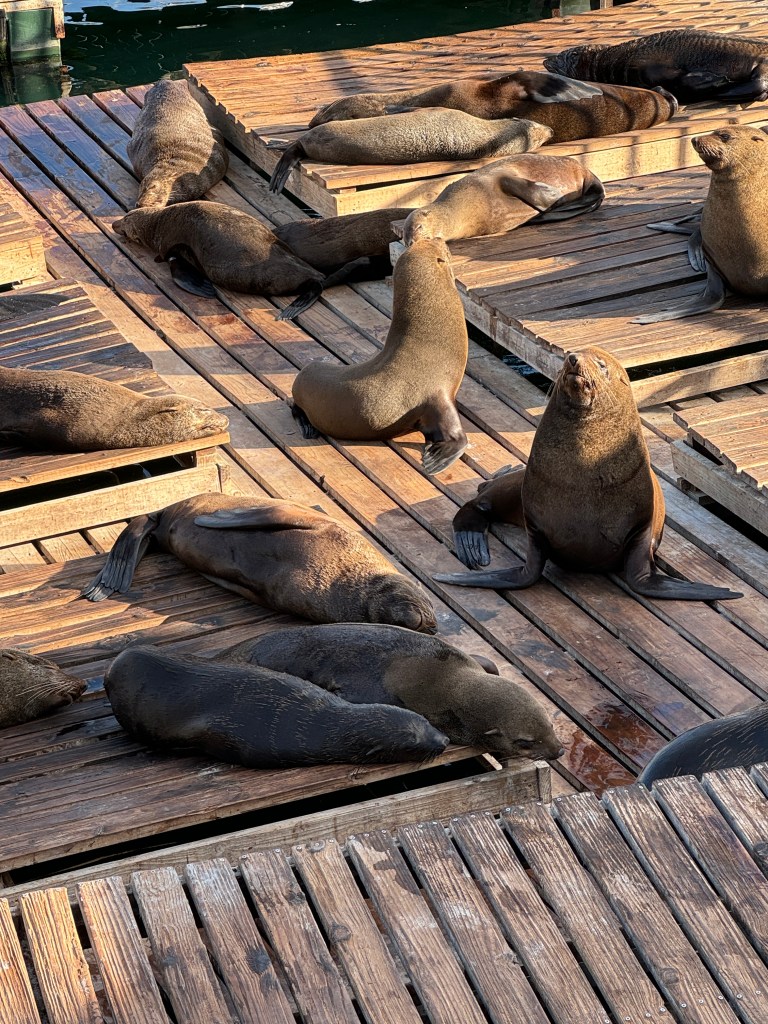
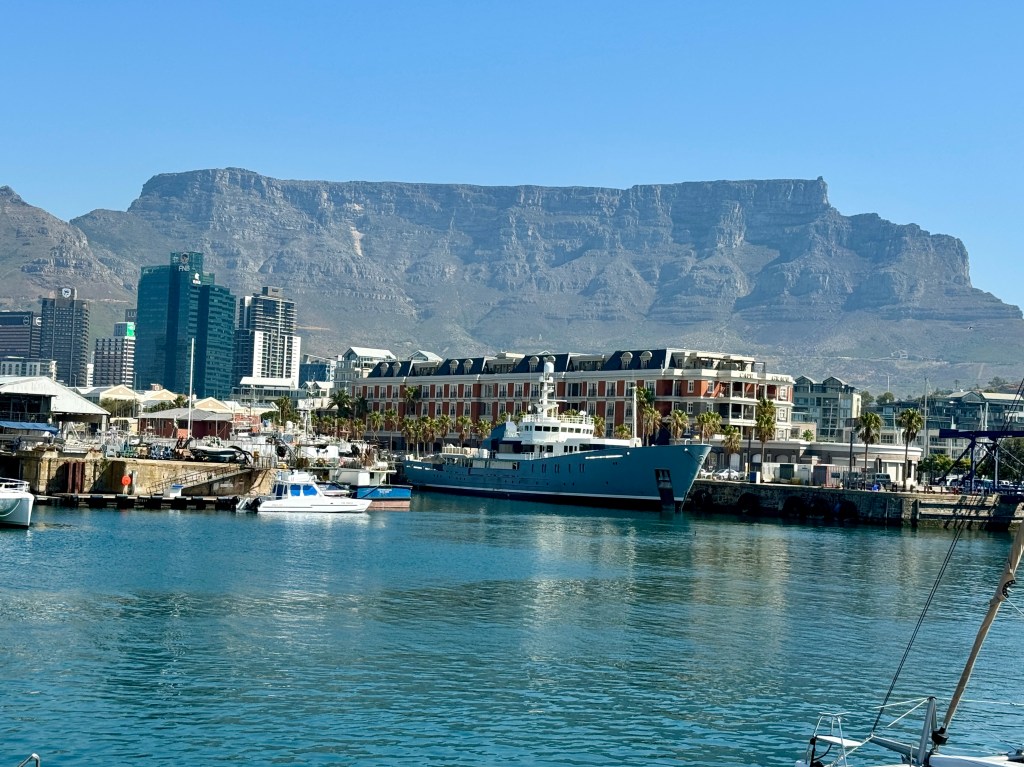
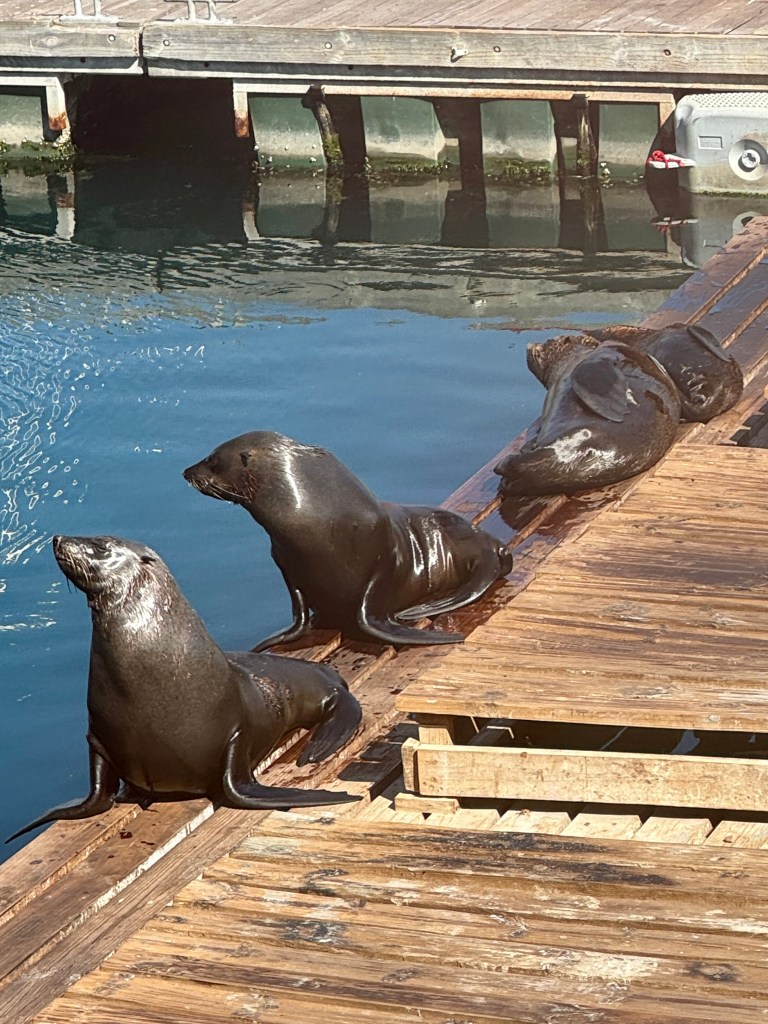
We visited the V&A Waterfront. The seals in the harbour put on quite a show for us.
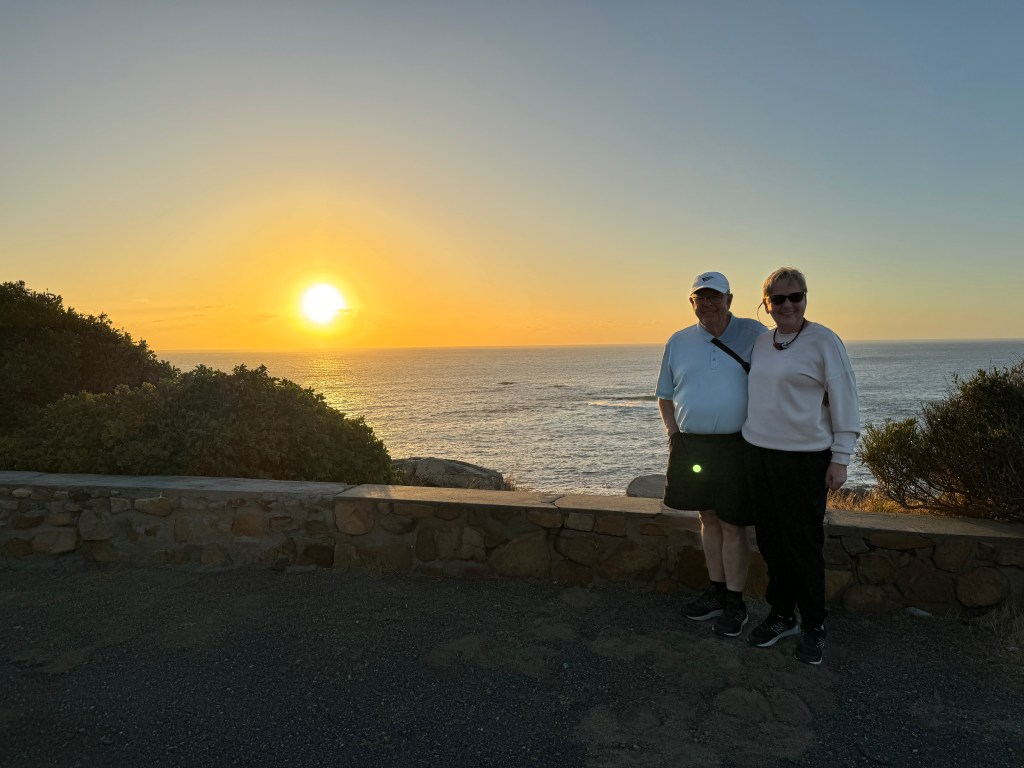
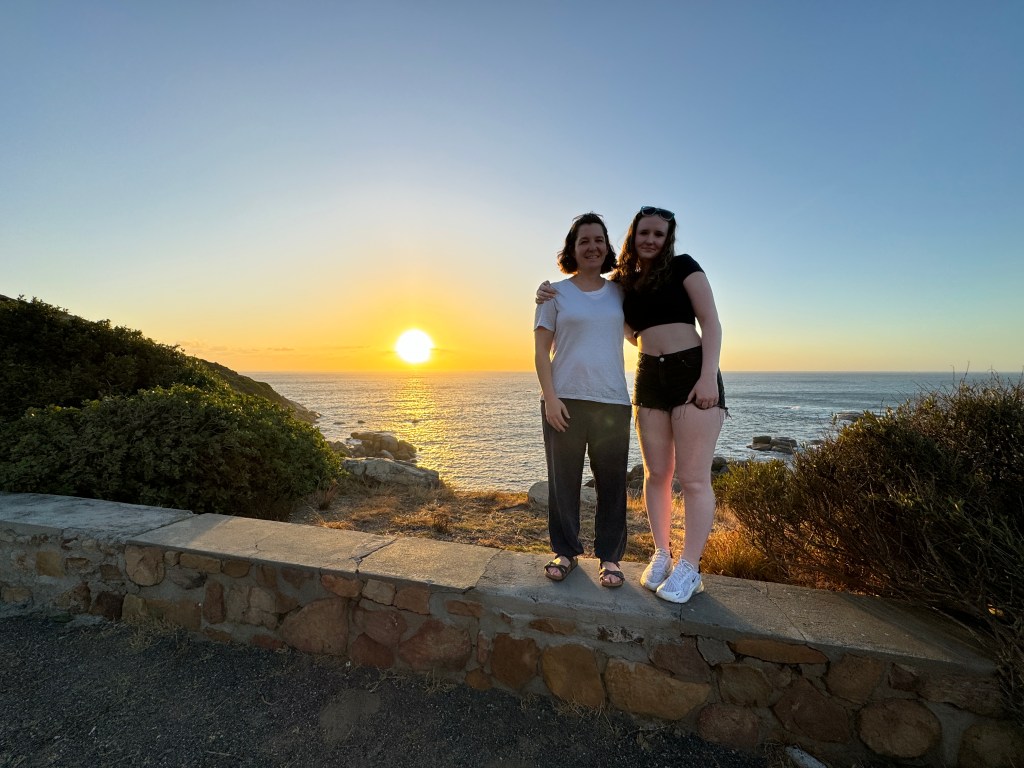
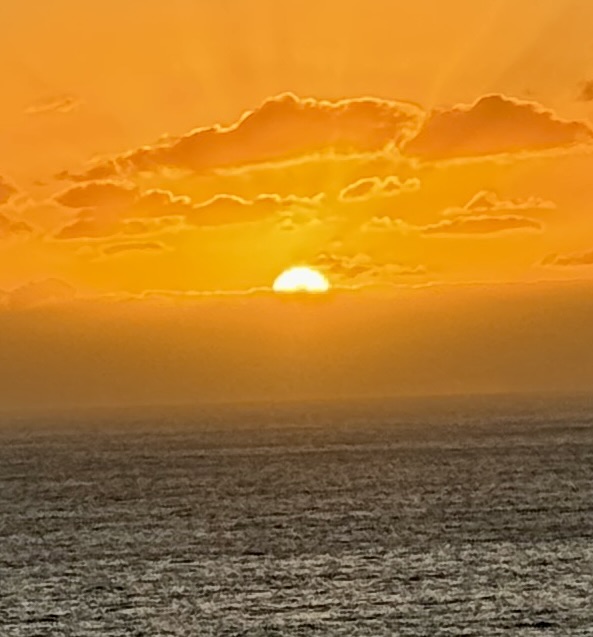
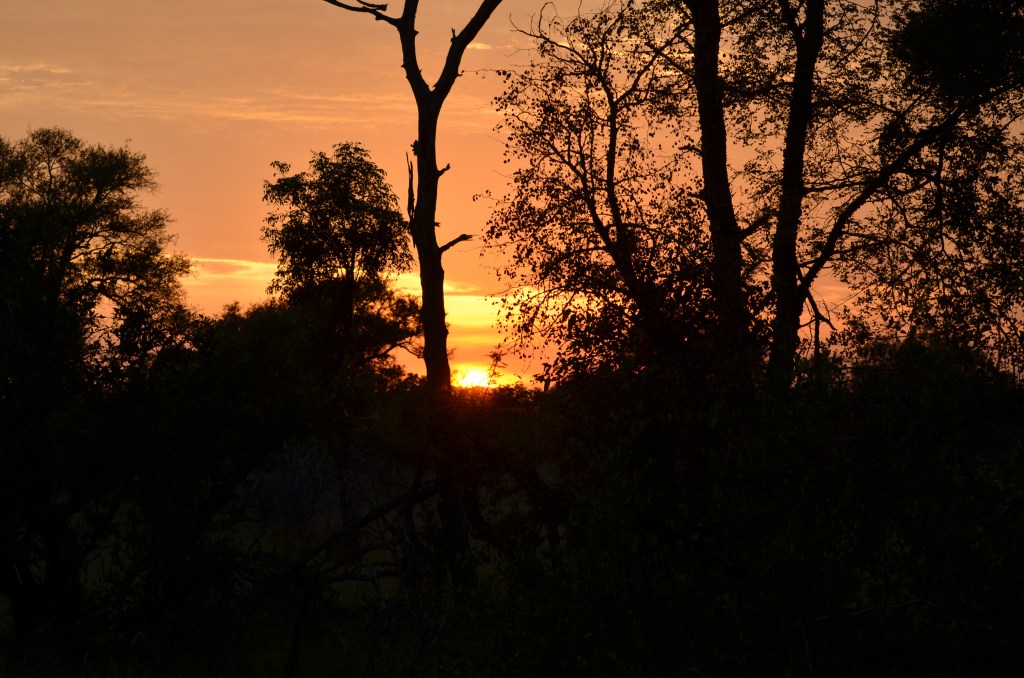
Beautiful sunset on the way back to Hout Bay Manor.
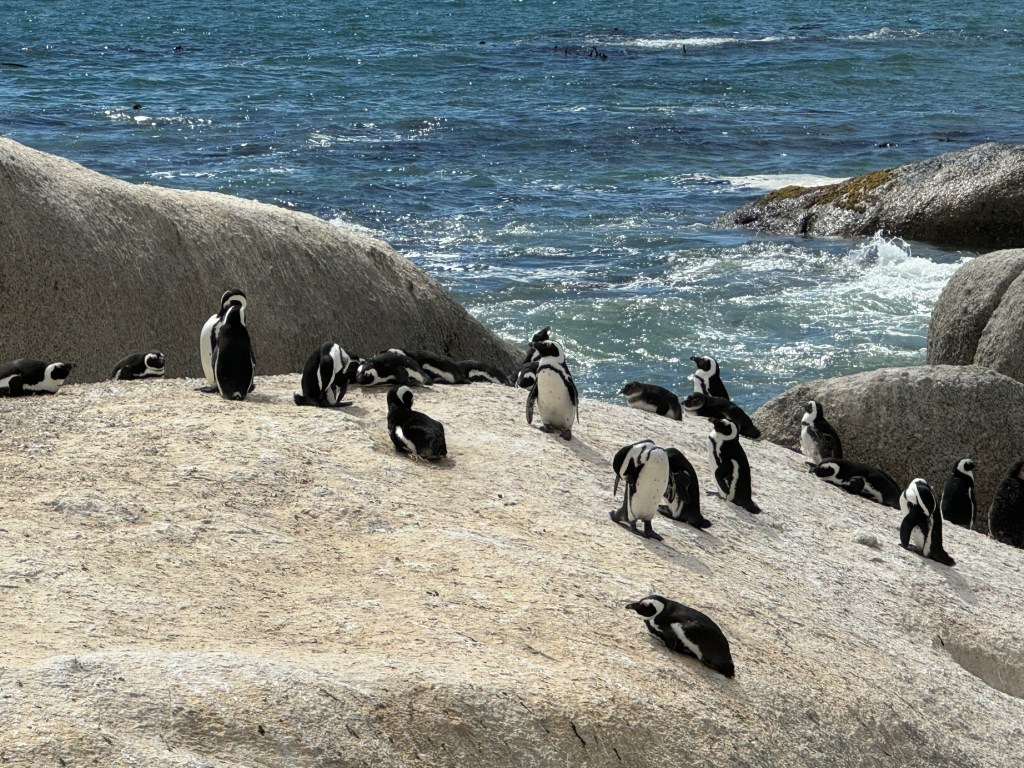
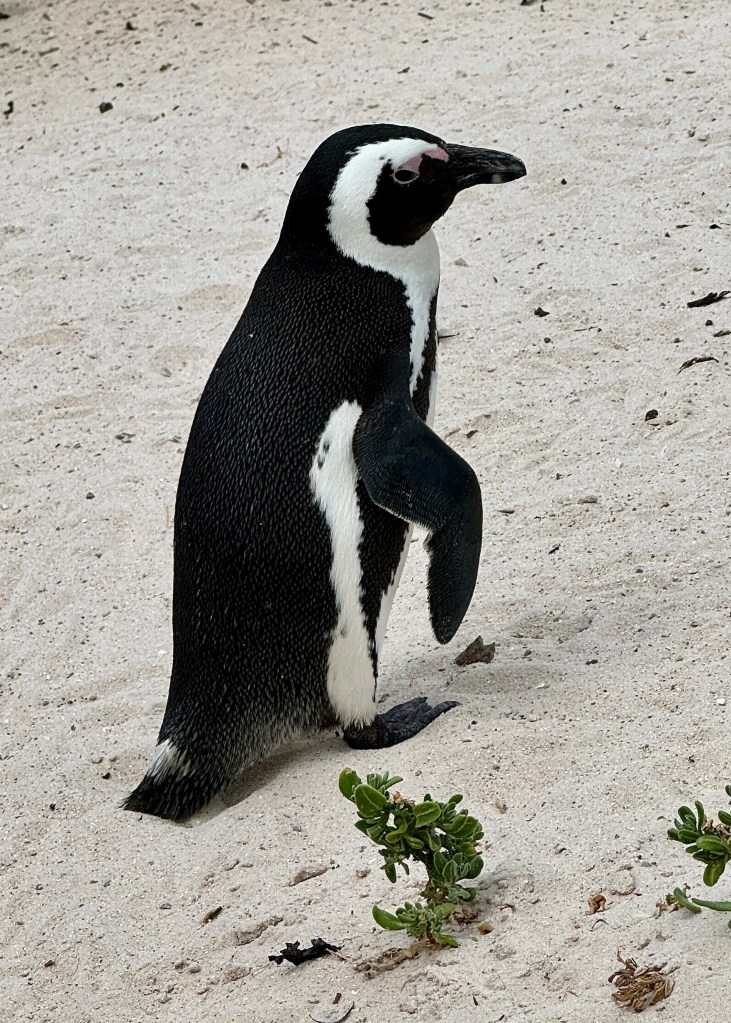
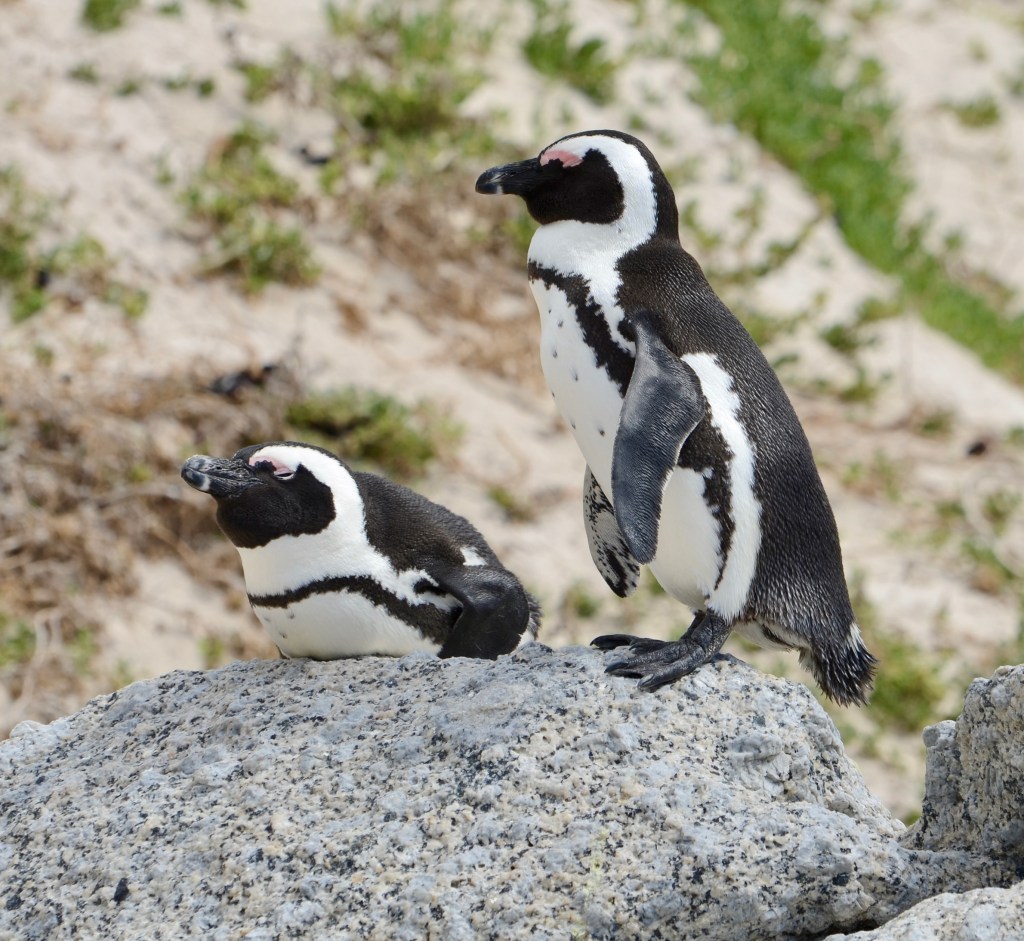
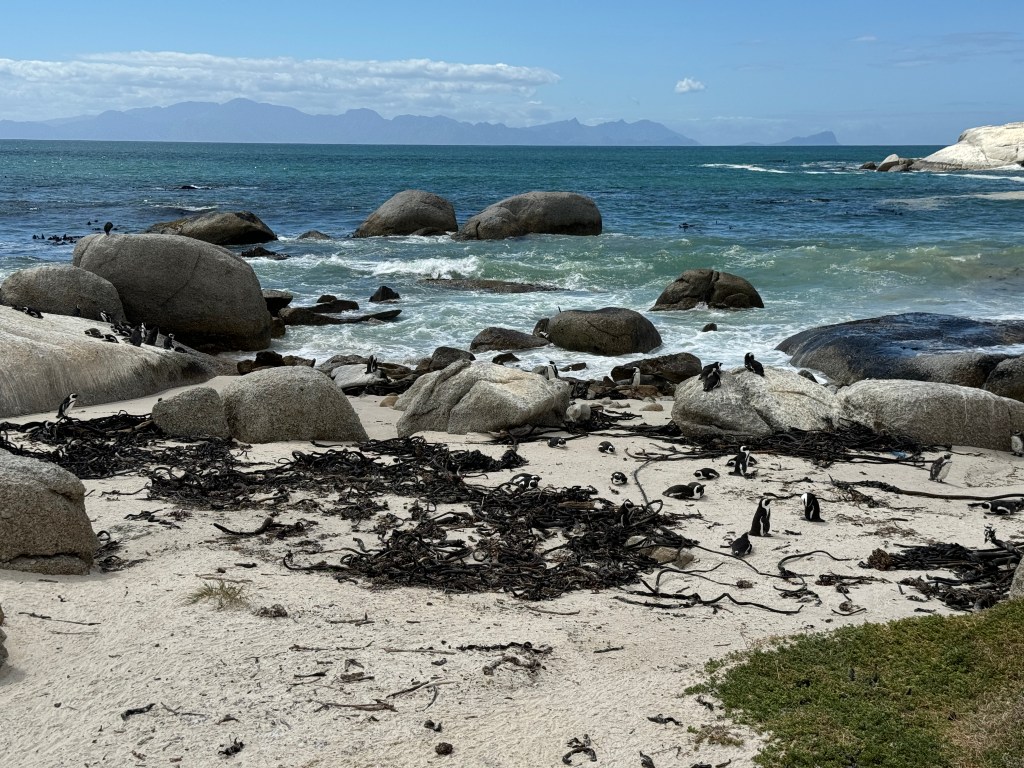
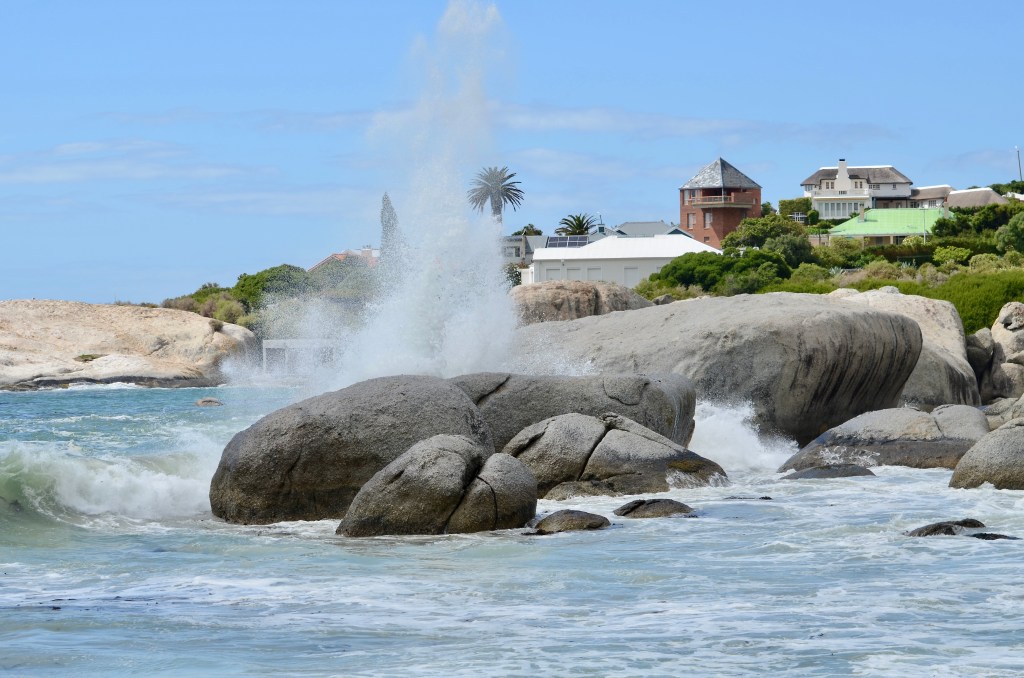
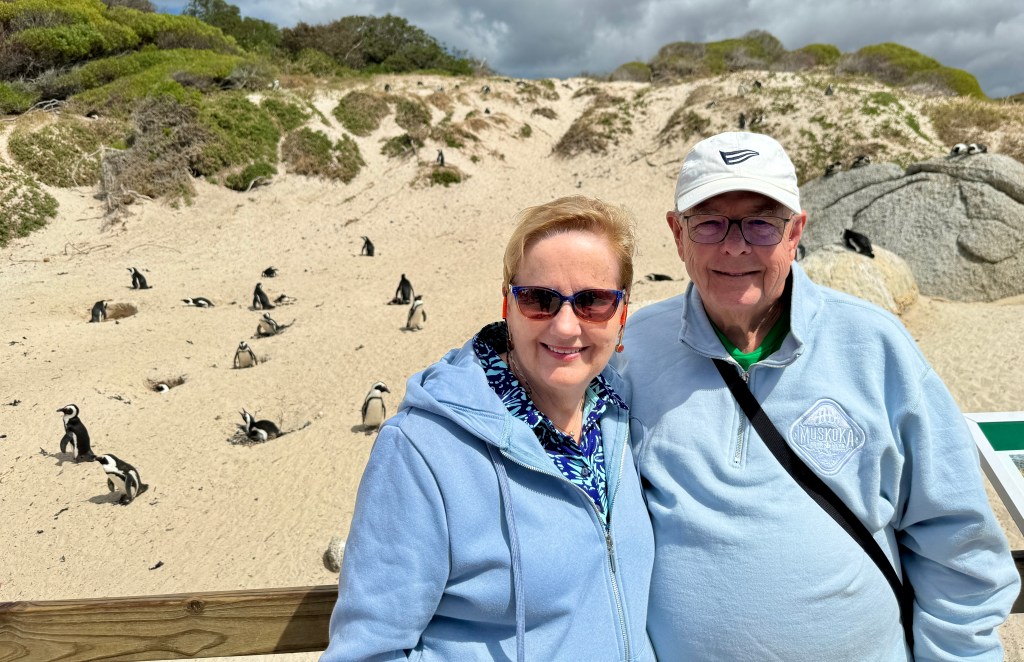
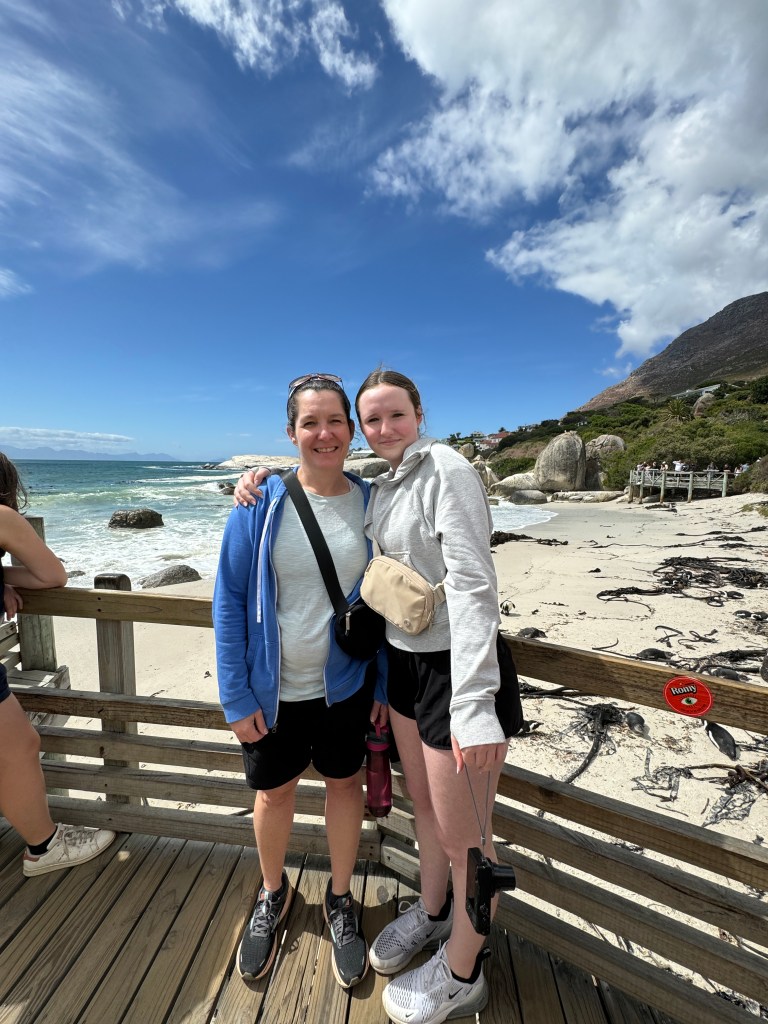
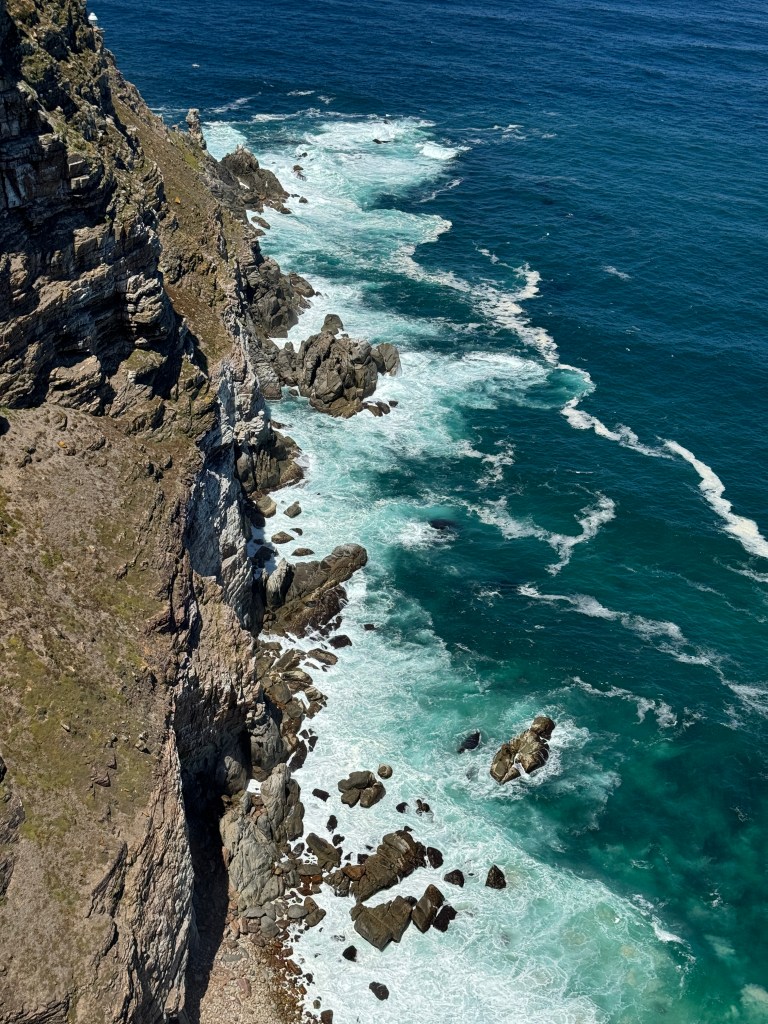
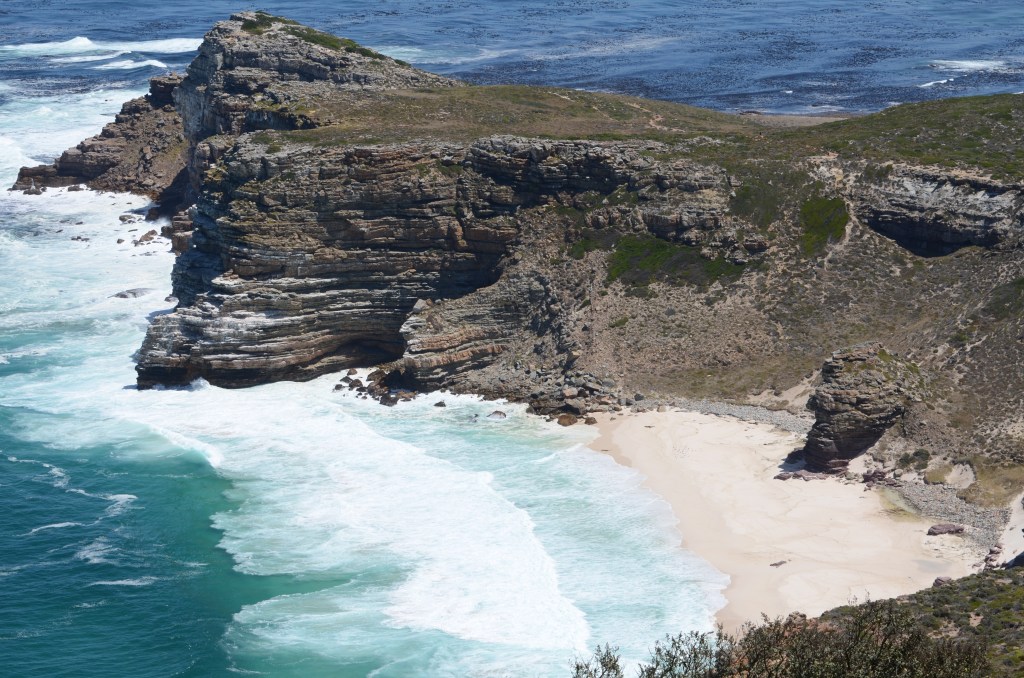
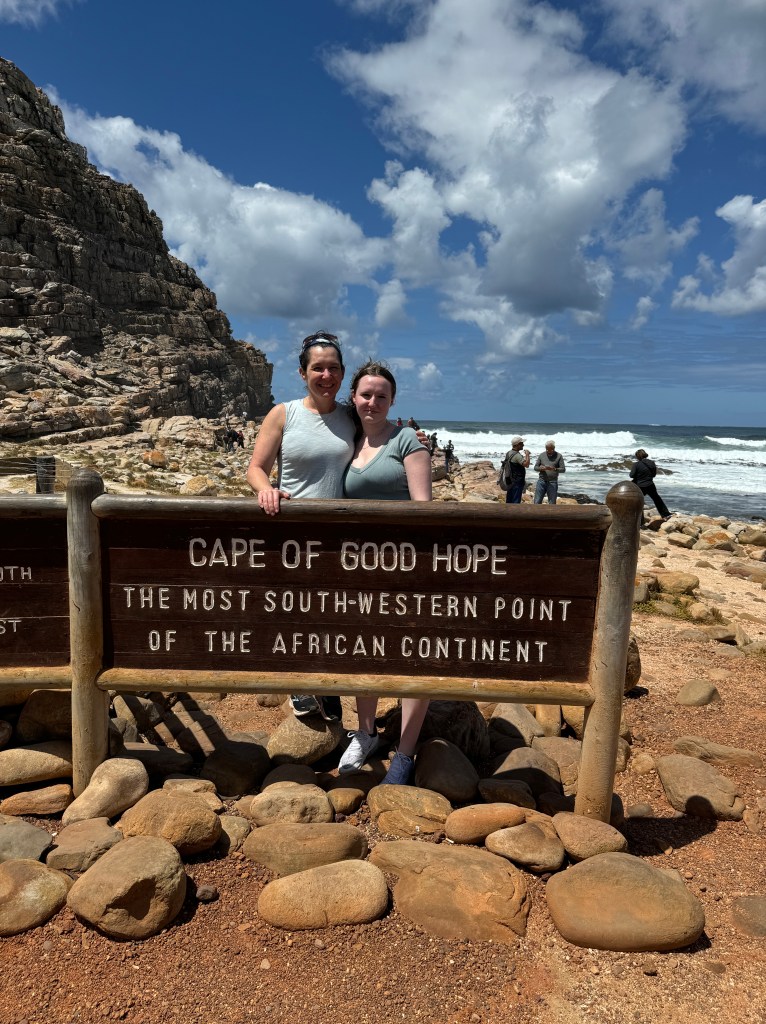
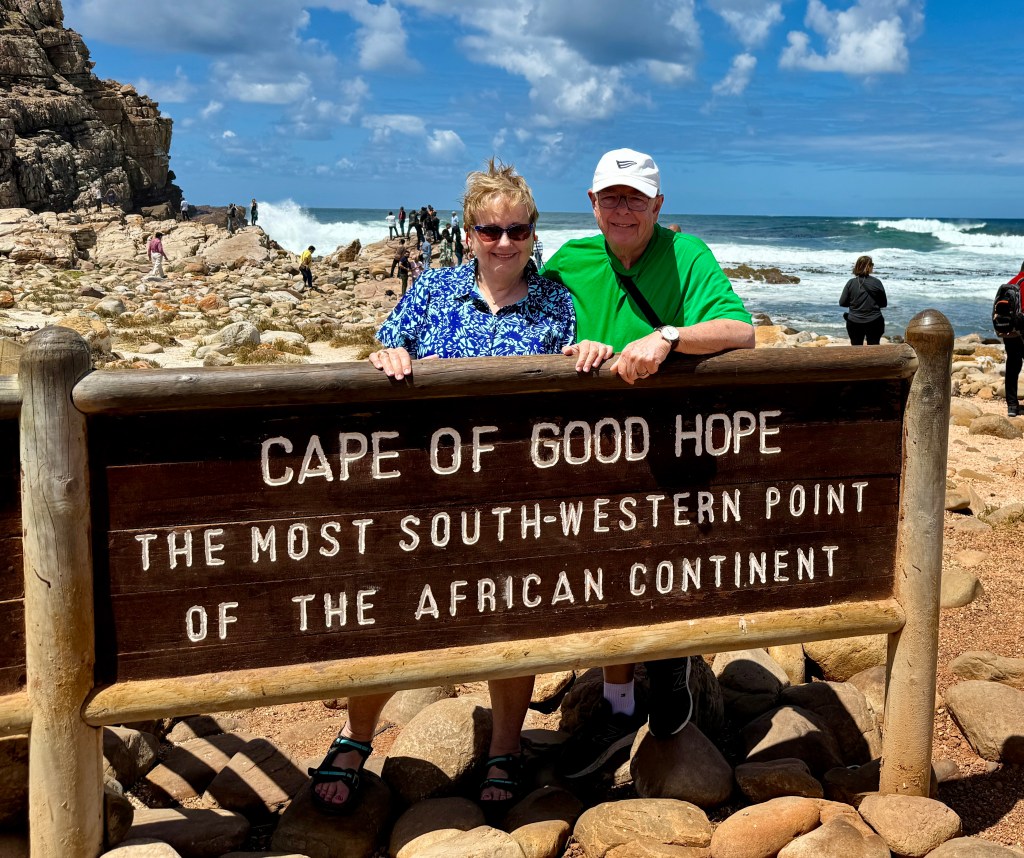
Next day we headed to Simon Town to see the African Penguins and then Cape of Good Hope – not too hot, and not windy – perfect day.
The African Penguin (also called the Cape Penguin) is just 60 – 70 cm (24 – 28 inches) tall – it stays in the southern African waters.
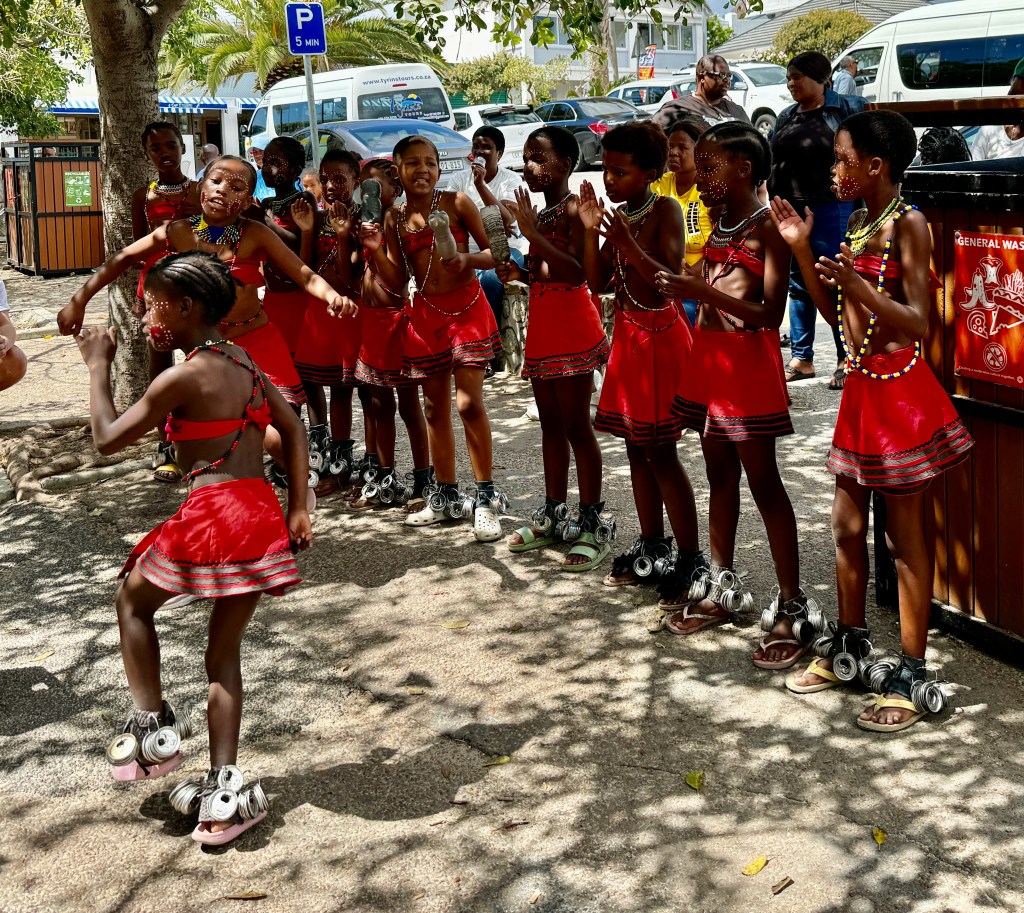
These young gals put on quite the show. Around their ankles they have the tops of pop cans.
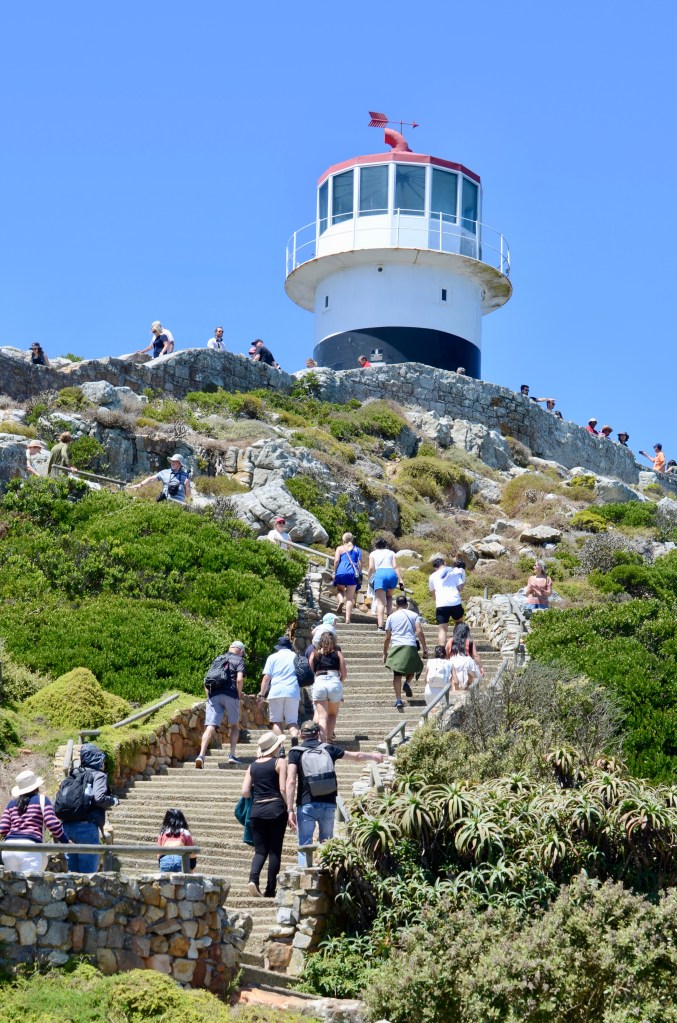
We took the vehicular up to the Cape of Good Hope lookout and then walked down.
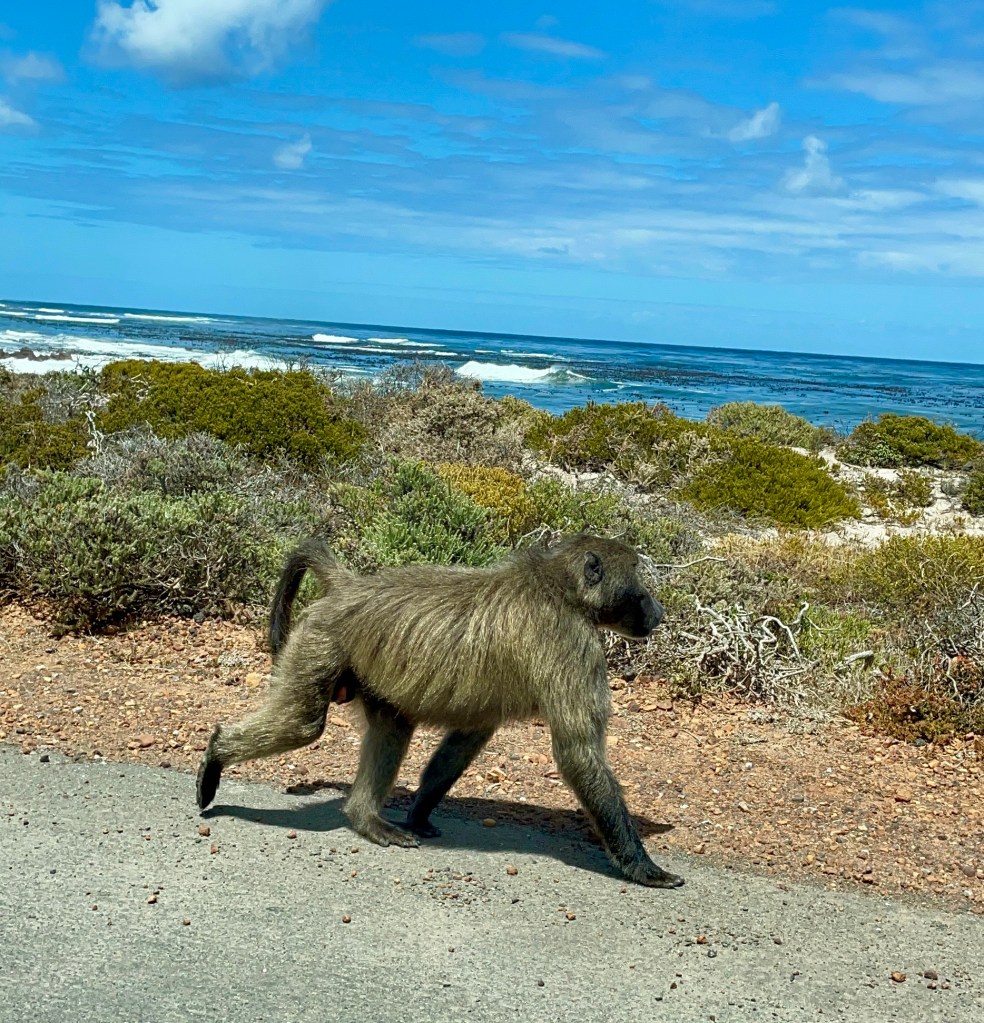
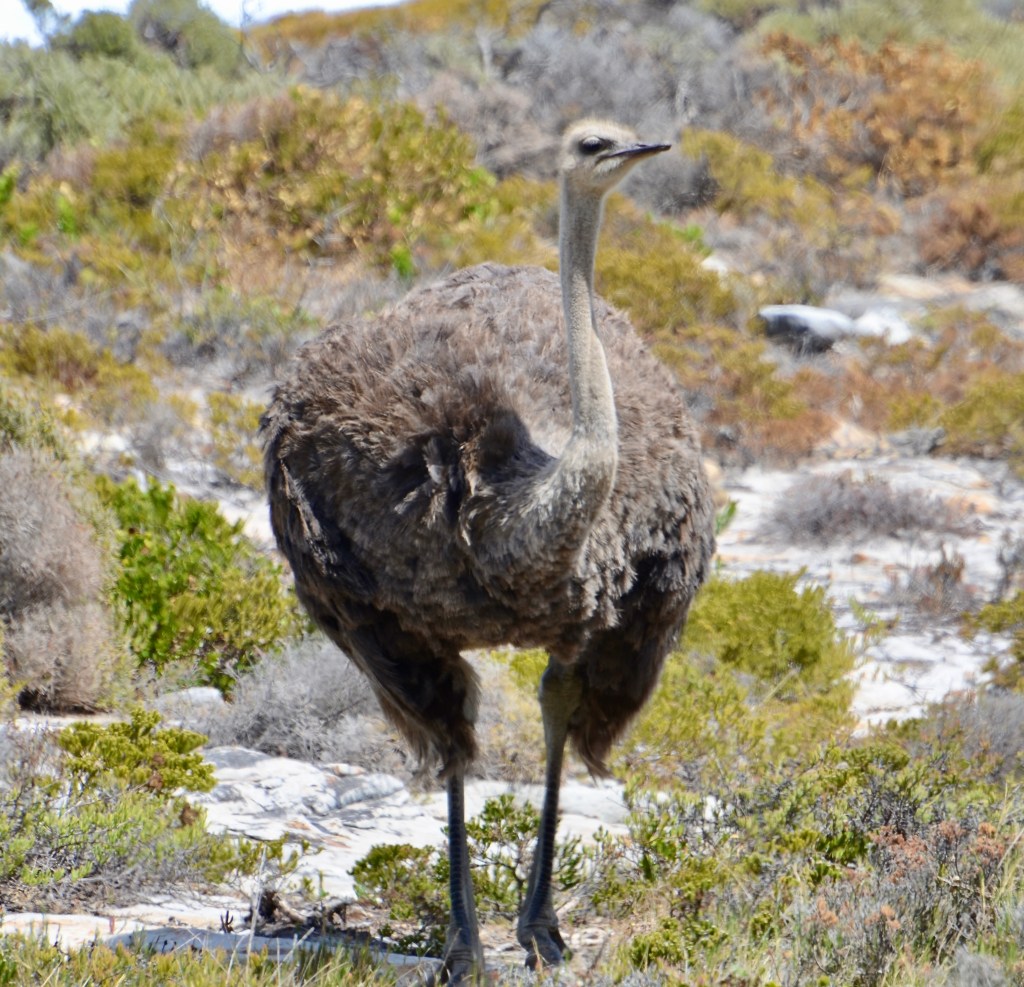
The baboon walked along the road beside us, the ostrich was off in the distance and the little lizard was on a rock behind where I was sitting (luckily he was just interested in catching insects).
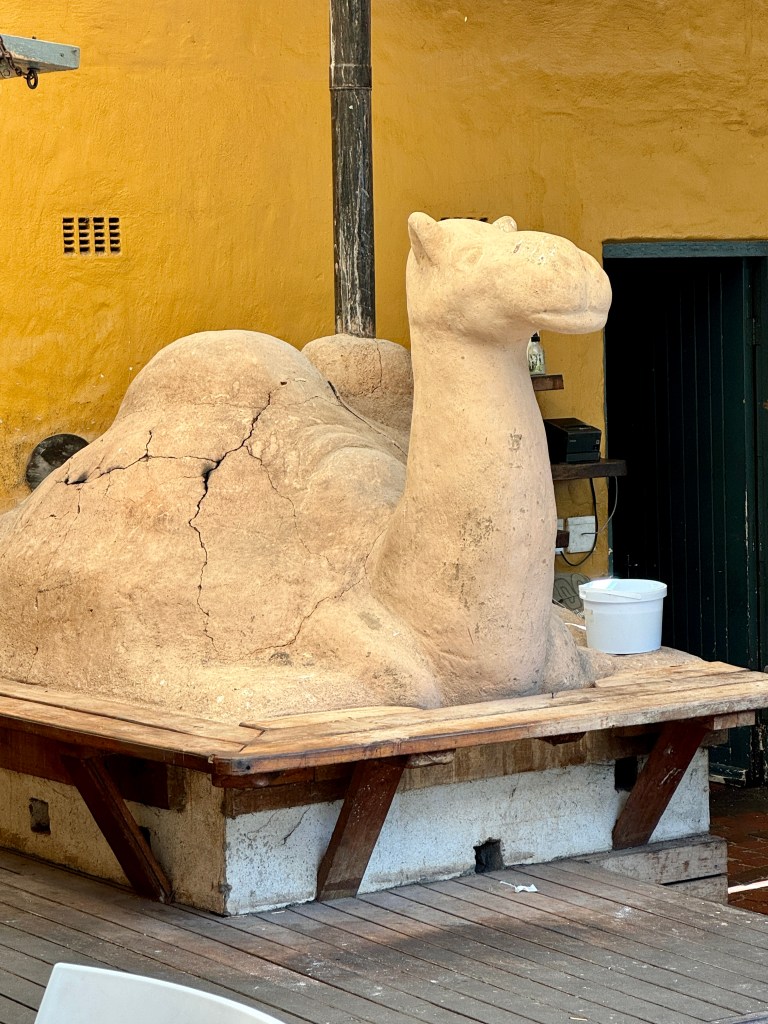
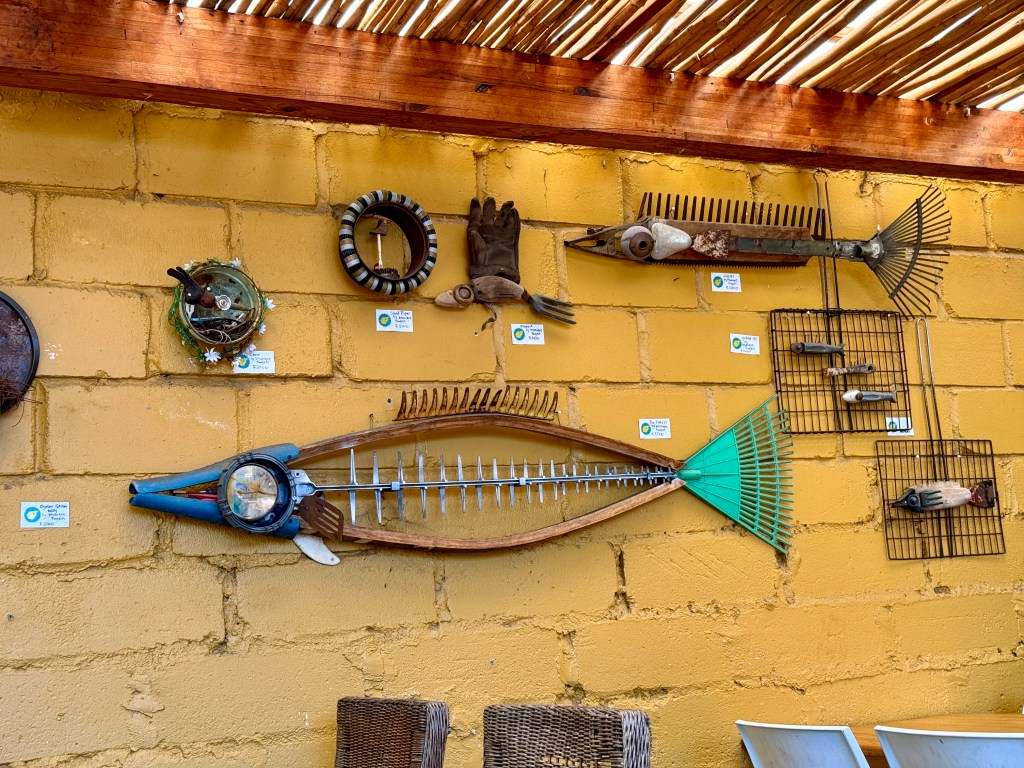
When we left the Cape, we stopped in Scarborough for lunch at the Camel Rock restaurant. We had hoped to see kite surfers but no surfers – we think because there wasn’t enough wind. The Camel is a pizza oven. There were numerous unusual “pieces of art” on the wall – we were not tempted to bring any of these home.
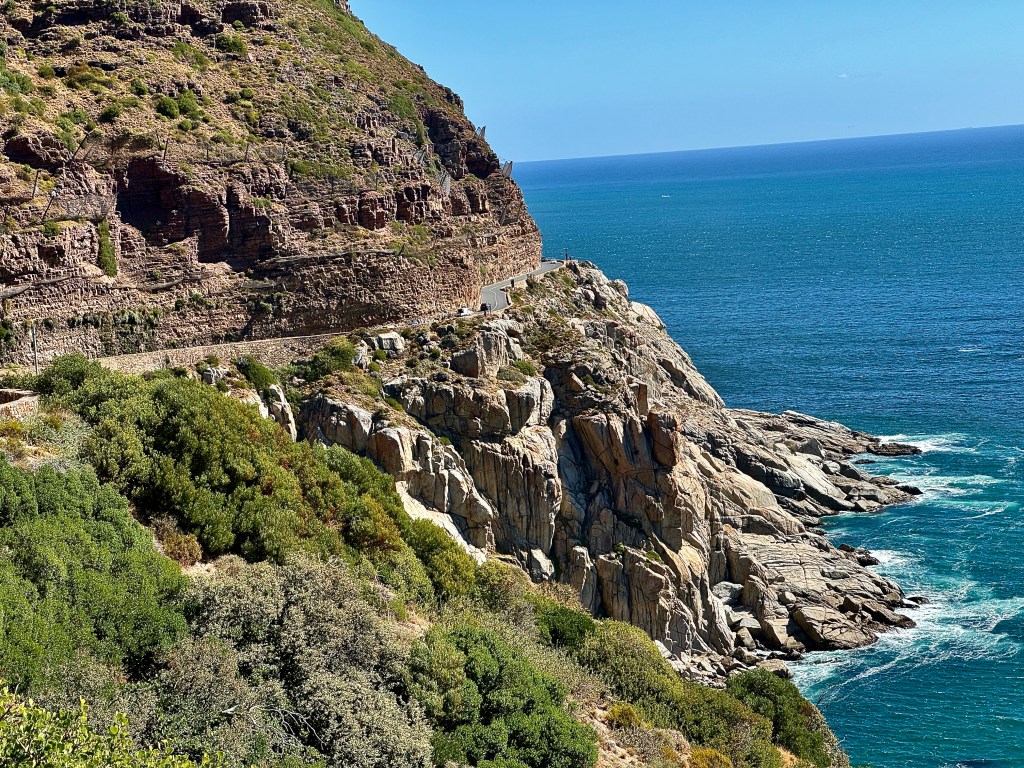
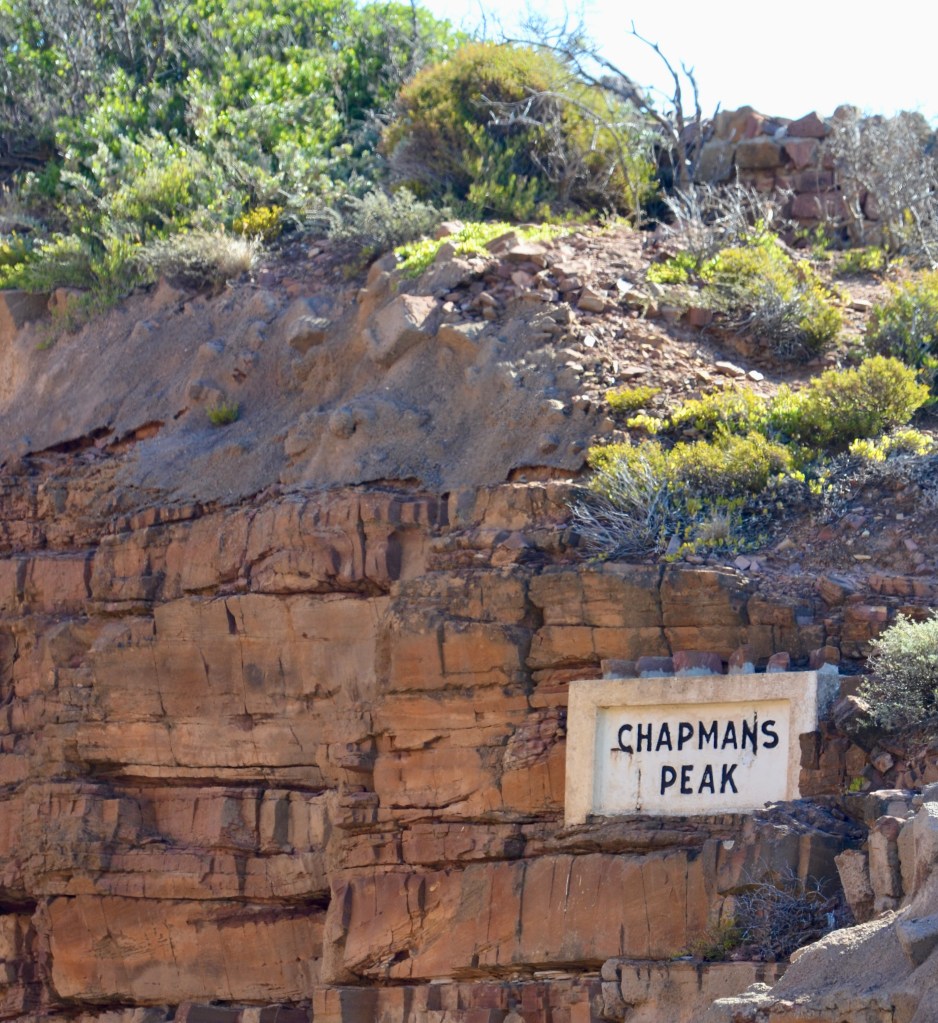
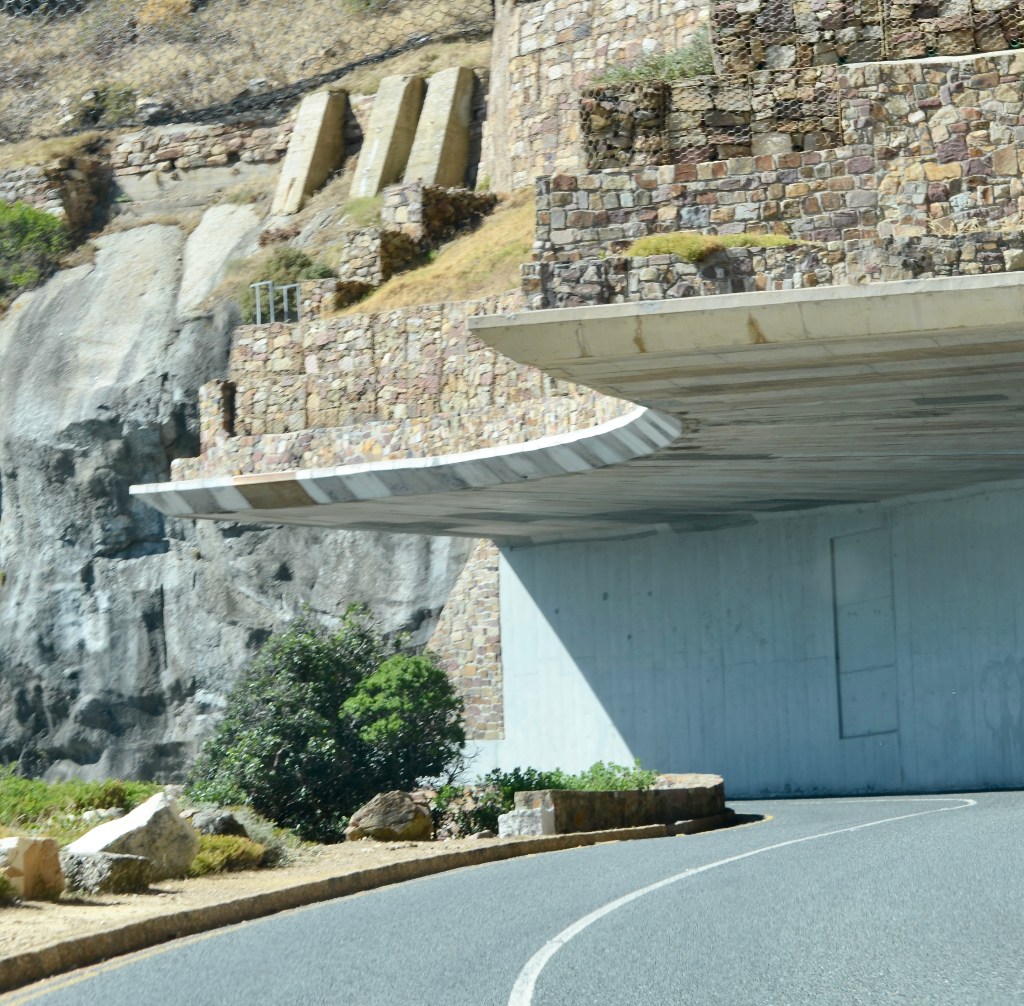
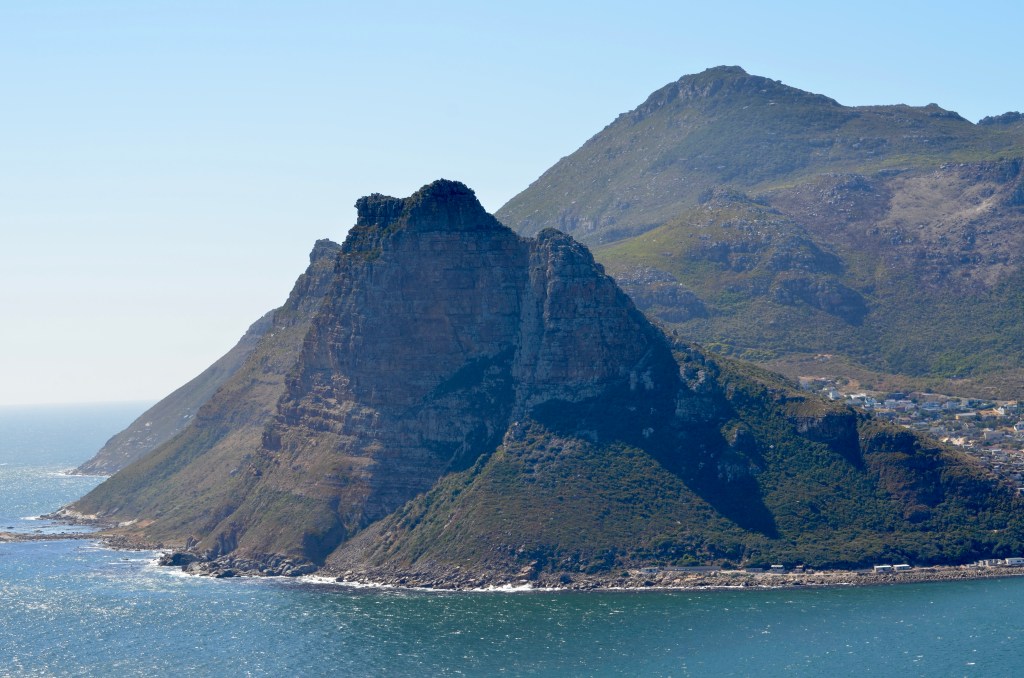
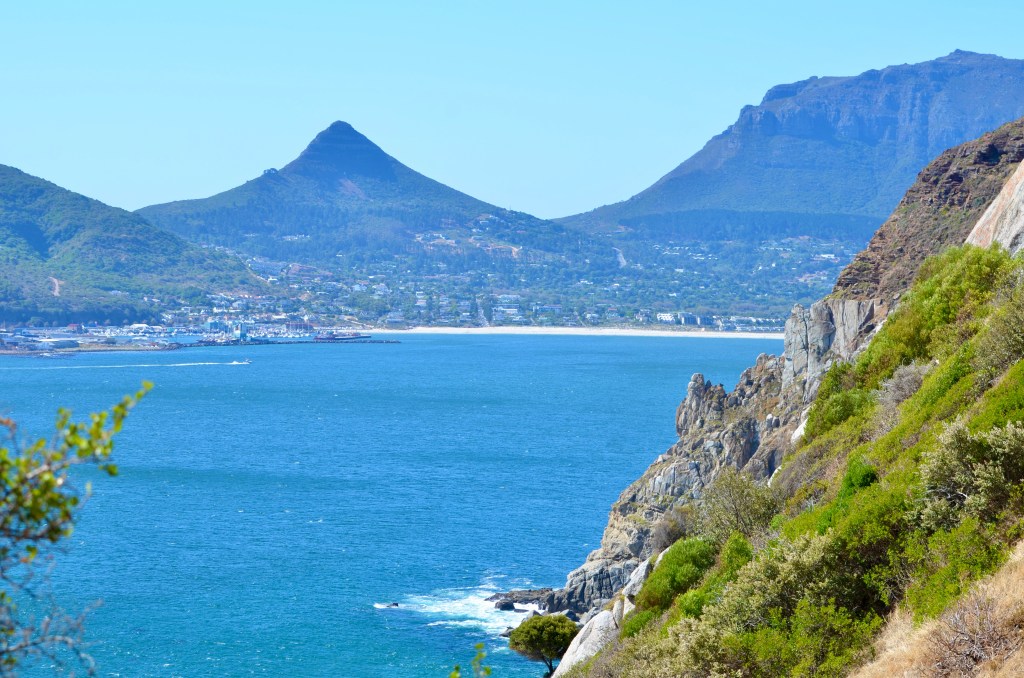
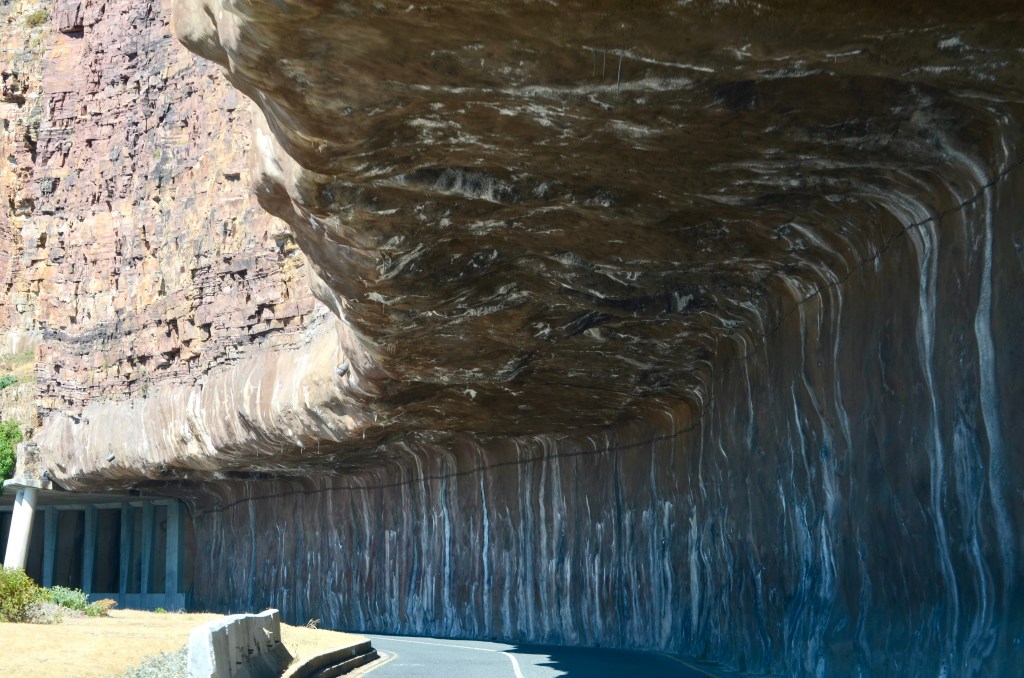
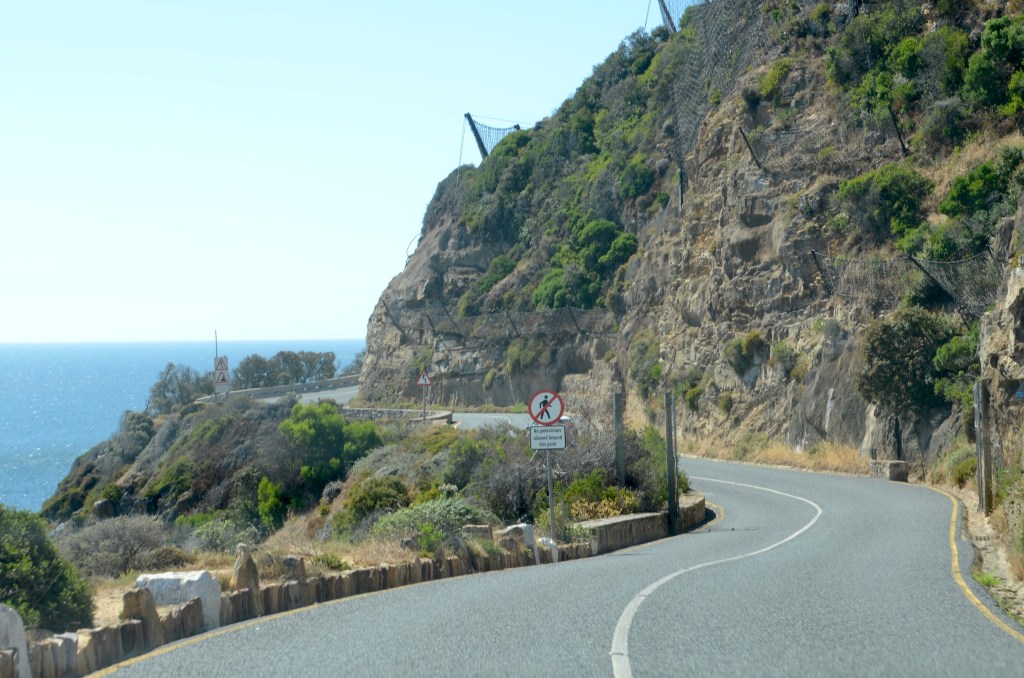
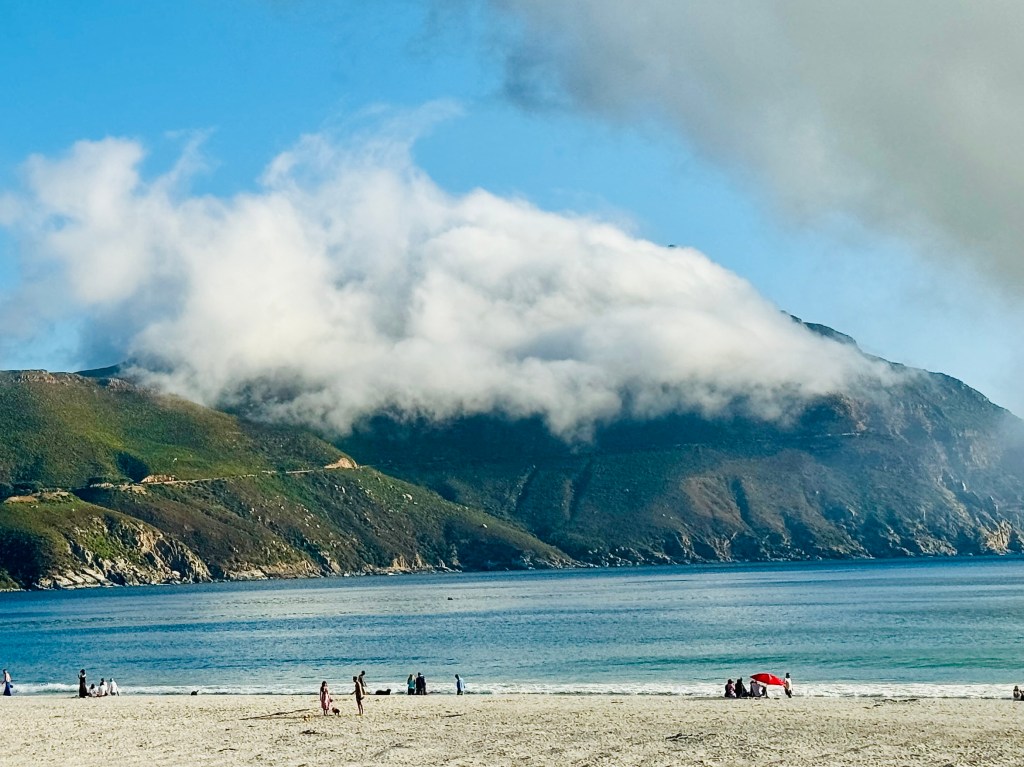
We headed back to Hout Bay via Chapman’s Peak – great views from the lookouts.
We headed to Paternoster on February 19th for 2 nights. We left Paternoster today (Feb. 21st) and we are staying in Robertson tonight. Tomorrow we head to Wilderness.
Our next blog will cover our stop at the Vineyard Hotel in Newlands, Paternoster and Robertson.
As mentioned in Part 1, Peter kept a list of the animals/birds we saw – we were so lucky to see so many up close. Below are some of the many we saw.
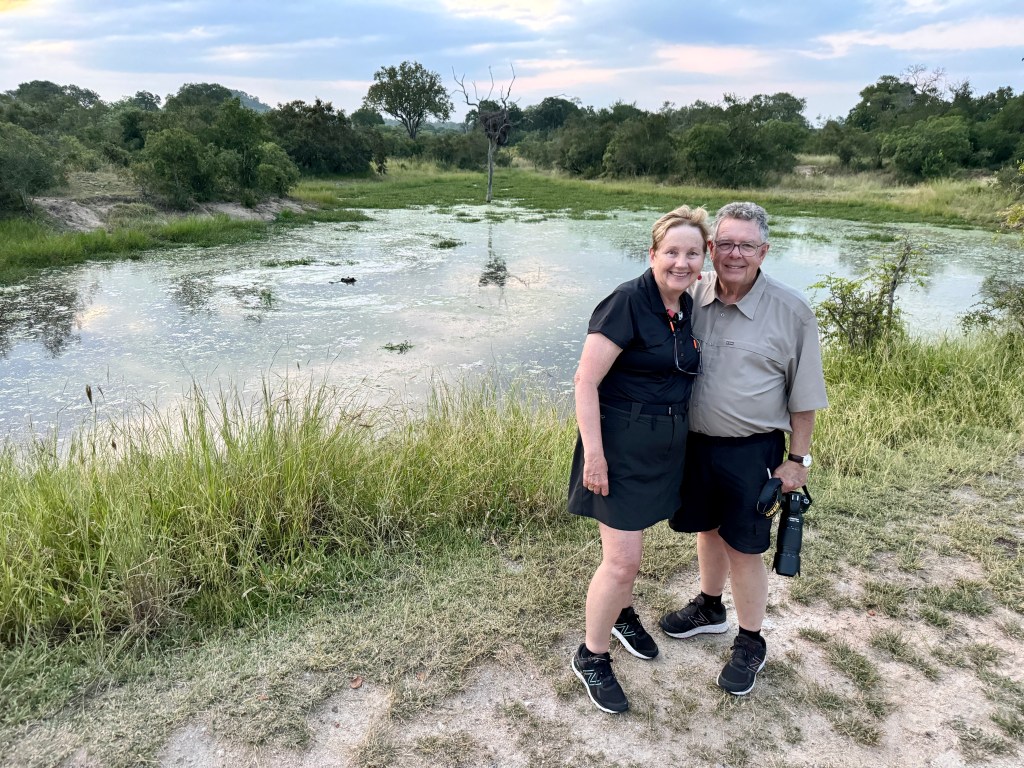
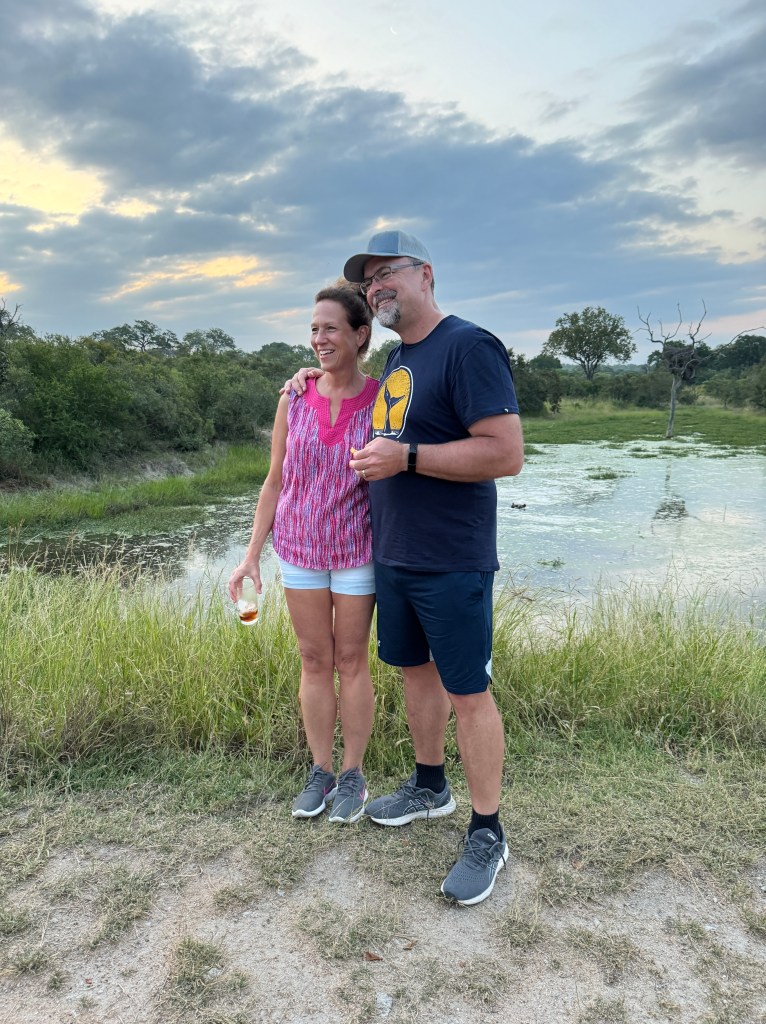
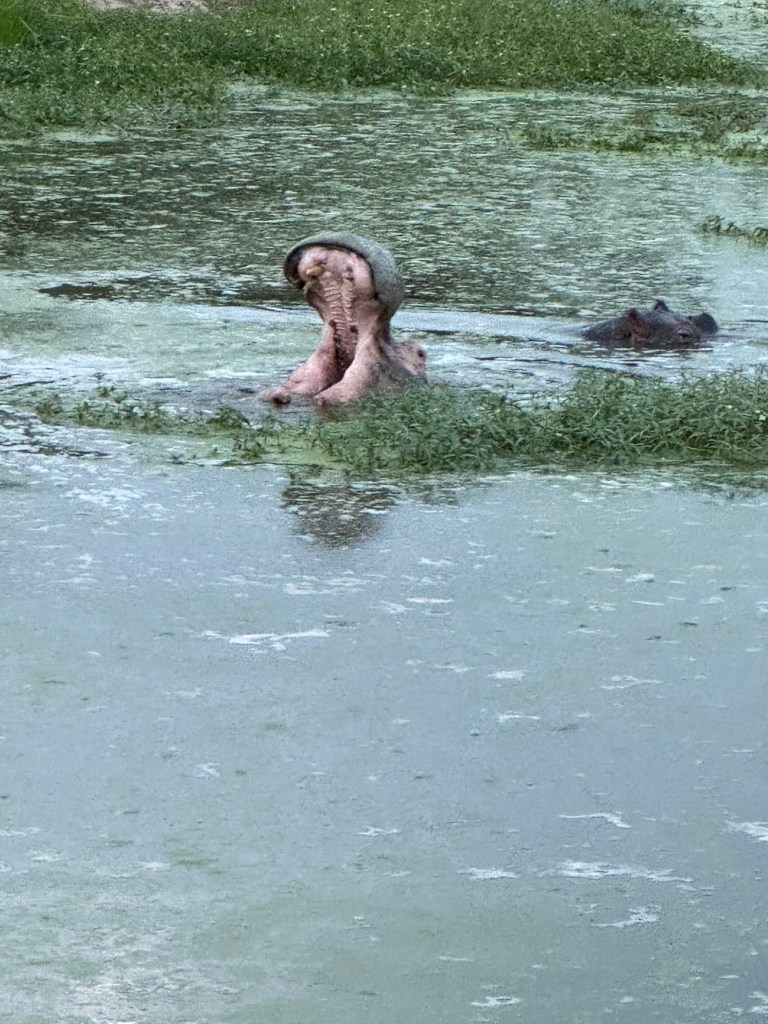
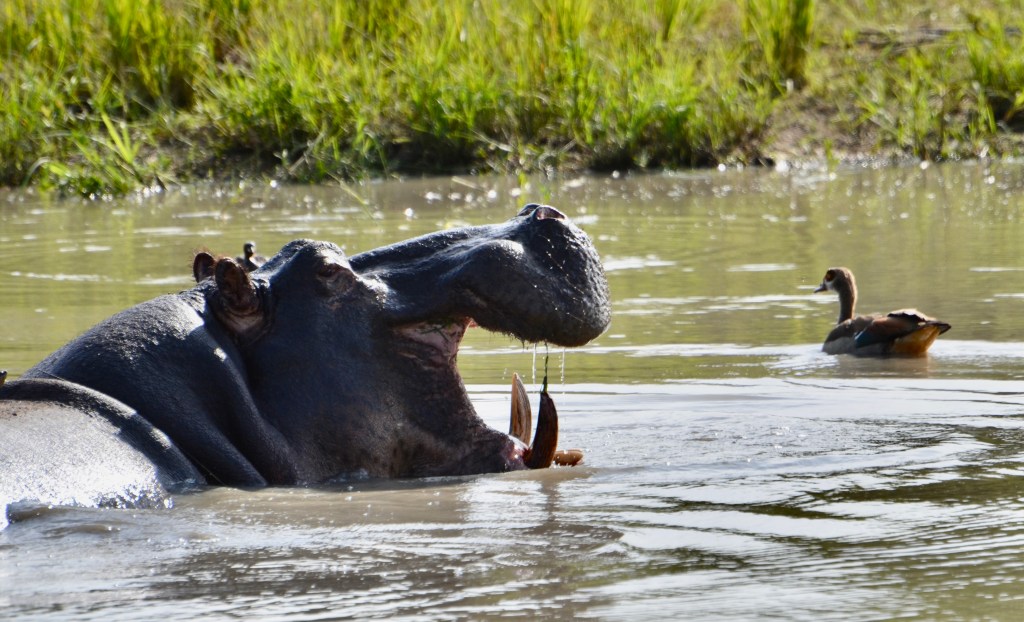
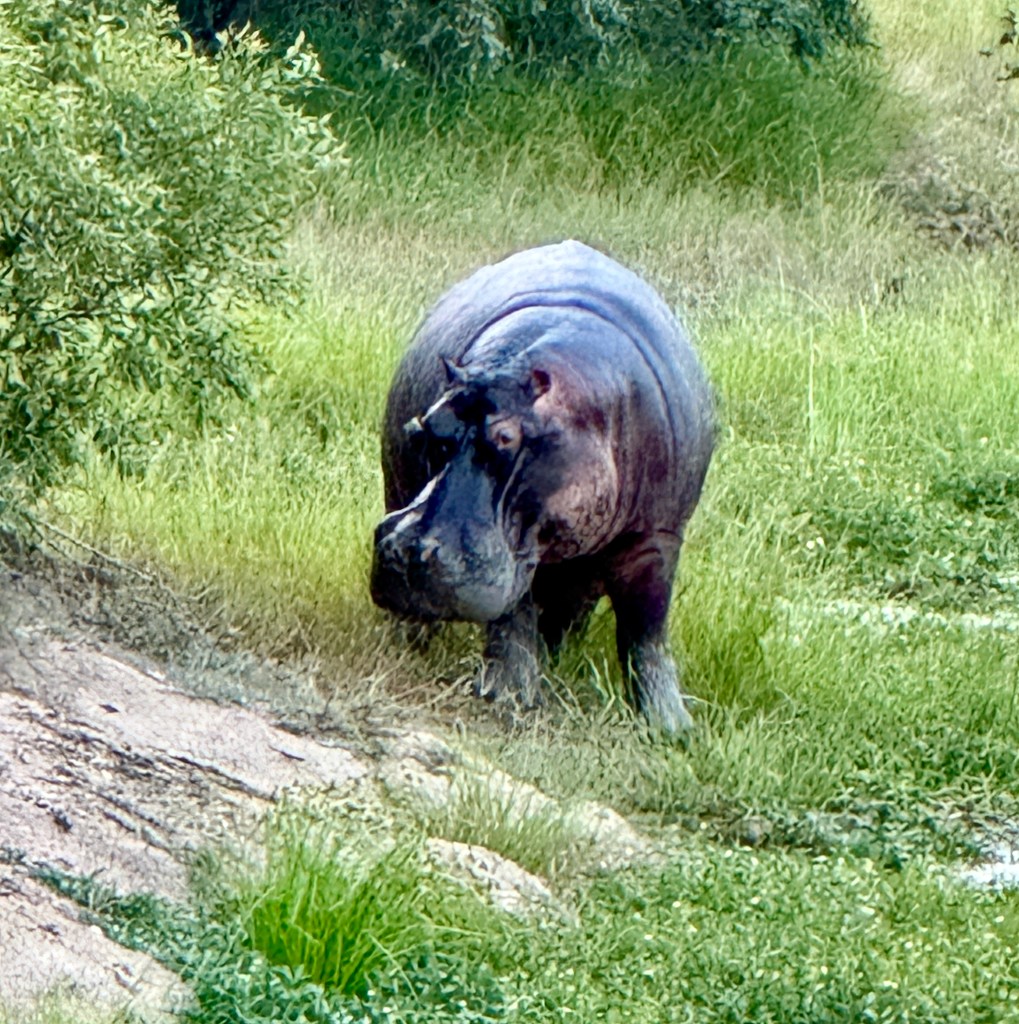
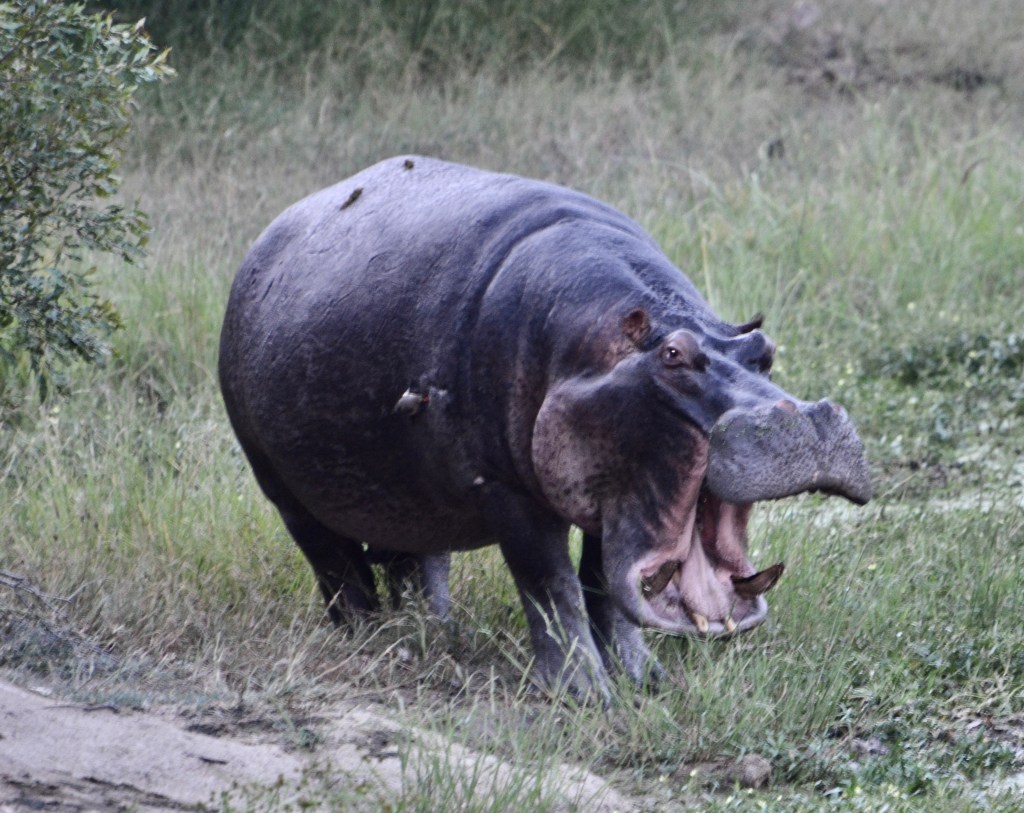
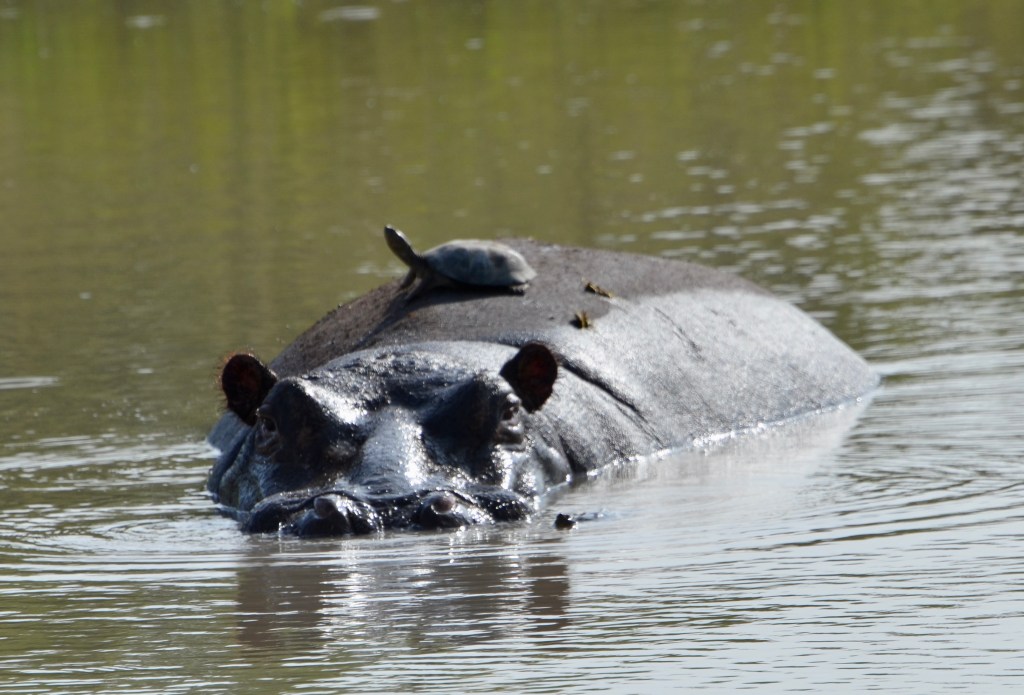
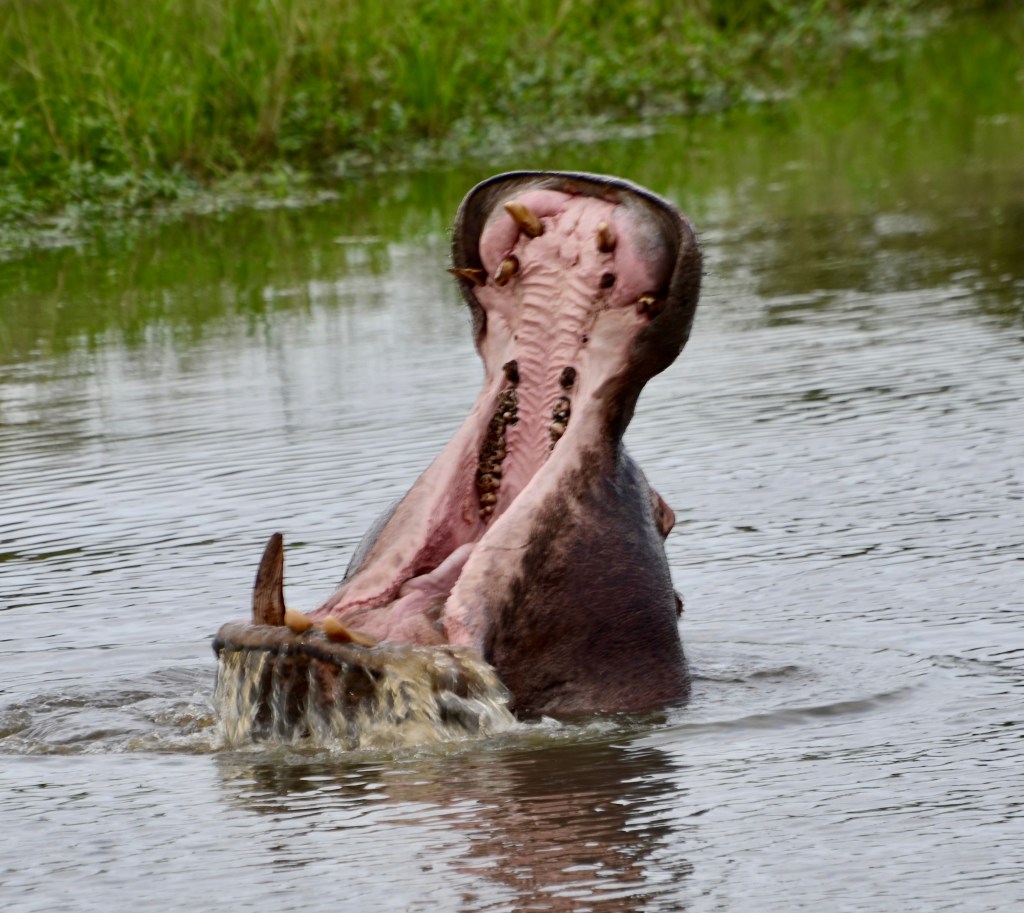
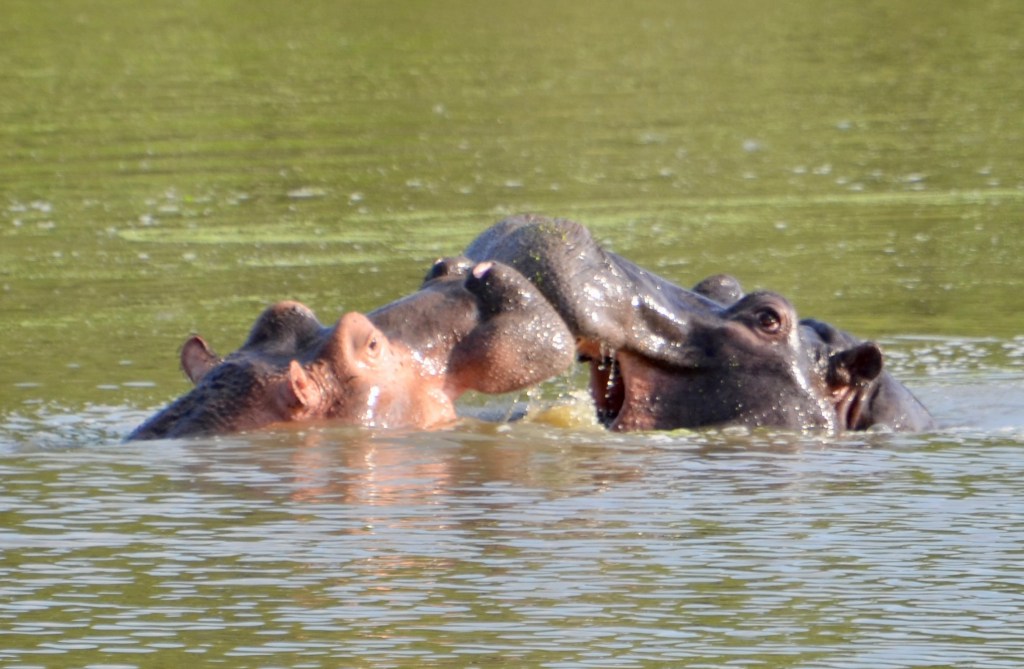
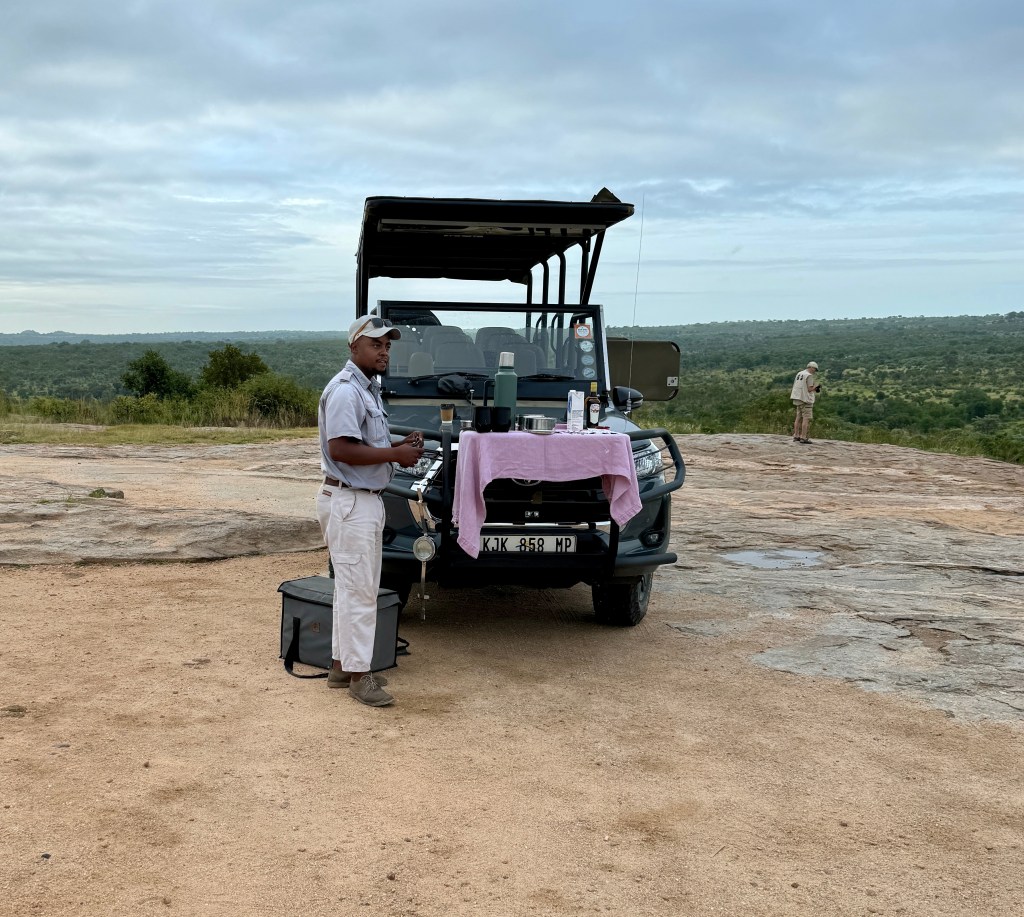
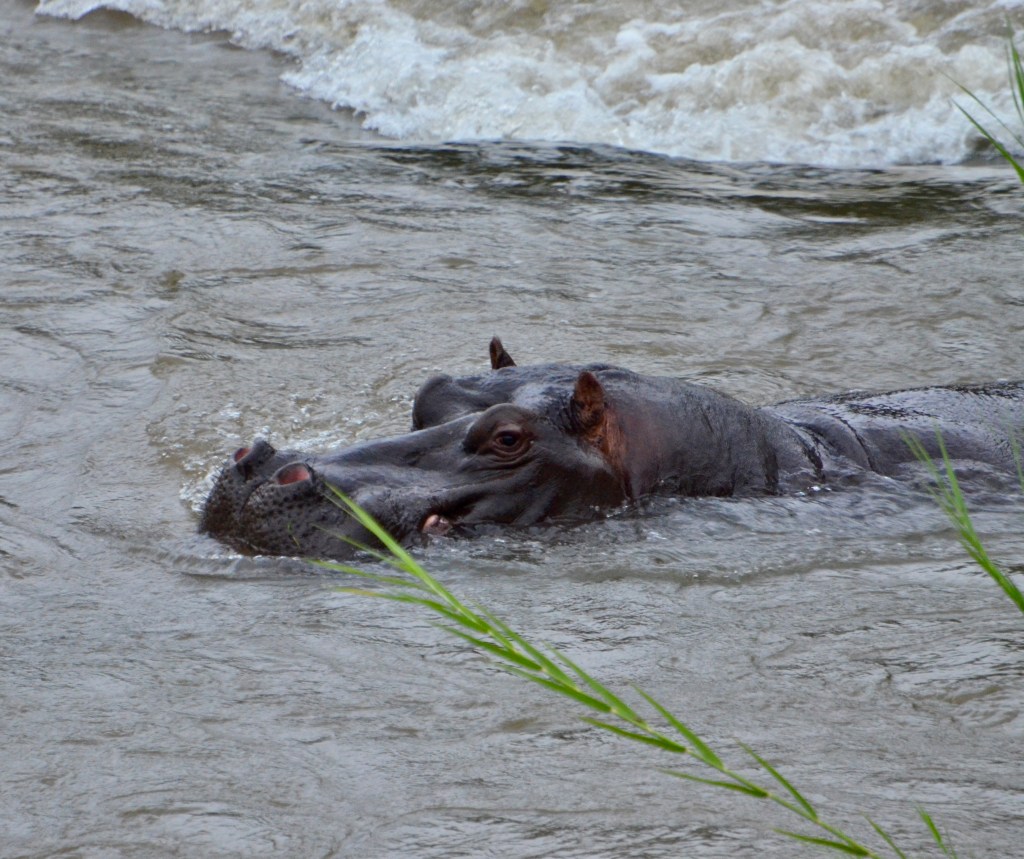
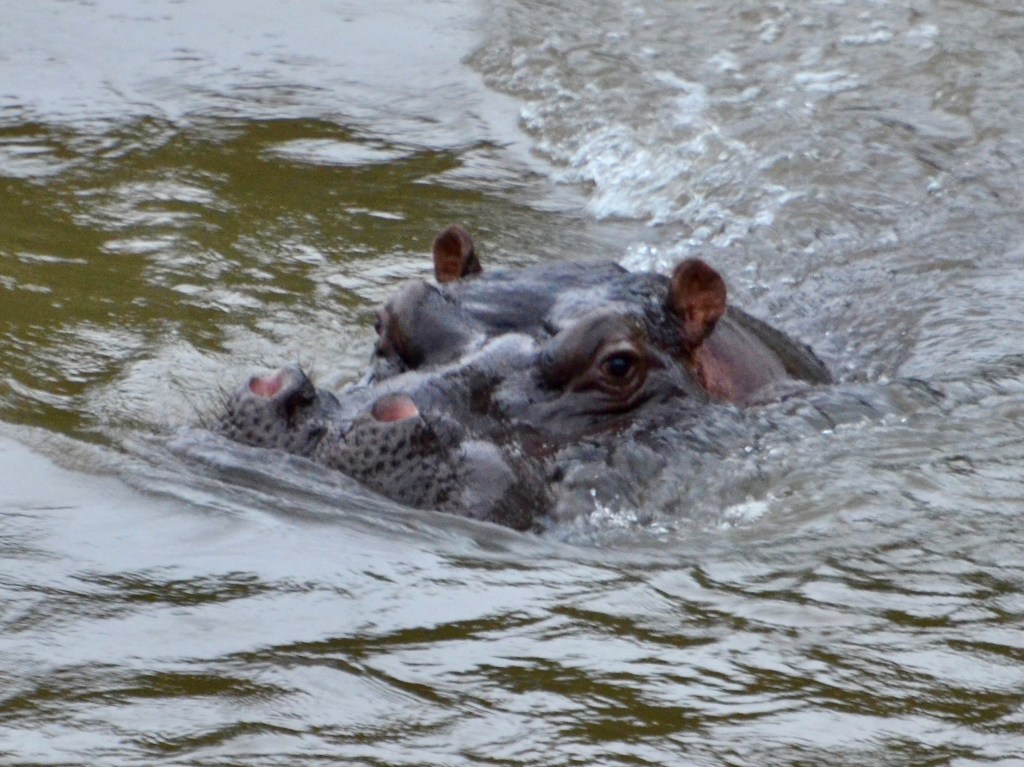
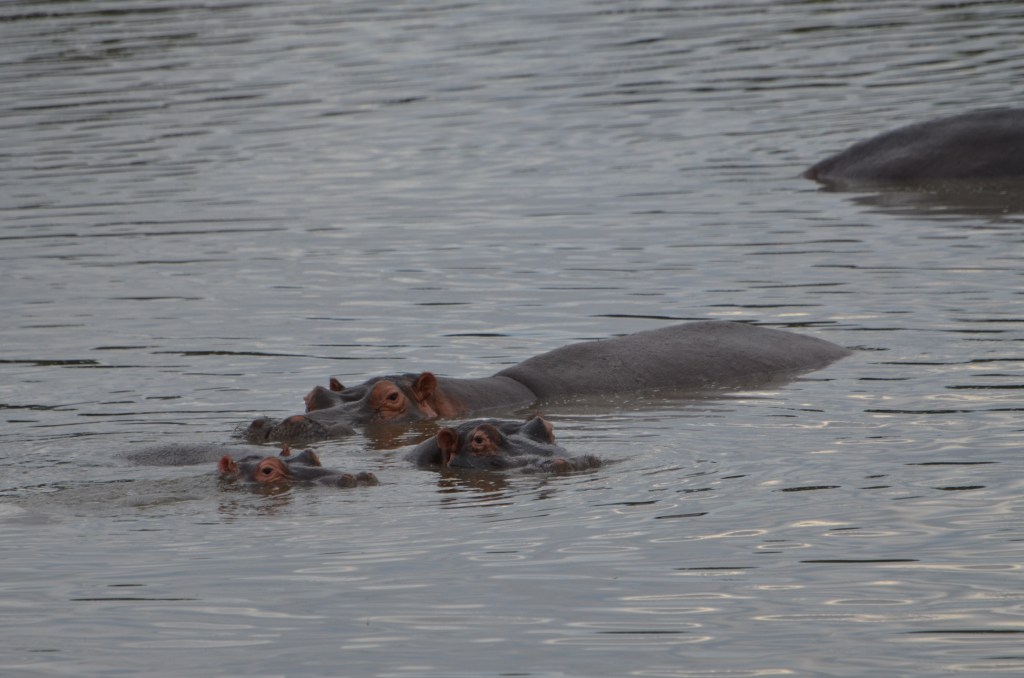
First the hippo. Two of our evening “sundowners” were by hippo ponds. Sipping AmarulaLiqueur as we watched the hippos was truly amazing. Only one important rule “stay close to the vehicle” although they were not interested in us, other than to put on a show.
Hippo pond right behind usWe shared so many incredible experiences with Dawn and PeterAnd in the pond behind us were these hipposThis hippo did not like the ducks in his pond so would scare them away.Amazing to see the hippo out of the waterTurtle picked a good spot
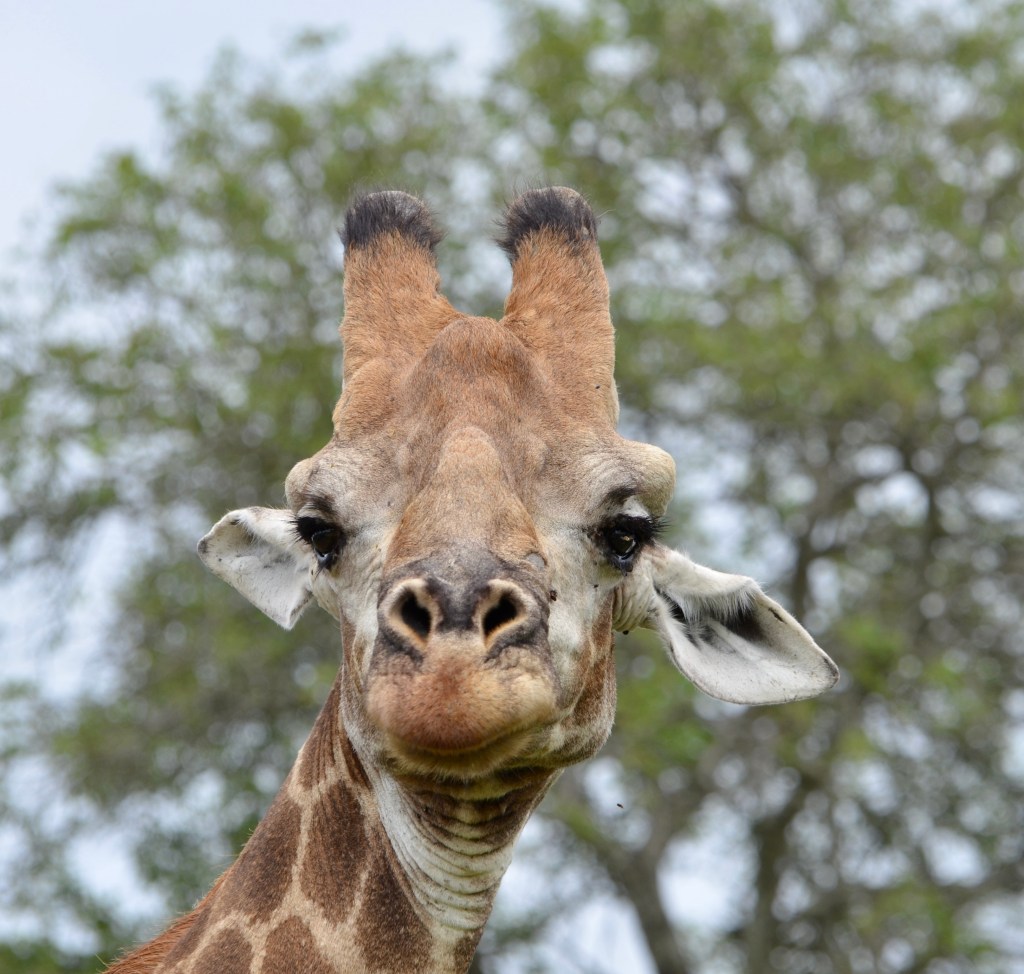
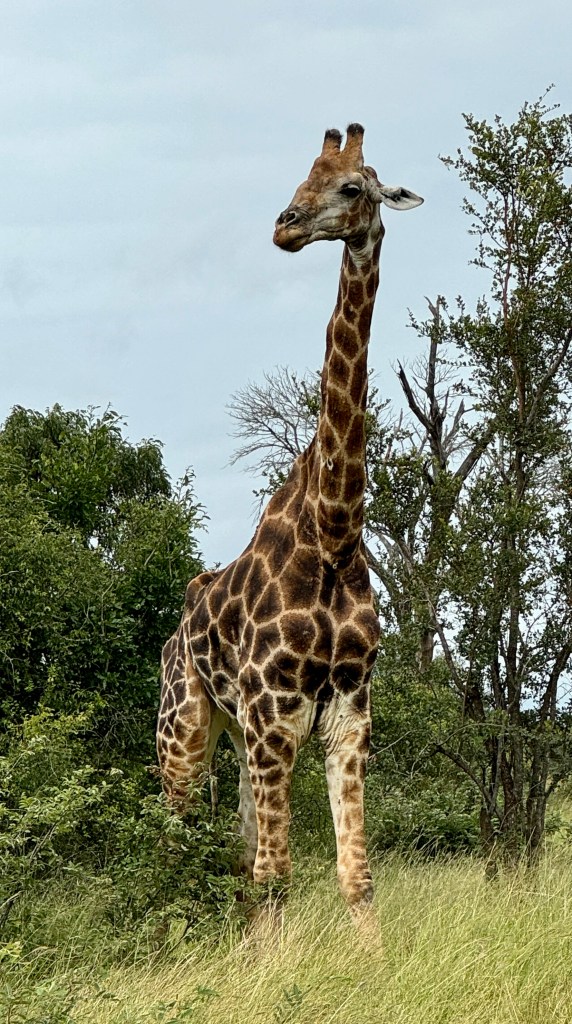
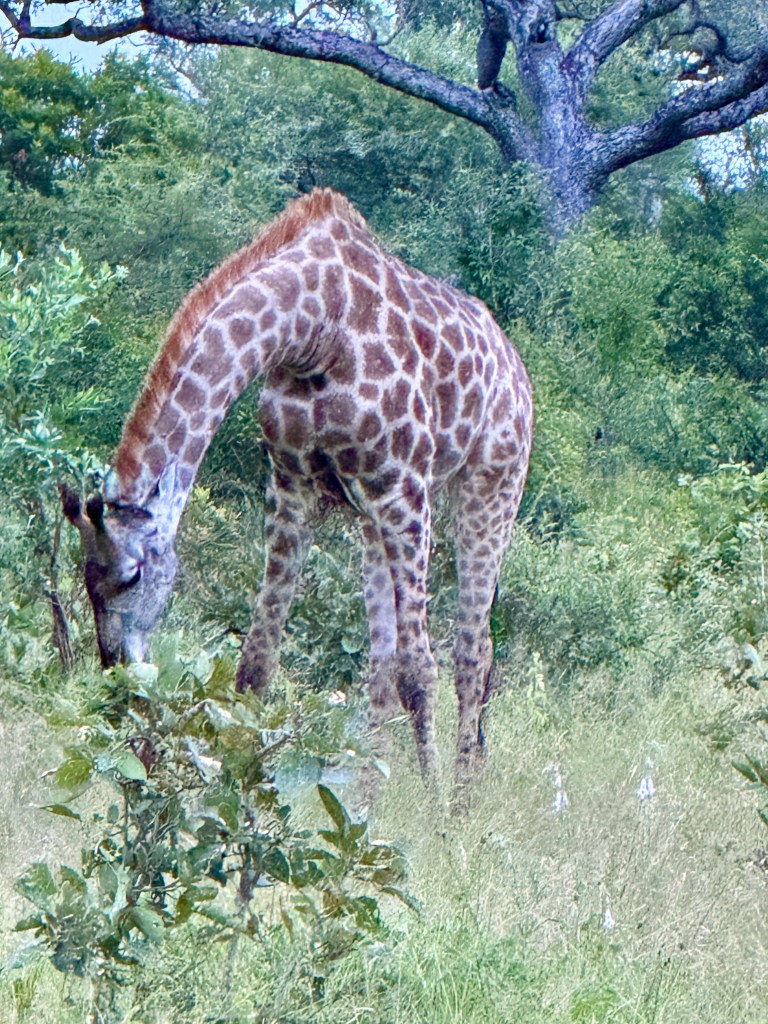
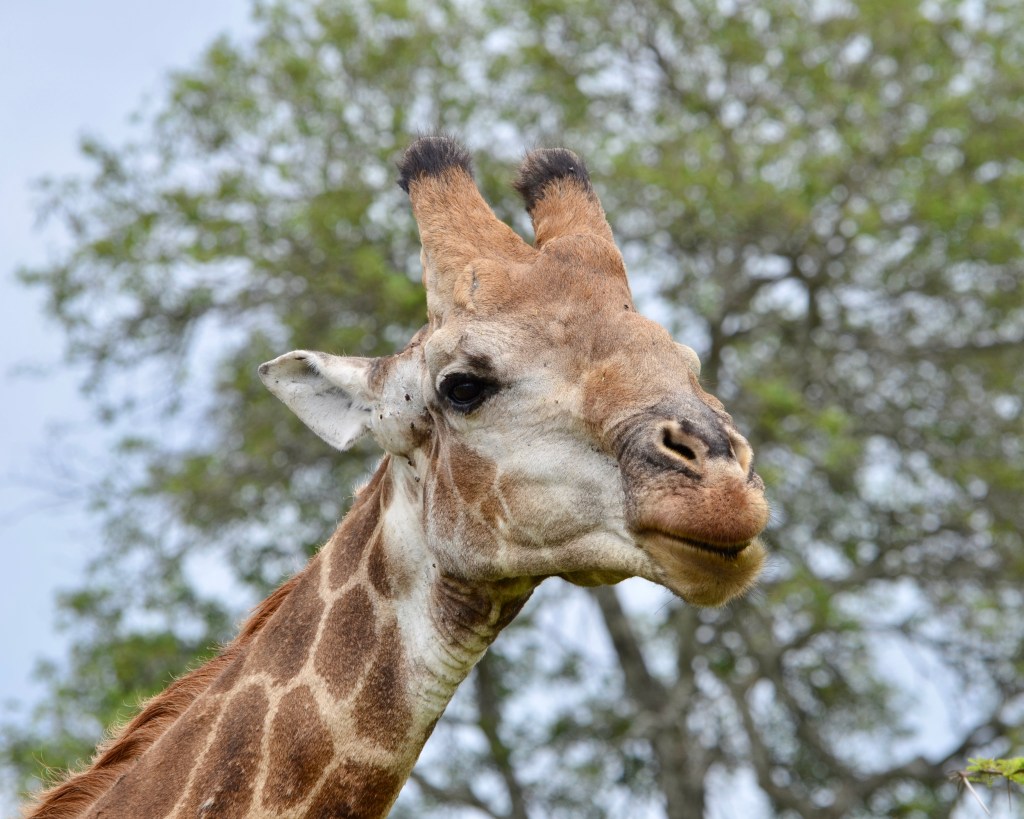
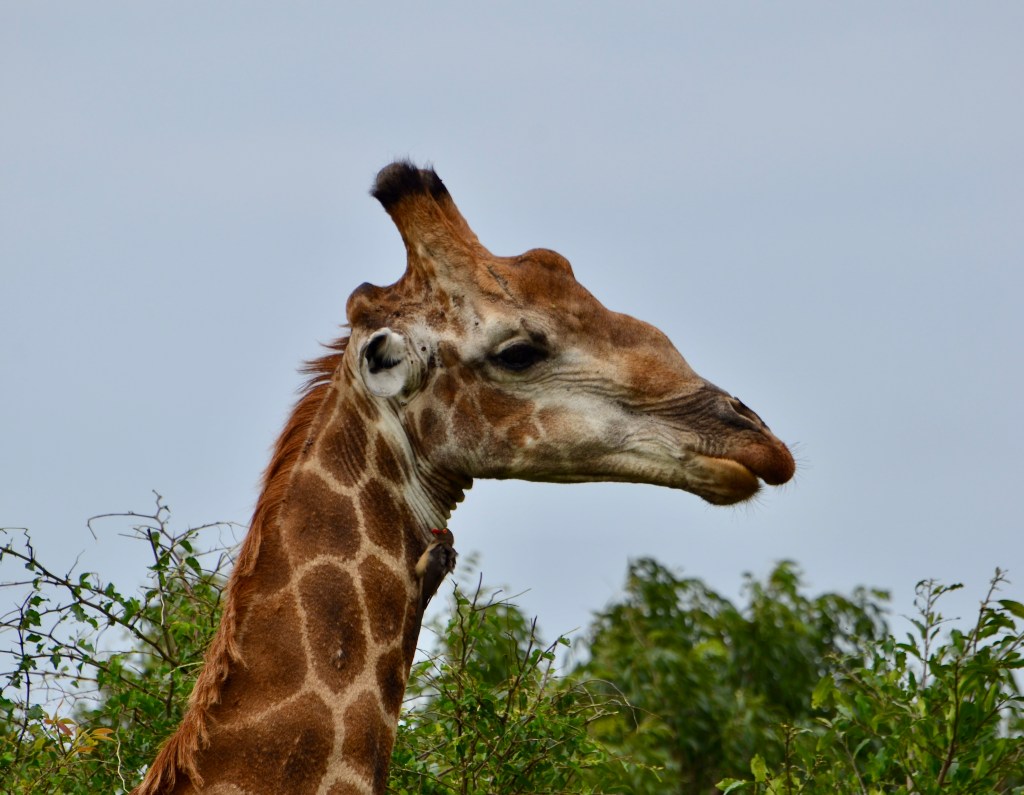
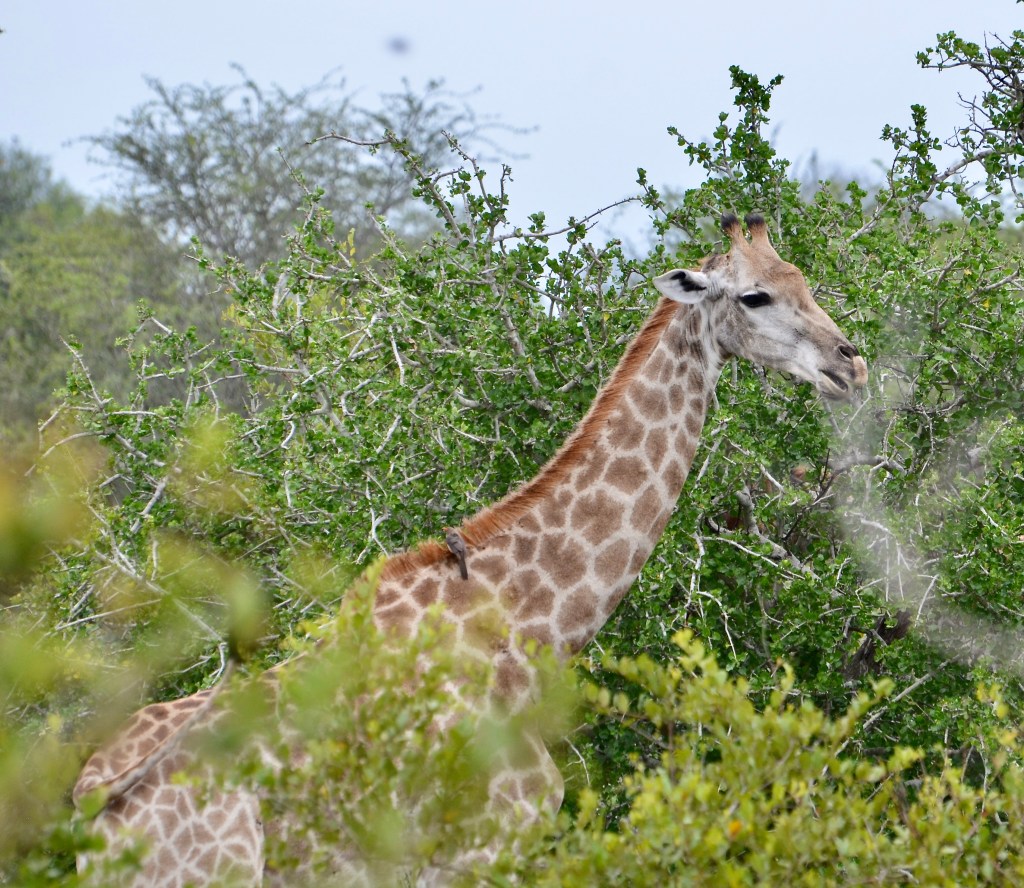
Dawn loved the giraffes – these are for you Dawn.
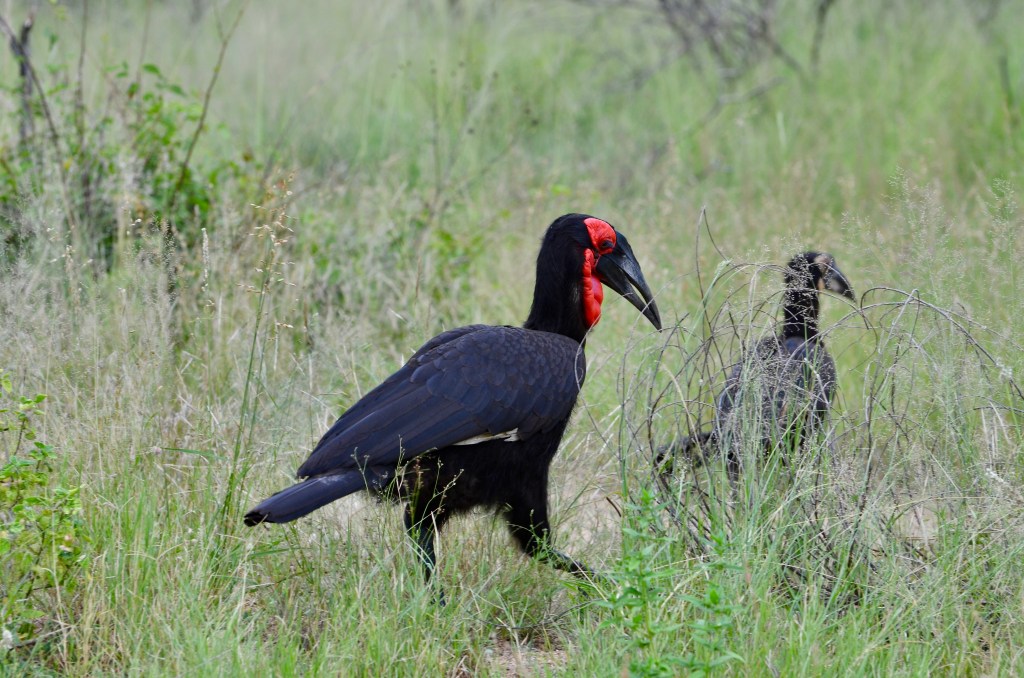
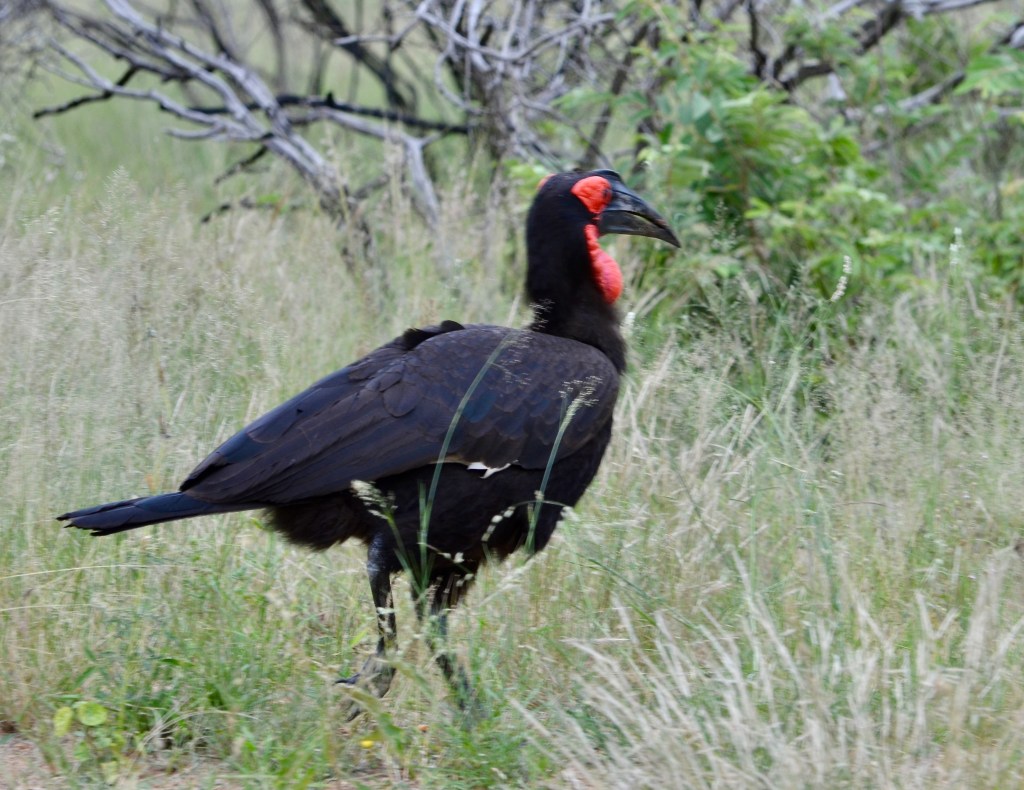
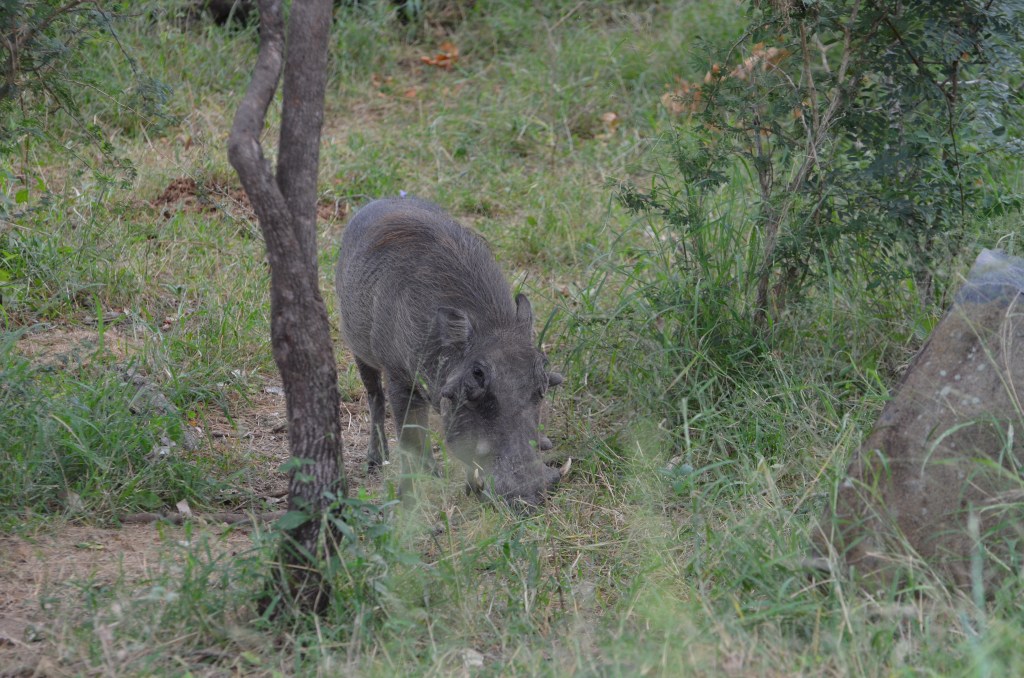
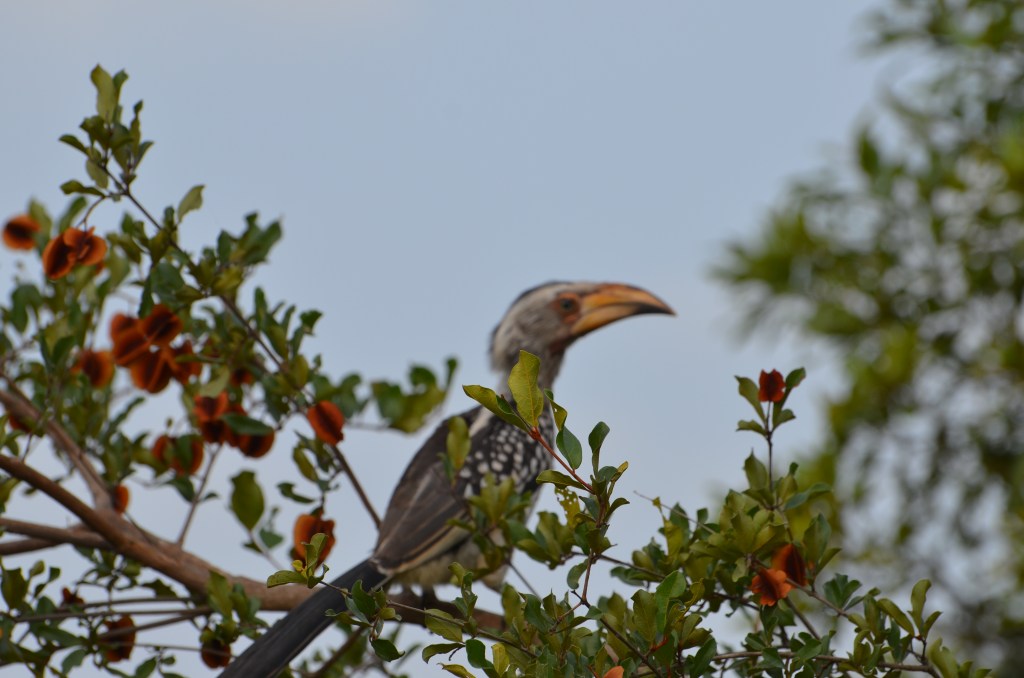
And now for the remaining and oh so special animals and birds we had the privilege of spending time with.
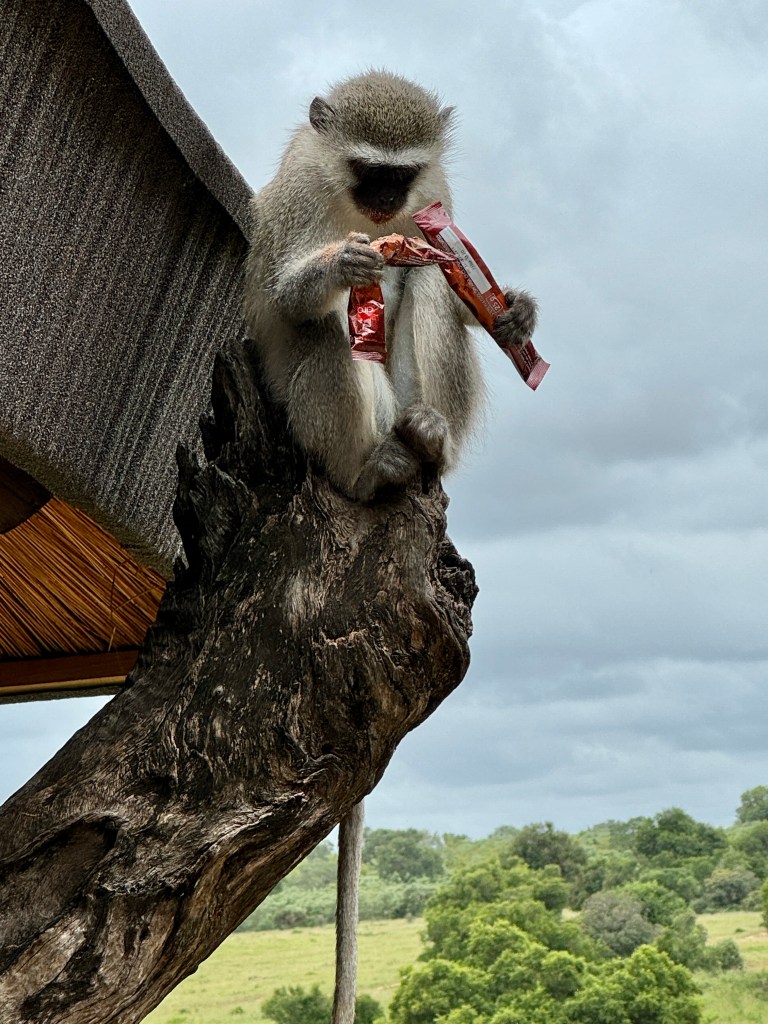
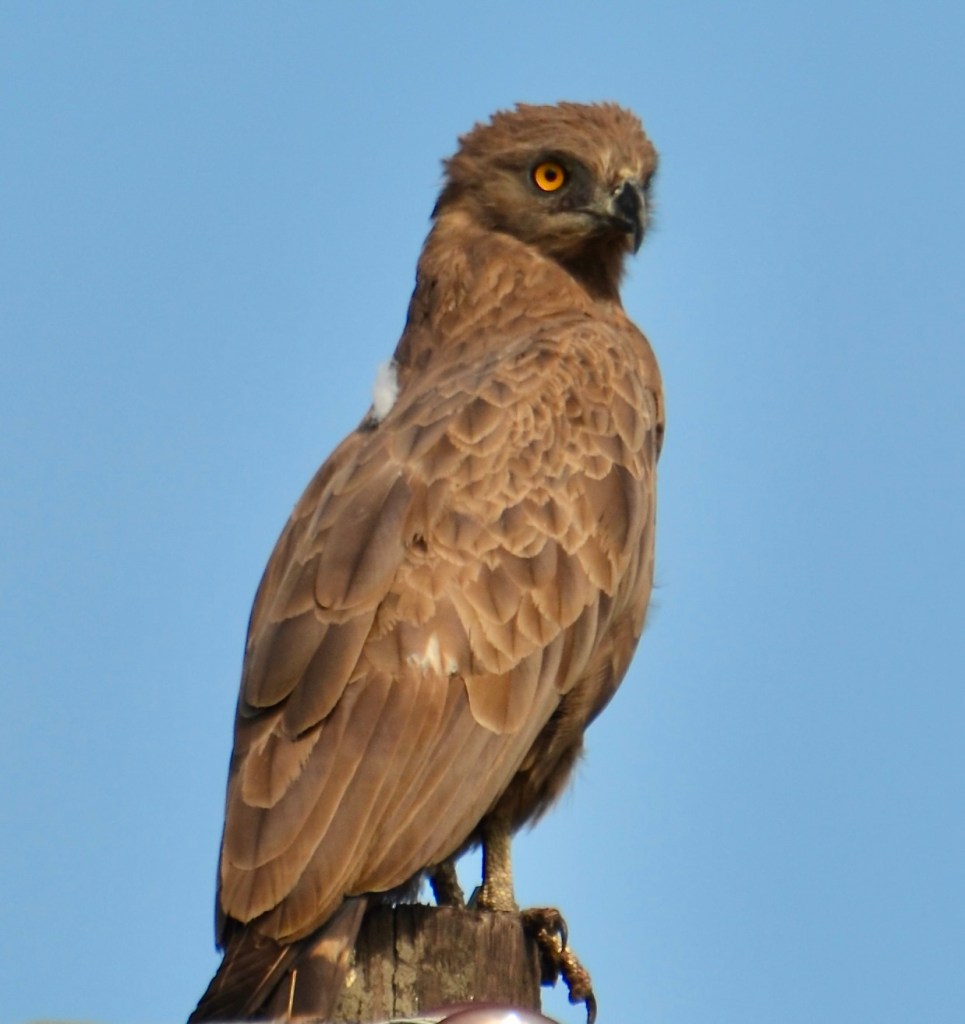
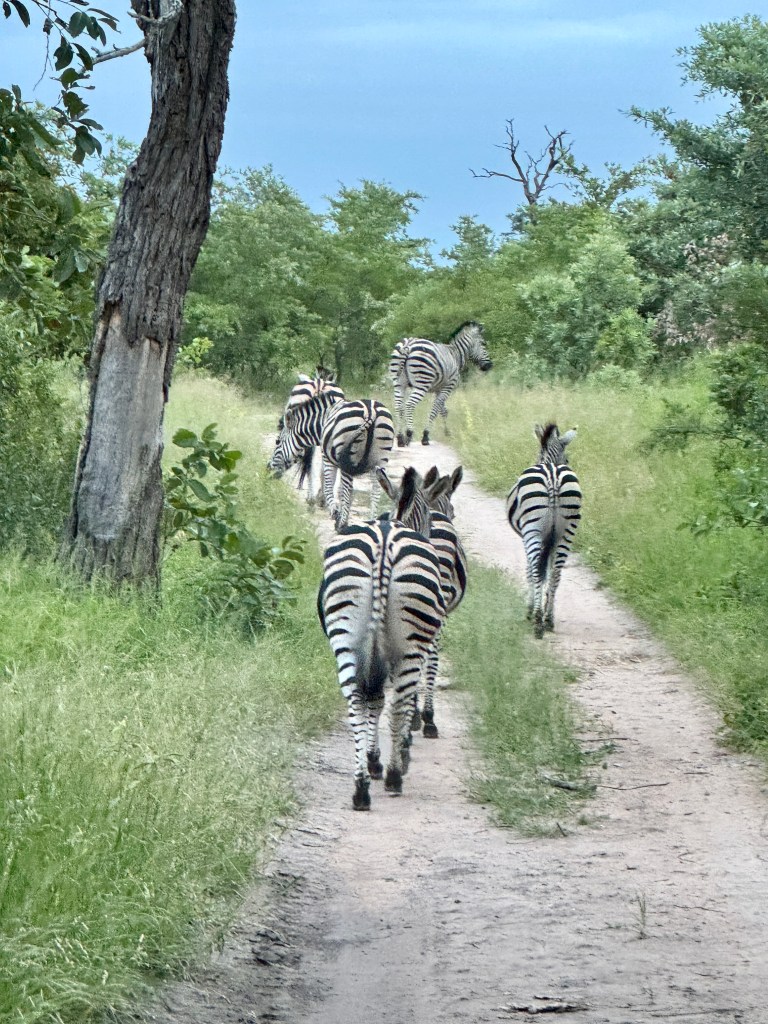
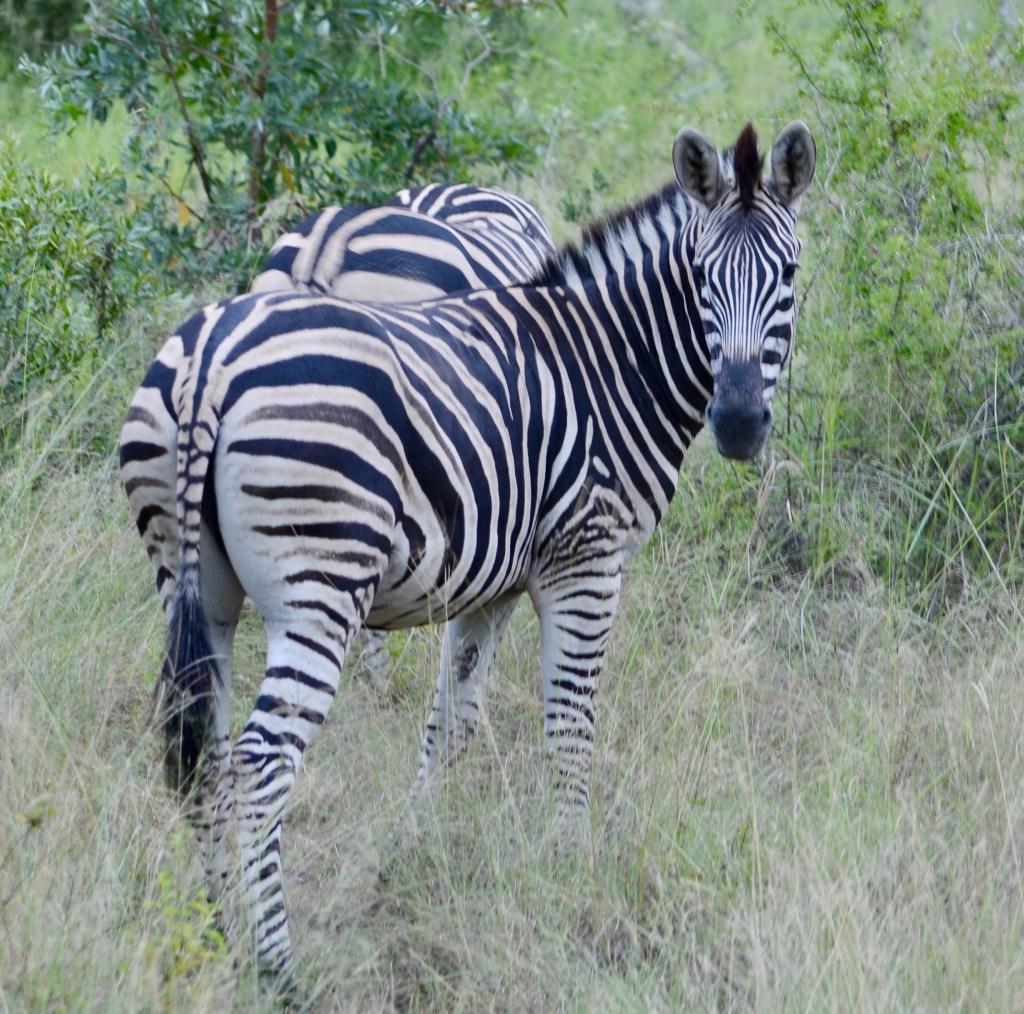
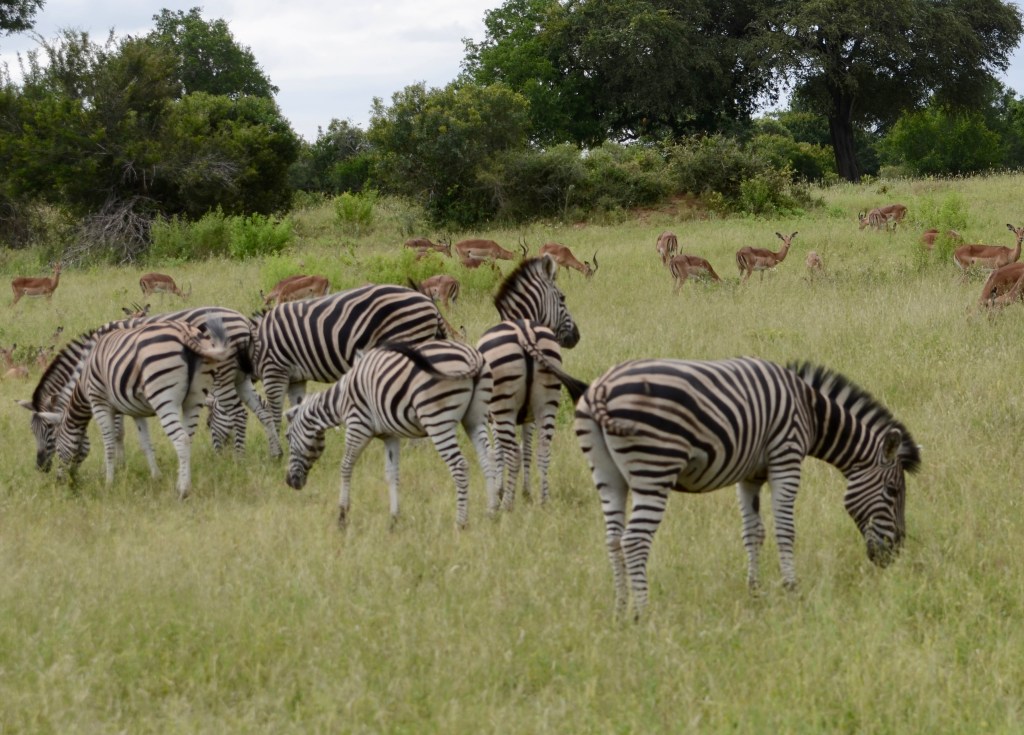
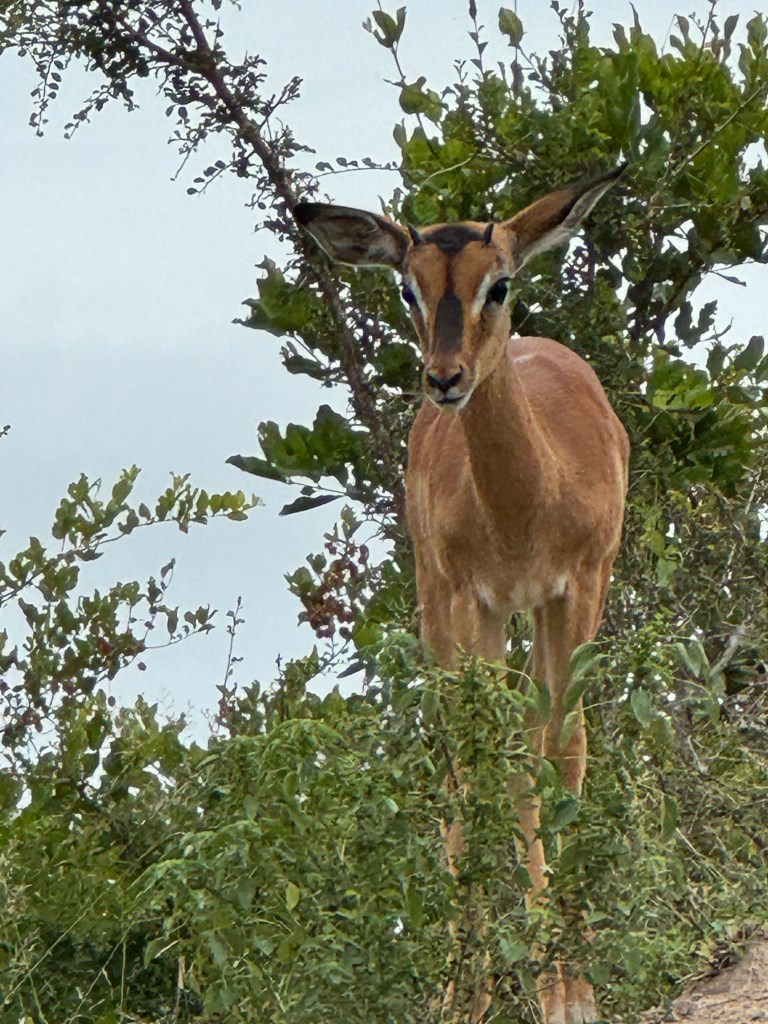
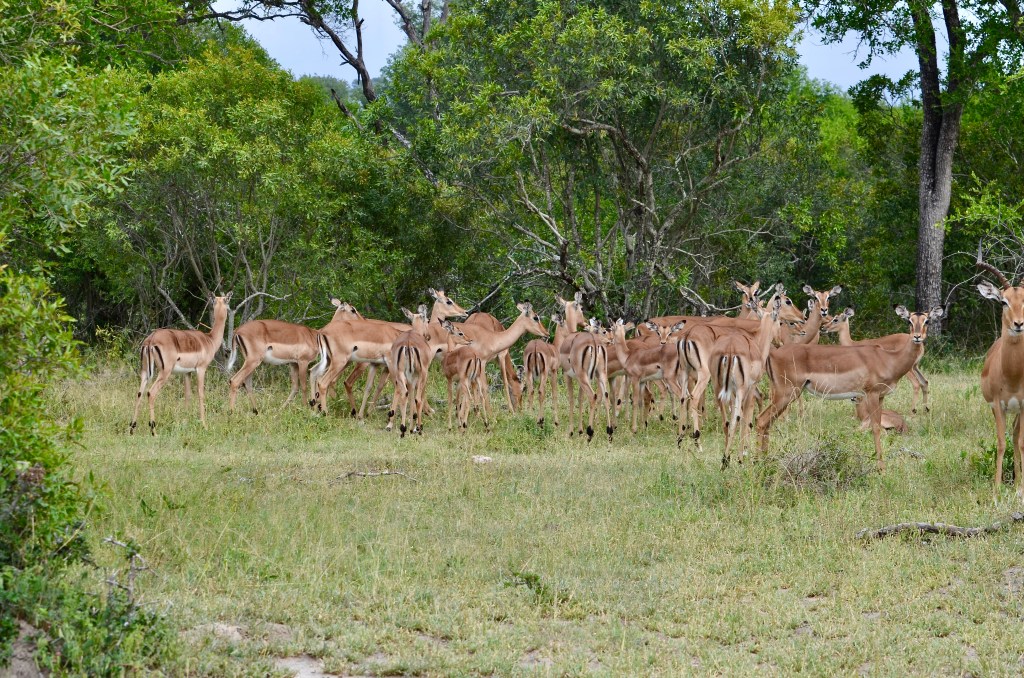
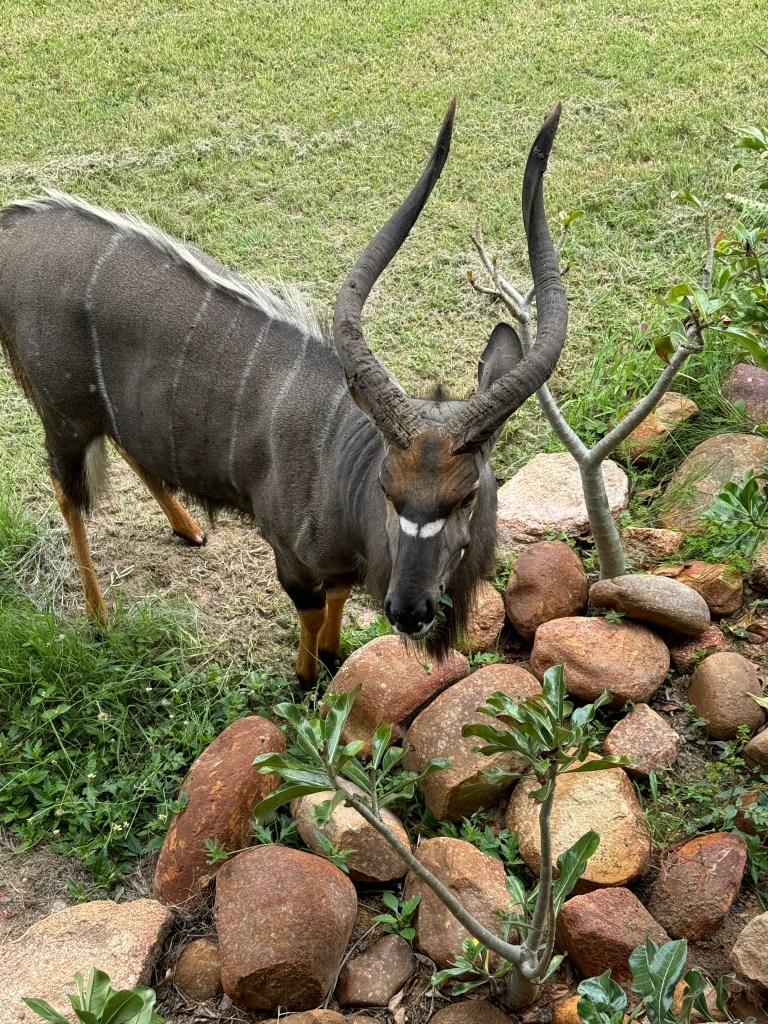
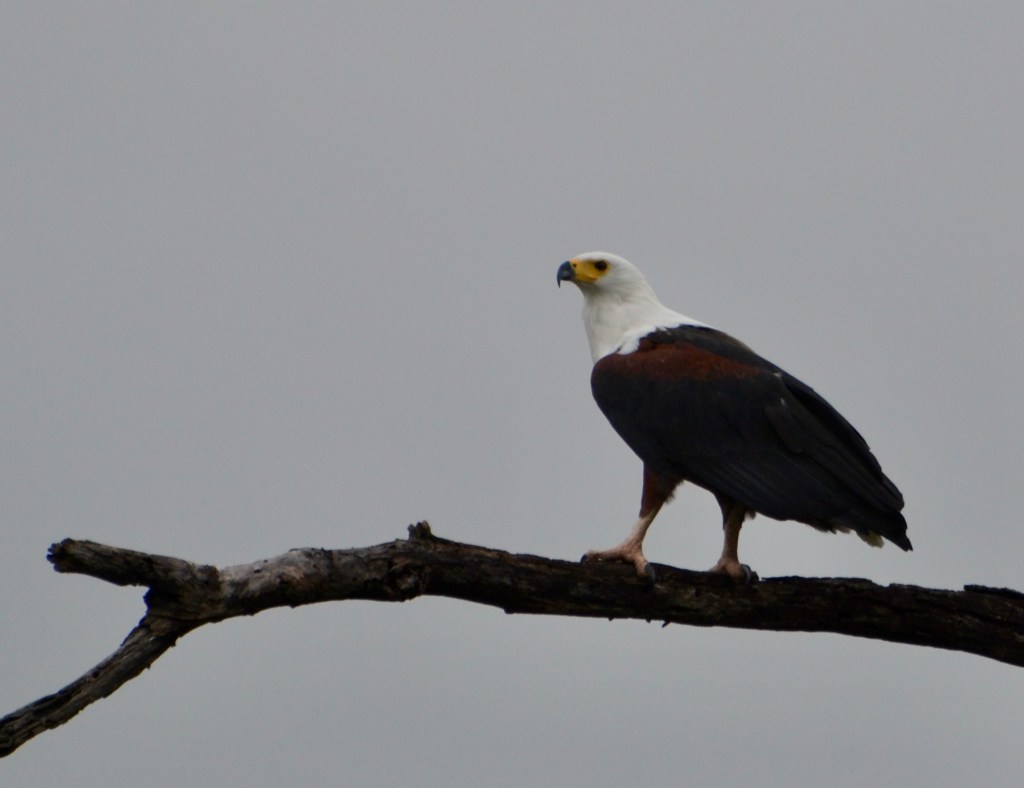
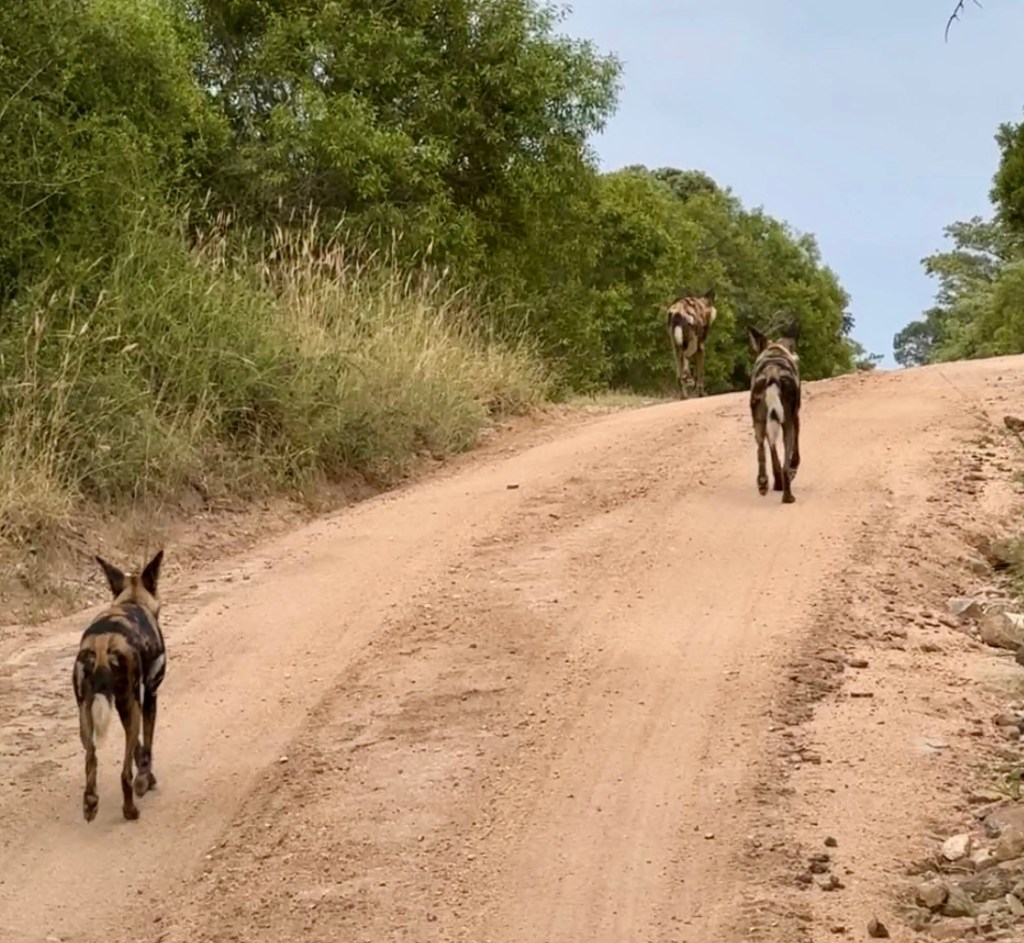
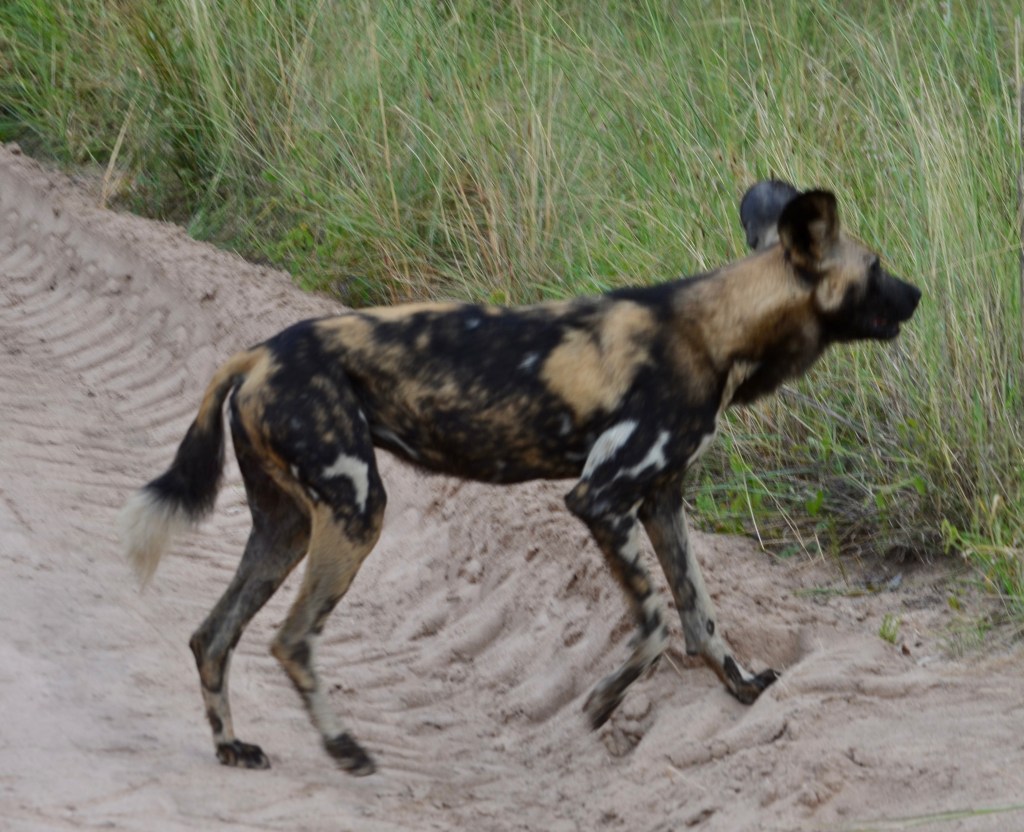
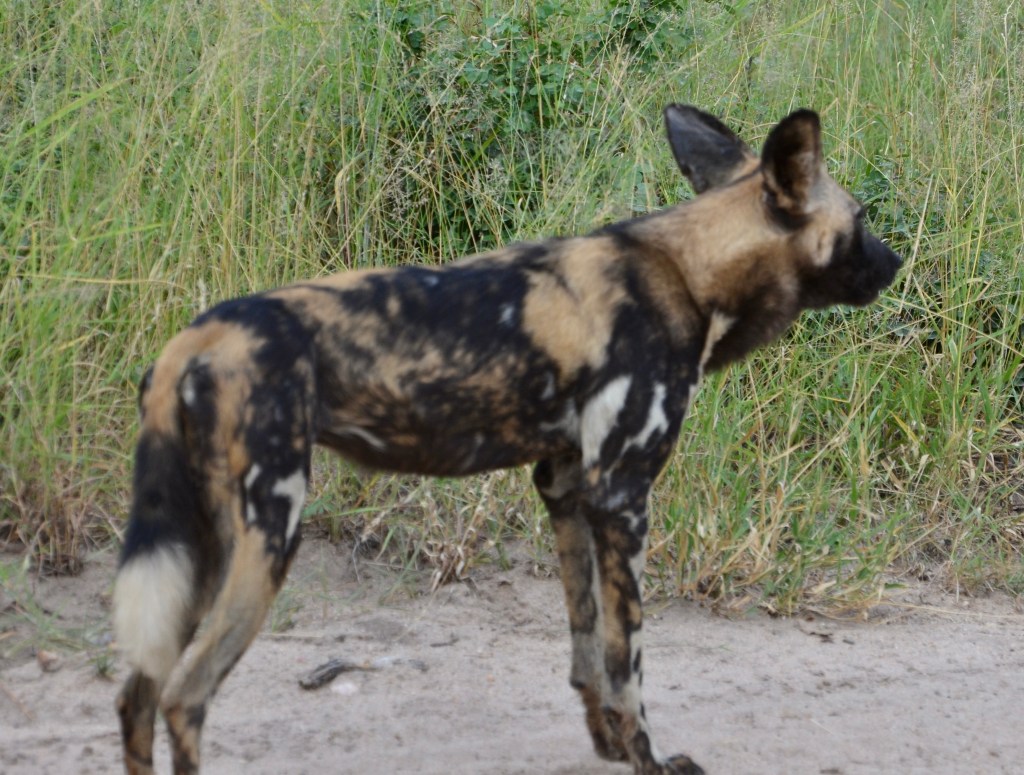
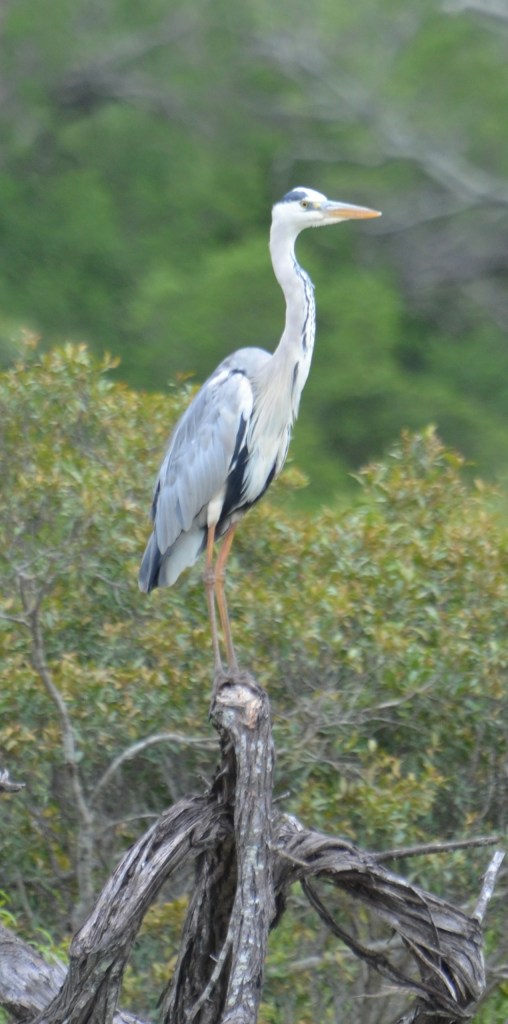
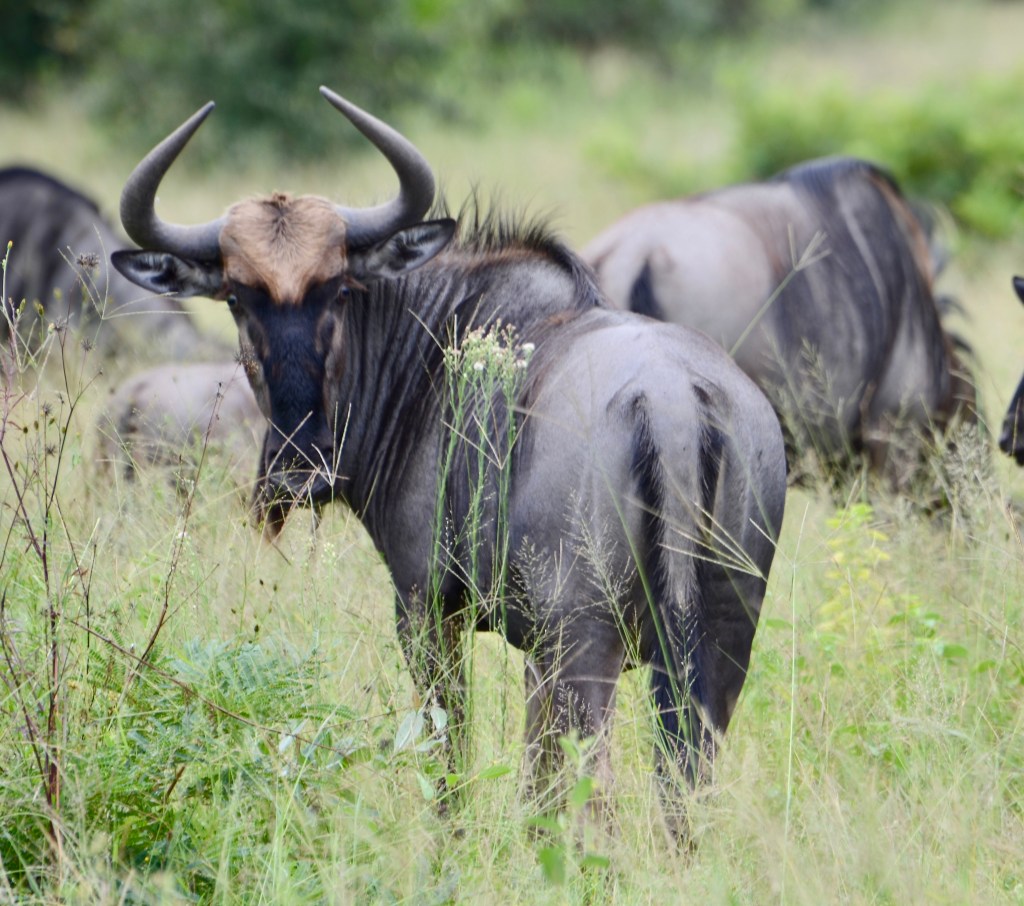
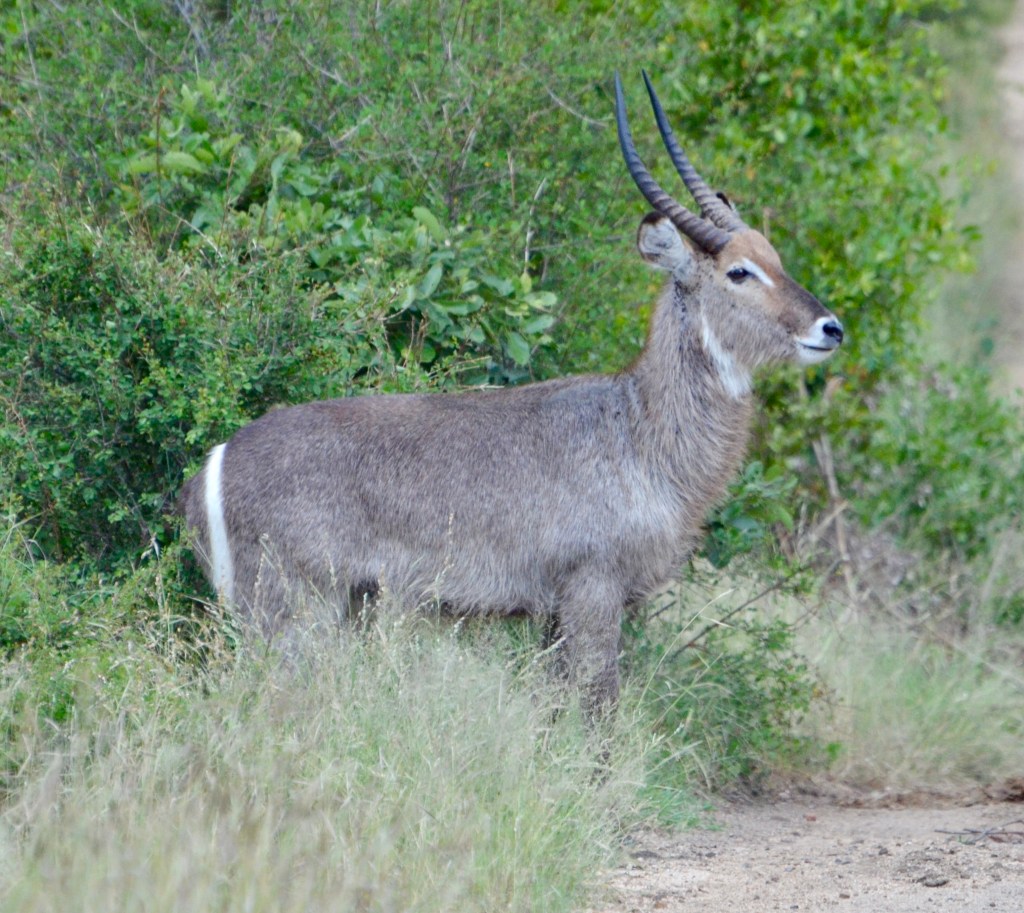
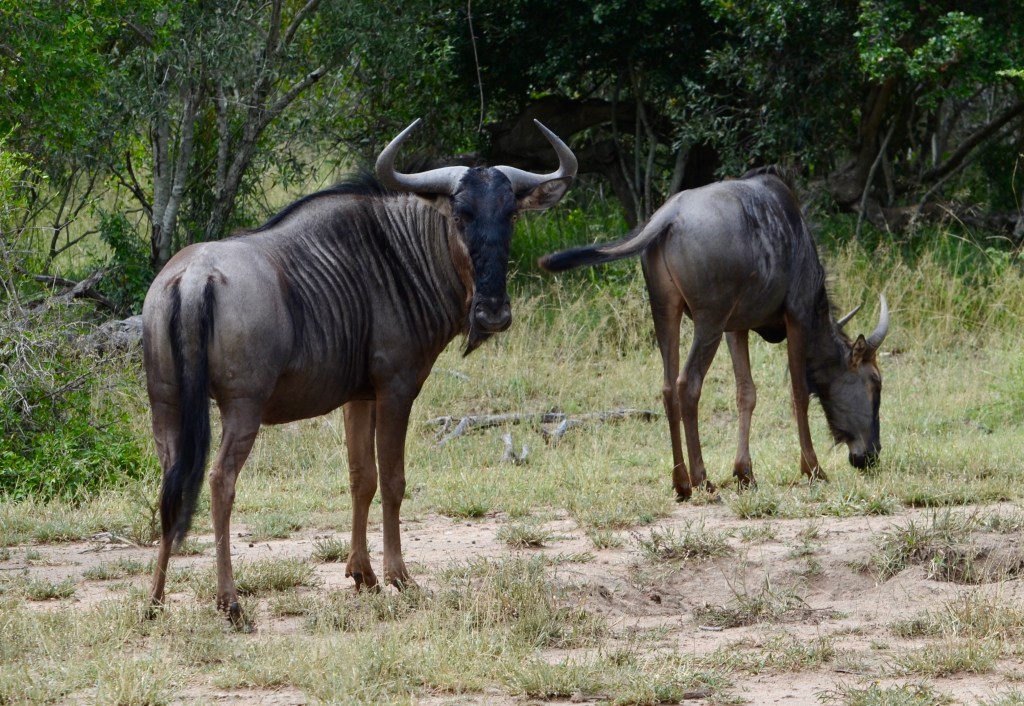
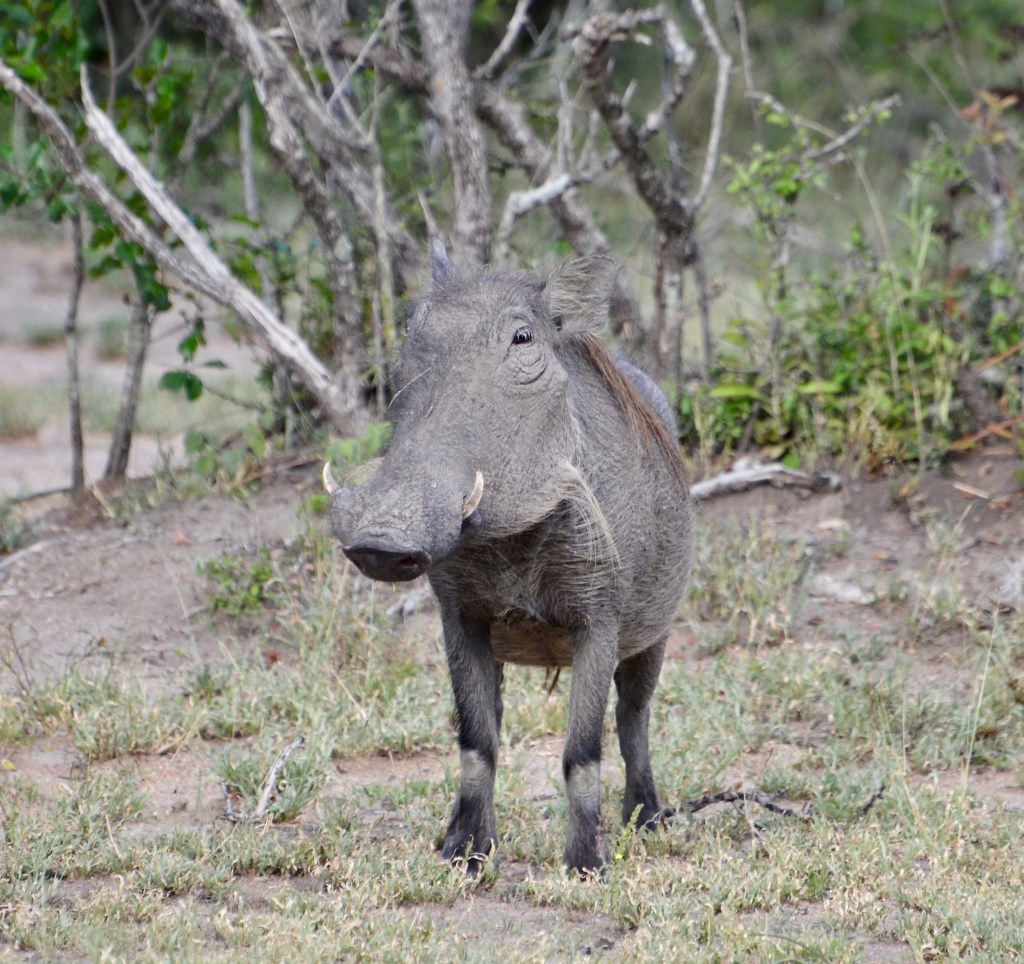
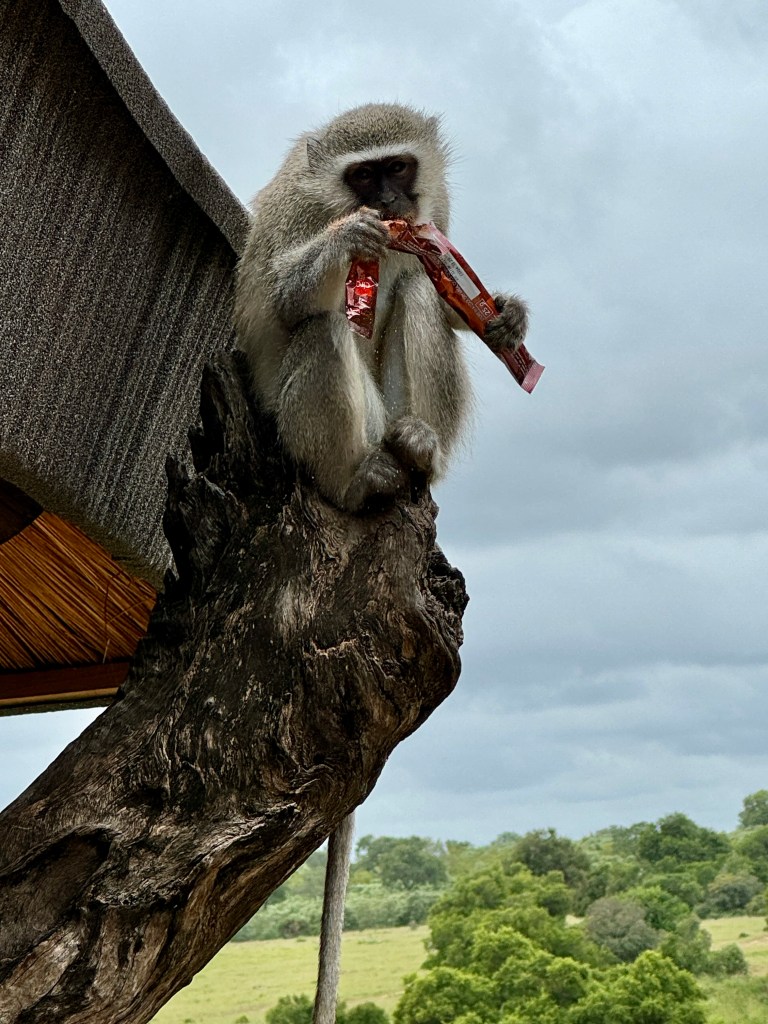
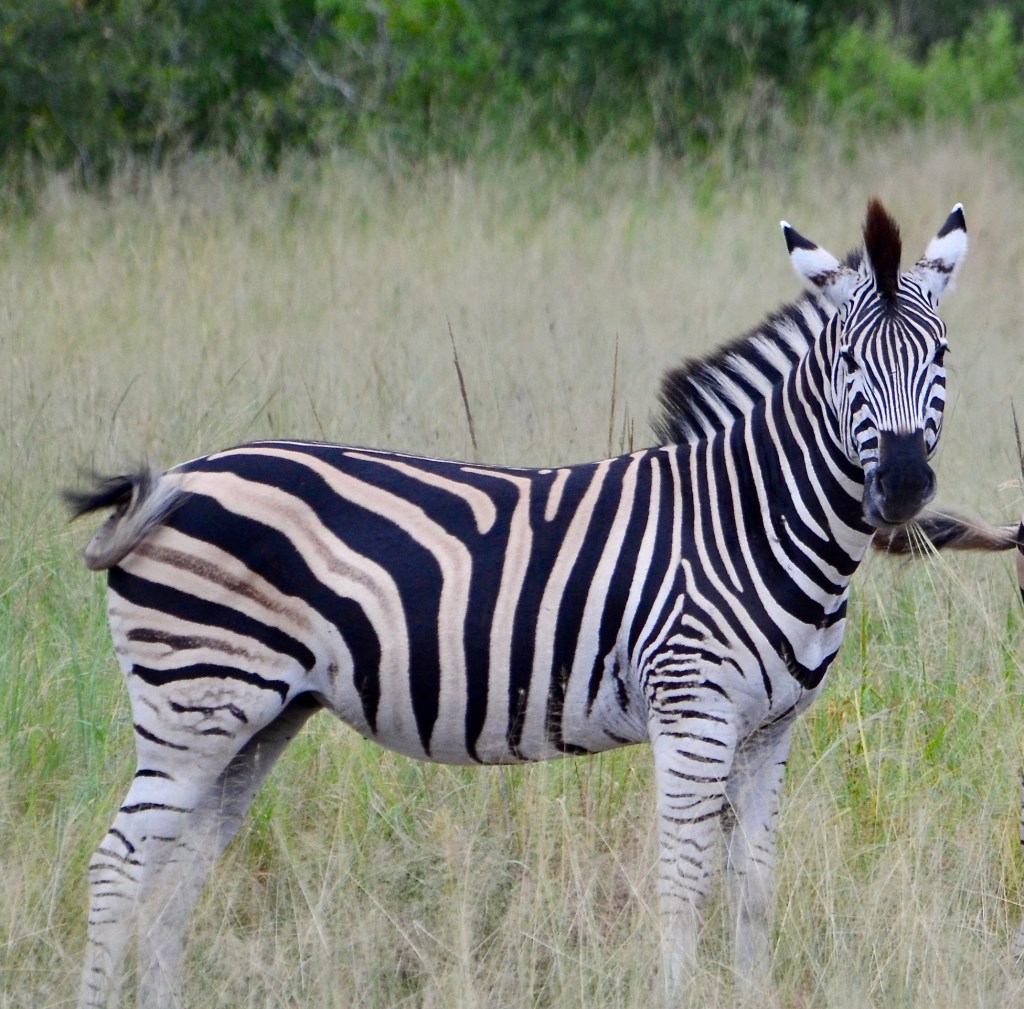
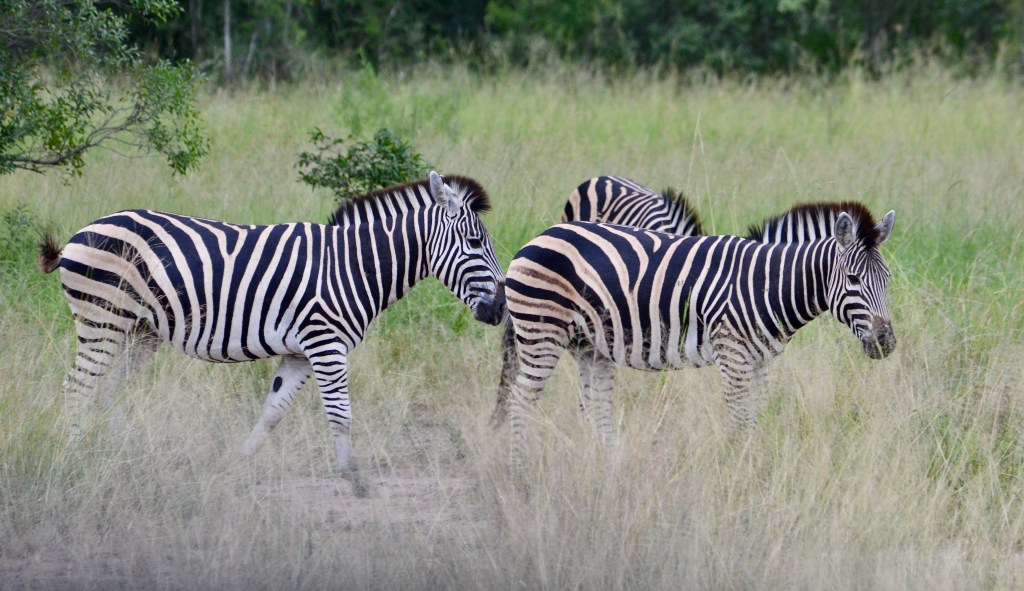
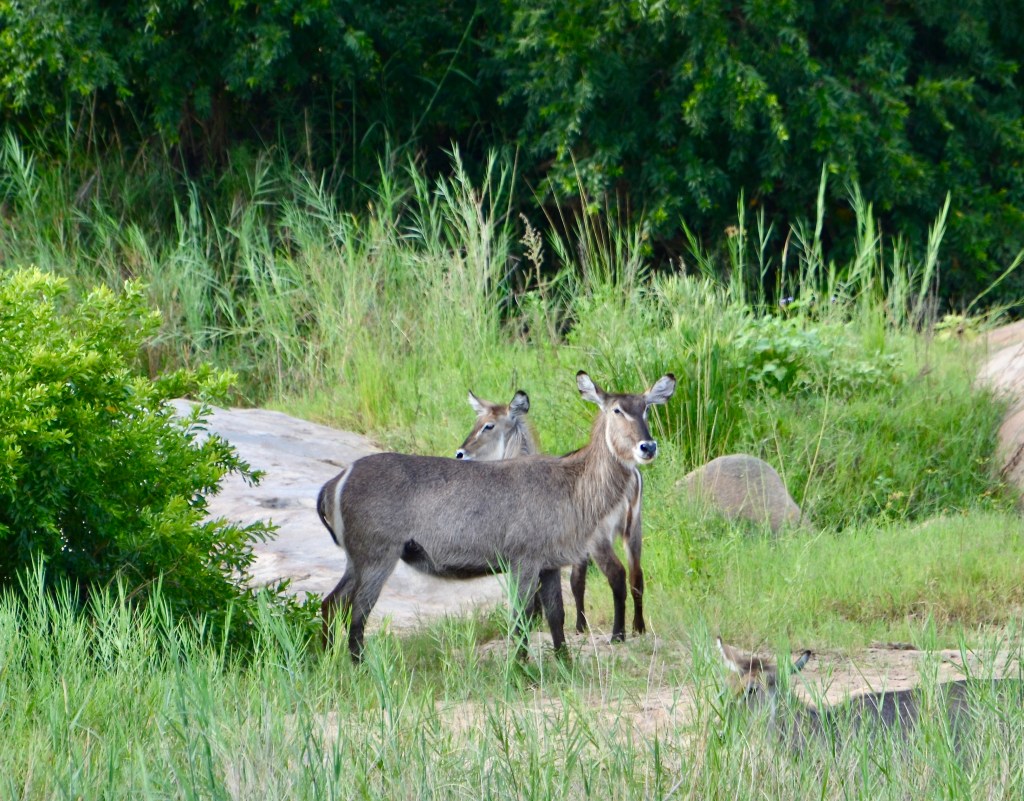
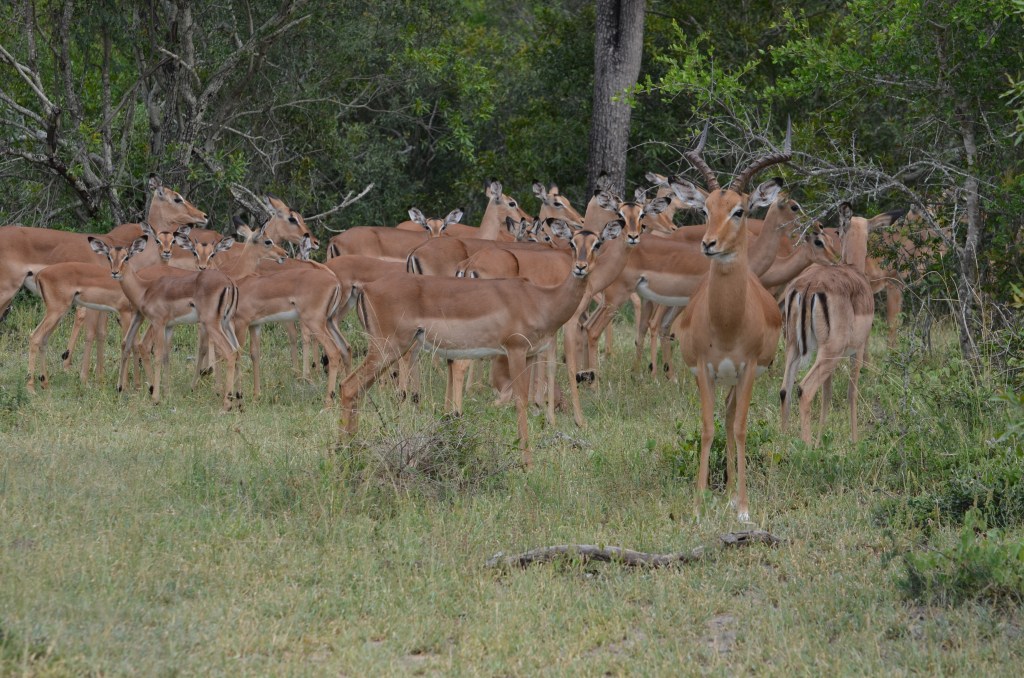
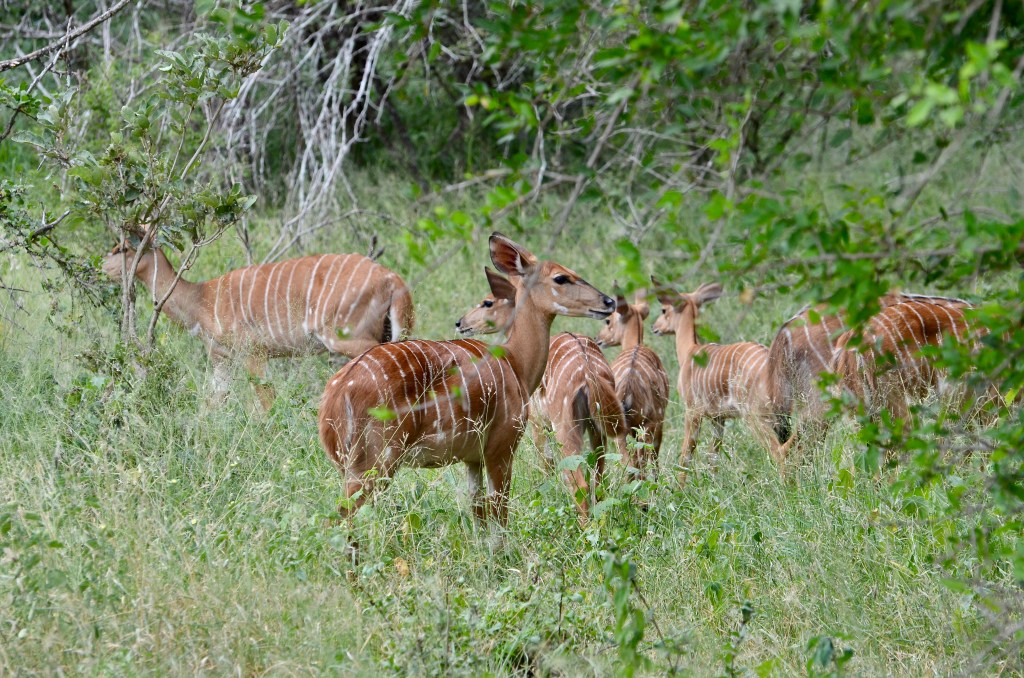
Mom is protective of the babyThis one was quick and grabbed a package of hot chocolate from the tableBrown Snake eagleZebra traffic aheadImpalaImpalaNyala would graze in the Inyati garden.Wild dogs are very difficult to find. We followed for a bit while they were searching for the rest of their pack.Blue heronWildebeestWaterbuckWildebeestWarthog
This is the last of our Inyati posts. Thank you Rodger and Qolani! We are still in awe of our leopard sightings and this was just a small part of what we saw – so INCREDIBLE!
As mentioned, Inyati is a small lodge with only 11 chalets and 5 safari vehicles. Our second day, only 2 of the chalets were occupied (by us and Peter/Dawn) – it felt like our own private lodge. It gets busy again on Valentines Day.
Now for the final two of the “Big 5” – the leopard and the elephant.
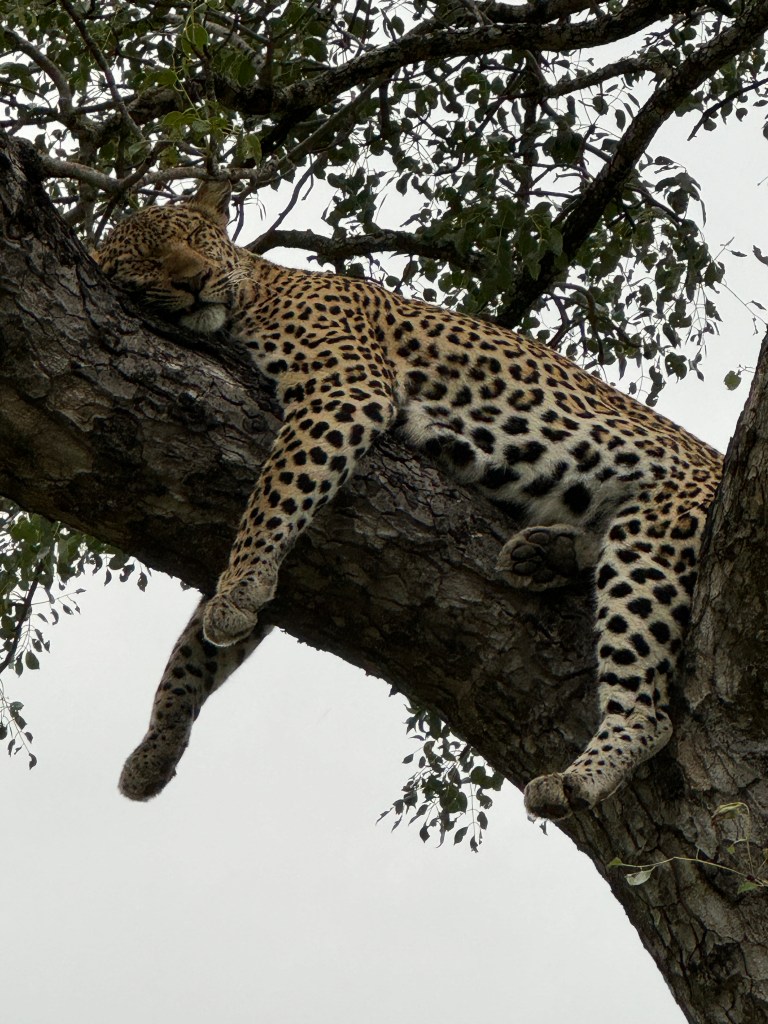
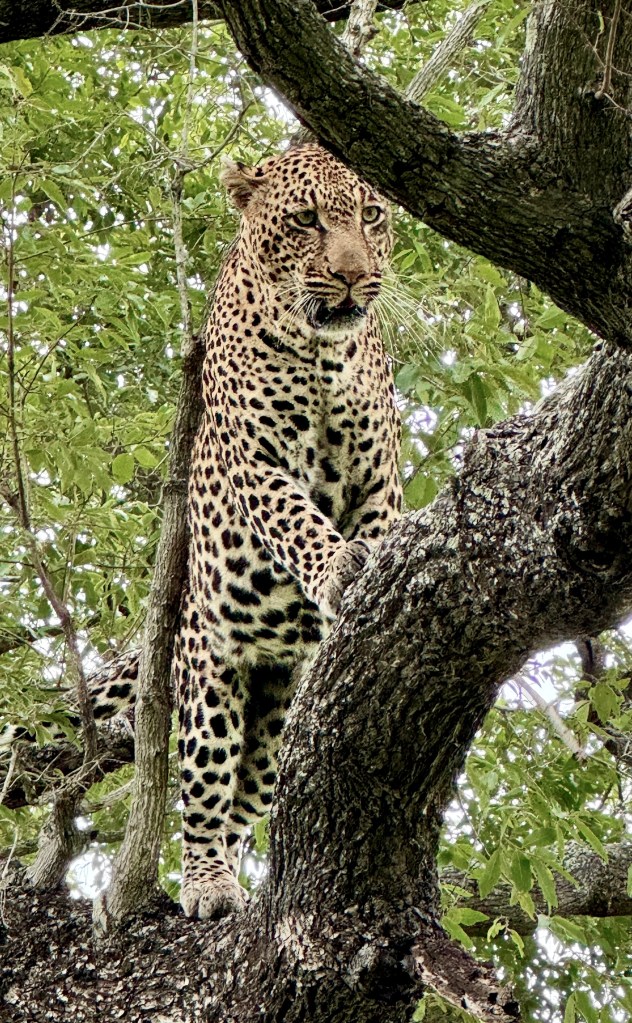
First the illusive leopard. We come to Sabi Sand because it has the highest number of leopards of any protected area surveyed in South Africa. We asked why Sabi Sand area has more leopards than the rest of Kruger National Park. We were told that since Sabi Sand area only has private reserves and thus very few vehicles, it is the preferred area for the solitary leopard.
Unlike Kruger National Park, the rangers in the private game reserves can “off-road” which makes for excellent viewing. The private reserves limit the number of vehicles at the sightings (maximum of 3) plus vehicles are the same colour tones and relative size, so the leopards are more “relaxed” when a safari vehicle approaches.
Even though there are more leopards in the Sabi Sand area, finding them can be difficult – its a mixture of knowledge, skill and yes good fortune. We had all three working for us this visit!
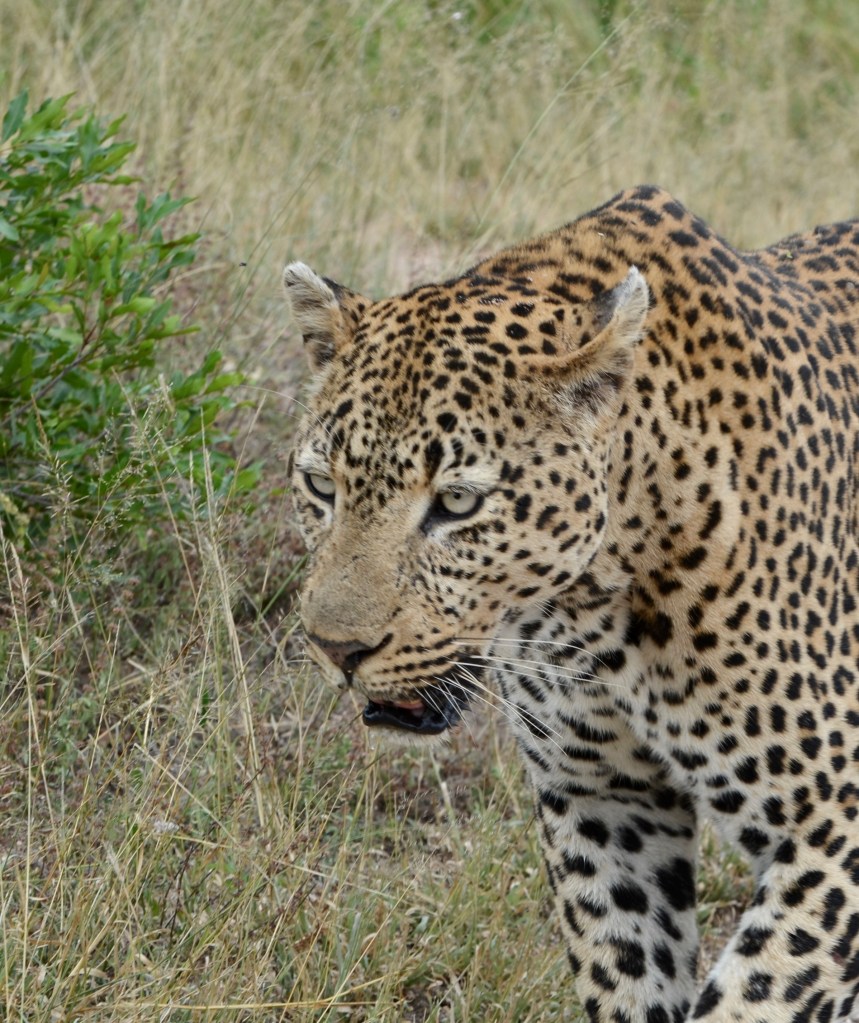
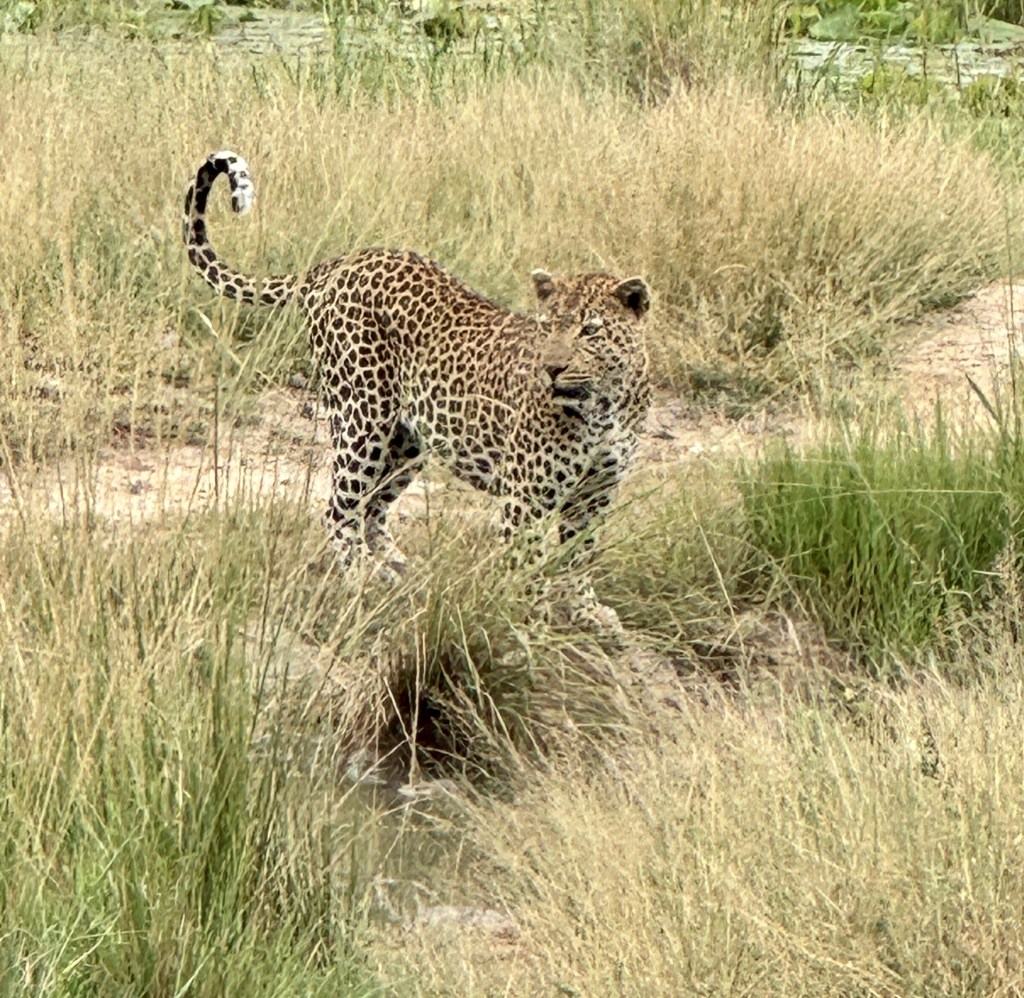
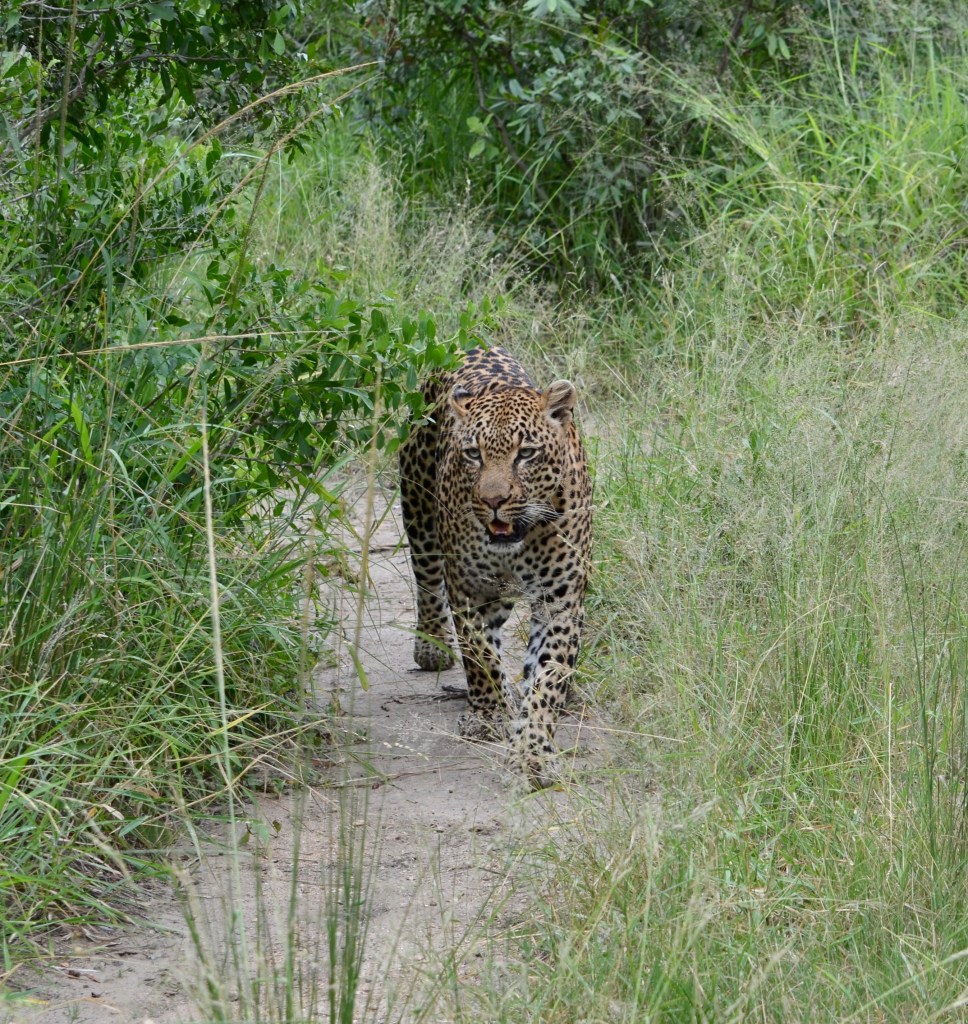
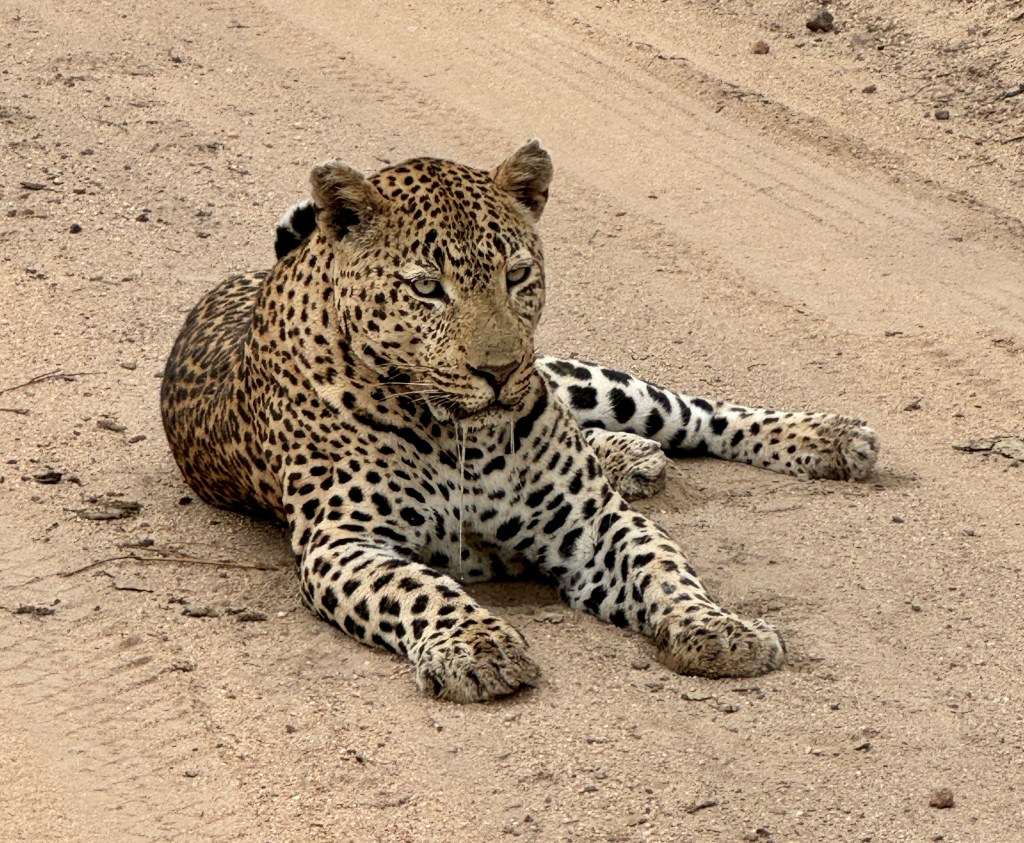
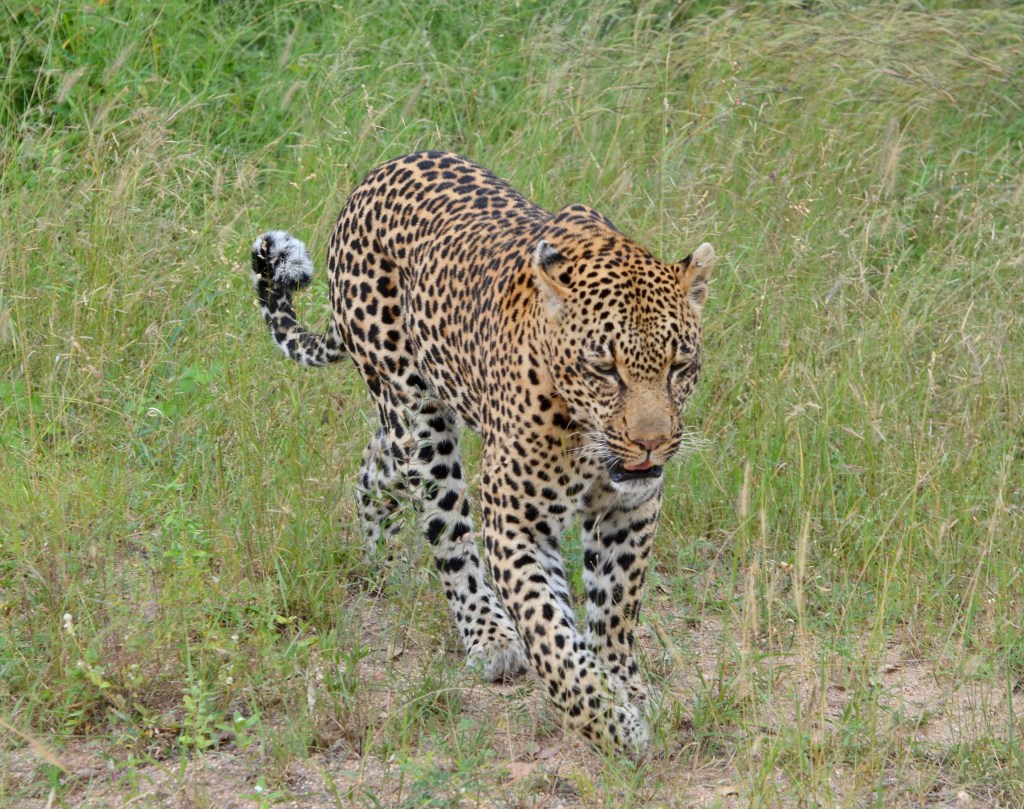
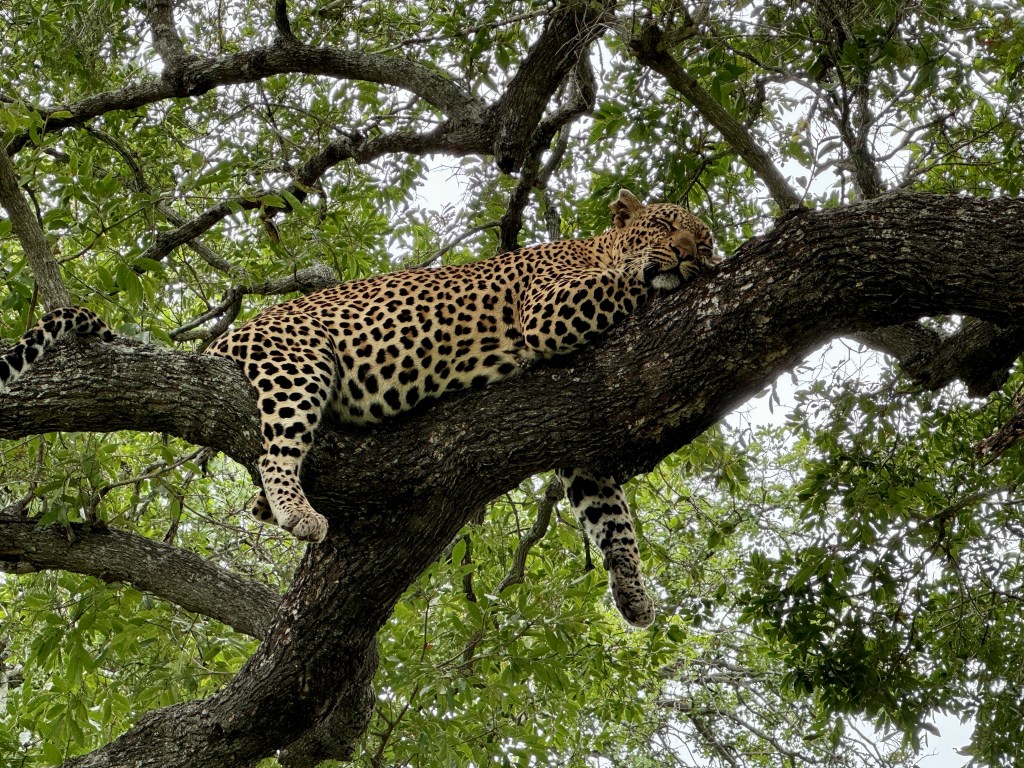
There is one very large leopard who they have named Ravenscourt (this is the leopard that was filmed walking through Inyati in the 2021 documentary “The Year the Earth Changed“). Although last year our ranger tried to find Ravenscourt, it was not to be…so this year we were not expecting to see him.
It was the morning drive and as we came around a corner Qolani jumped back in his seat (which is on the front bumper). We didn’t know what it was, but then Larry looked down and there was Ravenscourt staring up at him – he was so close. It was a “wow” experience that Larry will not forget (similar to your leopard experience Todd).
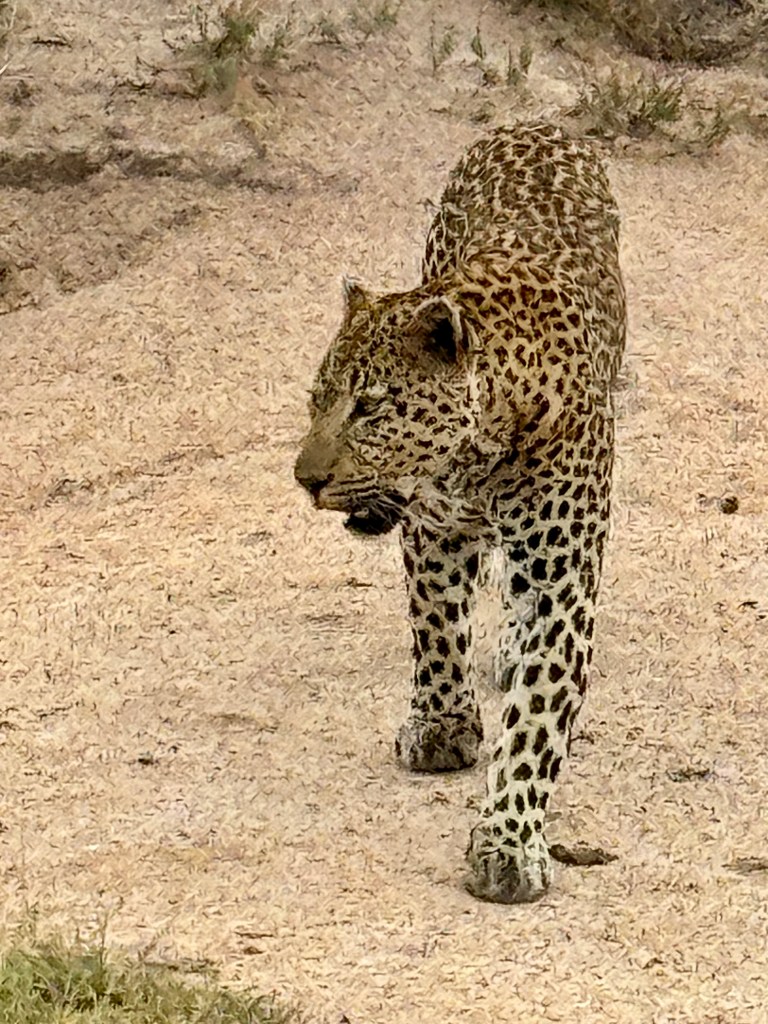
Territoriality is a key aspect of leopard social behaviour. Each adult leopard establishes and defends its own territory, marking it with scent and visual cues. An Inyati Ranger witnessed one of the other male leopards (Thamba) trying to take over Ravenscourt’s territory. Thamba did eventual retreat, but when we sighted Ravenscourt he was focused on marking his territory with his scent – this made for great viewing as we could follow him.
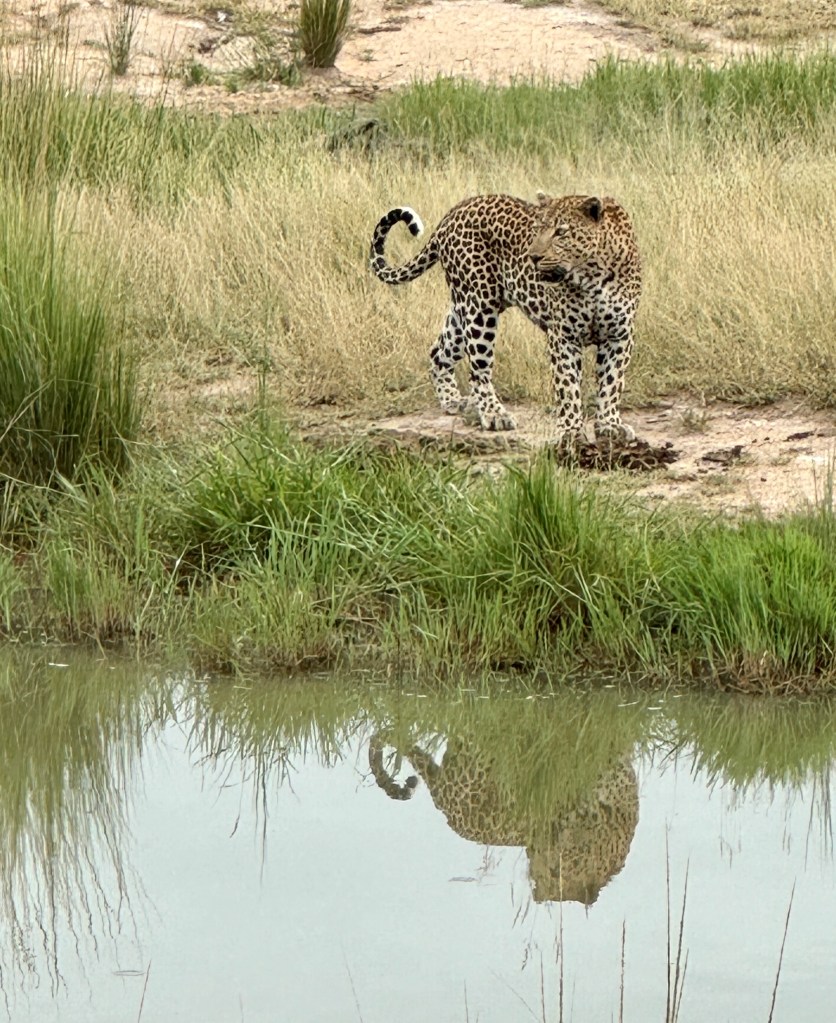
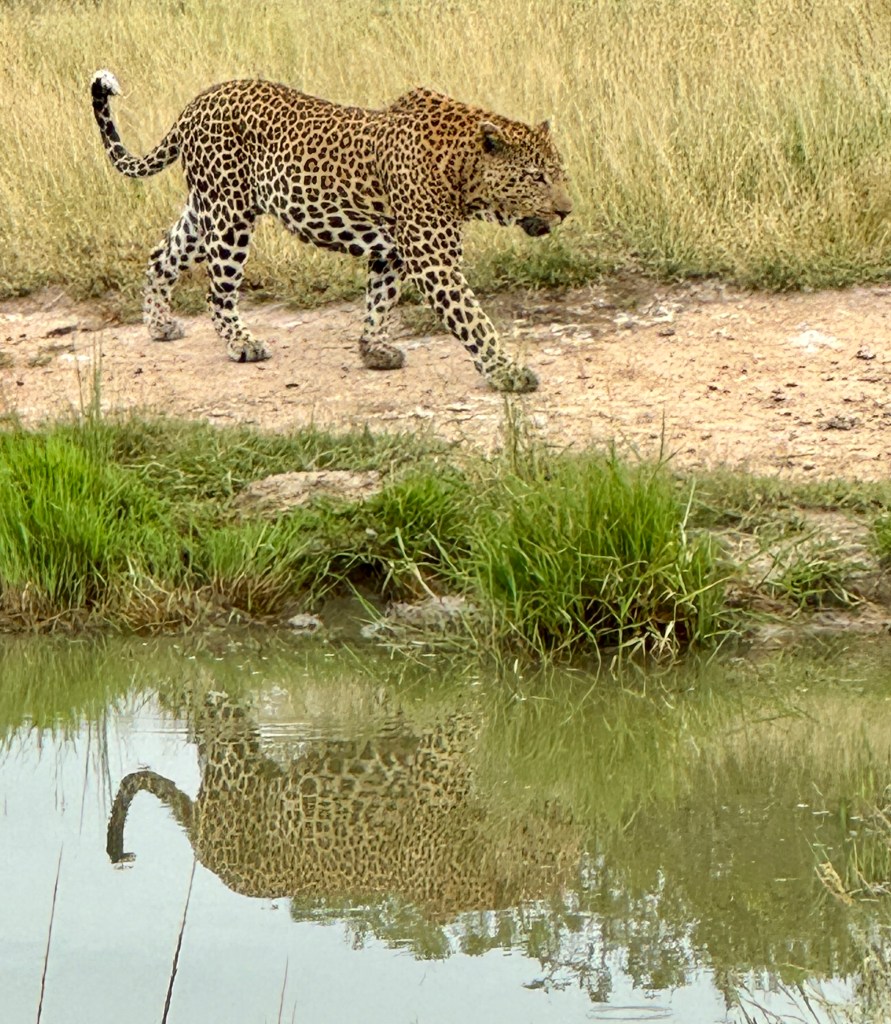
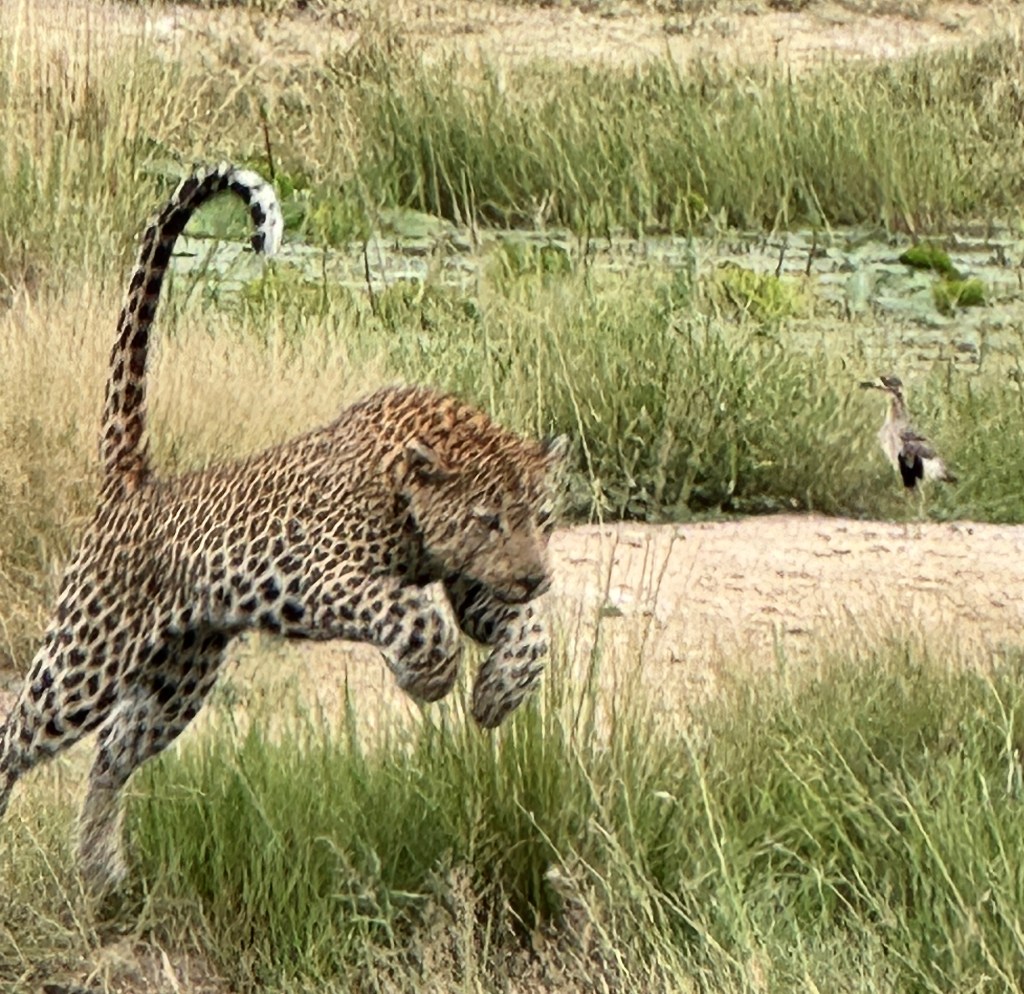
Leopards do not like water – even this little stream he jumped over (Gord/Wendy we thought of you when we saw this)Time for Ravenscourt to restOn the move again – we spent about an 1/2 hour with Ravenscourt
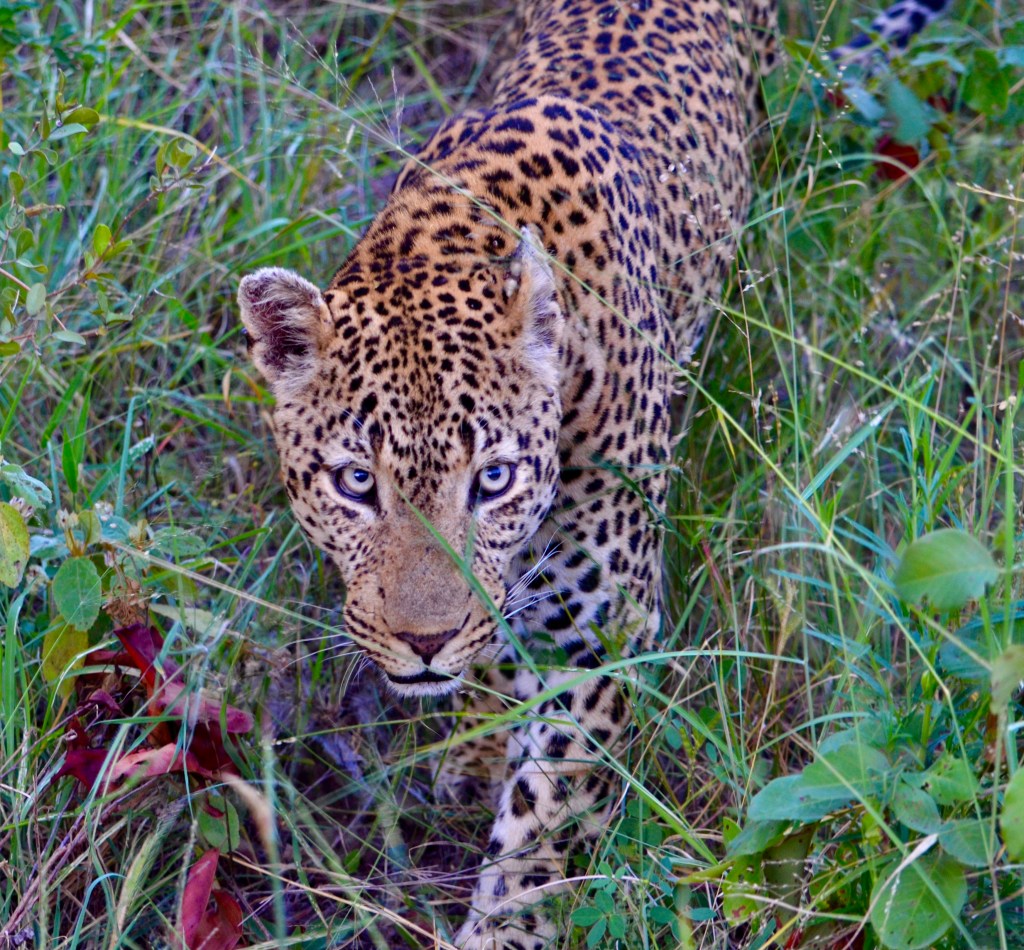
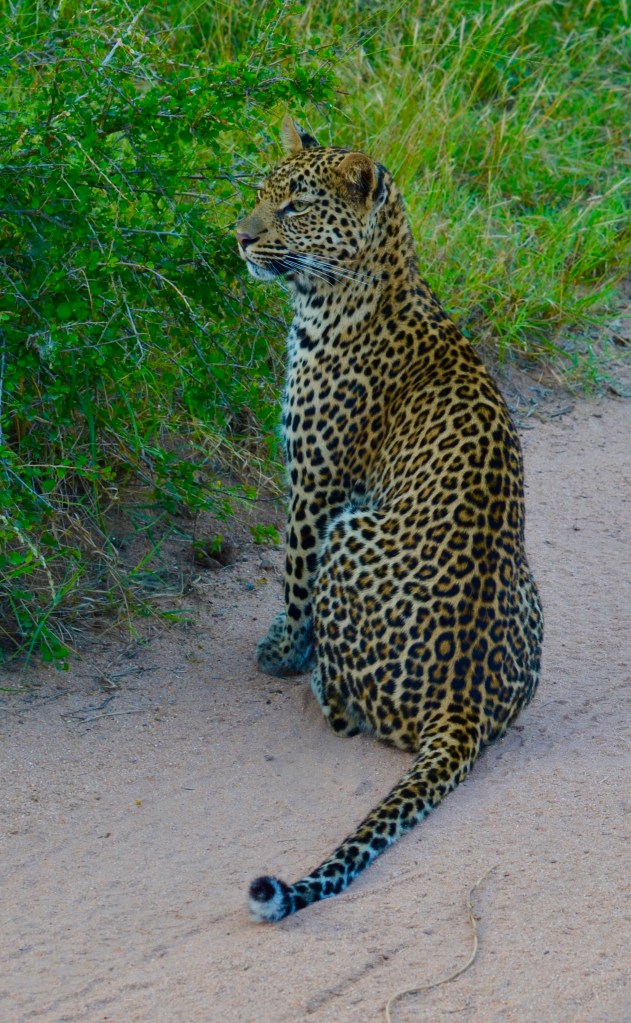
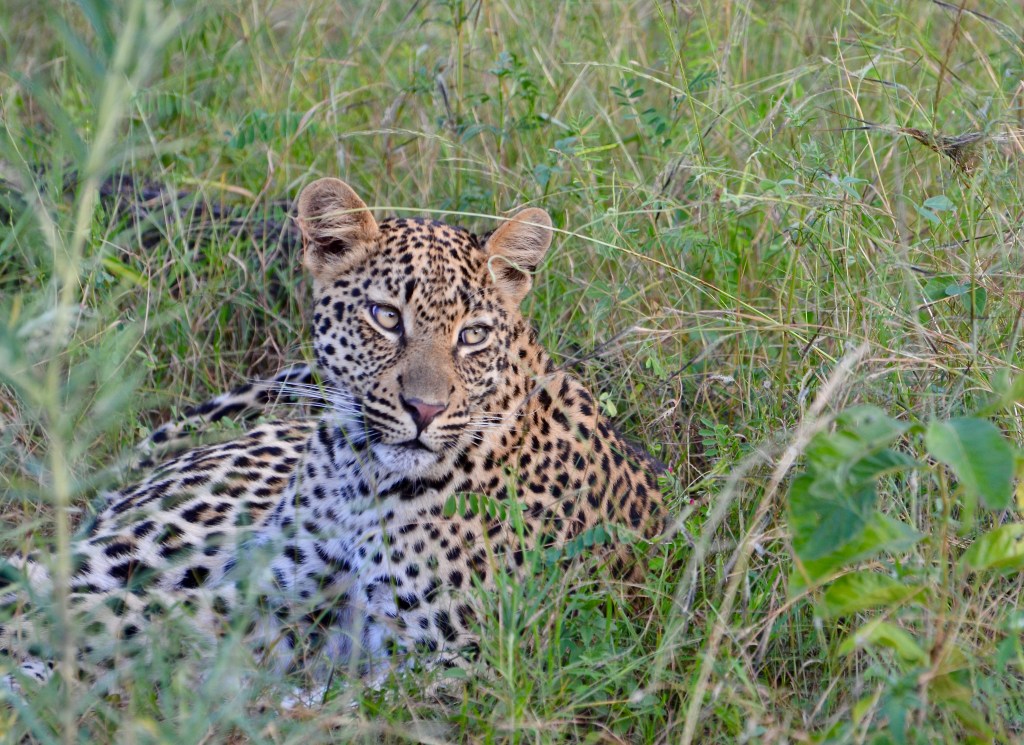
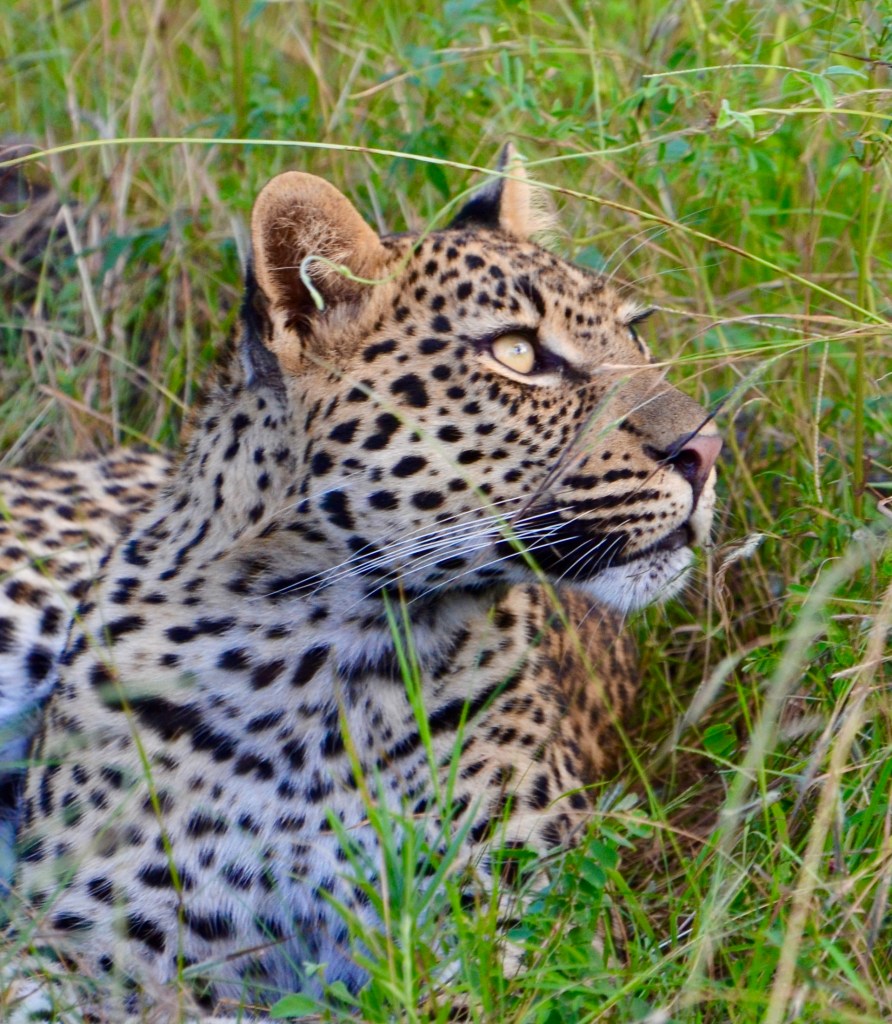
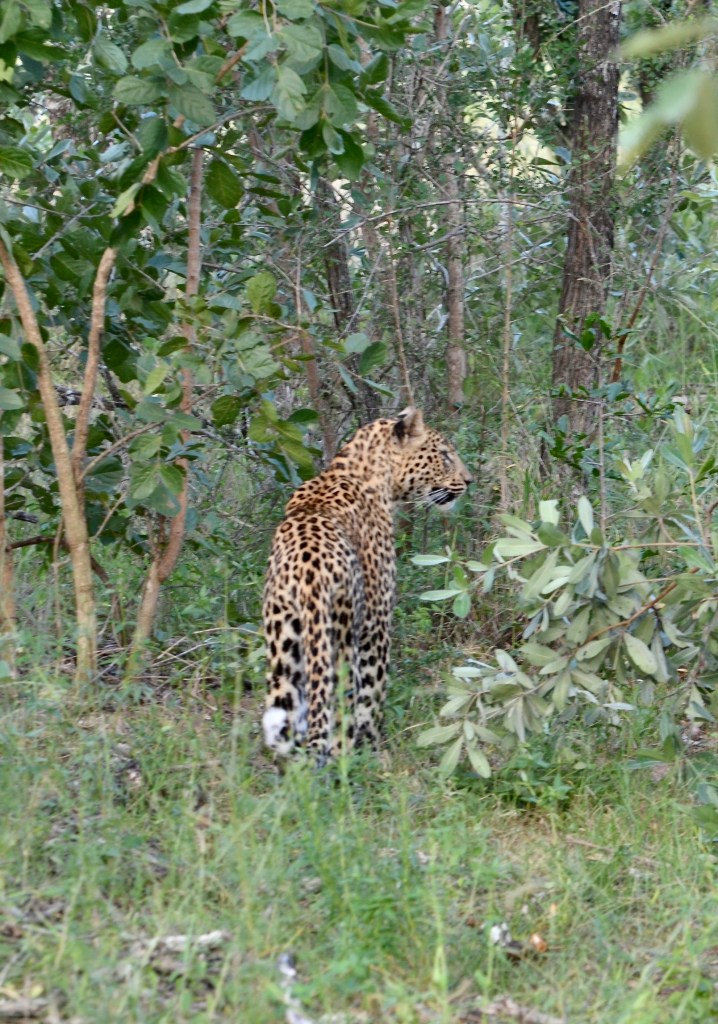
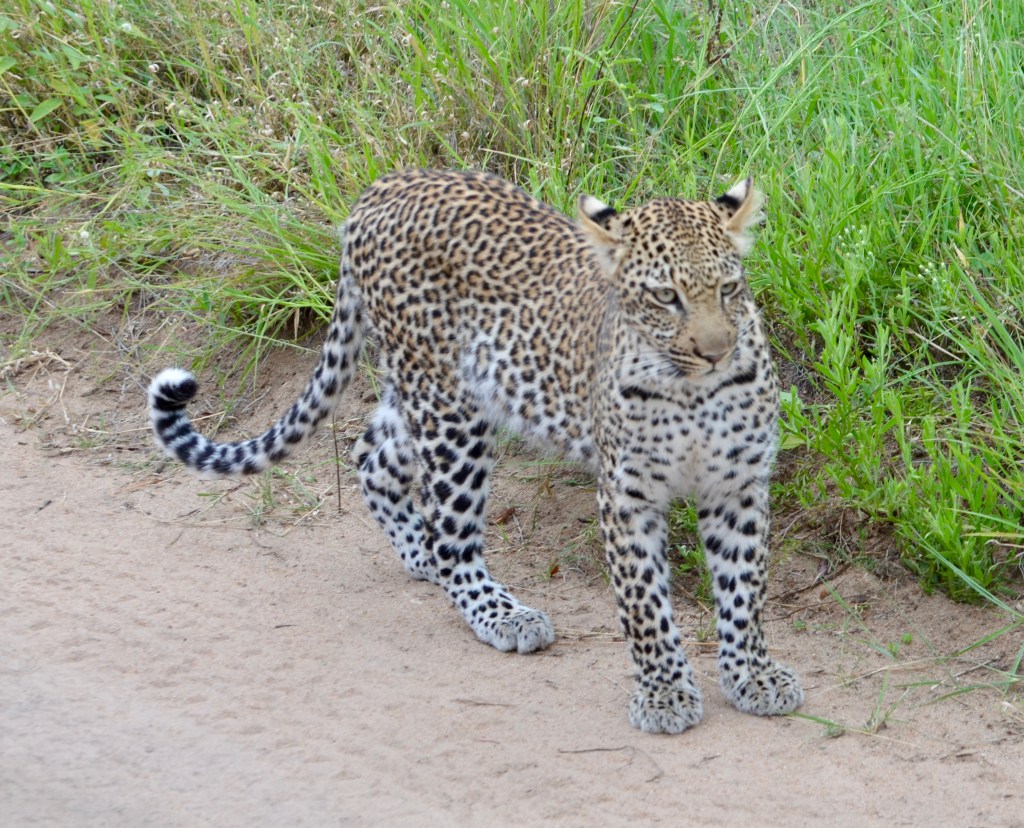
Ravenscourt was not our only leopard sighting. We spent time with a young female who was now old enough to leave her mother (about 2 1/2 years old). She was very timid now that she did not have the protection of her mother.
Because of the territory in which the Rangers first saw this female, they said she was Ravenscourt’s daughter. As she was young, and female, she was much smaller than Ravenscourt. She disappeared into the thick bush
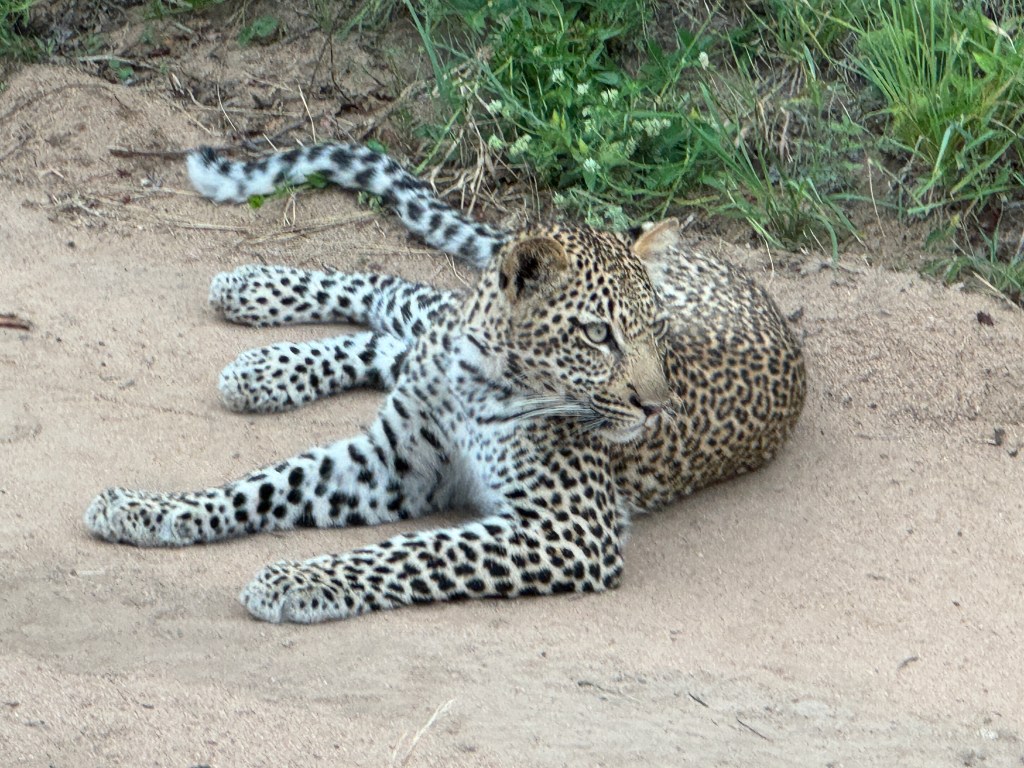
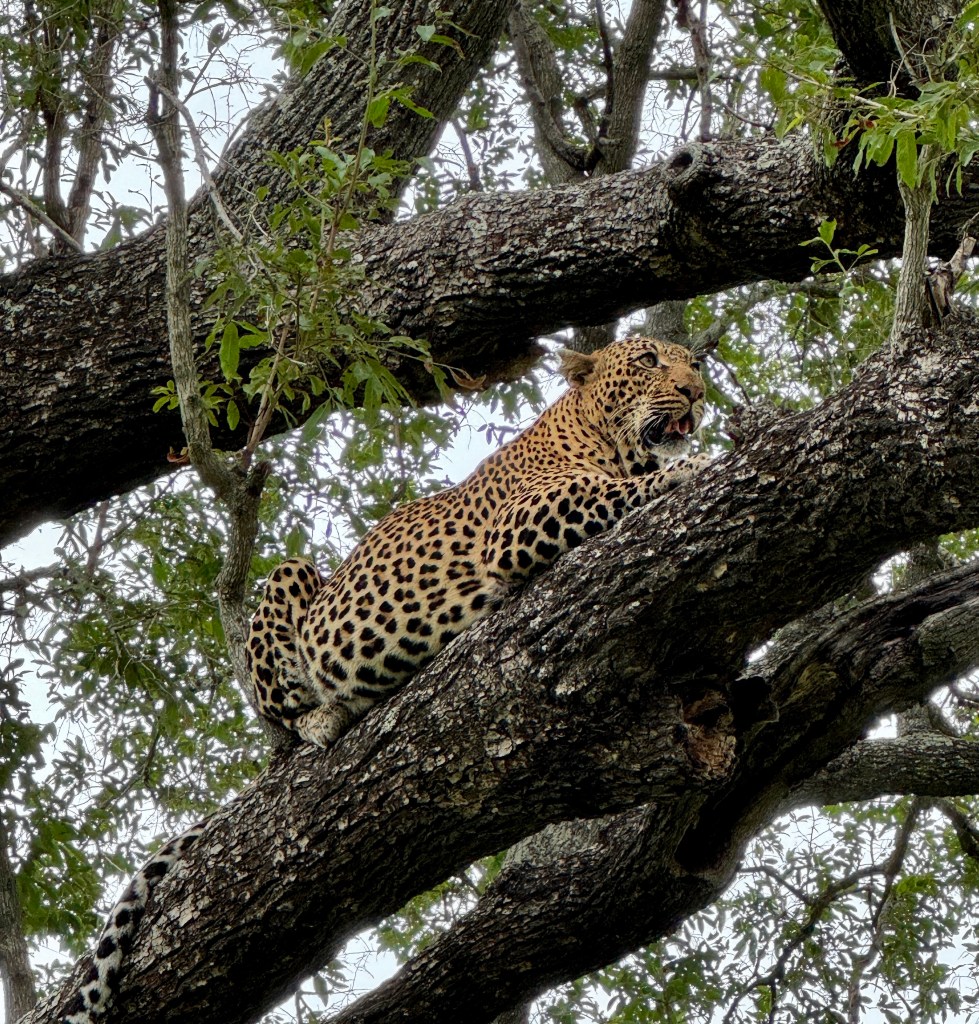
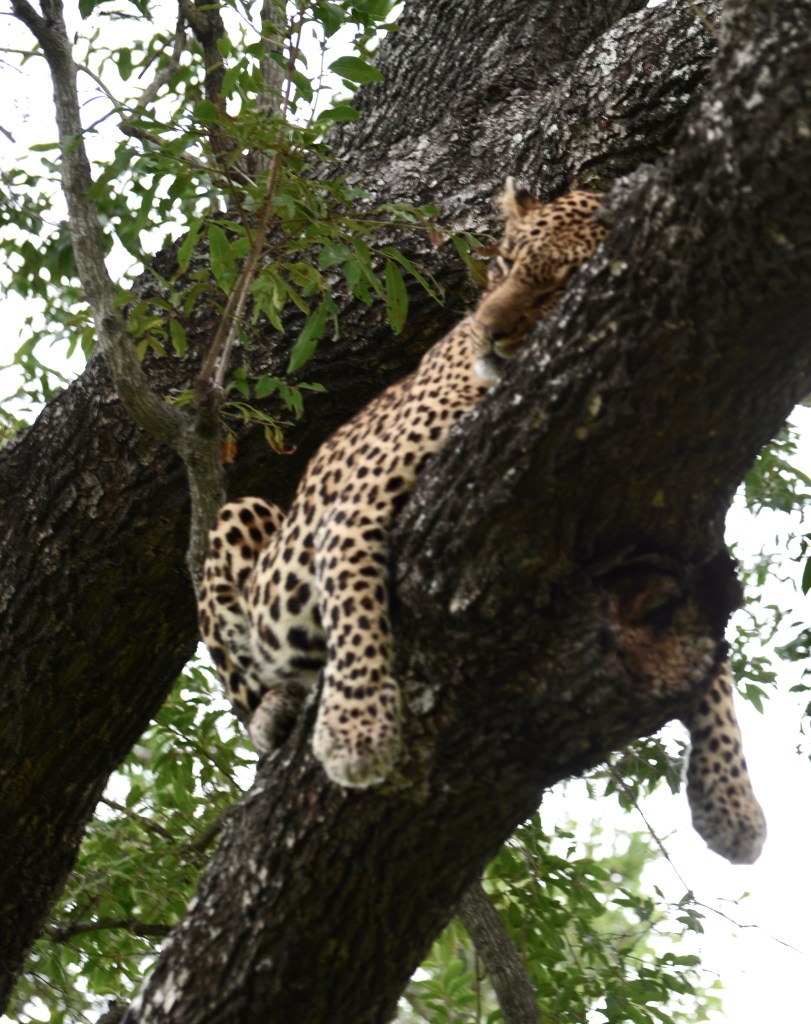
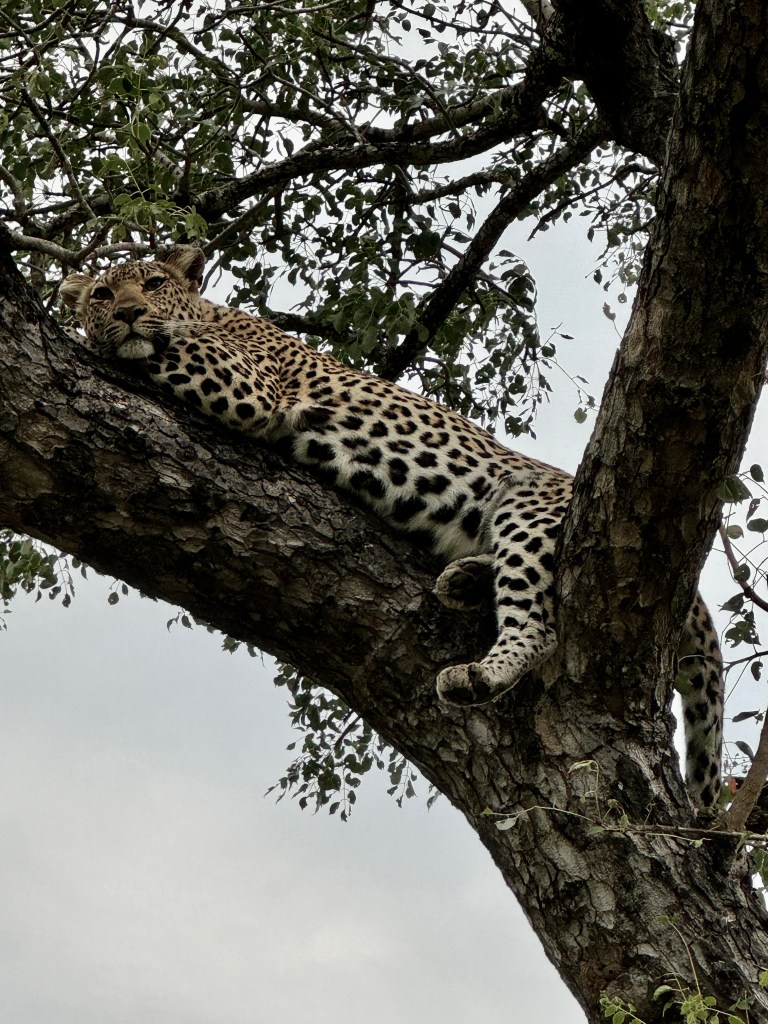
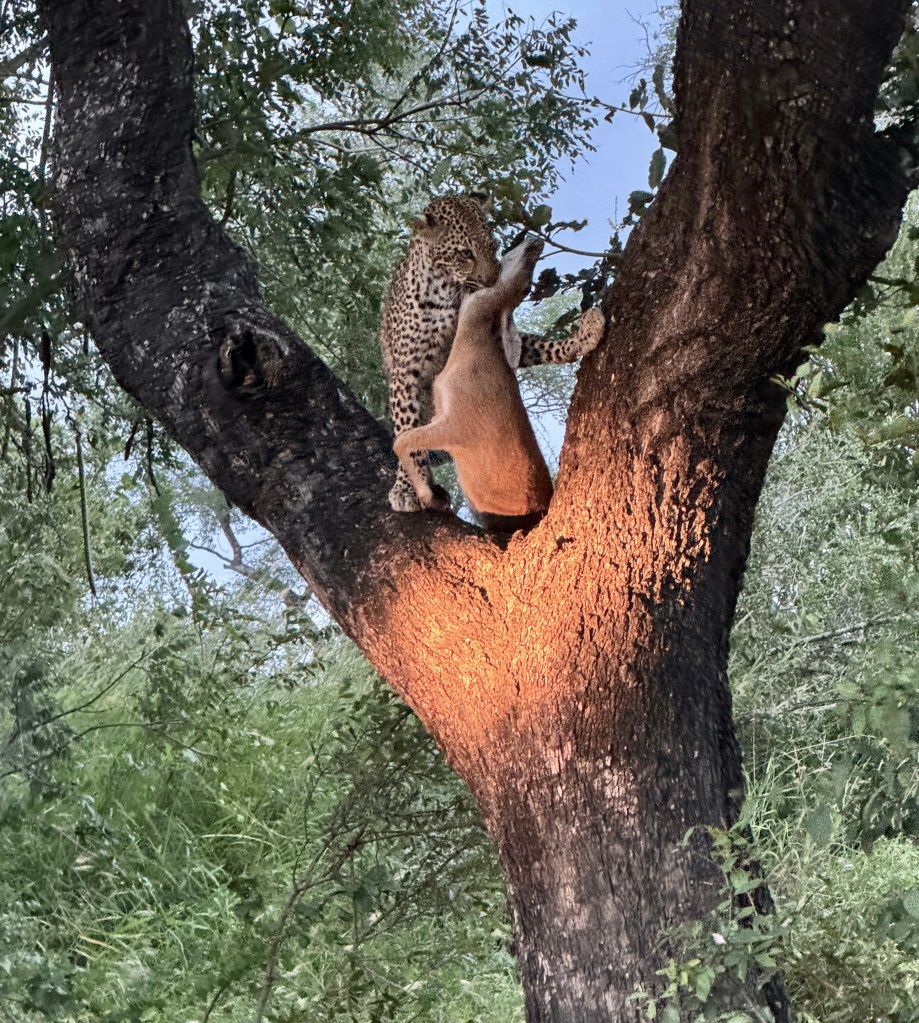
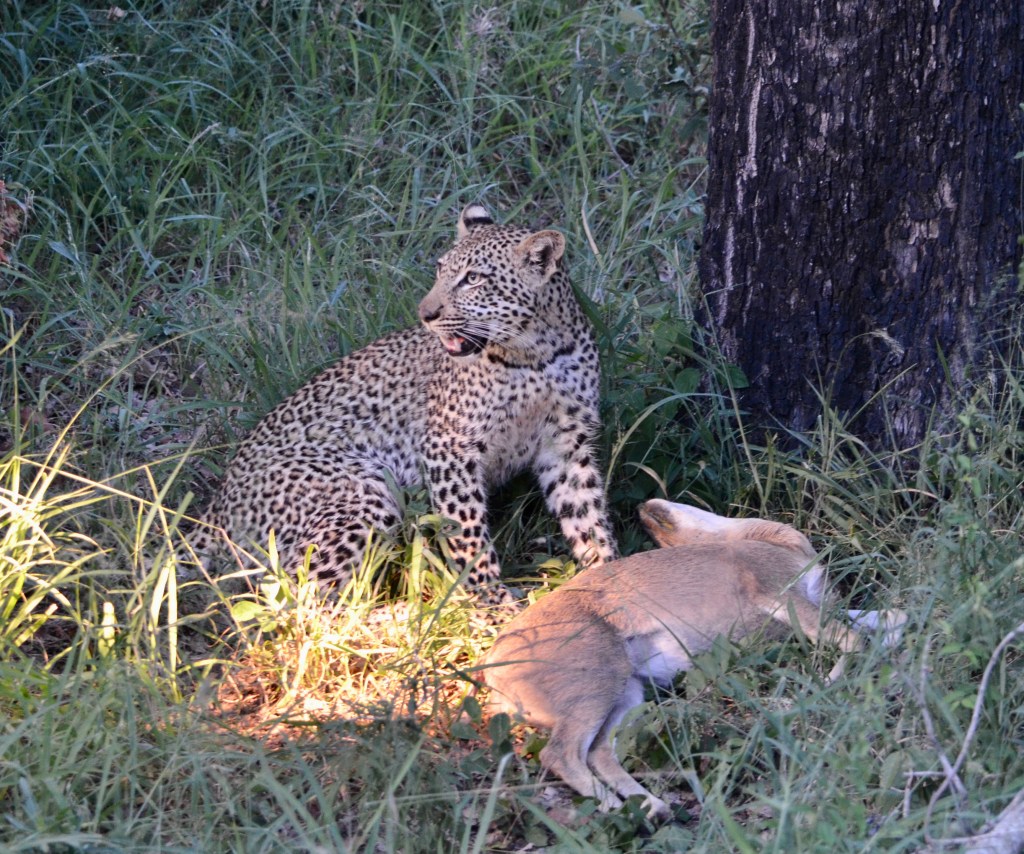
Just to add to our amazing leopard encounters Qolani sighted a female with her cub. We saw her during the day and also at night.
Leopard cubs remain with their mother until about two years of age wherein they learn all the necessary skills from their mother – to hunt, forage, feed and survive in the wild.
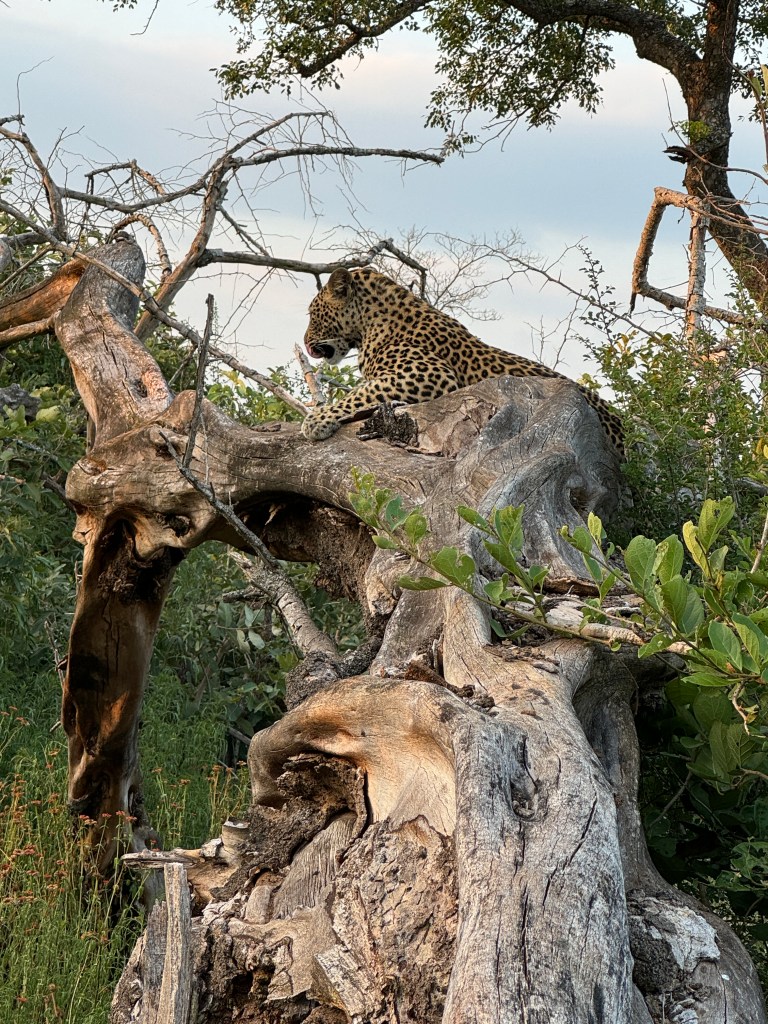
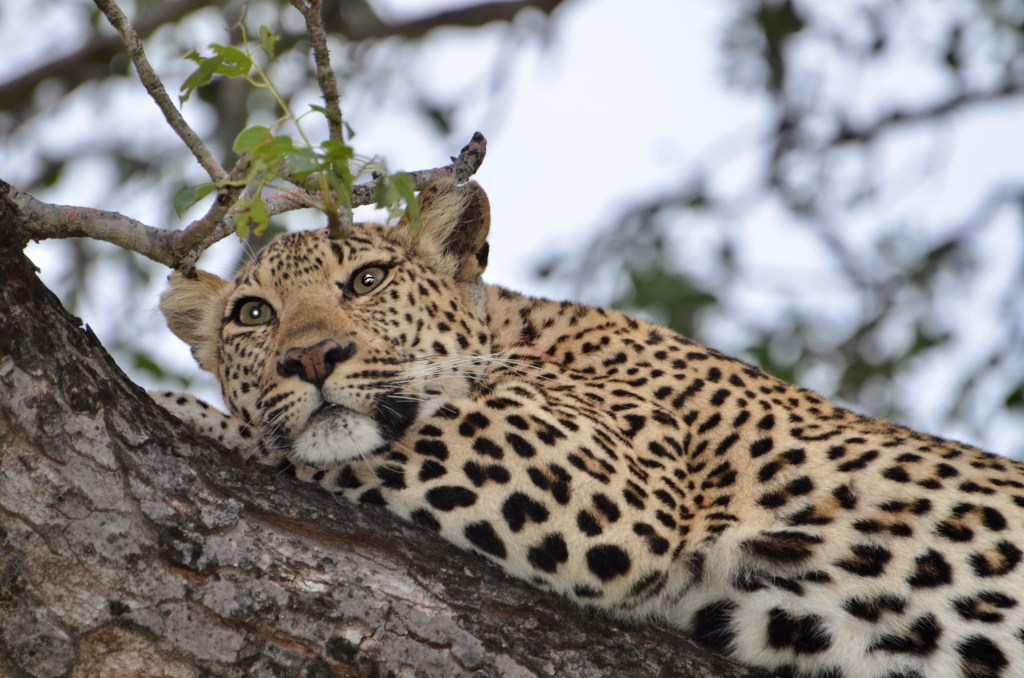
Mommy was relaxing in the tree, but also looking up periodically to make sure her cub was close by.
Such a beautiful cub who was so curious.Mommy with a very full belly.Curious cub looking aroundMommy would periodically move to a new spot in the tree.
As mentioned, we also saw the mom and cub at night. The mother had made a kill, and was resting while the cub was eating. The cub did struggle, and at one point dropped the kill on the ground (which startled us as it dropped close to our vehicle). The cub struggled it get it back into the tree. Thankfully there were no hyenas or wild dogs around or the meal would be gone. The photos do show the kill, but it is part of their natural way.
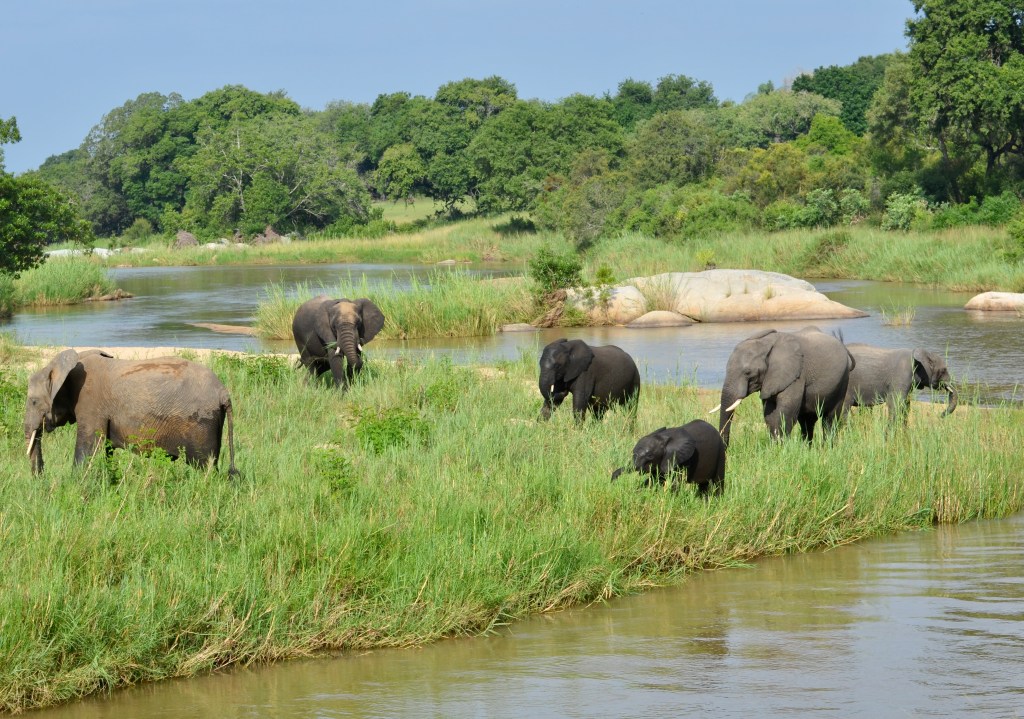
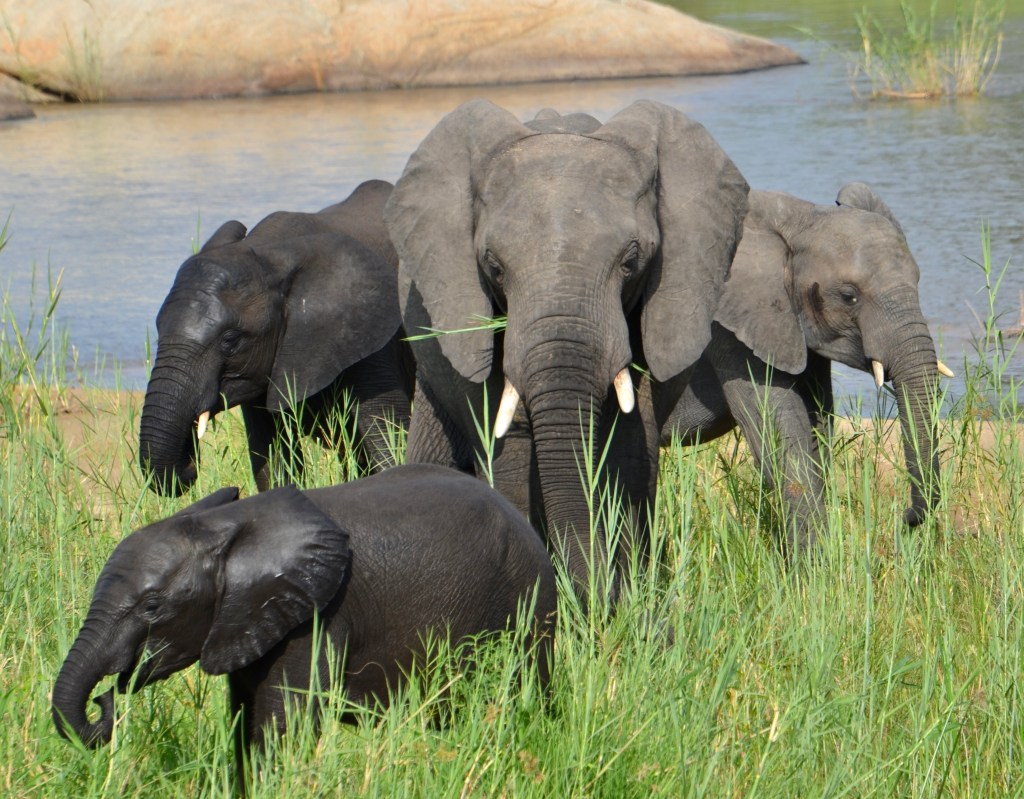
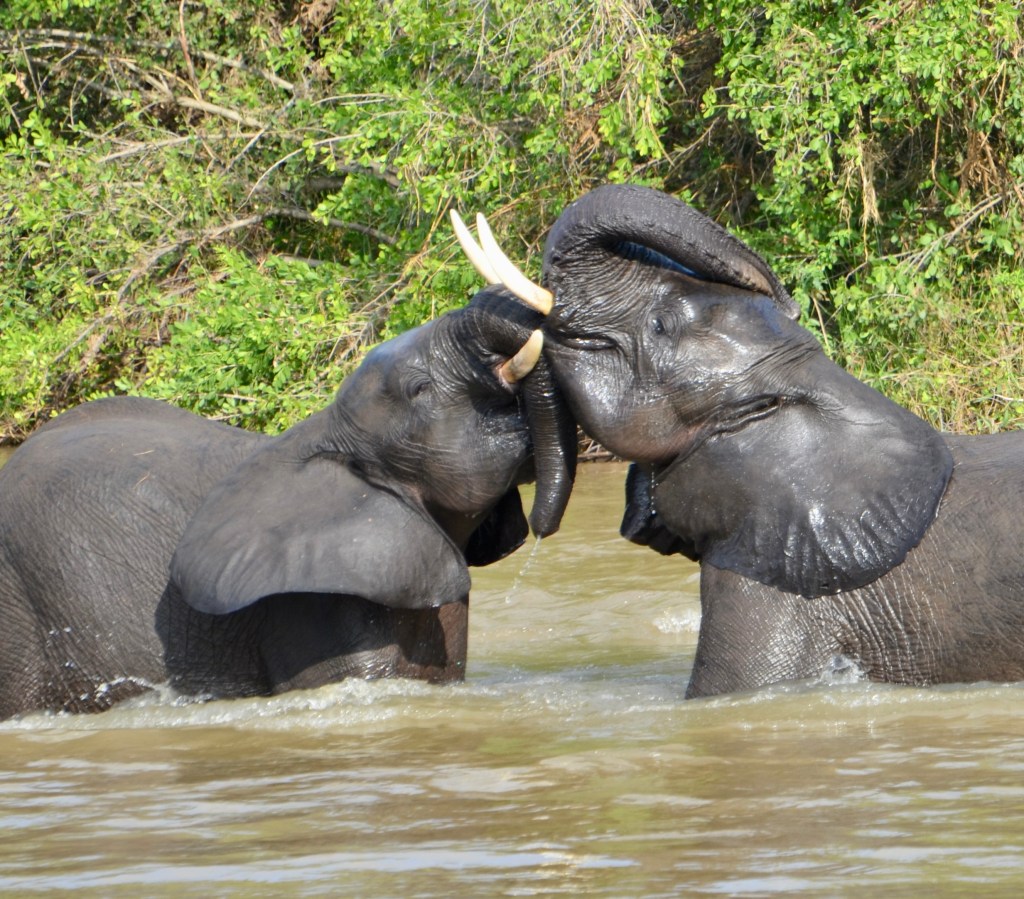
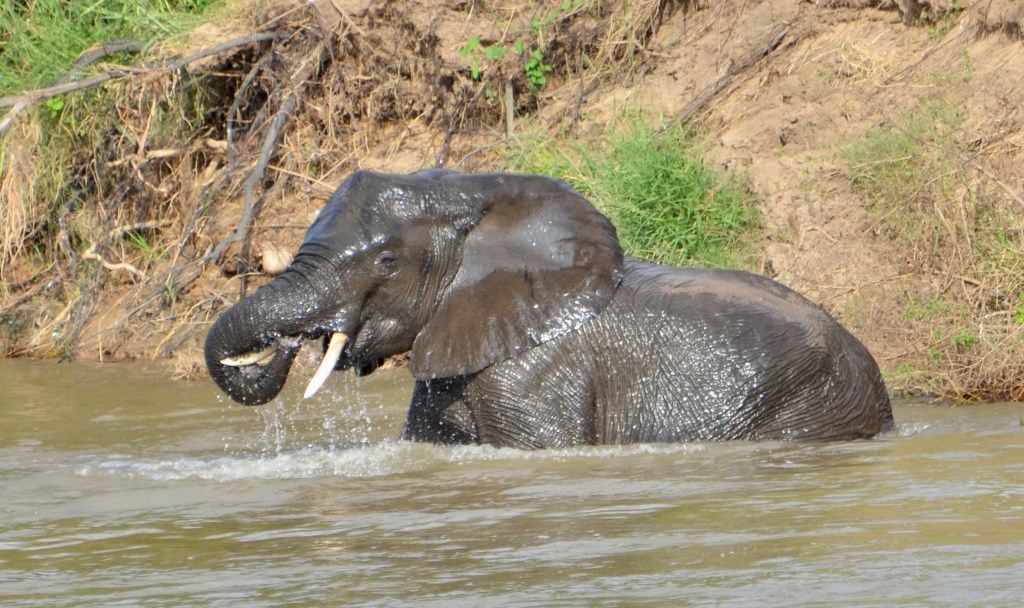
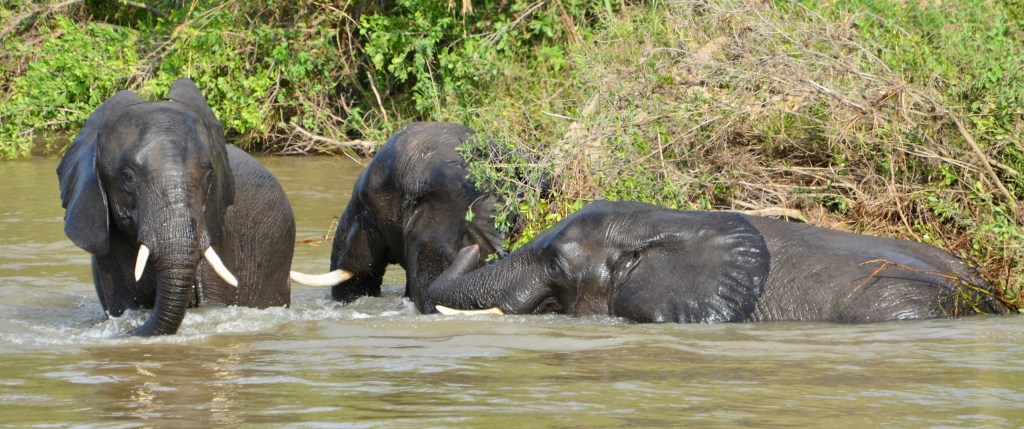
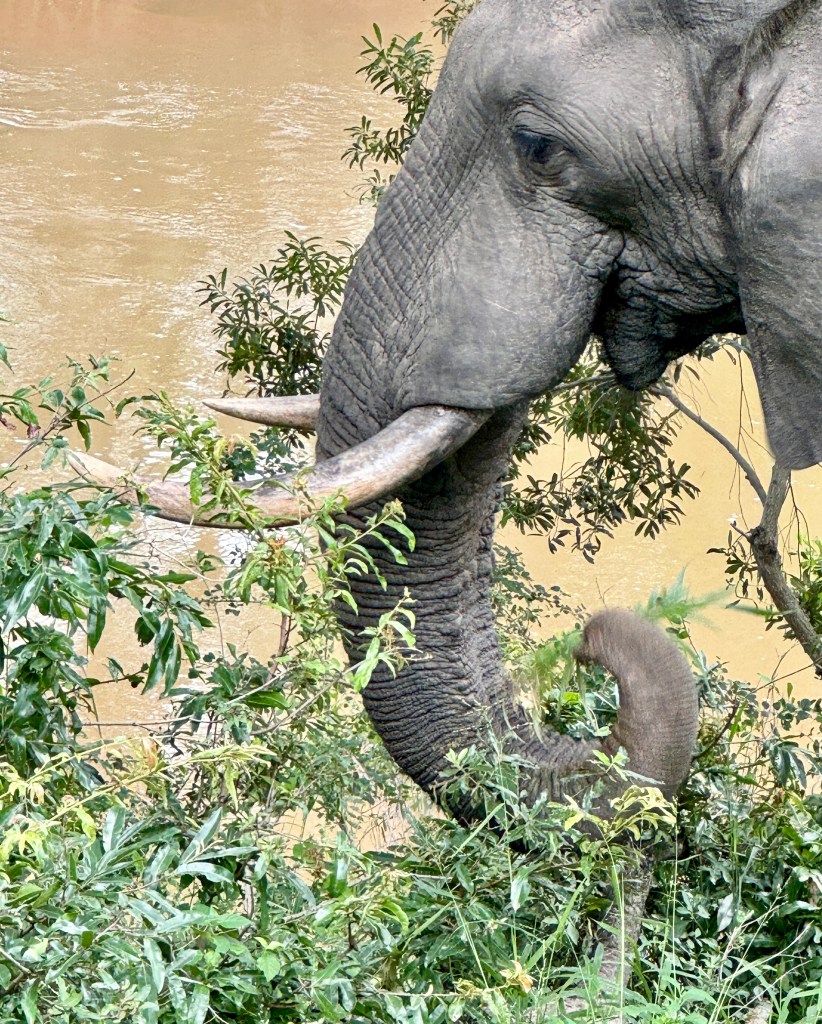
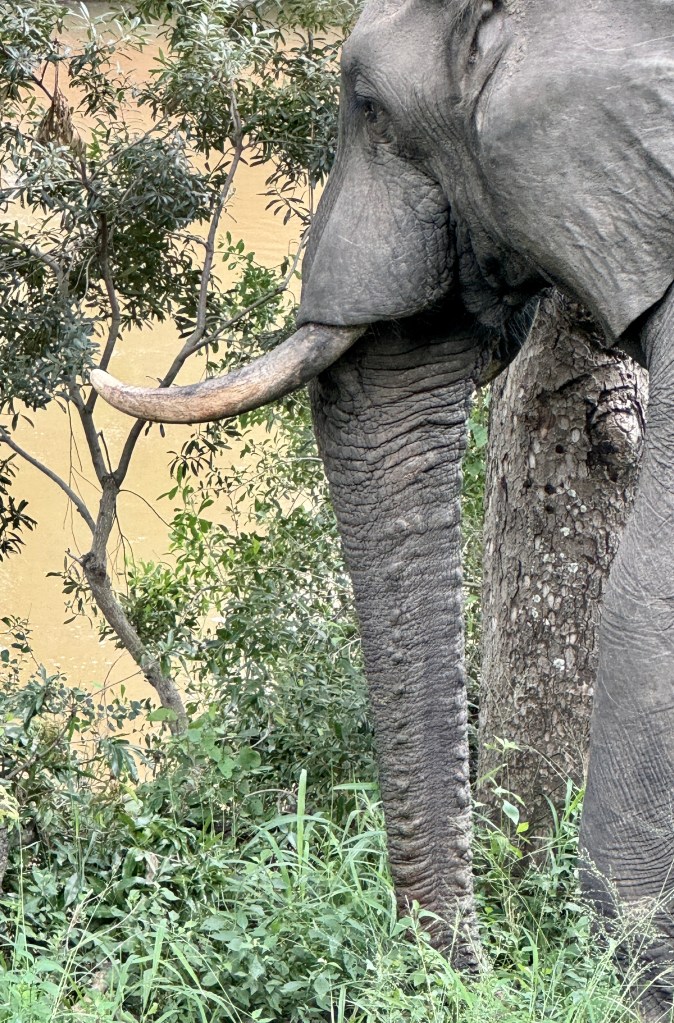
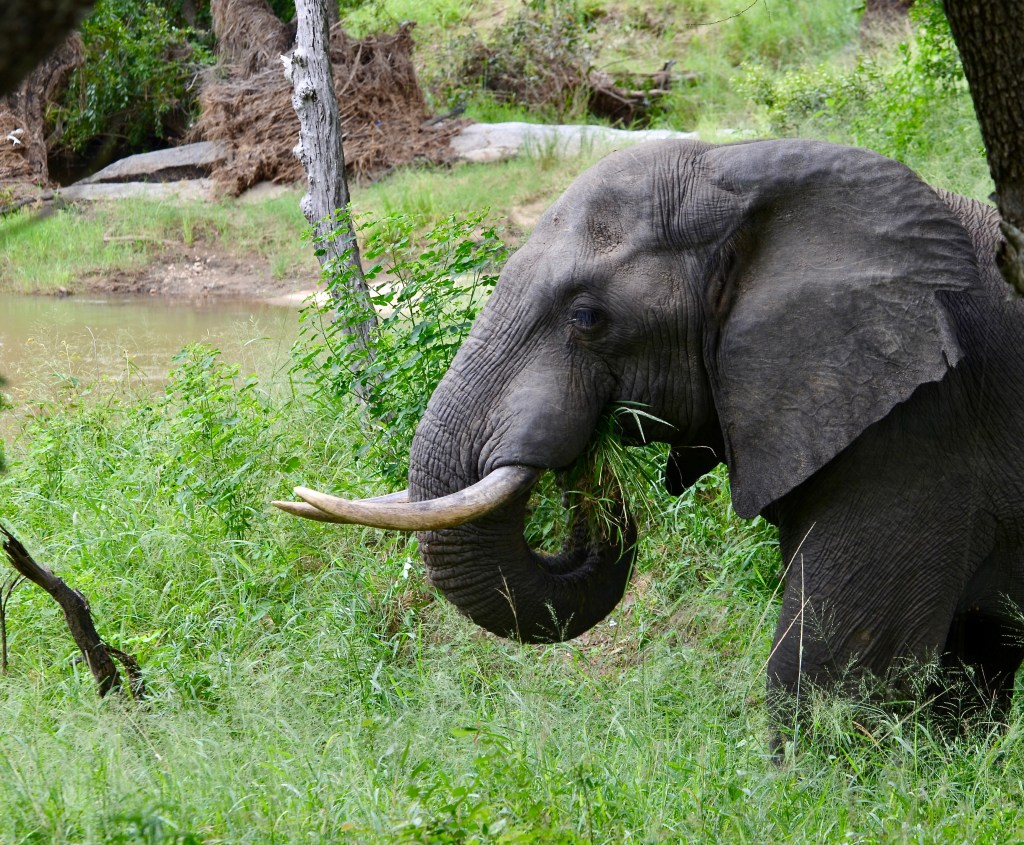
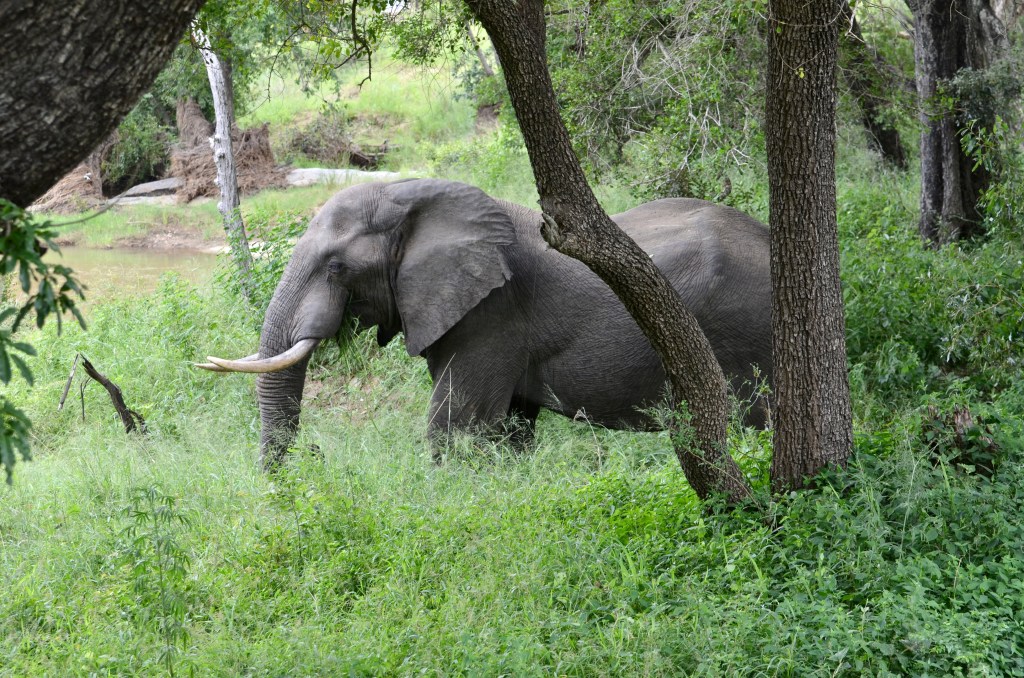
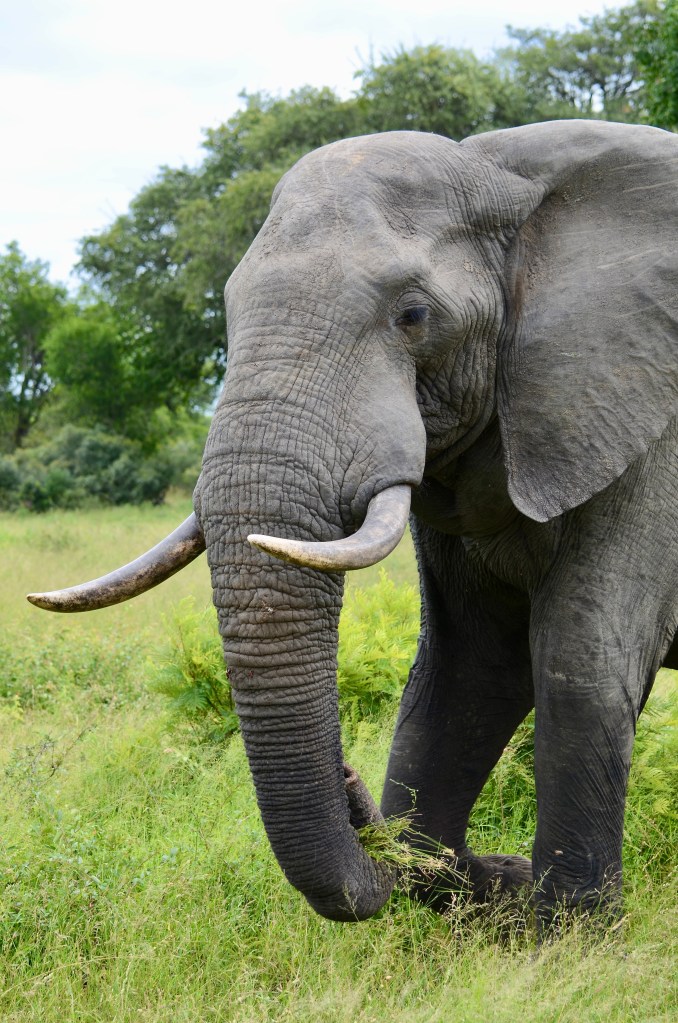
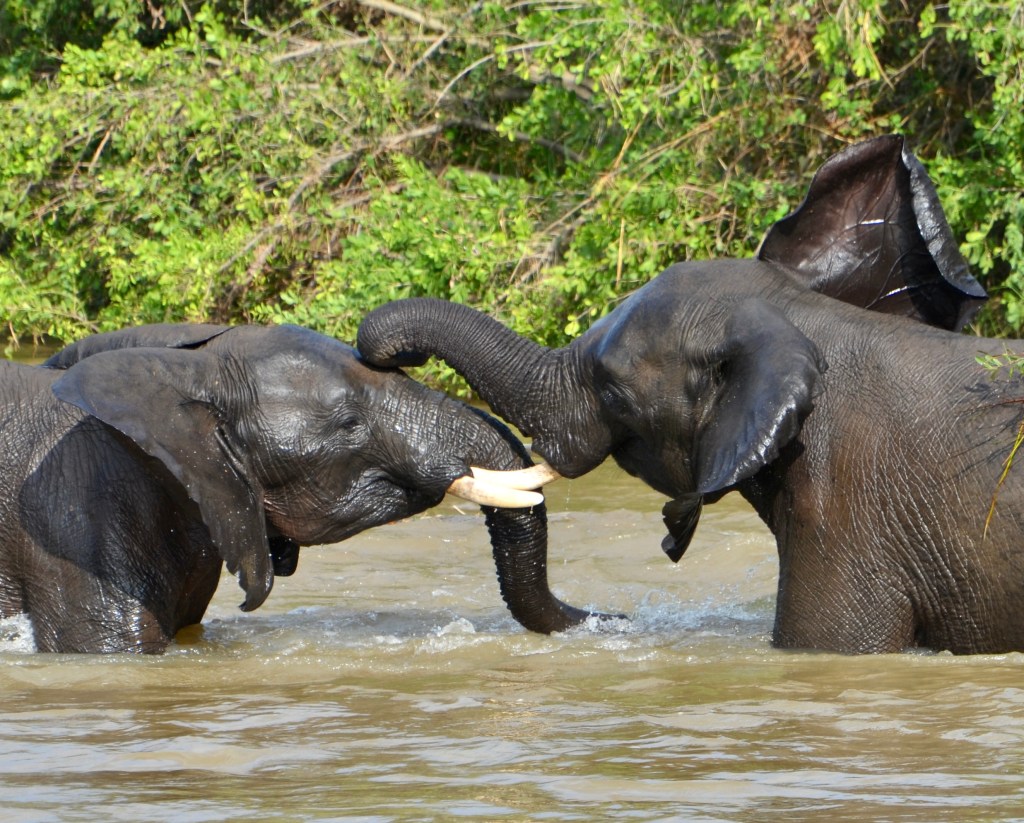
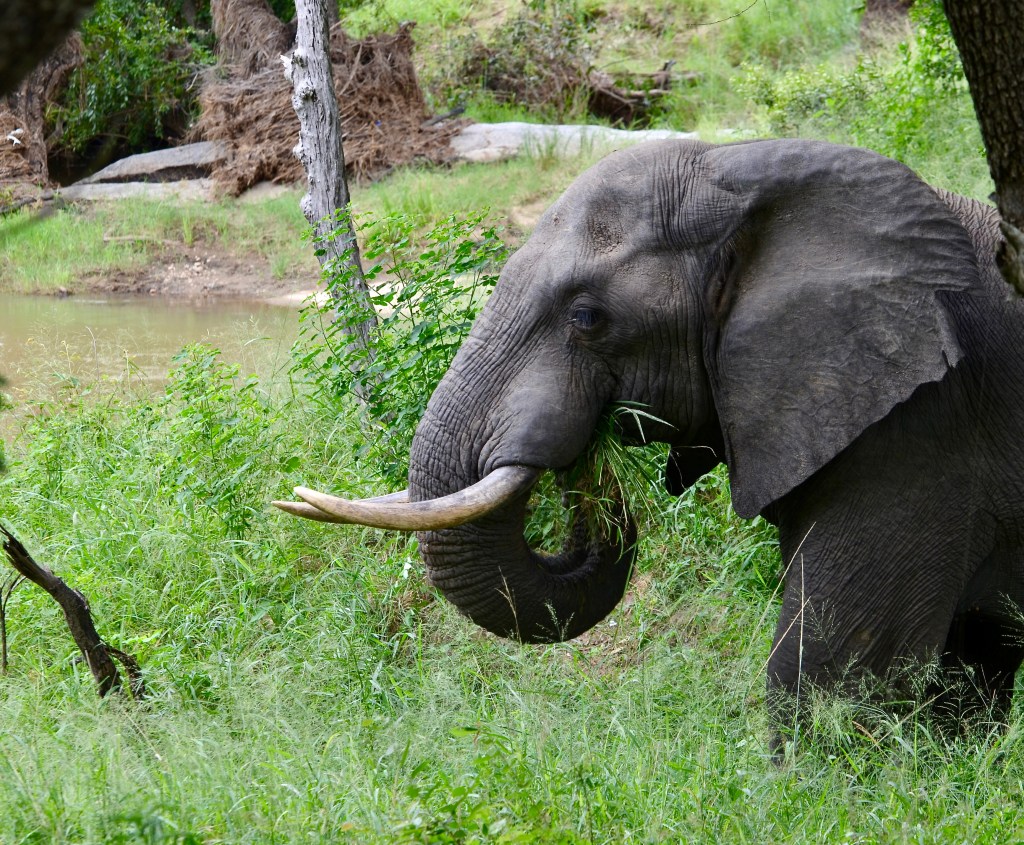
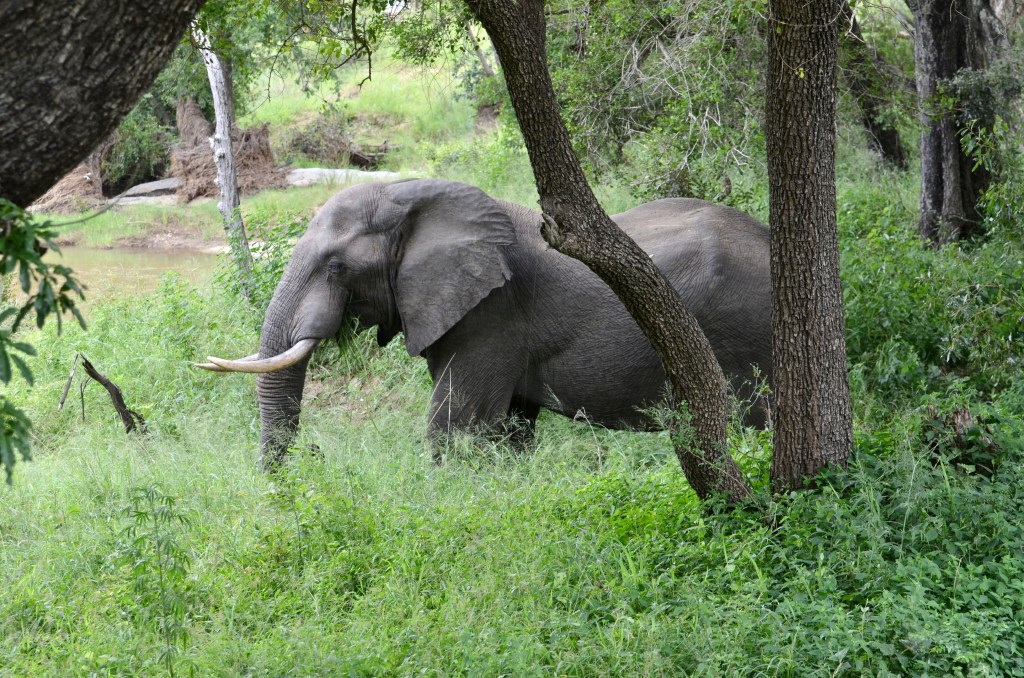
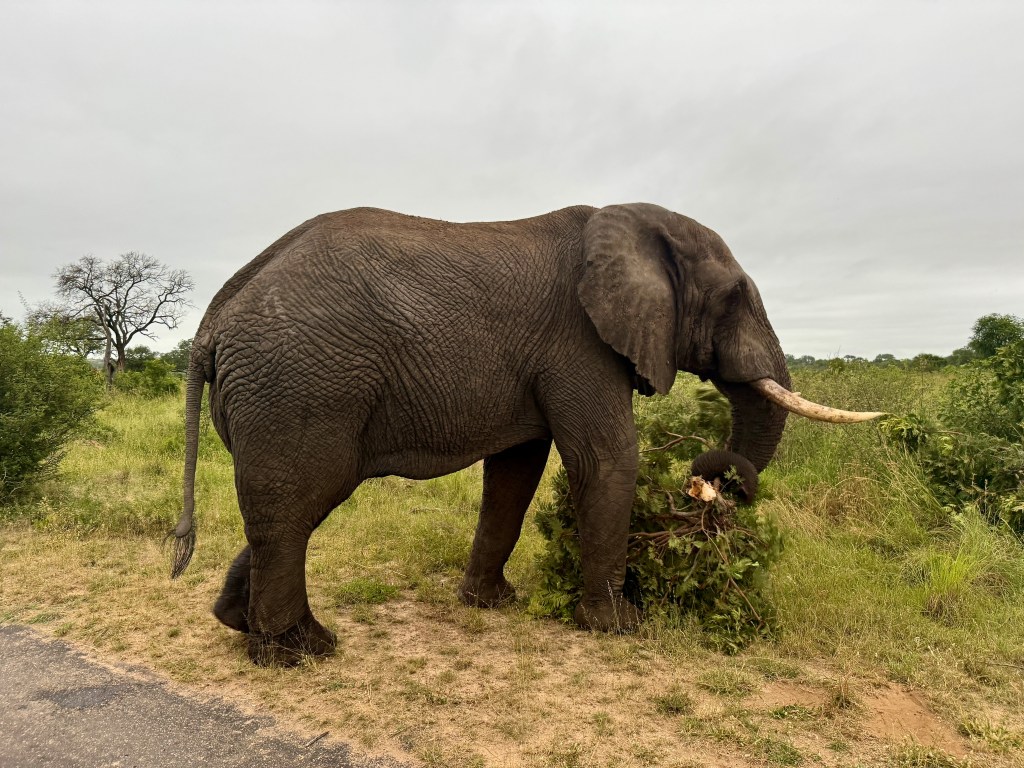
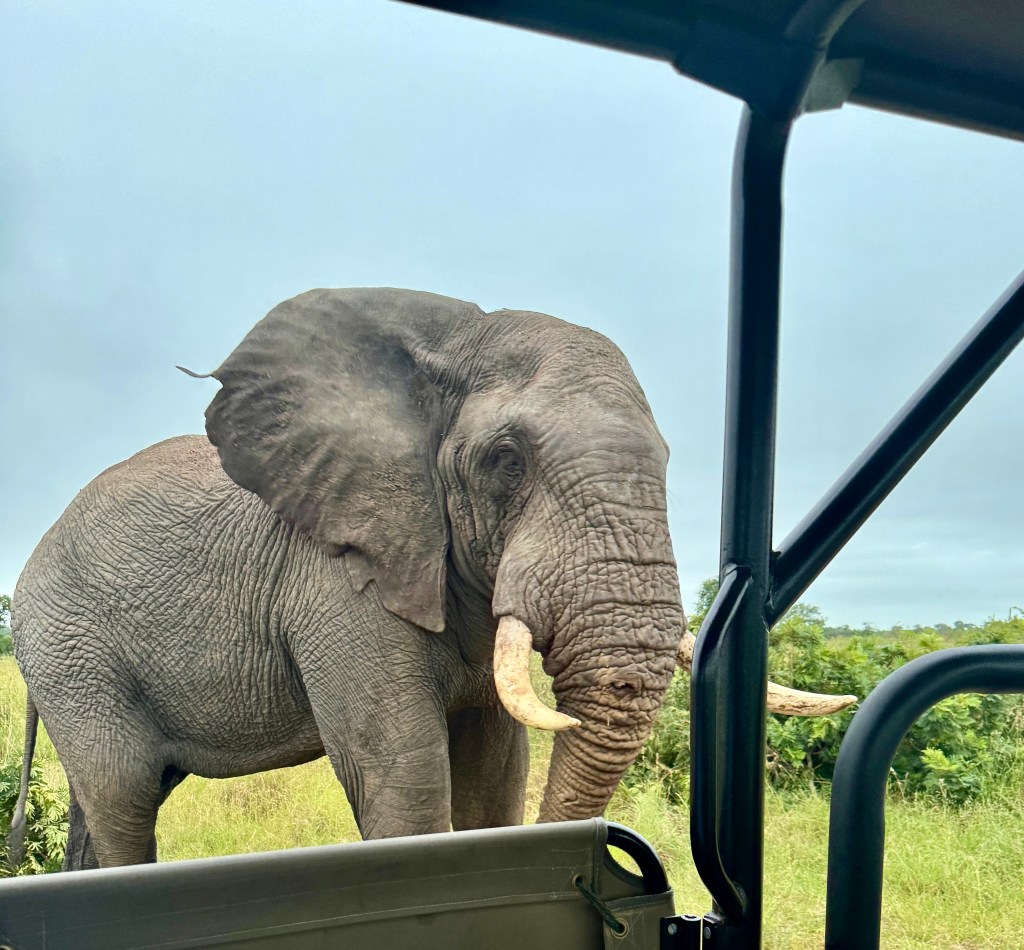
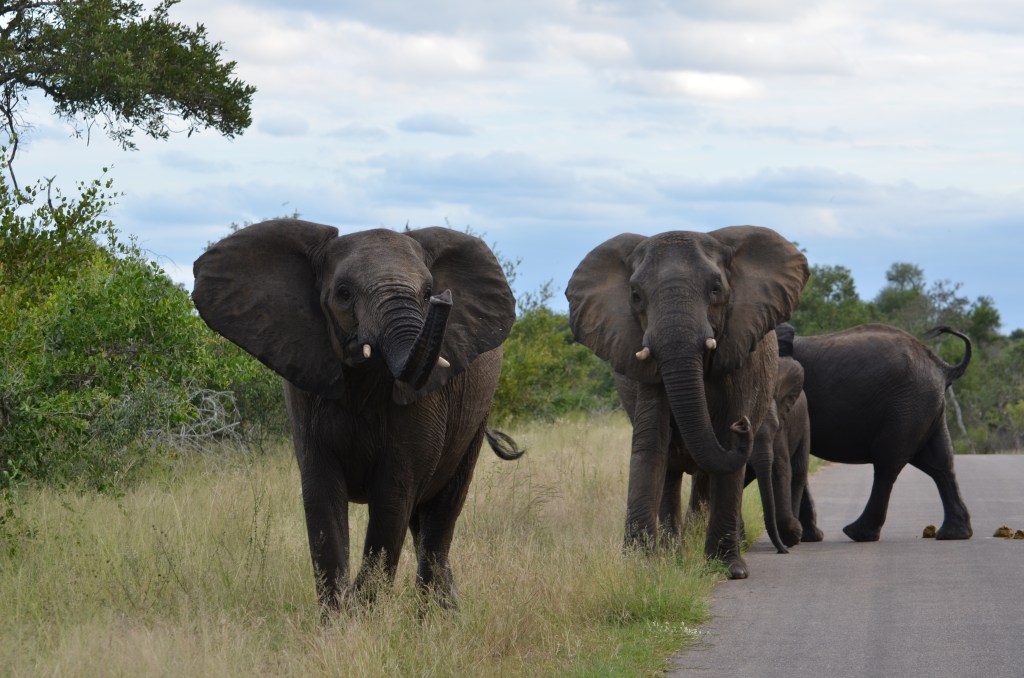
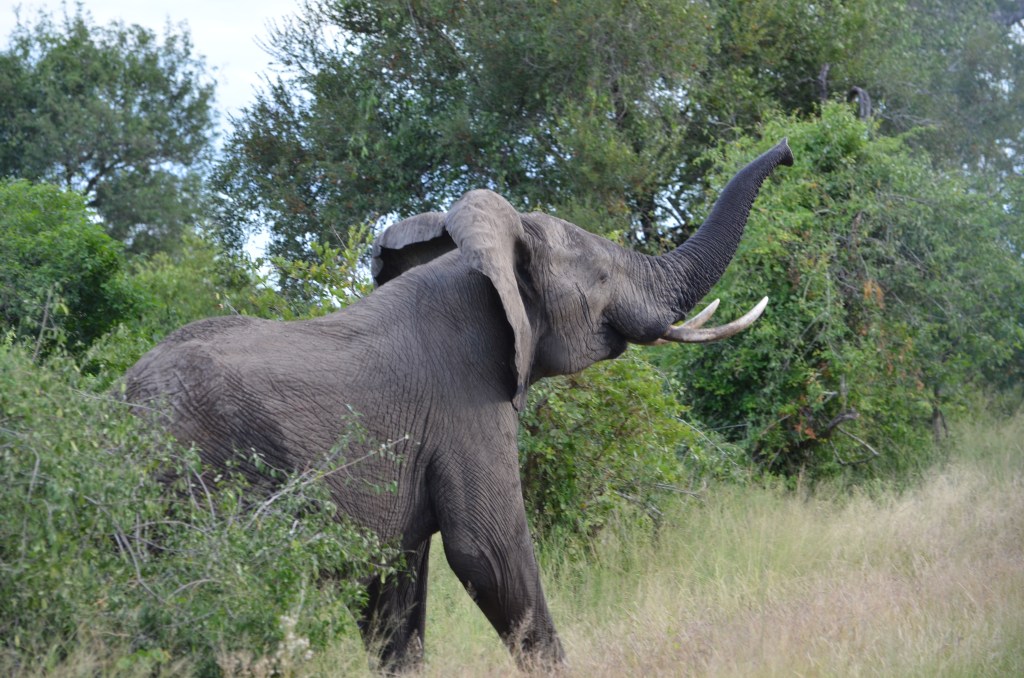
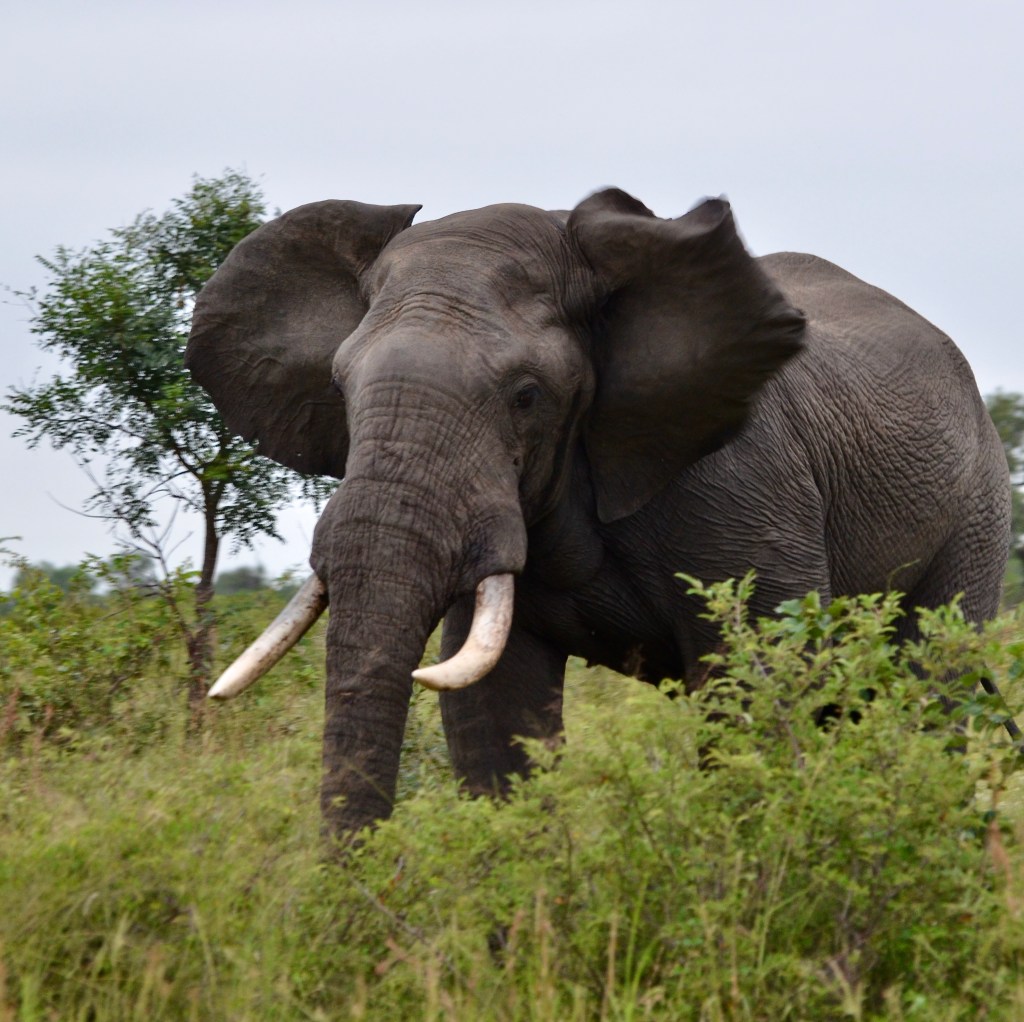
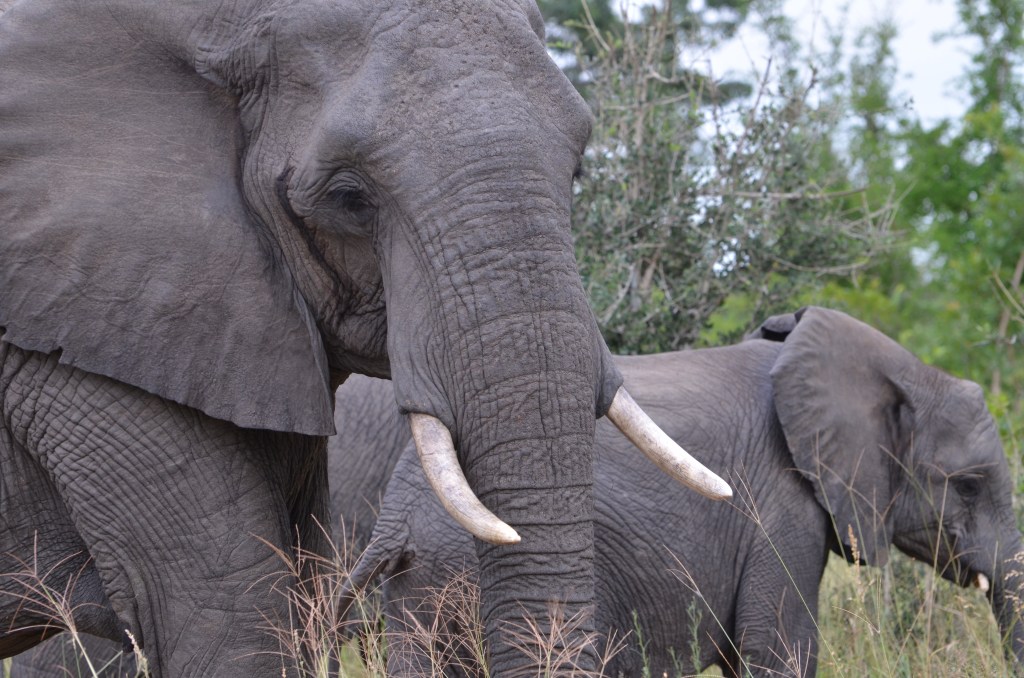
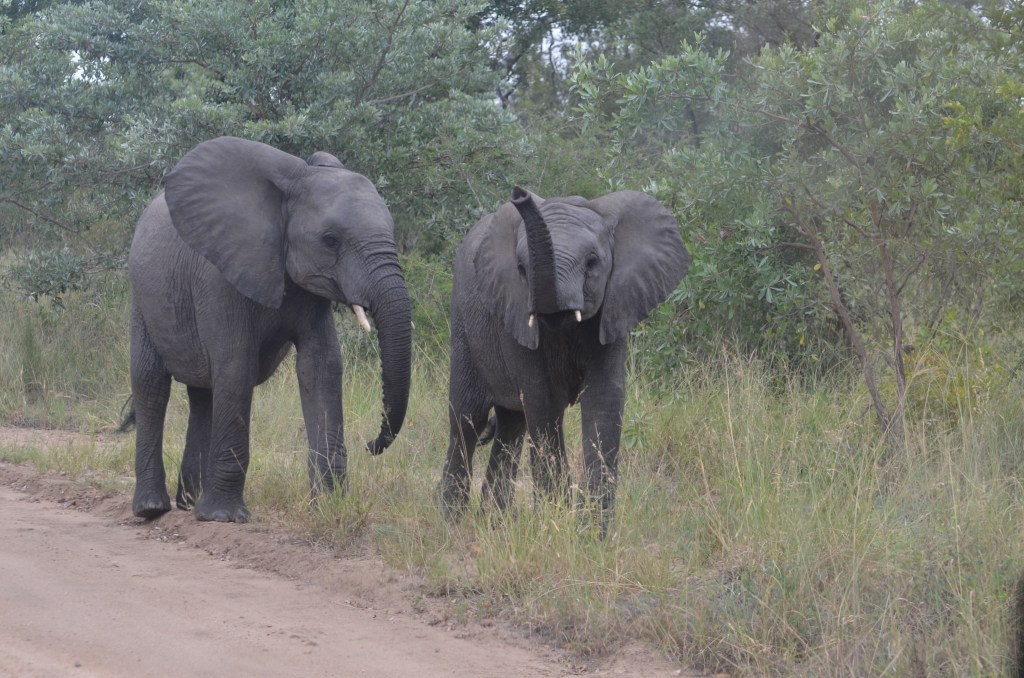
Now last, but certainly not least, the elephant. Again, so many wonderful viewings with these huge animals. The young ones were enjoying the water as it was a hot day.
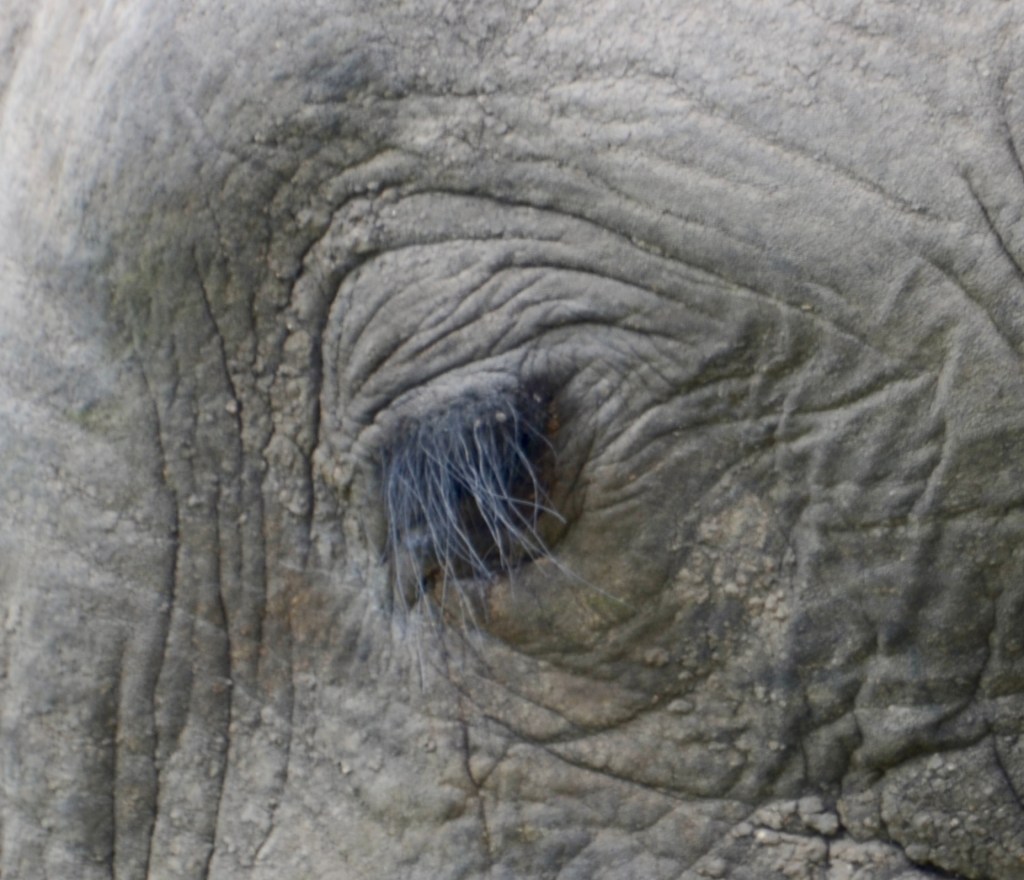
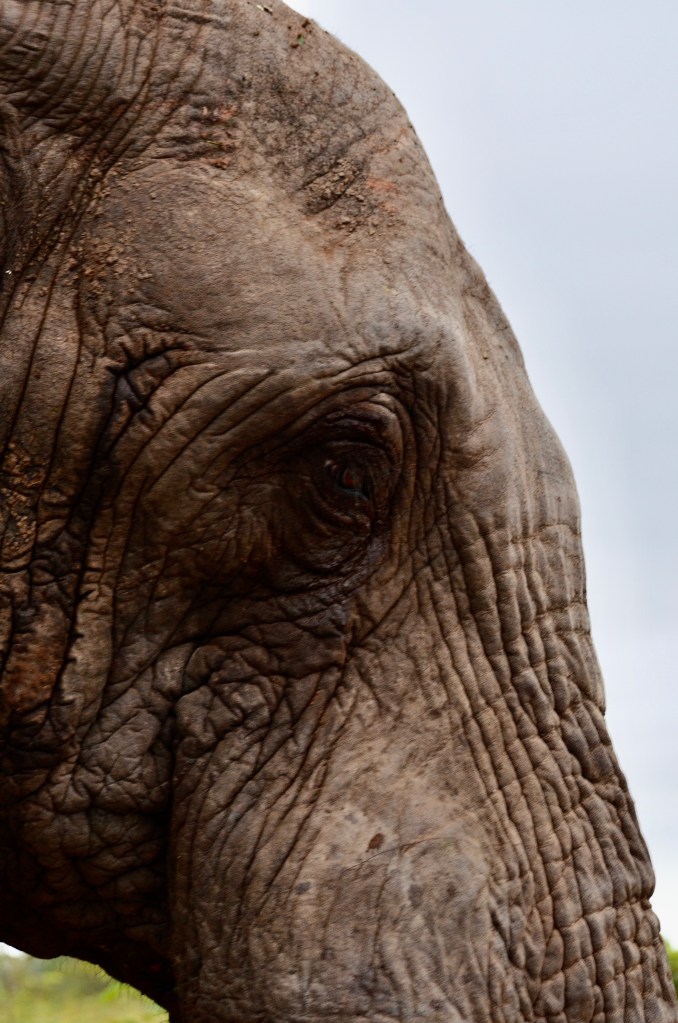
Truck is so interestingI took these photos from our chalet deck – I watched the elephant for over an hour.At times the elephants were so close this was all Larry could capture with his telephoto lens
We love seeing the “Big 5”, but there is so much more. Part 3 will feature the other animals we spent time with.
Sometimes the stars align creating an incredible experience. For us, it was our time at Inyati. The weather, our accommodations, our “safari drive” mates, our safari ranger and tracker and finally, and most importantly, the animal sightings were all amazing – or as Peter/Dawn, our safari drive mates, would say “UNBELIEVABLE”.
Inyati is a small game lodge (only 11 chalets) situated in the western sector of the Sabi Sand Nature Reserve which is a private game reserve sharing a common unfenced boundary with the Kruger National Park. It spans 50,000 hectares (~124,000 acres) and has traversing rights with 5 other safari lodge properties which makes the drives very interesting. Also, the rangers from these lodges keep in touch by radio which increases the chances of spotting the animals (as our Ranger put it “more eyes looking”).
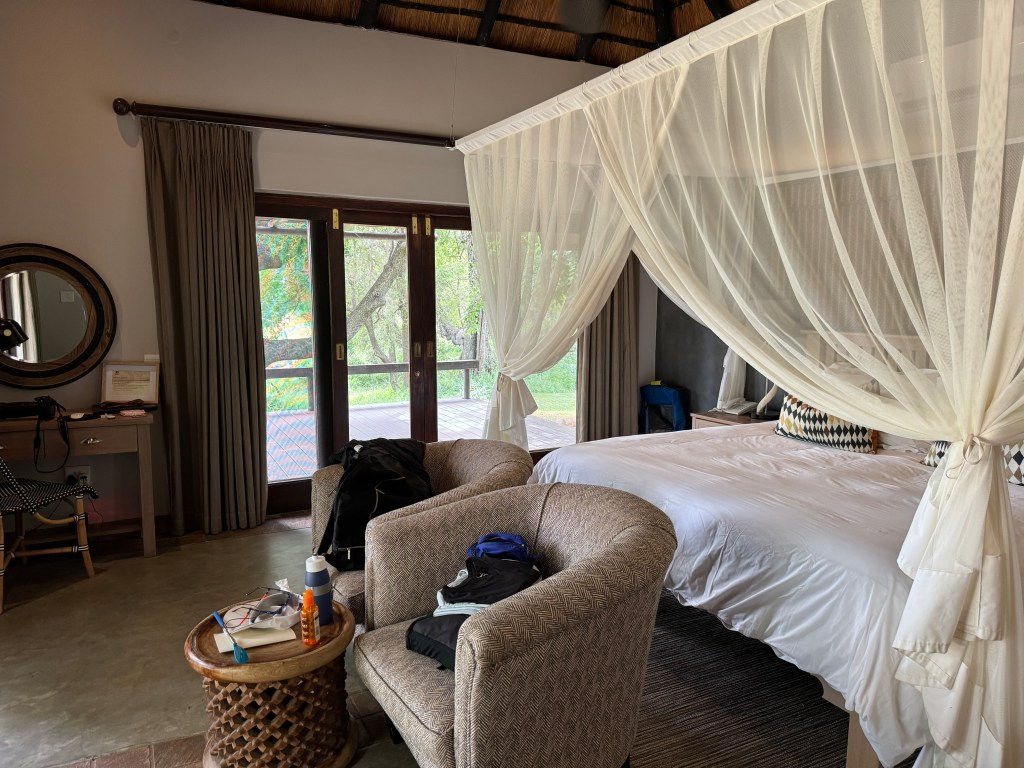
The accommodations are not fancy – more rustic African which we like…. but it’s the property we love. The views from the outdoor dining room and also from our chalet are beautiful. It is common to see animals while relaxing between drives.
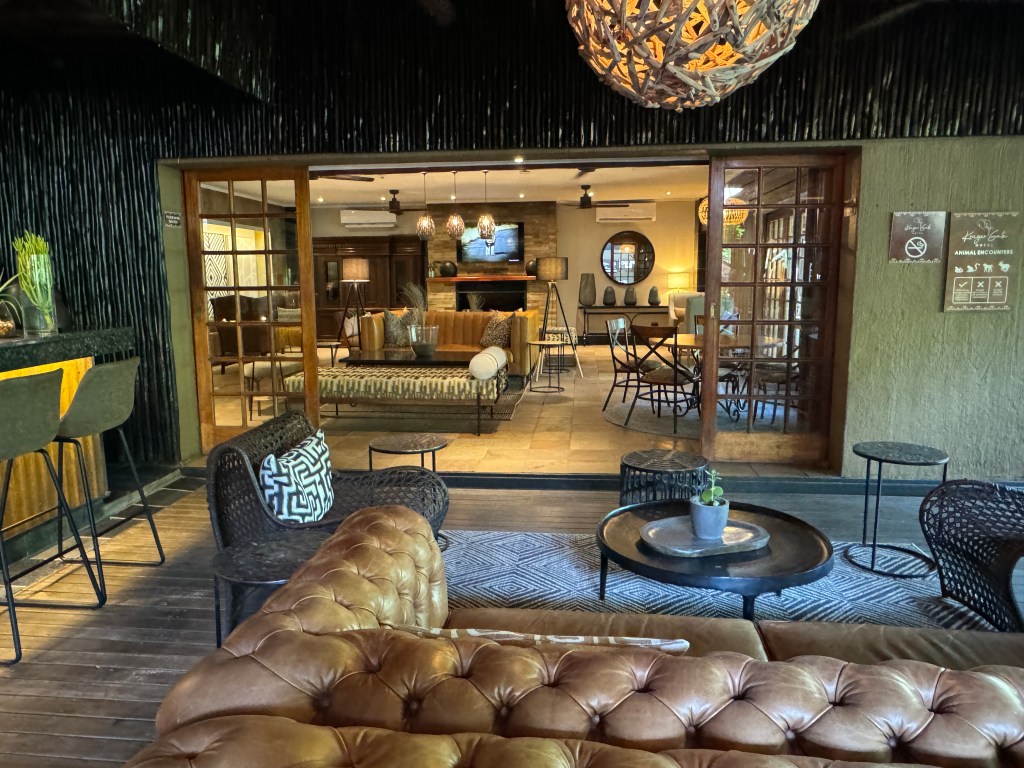
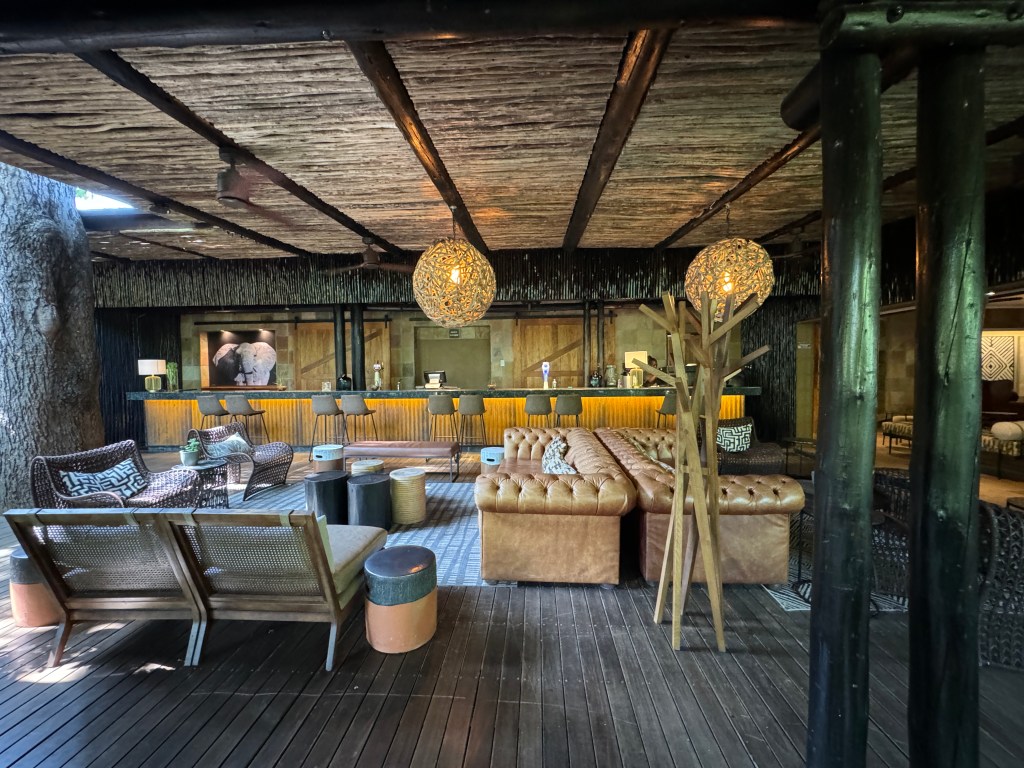
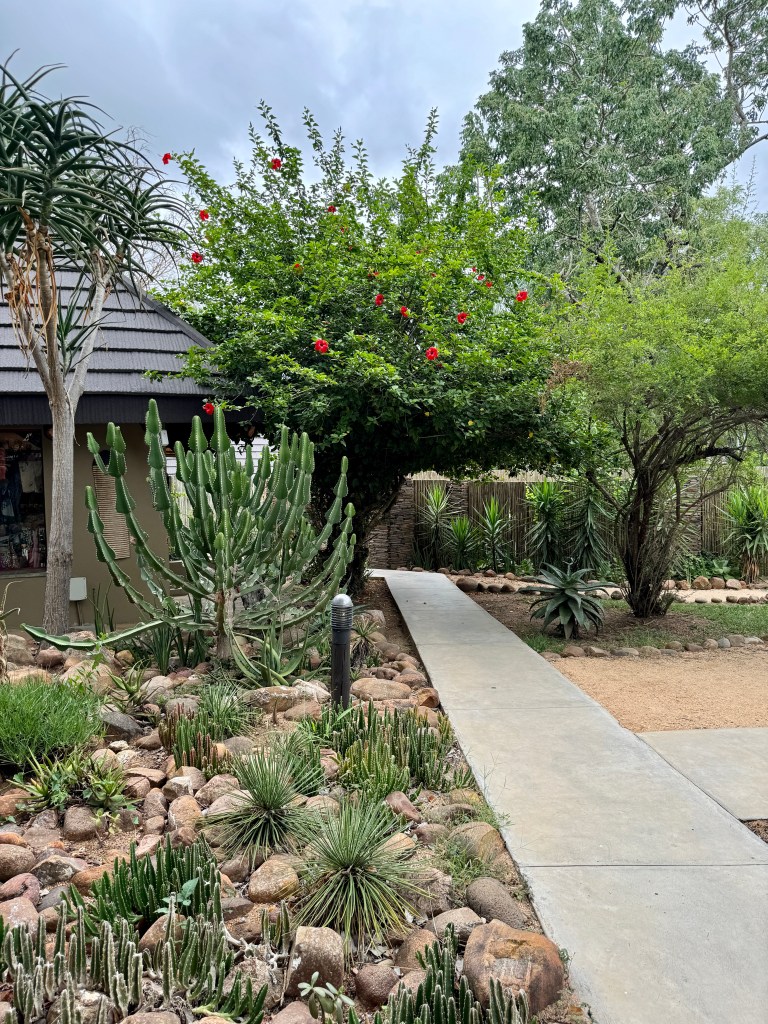
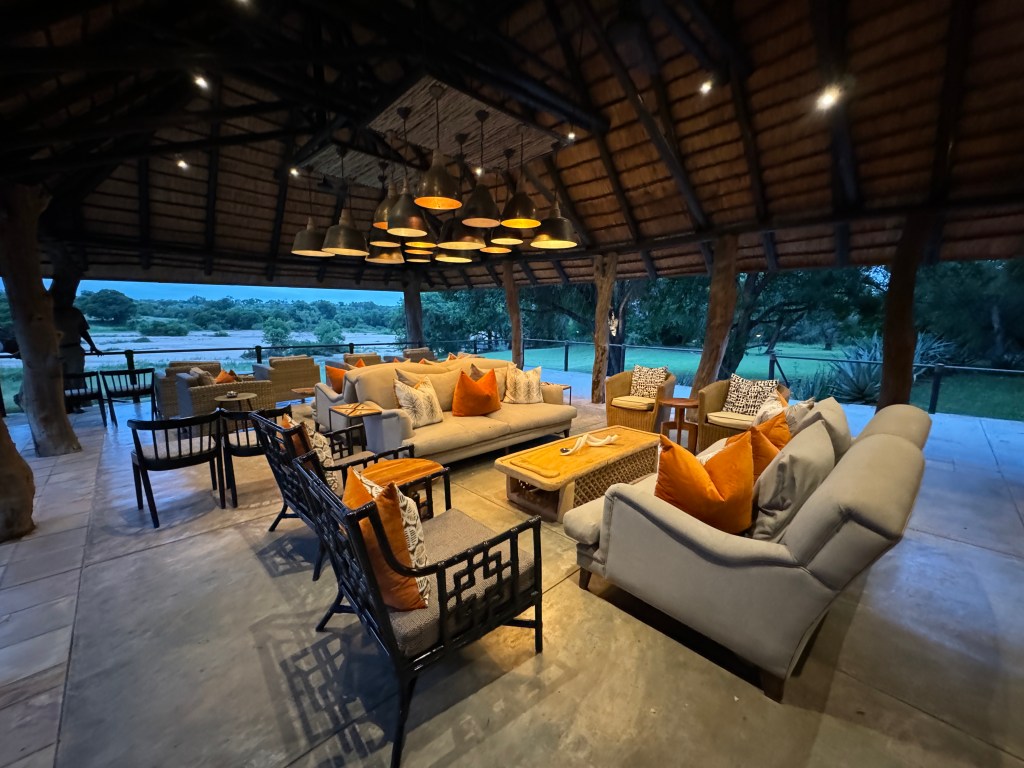
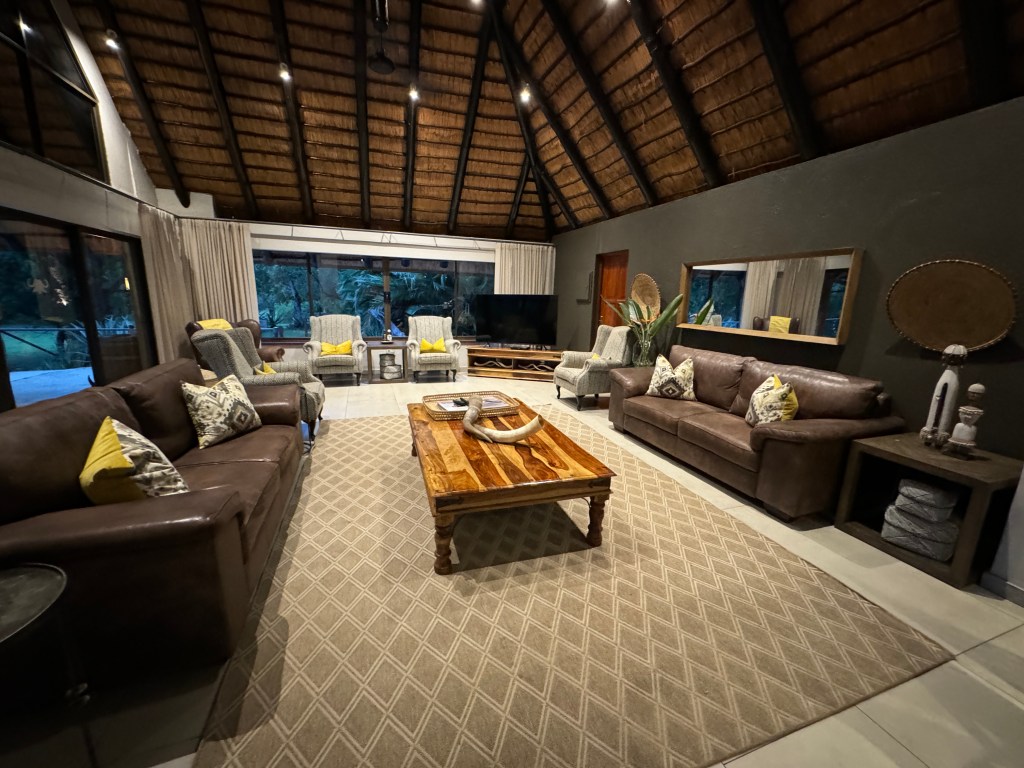
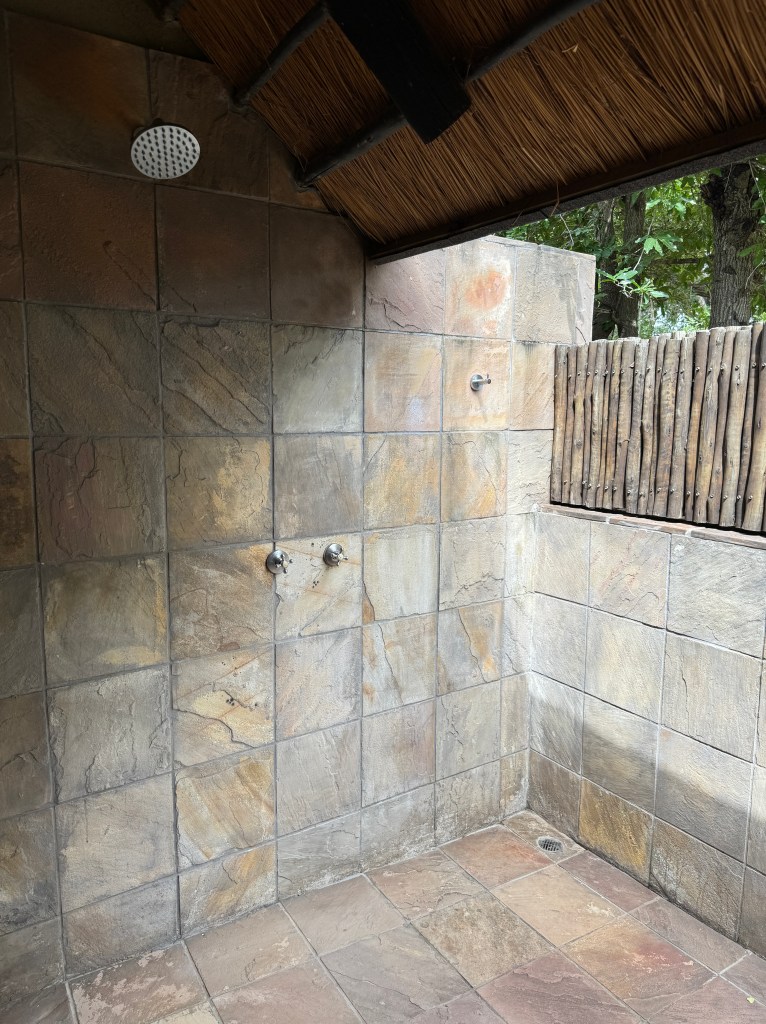
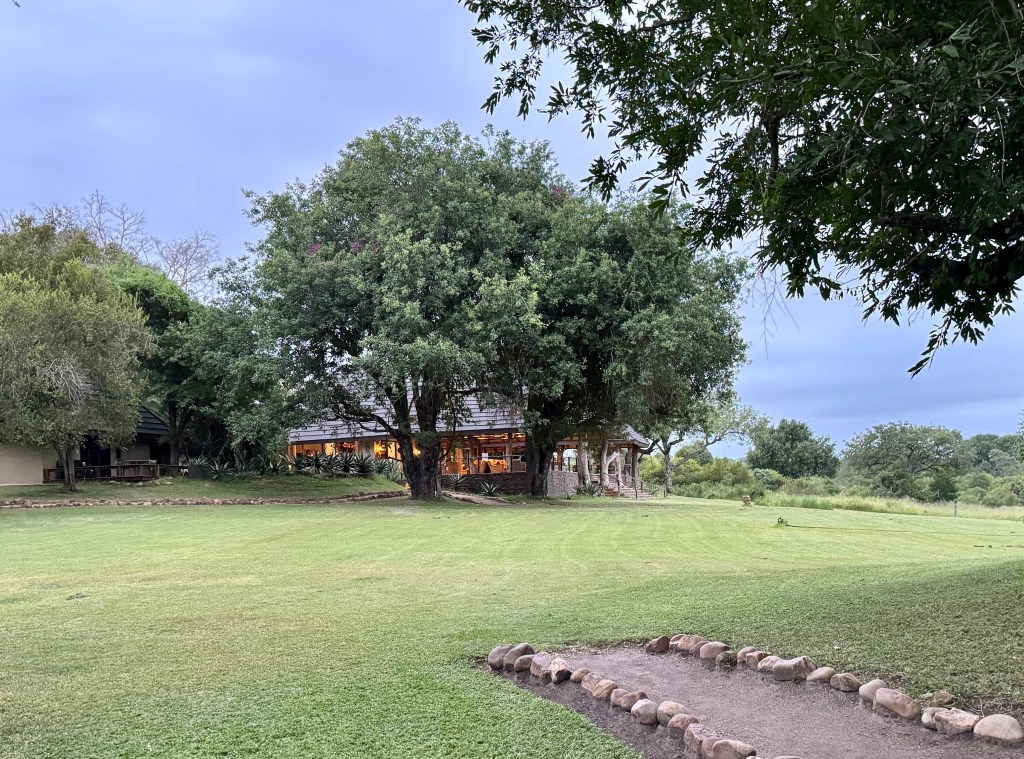
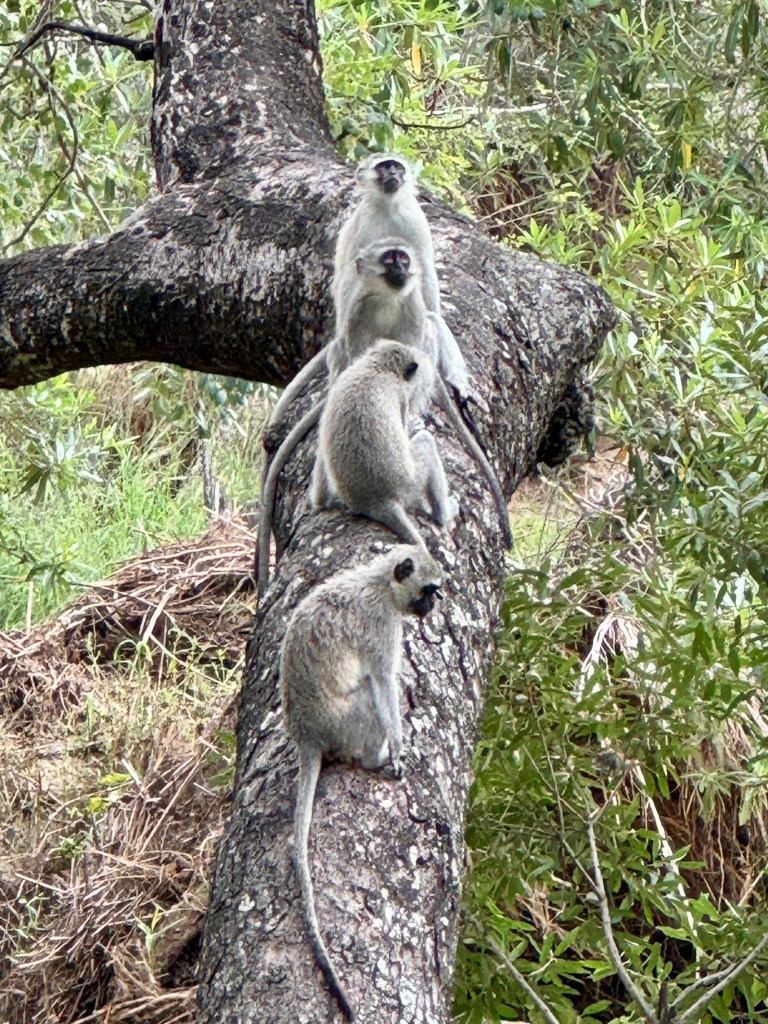
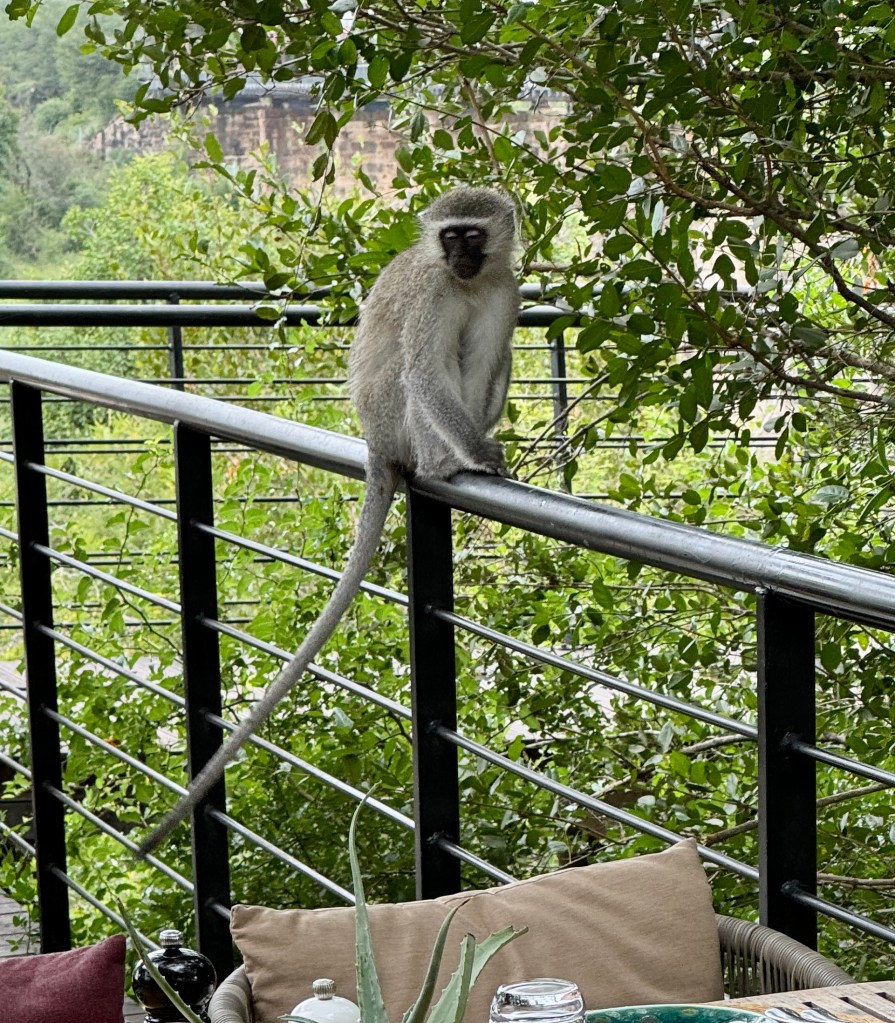
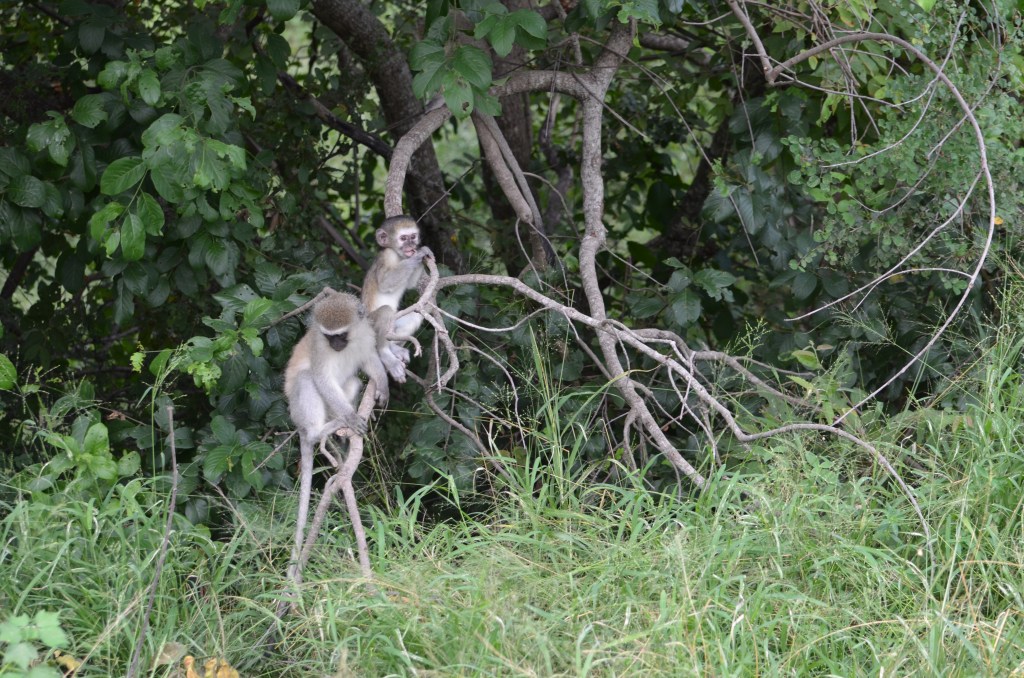
Path to reception and dining areaMonkey managed to grappackages of powdered hot chocolateOutdoor Lounge areaIndoor LoungeLove the outdoor shower (there is one inside too)Our bedroom with a king size bedPath from our room to the lounge and dining areaTaken from our chalet deck The elephant was so close to our deck – great spot to watch fromOur chalet looked onto the river where elephants, giraffes and many different types of antelopes came to drink
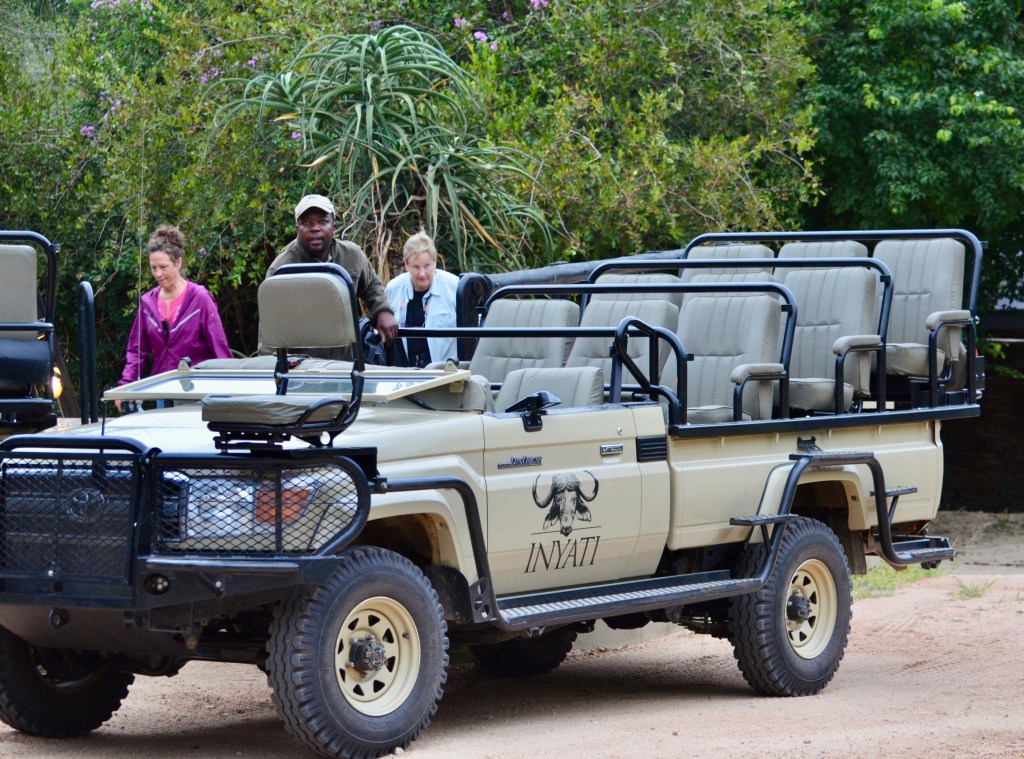
The safari vehicles hold 10 people (3 rows and the front seat), but Inyati only puts 6 people in a vehicle (leaves middle seat empty) which makes it so much better for viewing. As couples left and new ones checked in, our numbers varied – we had 2 drives with 6 people, 2 drives with 4 people and then 2 drives with 6 people. With us the whole time were our drive mates Peter and Dawn, who were great to be with. Peter would exclaim numerous times during the drive “unbelievable” – which also became our way of describing the sightings.
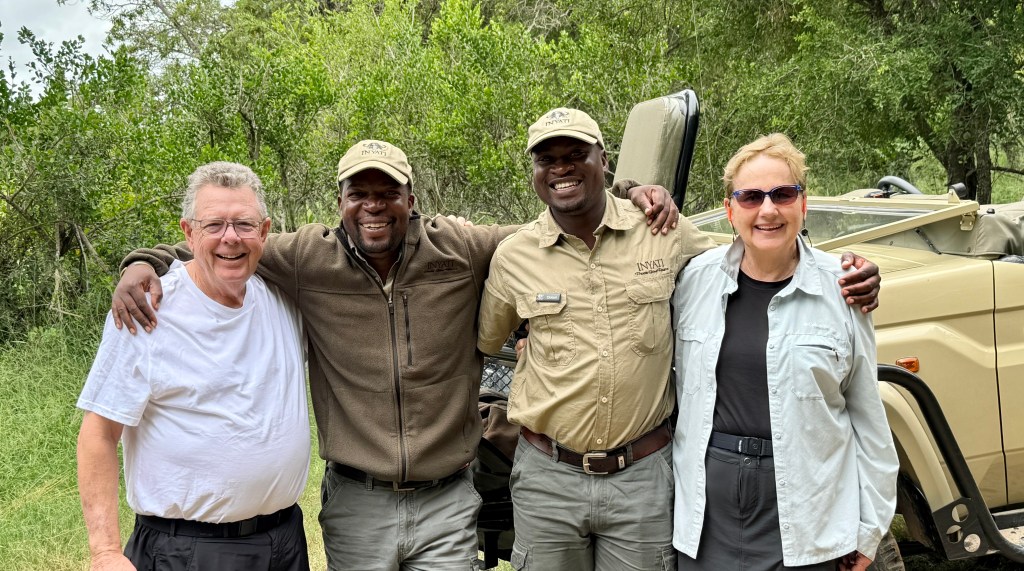
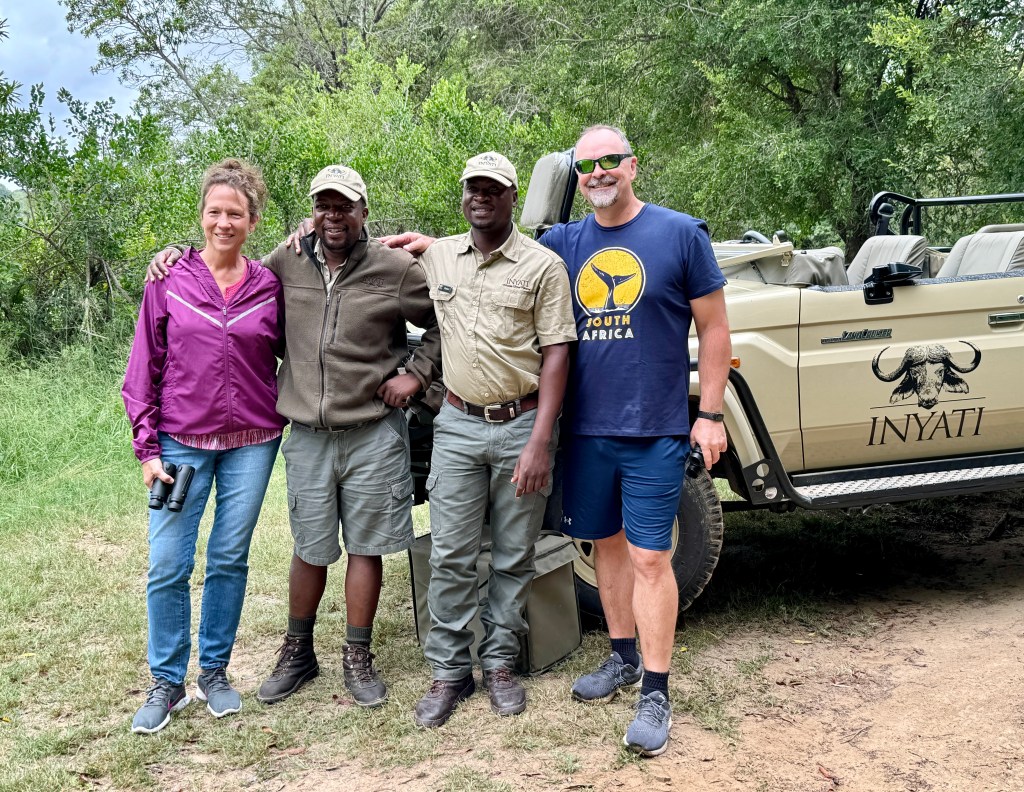
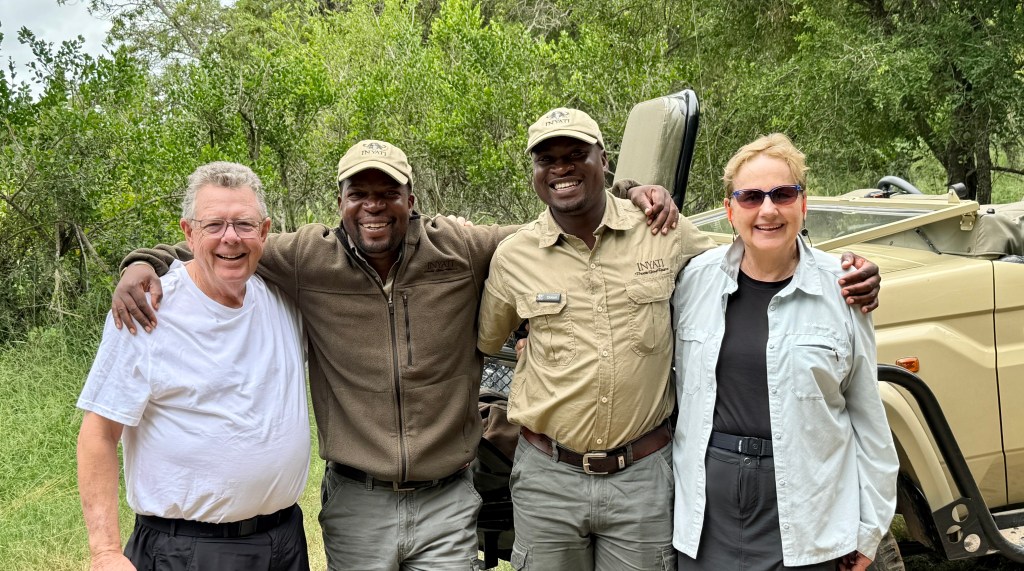
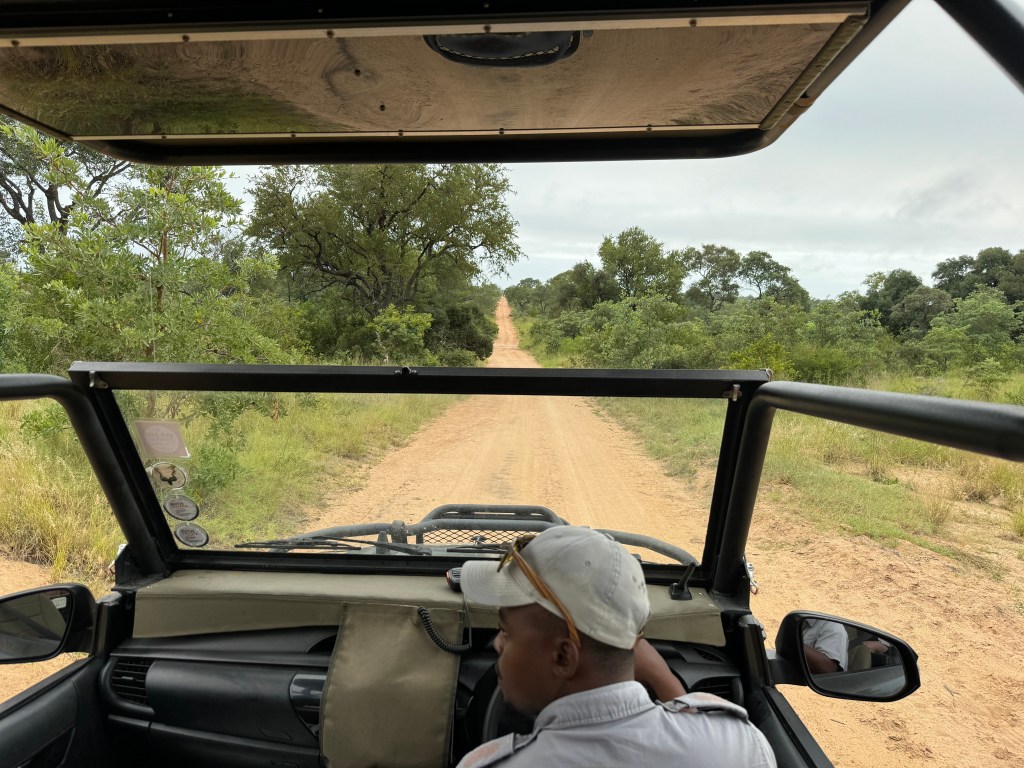
Open vehicle is great for photography. Tracker sits on the front “bumper chair” Dawn and Peter, with Rodger and Qolani
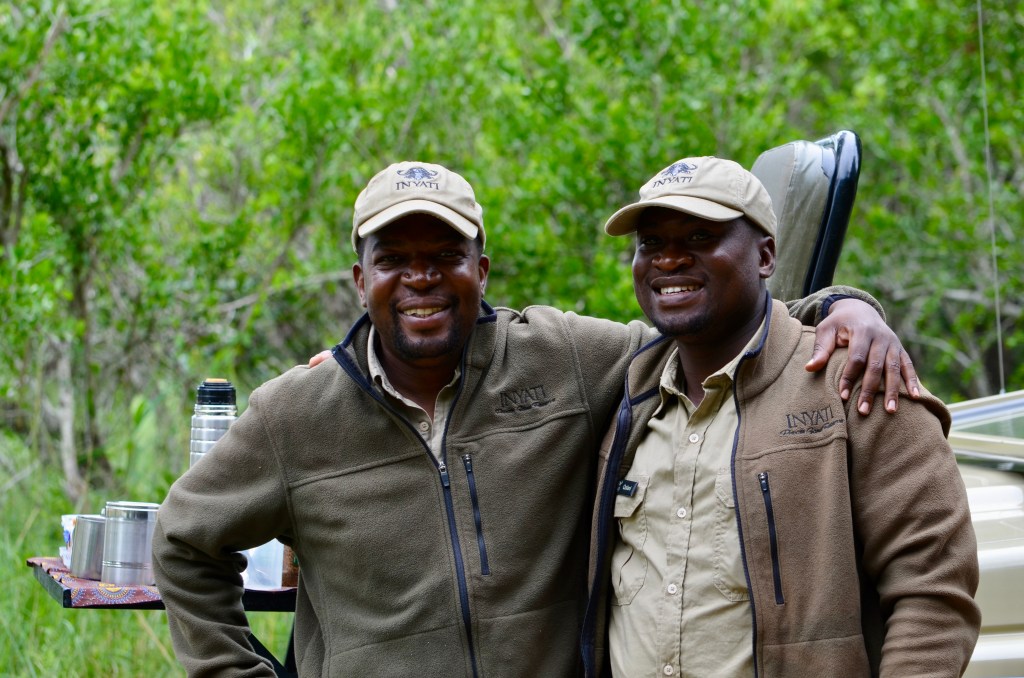
We had the most amazing ranger and tracker this year – Rodger and Qolani. We had met Rodger previously at the lodge and have seen his photos posted on Instagram. This year we requested him and we are so glad we did.
Rodger and Qolani
And now for the sightings. Not only did we see the “Big 5” (Elephant, Rhinoceros, Cape Buffalo, Lion, and Leopard), we saw them numerous times. Big 5 was first coined by big-game hunters more than 100 years ago as the most dangerous animals to hunt on foot and now it is more a marketing reference.
Big 5 are great, but there was so much more to see – Peter was listing the animals we saw and just from his list we saw 32 different animals/birds – unbelievable (thank you Peter for keeping a list).
We took so many photos – below is just a sampling. Also, if you are on Facebook I will be posting “reels” with our videos. I am new at this so my reels are a “bit raw” but still fun to view.
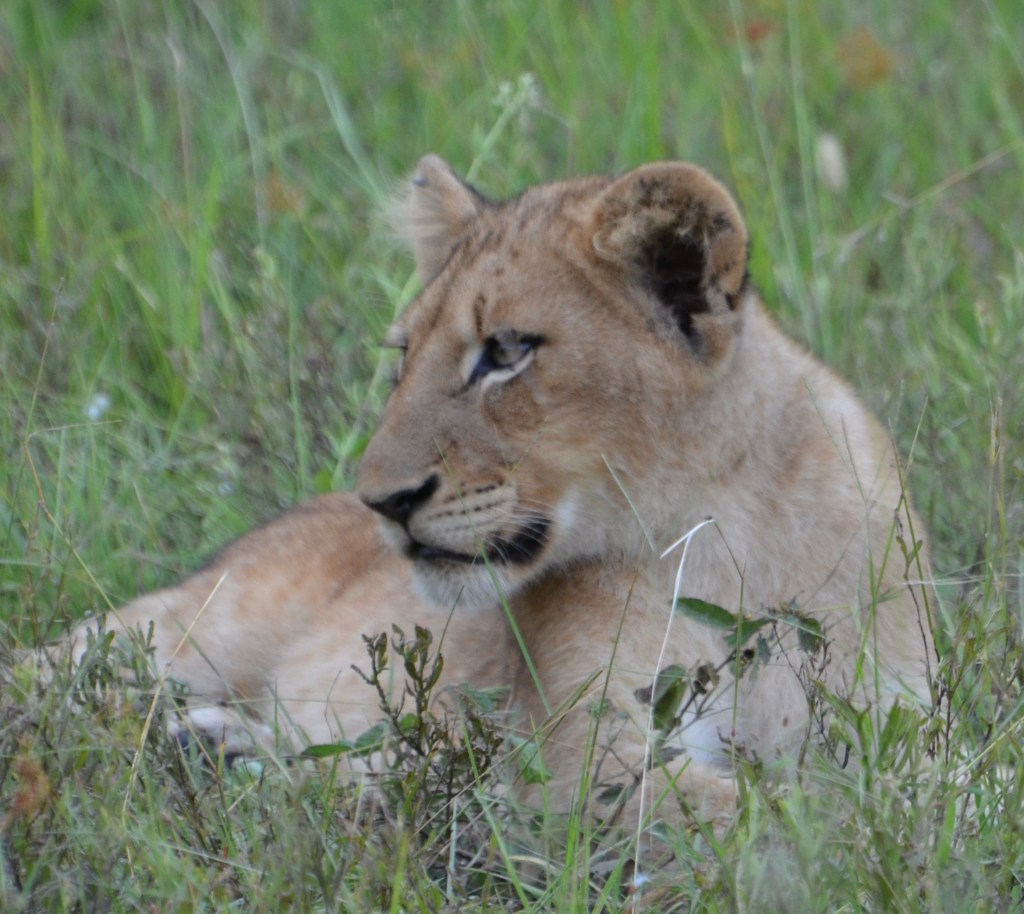
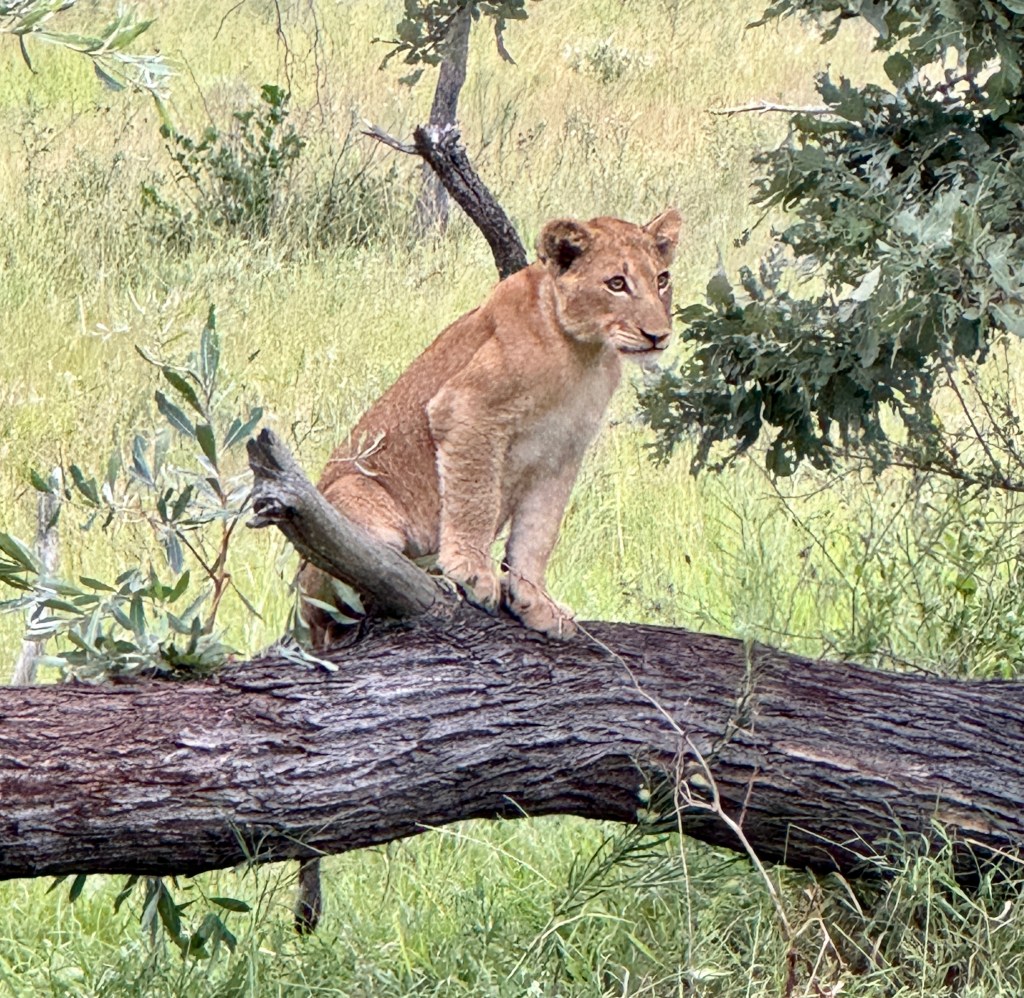
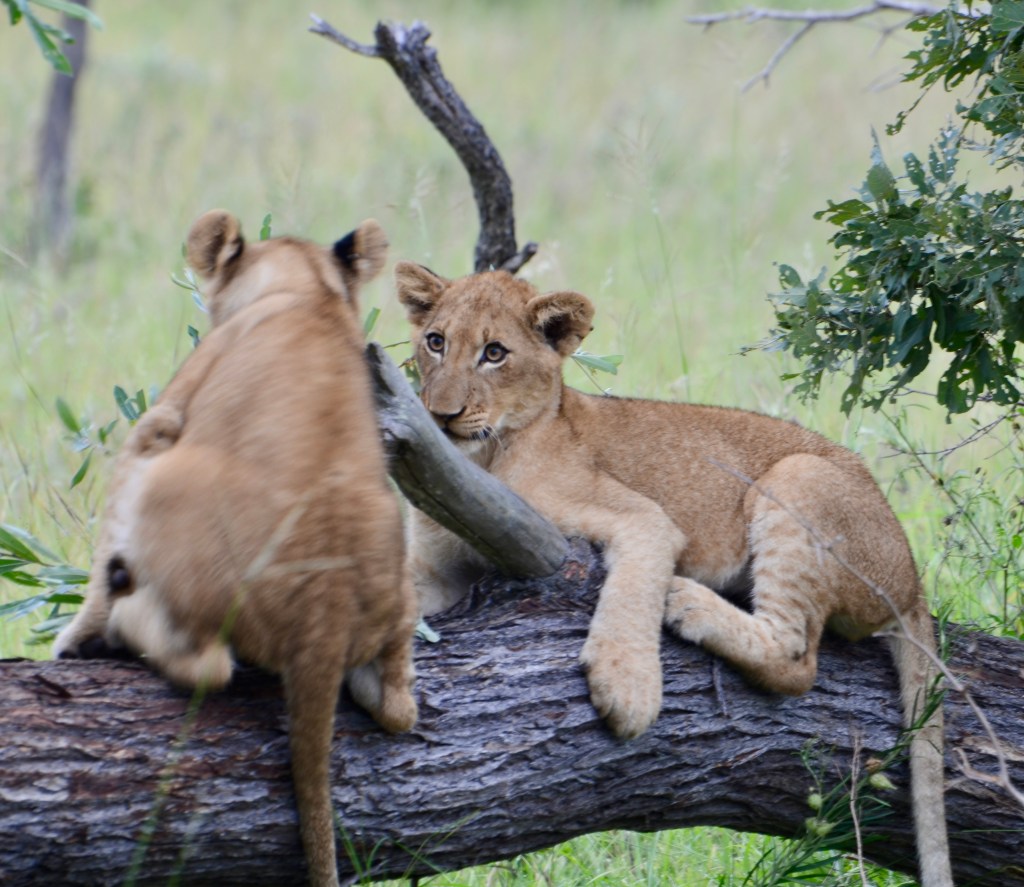
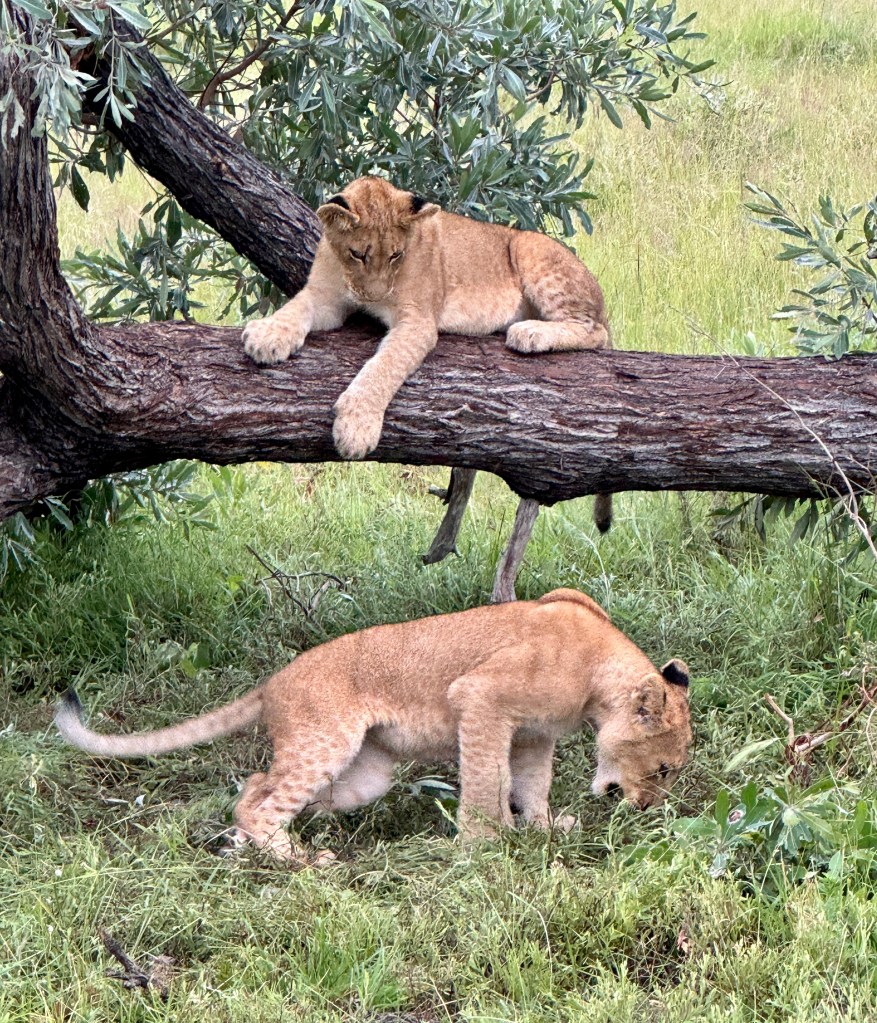
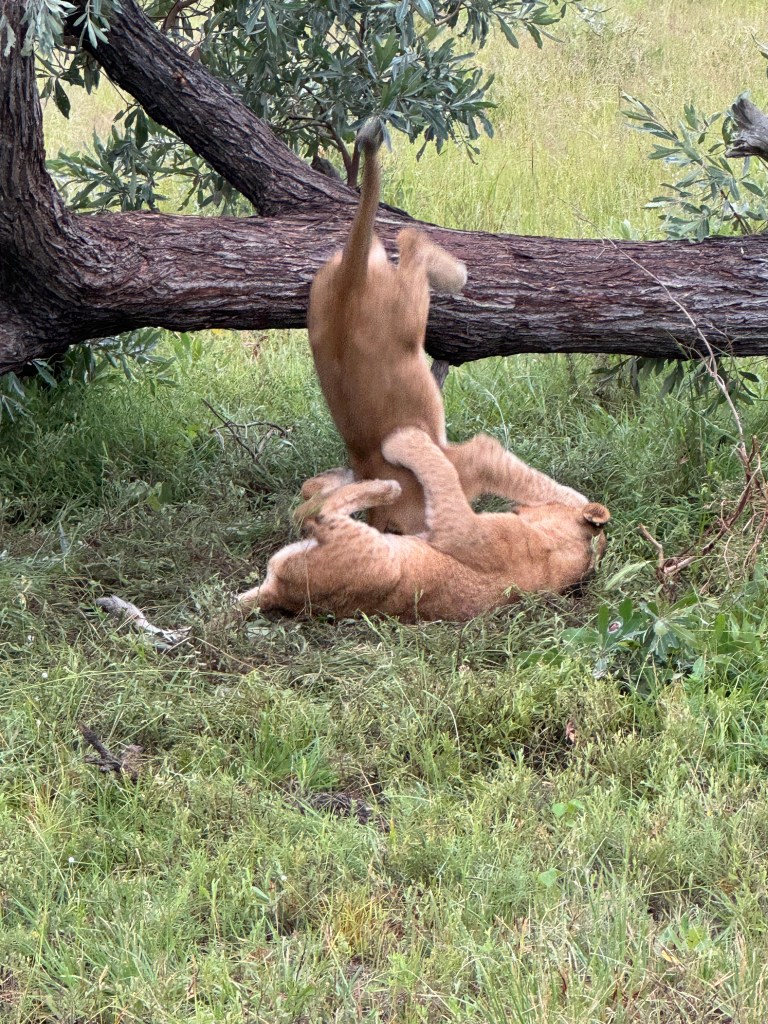
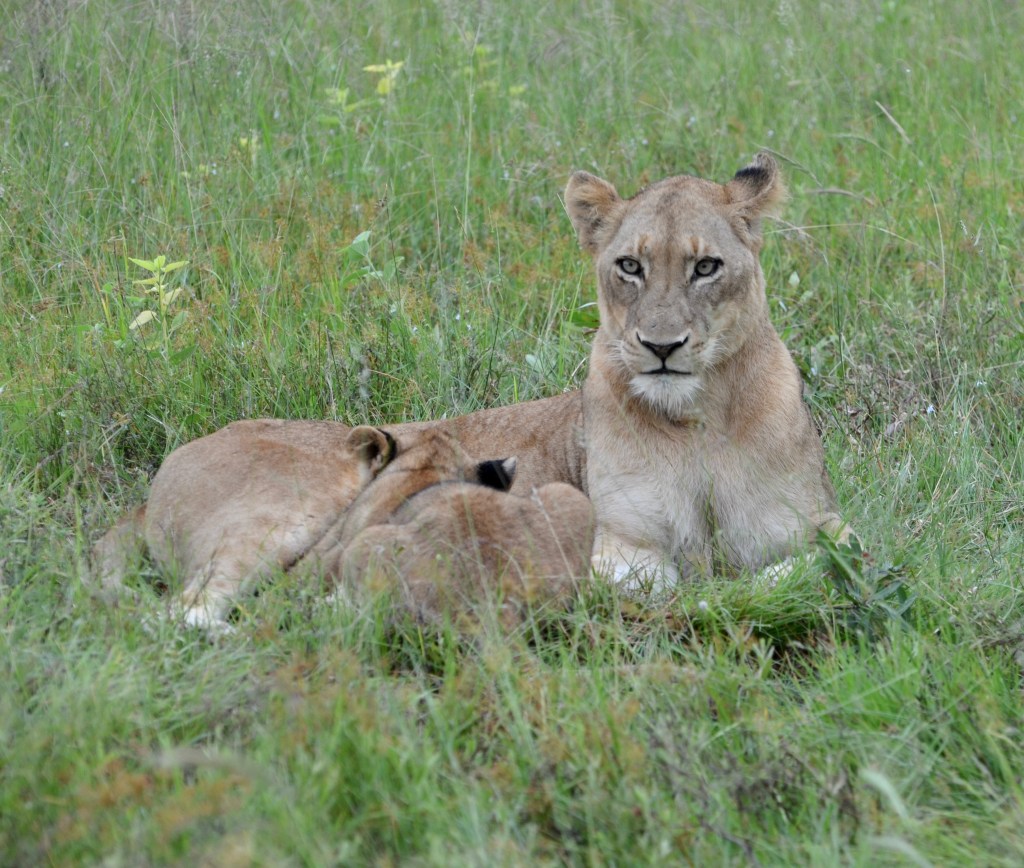
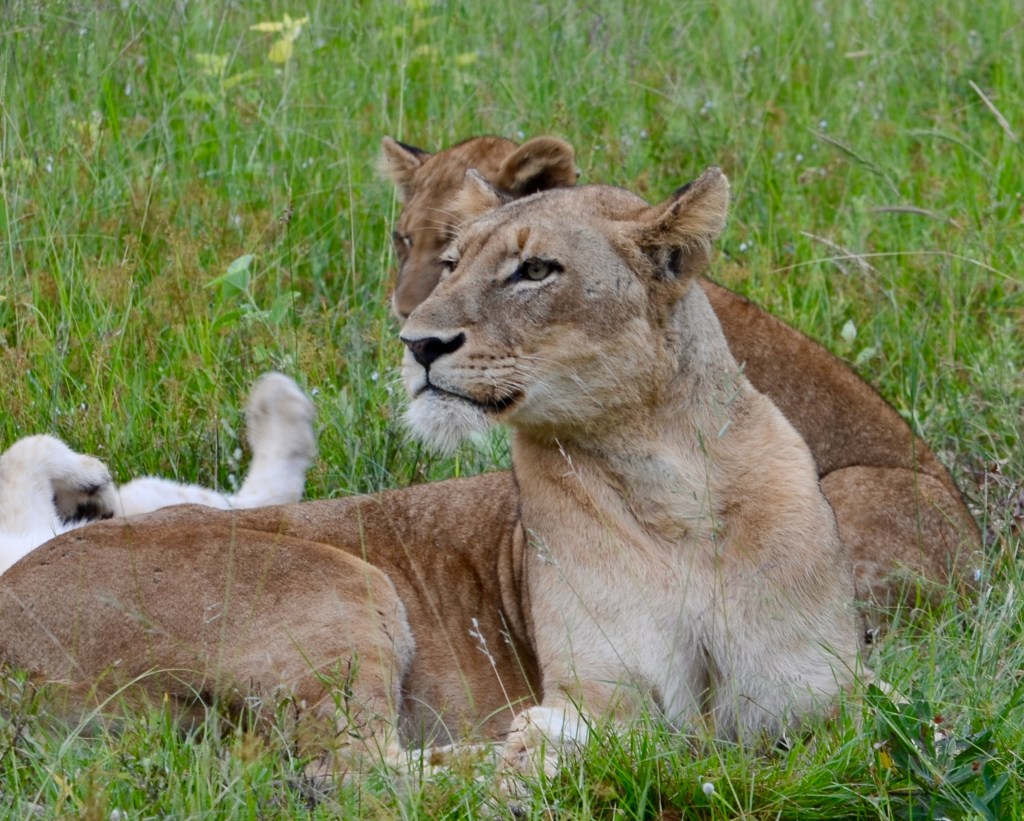
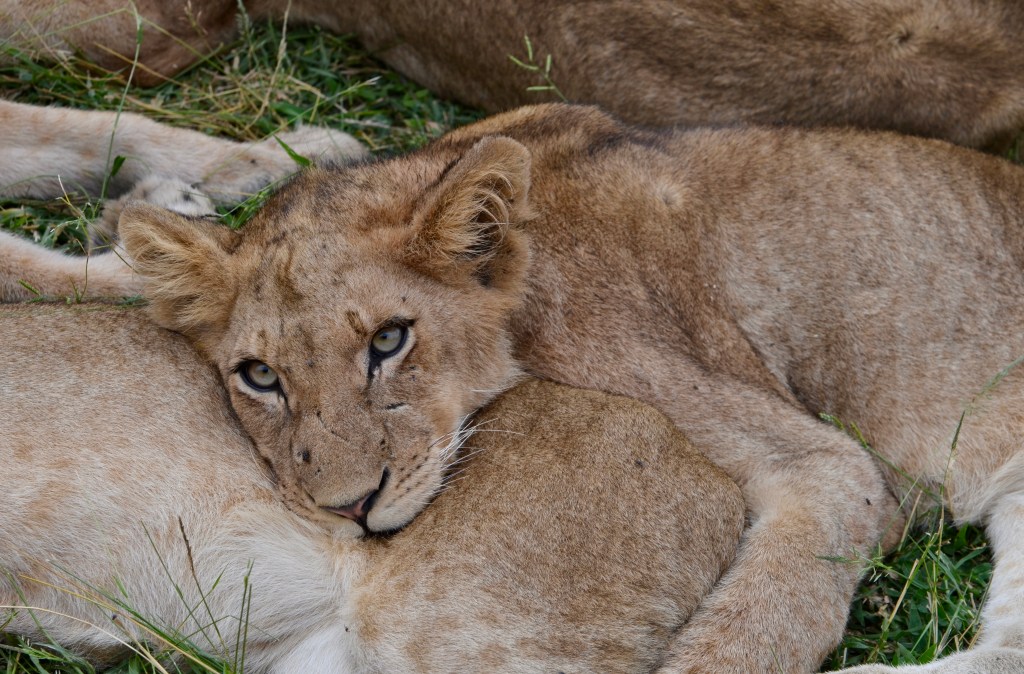
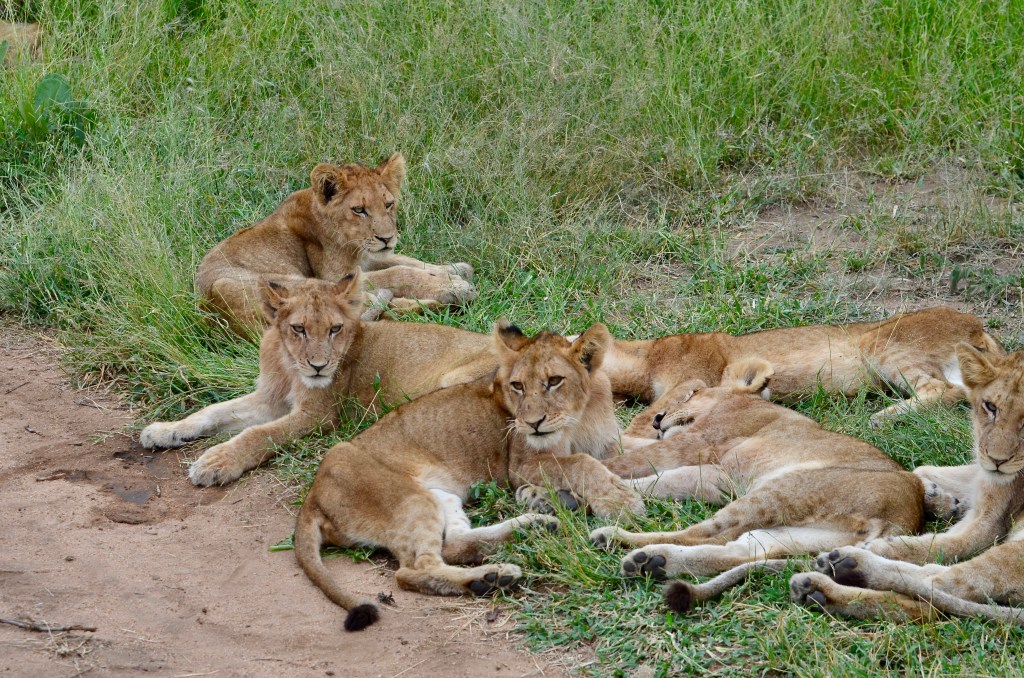
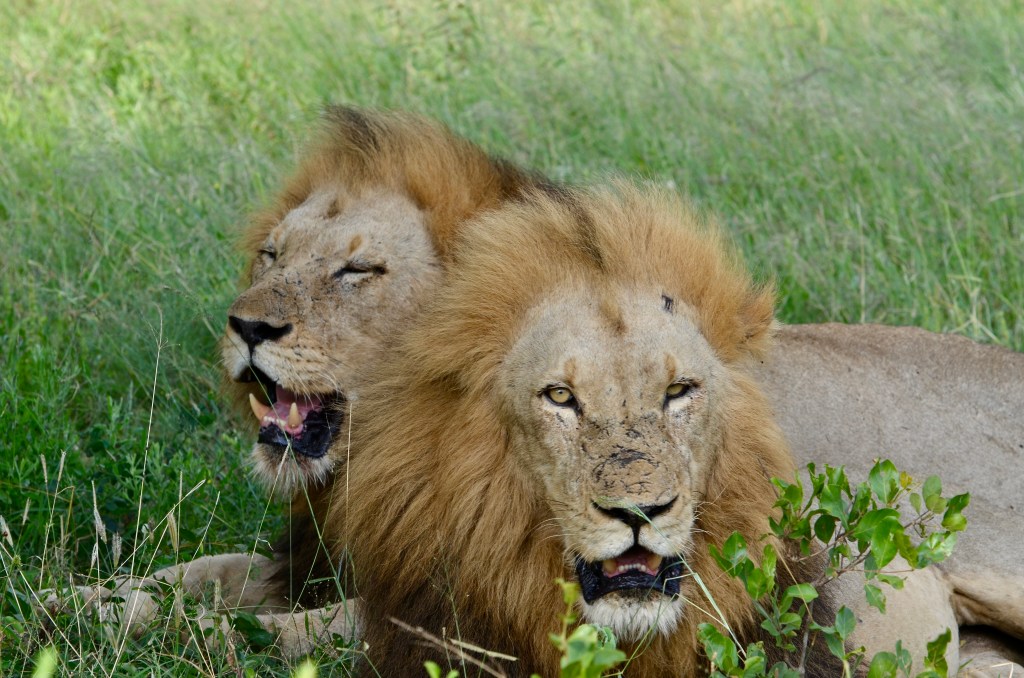
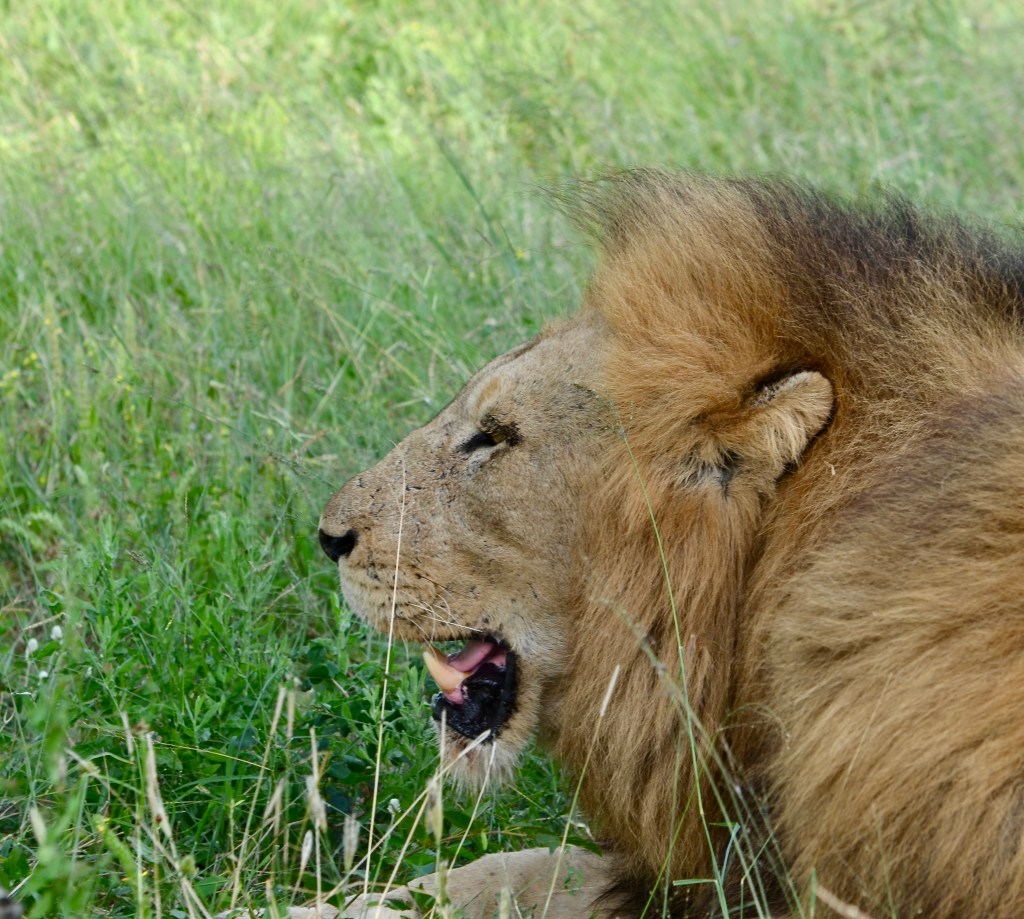
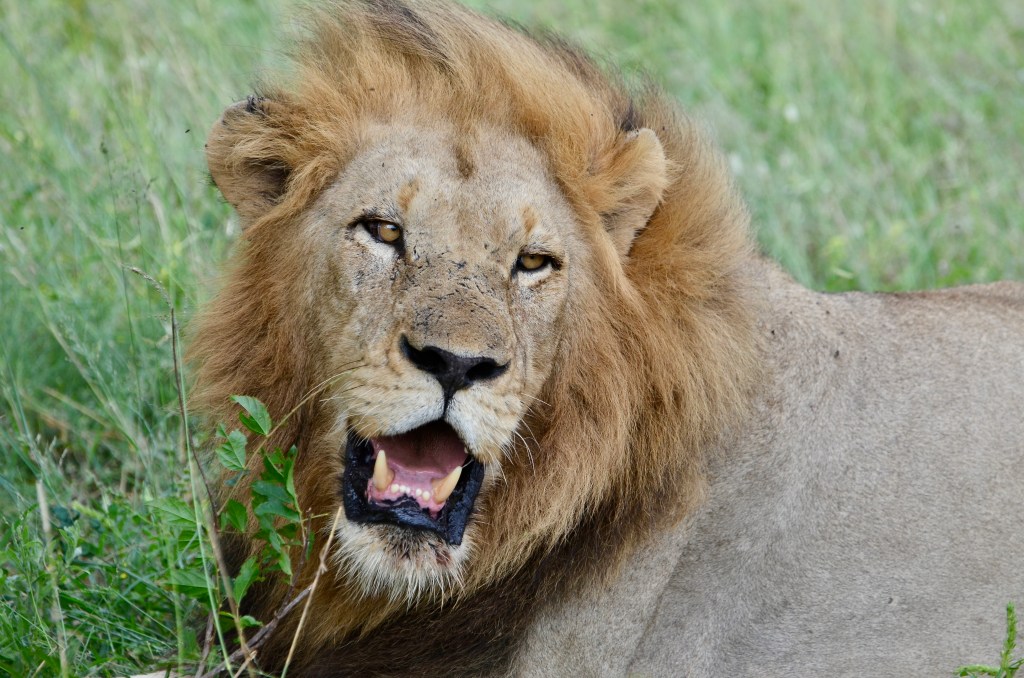
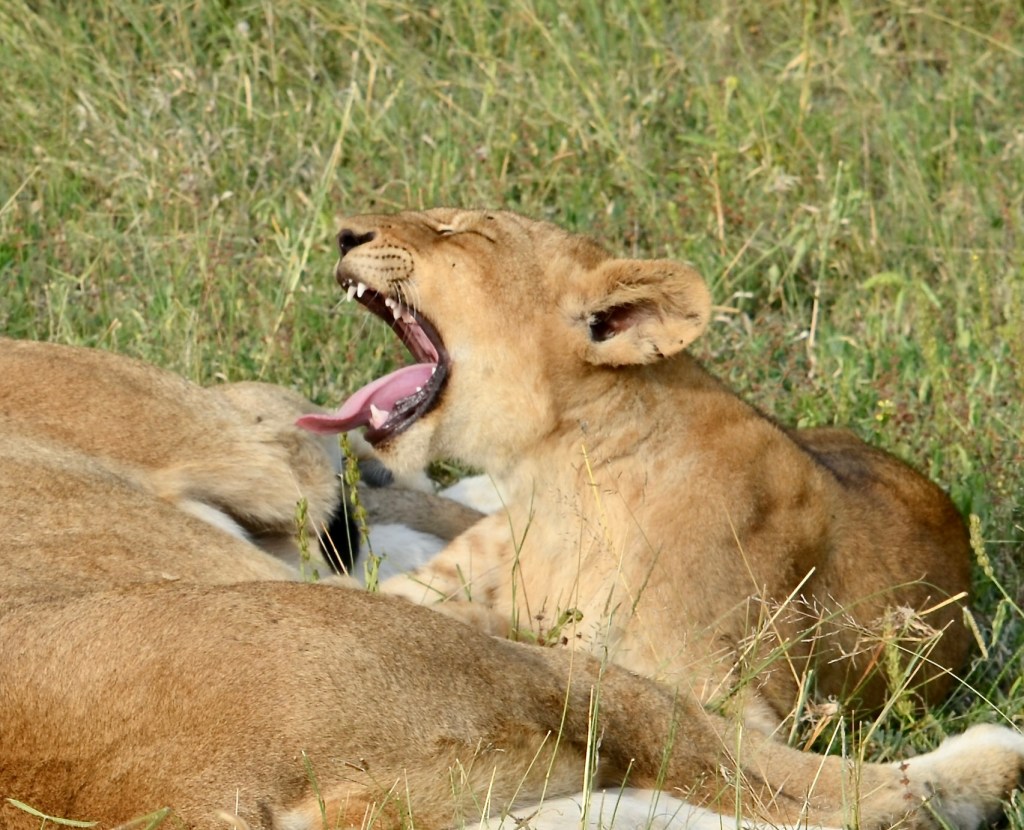
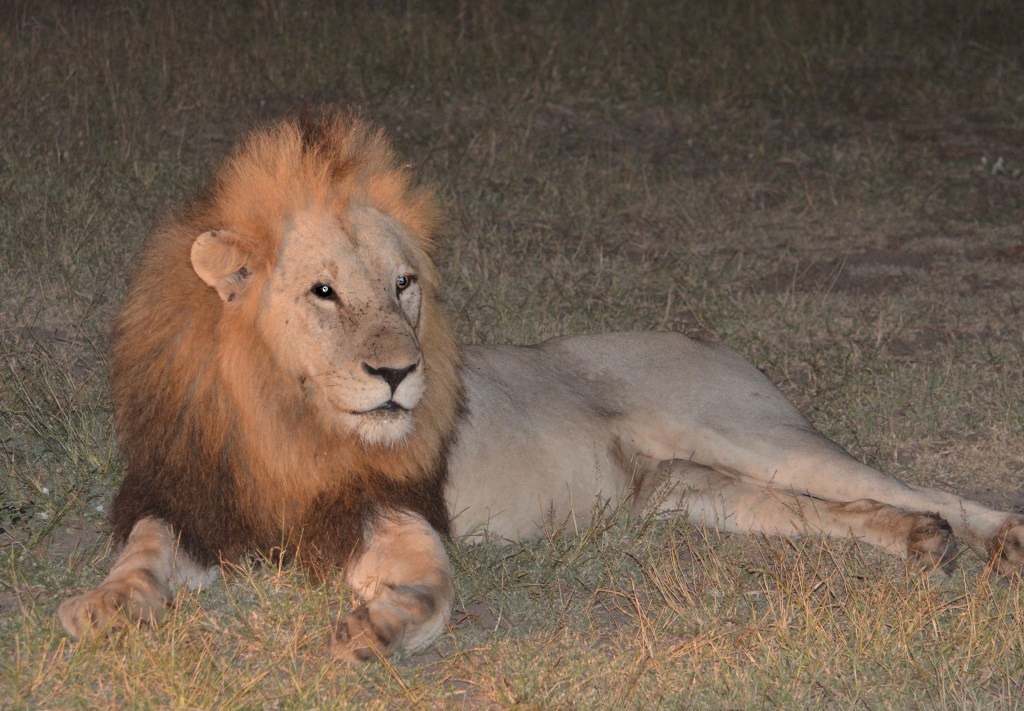
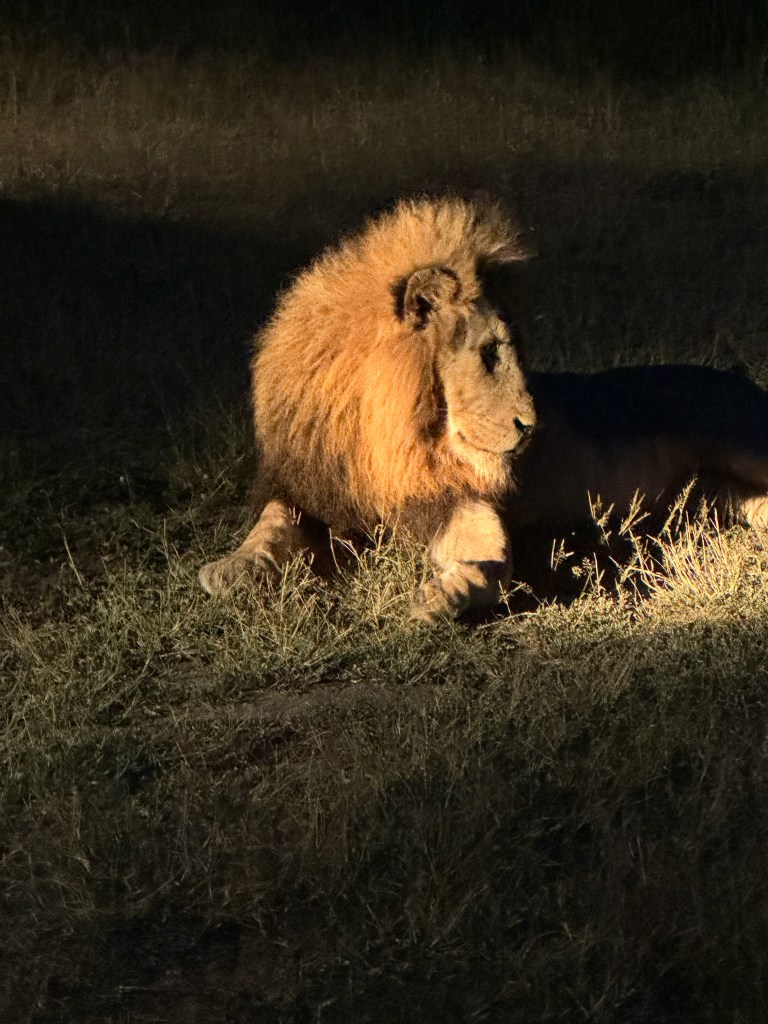
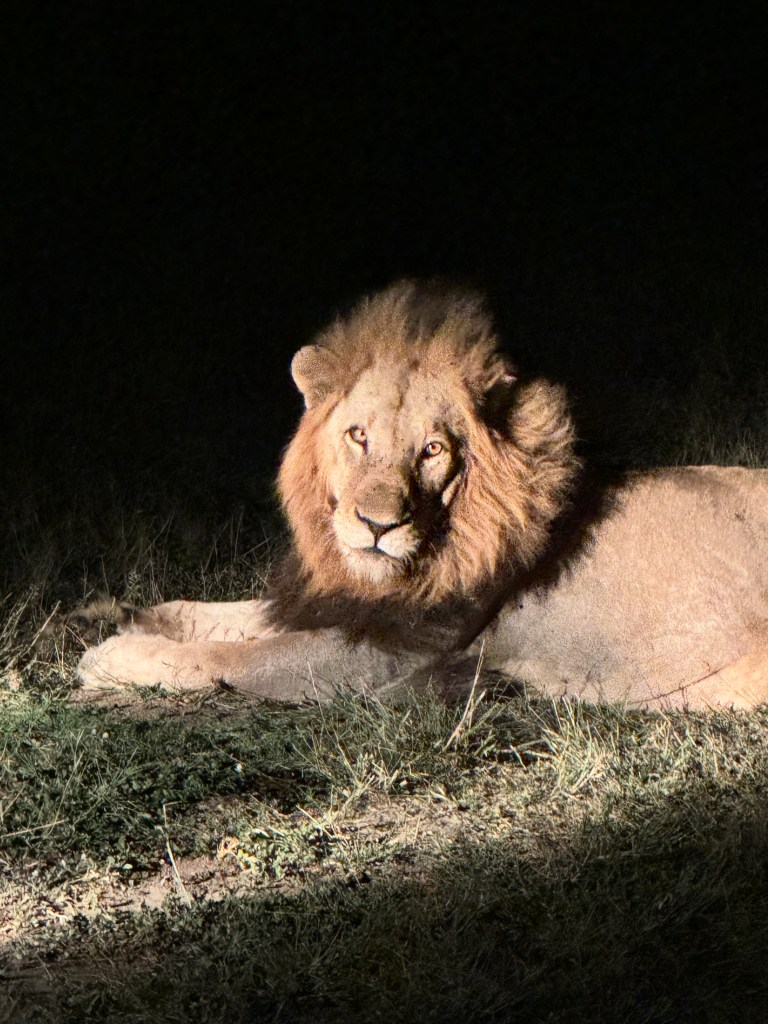
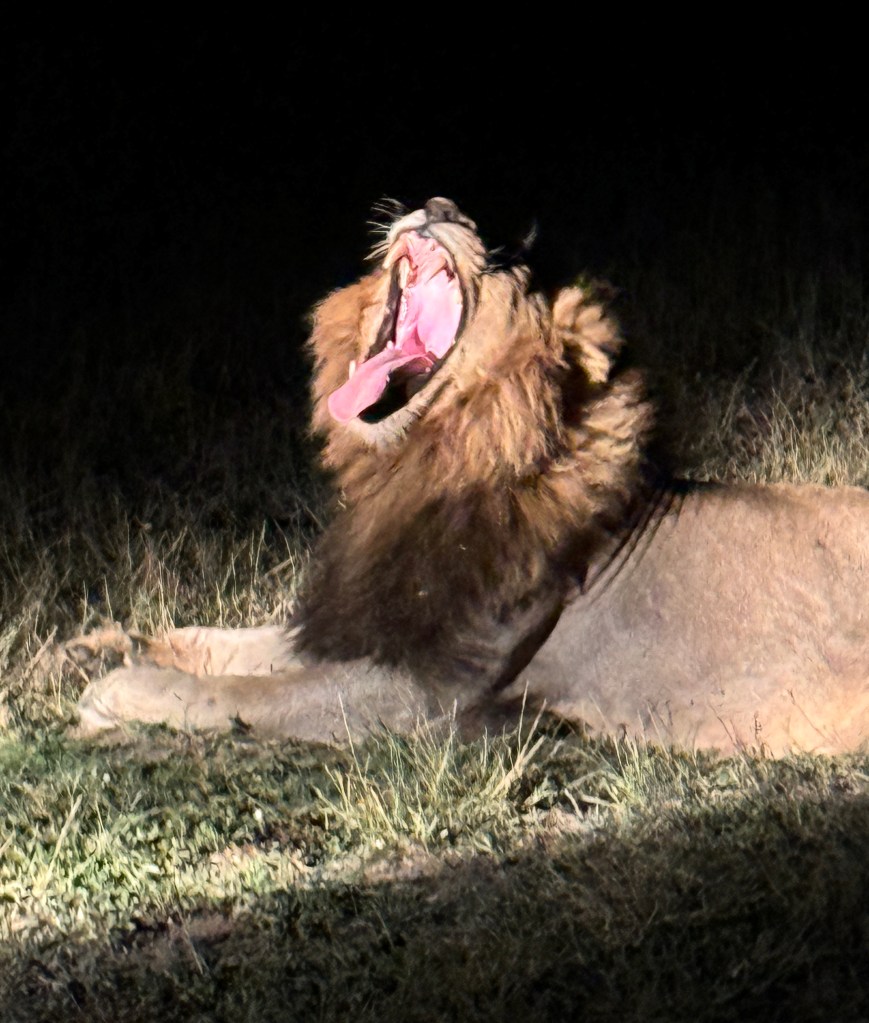
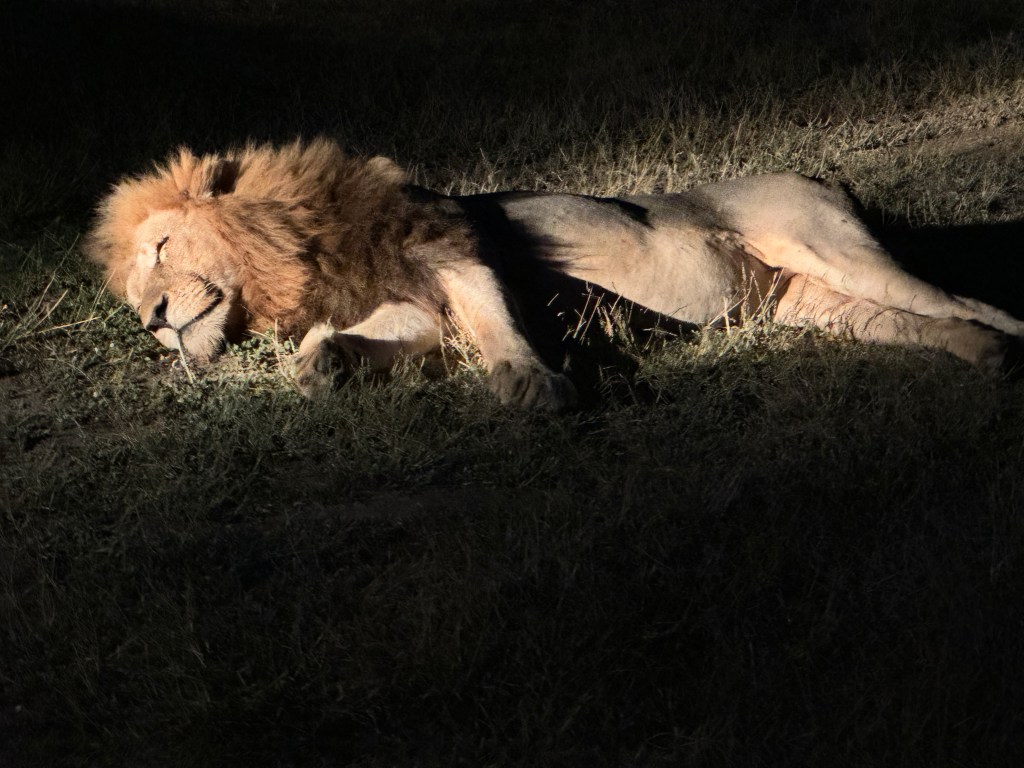
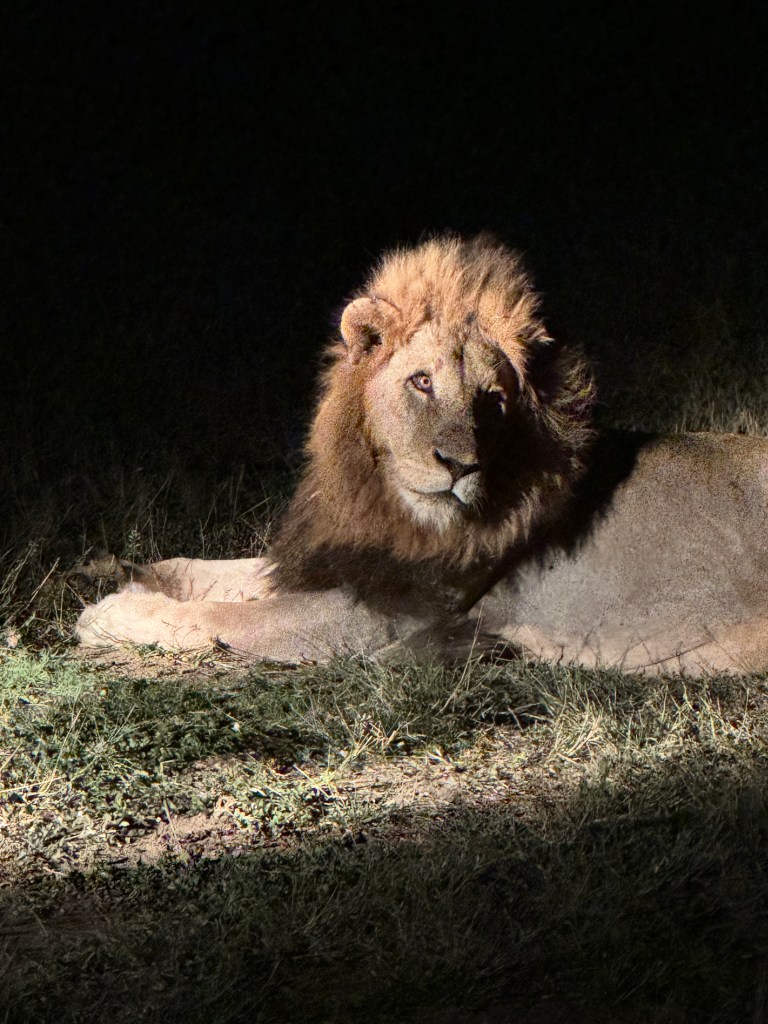
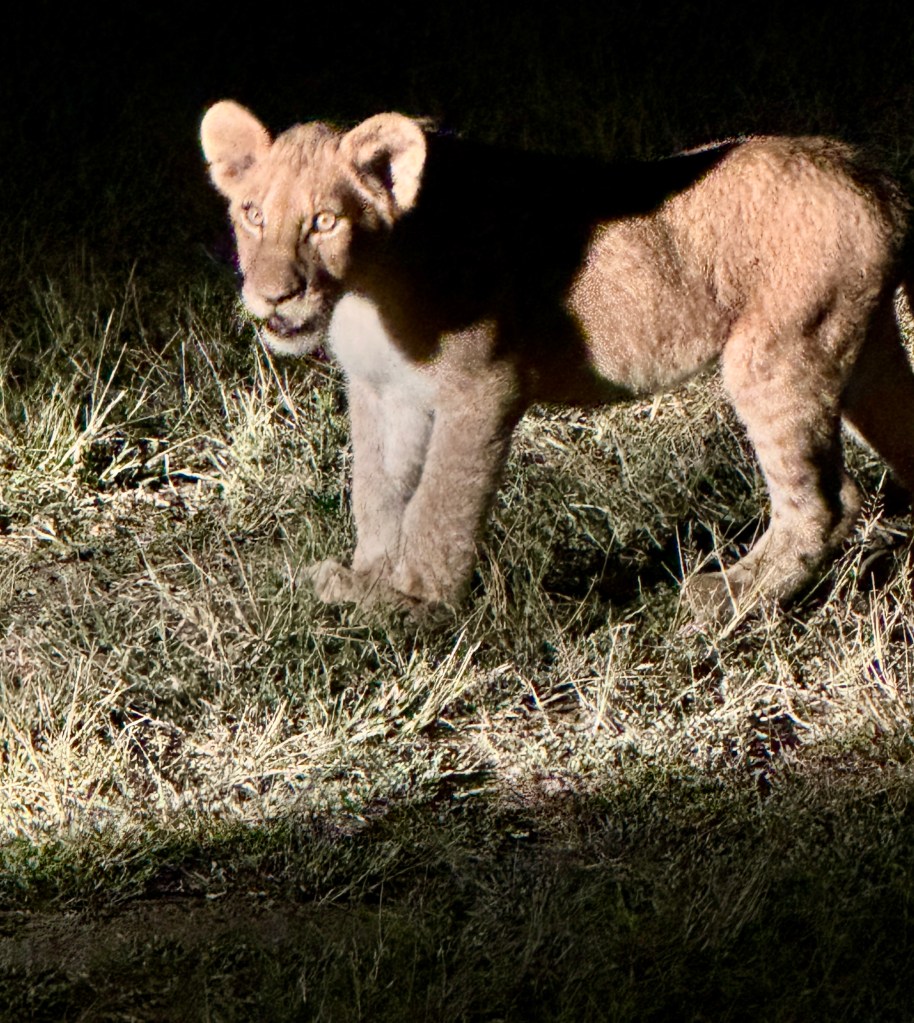
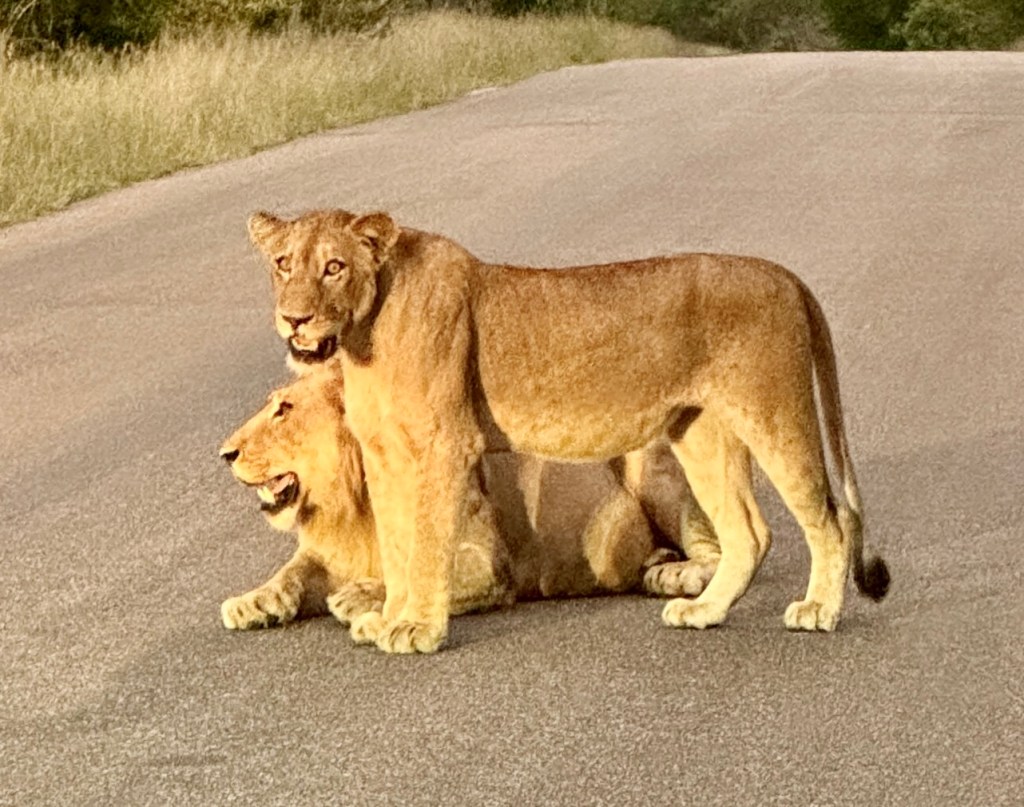
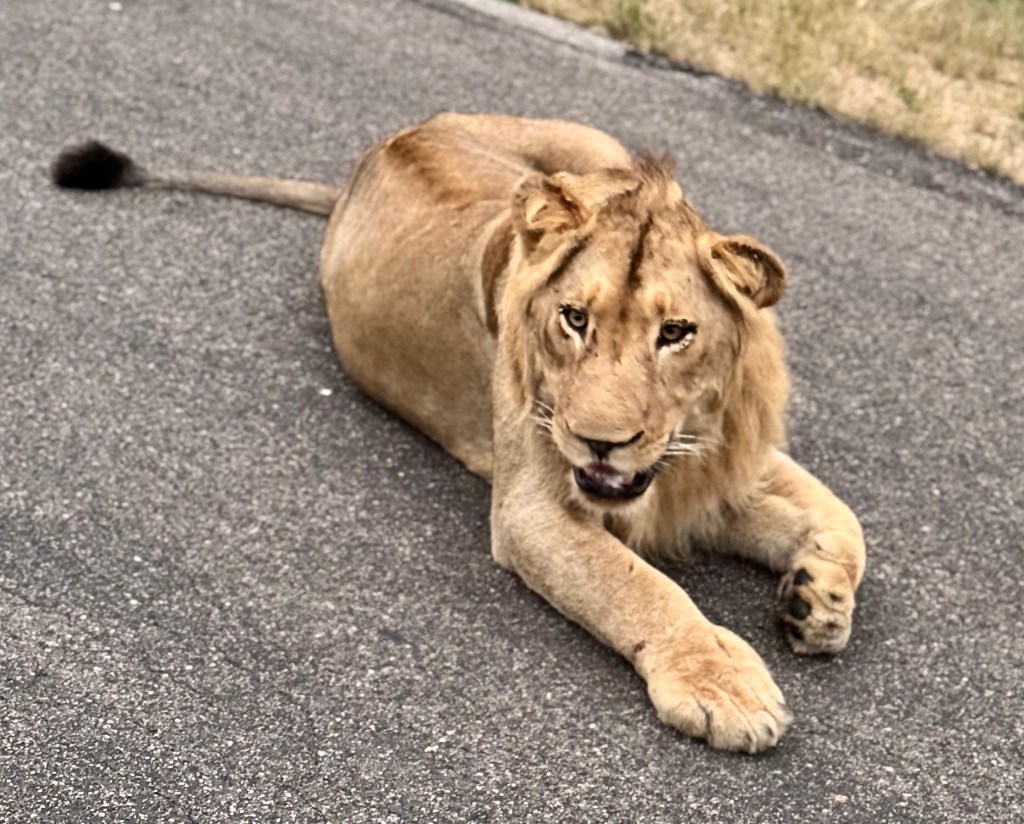
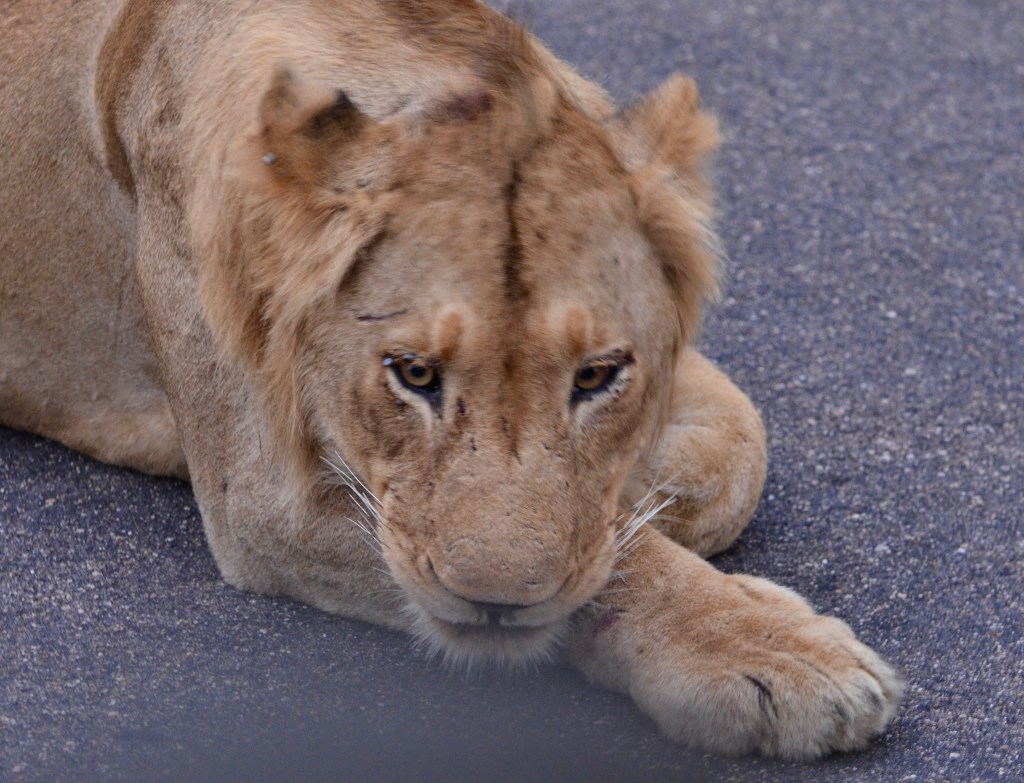
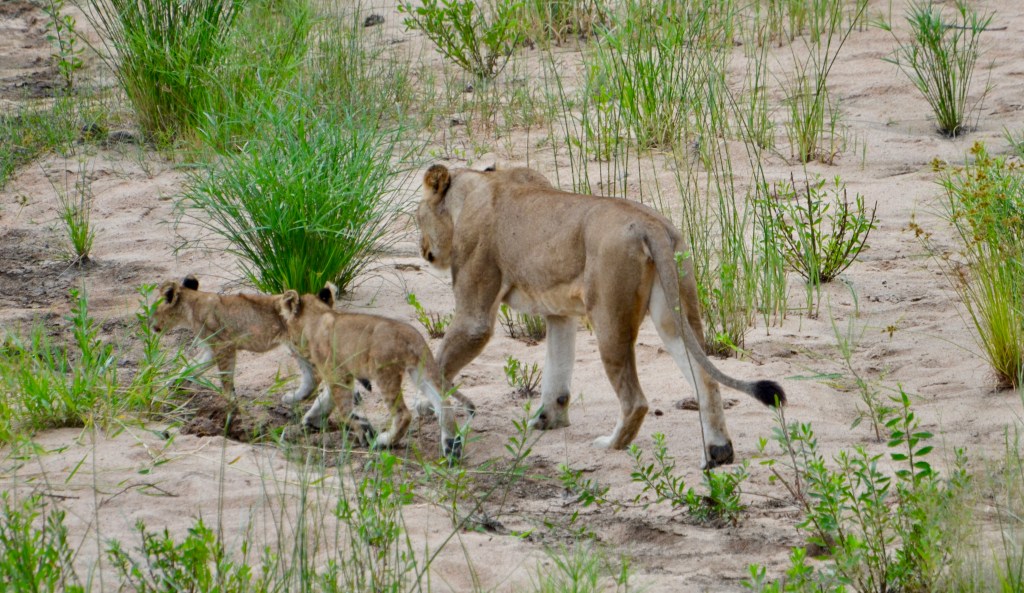
First the lions – the “king of the jungle”. Some of the shots were taken at night on the way back to the lodge. We were so close to the lions – to quote Peter “we could have reached out and touched them”.
We enjoyed watching the two playful cubsMommy nursing the cubThis was a large pride of lions – this is less than 1/2 of themIt looked like he was smiling – males seem to sleep alotThe cub was curious so came right up to the vehicle
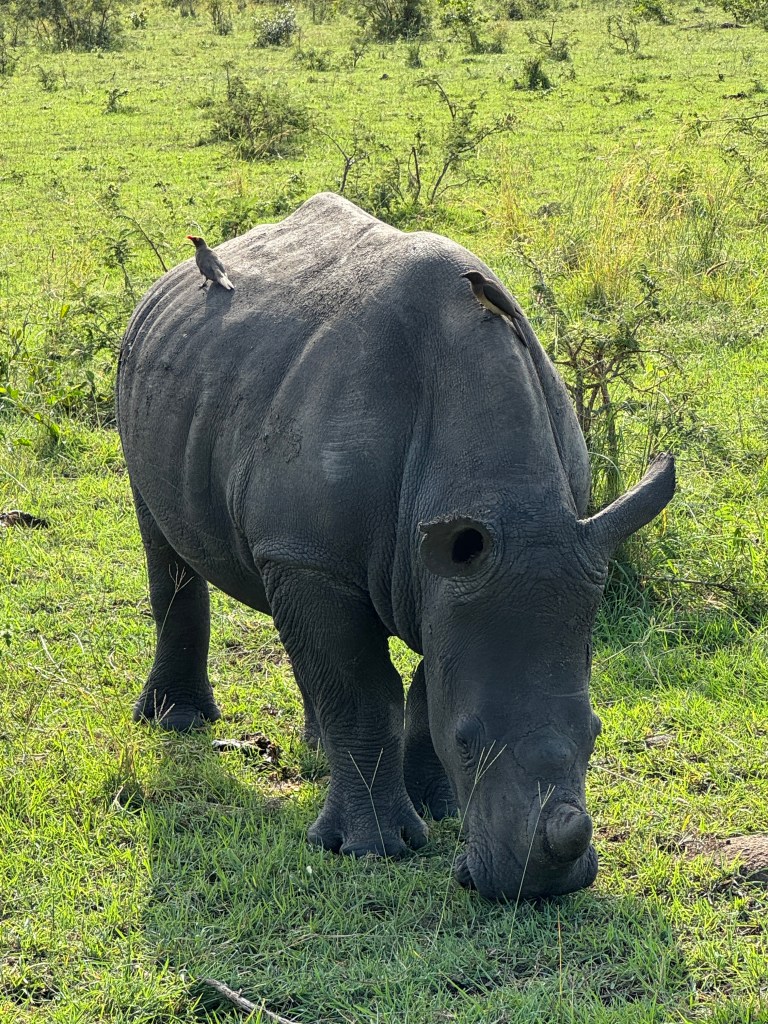
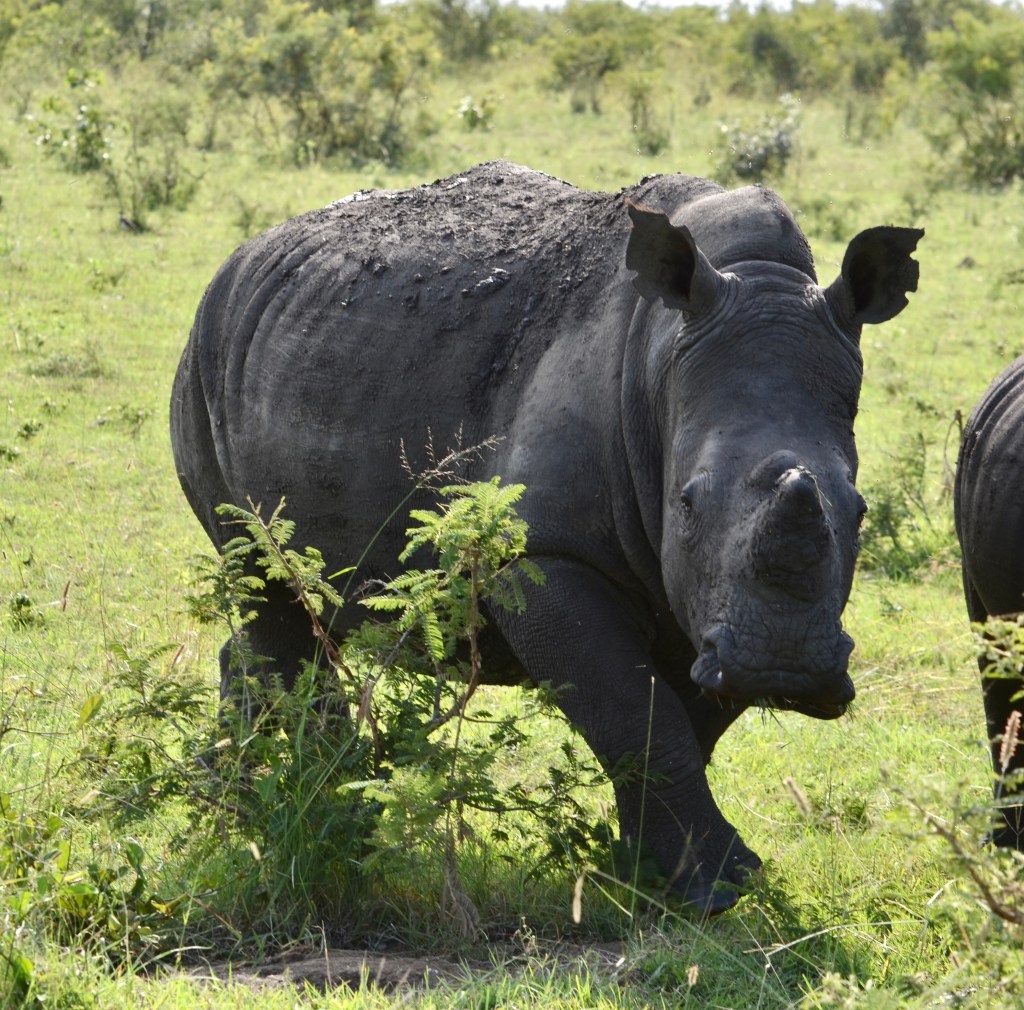
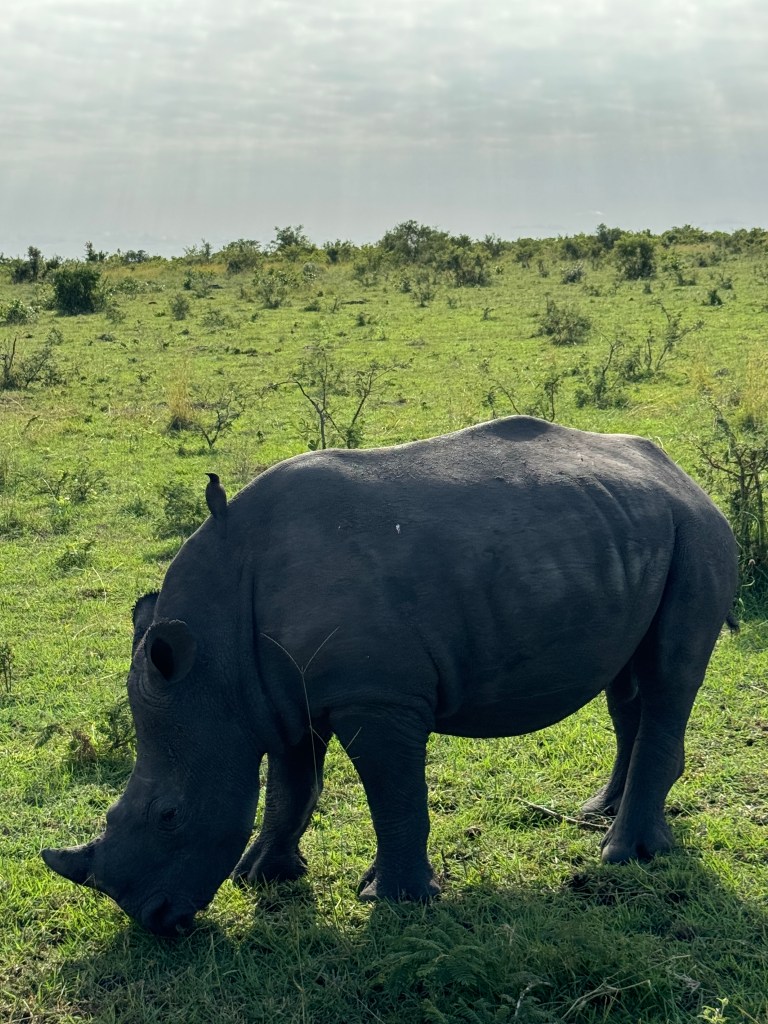
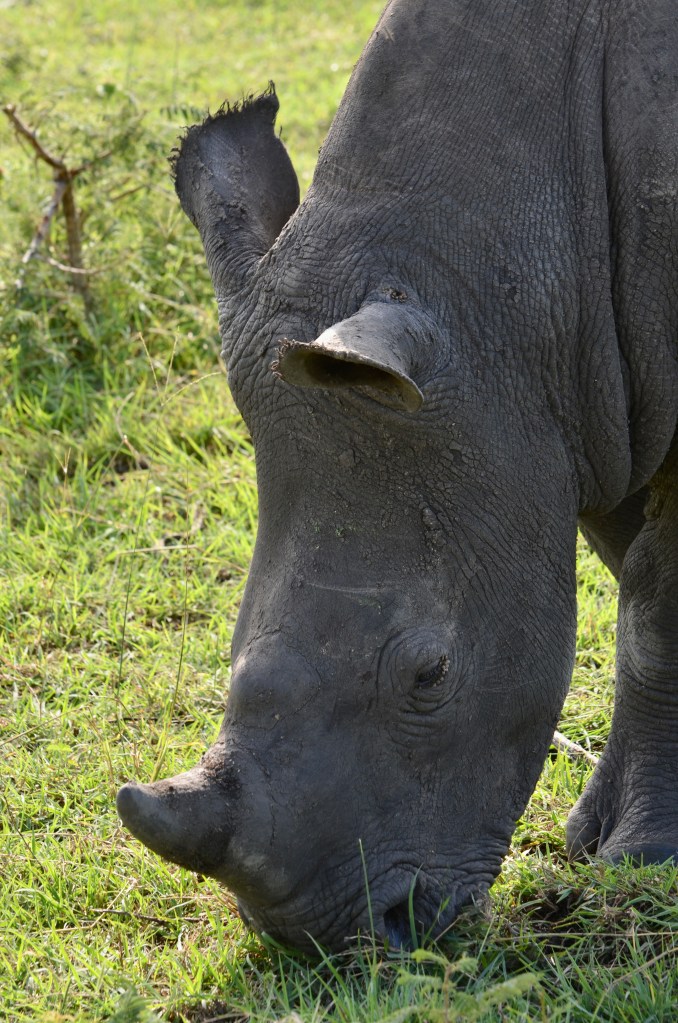
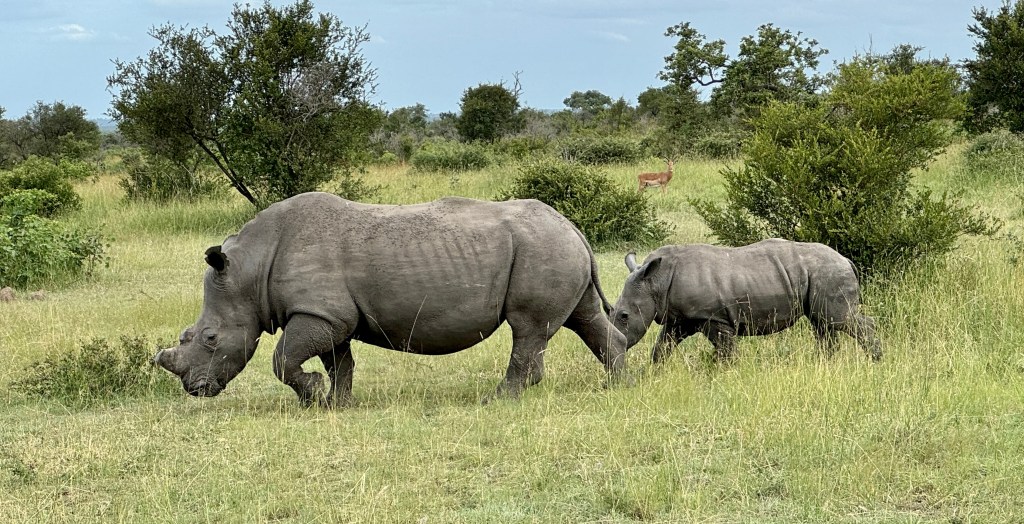
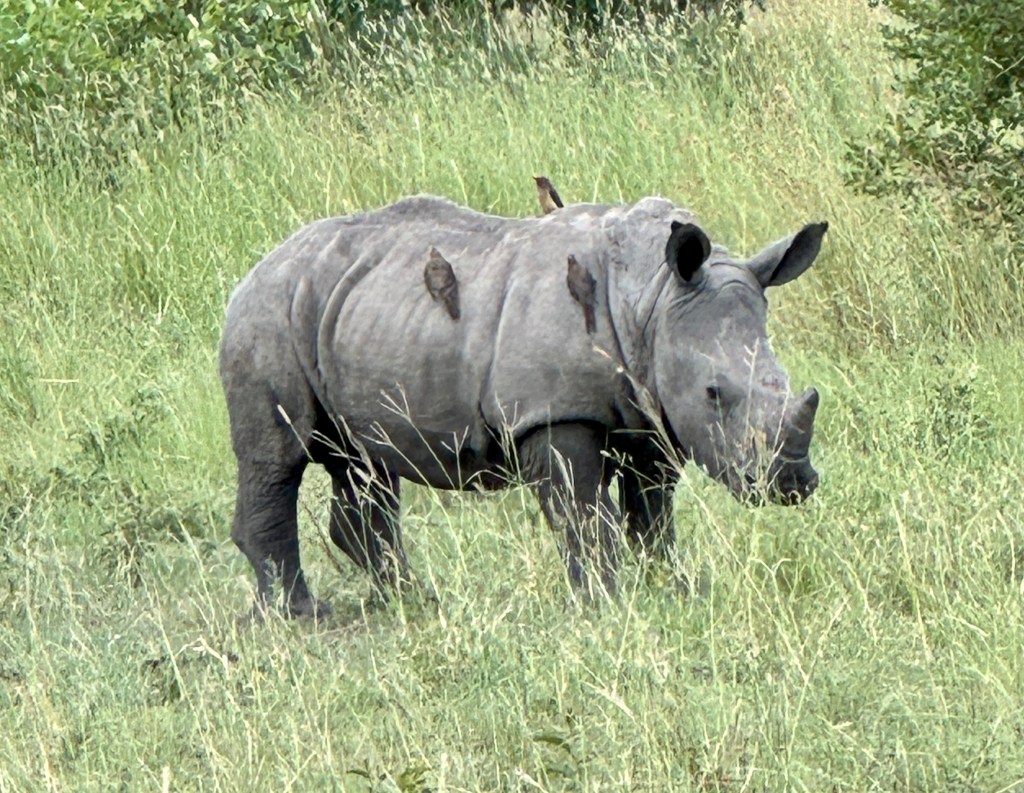
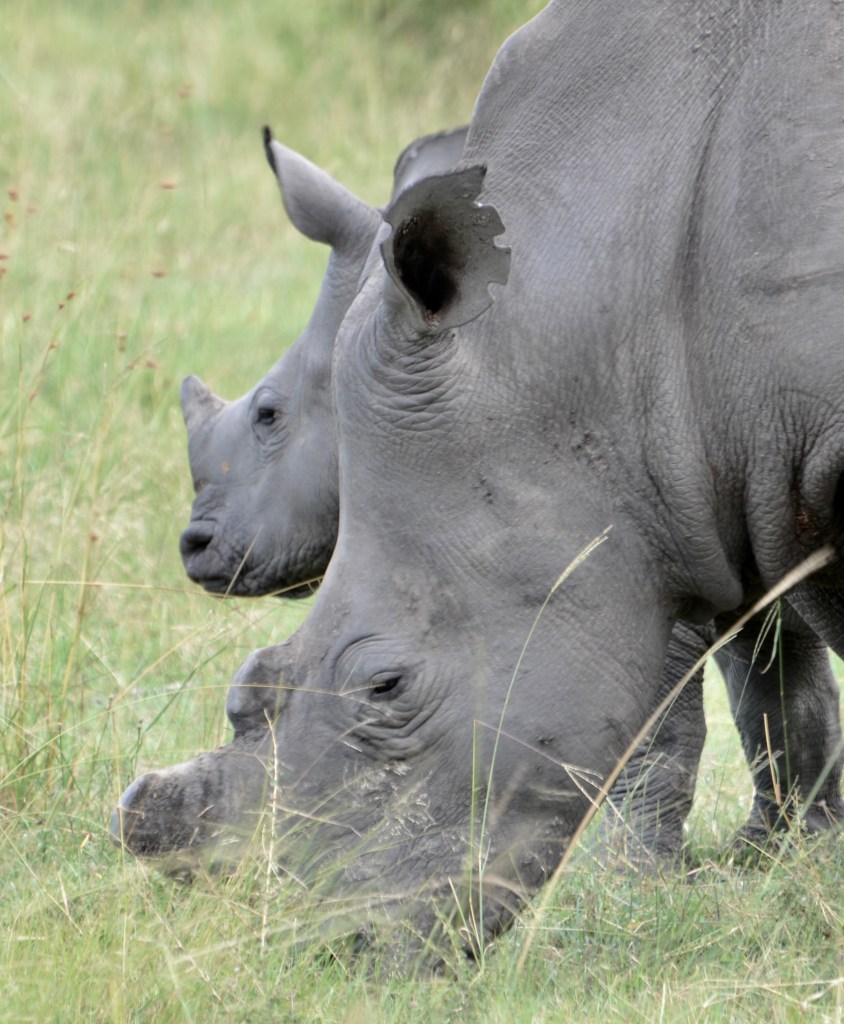
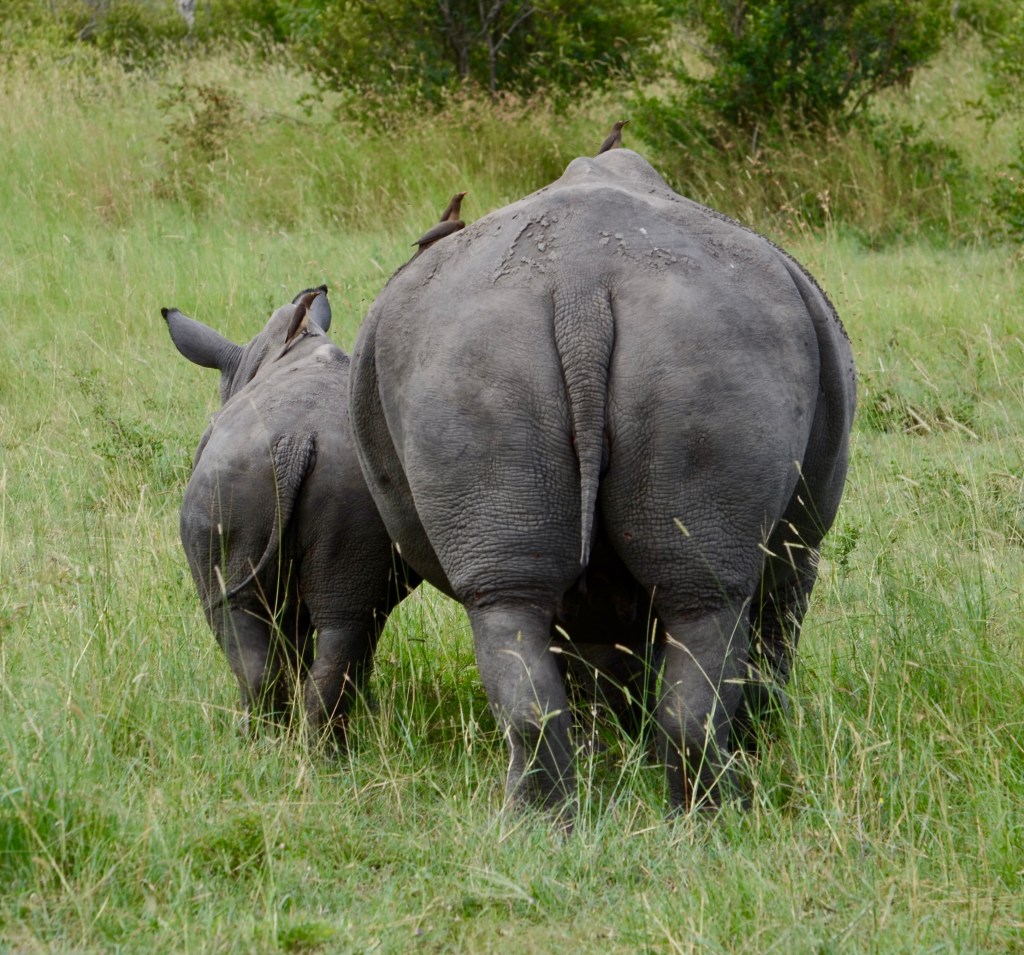
Next the White Rhinoswhich are characterized by a square lip – the “grass eaters”
It was so nice to see rhinos before the horns had been removed (to deter poaching)Horn was removed on this motherThey had enough of us.
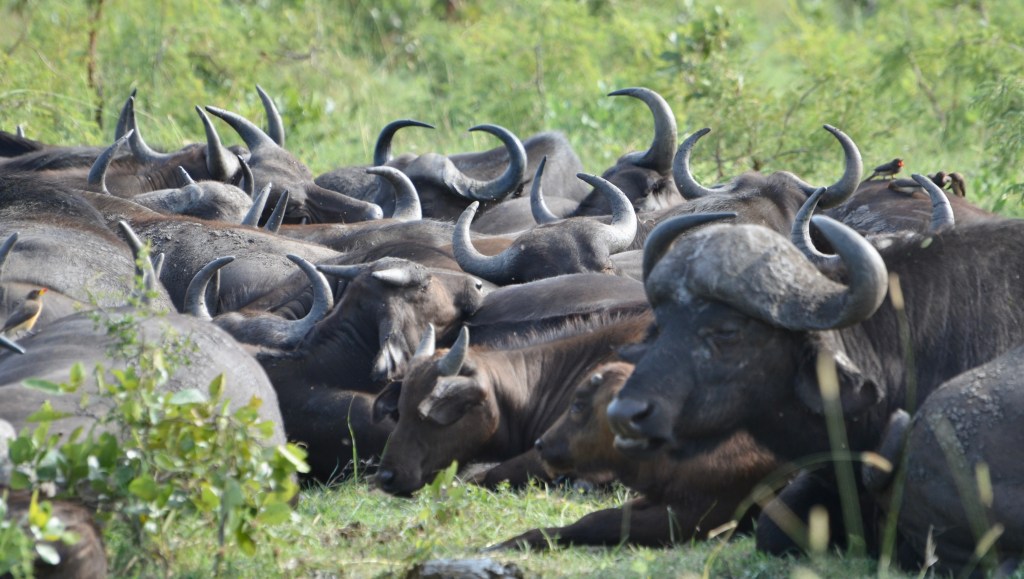
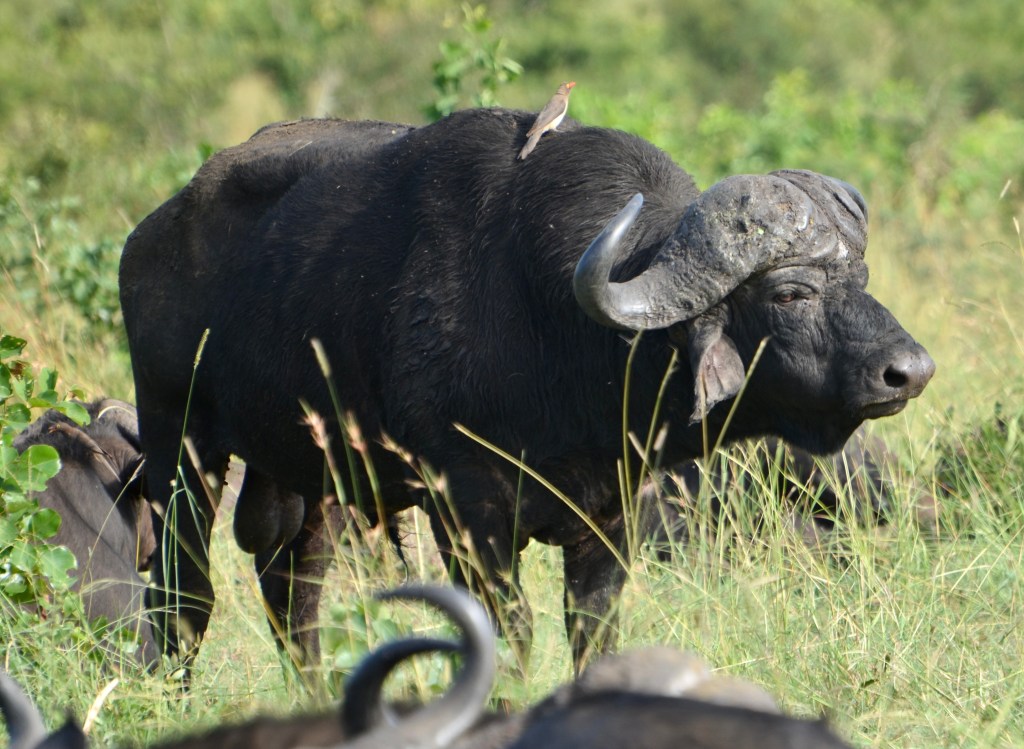
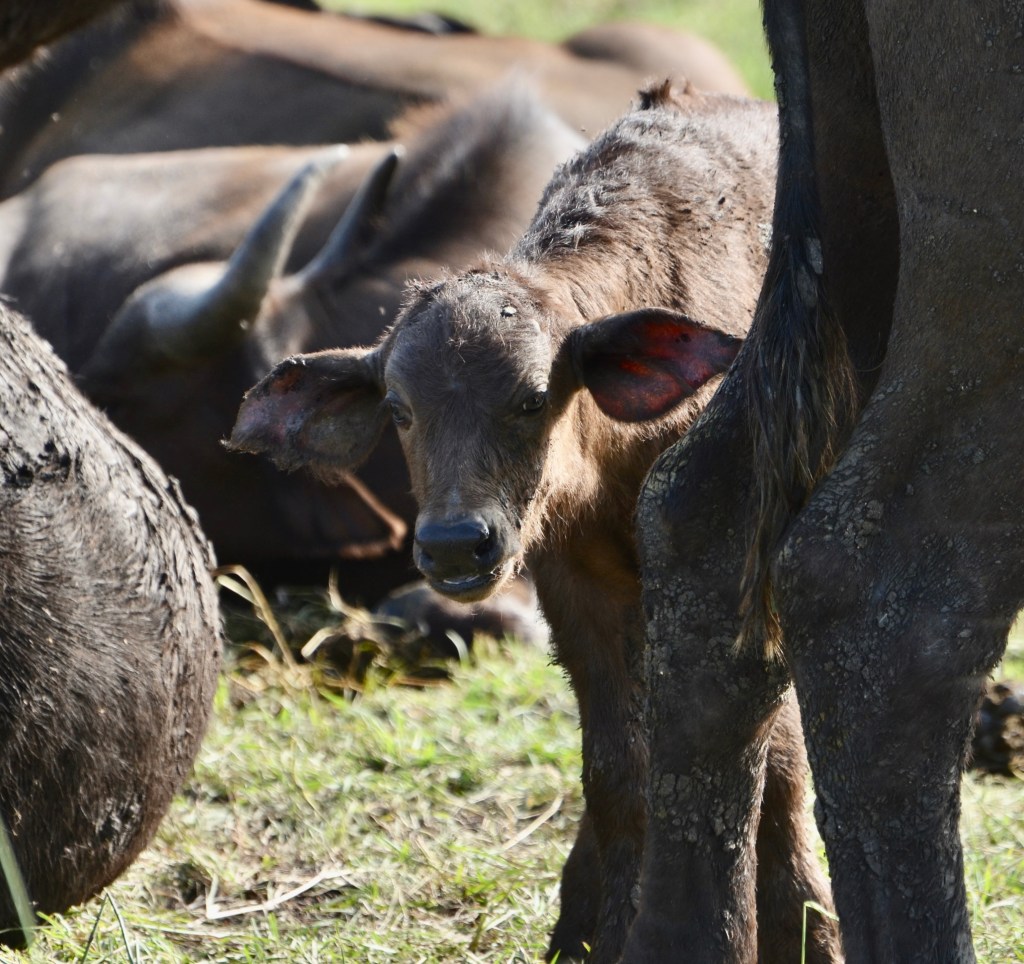
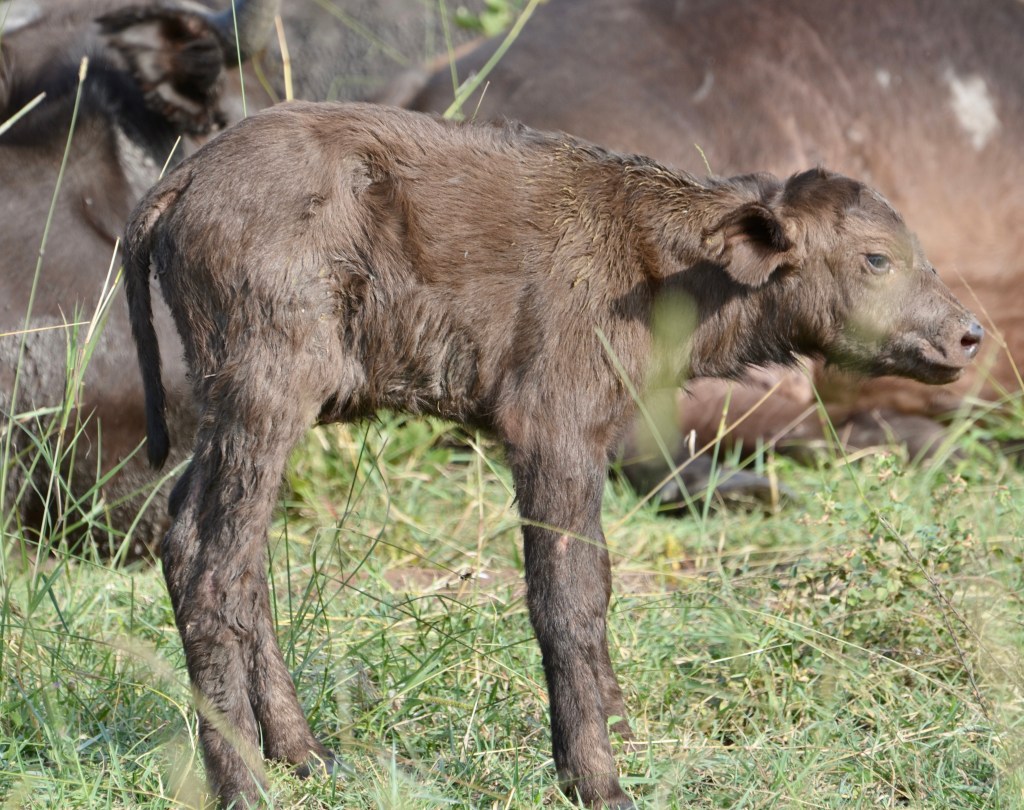
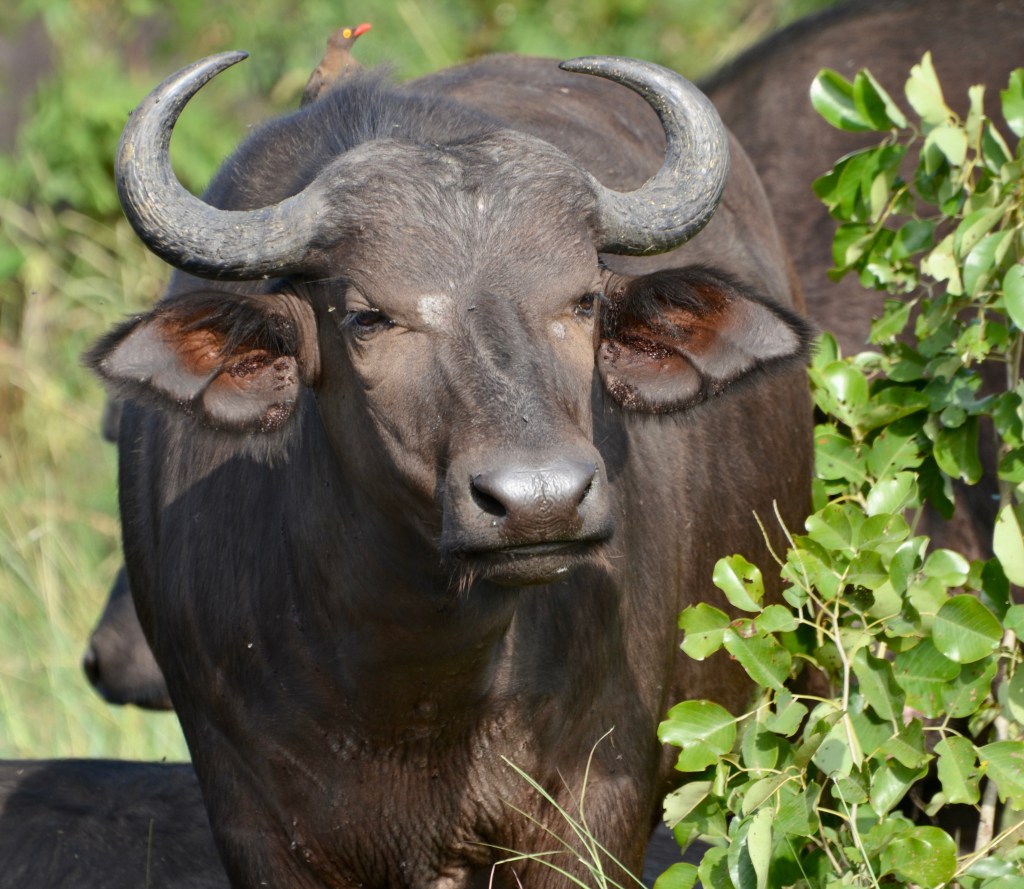
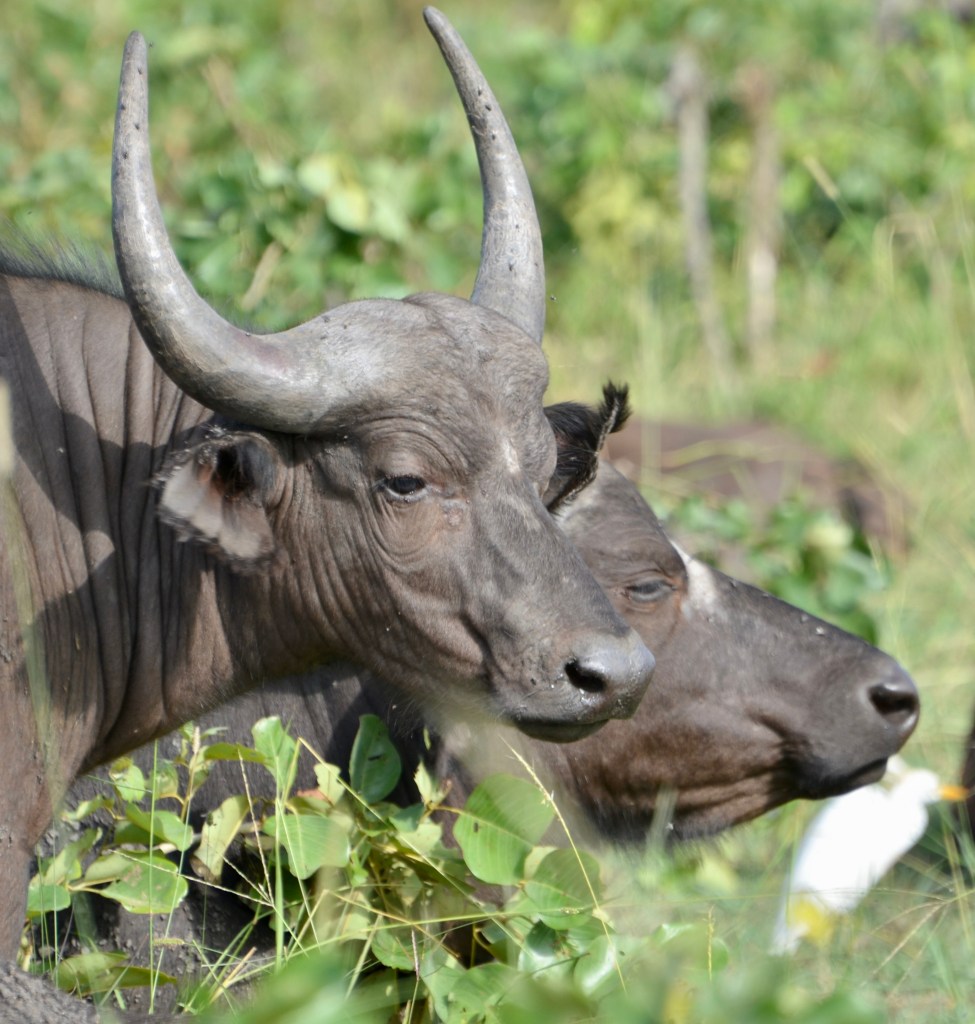
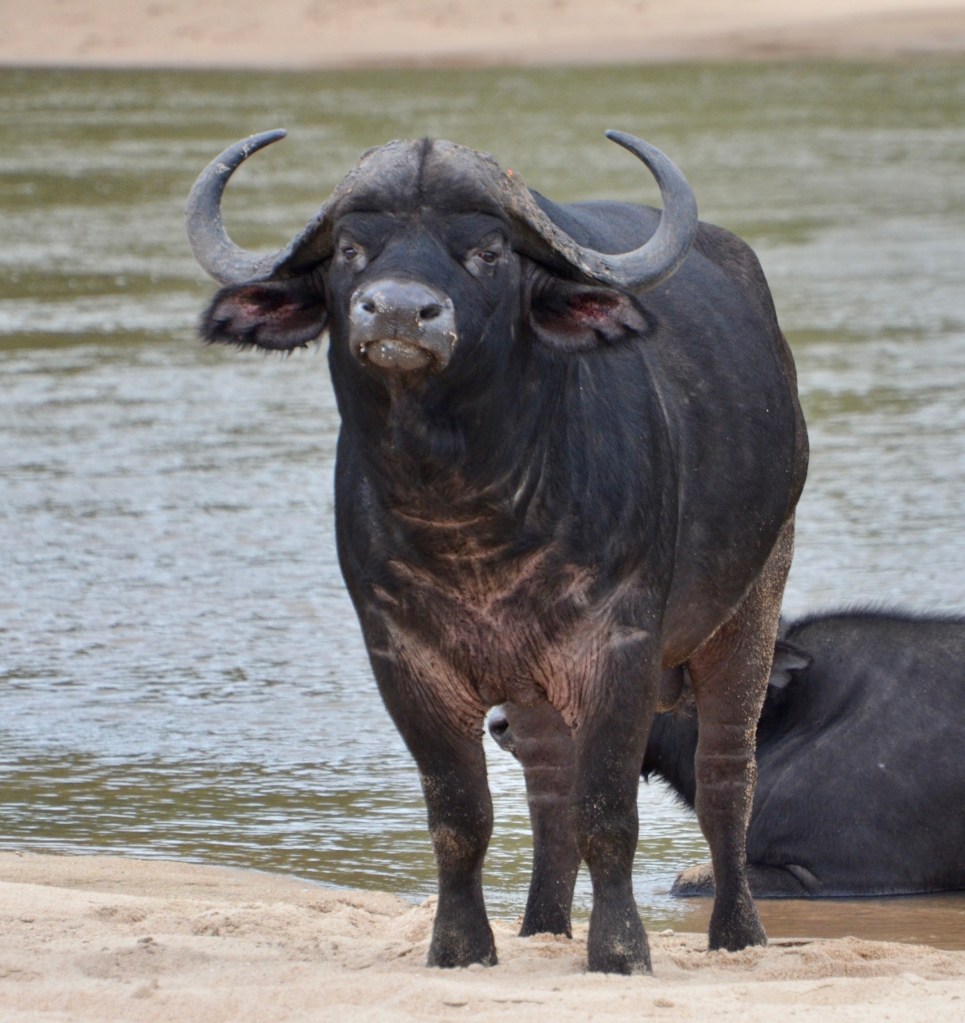
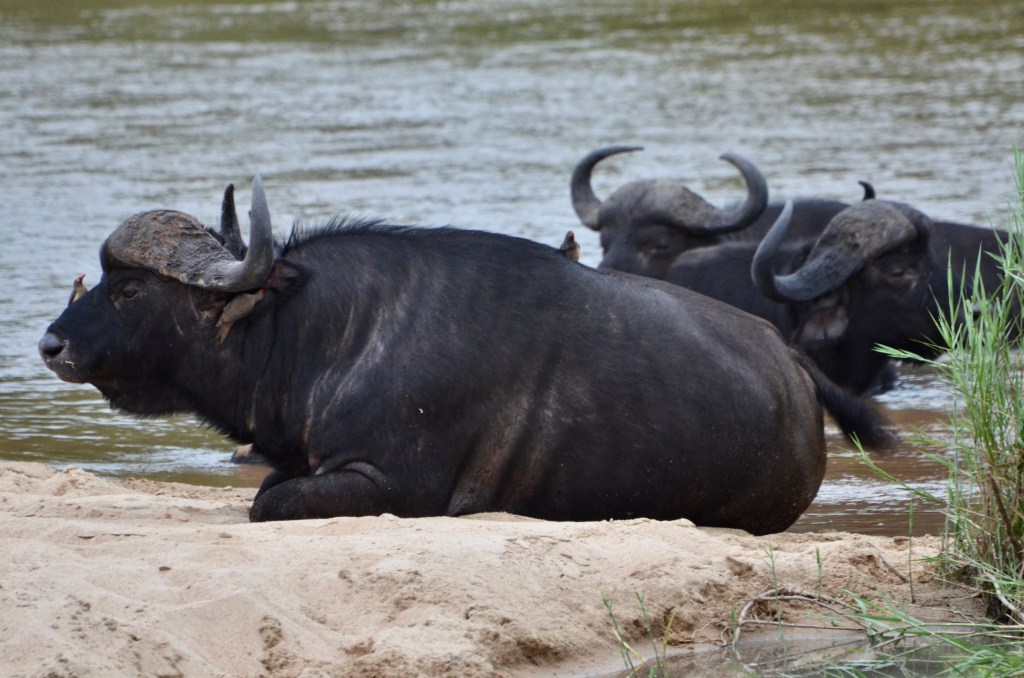
Number 3 of the “Big Five” is the Cape Buffalo – one of Larry’s favourites
There were a couple of hundred Cape Buffalo – too many to capture in a photoThe male has the “helmet”A newborn Rodger said this little one was born a few hours ago as he was still very wobbly.The little bird on the Cape Buffalo’s back was eating insects.There were 4 “old males” who left the herd and “retired” by the river. They could no longer keep up with the herd.
With so many photos, we decided to post in threes parts. This ends Part 1; Part 2 will feature the elephants and the leopards.
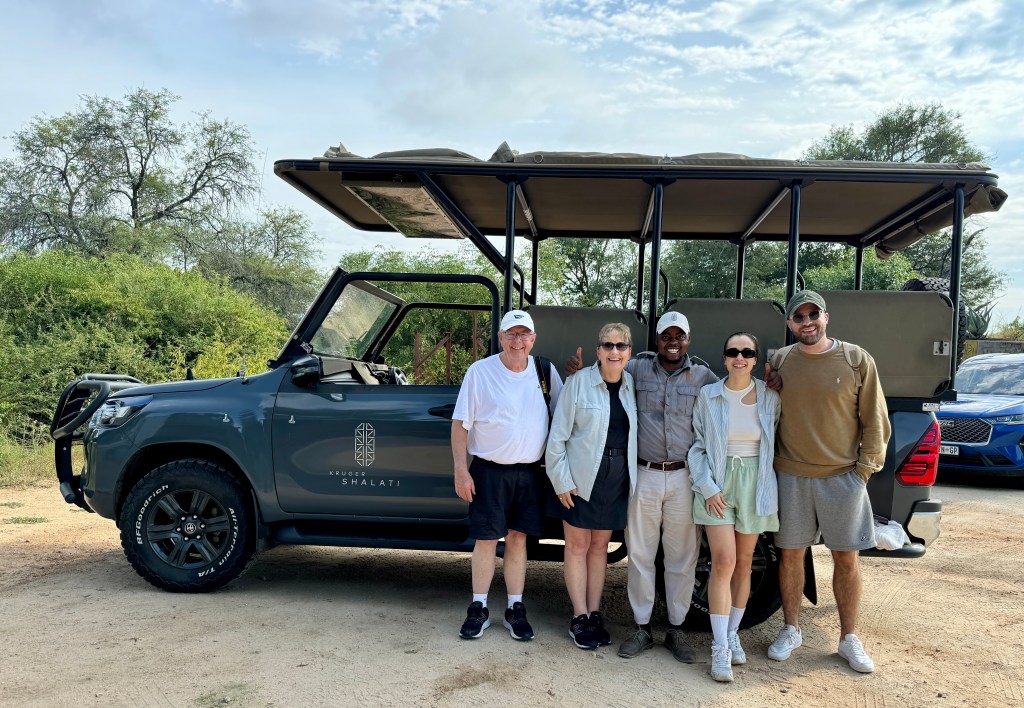
On February 8th we flew from Cape Town to Skukuza. Skukuza Airport is situated in Kruger National Park, so we had a very short transfer to Kruger Shalati the Train on the Bridge (less than a 10 minute drive from the airport). Our safari guide Mishack met us at the airport which was a nice start to our time here.
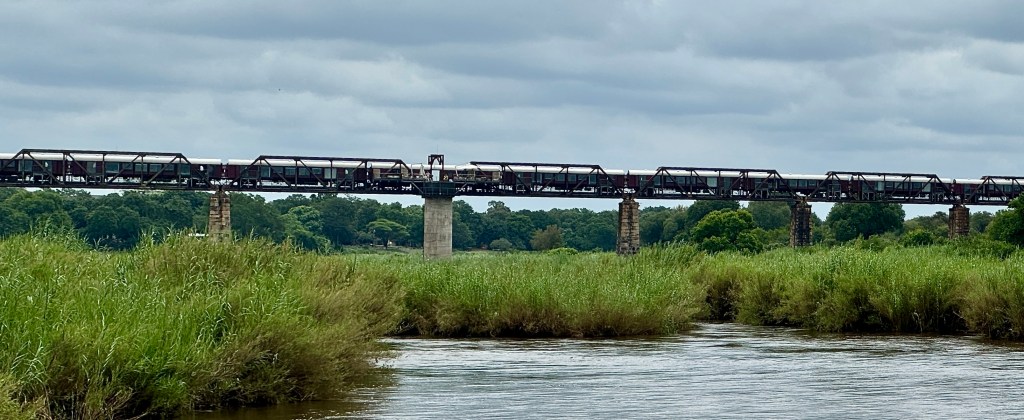
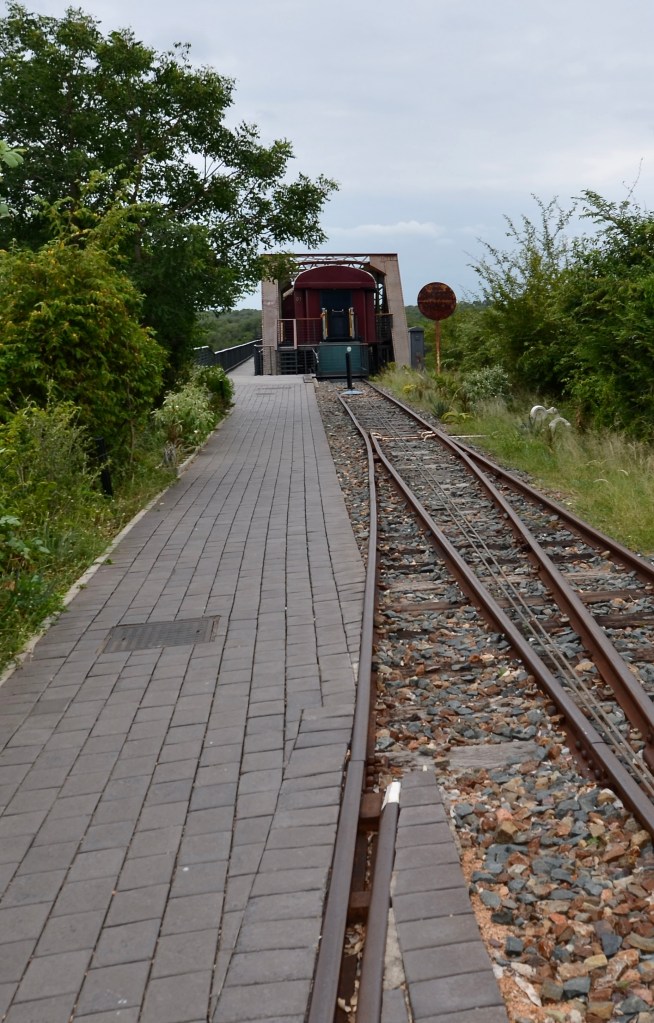
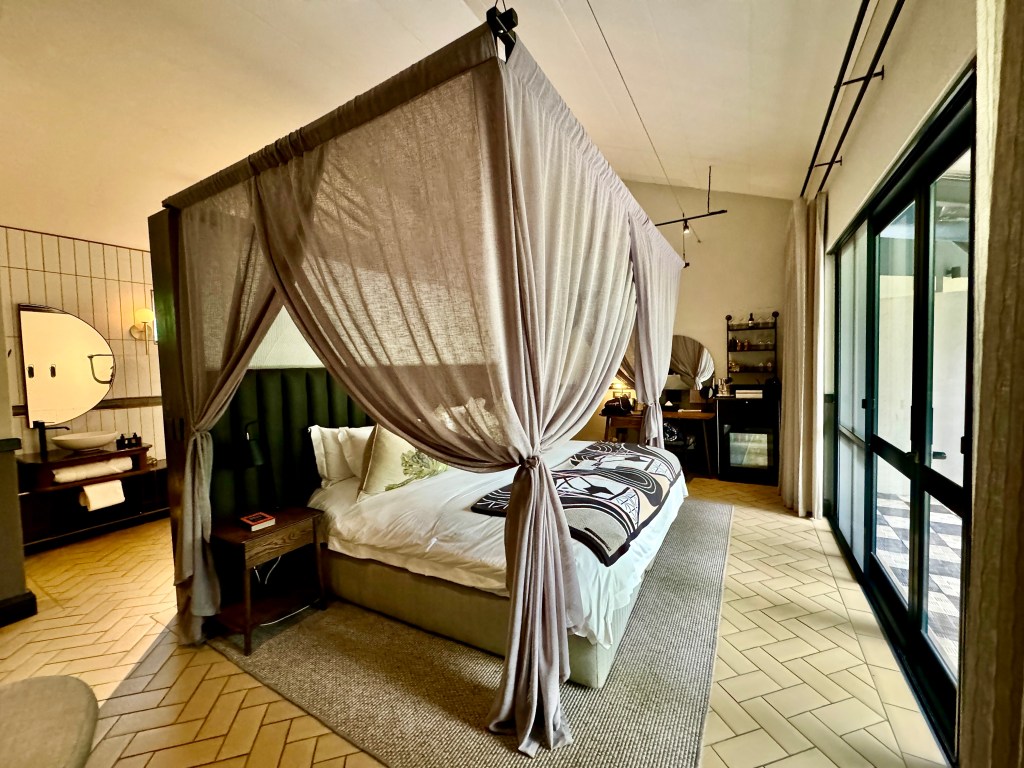
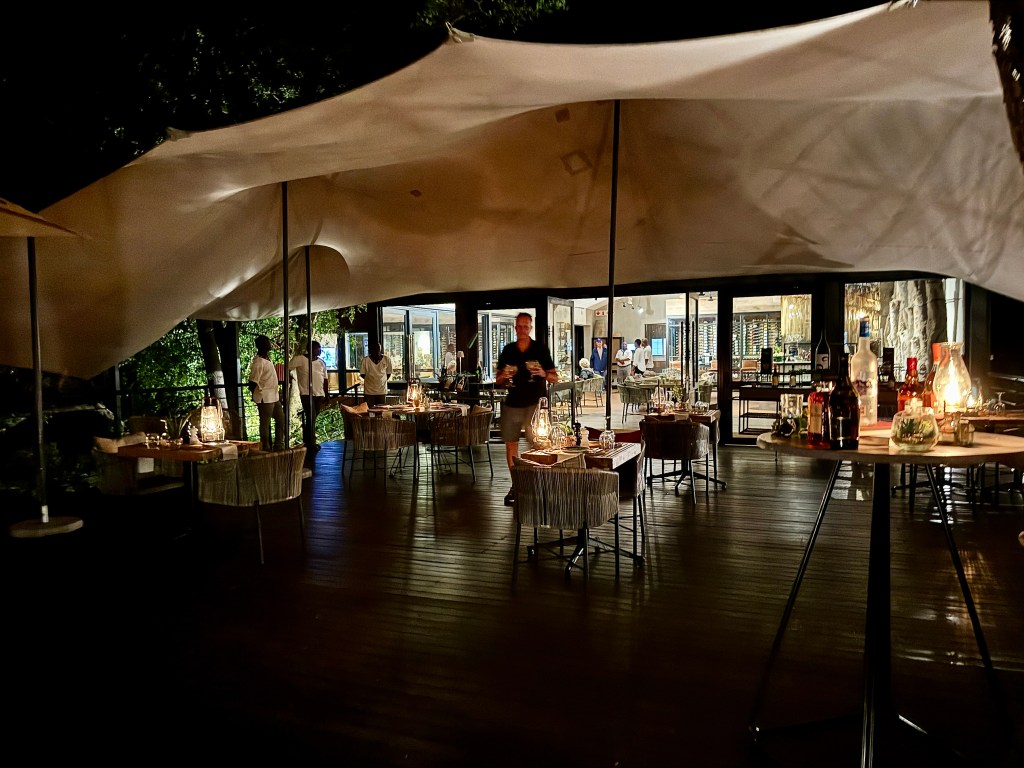
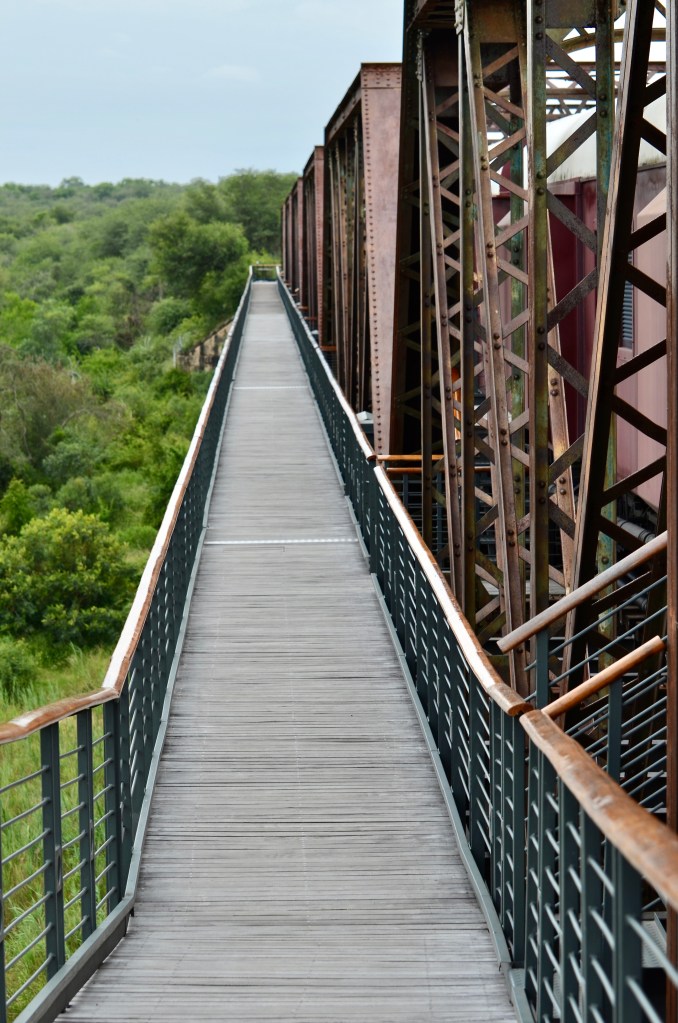
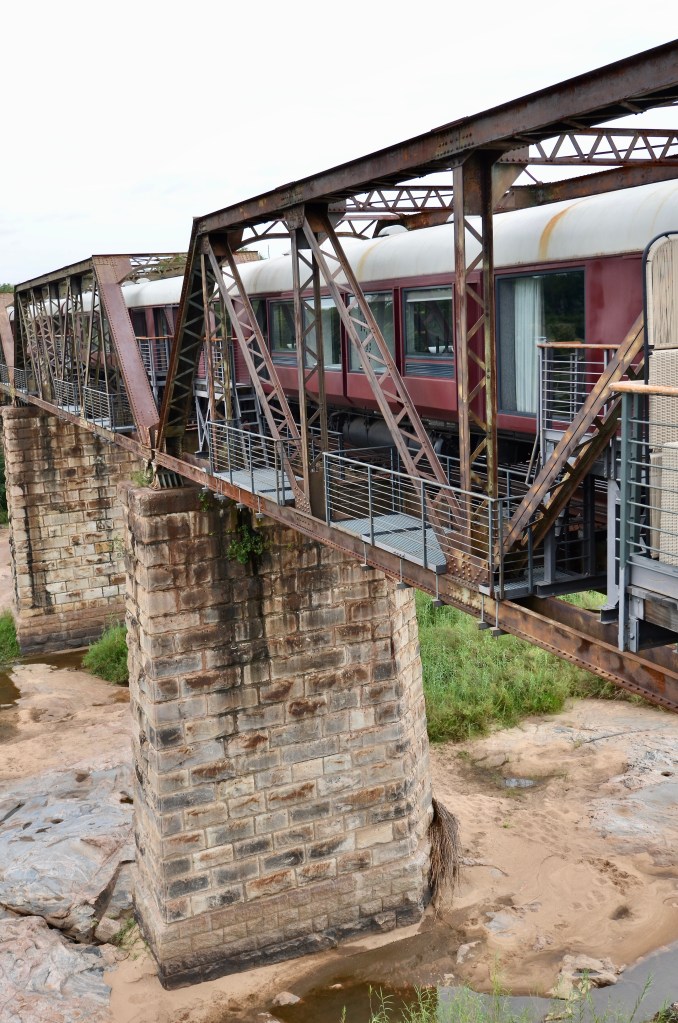
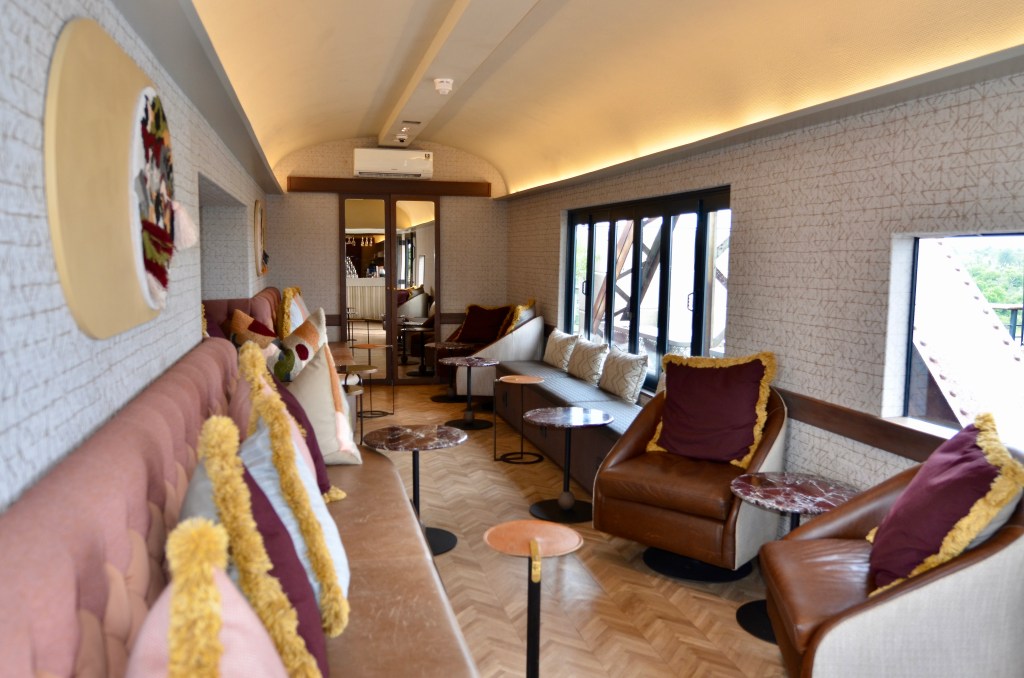
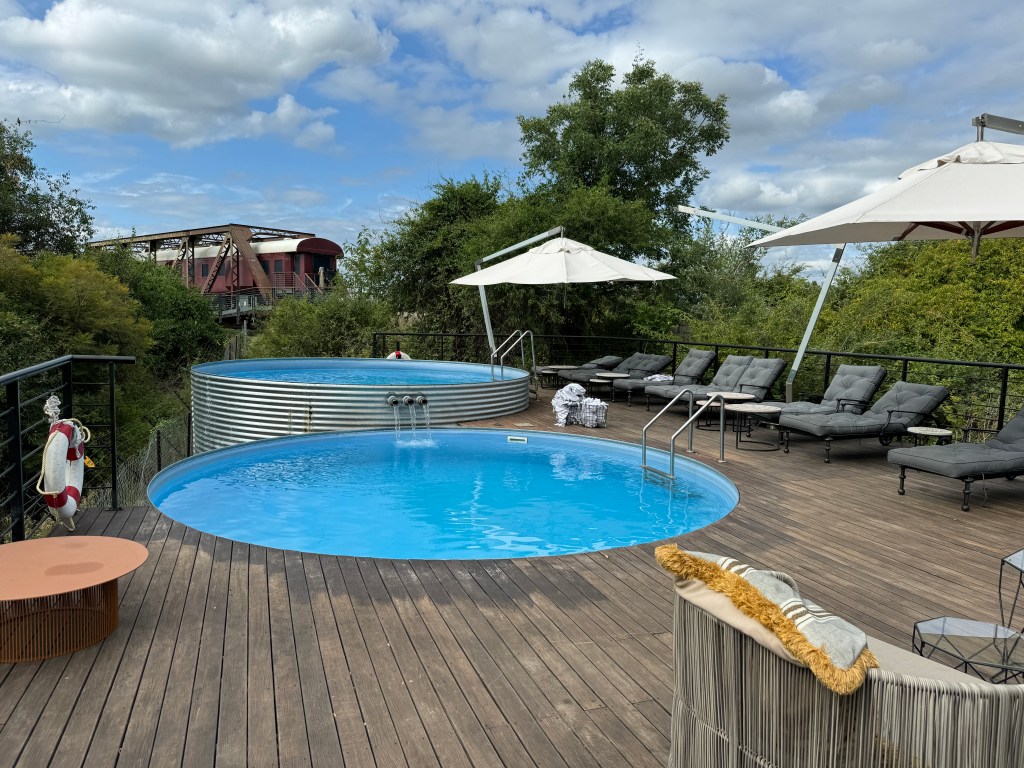
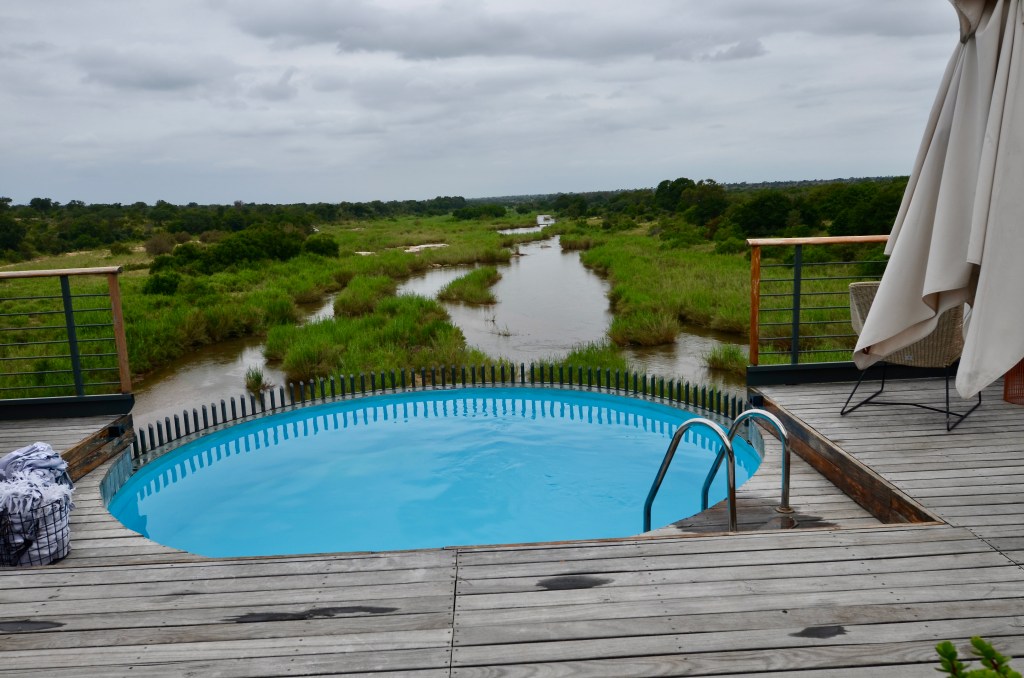
Kruger Shalati (Shalati) is permanently stationed on the Selati Bridge which is suspended 15m above the Sabie River in Kruger National Park. Shalati has 24 Train Carriage Suites and 7 Bridge/Garden Suites. Mid-train is a bar, small swimming pool and patio area with a view of the Sabie River – a spot to watch the hippos. The main restaurant is in the garden area; it has a large outdoor dining area where we ate all of our meals. The meals were very good as were the wines and drinks. Shalati was recommended by friends (thank you Wendy and Gord) – we enjoyed our 2 nights (4 safari drives) at Shalati.
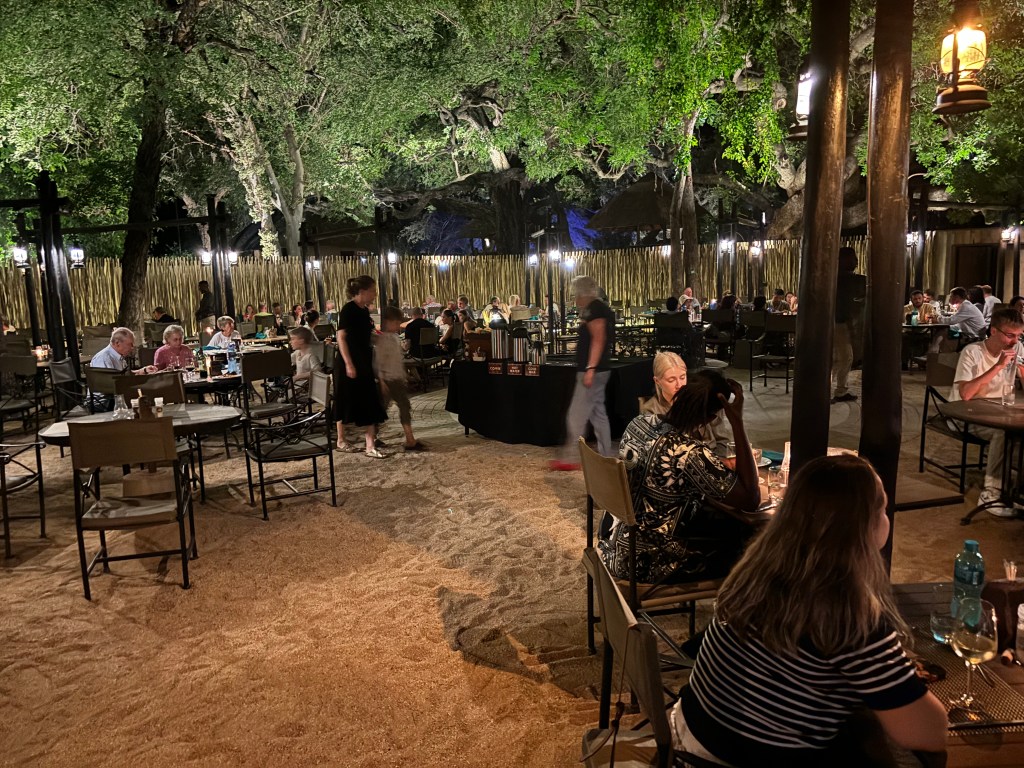
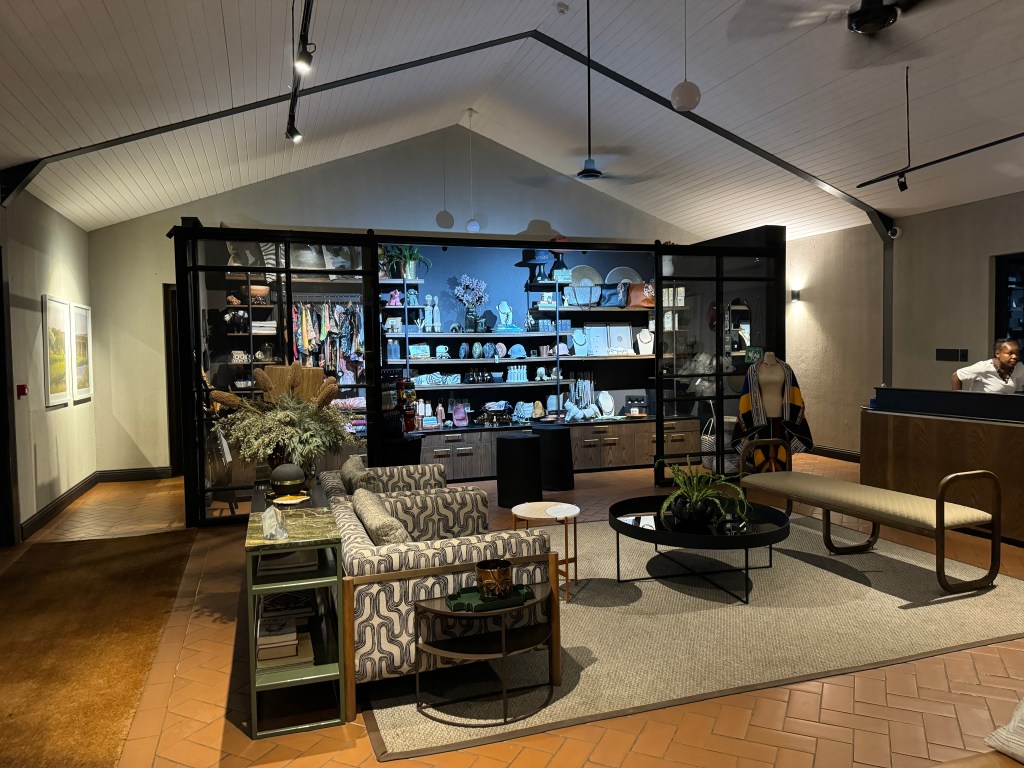
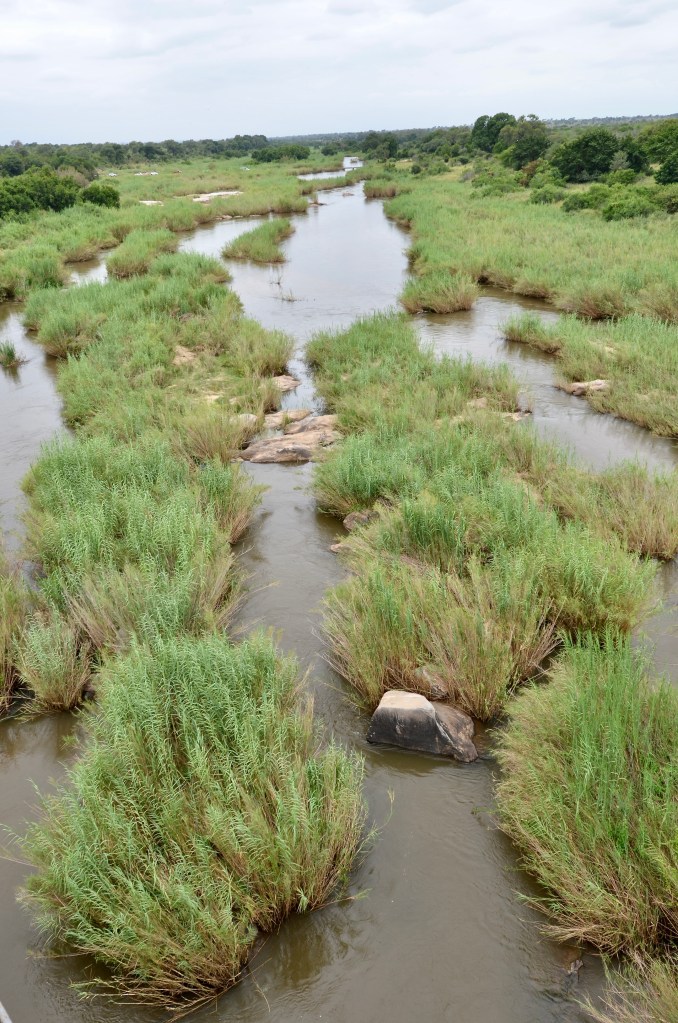
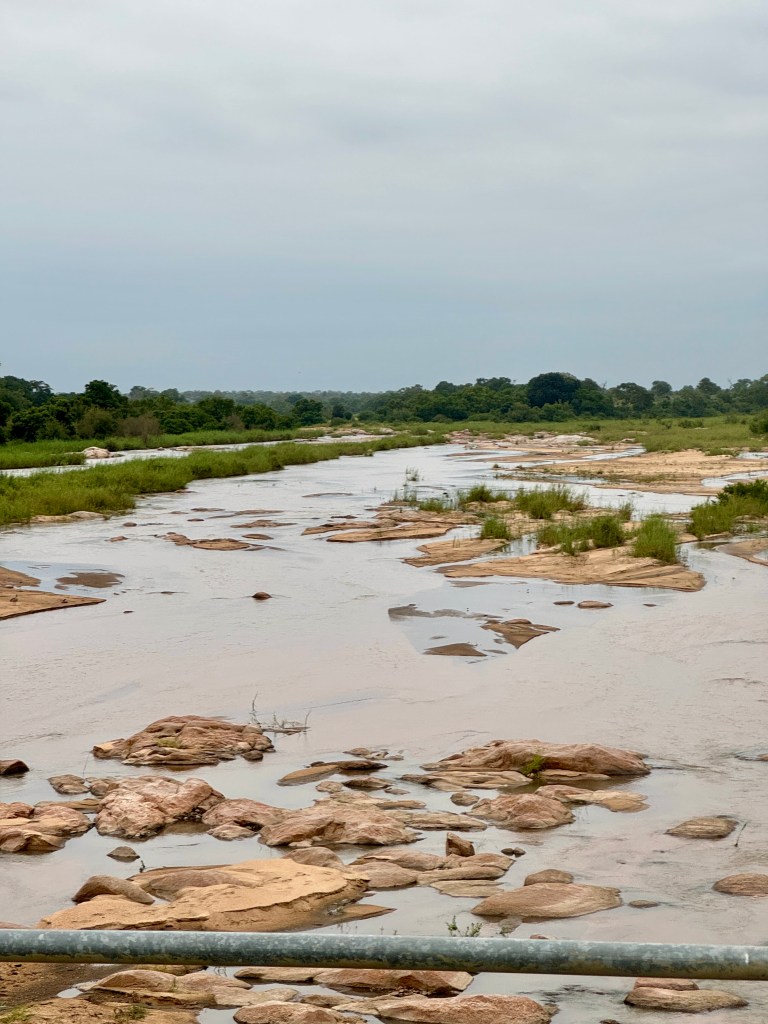
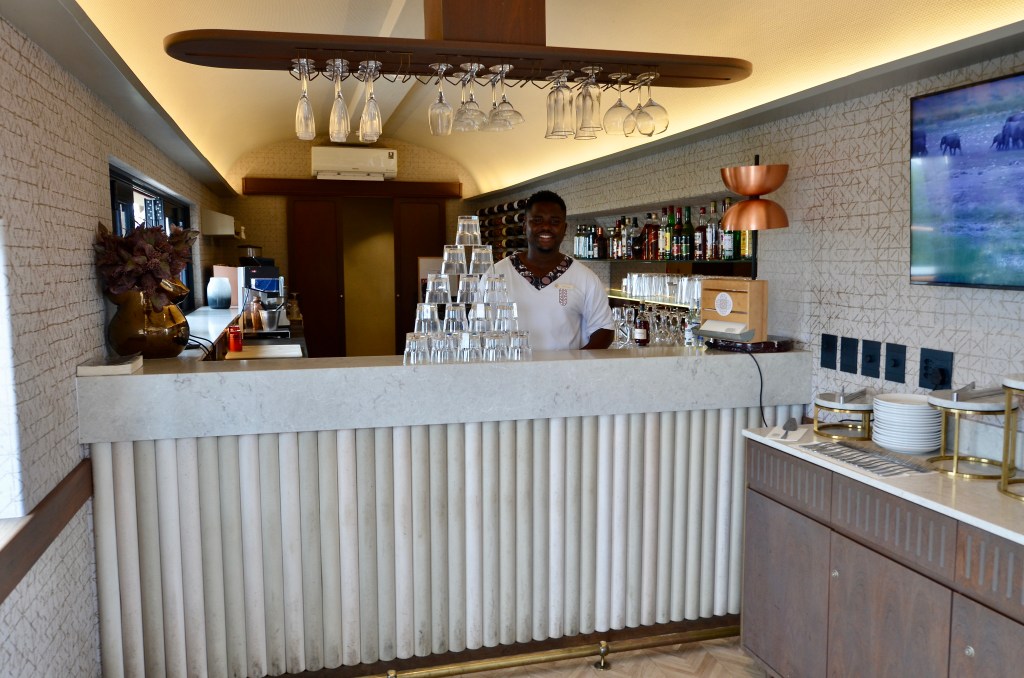
Train car suites and bar area overlooking the Sabie RiverVery comfy king bed and view of the gardenReception and gift areaLarge outdoor dining (this is only a portion of it) plus an indoor dining area Walkway to the train suites and to the bar and patioView of the Sabie River from the Shalati Bar areaSabie River from the Shalati bridgesideBridge barIndoor train lounge areaGarden PoolsPool on the Bridge
Game drives were done in Kruger National Park. The park is an area of 7,523 square miles (19,485 square km) and is about 200 miles (320 km) long and 25 to 50 miles (40 to 80 km) wide. With such a large, lush area and given that the guides cannot ‘off road” to view an animal, it really is “being at the right place at the right time”. If the animal is on the road, or close to it, then the viewing is great. If the animal is in the bush or far off, it is challenging to spot it.
Wake up call was at 4:30 a.m. and the drive started at 5:00 a.m. (very early). We were back to Shalati for breakfast by 8:00 a.m. We headed off for our evening drive at 4:30 p.m. and we were back by 8:00 p.m. in time for dinner. After dinner we were definitely ready for bed.
Beautiful sunrise this morning (Feb 10th)Sunrise – Feb. 10th
We were very fortunate to have only one other couple in our safari vehicle so lots of room; plus Naomi and Fabian (our safari mates) were great to be with. Fabian was excellent at spotting animals (even after he pointed the animal out we had trouble seeing it) and Naomi’s spotting on our last drive was very impressive. Our guide, Mishack, provided answers to our many questions and tried so hard to find the illusive leopard (we just got a glimpse) and the rhino but to no avail.
Our last drive together
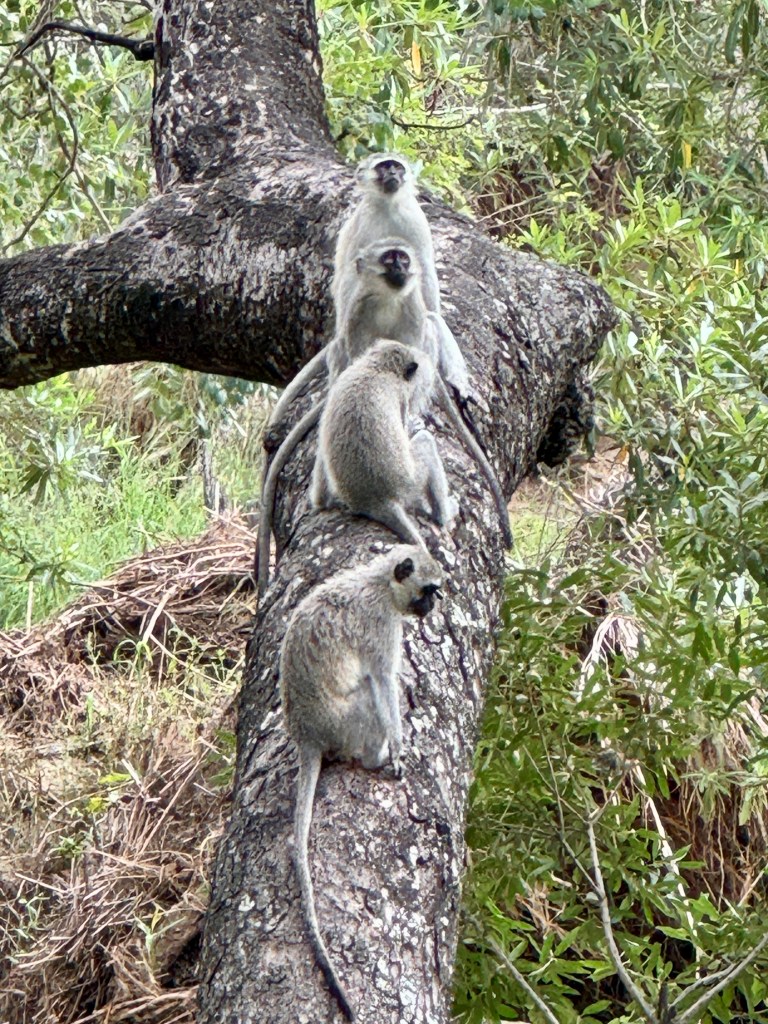
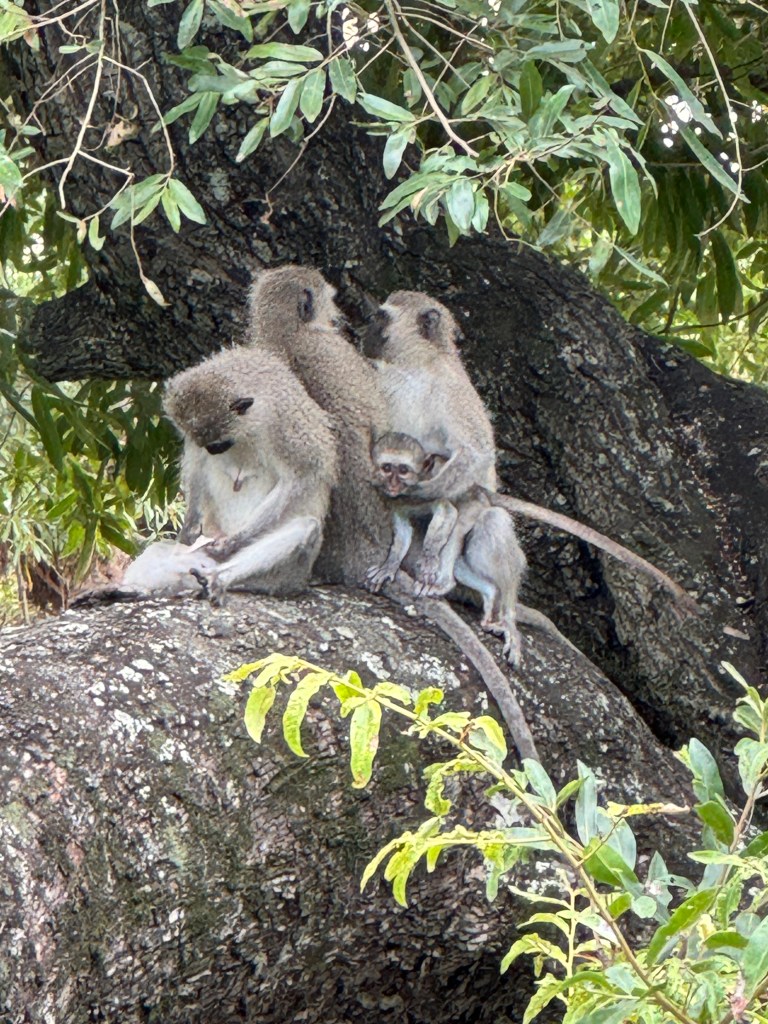
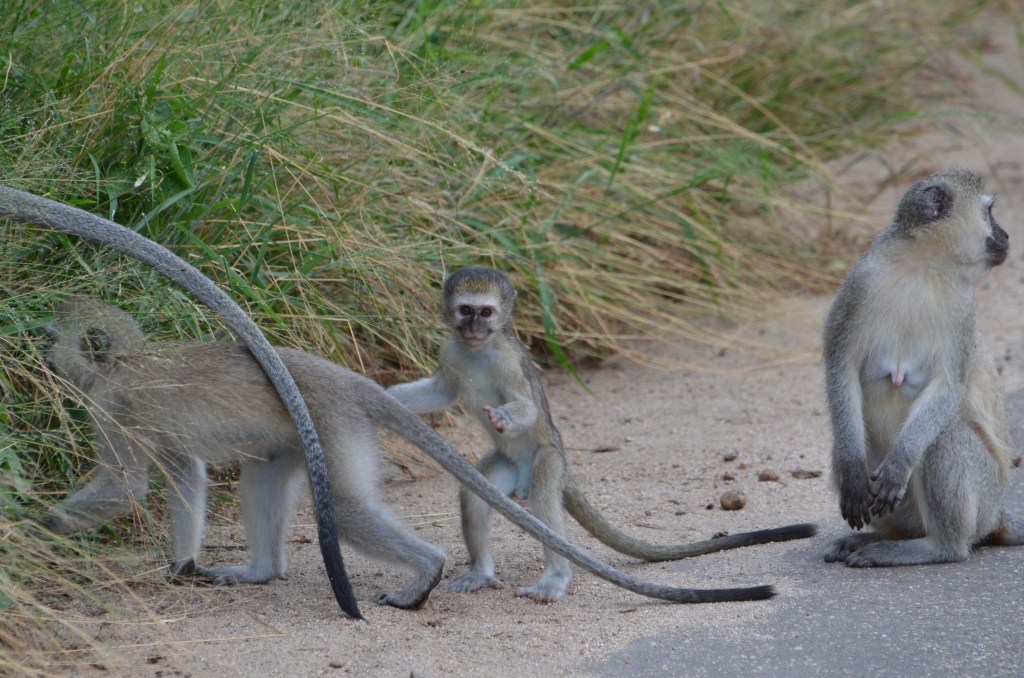
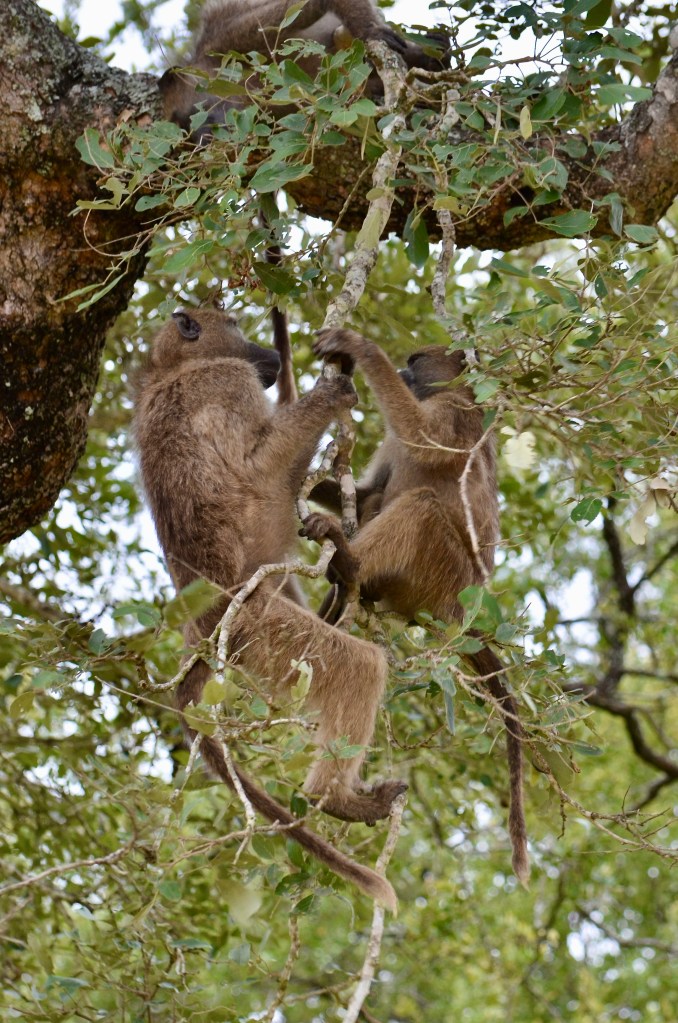
And now for the many safari pictures – and this is just a sampling of the ones we took. Elephants were plentiful, as were monkeys, hippos, hyenas, and of course impala.
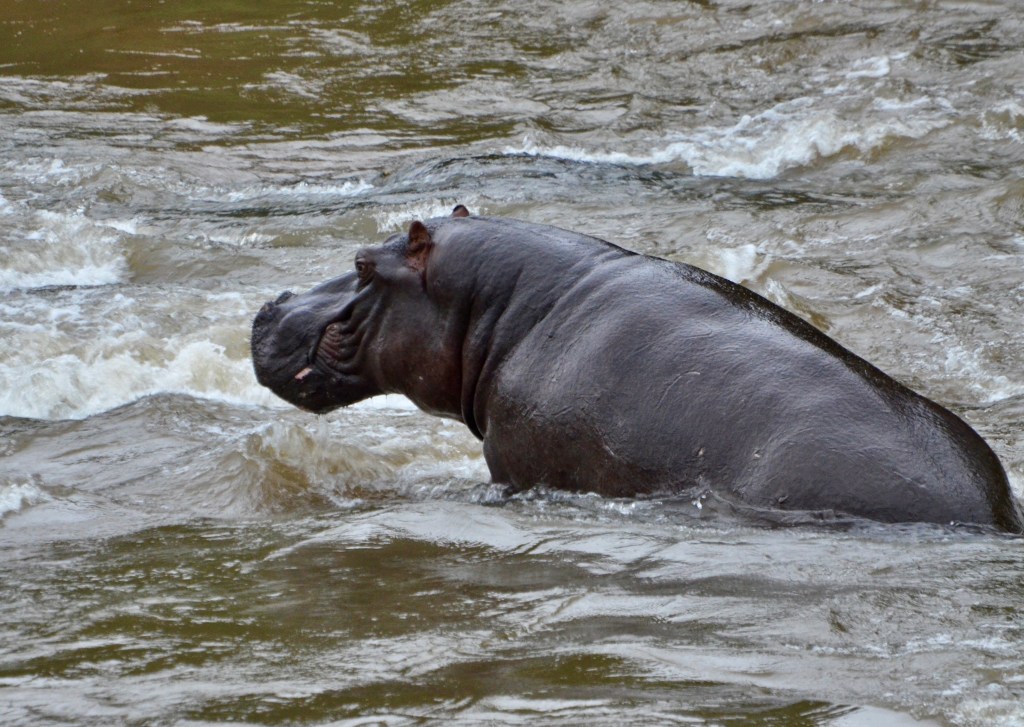
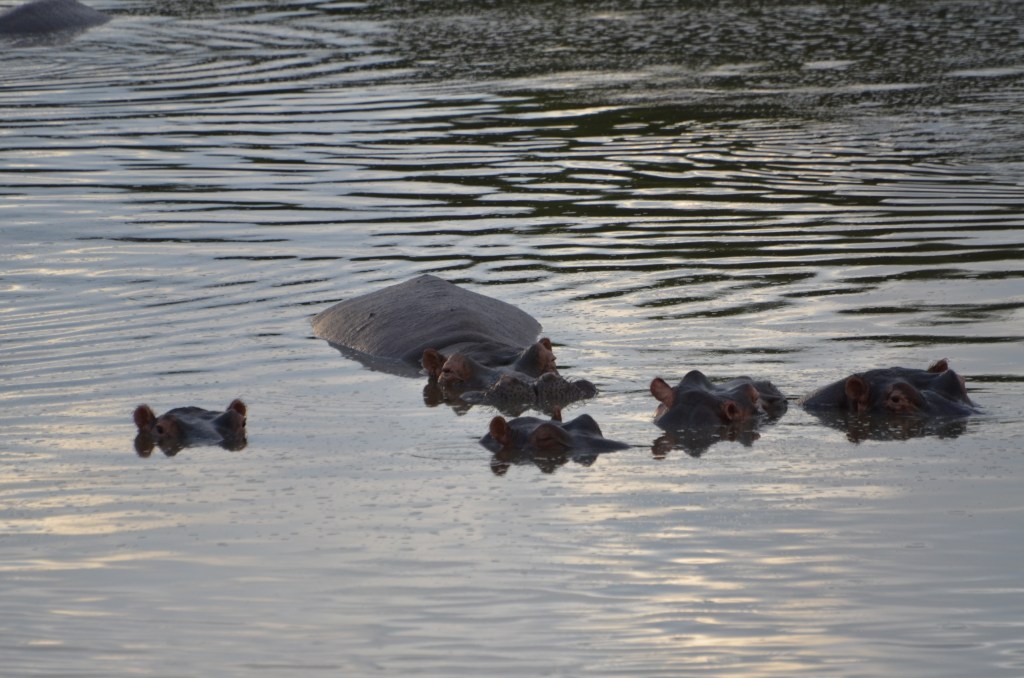
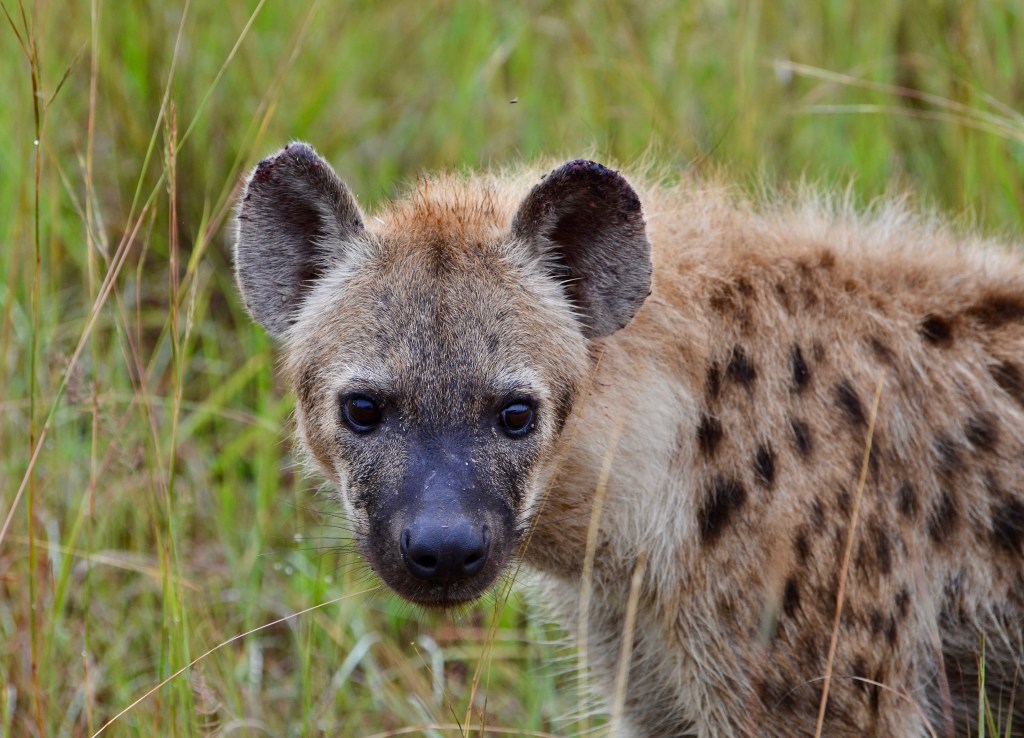
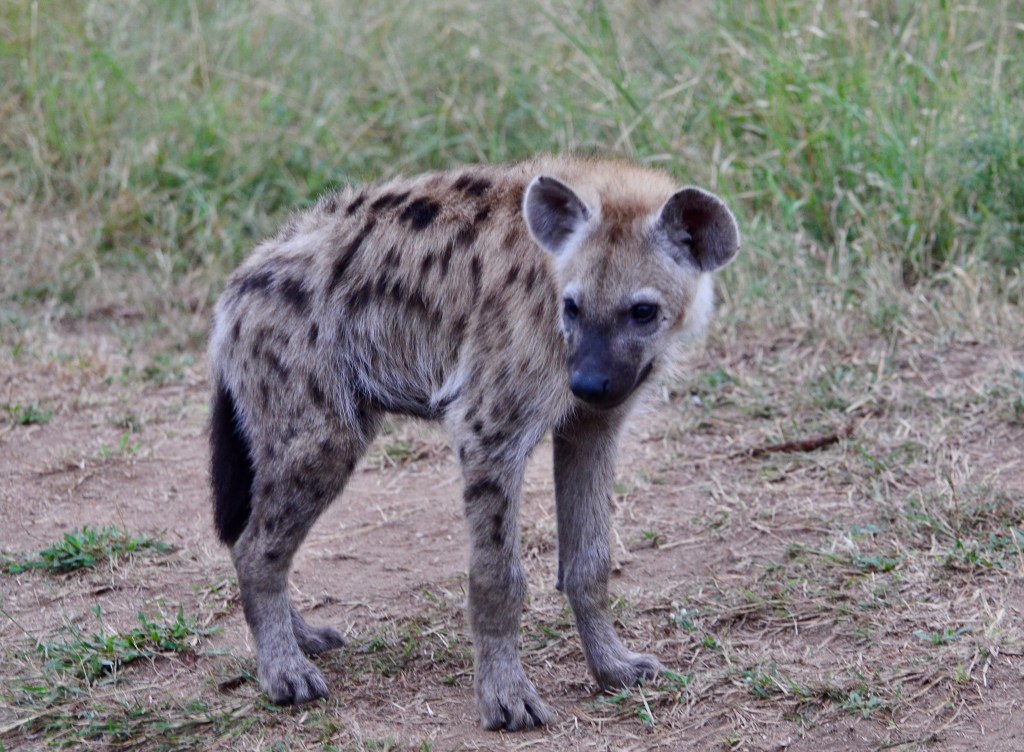
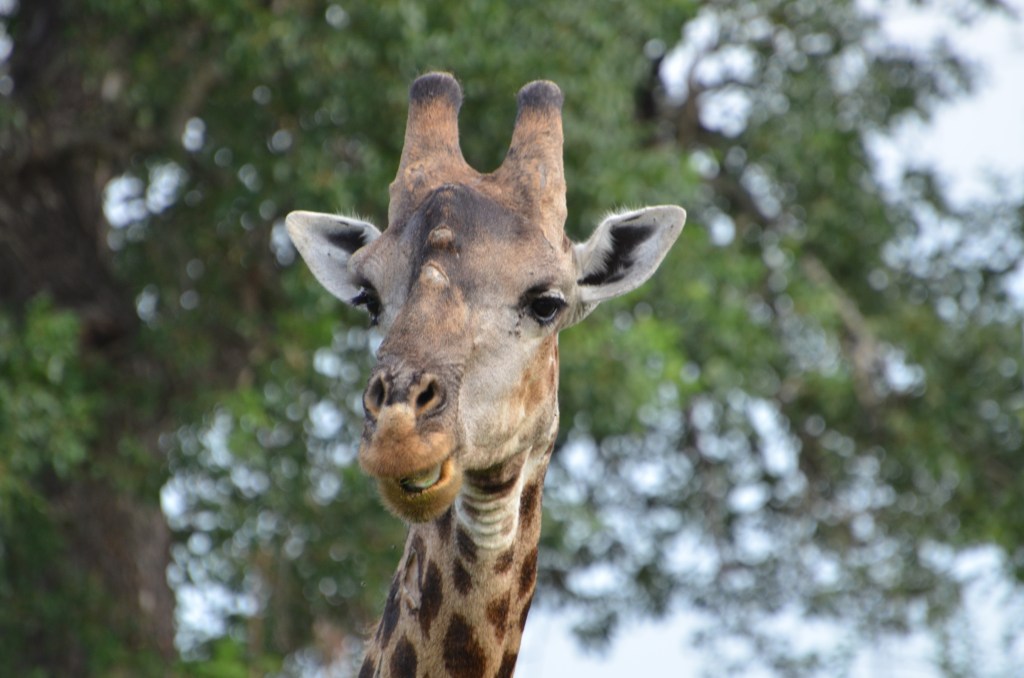
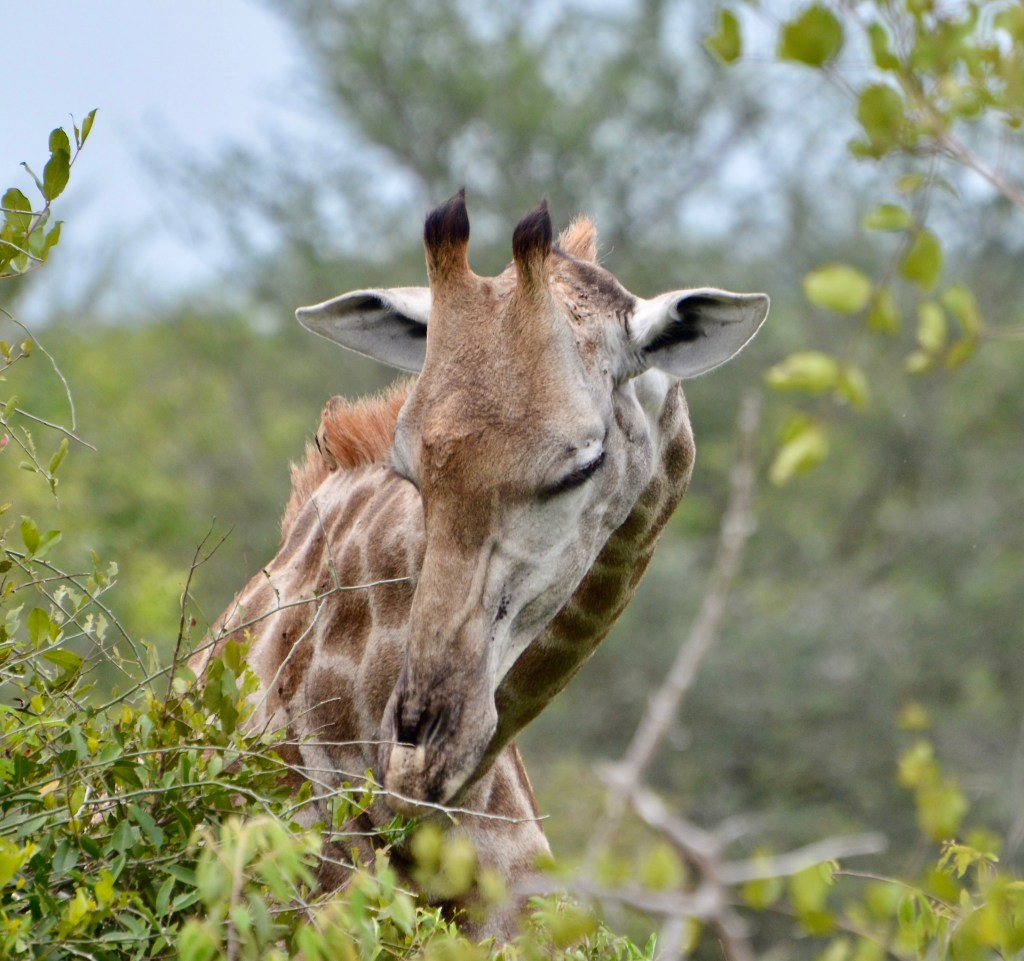
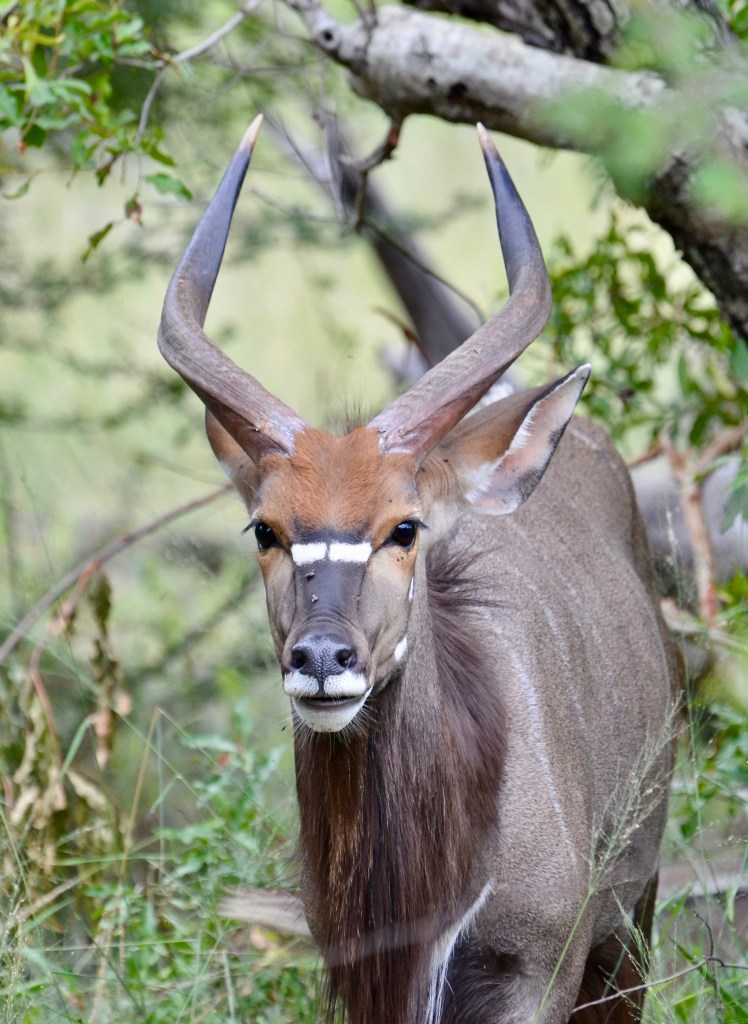
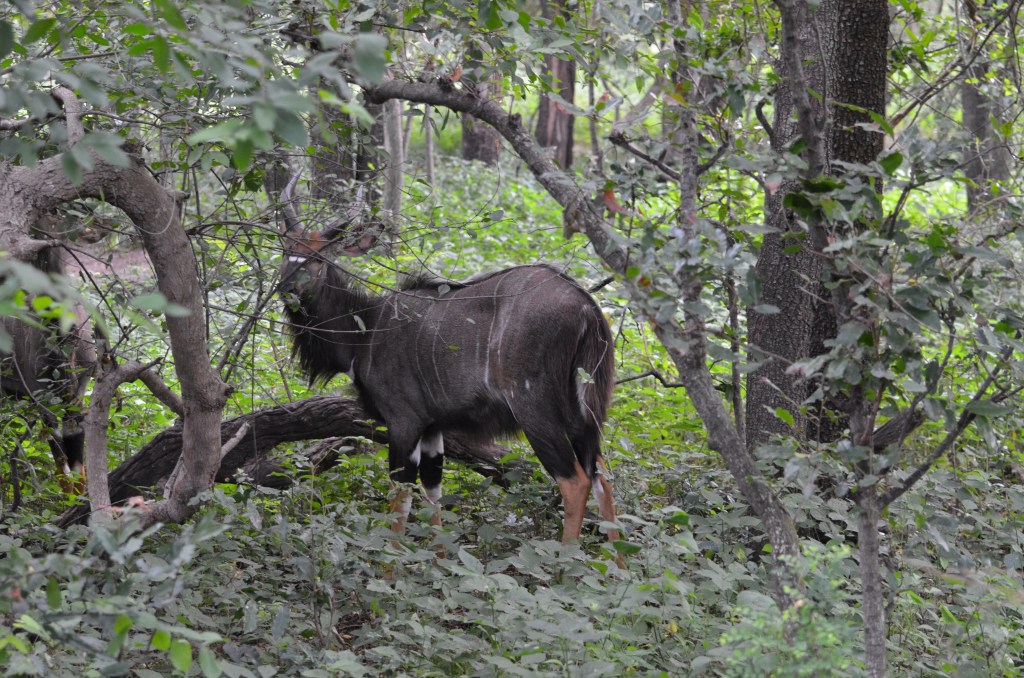
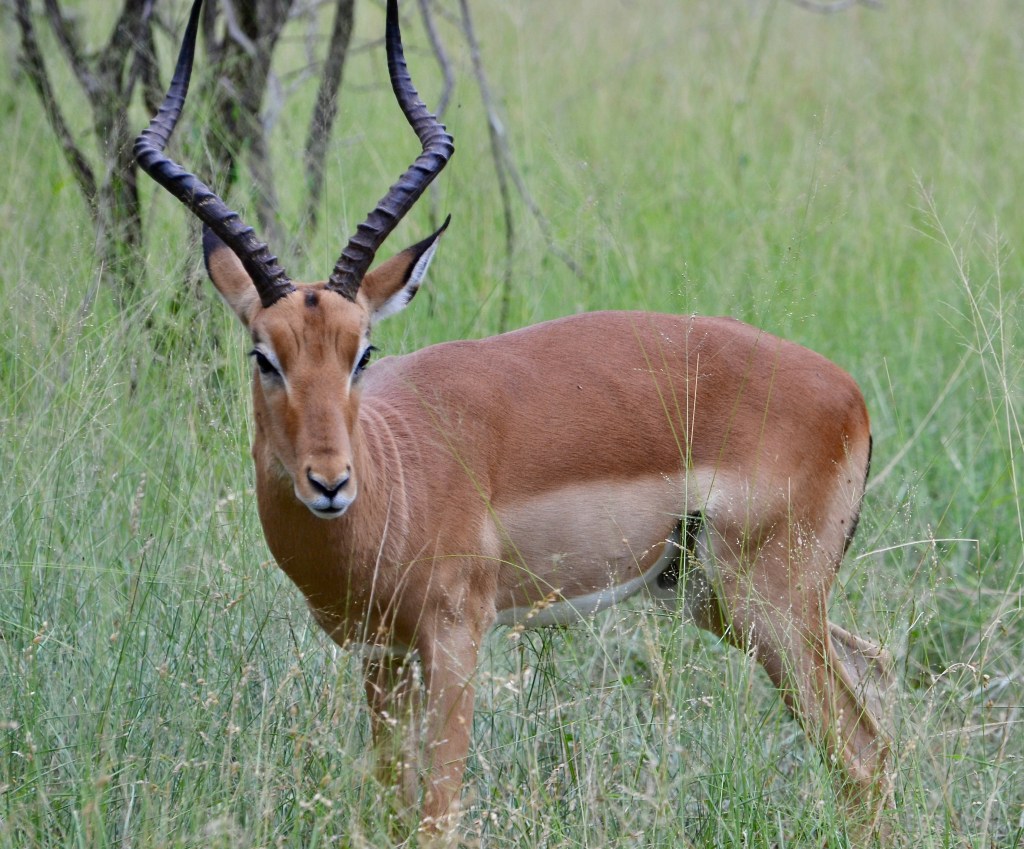
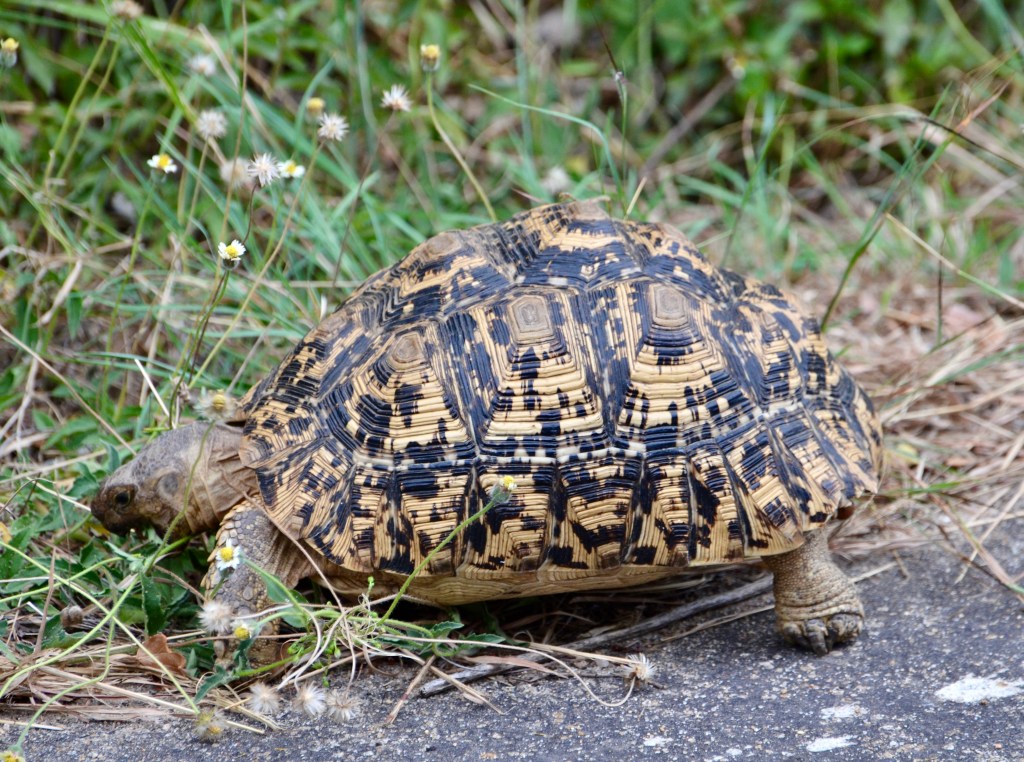
Special to see the hippo getting out of the water. One evening one crossed the road in front of us (too dark for a photo)So many in the waterWe saw so many hyenas. At one point, the young ones were all around the vechicleLove the eyelashes on the giraffeWaterbuckImpala are plentiful – they joke that the black “M” on their bottom is for McDonald’s – they are are everywhere and everyone eats them.Female NyalaMale Nyala – very different appearance than the femaleMale ImpalaLeopard Turtle
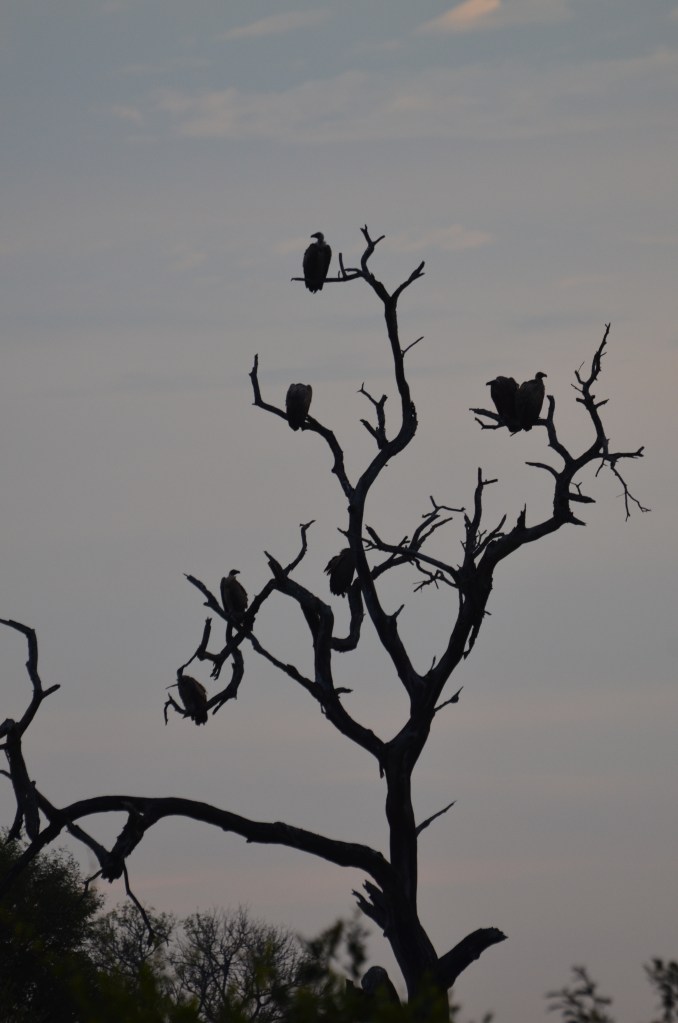
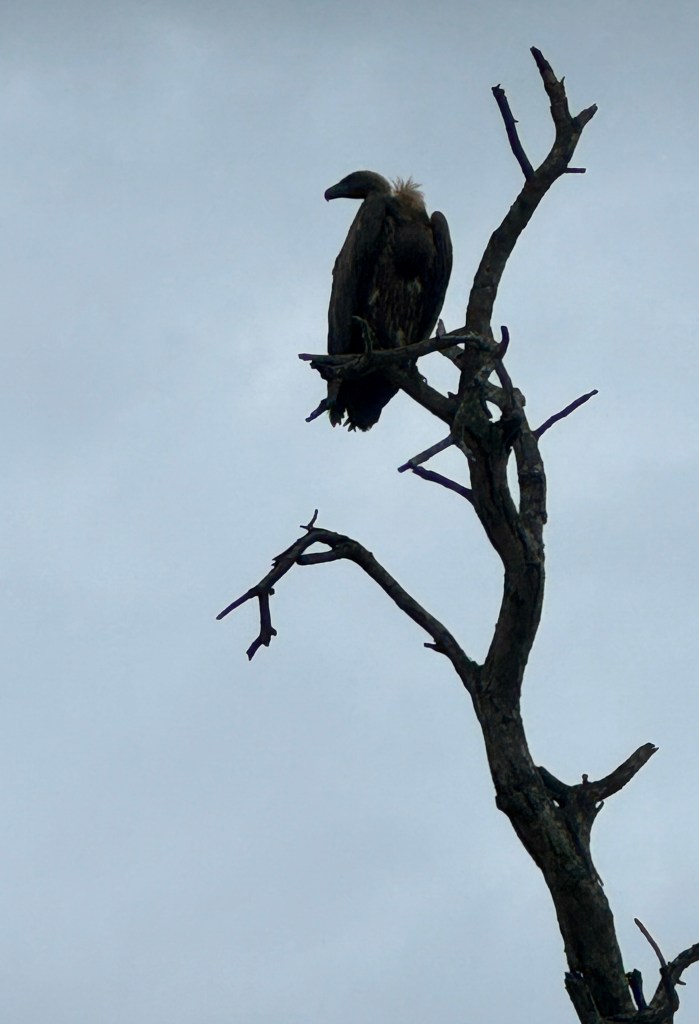
Voltures – easy for them to land in the dead trees. Elephants remove the bark (to eat) and this ultimately kills the tree.
And now for the elephants – Theresa and Karen, our elephant lovers, there were so many elephants, and at times they were so close. We saw a mother elephant upset and running into the water and up the bank with a young one following – the young one “screaming” and the mother trumpeting. They headed our way, but it was the rest of the herd that they were interested in. So many elephant pictures…here are a few.
This big fellow came very close – he is right beside LarryHe came so close this is all Larry could get with his camera.The trumpeting mother and her young one.
And the final animal for this post, the lion.
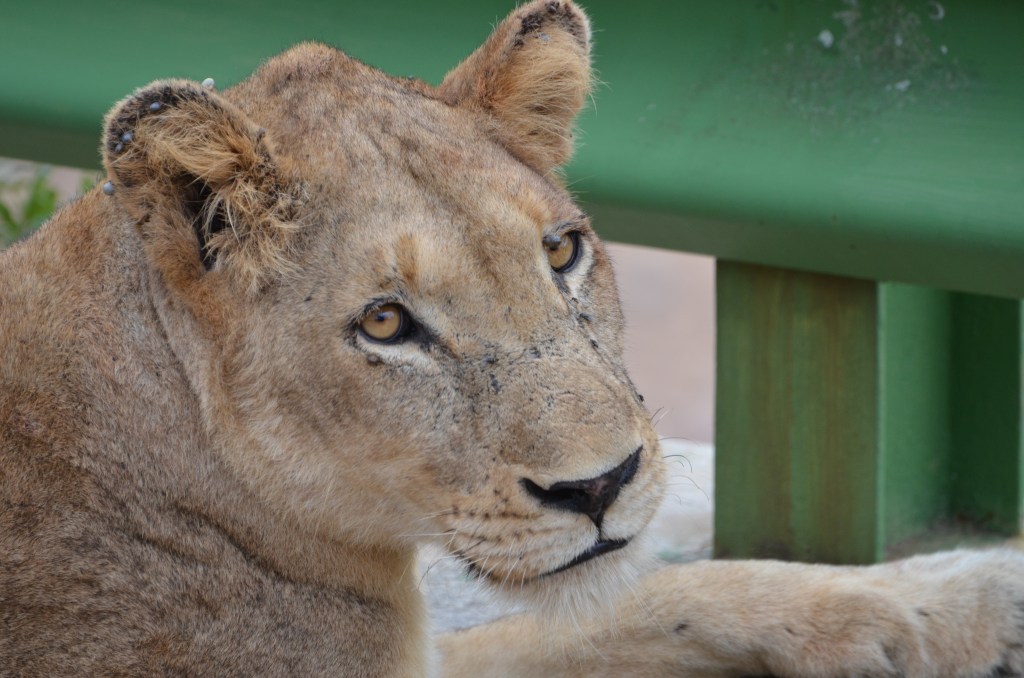
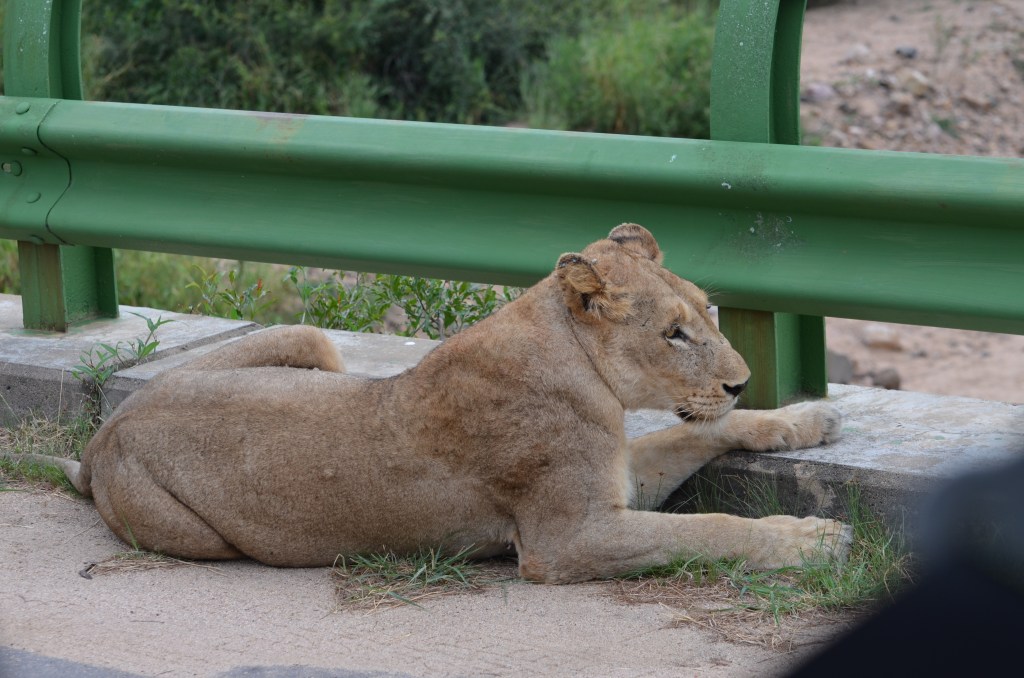
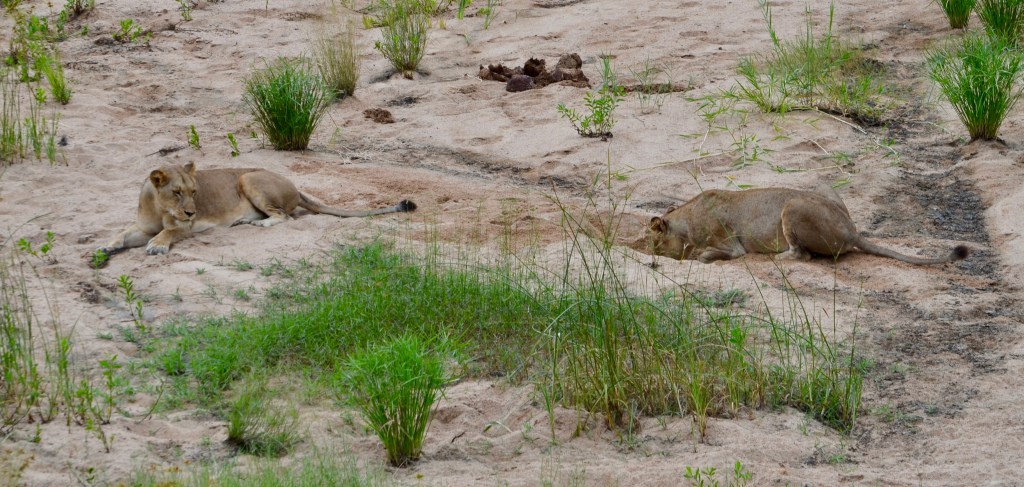
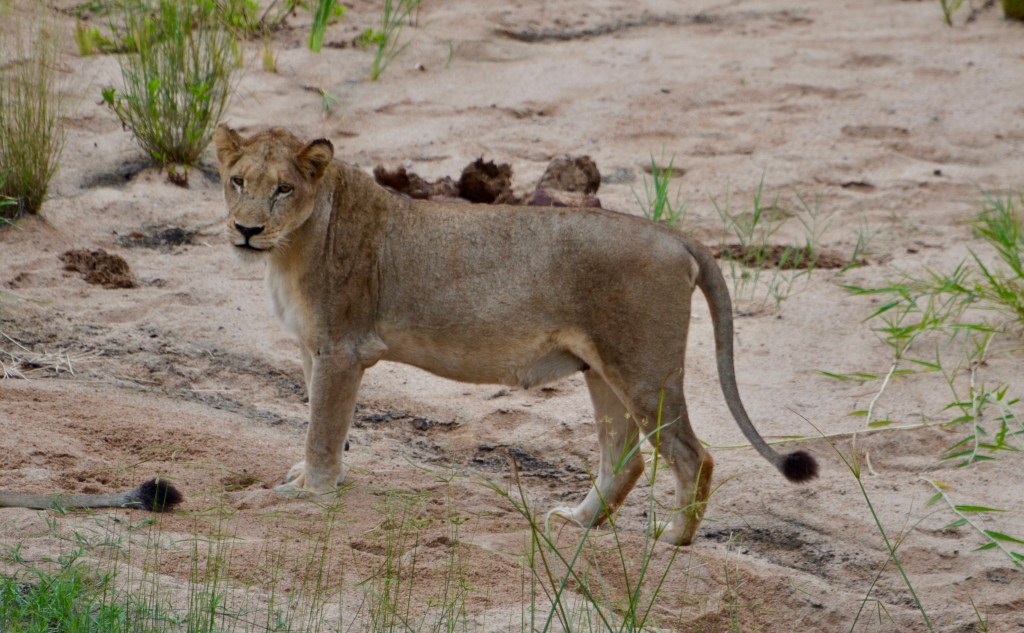
We were so lucky as the lions were on the road when we headed out for our morning driveIt seemed strange to see a lioness on her own; she was focused on the river bed below. When she headed down we could seee why – the rest of her pride was below.When the “lioness on the bridge” joined the rest of her family, she dug a hole to lay in.Often we see two lioness with the cubs – mother and “stepmother“– our guide said the stepmother can take over if anything happens to the mother. It was not long before the pride headed into the bush.
Our two nights (4 game drives) went by quickly. On Feb. 10th we headed to Inyati Game Reserve (just over an hour drive from Shalati).
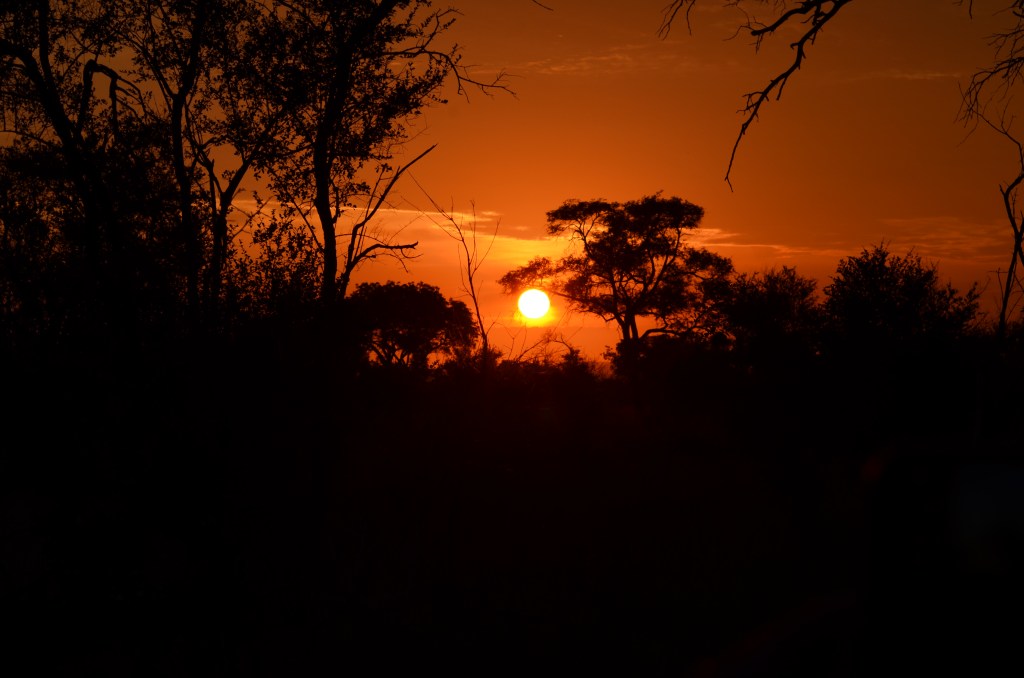
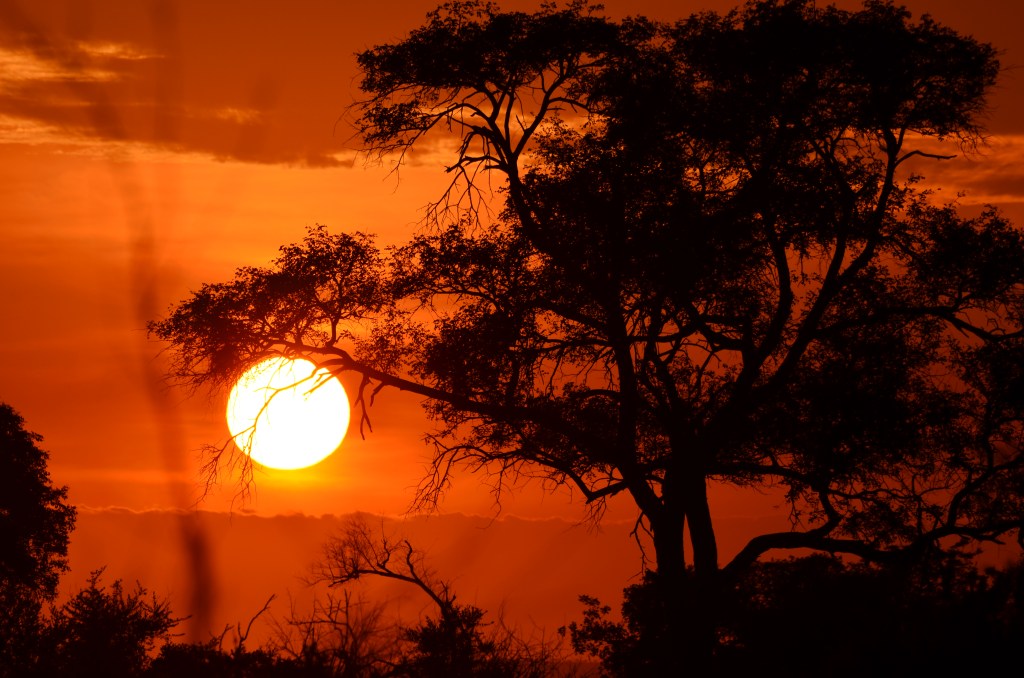
A final photo of the beautiful sunrise on our last morning.
We’ve enjoyed our time in Hout Bay – a nice combination of relaxing to get over jet-lag, daily walks to the beach and town and outings.
Uber is readily available in the Cape Town area, so we combined a trip to the V&A Waterfront and an early dinner in Codfather, Camps Bay.
Wandering through the Waterfront brings back many memories as we rented apartments in the V&A area before we started staying in Hout Bay. It is still nice to visit, but we prefer the less busy Hout Bay.
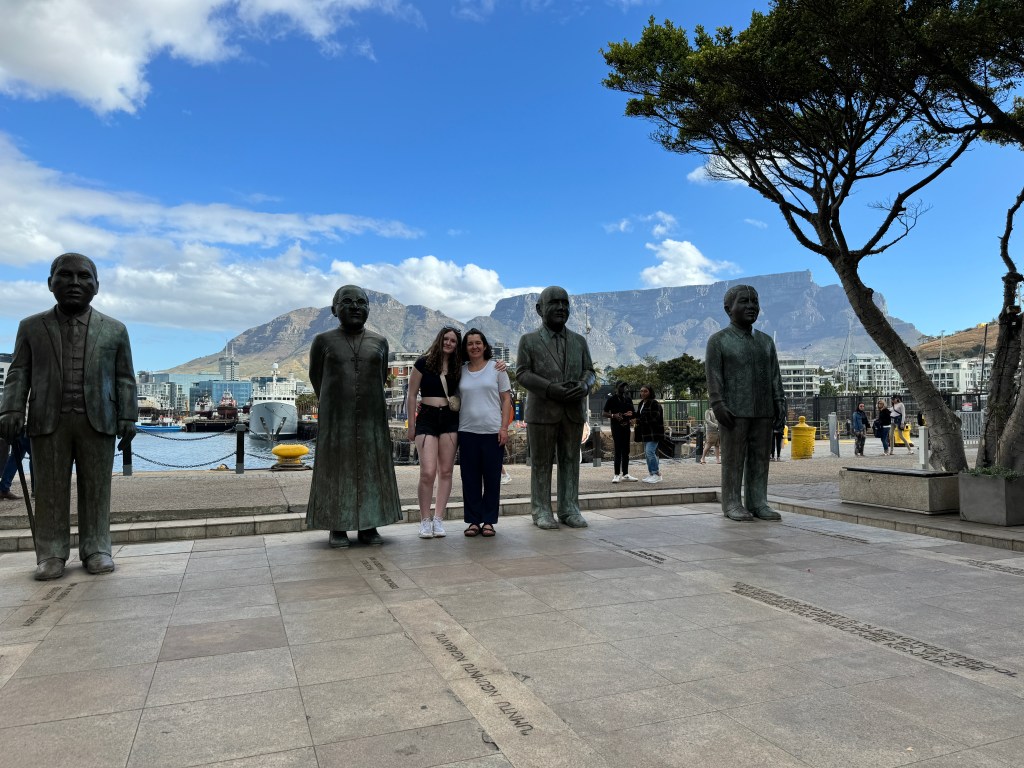
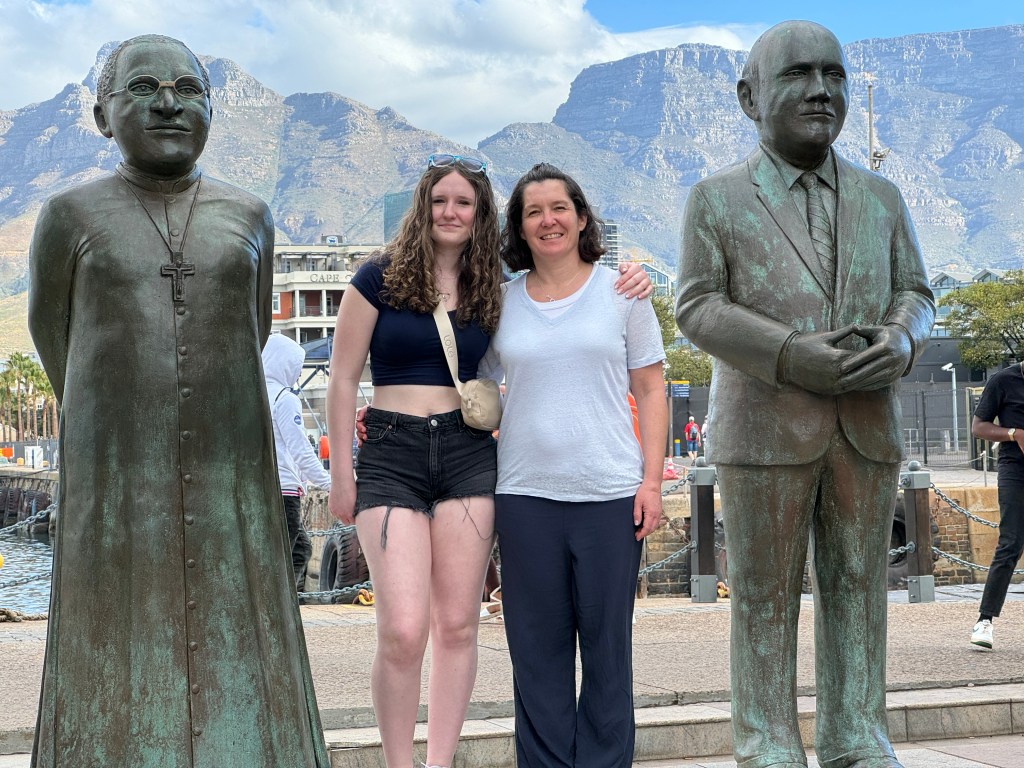
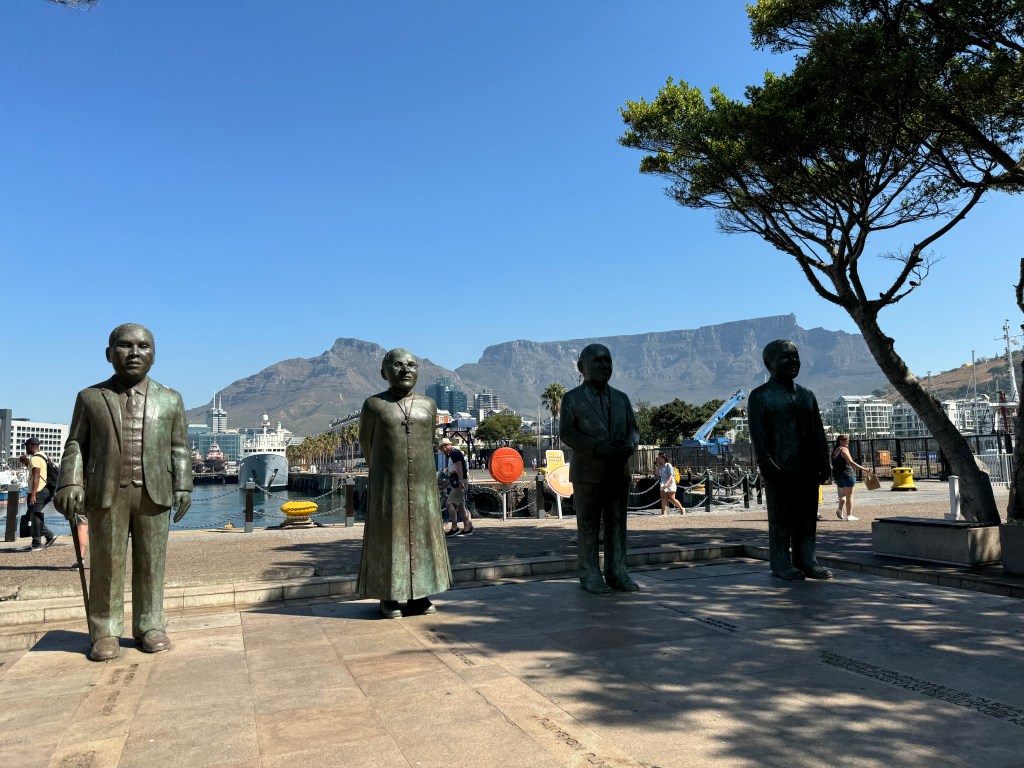
Love this view of Table Mountain. The low-rise reddish building is the Cape Grace Hotel and behind that are apartments and the One and Only Hotel.When we stayed in this area we would pass by the seals daily when we walked from our apartment to the waterfront. As usual, today the seals were enjoying the sun.We always take a picture of Nobel Square – we have a great backdrop with Table Mountain and blue skies. The sculptures pay tribute to South Africa`s four Nobel Peace Prize Laureates: activist Nkosi Albert Luthuli, Archbishop Emeritus Desmond Tutu, former State President FW de Klerk and former President Nelson Mandela.
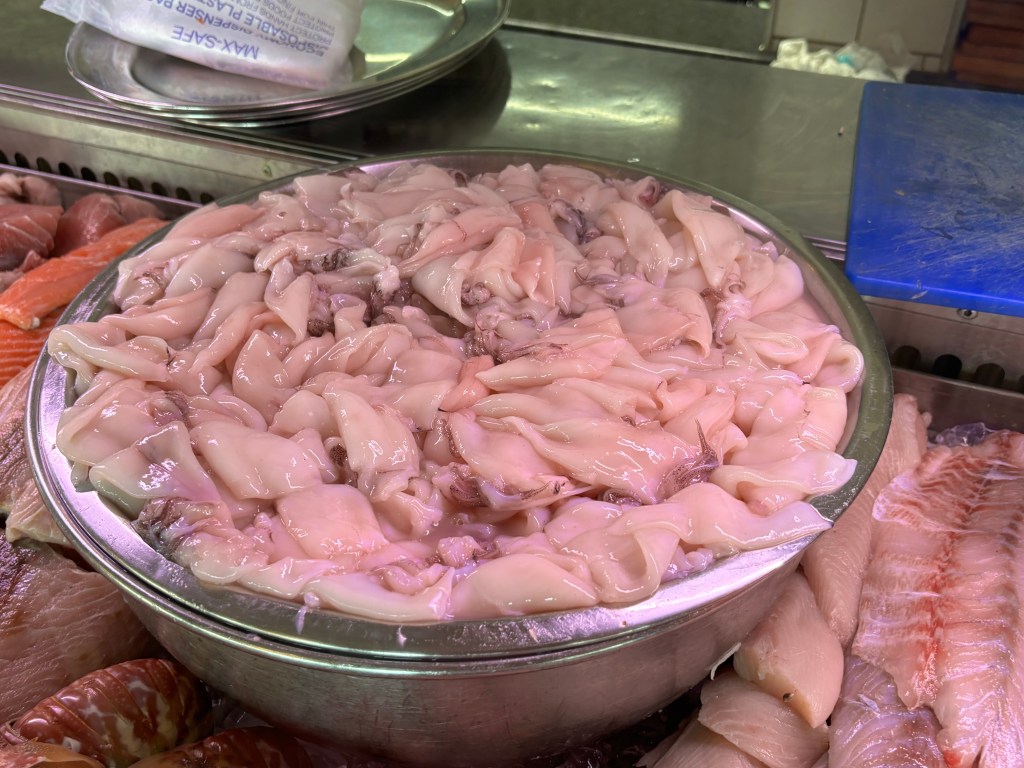
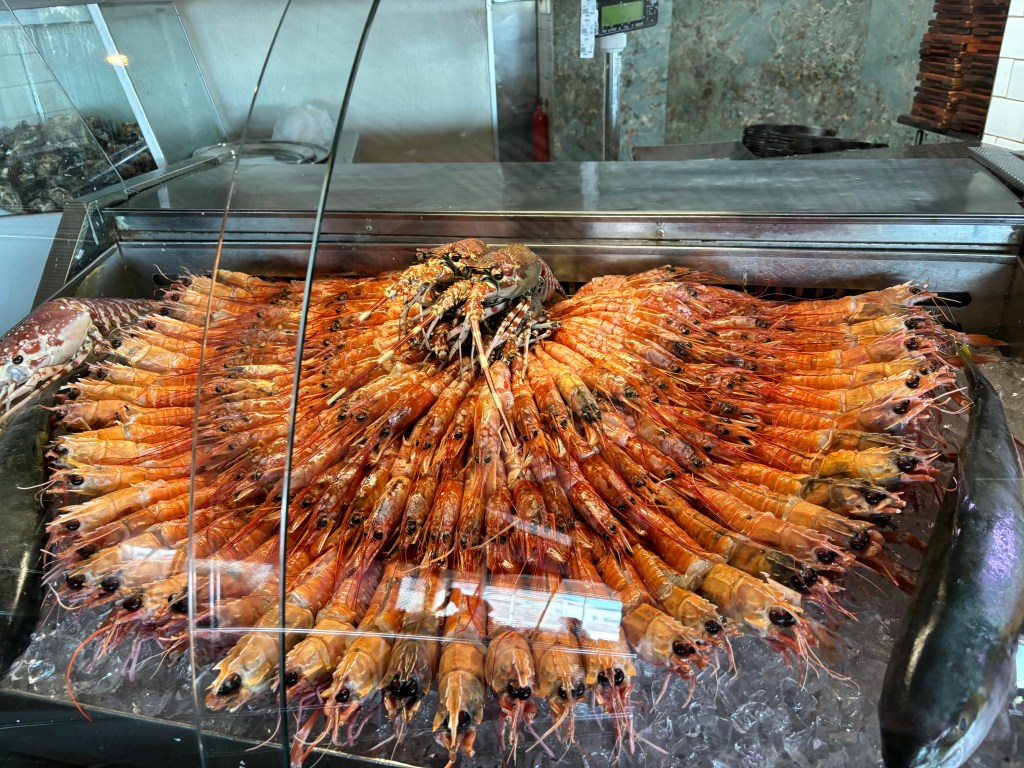
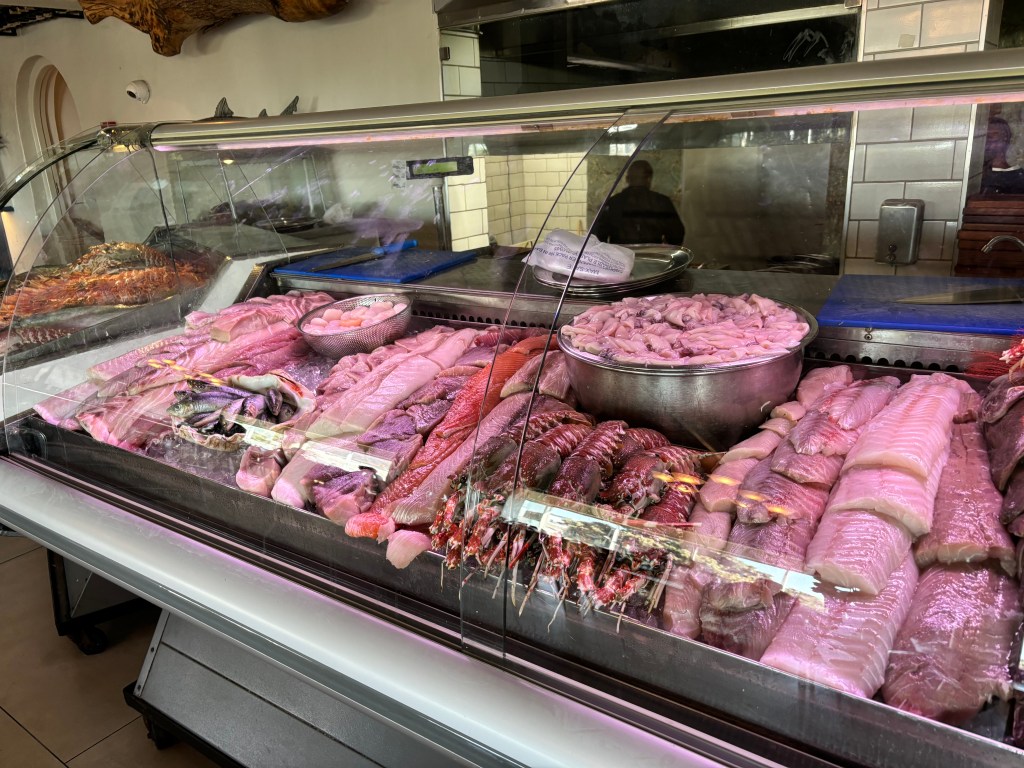
From past trips to South Africa, Codfather became our favourite seafood restaurant – and it didn’t disappoint this year. We like going around 4:00 as we don’t need a reservation and we can avoid the crowds/noise. The seafood was so fresh – we had Kingklip, Scallops and calamari. All were perfectly cooked.
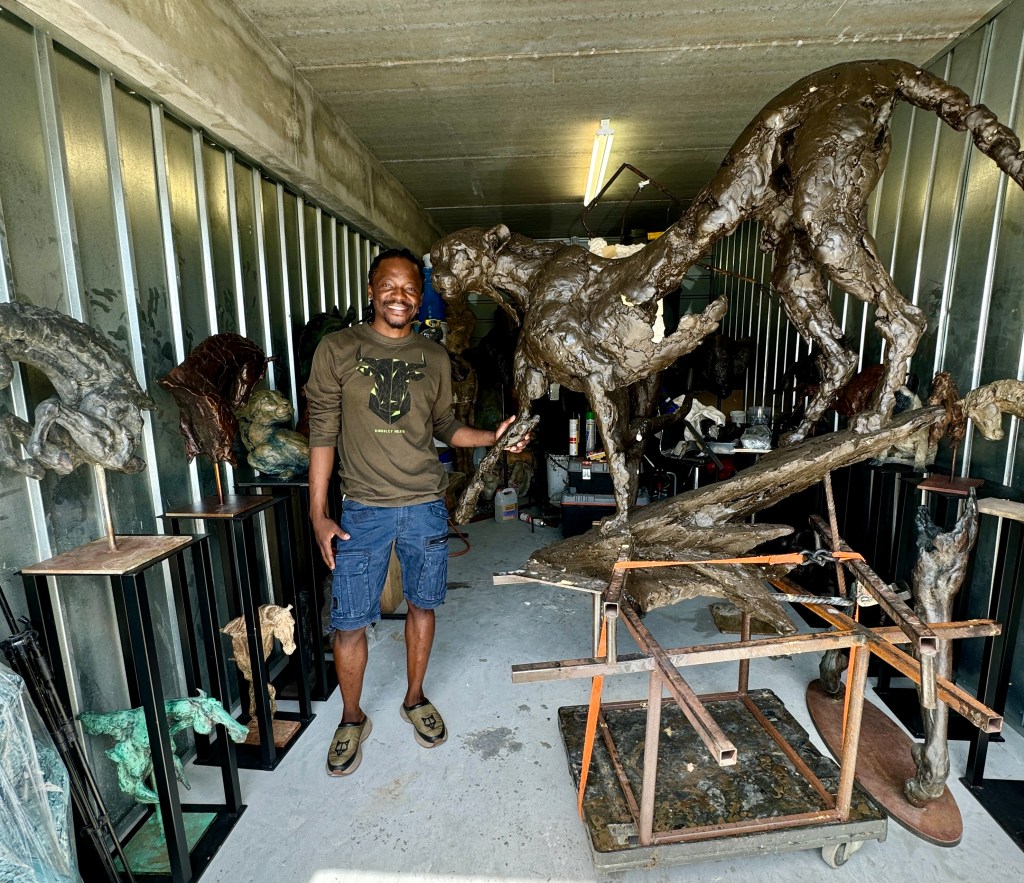
We spent a day with Michele and Ken. We met Michele and Ken in Canada last year when they visited Margaret and John. After seeing our SA beaded scultures they wanted to take us to see the works of Robin Kutinyu ( a friend of theirs). Robin started out with stone sculptures and then moved to bronze, producing amazing, and large, pieces of equestrian art (which has become his focus as noted on his Facebook page). Robin shows at equestrian events and also has many large pieces in the gardens of a Stellenbosch vineyard. Robin’s works reminded us of the early works of Dylan Lewis, a South African artist who has emerged as one of the foremost figures in contemporary sculpture.
Robin explained the bronze sculpture process – it takes months to produce his larger pieces. The leopard is in the “wax stage”. He had smaller leopard pieces he was working on, but still too large and expensive for us to bring home – although Larry was tempted.
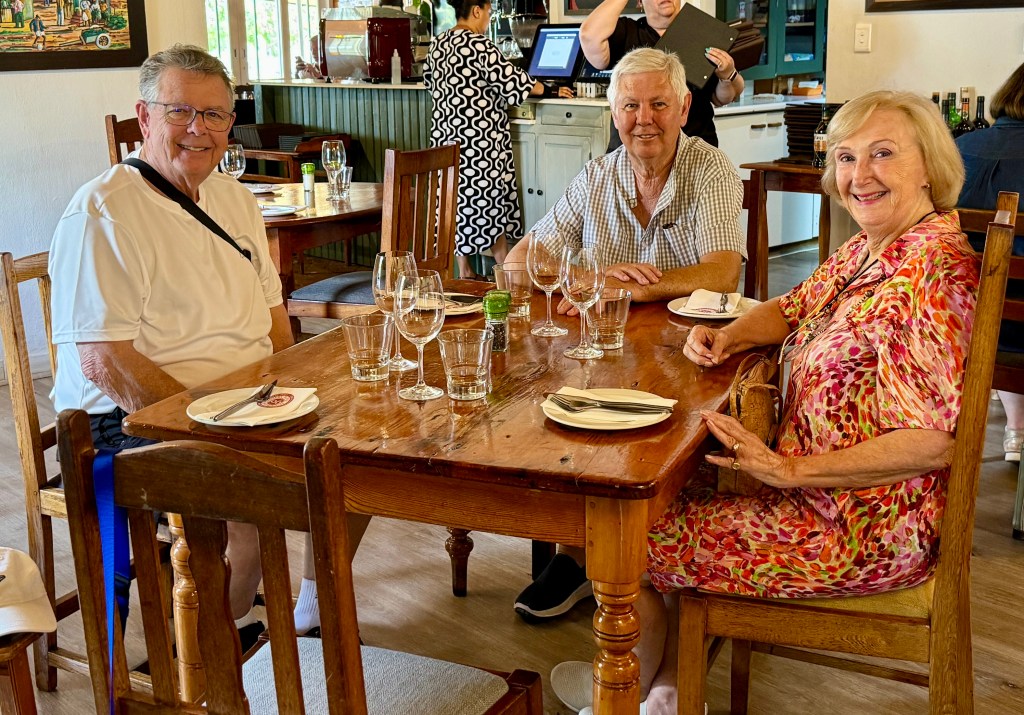
After our visit to Robin’s storage unit, we had lunch at 96 Winery Road, Ken Forrester Vineyards. This is a small, young (only opened in 1996), vineyard which we had not been to before. The wine and lunch were wonderful – we will definitely visit again.
Lovely lunch with Michele and Ken
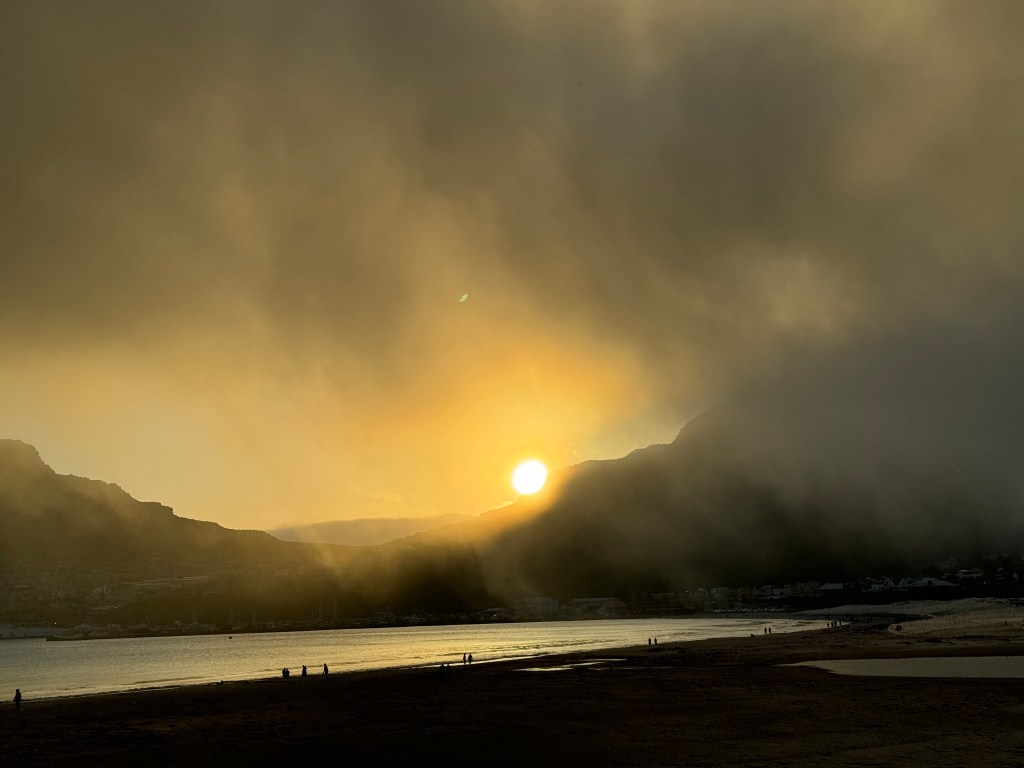
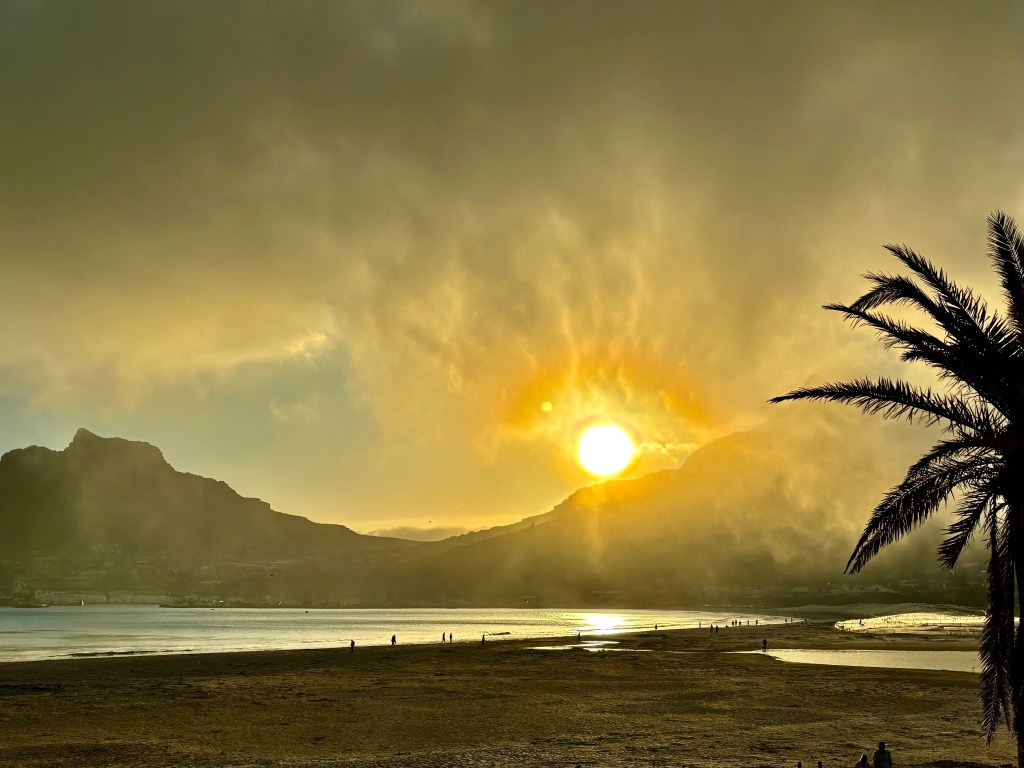
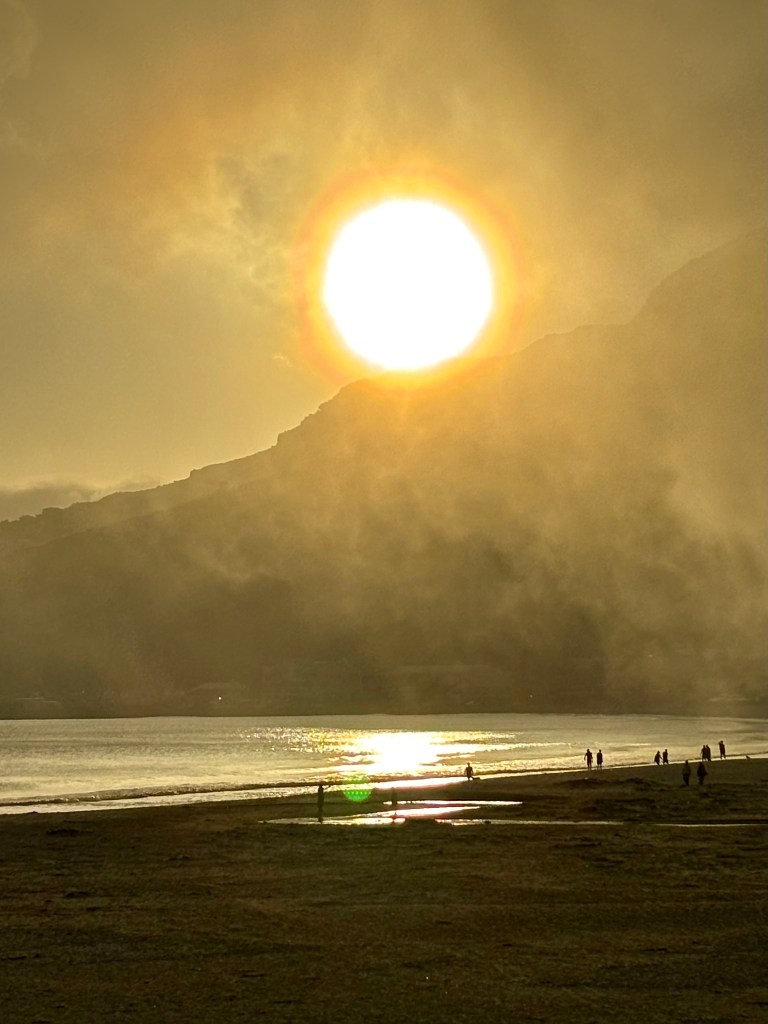
Sunday was a “relax by the pool” day, followed by a beach walk. We ended up at Dunes Restaurant and Bar where we enjoyed a bottle of rose and dinner. It is nice to be able to walk to/from the restaurant to our hotel. As you will see from the photos below, dark clouds would move through, but it didn’t rain – it was a lovely spot to have dinner.
View from the Dunes Restaurant – this is looking towards Chapman’s Peak.Sunset taken from the upper deck at Dunes Restaurant.Ominous black clouds but they passed by.
Our final night in Hout Bay, we had dinner at Michele and Ken’s home. As you will see below, they have a wonderful view of Hout Bay and the mountains. Ria, another friend of Margaret and John’s, joined the dinner – it was a very relaxing and enjoyable evening.
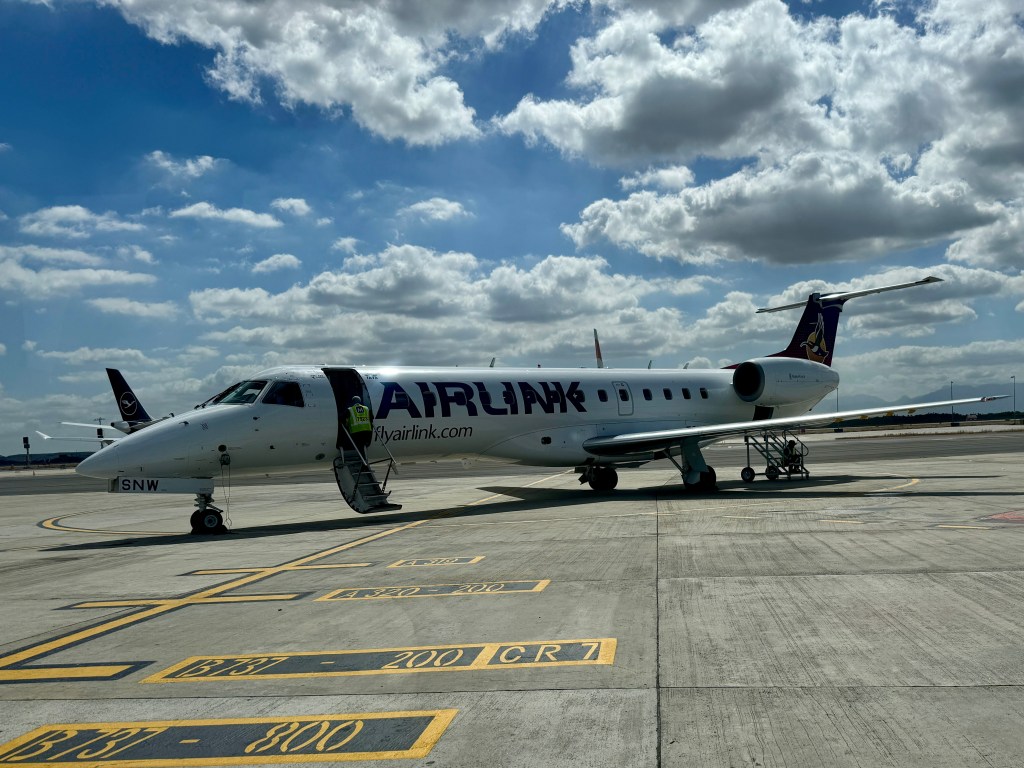
Up early this morning (Feb. 8th) as we had a flight to Skukuza, which is the gateway to our safari adventures. We will be back in Hout Bay (Part 2) on February 14th – this time Deb and Lauchlyn will join us.
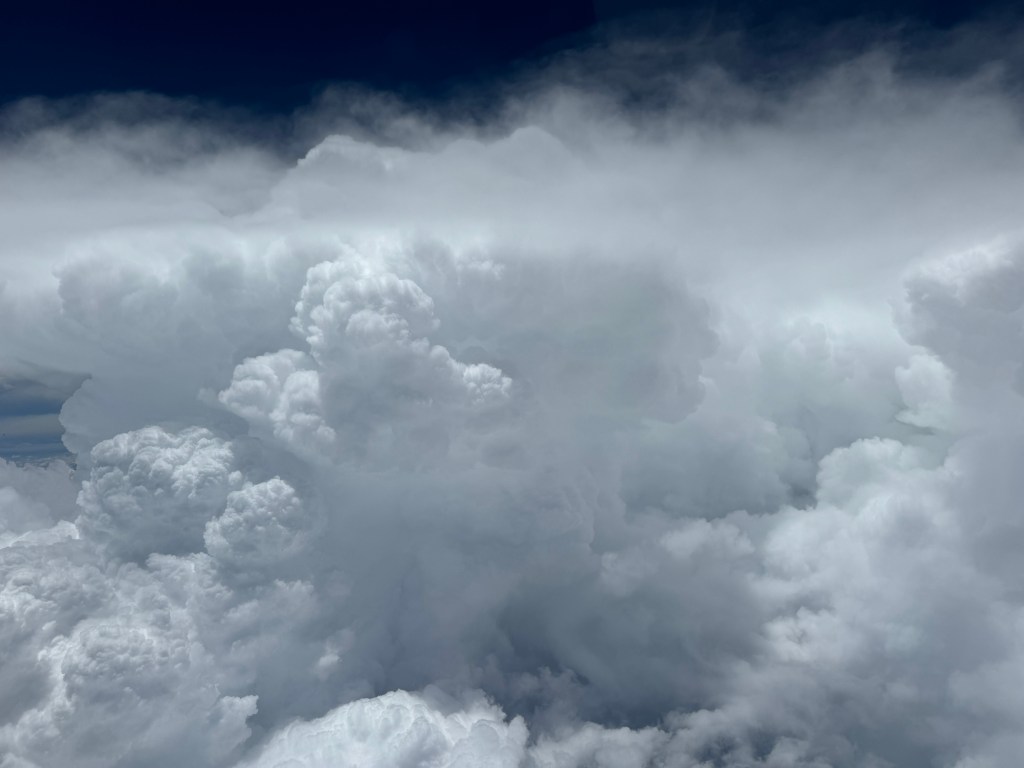
Small plane but very good flightDo you see the teddy bear in the clouds?
Hout Bay is described as “a seaside suburb of Cape Town” and although it is also referred to as a “resort town” it is not a prime tourist destination like the neighbouring town of Camps Bay.
We first visited Hout Bay 7 years ago. For the first few years we stayed at a guest suite/apartment overlooking the mountains; we loved the apartment and the views and we kept in touch with the owners, but there were challenges – a very steep, winding driveway and we couldn’t walk to the village making a car essential.
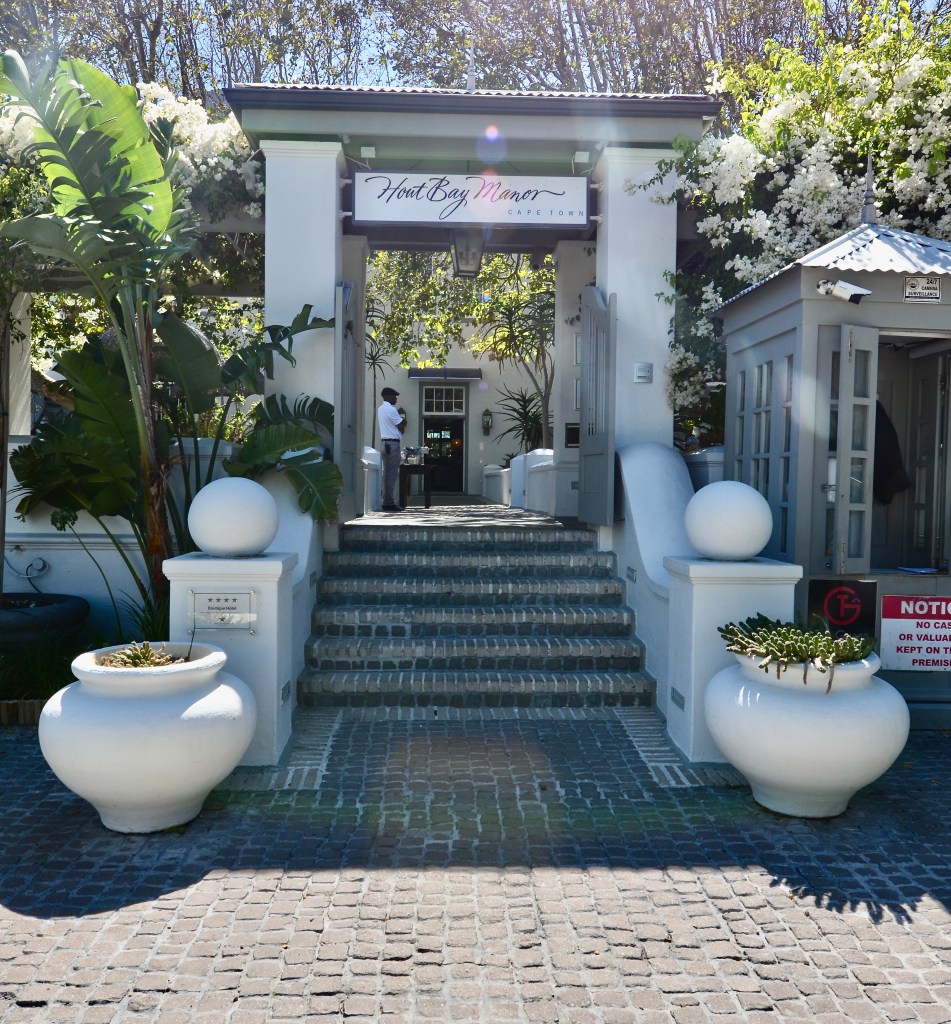
We knew we wanted to stay in Hout Bay, so we started to look at other options. Our friends, John and Margaret, have a home here and they introduced us to Hout Bay Manor. It is a boutique hotel built in 1871 so it has historic charm. It is in a quiet residential area, and is walking distance to the village and the beach. The staff are wonderful – we could not ask for anything more. This is our second year at Hout Bay Manor.
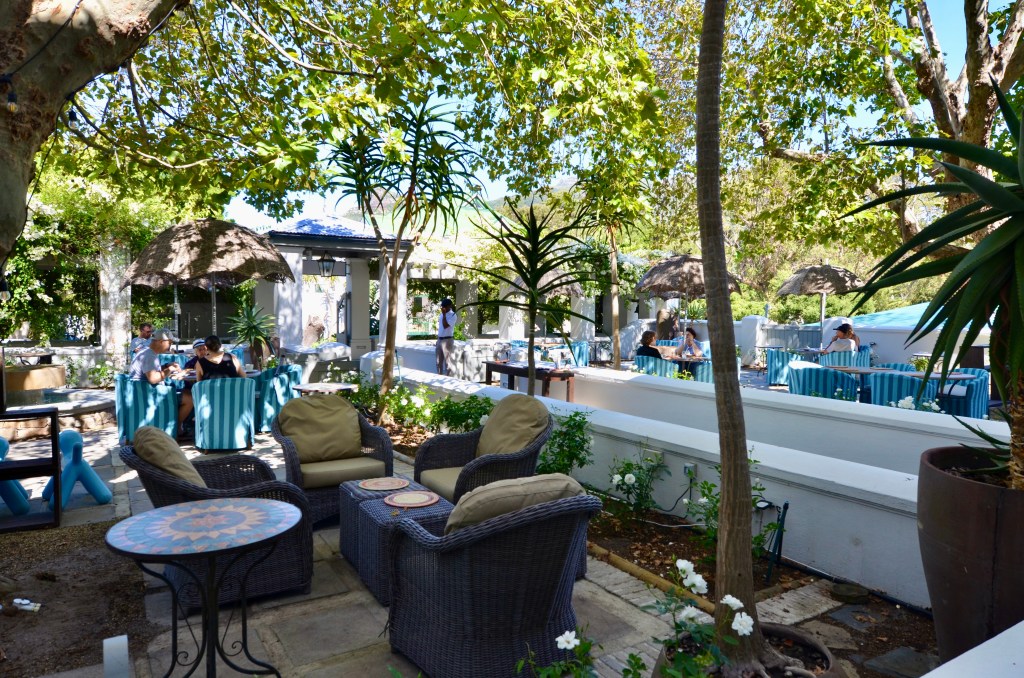
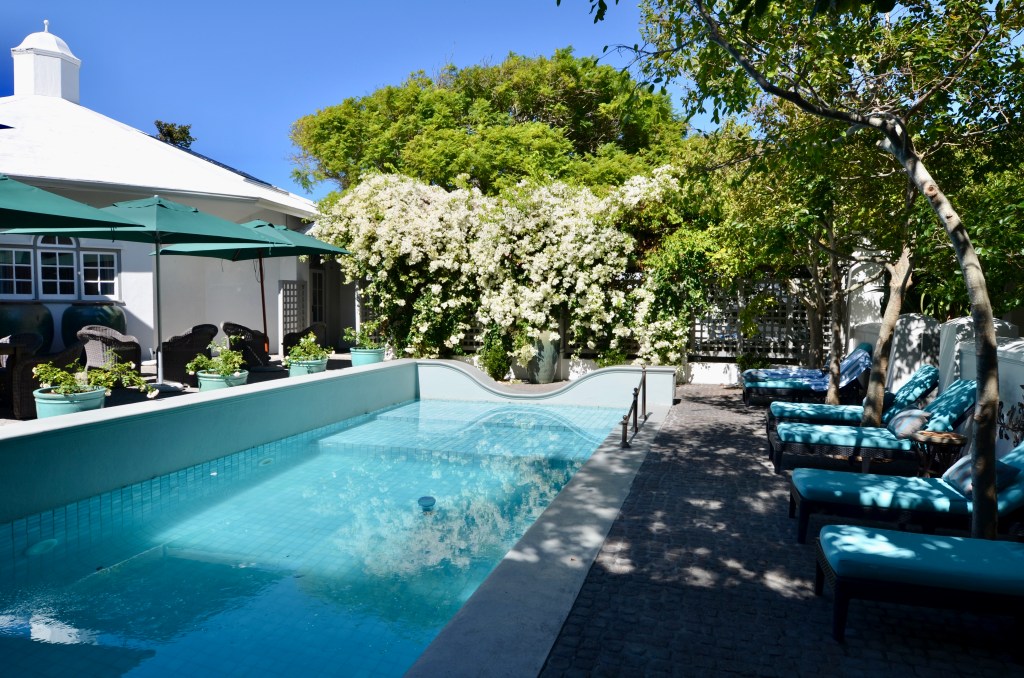
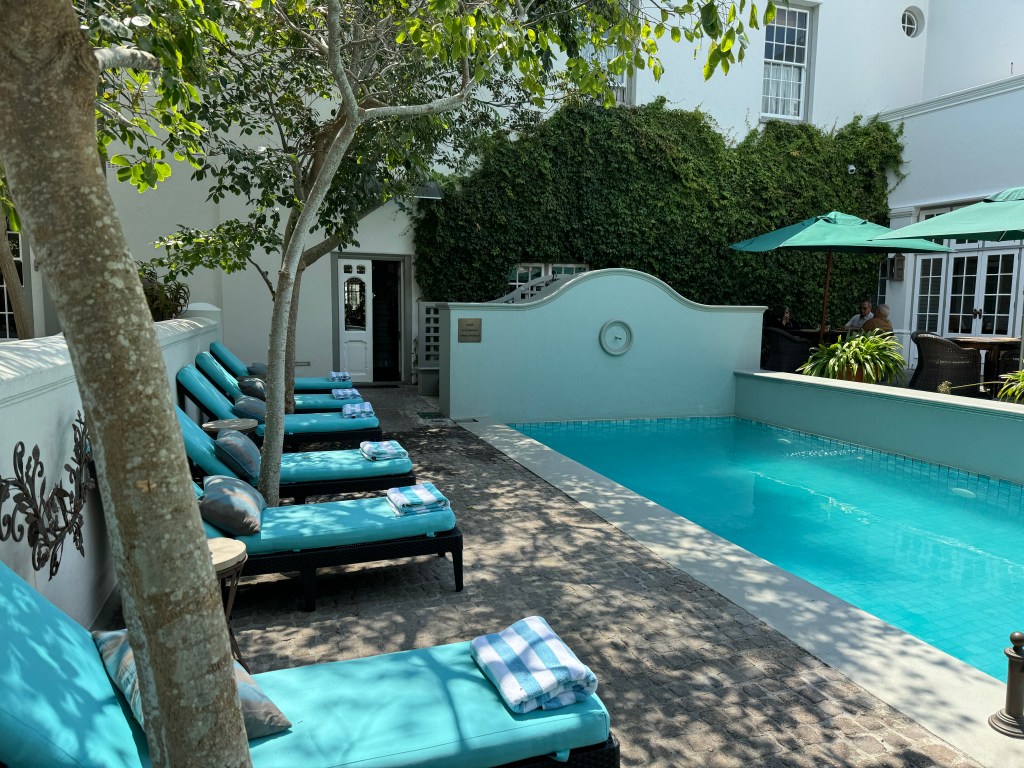
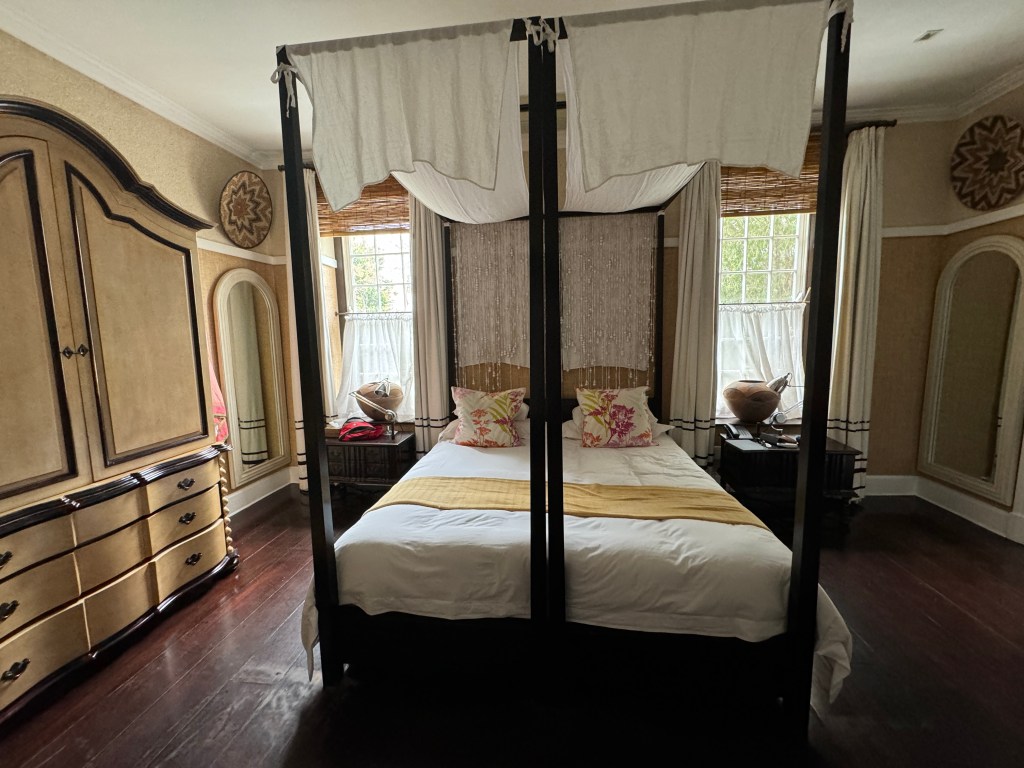
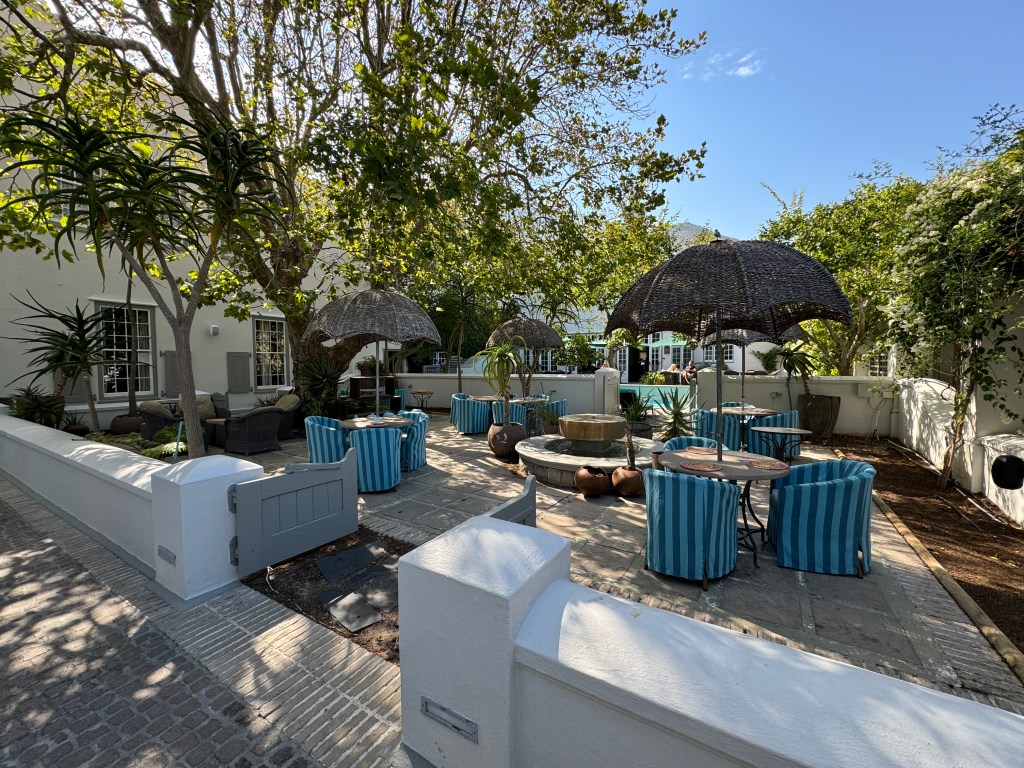
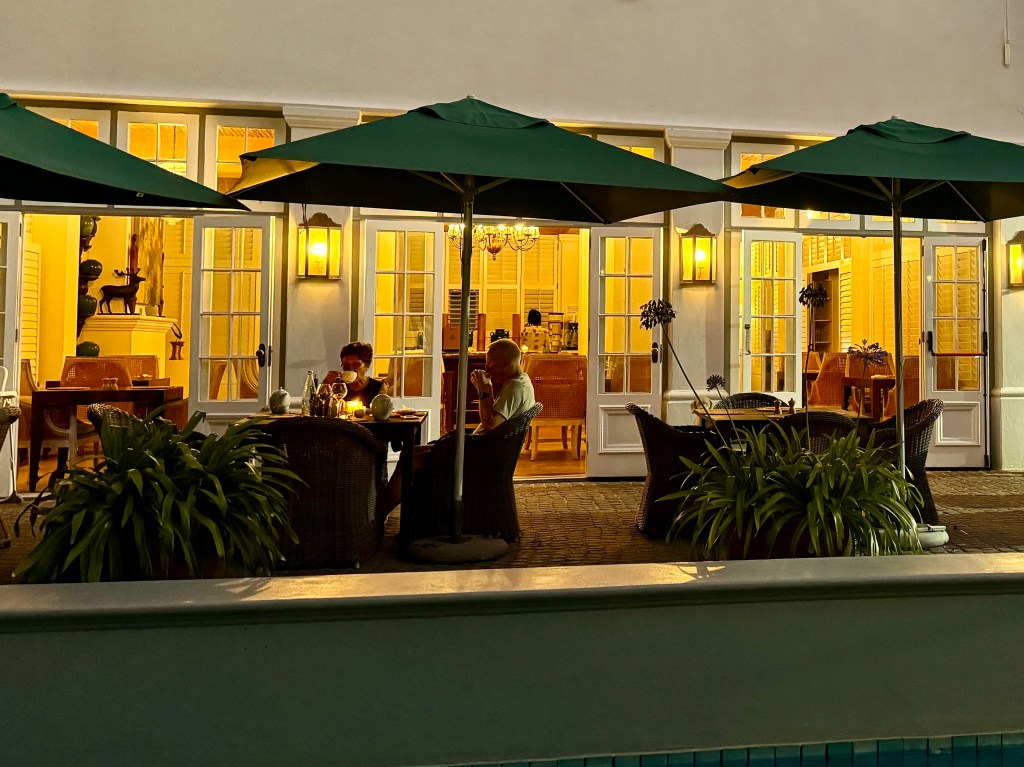
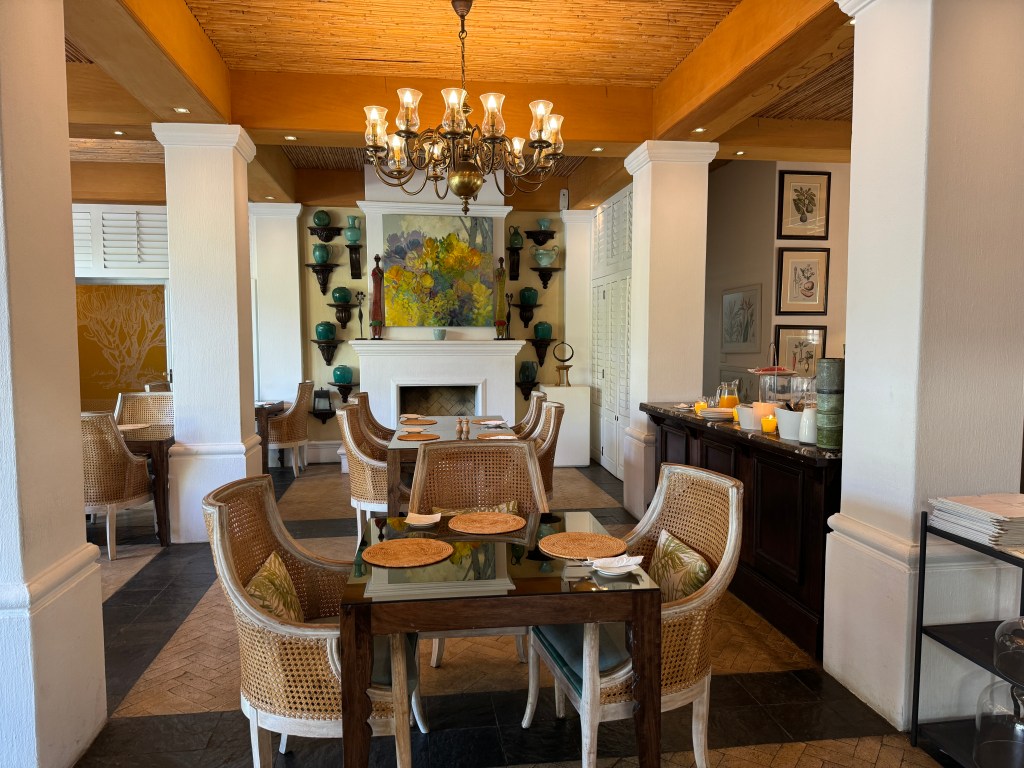
This year we are staying at Hout Bay Manor for 8 nights. You will see from the photos below, it is not busy which makes it even more relaxing.
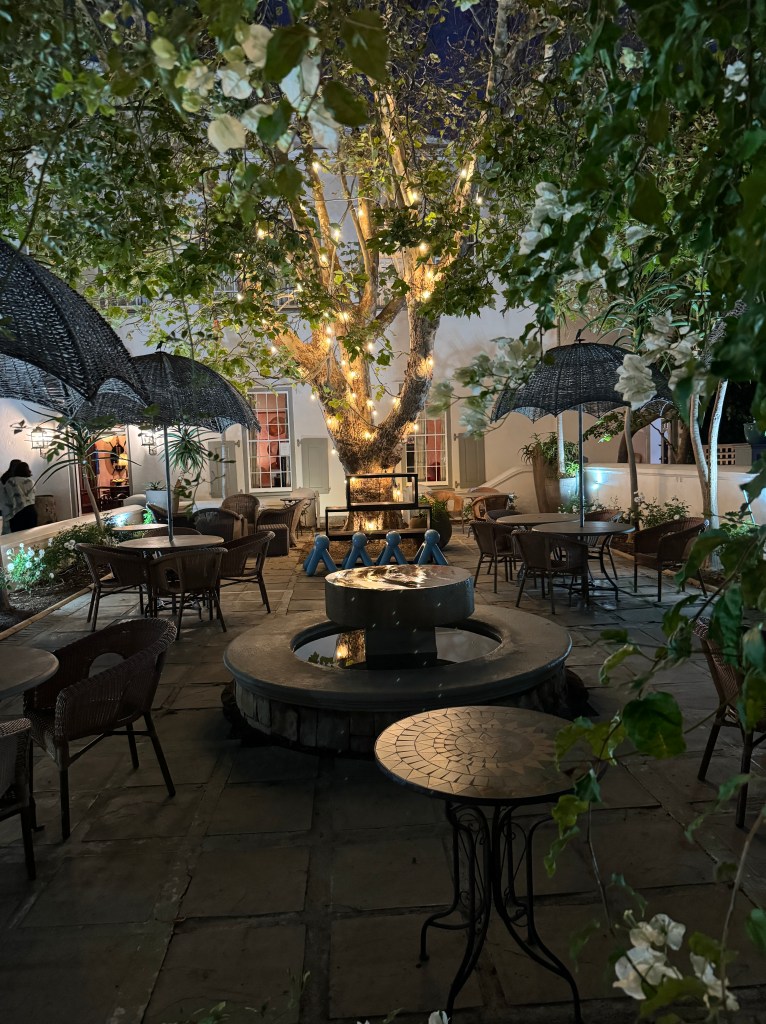
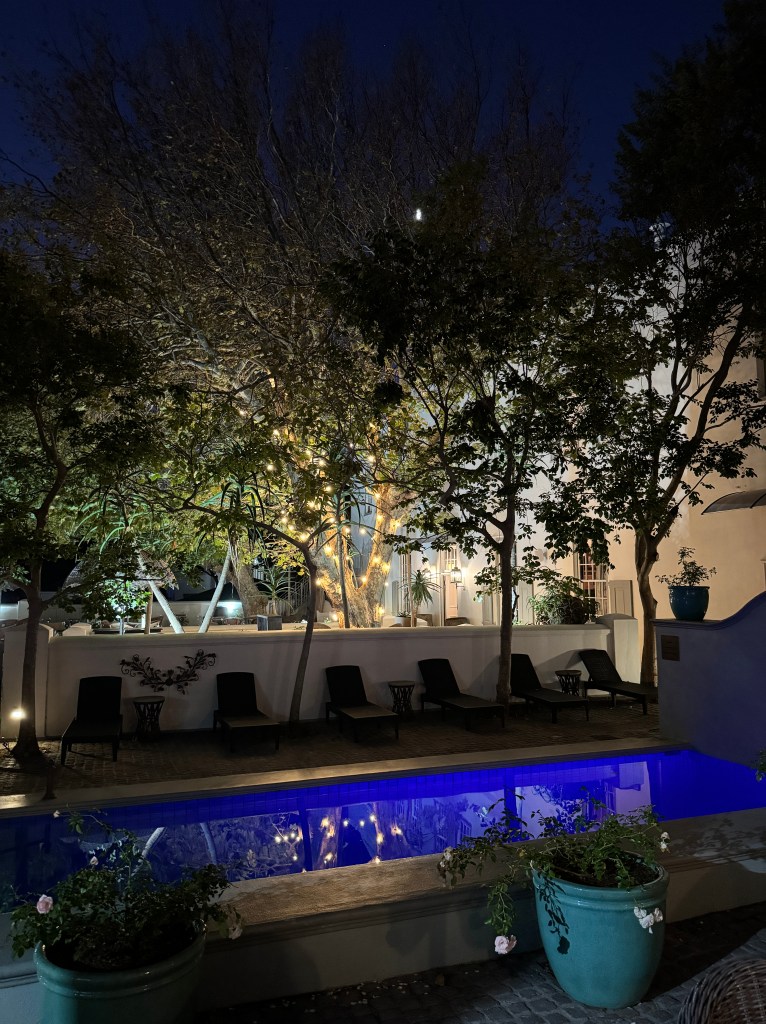
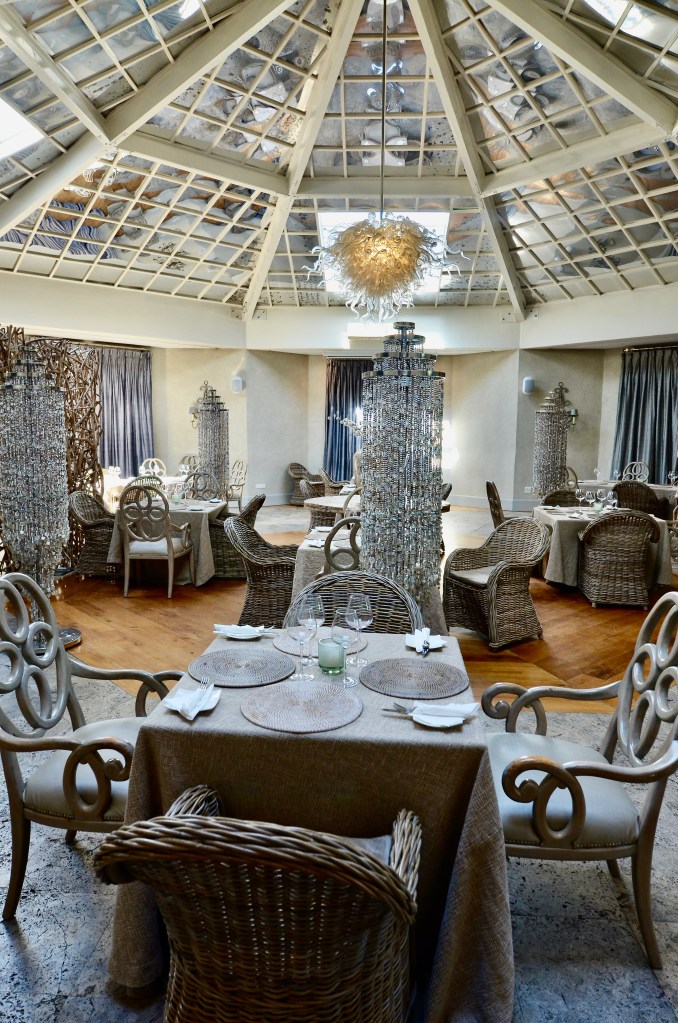
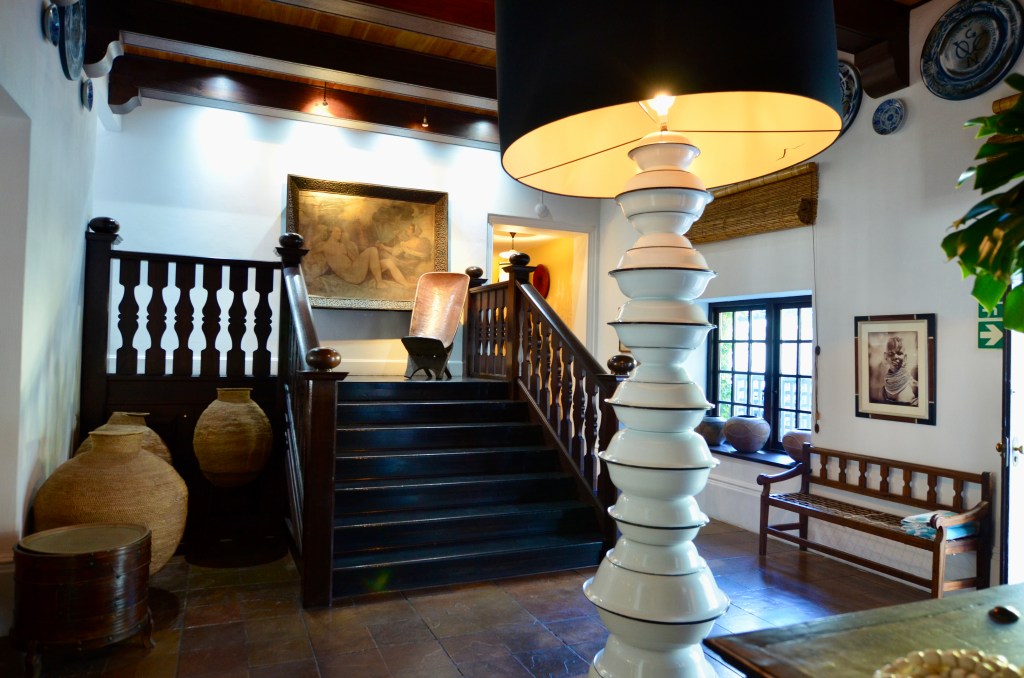
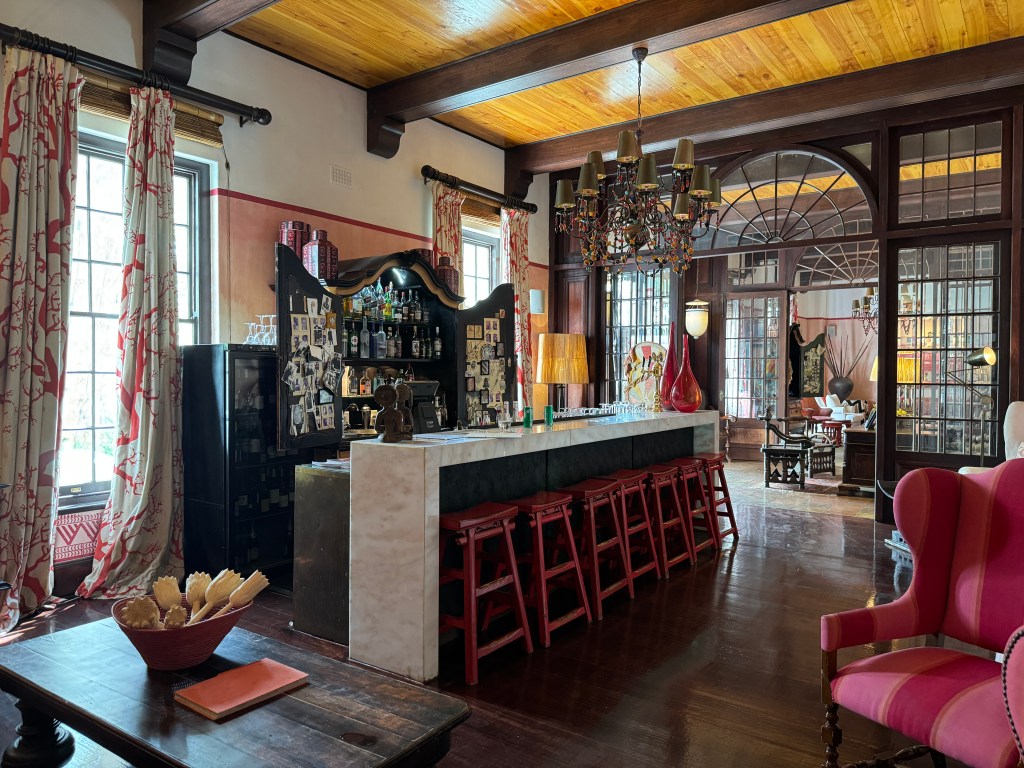
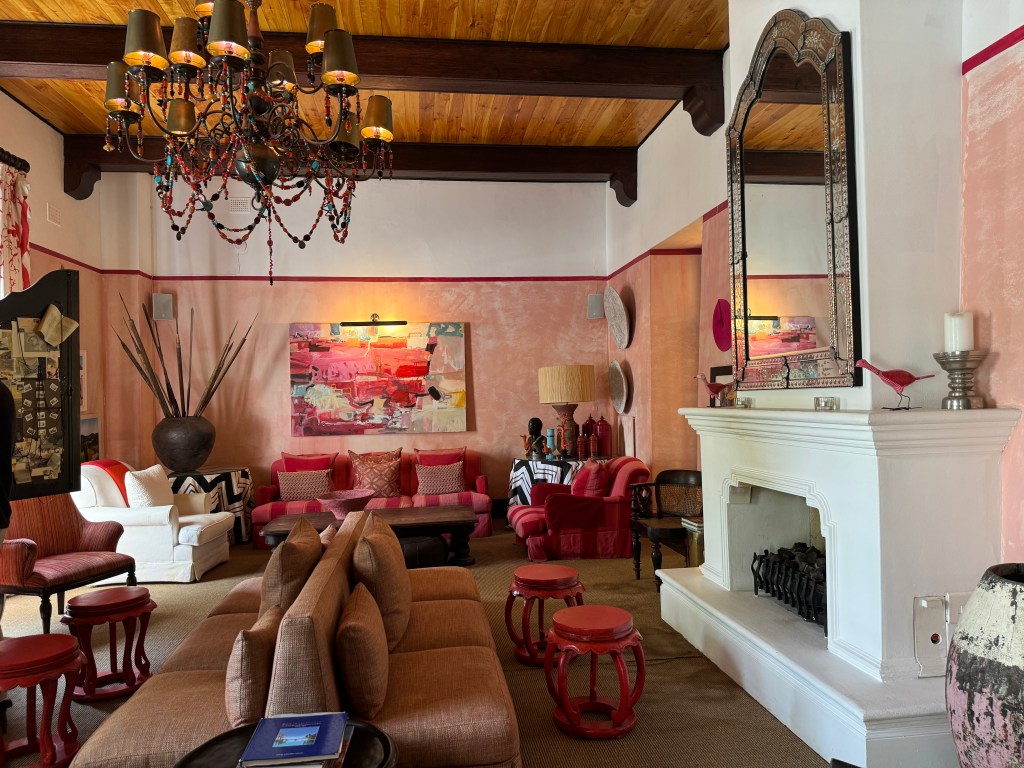
Pool area is a lovely place to relax and it is never busyLarge bedroom with a very comfortable king size bedNice patio area Outdoor dining – this is where we eat breakfastInside breakfast areaBar area – which is never busyLounge
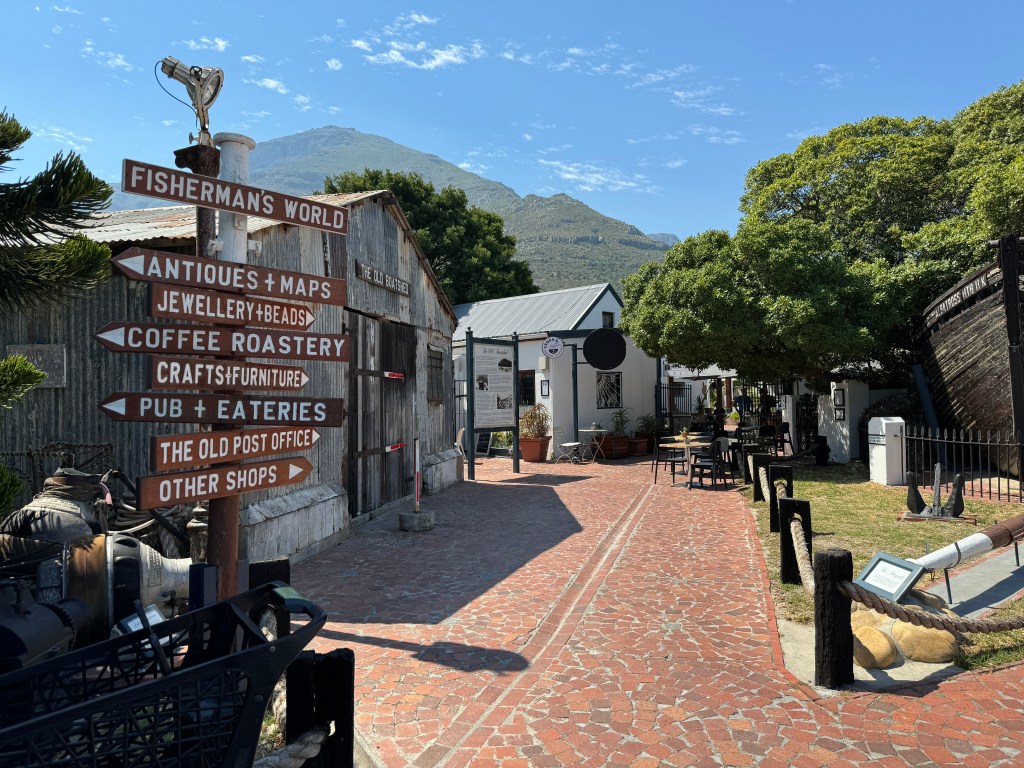
We really like our proximity to the village where there are grocery stores (including our favour Woolworths), drug stores, banks, restaurants and many small local stores. We have been walking into the village in the mornings just to look around (and yes we bought a few things). We normally have lunch at an outdoor patio at one of the many restaurants in the village.
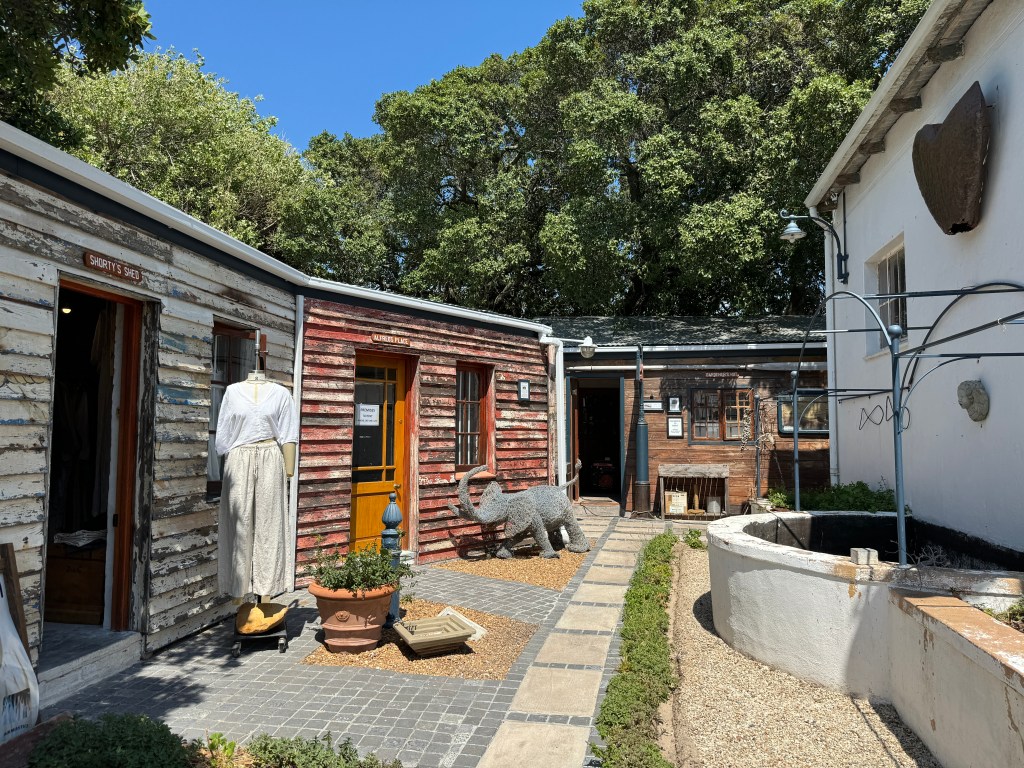
There is a quaint courtyard with many small shops and restaurants
One shop that our friend Jan suggested is The T-Bag Designs workshop. Although it closed during the pandemic, they are now open again. The T-Bag Designs employs people from the local townships to create art from recycled teabags. The tea bags are dried, emptied, ironed then painted by the T-Bag Designs artists and turned into cards, gift bags, coasters, jewelry etc. – each one is unique. Their brochure states “This enterprise provides employment and stability for a group of previously disadvantaged people in the Hout Bay area.” We purchased a few pieces of jewelry to support these local artists.
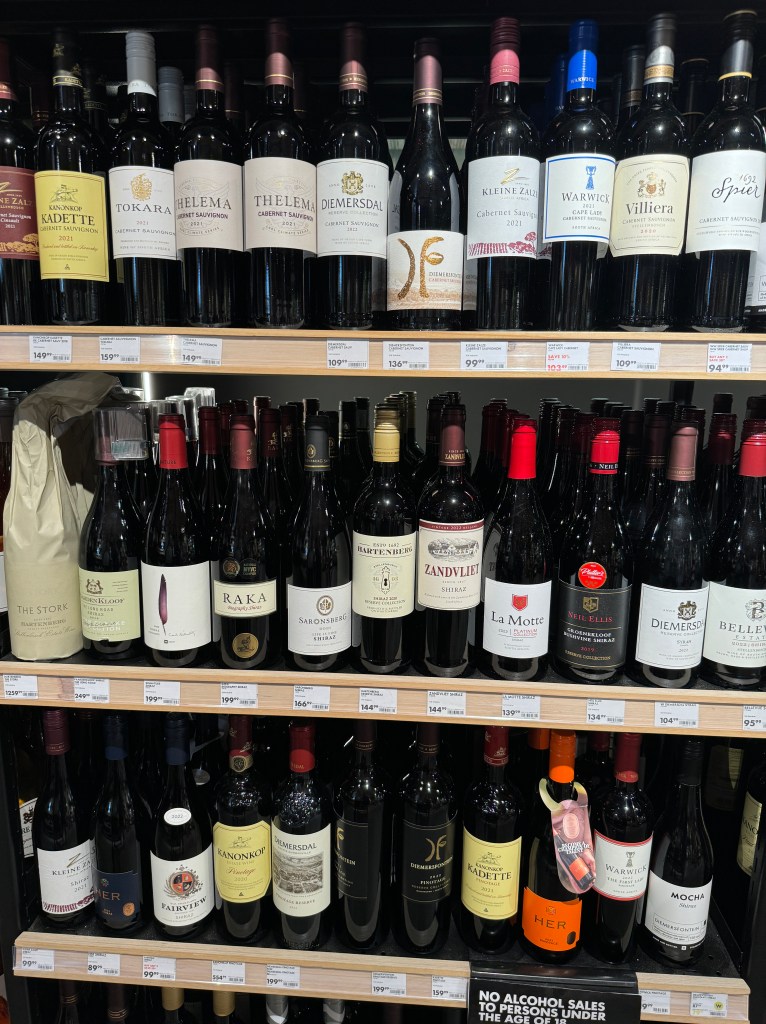
Although a long way to travel, we find the food, wine and accommodations very reasonably priced and the quality is excellent. We love South African wines, and some of our favourite restaurants are in South Africa. Right now the Rand/CAD $ is ~14R to 1 CAD$. A 9 oz glass of a good quality wine is in the $4 – $6 range and a bottle is under $15. We can have a very nice lunch for under $30 and our seafood dinner tonight at CodFather in Camps Bay, with tip, was $85 (for 2 glasses of excellent white wine, King Clip, Scallops, Calamari, rice, fries, a salad and dessert). The seafood was amazing! This would be considered a “pricer” restaurant. Normally dinner is in the $40 – $60 range with two glasses of wine.
Divide the Rand prices shown by 14. For example, one of our favourite reds is Raka and it is R199 which is $14.20CAD
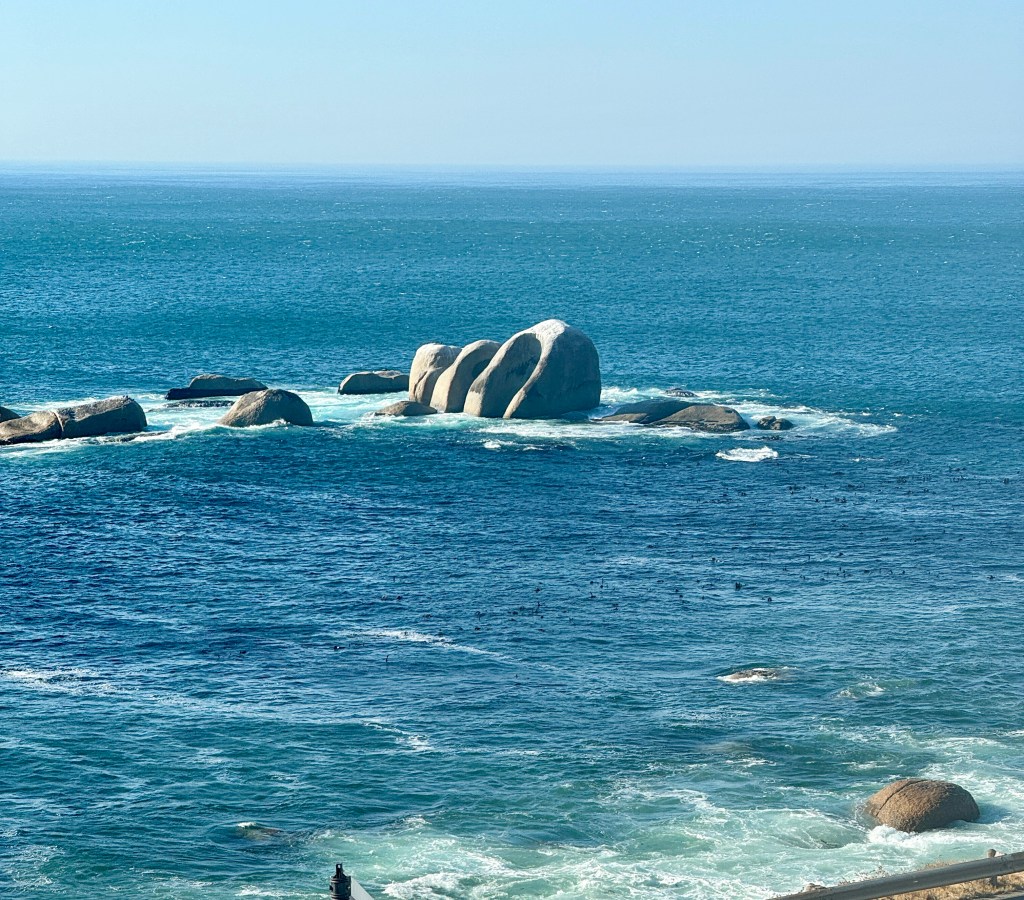
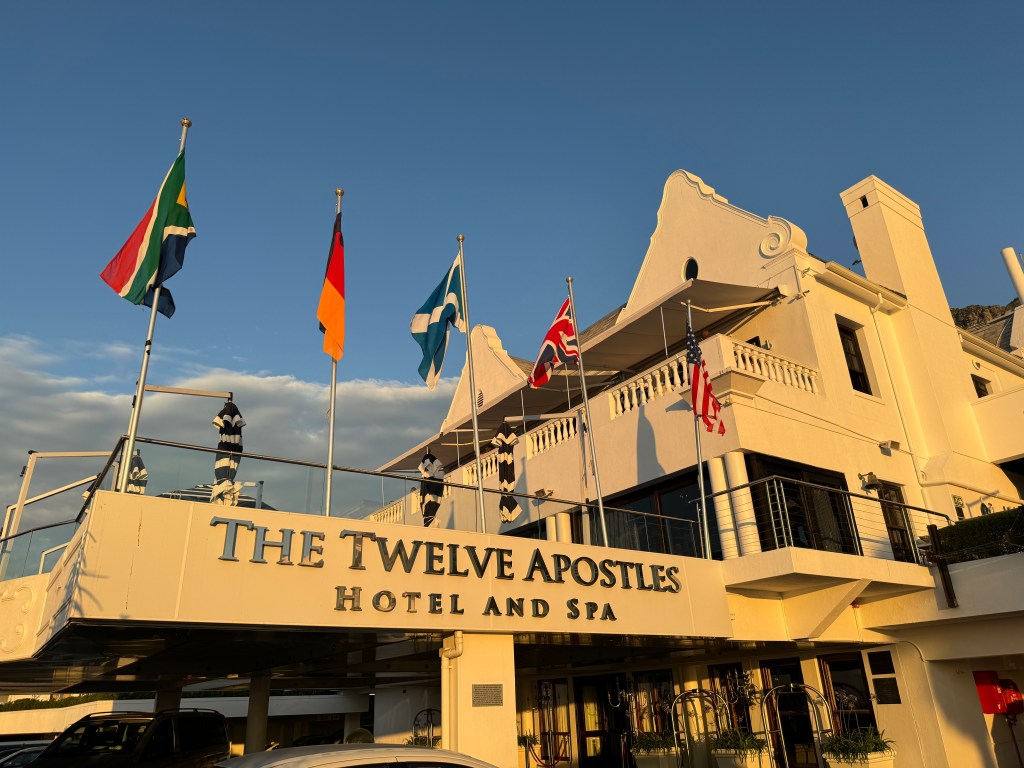
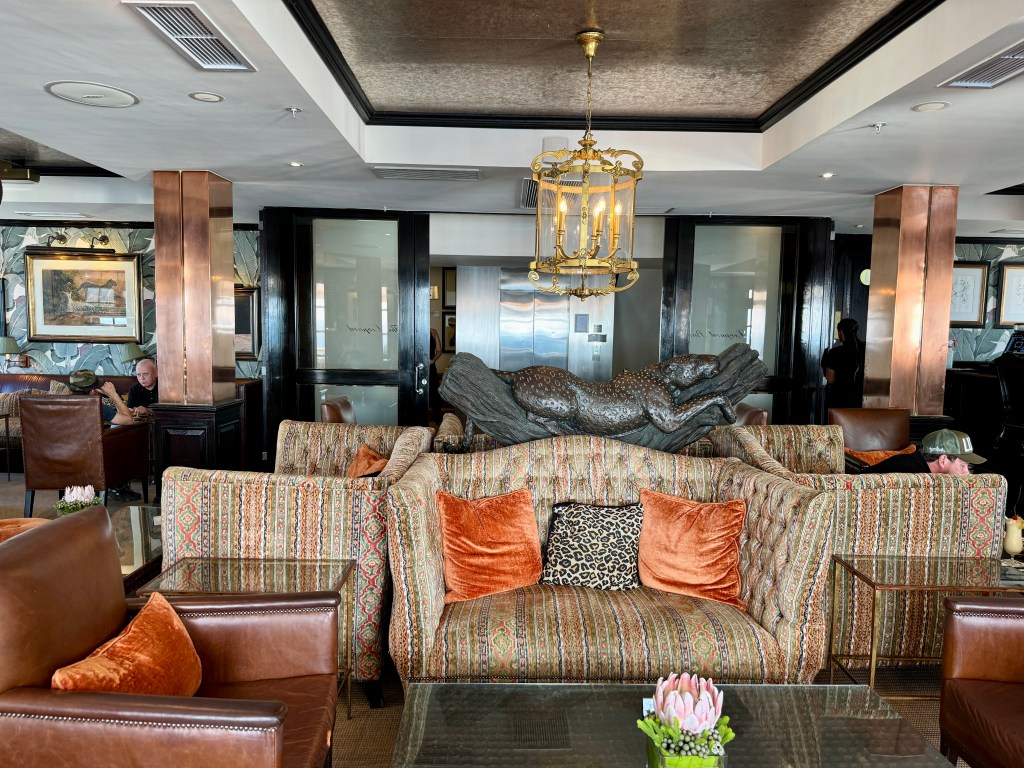
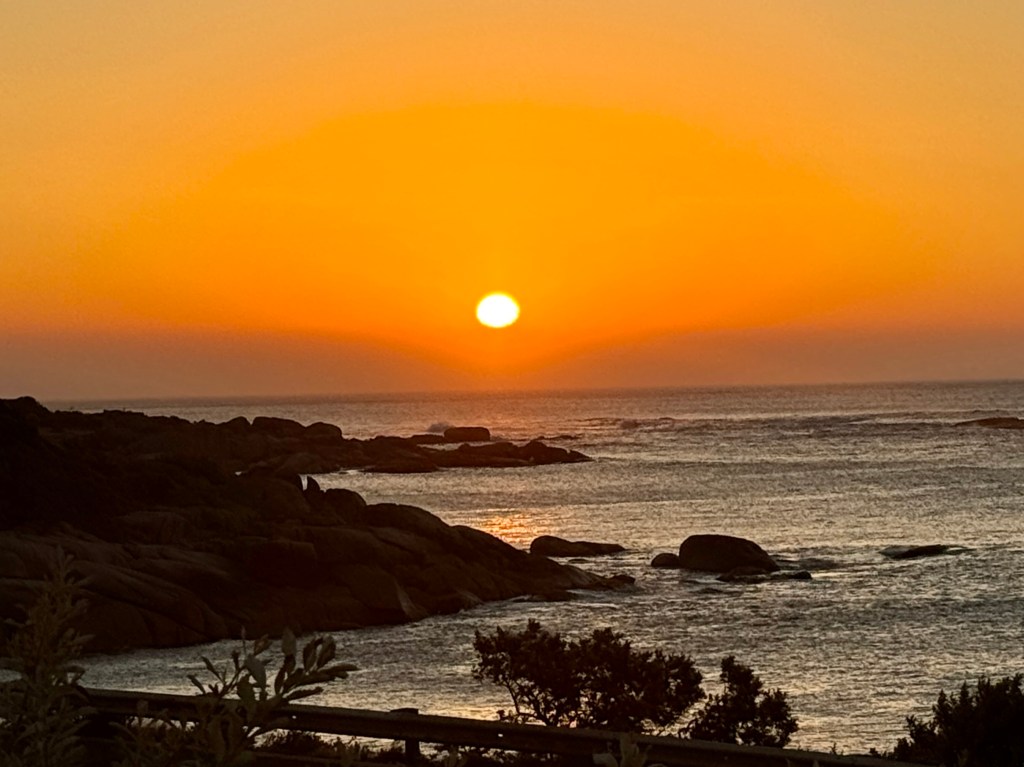
We thought closing with a sunset would be appropriate. We took these picture at Twelve Apostles last night. Although the hotel is very expensive, the Leopard Bar is a really nice, and a reasonable priced spot to have a “pub type” dinner. It is also one of our favourite places to watch the sunset.
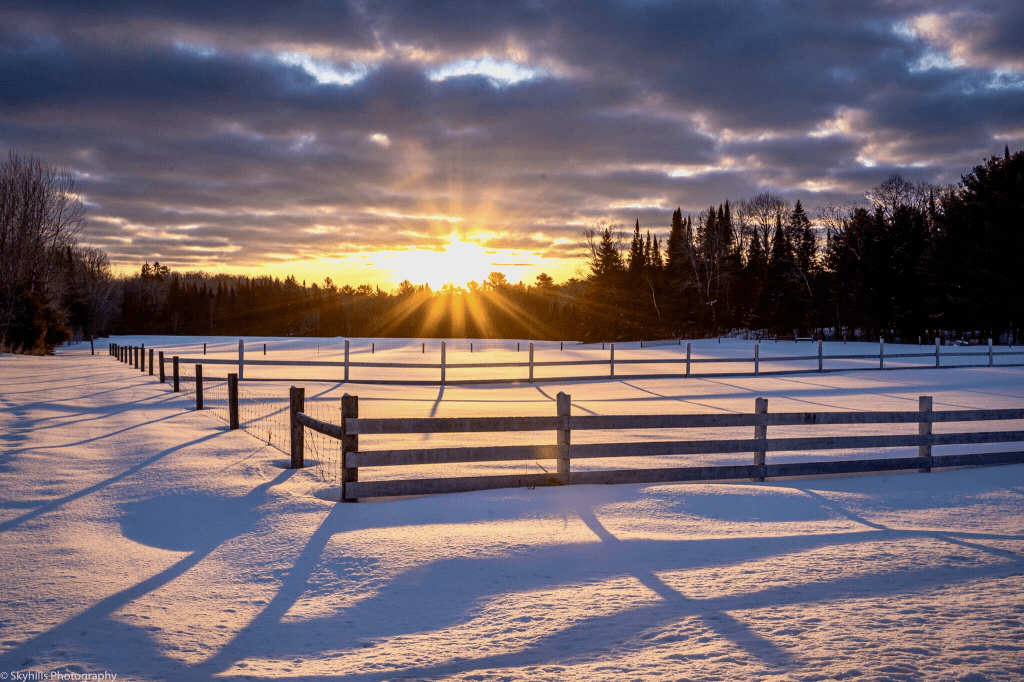
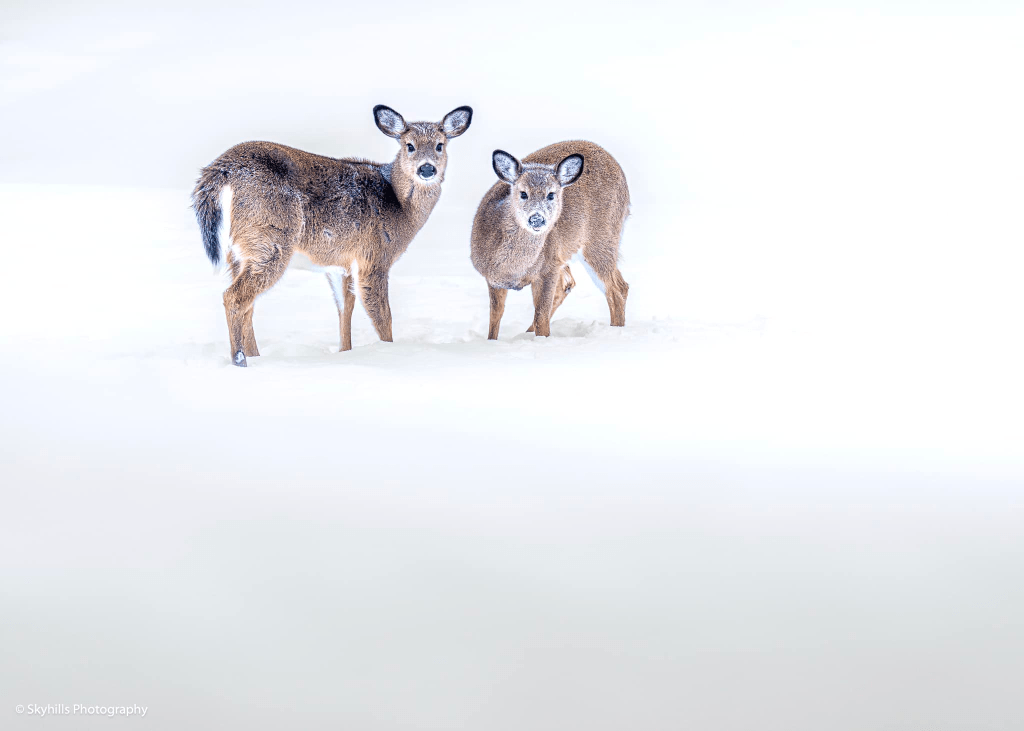
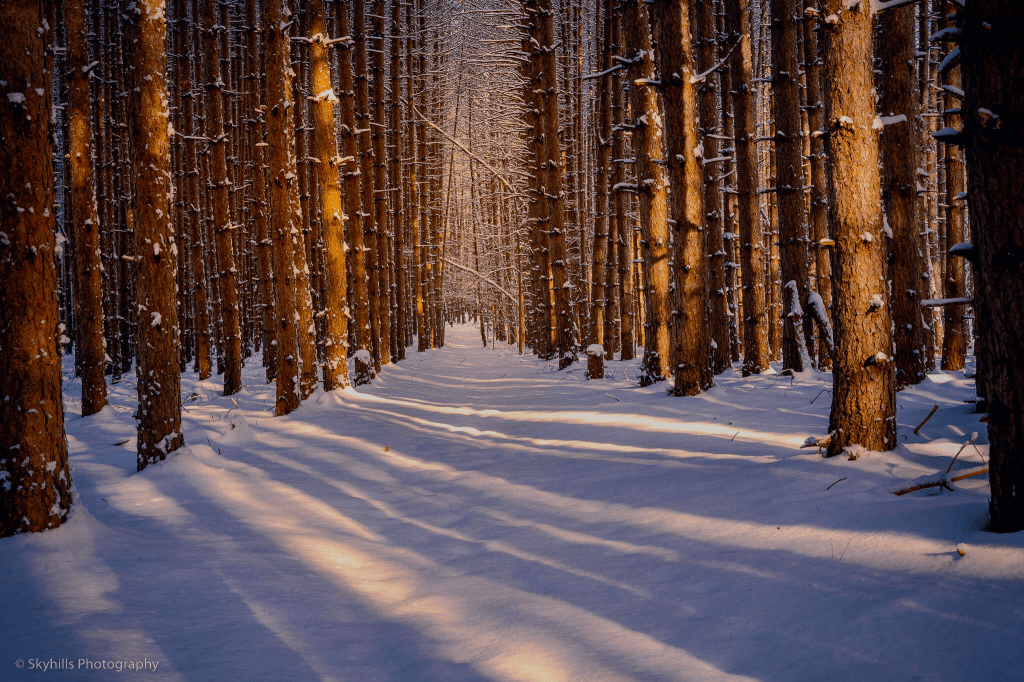
We certainly have had a lot of snow over the last couple of weeks. Although hard to get around at times, and it can be bitterly cold, we still enjoy this winter wonderland. We are lucky to have a neighbour, and very talented photographer, Daniel Gibson (Skyhills Photography), who captures the beauty of winter. Daniel, thank you for allowing me to share some of your winter photos from our neighbourhood. We look forward to seeing your photos while we are away so we can still enjoy the beauty of home.
Photo courtesy of Daniel Gibson, Skyhills PhotographyPhoto courtesy of Daniel Gibson, Skyhills PhotographyPhoto courtesy of Daniel Gibson, Skyhills Photography
We are once again travelling to South Africa, leaving January 29th, arriving in Cape Town on January 31st and returning March 25th, arriving in Toronto on March 26th. We are flying through London Heathrow.
We will be visiting a few new spots this year, combining this with our favourite places to stay in Hout Bay, Wilderness and Franschhoek.
Below is an overview of our travels.
When
Where (Click on the underlined links and you will see where we are staying).
Jan 31 – Feb 7th
We are staying at Hout Bay Manor again. The hotel is walking distance to the village and a short drive to Camps Bay and Cape Town. Lots to do in this area, and also a great place to relax.
Feb 8 – Feb 13th
We are flying to Skukuza Airport this year. For the first few days we are staying at Kruger Shalati – Train on the Bridge, which is a unique small hotel (thank you Wendy and Gord for recommending it). The hotel has great views of the Sabi River and our stay includes 2 game drives a day in Kruger National Park. This is our first time at this hotel – it should be a fun experience. We then head to Inyati Game Reserve again for 3 nights (6 game drives). Our last stop isKruger Gate Hotelfor 1 night before we fly back to Cape Town. We have not stayed at this hotel before.
Feb. 14 – 18th
We return to Hout Bay Manor for 5 nights. Deb and Lauchlyn will be joining us in Hout Bay on Feb. 14th and will travel with us into March. We are lucky to have such fun travel companions.
Feb 19 – 20th
We head to Paternoster, a small West coast fishing Village. A friend recommended Paternoster years ago, but we never booked far enough in advance to stay at Ah! Guest House. Ah! is known for its exquisite food. The owner prepares a 5 course dinner a couple of times a week and guests rave about it (thank you Jan for the recommendation). Finally, we will be able to experience it on Feb. 20th.
Feb 21st – March 10th
Next is Wilderness, with an overnight at Mo & Rose on the way to break up the 6 hour drive. Mo & Rose is in the Robertson Wine Valley, and is nestled at the foot of the Langeberg mountains. This is a new stop for us. We love our apartment at Wilderness Waters. This is our third year renting the apartment and we have developed a friendship with Ruan, the owner. The location is great – an easy 5 minute walk to the beach and an even shorter walk to some wonderful restaurants. There is lots to do in the area – we already have a few activities booked. Lauchlyn heads home on February 29th and Deb on March 9th. We will miss our travel companions.
March 11 – 26th
Our final stop is Franschhoek and Devilliers BnB. We stayed at Devilliers last year, and it was by far our favourite BnB in this area. There are so many wonderful vineyards to enjoy within a 45 minute drive of Devilliers. Of course, we have our favourites, plus we always add new vineyards to our list. We fly home on March 25th , arriving March 26th, after spending almost 2 months in South Africa.
Our next post will be the first week in February. Thank you for following our travels.
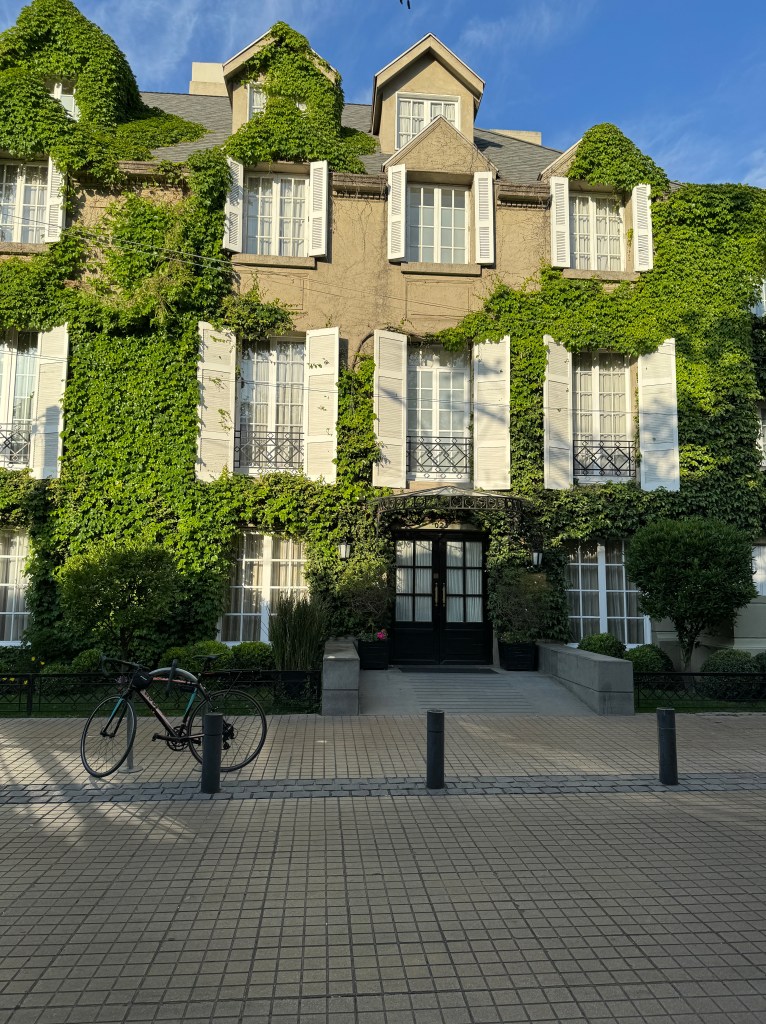
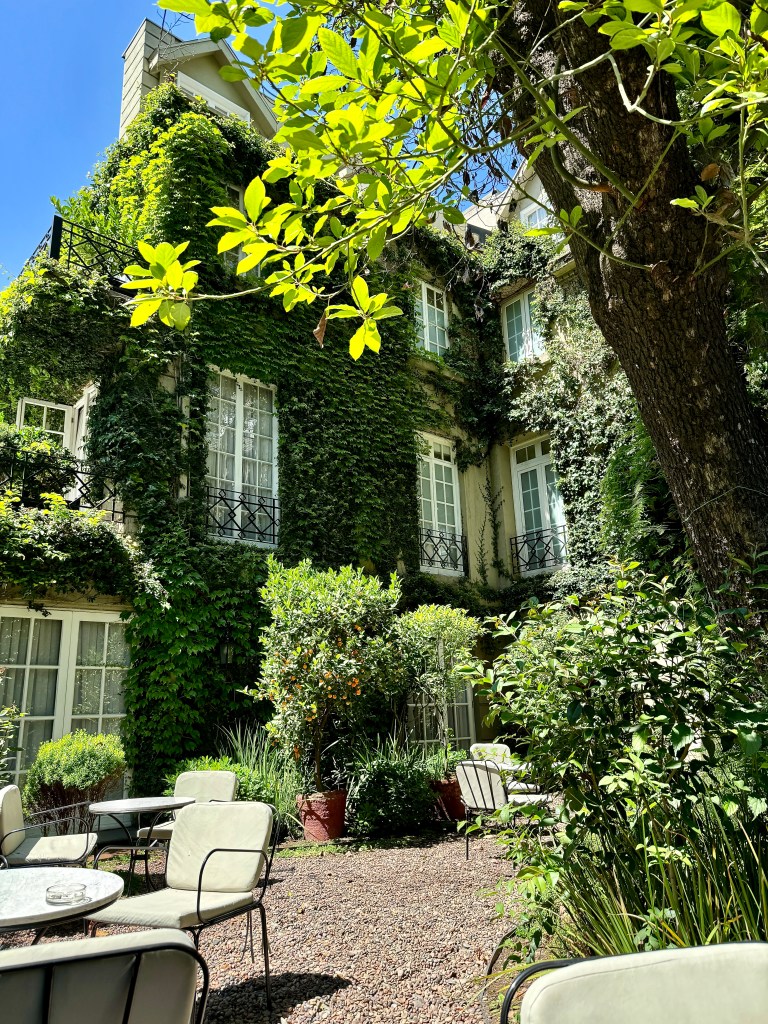
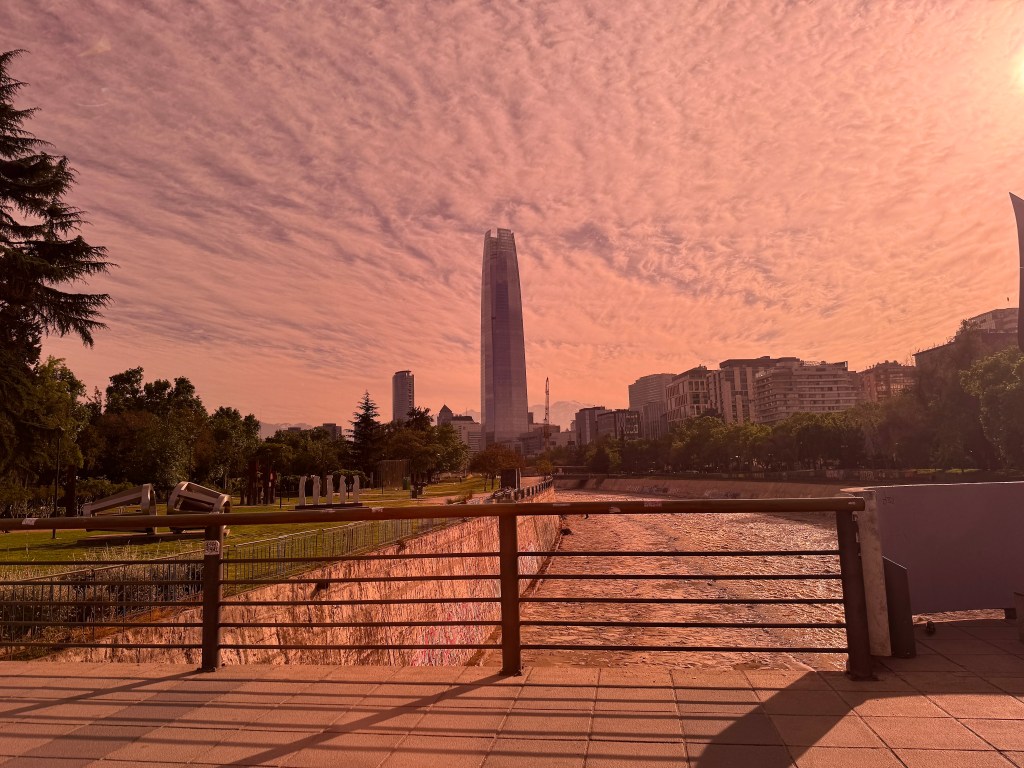
We spent our last 3 days in Santiago. We stayed at Le Reve, a boutique hotel on a quiet tree-lined street in the Providencia area. There were numerous restaurants within easy walking distance so a perfect place to relax before we headed home.
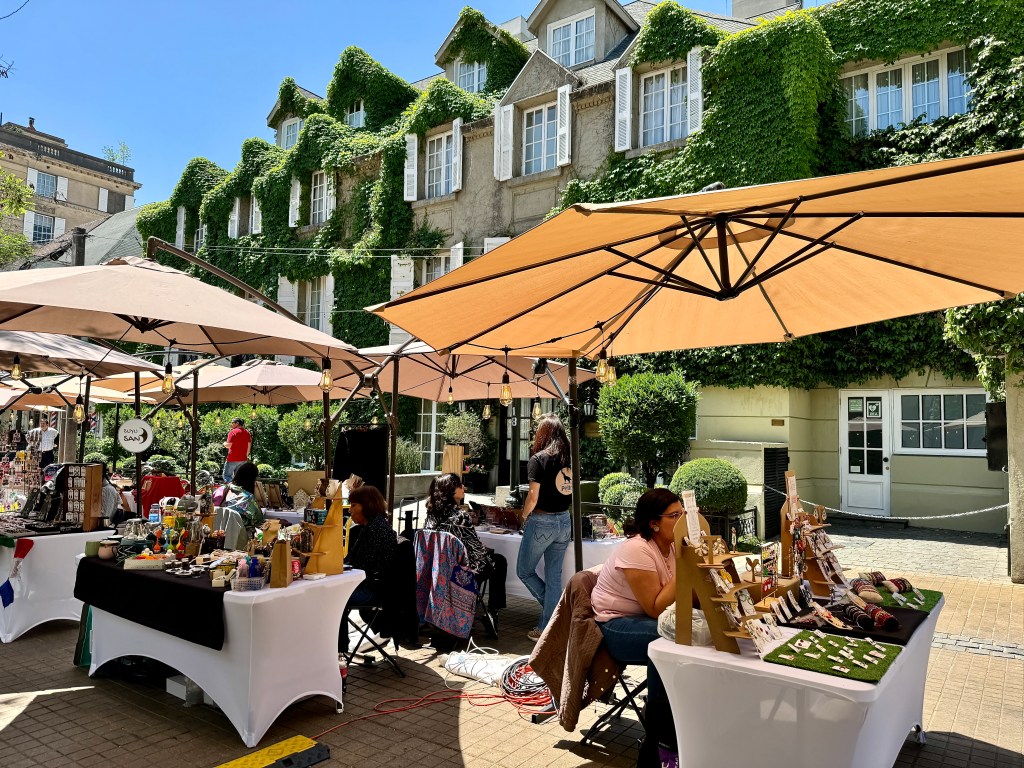
Le Reve – very quiet streetVery peacefulcourtyard at the back of our hotelSmall street market in front of our hotel – just there for the afternoon
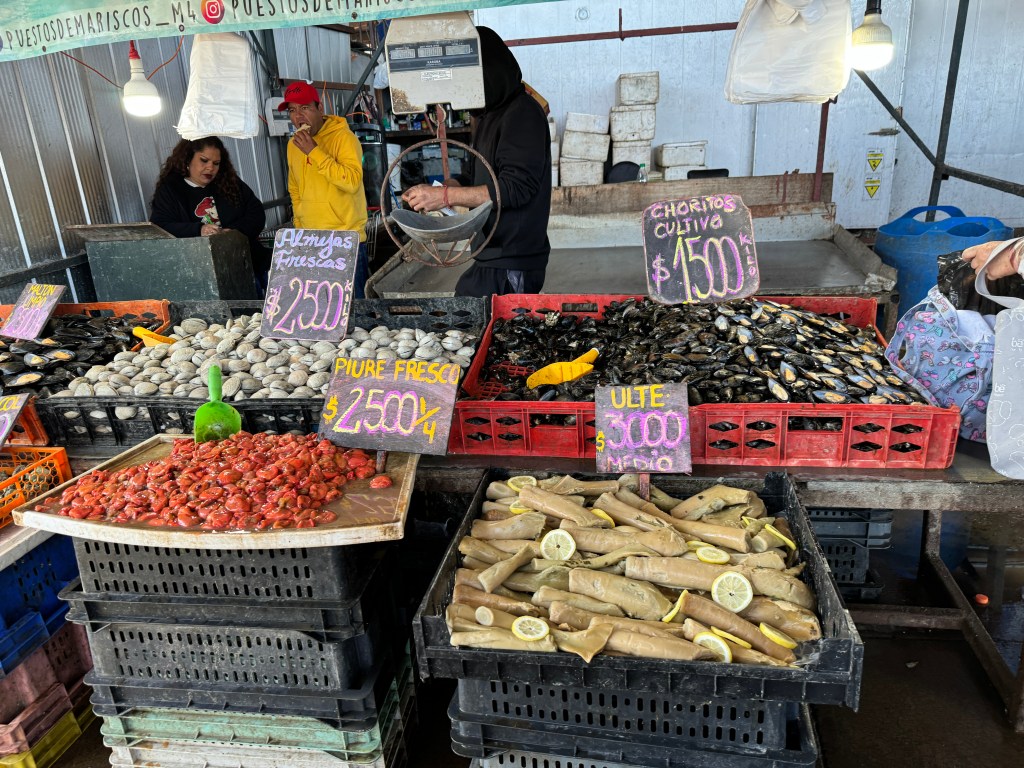
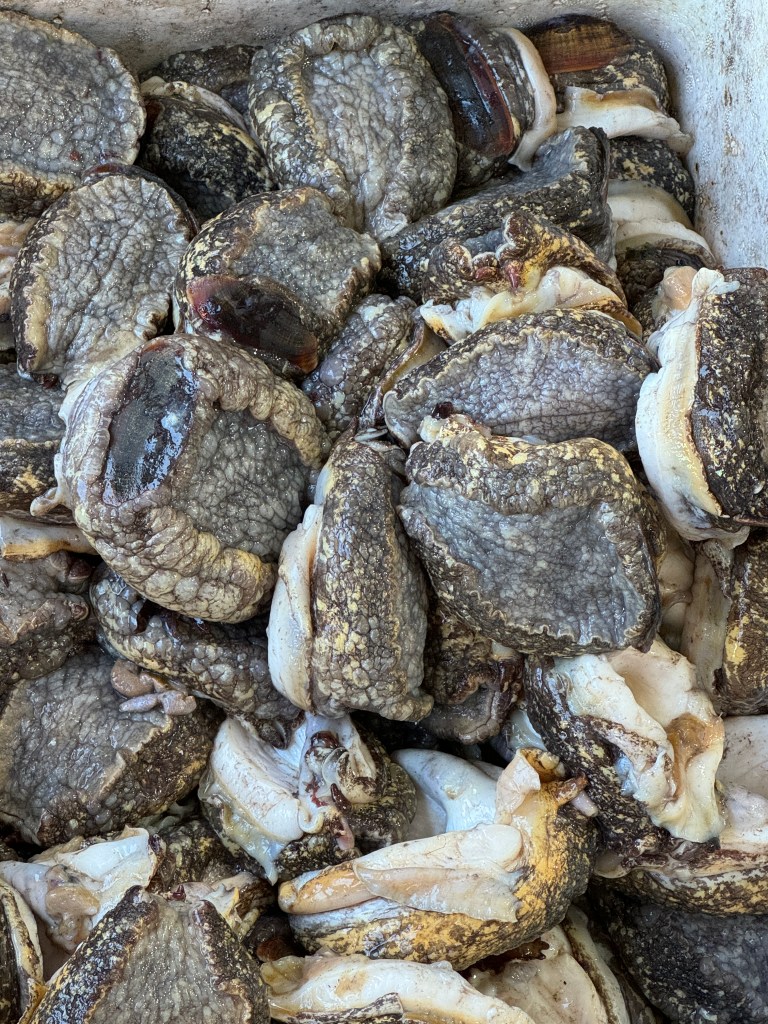
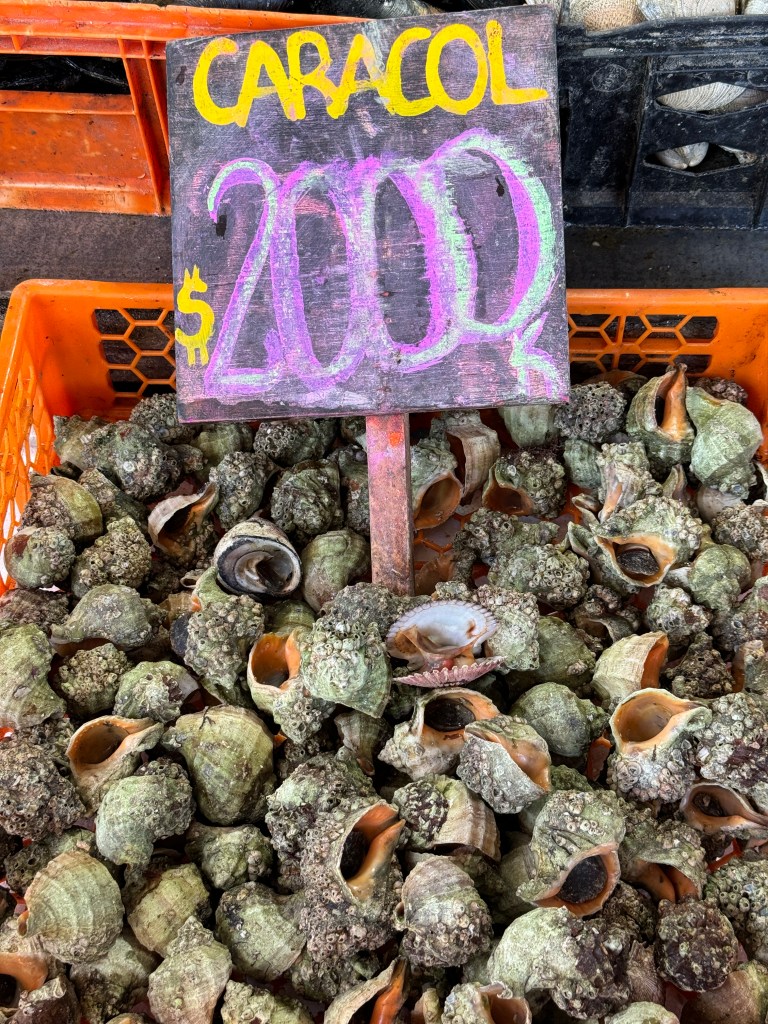
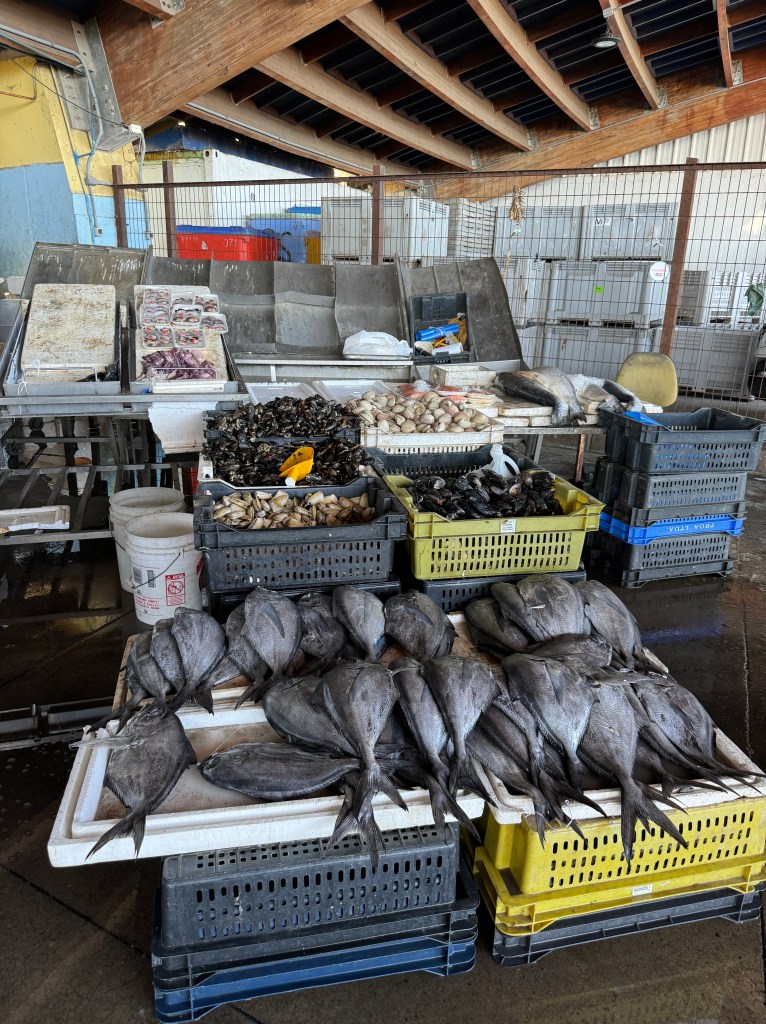
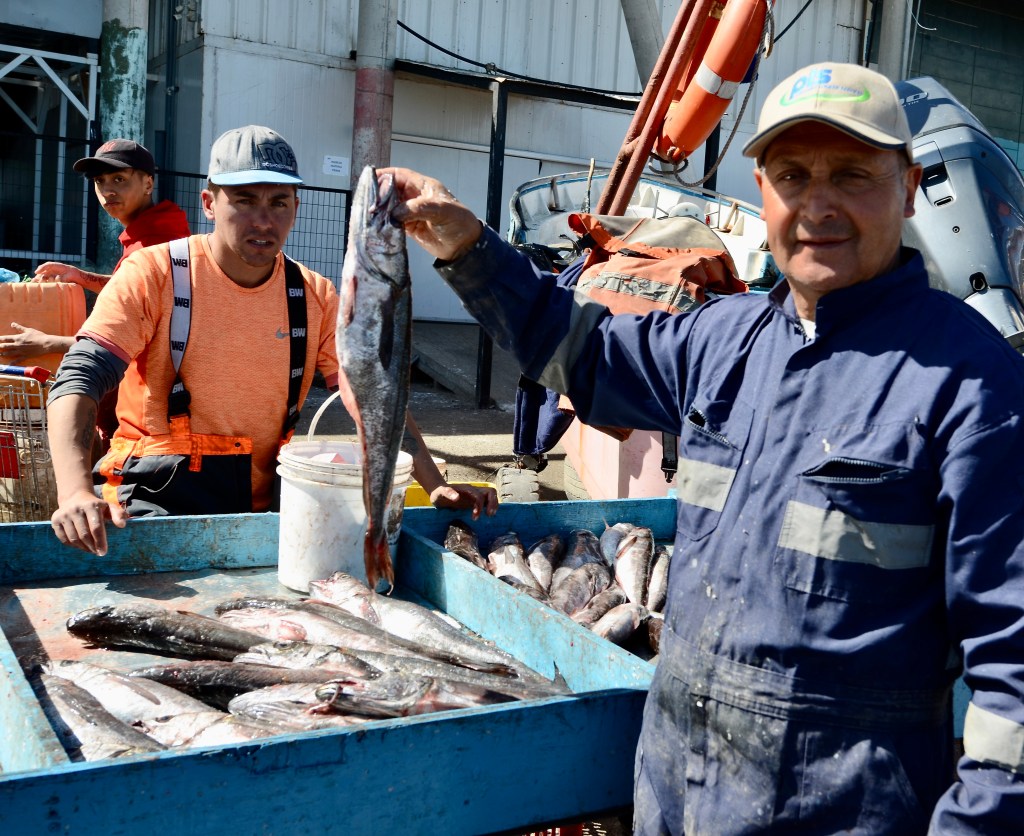
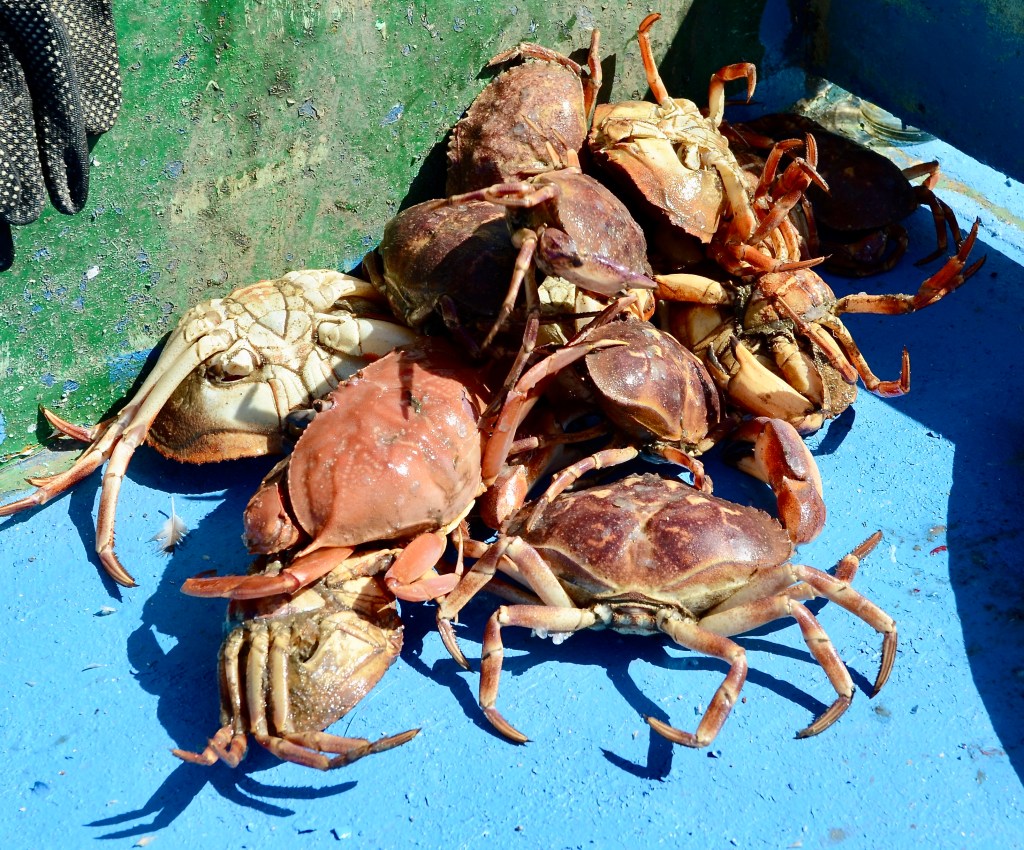
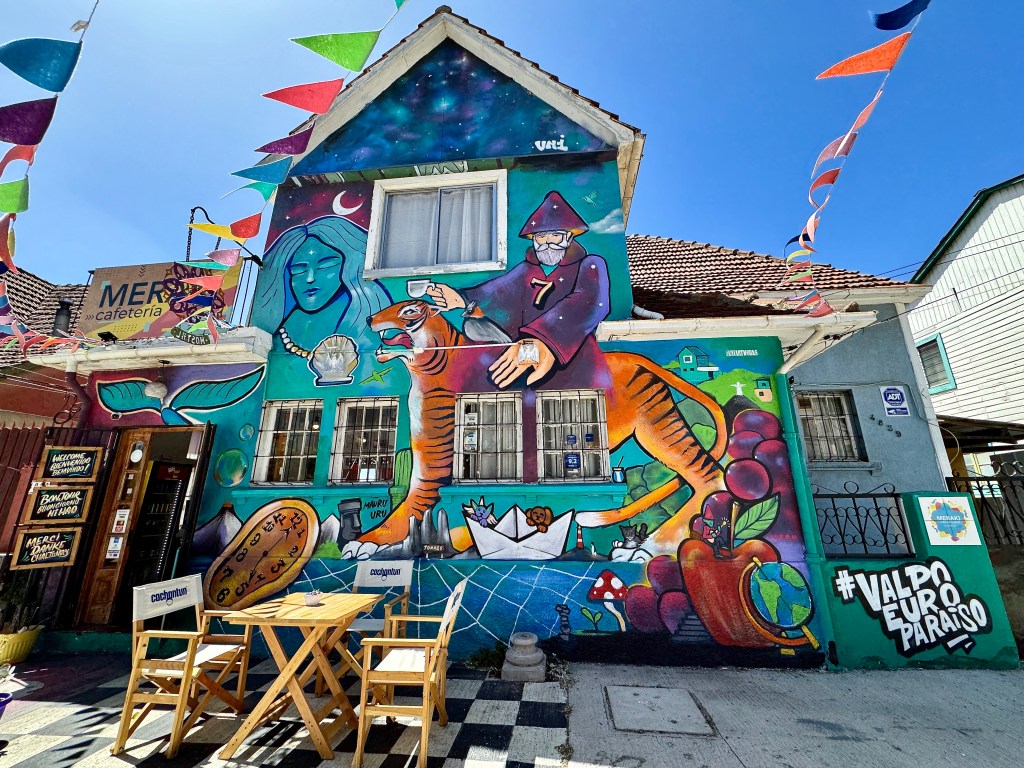
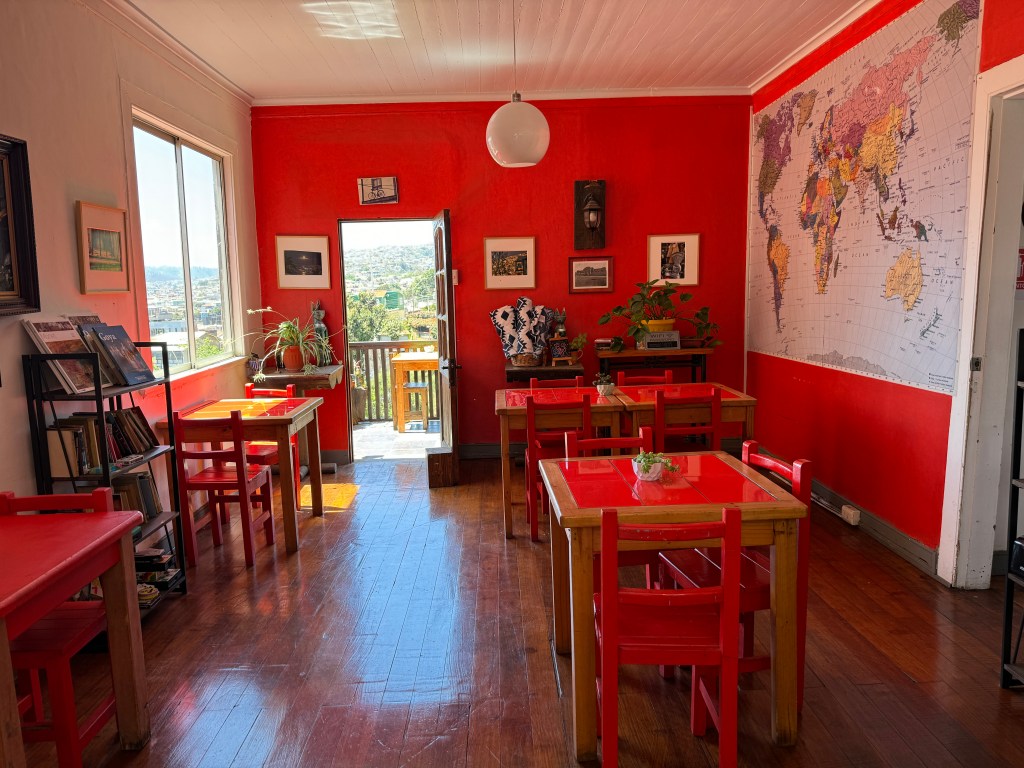
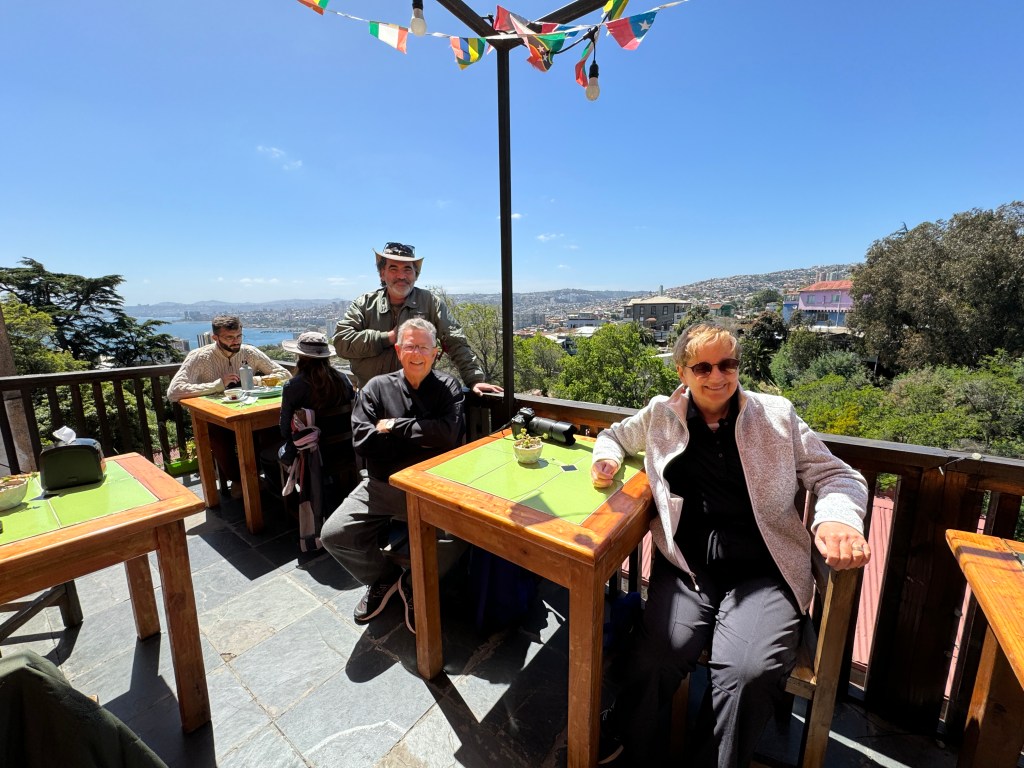
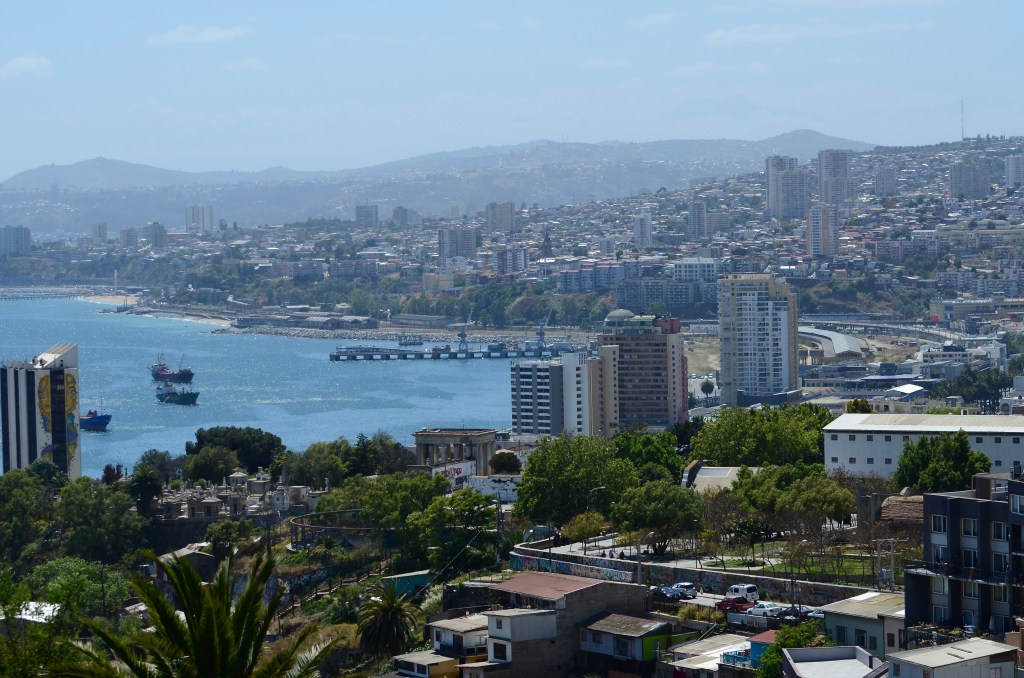
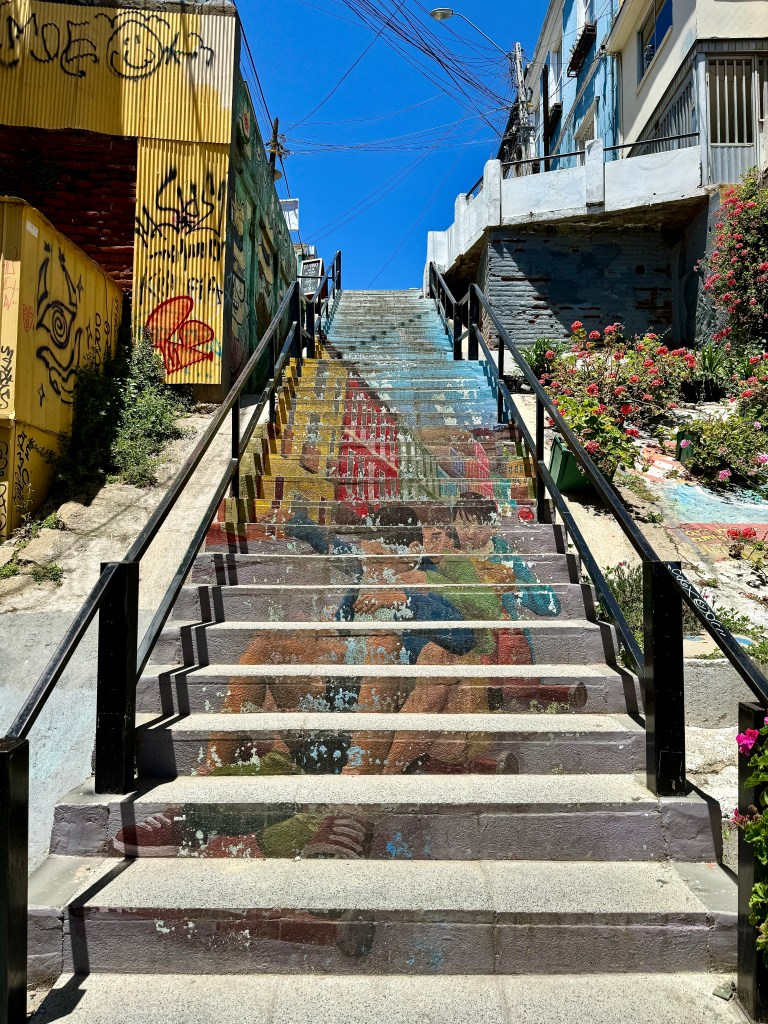
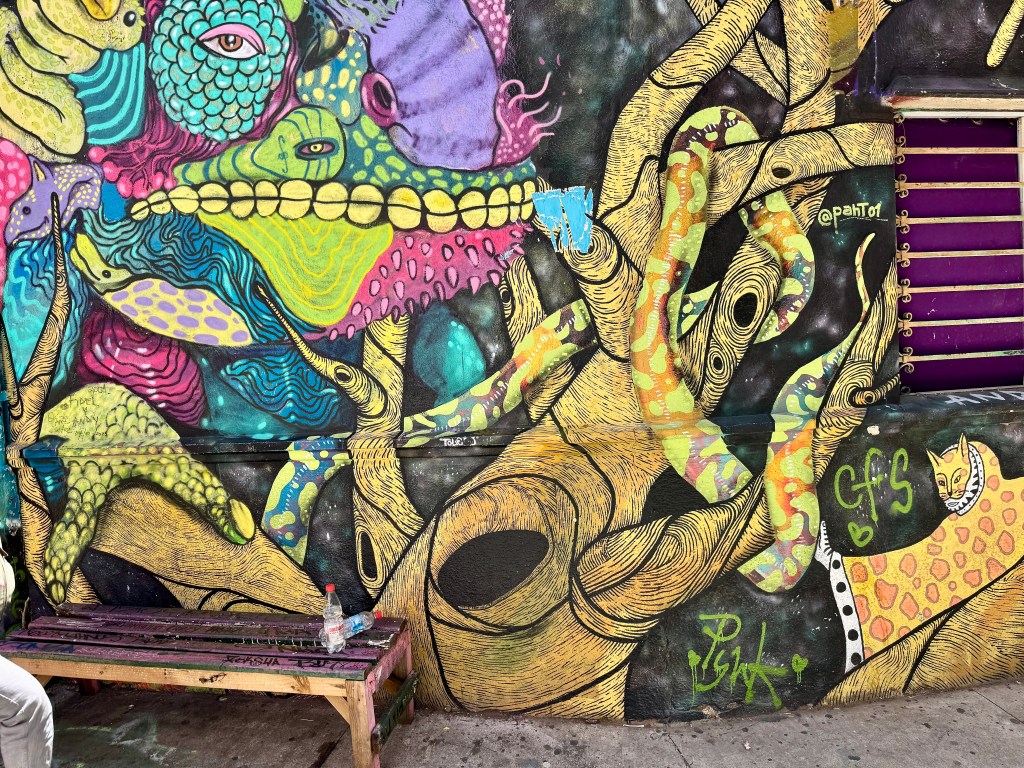
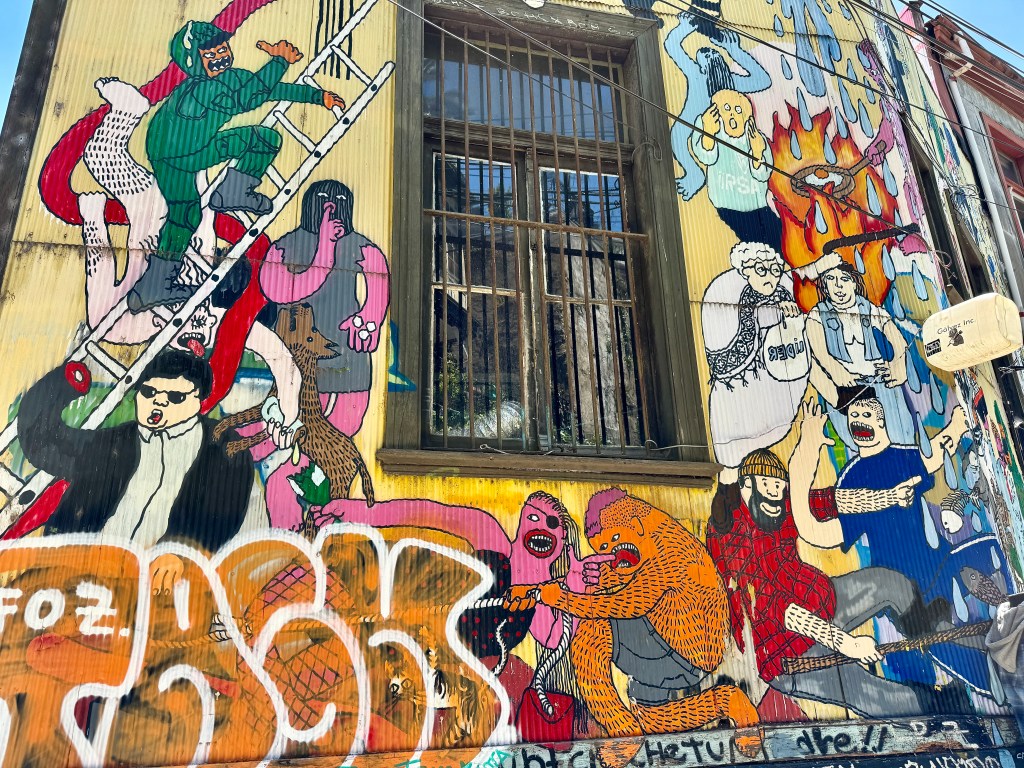
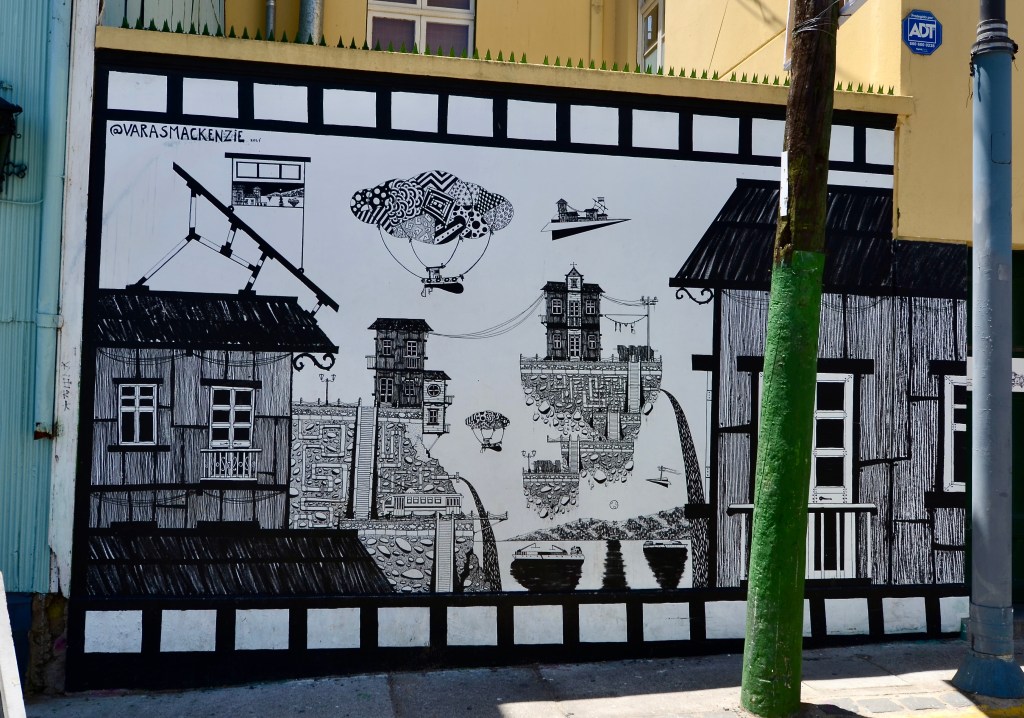
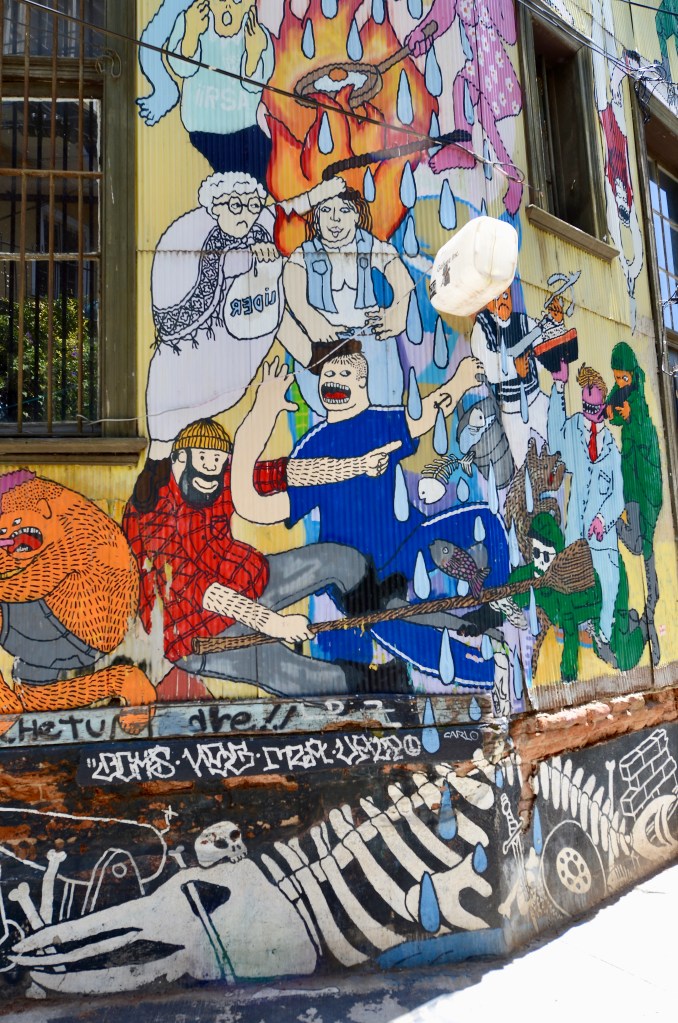
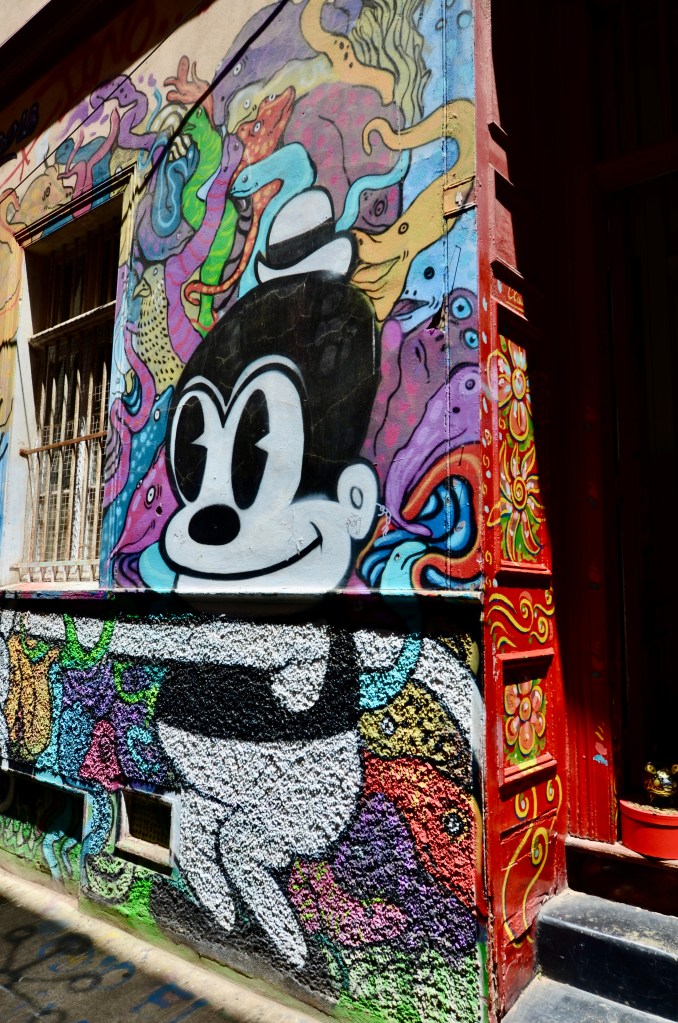
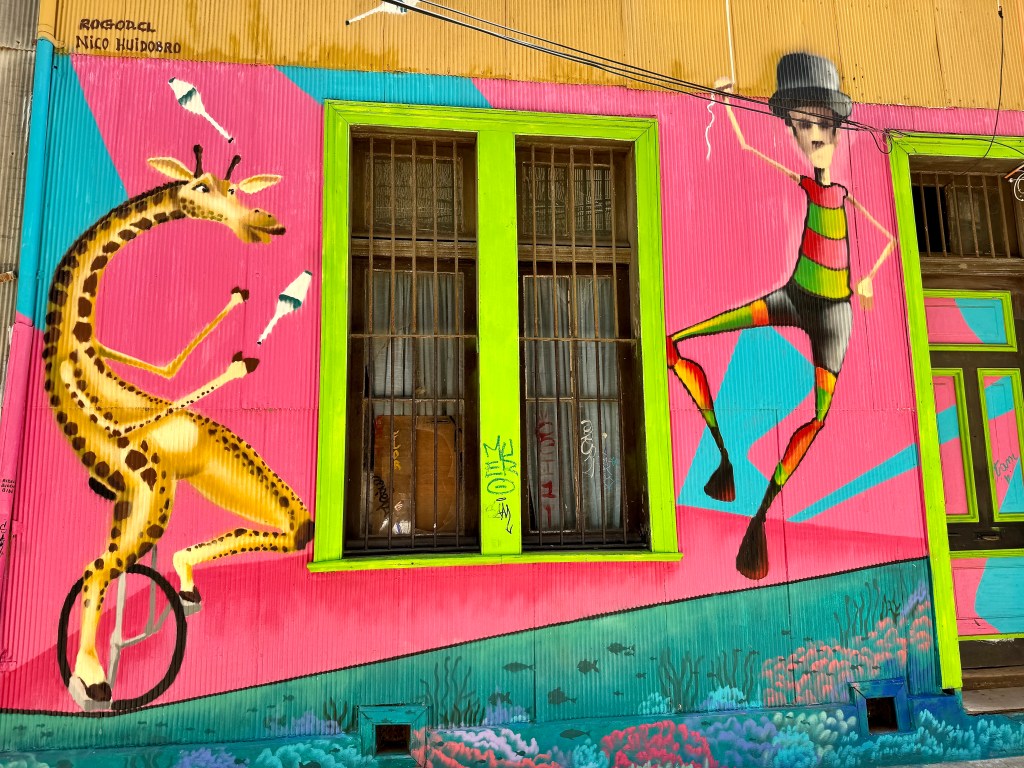
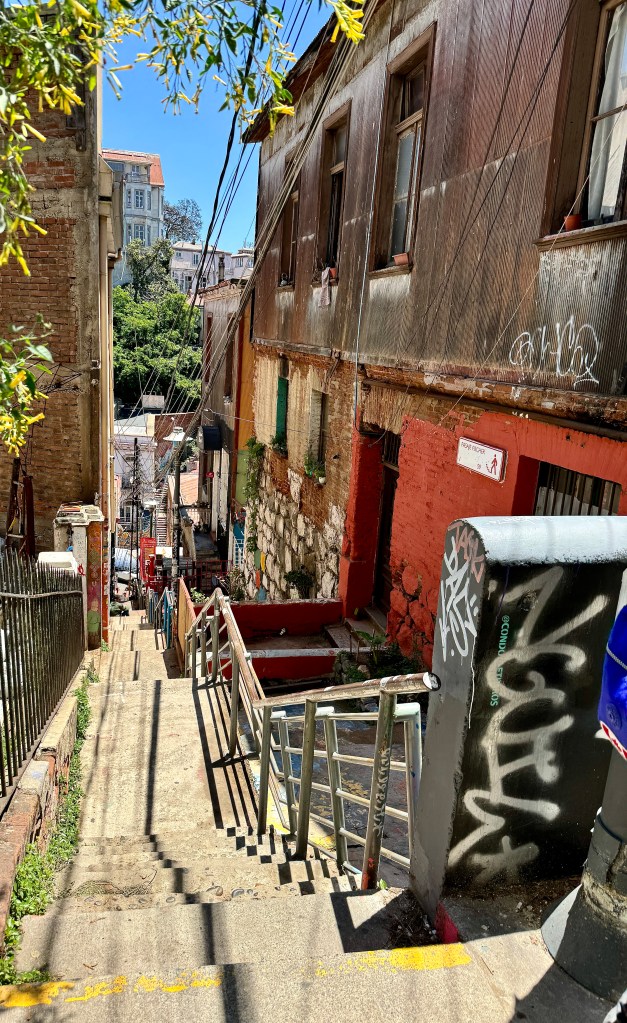
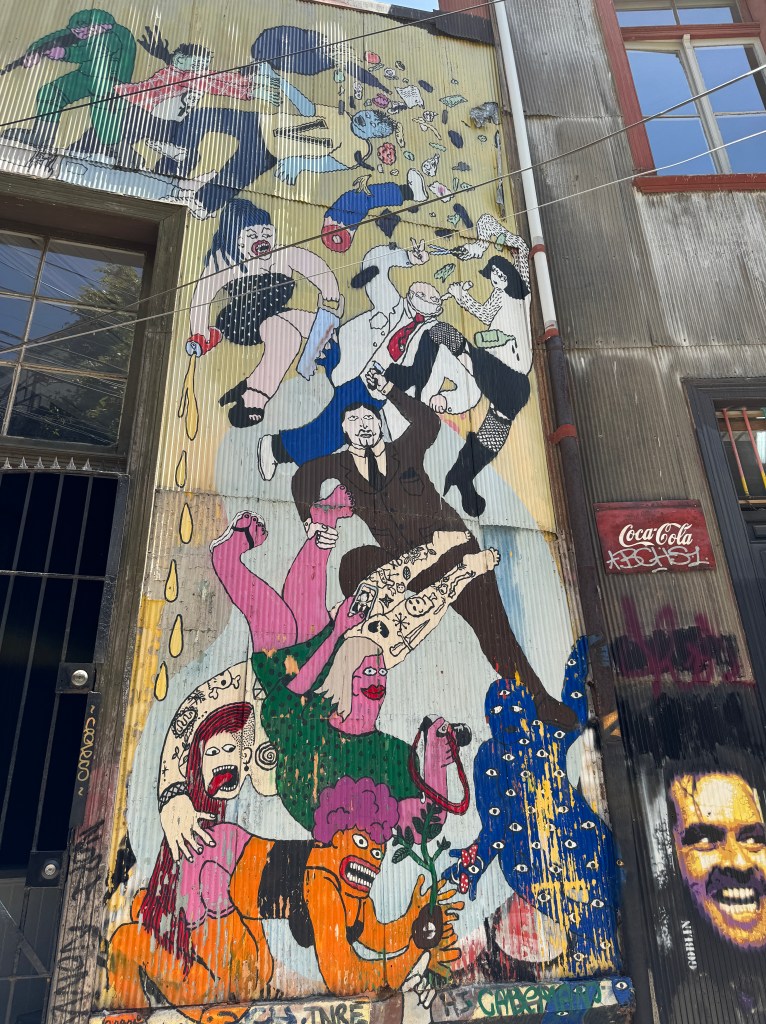
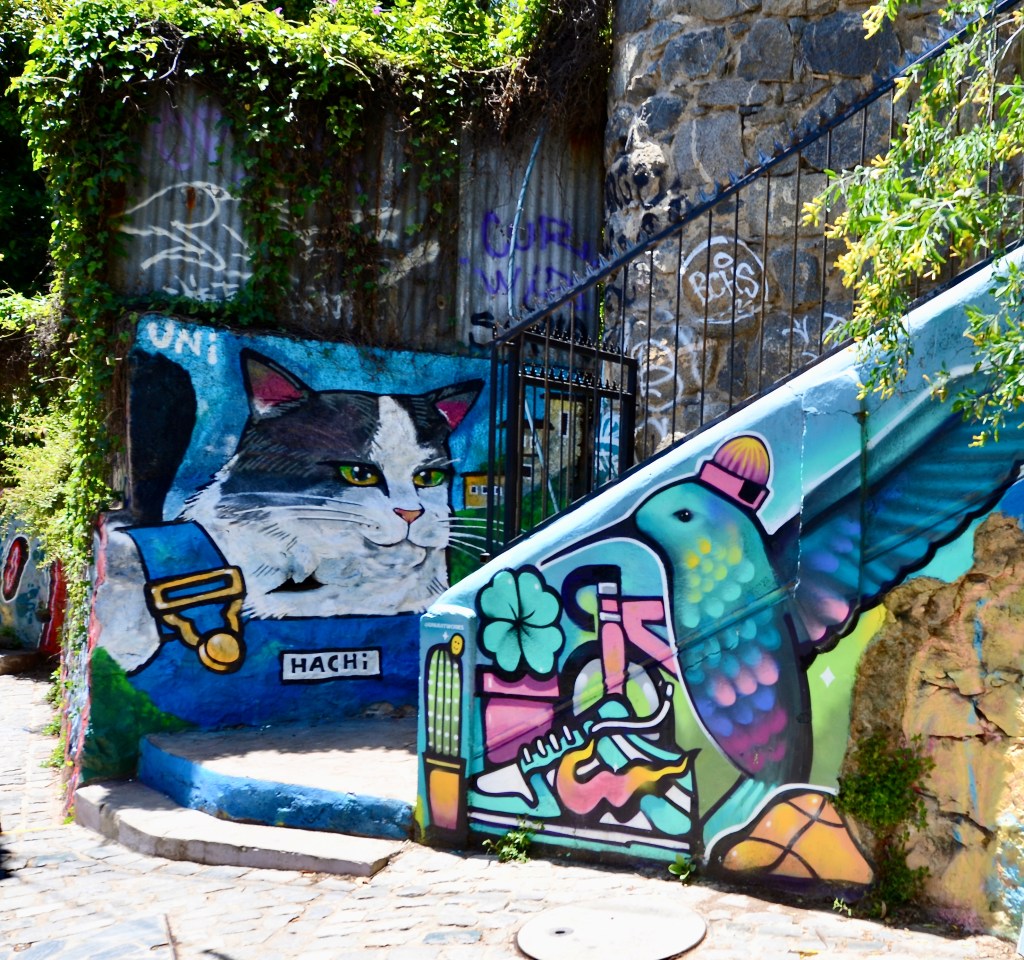
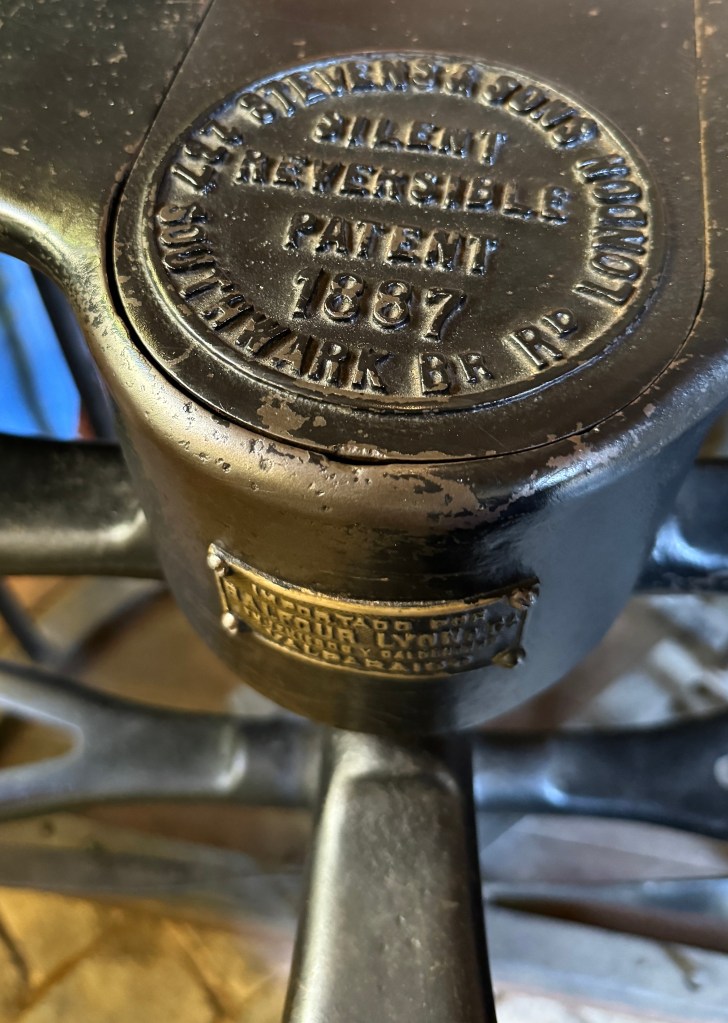
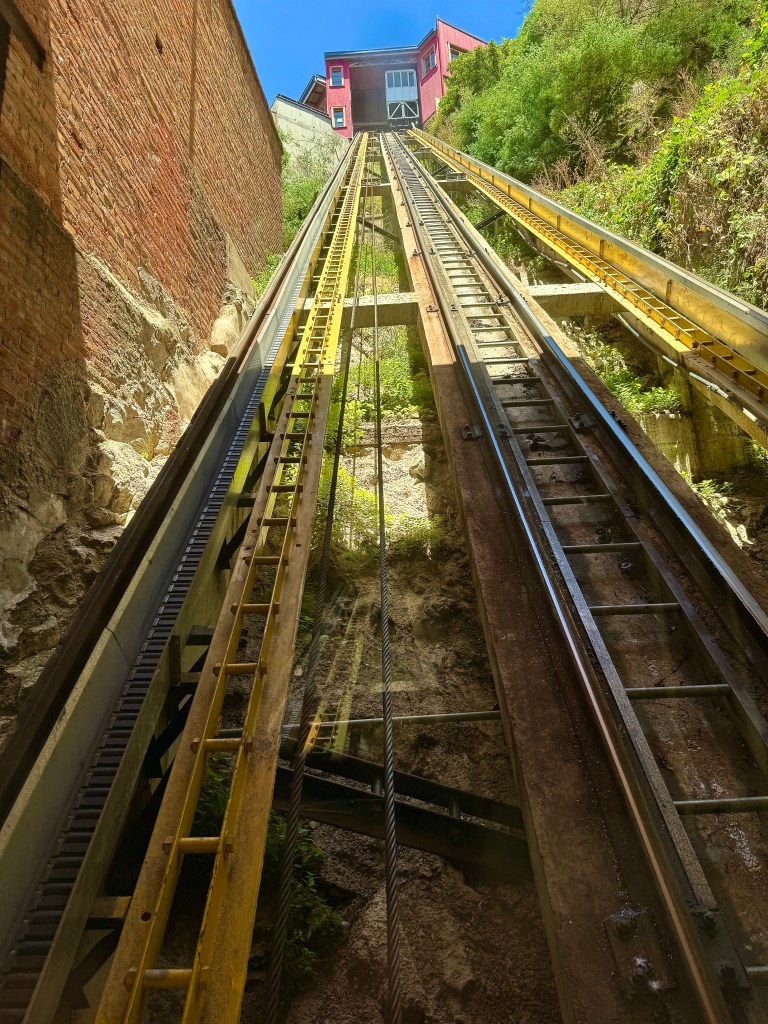
We arranged a full day tour of Valparaiso with Julio Private Tours. Valparaíso is a port city about 120 km to the north west of Santiago. It is known for its steep funiculars, colourful cliffside homes and playful street art. Julio and his son were fun to be with and it was a nice combination of driving and walking. Valparaiso is described as Bohemian and colourful and it was – we enjoyed the fish market, our ride on the historic funicular elevators, the street art and the panoramic views from the lookout points.
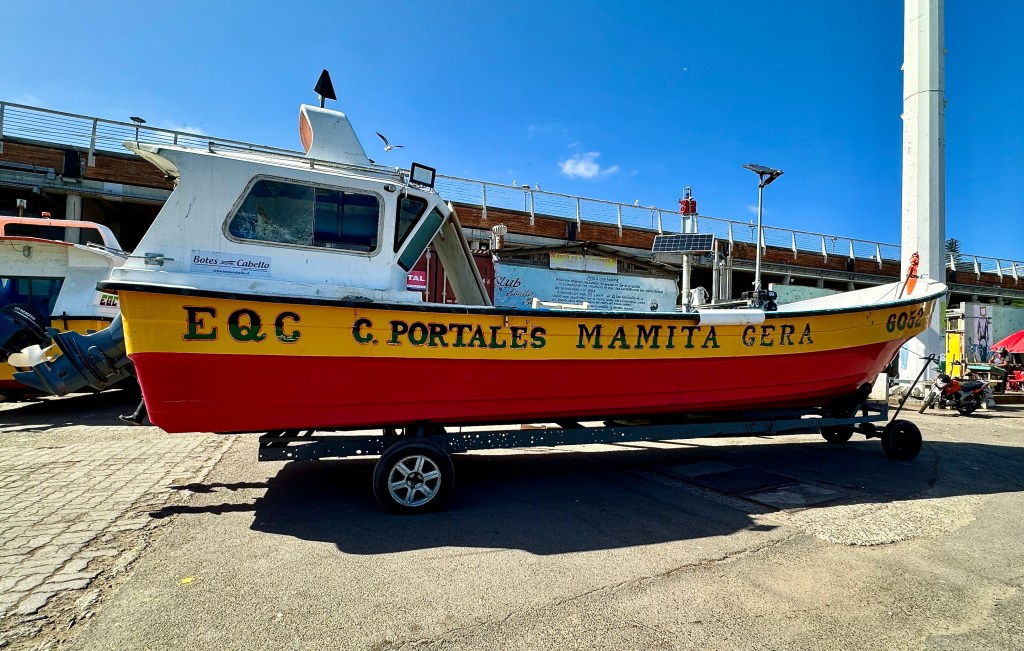
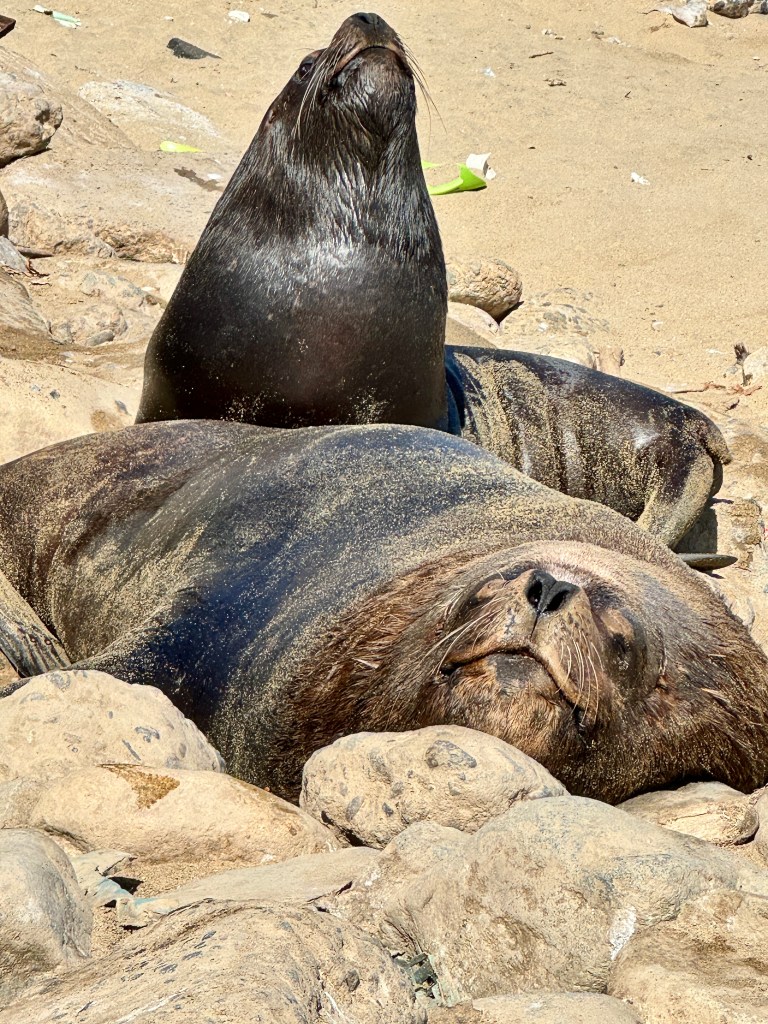
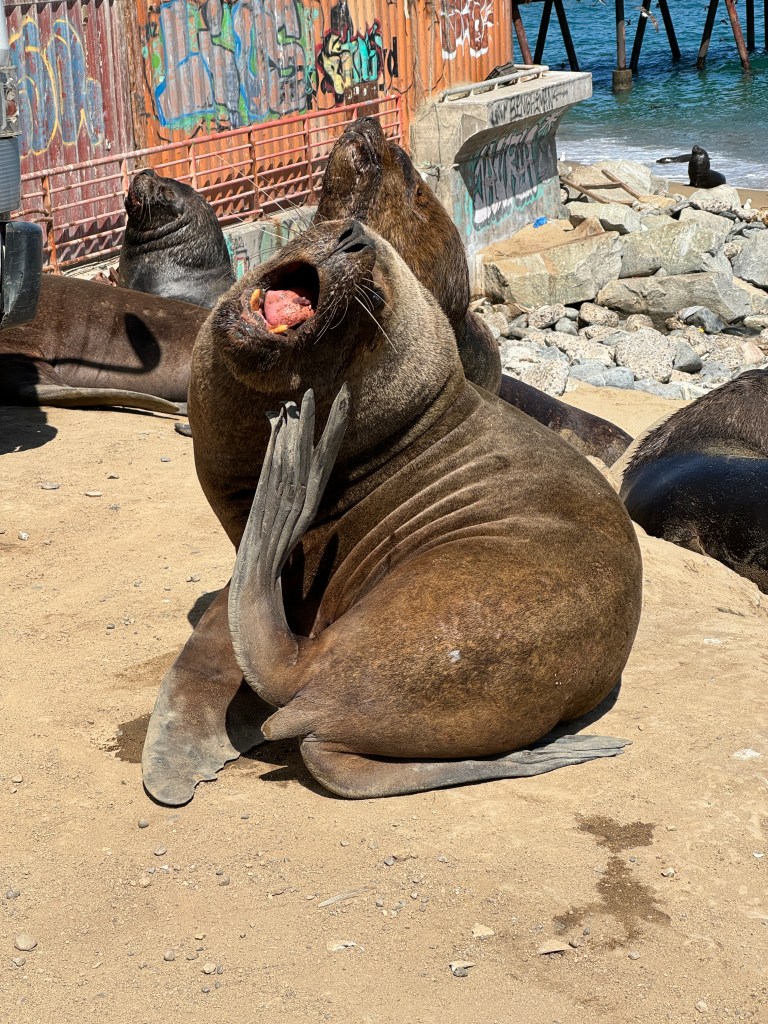
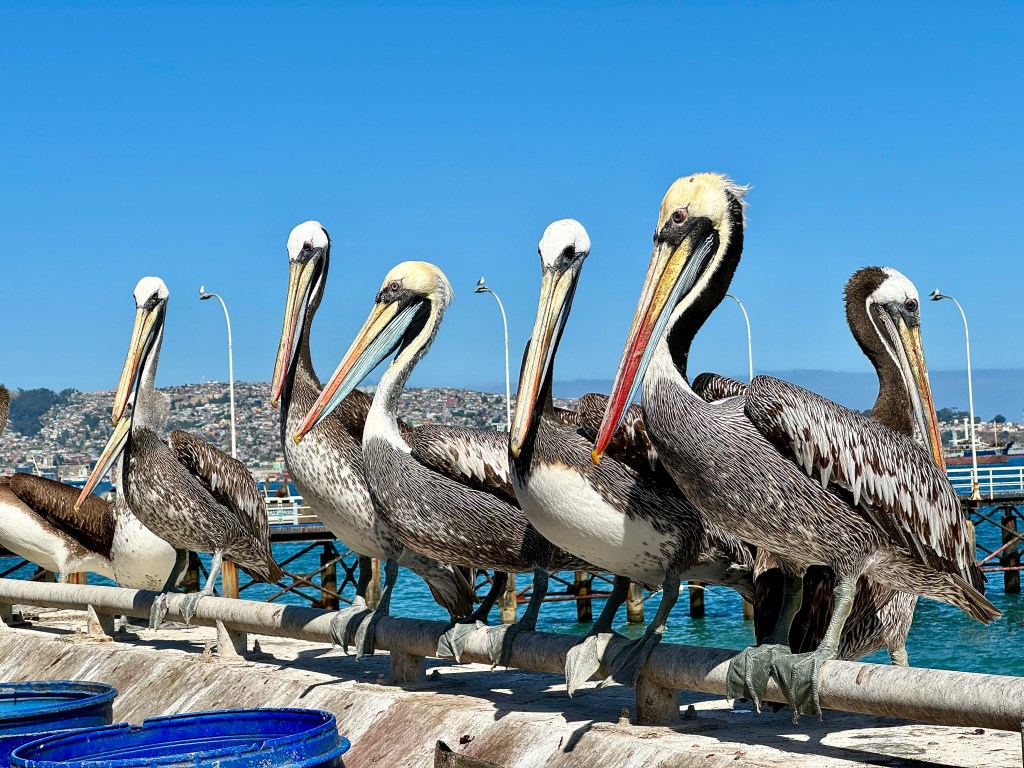
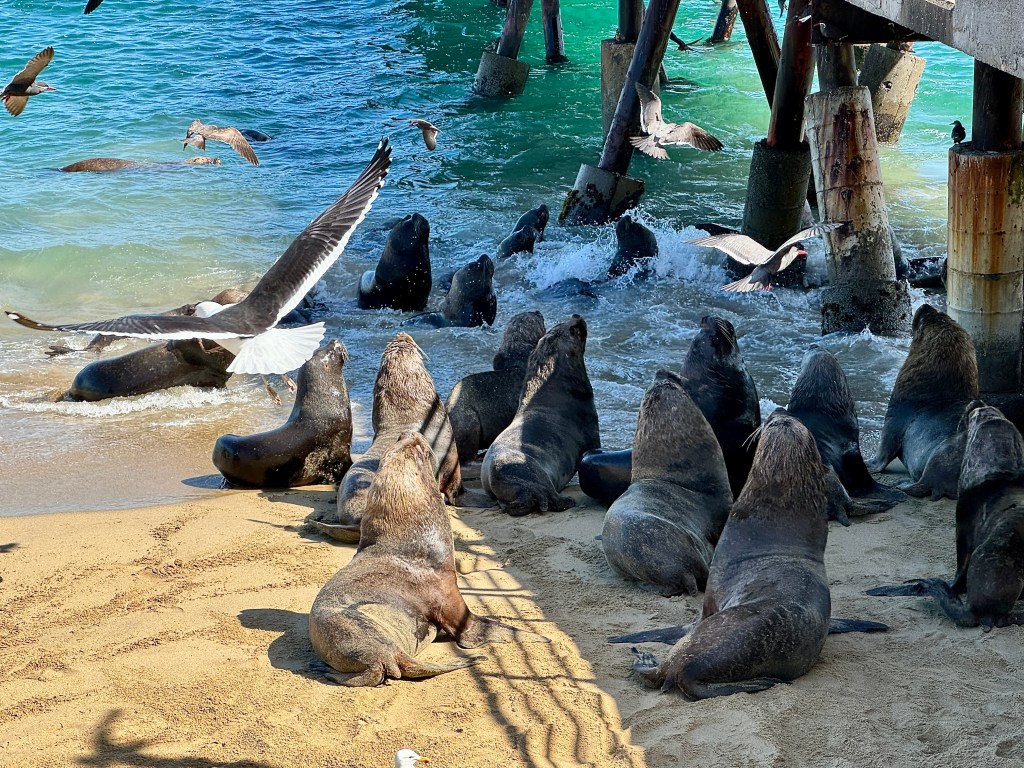
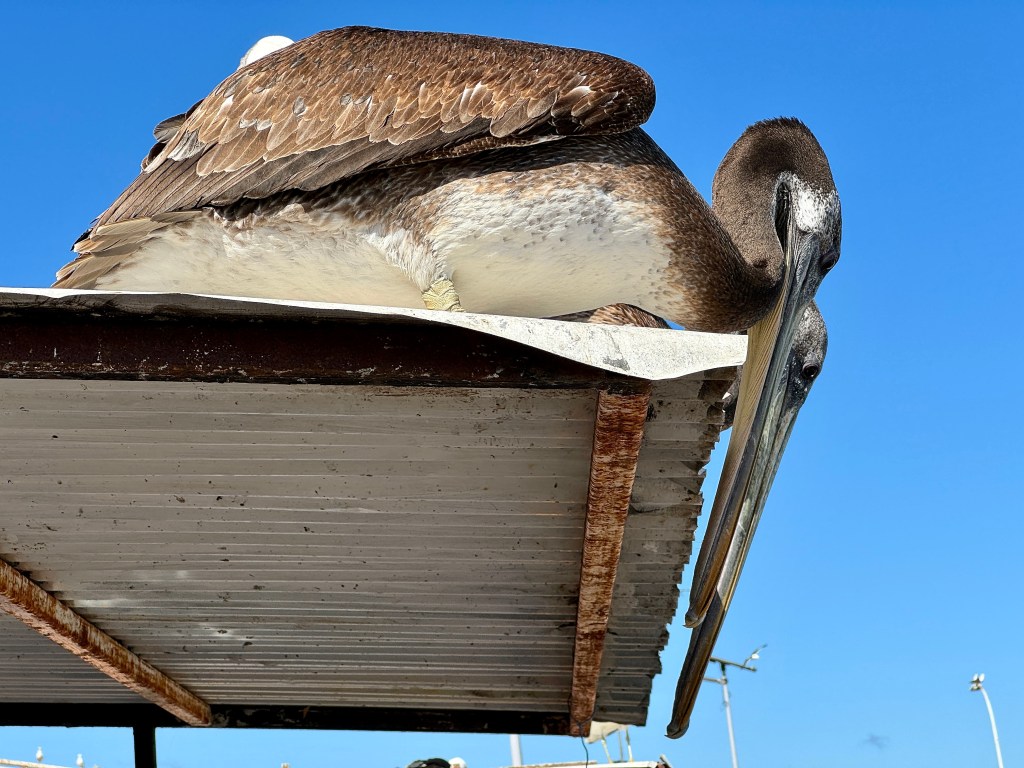
Early start from Santiago on our way to ValparaisoFishing boats are moved by tractor down the warf and then lowered into the waterNow this fellow was relaxedFeeding frenzy when the remnants from fish cleaning were dropped into the waterJulio’s favourite Cafe – loved the view and the coffeeJulio is standing behind LarryHarbour view from the cafe
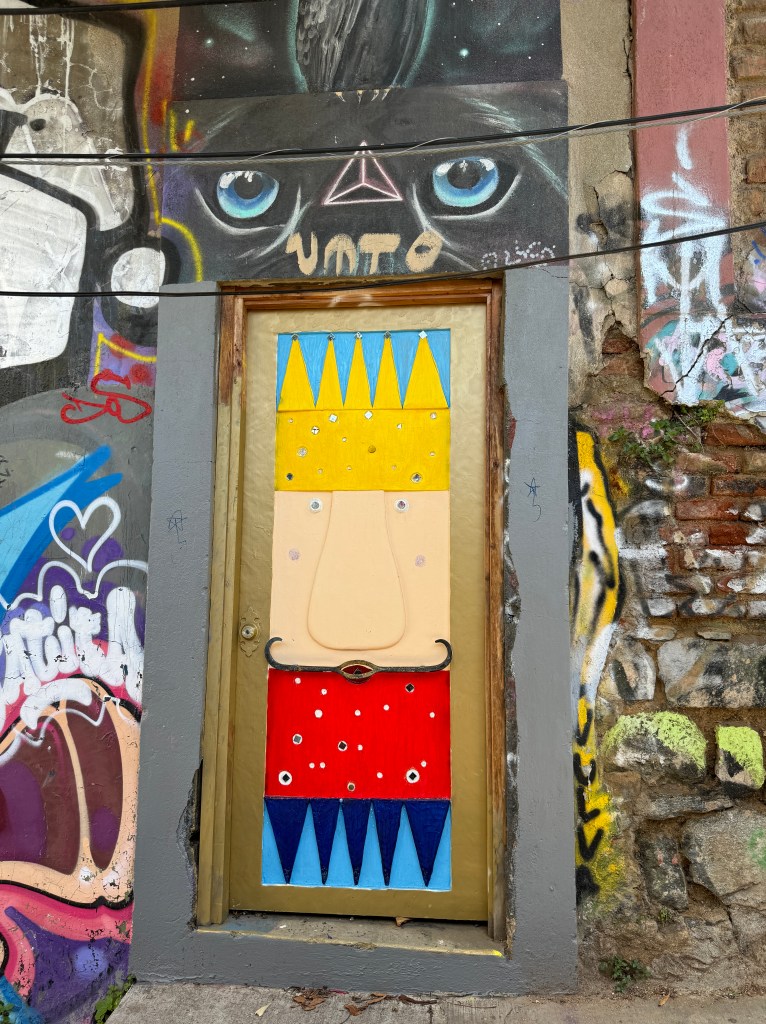
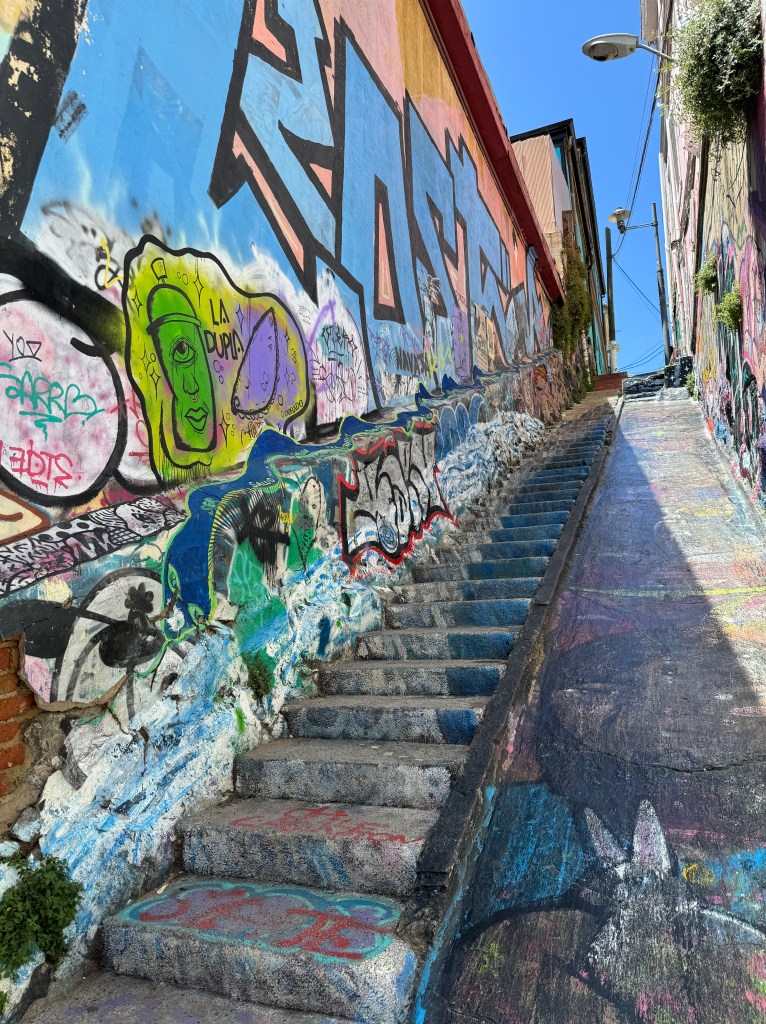
Valparaíso’s local government supports and promotes the local street art. As a result, the city is covered in amazing murals – we saw only a small sampling – very impressive. It is recommended to have a guide so you see more, but also for safety reasons.
Turnstyle at funicularWe ended the day with a trip to a small winery.We really enjoyed the Chilean wines. Unfortunately, we only had room for 1 bottle in our luggage.
We enjoyed our last few days in Chile. We had an early morning flight back to Toronto. Easy flight, but somewhere along the way we picked up a mild case of Covid. We recovered at home and we’re feeling good. We loved our Chilean Adventure.
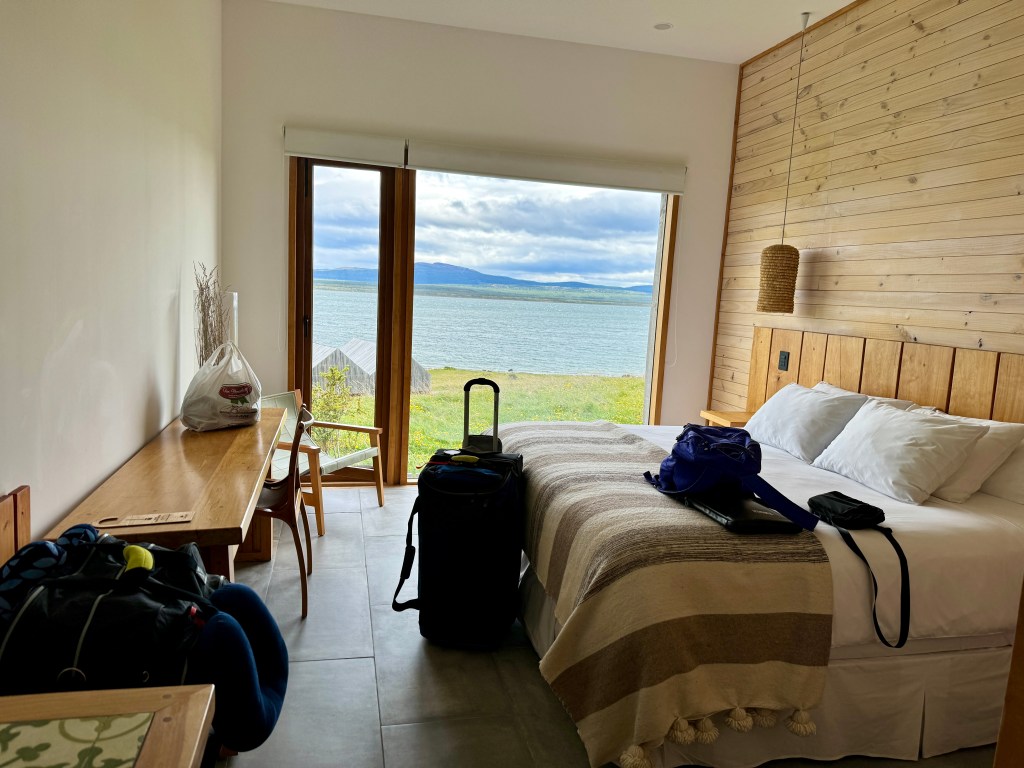
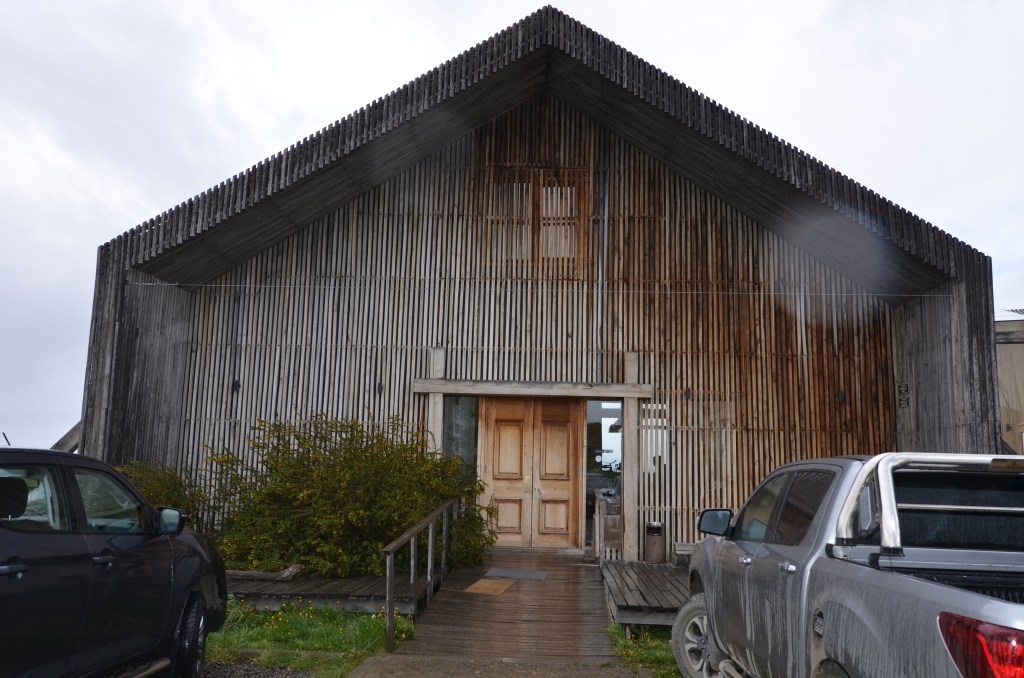
Patagonia Planet Tour Company picked us up at the port in Punta Arenas for our 3+ hour drive to the Hotel Simple in Puerto Natales. We decided to stay outside of Torres Del Paine National Park as prices for hotels inside the park were extremely expensive. For example, the all-inclusive Explora Hotel was $4,200 per night with a 3-night minimum stay and the Tierra Patagonia was $3,600 per night. There were a few hotels with breakfast only, but in the $600 – $1,000 per night. The other option was a hostel or camping in the park – needless to say this was not going to happen. The Simple Hotel was a clean, comfortable family owned hotel and was slightly over a 1 hour drive to Torres Del Paine National Park- it was the right choice for us.
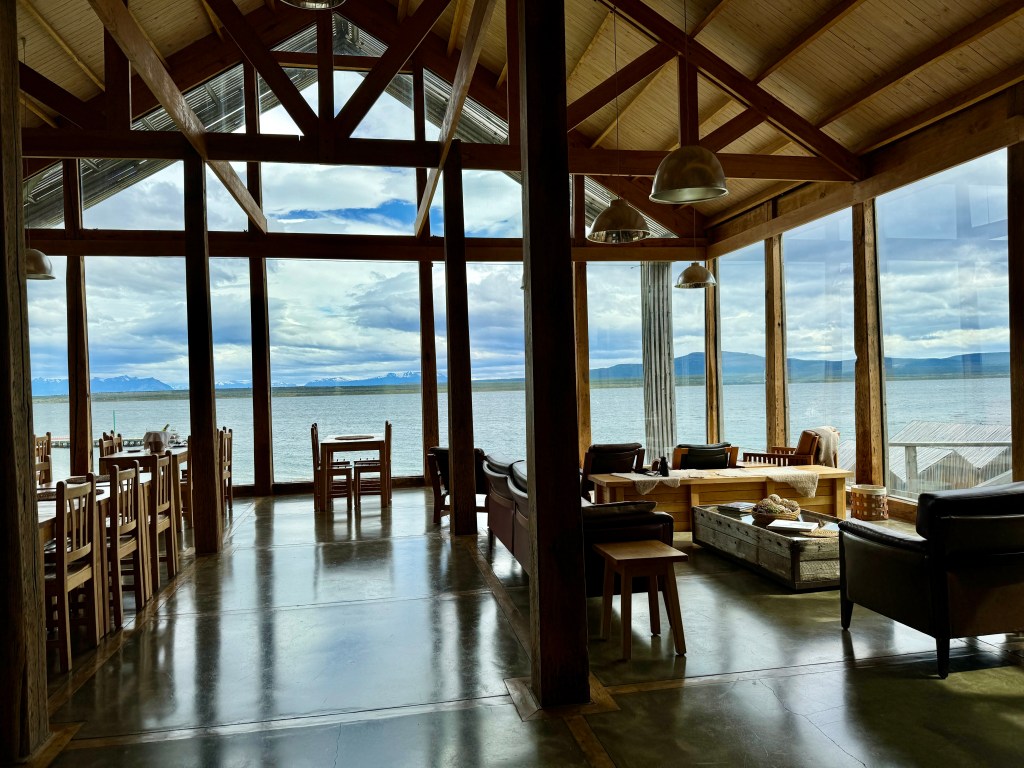
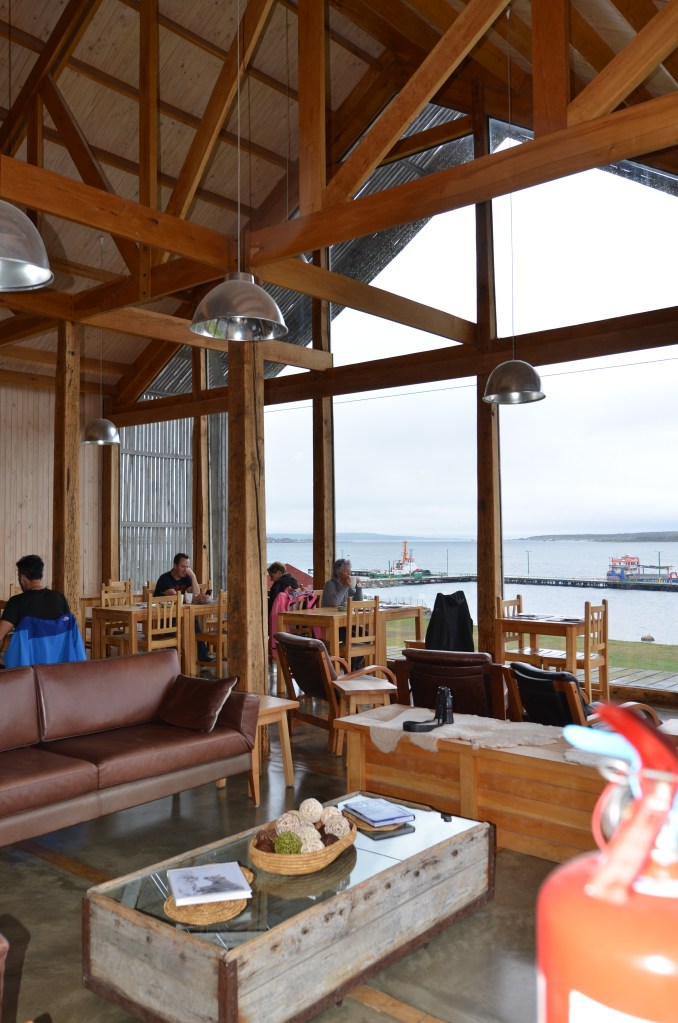
Dining Room at the Hotel Simple
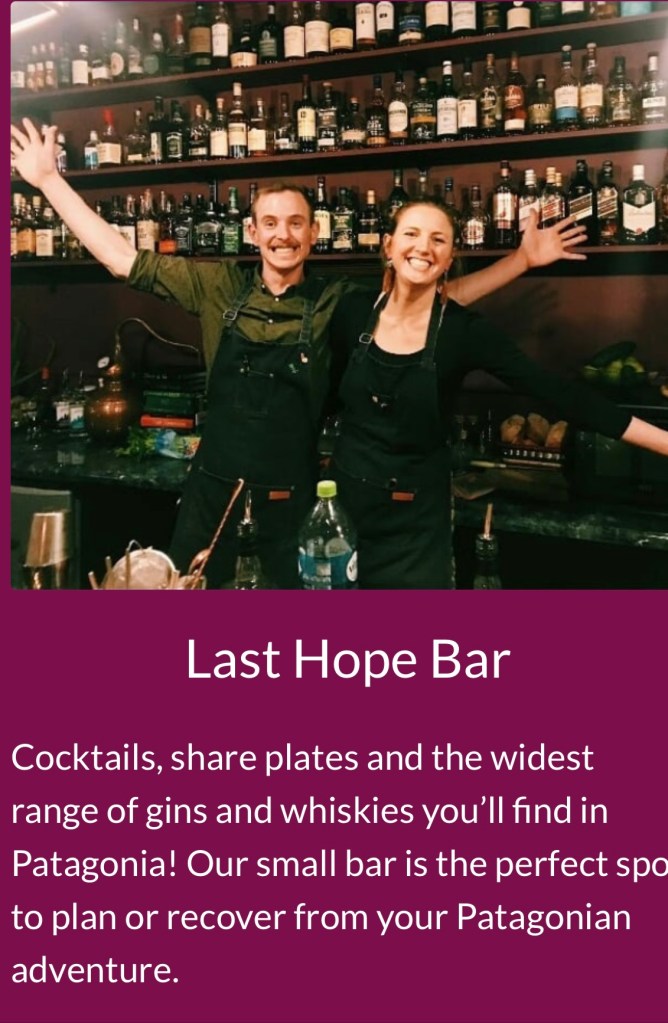
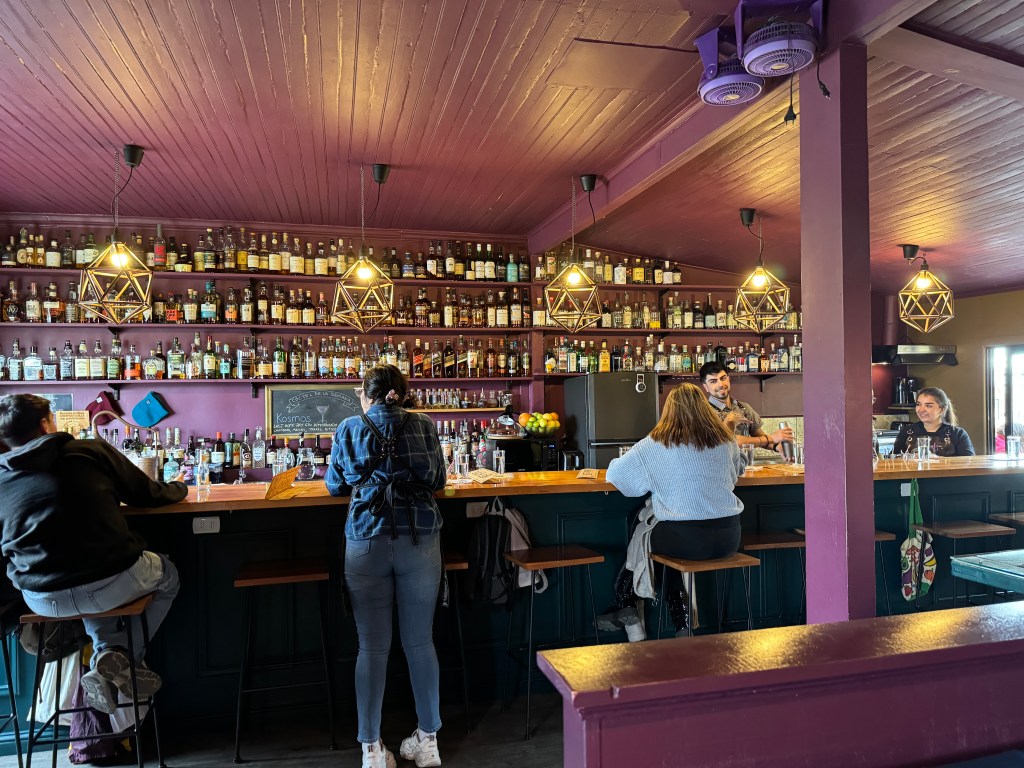
After the long drive Rich and Deb decided to walk to the Last Hope Gin Bar in town (a 1 1/2 hour walk). We took a taxi later and enjoyed the vibe of the bar and dinner later at a local restaurant. The gin bar was established by an Australian couple – it was very busy when we were there. Last Hope is the name of the region, although we do hope that they are successful as it is a fun place, in a town that looks like it is struggling – there were many closed stores and buildings.
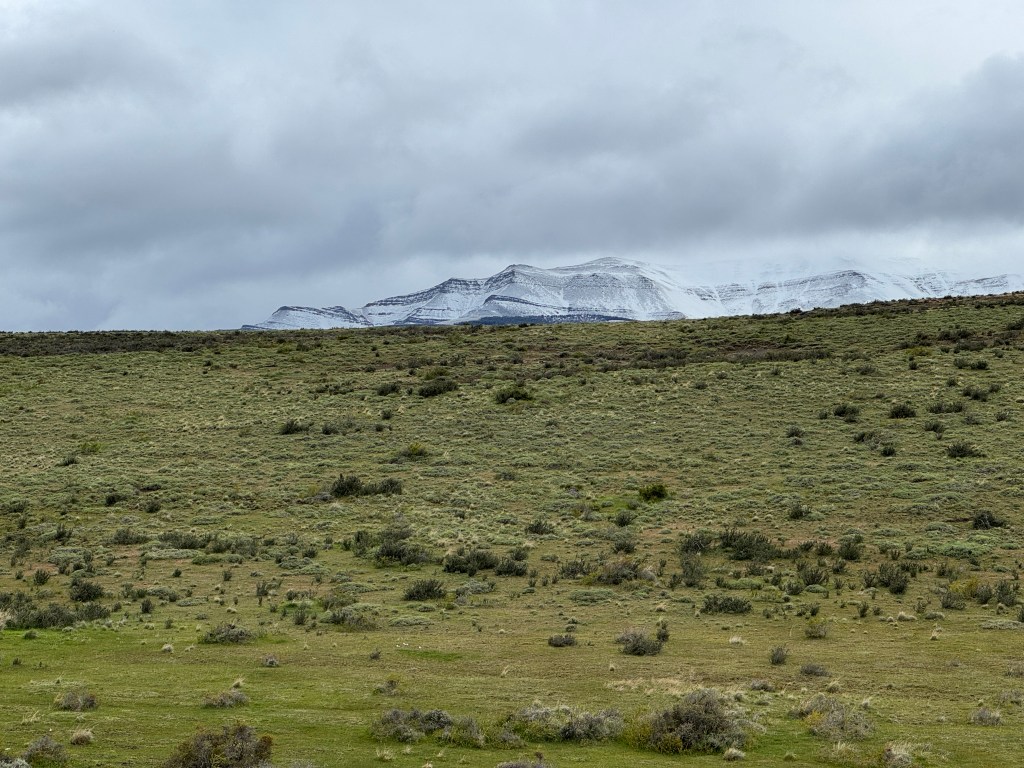
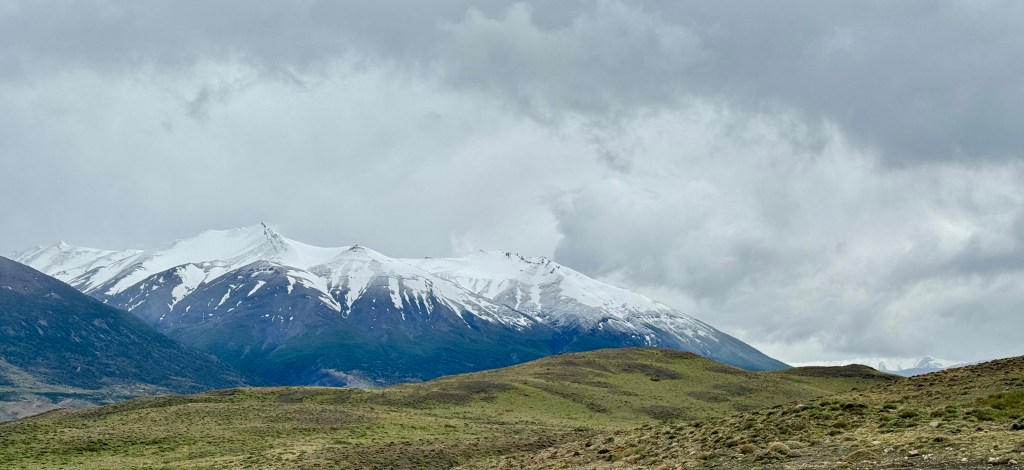
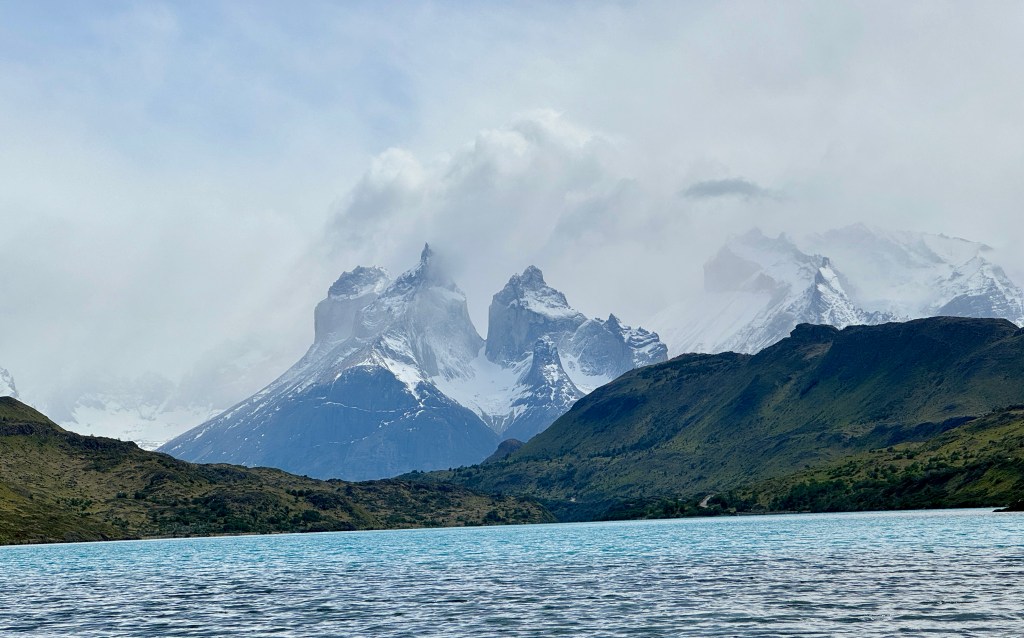
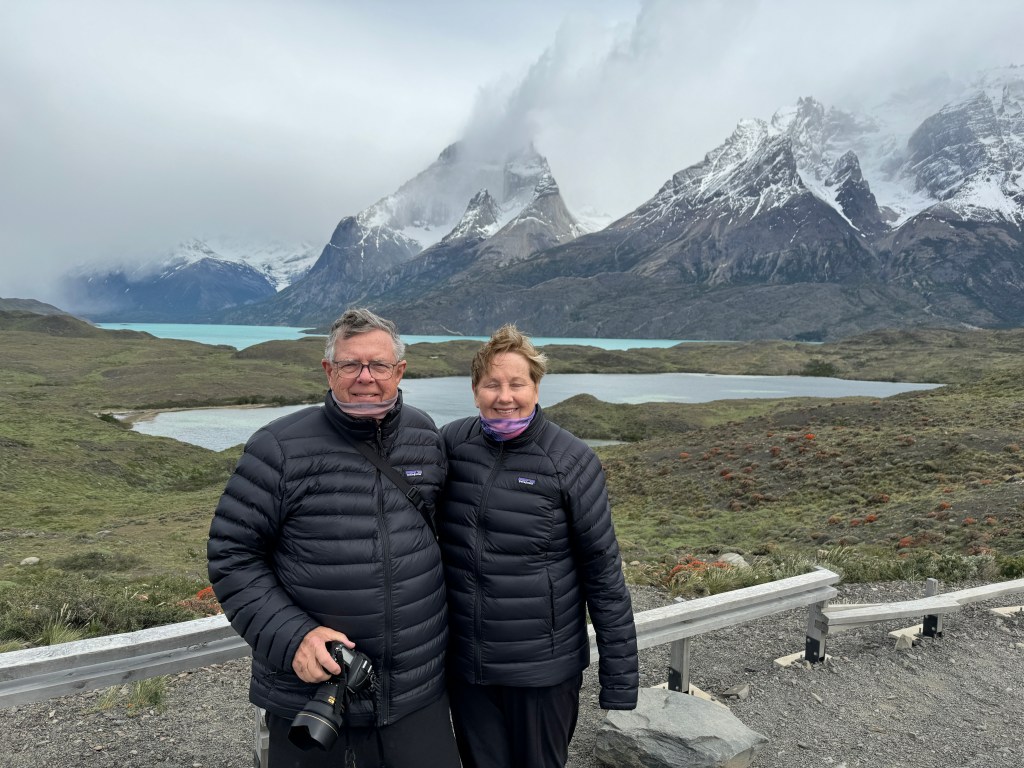
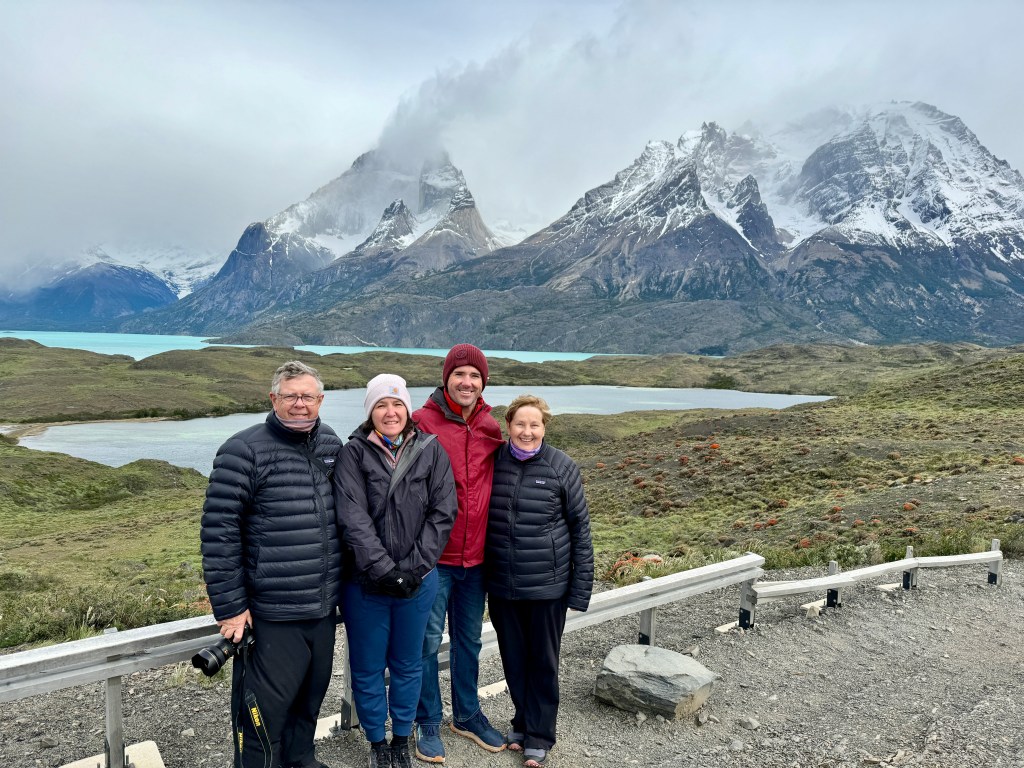
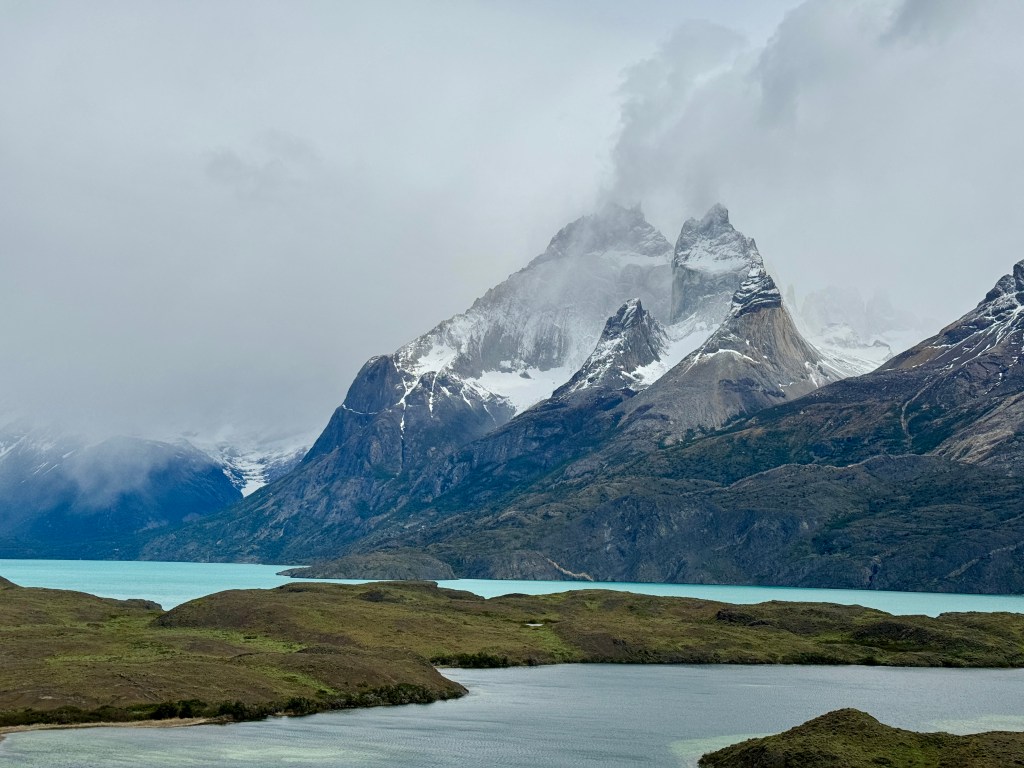
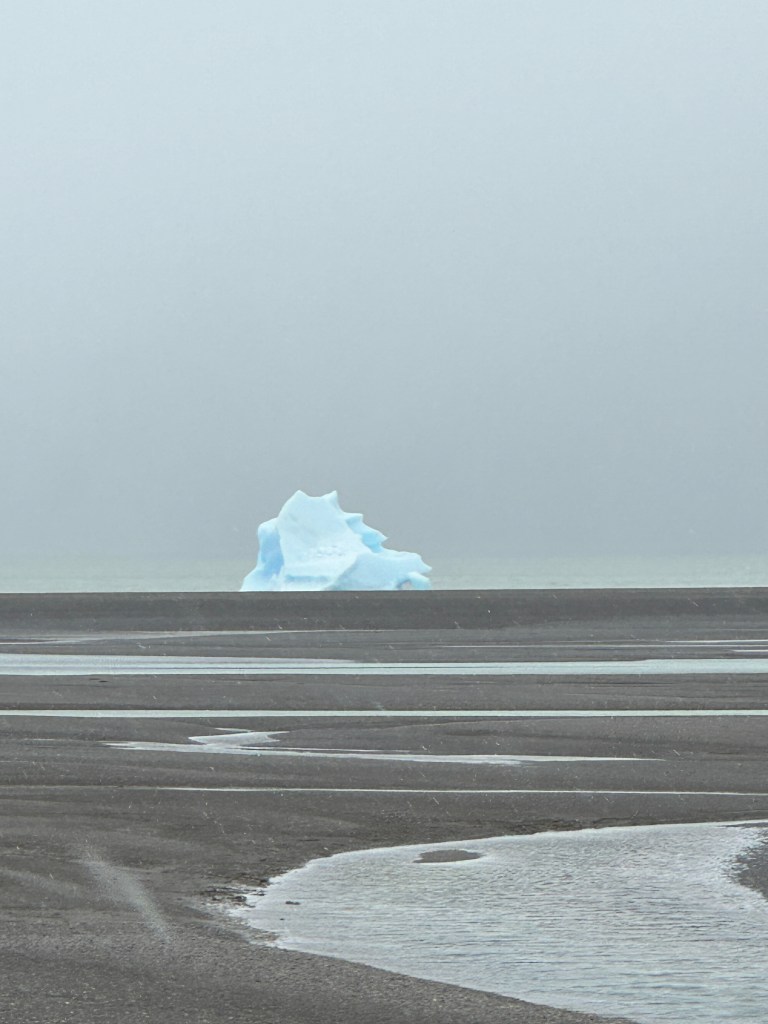
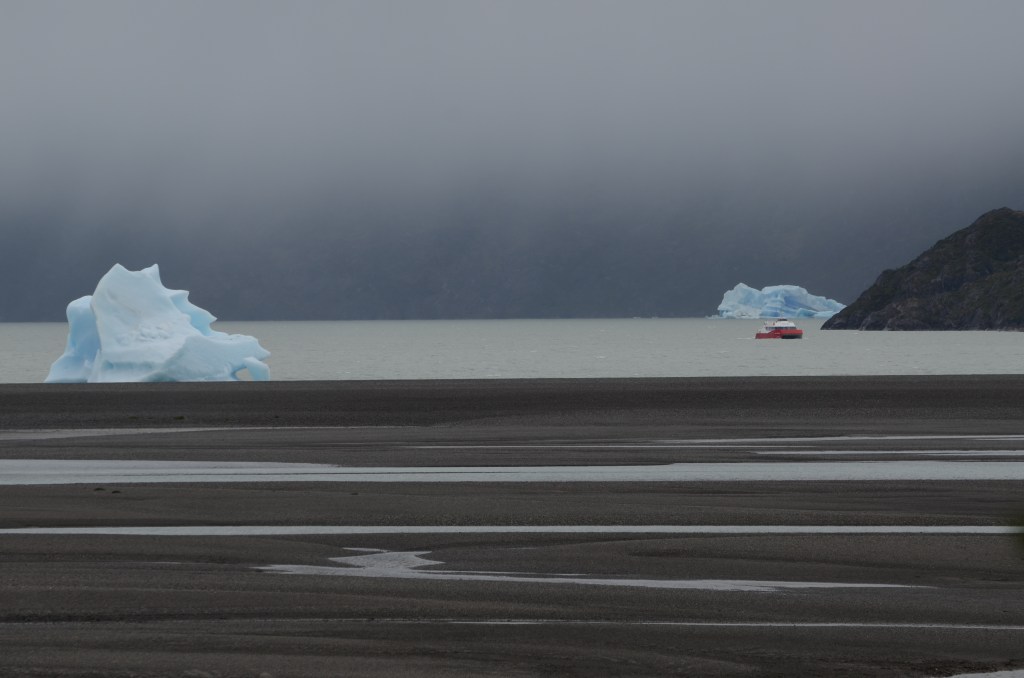
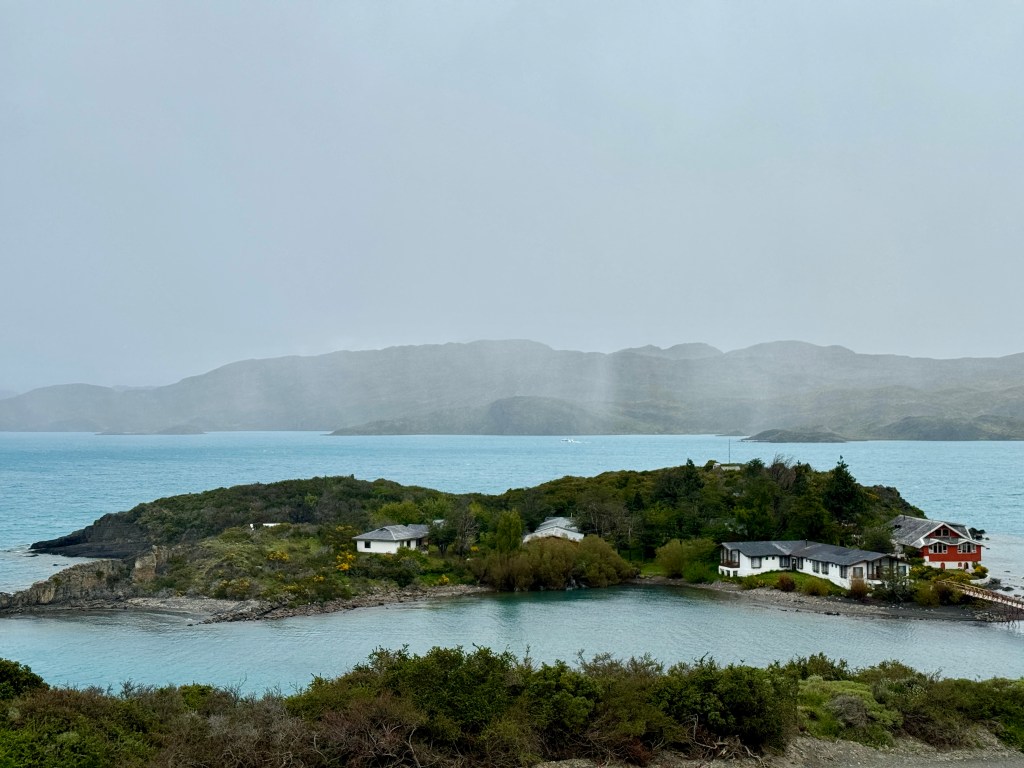
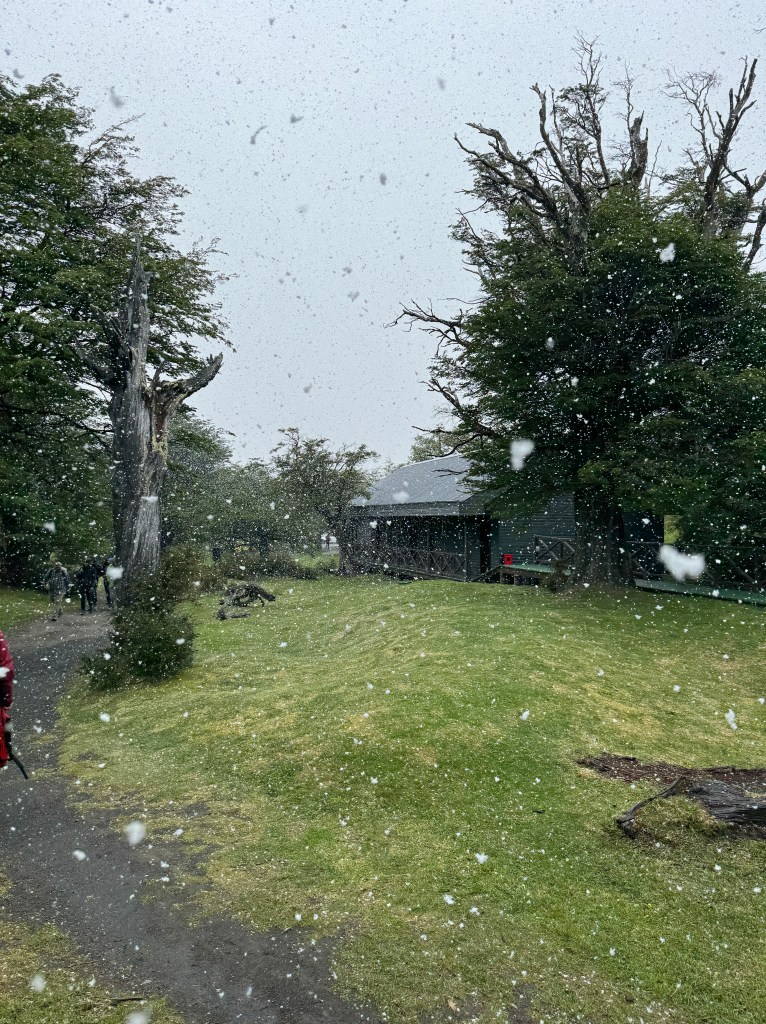
The next day we did a tour with Patagonia Planet into the Torres Del Paine National Park. The weather was not ideal – cold, very windy and cloudy for most of the day with periods of rain, sleet and snow. This is the only poor weather we encountered. It was very cloudy so we did not get good views of the glaciers – unfortunately we did not see Torres Del Paine National Park at its best.
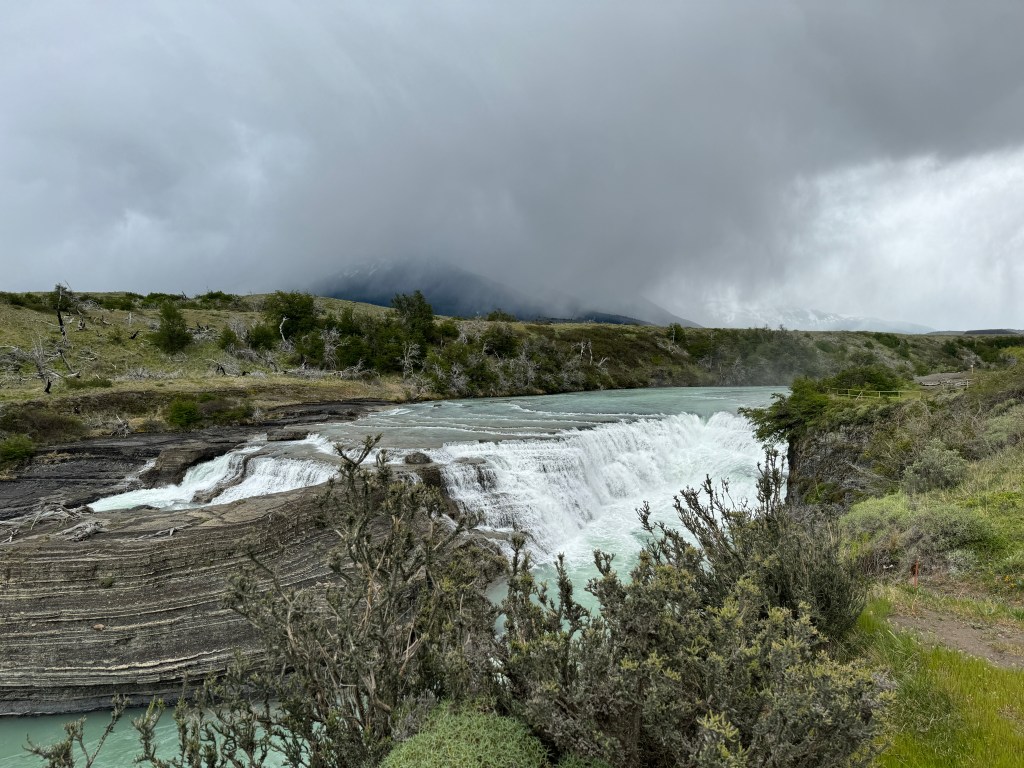
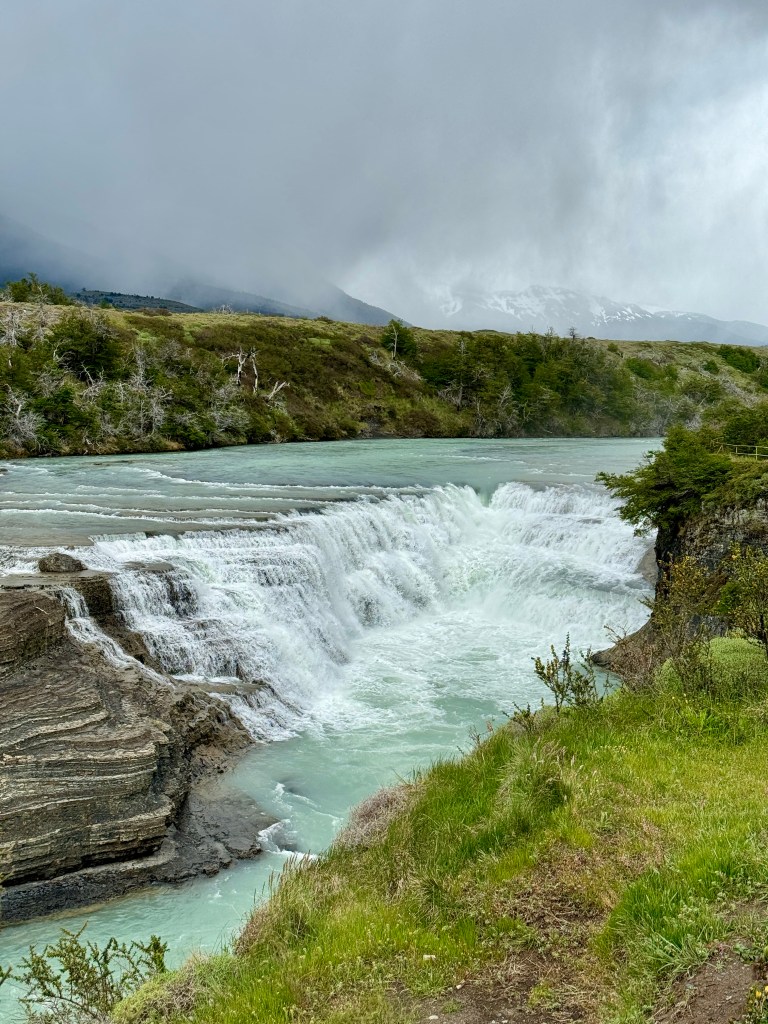
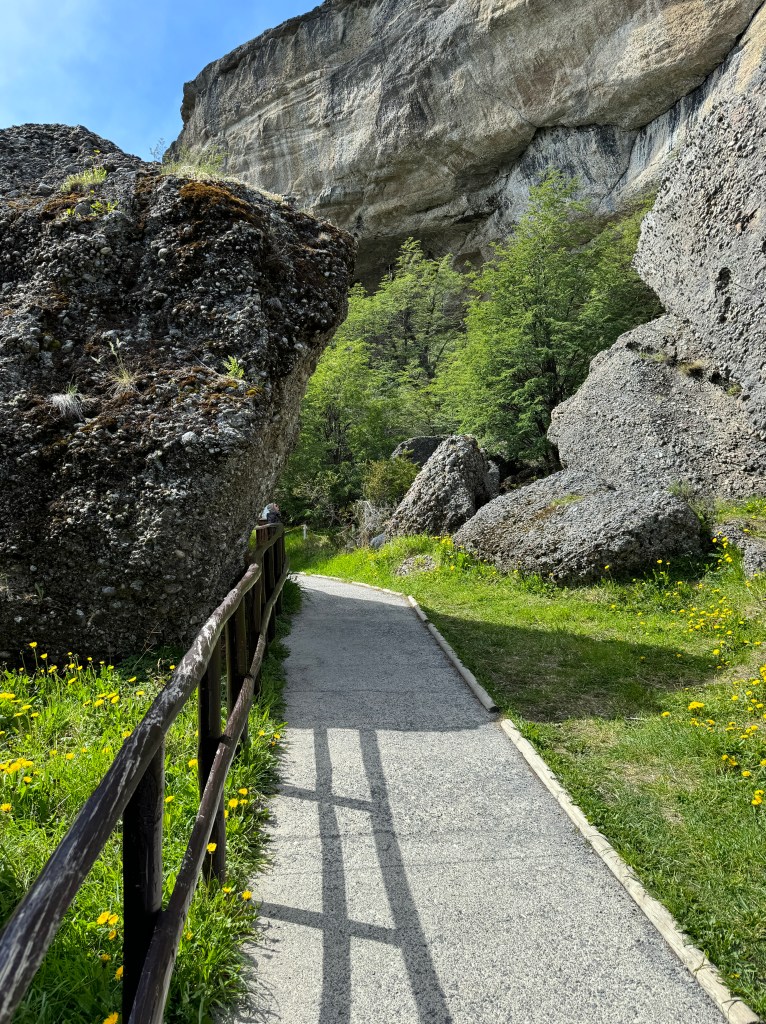
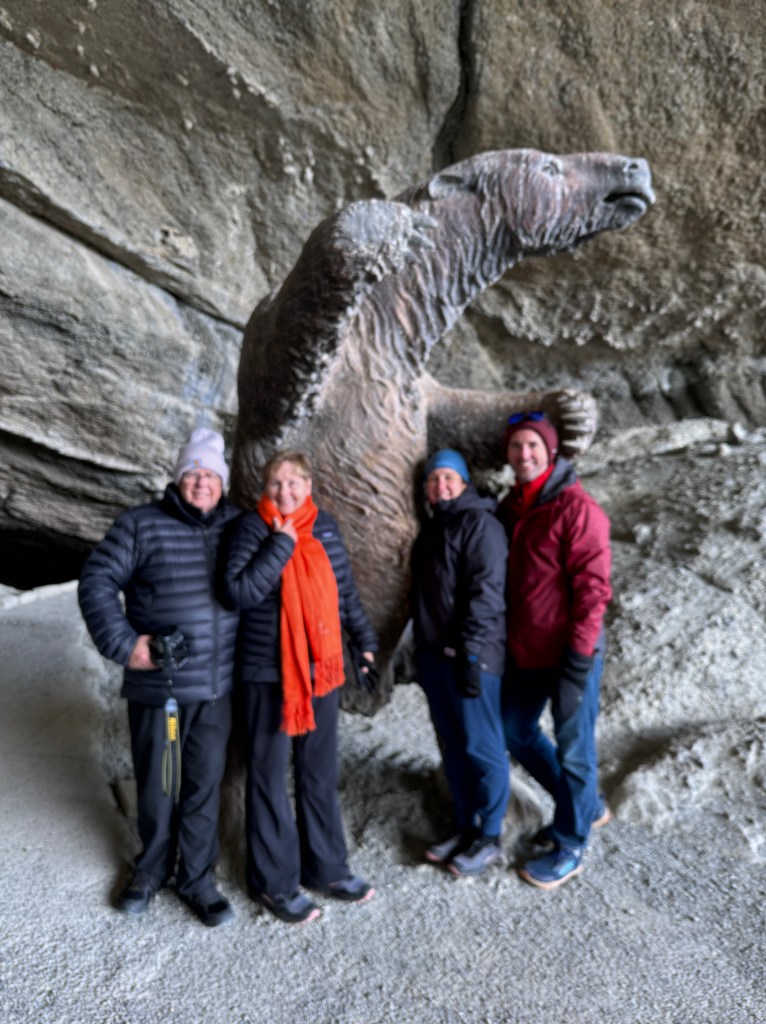
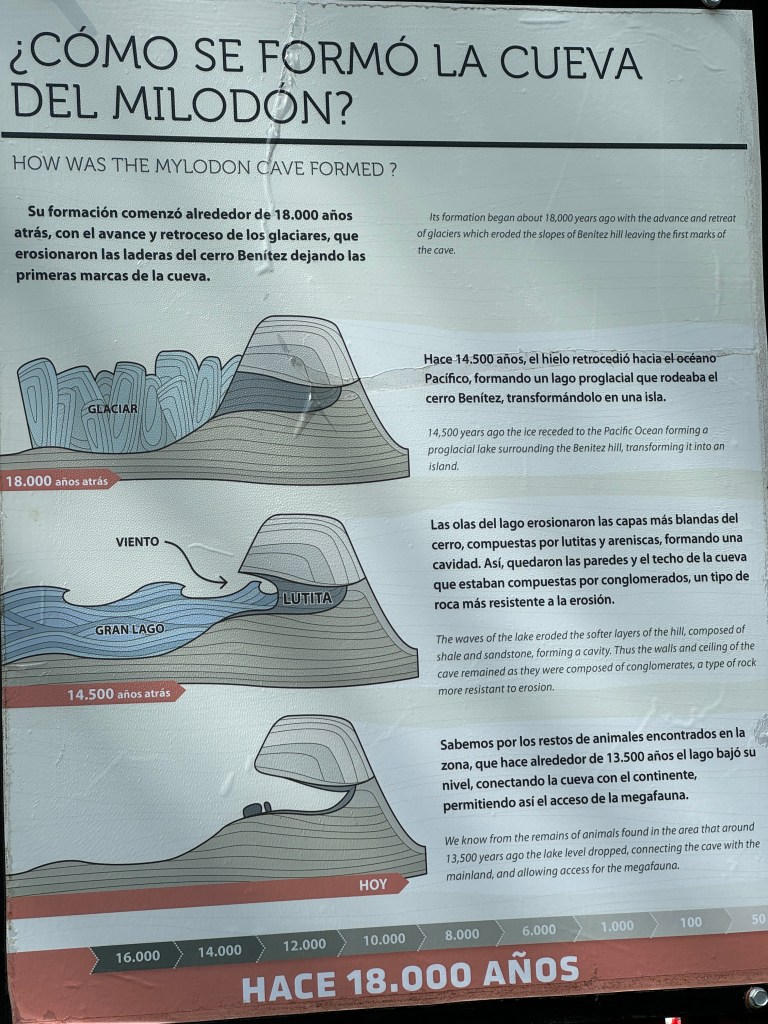
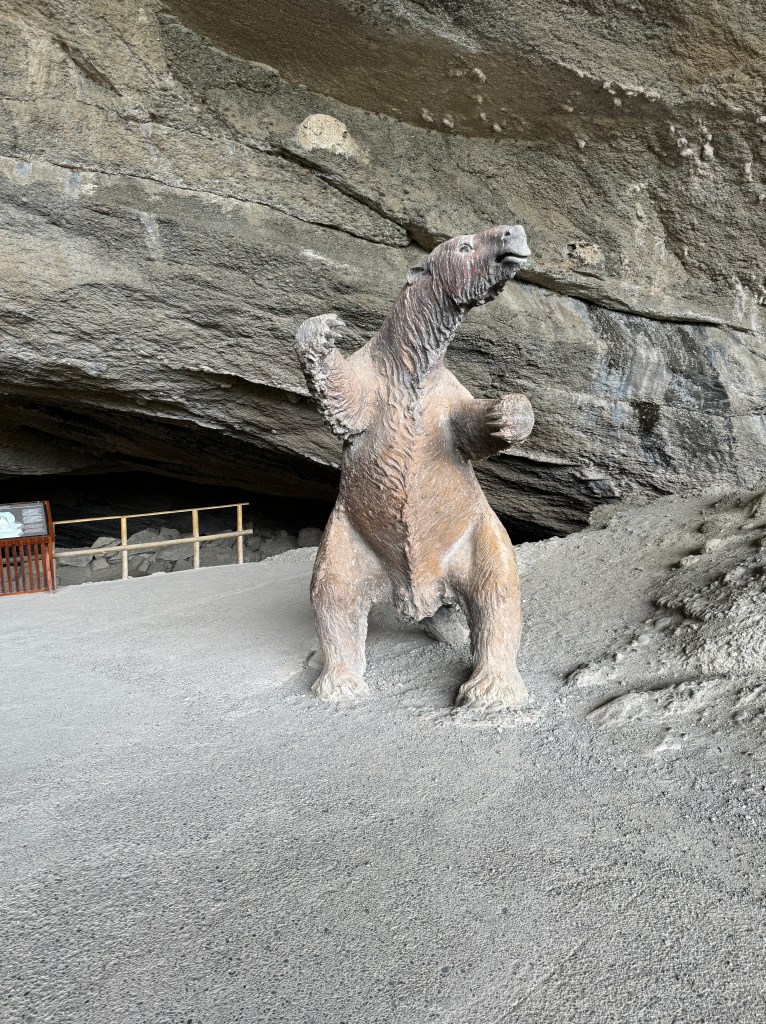
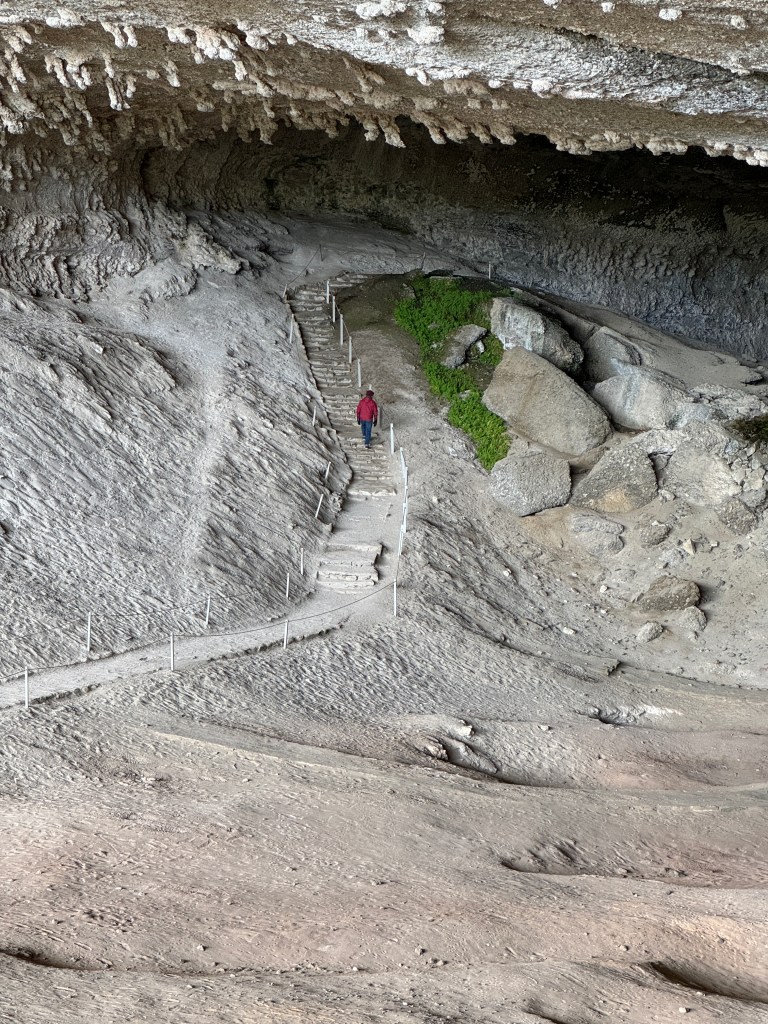
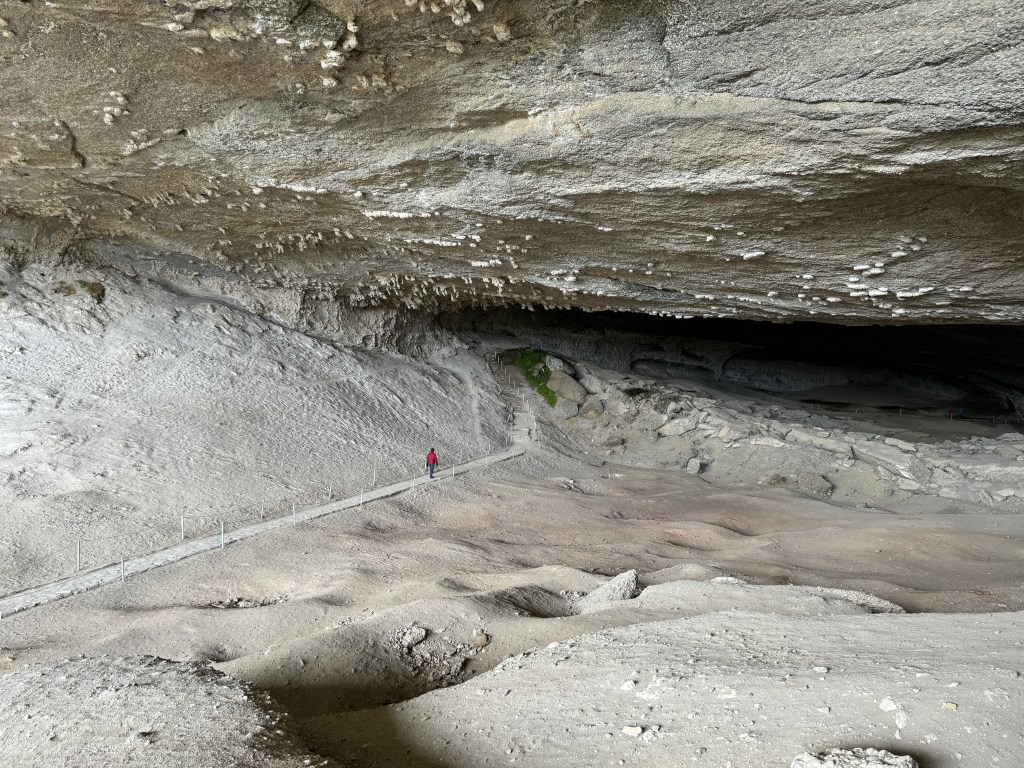
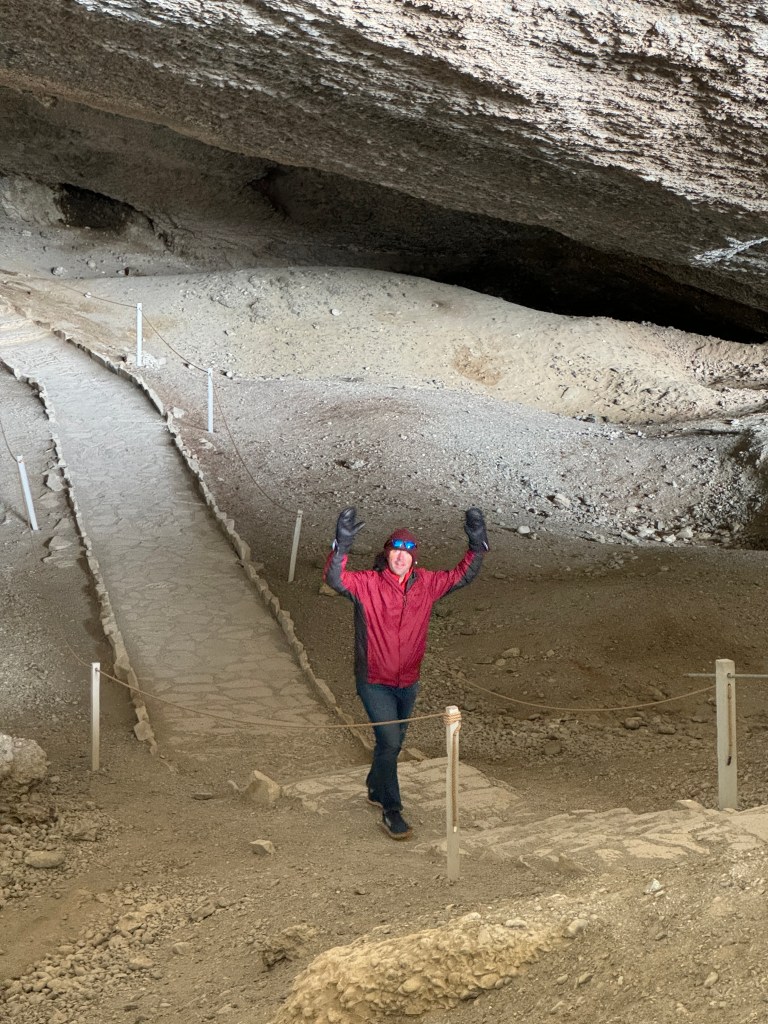
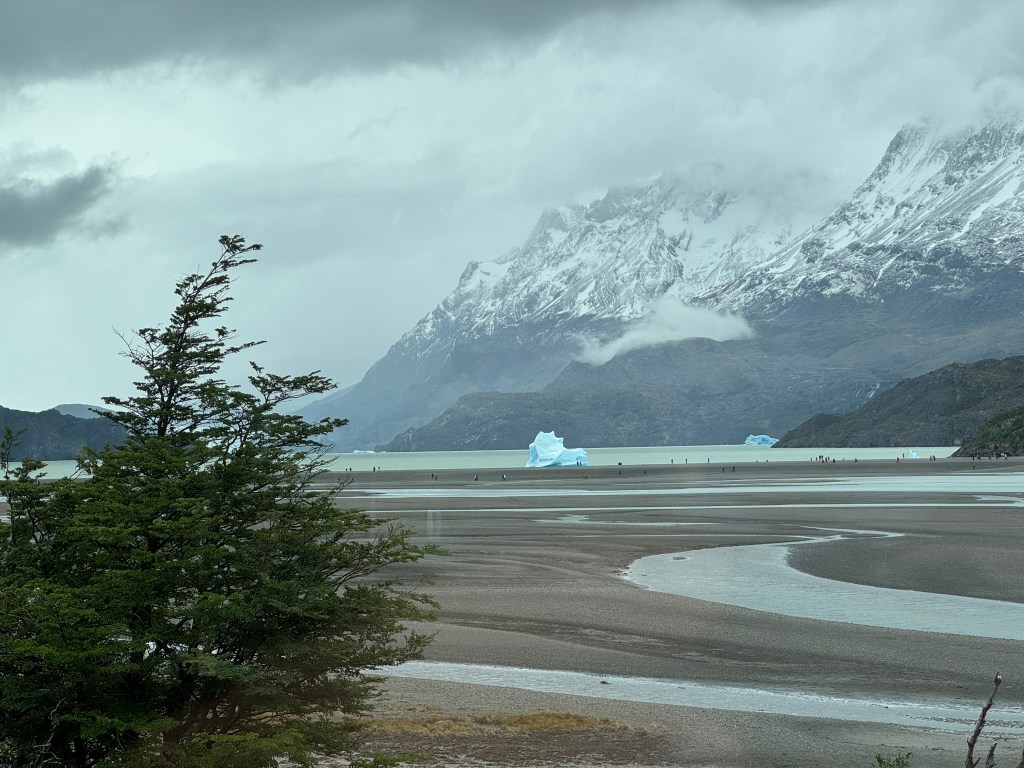
Waterfall just prior to entering the parkSun came out for a short period of time just before we went into the caveOnly Rich did the path through the cave & he made it backView from Lago Grey Hotel where we had lunchThe cloud was so dense that only the iceburg could be seen.It started to snow as we left the restaurant. Not nice for the campers.
Next post is Santiago where we spent 3 nights before heading home. Deb and Rich headed home directly from Santiago. Before we leave this portion of our trip a few things we found interesting:
The Beaver Issue: We heard from several guides that beavers were imported from Canada and had become a serious problem. So why would the government import beavers and how are they addressing the issue.
The beavers were introduced to the area in 1946 due to an effort by the Argentine government to establish a fur trade in the region. Ever since the introduction, the beavers have spread throughout most of Tierra del Fuego and have even been recently spotted on the Brunswick Peninsula, mainland Chile. When the fur trade industry failed, the beavers became problematic and the governments agreed to intervene to wipe them out. Over the years, Chile and Argentina have made halfhearted attempts at curtailing the invasion. A bounty program failed to motivate trappers, while proposed markets for beaver meat never materialized. Recently, though, the two nations have gotten more serious: In 2016, they announced a plan to cull 100,000 — one of the largest invasive-species-control projects ever attempted. Interesting that beavers are described as “invasive species”.
The Beagle Channel, the Straits of Magellan to the north, and the open-ocean Drake Passage to the south are the three navigable natural passages connecting the Atlantic Ocean to the Pacific Ocean. We touched on all three during our Chilean Fiord trip. Despite its tricky passageways and cold climate, the Strait of Magellan was an important route for ships traveling between the Atlantic and Pacific Oceans, up until the completion of the Panama Canal in 1914. The Strait of Magellan was considered a safer route than the often rough Drake Passage.
Our guides described the weather as “unstable” as you can experience 4 seasons in a single day – and we did. There were several locations (Cape Horn and Magdalena Island) where going ashore was weather dependent. We were blessed to have such wonderful weather while in the Chilean Fiords so we saw it all (yes it was cold and very windy at times but with several layers of clothes we were comfortable).

 ELF Travel To ...