As We Leave Montserrat

Although getting to Montserrat was a bit of a rocky start, and Olveston House wasn’t quite what we had expected, we soon settled in and enjoyed our stay. Olveston House must have been a grand estate in its day, and although it has seen better times, we found ourselves falling into a relaxed routine. Our days were spent reading, writing blogs (Ev), swimming in the pool, and doing a little exploring around the island before dinner. It was a slower pace and much quieter than we’re used to, but we enjoyed it. And the weather has been great.

One of the main reasons we wanted to return to Montserrat was to see Carol Osborne and Vue Pointe Hotel again. We had a chance to catch up with Carol over dinner and later visited her at her home in the Woodlands area. Although so many years had passed, conversation came easily, and it was wonderful to reconnect.

Carol’s children, with the exception of Amanda (Cedric’s daughter from his first marriage), now live in the United States. Amanda lives in Carol and Cedric’s original home and runs the family business, M.S. Osborne Ltd., a major distributor of food, beverages, hardware and building supplies on the island.

The following photos were taken around Carol’s property in Woodlands – beautiful piece of property.

Sadly, Vue Pointe is now for sale. The cost of restoring the property would be enormous, much of it due to the damage caused by volcanic ash over the years. Carol explained that the family does not want to put their successful distribution business at risk by borrowing against it to finance the restoration. Having seen the condition of Vue Pointe firsthand, we certainly understand their decision, although it is sad to think that this wonderful small hotel may never return to what it once was.

Most of our dinners were either at Olveston House or Vue Pointe, which was about a five-minute drive away. With so few diners on the island, there simply isn’t enough business for restaurants to stay open six or seven days a week. Vue Pointe serves dinner four nights a week, but no breakfast or lunch, while Olveston is open three nights a week for dinner and three for lunch.

On days when neither was open for lunch, we headed to The Attic, the only other restaurant in our area, which serves breakfast and lunch but no dinner. One evening, we also ventured out to a bar and restaurant about 10 minutes away, reached by a very rough road that was more like a path. It only serves dinner on Friday and Saturday nights.

Thank goodness we had a car, as none of these places were within walking distance of our hotel. Keeping track of who was open and when was sometimes a challenge, but we figured it out and enjoyed the variety.

Starship mega rocket – taken from the Beach Bar on Friday Nov. 14th – same day as the FAA shutdown.

There are beautiful homes and views in the area around the Vue Pointe.

As a point of interest, we were curious about the cost of buying or renting a villa in Montserrat, particularly in the areas where we used to spend so much time. We found that a comfortable two- or three-bedroom villa can cost anywhere from about US$400,000 to $800,000, with some of the larger properties priced well over $1 million. Weekly villa rentals generally range from US$1,200 to $2,500 or more, with properties at the higher end often having a private pool. One thing we noticed is that many of the villas have rather dated kitchens and furnishings, which is understandable given the challenges and expense of bringing new furniture, appliances and building materials onto the island.

However, owning a home here comes with its challenges. Building supplies are expensive, and finding people to carry out repairs and maintenance can be difficult. Many owners are keen to rent their properties to help offset these costs, but getting to Montserrat isn’t easy. As we discovered firsthand, flights from Antigua are expensive and can be unreliable. A ferry service has been planned, but regular service is not yet operating. We were told that flying into St. Maarten and then taking a WINAIR flight to Montserrat might be a better option, although it still involves an overnight at the beginning and end of the time in Montserrat.

Once here, a rental car is almost essential. The island is very hilly, and with so few restaurants, most are not within walking distance. Grocery shopping is another challenge, especially if you’re renting a villa and planning to cook your own meals.

A couple we had dinner with, who spend their winters in Montserrat, told us they bring about 50 pounds of meat and cheese with them from Canada. Most meat and seafood available locally is frozen, and while the grocery stores are fine for canned and basic goods, the selection of fresh produce and other items is limited. Stocking a kitchen for an extended stay isn’t quite as simple as we’re used to. Also, food is expensive and prices are in US$.

Montserrat certainly has its charms, especially the beautiful scenery, peaceful surroundings and friendly people. But after spending time here, we can appreciate why owning or renting a villa for an extended stay is more challenging than it first appears and why Montserrat is struggling to attract tourists.

So many beautiful sunsets and wonderful memories. The people we reconnected with and met for the first time were so welcoming. We are so happy that we visited Montserrat one more time.

We flew back to Antigua on November 16th and are spending a few days at Admiral’s Inn and Gunpowder Suites. Our niece Kelly also recommended this hotel — thank you again, Kelly!

Admiral’s Inn is on one side of the waterway, where our room is located, while the pool and spa are across the water at Gunpowder Suites. Cecil takes us back and forth by boat whenever we like, which makes it easy access to the pool. There is just a small beach here, so Cecil also took us to a local beach close by. Although going over the rocks to get into the water was a bit challenging, once in it was lovely.

Here are a few photos from around our hotel and the dockyard.

Gunpowder part of the resort which is across the waterway – we spend afternoons by the pool

Admiral Inn is right beside the historic Nelson’s Dockyard, so it’s a great area for walking and exploring. There are already lots of beautiful yachts and mega sailboats arriving in preparation for the Caribbean sailing season. Some mega sailboats are here for the Antigua Charter Yacht Show, December 4–9, 2026. This is one of the Caribbean’s premier yachting events, bringing luxury charter yachts from around the world to Antigua. Now in its 65th year, the show gives yacht brokers an opportunity to inspect the boats, meet their crews and arrange charters for the upcoming winter season. Some of these yachts are enormous, and it’s quite something to see them up close.

And some of the sailboats are part of the Salty Dawg Fall Rally, a massive annual cruising event where 80 private sailboats and catamarans departed the Chesapeake Bay in early November to make a 1,500+ nautical mile passage to the Caribbean, with the majority making landfall in Antigua. We were told by the crew we met that it took them 11 days, and yes there were rough seas. Most of the sailboats have not yet arrived.

Beautiful pool at Gunpowder – never very busy – unless it is cocktail time and then the guests take their drinks into the pool.
Restaurant at Gunpowder
Steel band at our hotel last night
Last meal at Admiral

And we thought it fitting to end our posts on this trip, with a sunset taken from the beach at Montserrat.

The Volcano Eruptions that Changed Montserrat

Just three months after our visit in April 1995, on July 18, 1995, the Soufrière Hills volcano erupted for the first time in recorded history. The initial eruption was relatively small, releasing steam and ash, but it marked the beginning of nearly 15 years of intermittent volcanic activity. The last major eruption occurred in February 2010.

On Friday we toured the restricted zone with our 81-year-old guide, Charles Daly, and saw firsthand the devastation caused by the eruptions. We had read about the destruction over the years, and Carol Osborne had shared some of her experiences when we had dinner with her earlier this week. But actually seeing what remains of places we remember so well was something else entirely. It really brought home just how much Montserrat has been through since our last visit.

As part of the tour, Charles took us to the Montserrat Volcano Observatory, where we learned more about the eruptions and the enormous impact they had on the island.

  • July 18, 1995: The Soufrière Hills volcano began erupting, initially releasing steam and ash.
  • August 21, 1995: A major eruption sent a thick cloud of ash over Plymouth, turning daylight into darkness for about 15 minutes. Thousands of residents were evacuated. After approximately two weeks, residents were allowed to return to Plymouth. Although ash had fallen on the town, homes, businesses and government buildings were still standing and usable.
  • December 1995: Increased volcanic activity forced another evacuation. Residents returned again in January 1996.
  • April 3, 1996: Plymouth was evacuated for the third and final time. Residents never returned to live there.
  • 1997: The most destructive eruptions occurred – a collapse of the volcano’s lava dome sent a deadly flow of superheated gas, ash and rock rushing down the mountainside, killing 19 people and destroying Plymouth.
  • 1998–2010 – Volcanic activity continued. The volcano remained active, with periods of calm followed by further eruptions, including major events in 2003 and 2006. On February 11, 2010, a major collapse of the lava dome sent ash across neighbouring Caribbean islands. This marked the end of nearly 15 years of intermittent eruptions. The volcano has remained relatively quiet since, but continues to be monitored.

Today, much of southern Montserrat remains within a Restricted Zone, shown in pink on the map below.

Volcanic mudflows and ash deposits transformed Belham Valley, burying the bridge and the golf course under what we were told was more than 30 feet of debris. The valley we remembered was unrecognizable and the 11-hole golf course was buried under mud and ash.

During the 15 years of volcanic activity, Montserrat lost homes, businesses, its airport, port facilities and much of its infrastructure. Water and electricity services were severely disrupted. Carol told us that at one point, they went three months without running water and six months without electricity, relying on water being hauled in and generators to meet some of their everyday needs.

Carol also told us that she and Cedric had to move 17 times over the years, as the Restricted Zone expanded and they were forced to relocate. On other occasions, they had to move when overseas homeowners returned to their vacation properties where the Osbourne’s had been staying. Their final move was to Woodlands in the North where Carol still lives.

The photo below shows just how dramatically the landscape has changed. All we could see of the former Plymouth was part of the pier and a small section of road. Everything else was buried beneath volcanic mud and ash.

The area below the mud slides was once Plymouth

Access to the restricted zone is tightly controlled. Charles had permission to take us into the Restricted Zone. Before entering, he had to radio the control centre, and again when we left, so they knew who was inside the area and also could arrange for the gates to be opened. He explained that some buildings are buried beneath metres of volcanic ash and mud, with rooftops hidden just below the surface. Walking in the wrong place could mean stepping onto a weakened roof that might collapse, thus the reason for the tight controls.

I took photos of the old pictures Charles showed us and, with the help of AI, placed them side by side with the photos we took during our tour. The before-and-after comparisons really show the extent of the destruction and just how much Montserrat has changed.

Only the peer and the road shown in the photo above can be seen in this photo

For Barclay’s Bank, all that is left is the blue trim around the roof.

For three-story buildings, all we can now see is a bit of the 2nd floor and the 3rd floor.

For the Montserrat Hotel below, just the 2nd story and the roof are visible.

The building below was once a high school. There was also a primary school and the American University of the Caribbean School of Medicine in the area, all reminders of the thriving community that existed before the volcano.

In the south of the island, there are many homes still standing, yet completely deserted in areas that were once thriving. Some are in restricted zones, some are in areas where residents or overseas owners have not returned.

This home is in the Isles Bay area, where beautiful villas were being built in the years leading up to the volcanic eruptions. Although outside today’s restricted zone, it is another example of a once-beautiful home that has been abandoned, a reminder that the volcano’s impact extended well beyond the areas buried in ash and mud.

The old sugar mill at Richmond Hill is another reminder of Montserrat’s history. Once part of the Richmond Estate, where sugar cane was processed, it was donated to the Montserrat National Trust in 1975 and opened as a museum in 1976. The museum closed following the volcanic eruptions.

The National Trust is now restoring the building as a visitor centre, with photographs showing Plymouth before and after the eruptions, along with interactive displays. We understand that it may reopen to the public in December 2026, although we haven’t been able to confirm the date.

From the lookout, we could see the remains of Plymouth below. An information poster helps visitors identify areas in Plymouth that once made up the capital. I’ve recreated an approximate version of the poster using several photographs we took during our visit.

The enormous deposits of volcanic ash, sand and rock are now being mined and used in construction both locally and on neighbouring Caribbean islands. What was once a source of such devastation has become an important export industry, providing jobs and much-needed income for Montserrat. In 2022, the government reported that the industry employed more than 60 people and was the island’s main export commodity

Continuously monitored

The Montserrat Volcano Observatory (MVO) continues to monitor the Soufrière Hills volcano, even though there has been no major eruption since 2010. The Observatory operates more than 50 monitoring stations across the island, tracking earthquakes, ground movement and volcanic gases. Seven full-time staff are supported through the University of the West Indies, working alongside local scientific, technical and administrative personnel. Their work helps identify changes in volcanic activity and provides important safety information to the government and residents.

We have also heard a siren sounding every day at noon. This is simply a test of the island’s volcanic emergency warning system. If the siren sounds at another time, residents are advised to tune in to Radio Montserrat for emergency information.

As we finished our tour of Plymouth, we couldn’t help but think about everything the people of Montserrat have been through. First came Hurricane Hugo in 1989, which damaged or destroyed most of the island’s homes. Just as they were getting back on their feet, the Soufrière Hills volcano began erupting in 1995, eventually destroying their capital, Plymouth, and forcing thousands to leave the island. Before the eruptions, Montserrat had a population of around 10,000. Today, the official estimate is just over 4,300, although locals we’ve spoken with believe it is closer to 3,000–4,000.

After seeing the devastation firsthand, we have an even greater appreciation for the resilience of the people of Montserrat. What has struck us most is that the people we’ve met don’t dwell on the hardships. Instead, they talk about how much they love their island, how safe they feel here, and how friendly and helpful their neighbours are. More than once, we’ve been told there is no better place to live.

Despite everything they have lost, they continue to appreciate the beauty of their island and the warmth of their community. It’s something we’ve noticed throughout our visit, and it’s a reminder that what makes Montserrat so special is the people who call it home.

As always, we’ll sign off with a sunset – this one was taken Friday evening. Tomorrow we fly back to Antigua, where we’ll spend a few days before heading home. Our next post will be our last from Montserrat, with lots of photos and memories from our time here.

Montserrat: Getting There Was Half the Adventure

In my last post, I wrote, “Stay tuned to see if we made it to Montserrat as planned.” Well, things didn’t quite go according to plan.

Sunday, November 8th, started as a beautiful morning. After checking out of Cocos Hotel, the manager kindly invited us to stay for lunch and drinks before heading to the airport at 1:00 p.m. Of course, we accepted and settled in for an early, relaxing lunch.

Relaxing, that is, until a sudden storm swept through. It started with heavy rain, so we moved to a table farther away from the open railings. There were only a few guests having an early lunch, so the staff were able to clear the tables that were getting wet. But then came thunder, lightning and gale-force winds, sending everything left on the tables flying onto the floor.

As the winds intensified, things became a little more serious. Fan blades were flying off the ceiling fans, and we were all moved into the hallway for safety. For about half an hour, we had torrential rain, thunder, lightning and fierce winds. Then, almost as quickly as it had arrived, the storm passed. The winds died down, leaving only light rain.

The staff managed to serve our lunch and drinks in the hallway, and what had started as a quiet lunch turned into quite a social occasion. There was certainly no shortage of conversation as we chatted with our fellow hallway diners.

Once the weather settled, we headed to the airport by taxi, checked in (more about that in a moment) and waited for our scheduled 3:50 p.m. flight to Montserrat. At around 4:30 p.m., an airline representative finally appeared to tell us that we would not be flying until 7:00 a.m. the following morning. Since the cancellation was weather-related, Fly Montserrat would not be responsible for any additional expenses.

Not exactly the news we wanted to hear. I went online and managed to find us a hotel fairly close to the airport for the night. Fortunately, both the Weatherills Hotel room and our dinner were lovely, so although we were disappointed by the delay and additional expense, we enjoyed our time there.

The next morning, we were up at 4:30 a.m. to be at the airport by 5:30, as instructed by the airline, for our 7:00 a.m. departure. Seven o’clock came and went, with no sign of anyone from Fly Montserrat to tell us what was happening. By 8:00 a.m., passengers for subsequent flights had begun arriving, and we were still waiting. Fortunately, we were assigned to the first flight out, finally departing around 8:30 a.m.

Flying to Montserrat

You know you’re flying on a small plane when they weigh not only your checked luggage but also each passenger holding their carry-on bags. In our case, that meant standing on the scales with our backpacks. We passed the weight requirement and were cleared to board our seven-seater plane.

There were only six passengers on our flight because the combined weight of the passengers and luggage meant the plane could accommodate only six of us. The seat beside the pilot remained empty (we were in the back row).

The planes are older, and everything seems to rattle during takeoff, but once airborne, we were on our way. The flight takes only about 20 minutes, and on landing, we came to a stop very close to the end of Montserrat’s short runway. We had finally made it to Montserrat, just a day later than planned.

Renting a Car, Montserrat Style

Montserrat continues to be a small, laid-back island, and renting a car here is a perfect example of how things operate. Forget Hertz, Avis or rental counters at the airport. On Montserrat, you rent from the locals, and arrangements are decidedly informal.

Suzanna, our contact at Olveston House, suggested that we rent from Joseph Irish and kindly made the arrangements for us. A few days before our arrival, she sent us the following instructions: “Please note the registration number for the rental jeep is R608 (white RAV4). The key will be in the glove box.”

No paperwork at a rental counter, no lineups and no searching for a rental agent. Just find the white RAV4 and look in the glove box. Even the customs officer got involved. When he learned we had rented a car, he asked for the licence plate number so he could help us find it.

And sure enough, there was our white RAV4, registration R608, waiting for us, with the key exactly where Suzanna said it would be. Quite different from renting a car elsewhere, but somehow perfectly fitting for Montserrat.

A Very Different Montserrat

As mentioned in my earlier post, Returning to Montserrat, much of the island was devastated by the Soufrière Hills volcano, which began erupting in 1995 and continued through several phases of activity, with the last major eruptive event occurring in February 2010.

Our arrival at Olveston House gave us our first indication of just how much the volcano had taken its toll and how much Montserrat had changed. Once a beautiful estate home belonging to Sir George Martin, Olveston House has clearly seen better days. While still retaining some of its original charm, the property is in need of significant repairs and updating, which would require a substantial financial investment.

The welcome was rather different too. When we arrived, there was no one to greet us apart from a fellow tending the pool and a few chickens wandering about. Fortunately, the pool attendant called Sarah, the daughter of the manager of Olveston House. She soon arrived, showed us to our room and gave us directions to a nearby restaurant where we could get something to eat.

After being so warmly welcomed and spoiled at Cocos Hotel in Antigua, the contrast was quite striking. And it was a far cry from our earlier visits to Montserrat, when arriving at the Vue Pointe always felt like coming home to old friends. Of course, we knew Montserrat would be different after all these years, but knowing that and experiencing it firsthand are two different things. On the positive side, the skies are blue, our room is clean, has air conditioning, the bed is comfortable, and we have the pool all to ourselves. Most importantly, we’re back on an island that holds so many wonderful memories for us.

We are the only guests staying at Olveston House, and with dinner served just four evenings a week, we rarely see any staff outside those times. Most days, it’s just the two of us, a few roosters, a lizard and an agouti that has made an appearance – very quiet surroundings.

Since Olveston House is only open for dinner 4 nights a week, we have been having dinner at the Vue Pointe. Again, what we saw was so different from the Vue Pointe we stayed at in past years. As we wandered the grounds, it was both sad and nostalgic.

The Vue Pointe Hotel is for sale and now mostly closed. It is in rough shape, although three cottages are still available to rent. The restaurant is open four evenings a week, which explains why the restaurant and pool areas are in better condition than the rest of the property. It’s sad to see how much the hotel has deteriorated, especially when we remember how busy and lively it used to be.

The Vue Pointe Conference Centre has fallen into such disrepair that parts of the building are literally falling apart. It’s hard to imagine this was once a busy part of the hotel.

But dinner time was different

By dinnertime, the bar and restaurant were busy. We were so happy to see some activity after seeing the sad shape of the Vue Pointe. A fellow passenger from our flight over stopped at our table to chat, and many Montserratians stopped to say hello as they passed our table. Margaret, the manager of Olveston House, had just returned from England and came by to welcome us.

The friendliness of the people brought back wonderful memories of our many visits to Montserrat and evenings spent at the Vue Pointe restaurant. This was the Montserrat we remembered.

View of the Soufrière Hills volcano from the Vue Pointe. More about the volcano after our Volcano Tour on Friday

As the sun set on our first day, we both agreed that it had certainly been a day of ups and downs. Our arrival wasn’t quite what we had hoped for, but by the end of the evening, we were glad we had made the journey back to Montserrat.

I wanted to get this post published, so it covers just our first day on the island. There is already lots more to share, including a wonderful dinner with Carol Osborne last night. Tonight, we enjoyed a fun evening at the buffet at Olveston House. The restaurant was full of people, and it was nice to see our otherwise very quiet hotel come to life.

Stay tuned, as there is more to come.

Antigua – Cocos Hotel

As mentioned in my previous post, we decided to spend a few days in Antigua, both before and after our visit to Montserrat.

The five-hour flight from Toronto to Antigua was surprisingly easy, even though the seats were so jammed together that our knees practically touched the seats in front of us if anyone reclined even slightly. But there was a screen, and although it was small, it was so close that it was easy to see. So, a couple of movies and a few minutes of shut-eye later, we were preparing for landing. As you will see from the photo below, we did a couple of roundabouts before making an uneventful landing in Antigua (the best kind).

Our hotel transfer guide, Claudia, was quick to mention that our Prime Minister, Mark Carney, and King Charles had been in Antigua and Barbuda for the Commonwealth Heads of Government Meeting, which had wrapped up just the day before we arrived.

The four-day summit, held November 1–4, brought more than 3,000 delegates to Antigua, representing the Commonwealth’s 56 member countries. Quite an event for such a small island. In fact, Antigua and Barbuda is the smallest country ever to host the summit.

King Charles and Queen Camilla had departed the day before our arrival, and Claudia also mentioned that our Prime Minister had been very well received by the people of Antigua. She said people appreciated his polite and respectful manner and the dignity with which he represented Canada – interesting comment in these unsettling political times.

I’ve since read numerous Facebook posts celebrating the event, and one comment particularly caught my attention, congratulating Antigua and Barbuda for demonstrating its hospitality, cultural richness and diplomatic leadership to the world. I thought that summed it up beautifully. What an accomplishment for this small Caribbean nation.

We’ve been to Antigua numerous times on our way to Montserrat and also as a cruise stop, but this is the first time we’ve actually stayed on the island. We took the advice of our niece, Kelly, and booked the Cocos Hotel on the southwest side of Antigua for our first 3-nights (thank you Kelly).

When we booked, I mentioned that this trip was part of Larry’s 80th birthday celebration. Once hearing Larry’s age, the manager wanted to make sure we could handle the hotel’s hilly landscape. After a few back-and-forth emails, we assured him that we would be fine with the incline but just to be sure, we were booked into a cottage close to the dining room. But when we arrived, part of our warm welcome included a surprise — we’d been upgraded to the cottage with a plunge pool and the best sunset view.

Now, it was an upgrade in more ways than one. Our cottage is at the highest elevation of all the resort cottages and the furthest from the dining room. We were taken to our new cottage by golf cart and immediately loved the views, so we decided we would just have to become “happy mountain goats”.

There are no golf carts after 7:00 p.m., so the first night, after dinner, we made our way back to our cottage on foot. The walking route is different from the one the golf cart takes and is a combination of stairs and winding pathways. We made a few wrong turns, ending up at dead ends, but eventually found our way. With the sound of the waves below and a lovely cool breeze, we concluded that the walk was not only doable, especially if we didn’t get lost, but actually enjoyable. So we are walking to the dining room for all meals.

The aerial that I found on the internet, gives an idea of the size of the resort and the paths we take to dinner.

Interestingly, Cocos Hotel is not only an all-inclusive, adults-only resort but also a couples-only resort, which gives it a slightly different atmosphere. It has 44 rustic wooden cottages scattered across the hillside, but with everything so spread out, two beaches, and an open-air dining area overlooking the water, it never feels crowded. There is no nighttime entertainment or TV in the room, so it is a quiet and relaxing atmosphere. Of course, we are here at the end of the off-season, so the hotel is not at full capacity, which only adds to the peacefulness.

As mentioned previously, our room was upgraded, and we think we were lucky enough to end up in the best cottage. We love the outdoor rain shower, which is a good thing since it is our only shower—no indoor shower or bathtub here. The cottage’s position high on the hillside gives us complete privacy, cooling breezes and wonderful views, especially from our plunge pool. We find ourselves in and out of it all day long. The pool size is just right, and the water temperature is perfect for a refreshing dip whenever we feel like cooling off.

As you see from the photos above, the beach is right below us and a short walk from our cottage. It has become our favourite spot for lunch and cocktails.

Our evenings have settled into a comfortable routine, starting with a pre-dinner drink in the lounge area before making our way into the dining room around 7:00. Although Cocos is an all-inclusive resort, meals are served à la carte rather than buffet-style, which we much prefer. Dining is a quiet, relaxed ambience, with tables generously spaced apart and most set for only two. The food is good, the drinks are plentiful, but the real star of the evening is the view.

We celebrated our wedding anniversary on November 4th, and I had casually mentioned it in one of my email exchanges with the hotel before our arrival. Well, Cocos had another surprise in store for us on our second evening. When we arrived for dinner, we were escorted to a beautifully decorated table, complete with a bottle of Champagne chilling in an ice bucket, ready for us to enjoy. What a lovely and unexpected gesture. First the cottage upgrade and now a special anniversary dinner. Well done, Cocos -you certainly know how to make your guests feel special.

We thoroughly enjoyed our time at Cocos Hotel. It was the perfect way to start our vacation. The weather has been wonderful, with temperatures around 30°C and plenty of sunshine—until last night, that is. A storm rolled in overnight and continued until around 8:00 a.m. this morning (Saturday). Fortunately, the skies cleared, and we spent the rest of the day doing what we’ve become quite good at—reading, swimming and relaxing.

Tomorrow, Sunday, November 8th, we are booked to fly to Montserrat. However, our travel plans are looking a little uncertain. When I tried to check in online, I received a message indicating there were no flights scheduled in the next 24 hours. Not exactly reassuring, but we know from past experience that flying to Montserrat doesn’t always go according to plan.

Oh well, it’s all part of the adventure. Stay tuned for our next post to find out whether we actually made it to Montserrat as planned—or ended up enjoying an unexpected extra day in Antigua.

Returning to Montserrat

We first visited Montserrat in 1975 and it became our go-to Caribbean vacation spot through the rest of the 70s and into the 1980s. Back then, very few people we spoke to had even heard of the island. Interestingly, that hasn’t changed much. When we mentioned that we were returning to Montserrat, most people still had no idea where it was.

We always stayed at the Vue Pointe Hotel, a lovely property with cottages scattered across the hillside, beautiful views of the Caribbean and an eleven-hole golf course (“eleven” because that is the number of holes that would fit on the property).

Over the years, we got to know Cedric and Carol Osborne, who ran the hotel, and their warm hospitality made our visits so special. There was always a personalised note waiting in our room, along with an invitation to a cocktail party at their home with other guests and neighbours.

Cedric and Carol have four children: a son and two daughters together, and a daughter from Carol’s first marriage. A few years after her first husband was killed in a car accident, Carol visited Montserrat with her aunt. During that trip, she met Cedric. Several visits later, they married, and Montserrat became and remains her home.

Bar area and pool at the Vue Pointe Hotel

We soon learned that Montserrat had an unexpected connection to the music world. In 1979, legendary Beatles producer Sir George Martin opened AIR Studios on the island, attracting some of the biggest names in music. It was not unusual to see well-known musicians staying at the Vue Pointe, and the locals were wonderfully laid-back about having celebrities in their midst.

One afternoon during our April 1989 visit we were surprised to see Keith Richards, Ronnie Wood and Charlie Watts, along with members of the Rolling Stones’ recording crew, having dinner at the hotel. We soon learned that they were staying at the Vue Pointe while the band worked on its Steel Wheels album. Mick Jagger came by the hotel several times for meetings and dinner, although he was staying at a private home with Jerry Hall and their two children. Steel Wheels turned out to be one of the last major albums recorded at AIR Studios before disaster struck later that year.

In September 1989, Hurricane Hugo hit Montserrat with winds exceeding 225 km/h, causing devastating damage. More than 90% of the island’s homes were damaged, and the Vue Pointe Hotel sustained severe damage.

The Vue Pointe did reopen after many years of reconstruction and we returned in spring 1995. We were so happy to be back and had plans to return the following year.

But then an even greater disaster than Hugo occurred – on July 18, 1995, the Soufrière Hills volcano erupted after centuries of dormancy. The eruptions continued for years, with particularly destructive activity in 1997. The capital, Plymouth, was buried beneath volcanic ash, mud and debris and had to be abandoned. Much of the southern part of Montserrat became an exclusion zone, forcing thousands of residents to leave their homes and, in many cases, the island itself. Many residents did not return to the island and the population, once more than 10,000, is now approximately 4,400.

Larry and I did manage to return to Montserrat once after the volcanic eruptions, when our cruise ship stopped in Antigua for the day. We made the trip over to the island and had lunch with Cedric and Carol at the Vue Pointe. Being together again felt as though no time had passed, but seeing the hotel was heartbreaking. The volcano had caused such extensive damage that only the restaurant and a few cottages were operating at the time. There was very little tourism, and the island was struggling.

The photos below were taken from the restaurant patio at the Vue Pointe. In the second photo, you can see the ash and mud stretching towards the sea, covering what was once the hillside Vue Pointe cottages and, in what was once a valley, the golf course.

From our current research, we learned that Montserrat has spent the intervening years rebuilding, mainly in the safer northern part of the island. Government operations moved to Brades, and Little Bay is being developed as a new commercial centre. New homes, roads, public facilities and port infrastructure have all been part of the recovery, with substantial financial support from the British government. Tourism Montserrat is advertising online in the hope that tourists will return to the “Emerald Island”. Small cruise ships are now visiting the island and there are daily flights from Antigua to Montserrat.

Over the years, we have often talked about returning to Montserrat, and we finally decided that 2026 would be the year!

This time, we won’t be staying at the Vue Pointe, as we could find very little current information about the accommodations. Instead, we have booked Olveston House, the former home of Sir George Martin.

We contacted the manager at Olveston House and sadly learned that Cedric passed away in 2024. We understand that Carol still lives nearby and that the Vue Pointe offers dinner on Sundays. We have made a reservation for Sunday dinner and are hoping to reconnect with Carol during our visit.

Returning to Montserrat will no doubt be emotional. So much has changed since we first discovered the island over 50 years ago, but it holds so many wonderful memories for us. We are looking forward to revisiting some familiar places, seeing how the island has changed and, hopefully, reconnecting with Carol Osborne.

Our flight to Montserrat is through Antigua, so we decided to spend three days in Antigua before heading to Montserrat and another two days there on our return. This gives us a chance to enjoy Antigua while also providing a bit of a buffer in case our flights to or from Montserrat are delayed, which is not uncommon with the small inter-island airlines.

We have now arrived in Antigua and settled into our hotel, where we are enjoying the warm Caribbean weather. Our next post, in a few days, will be about our stay here in Antigua before we head off to Montserrat.

Abu Dhabi

Our last stop in the UAE before heading to South Africa was Abu Dhabi. While Dubai is known for its fast pace and world records, Abu Dhabi is more low-key, with less glitz and a stronger focus on business and culture.

The UAE is made up of seven emirates, and Abu Dhabi is the largest and the capital, home to most government ministries, embassies, and major museums.

As with Dubai, our time in Abu Dhabi was short. We arrived around 3:00 p.m. and left for the airport the following evening at about 9:00 p.m. to wait for our flight to Johannesburg at 2:05 the next morning.

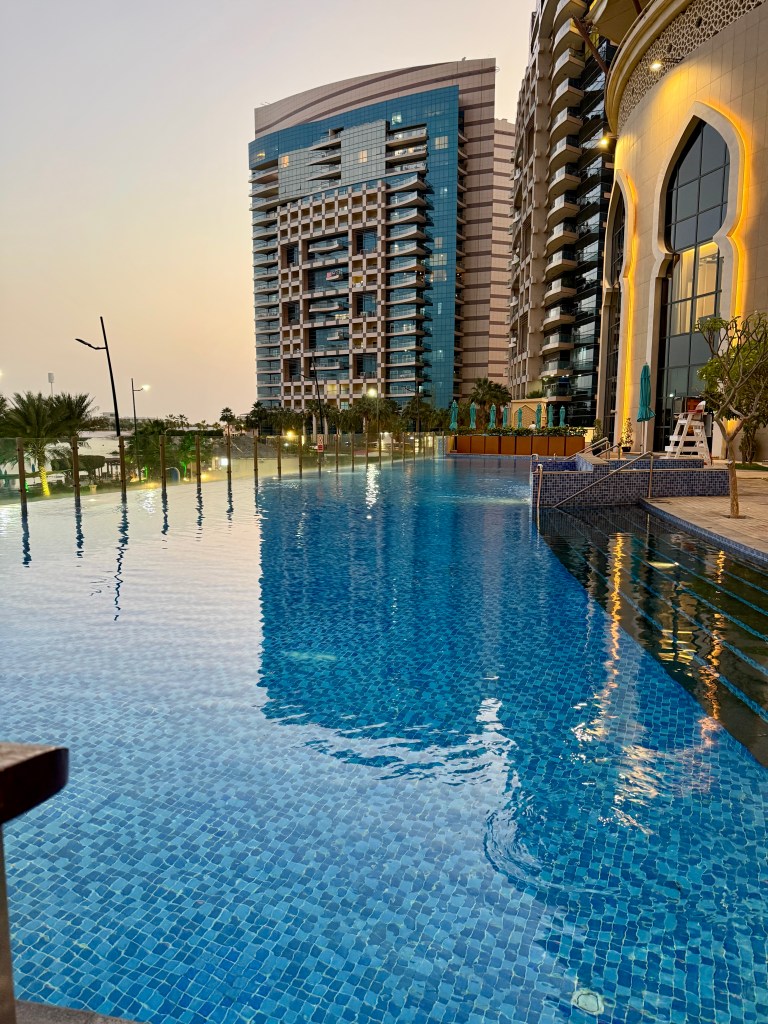
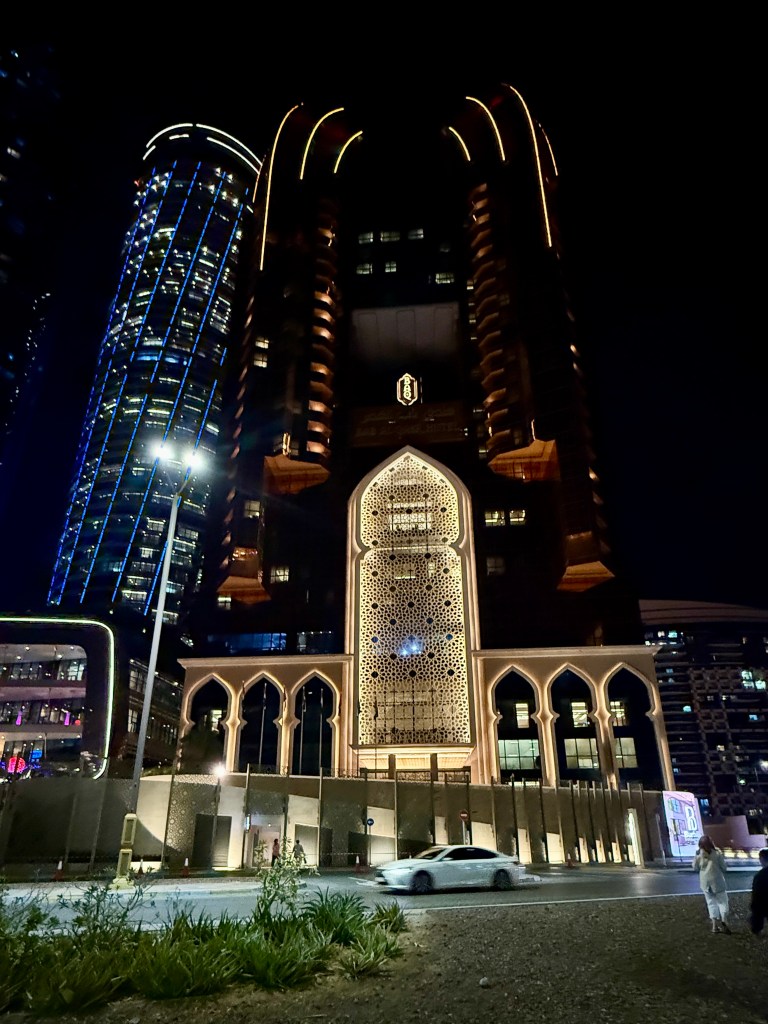
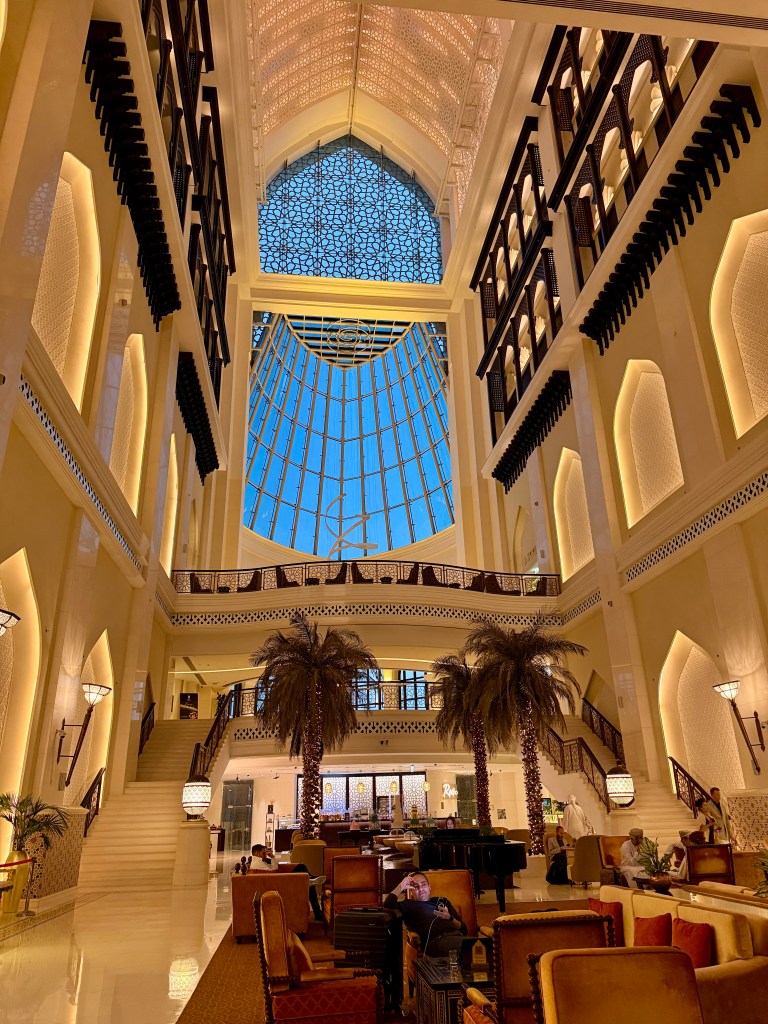
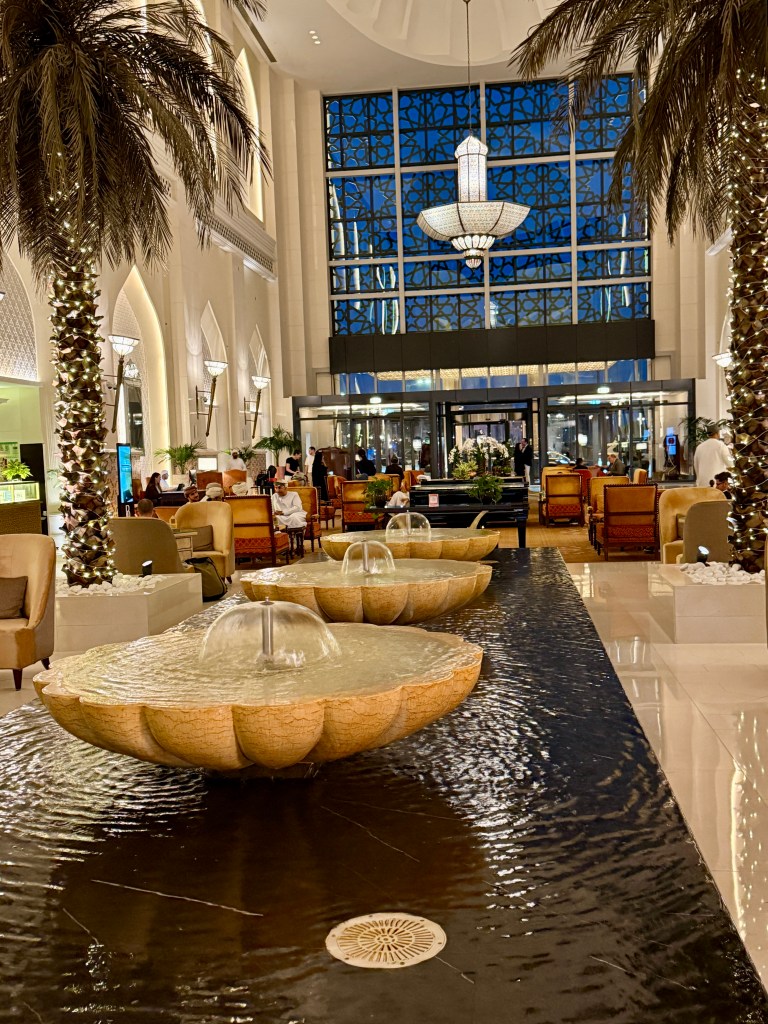
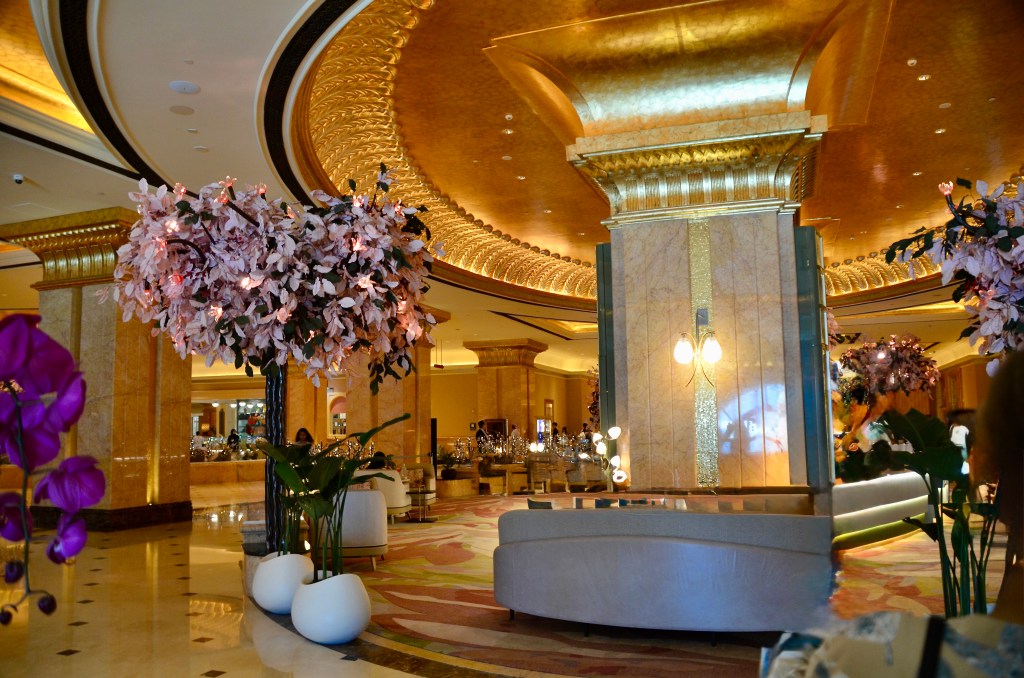
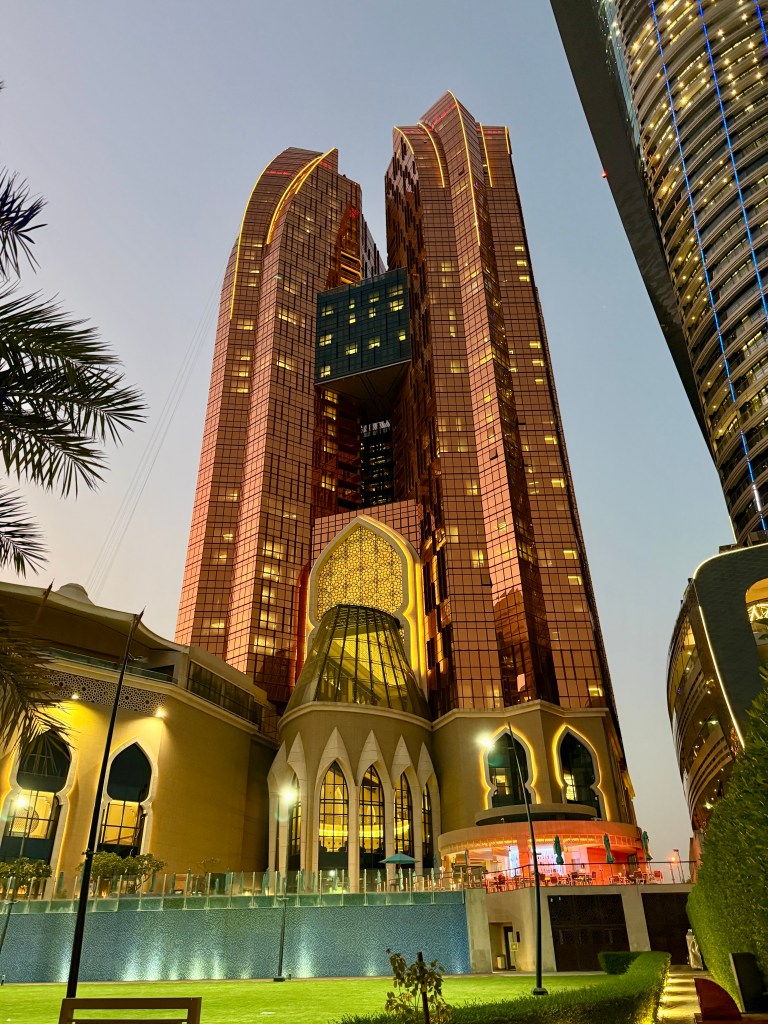
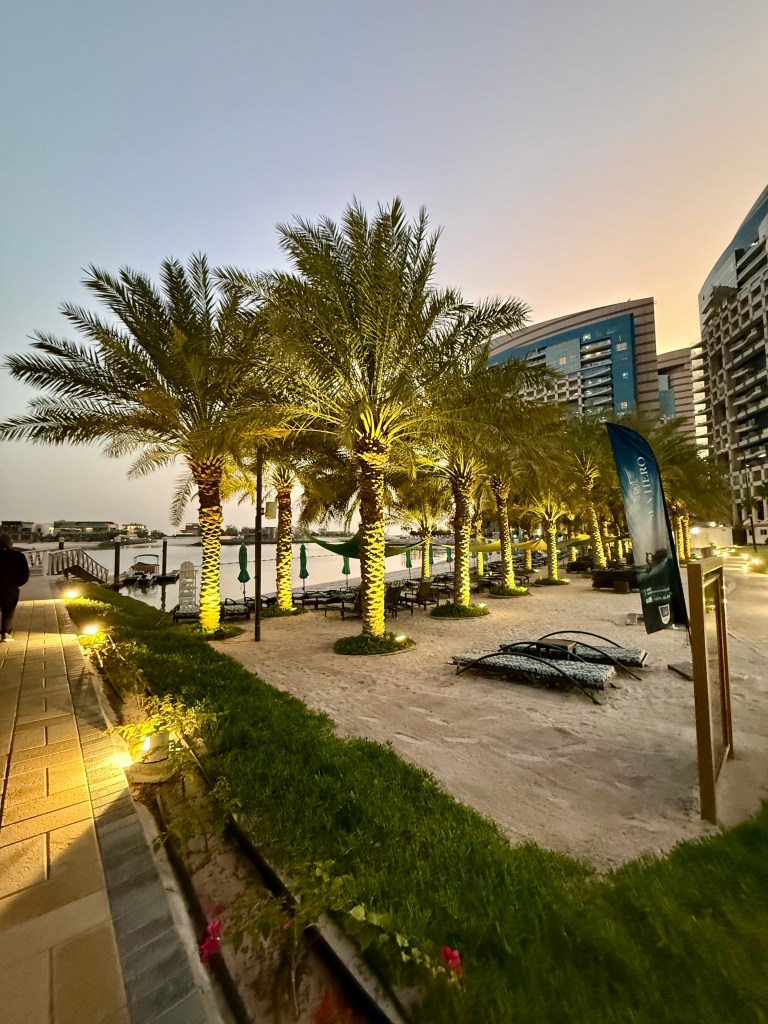
We stayed at Bab Al Qasr Hotel which was right across from Emirates Palace Hotel and close to Etihad Towers, which made getting around easy. The rooms were spacious and the hotel, although modern, had Middle Eastern design touches.

Our Hotel Lobby

Even with the limited time, we managed to fit in visits to several of the city’s tourist sites.

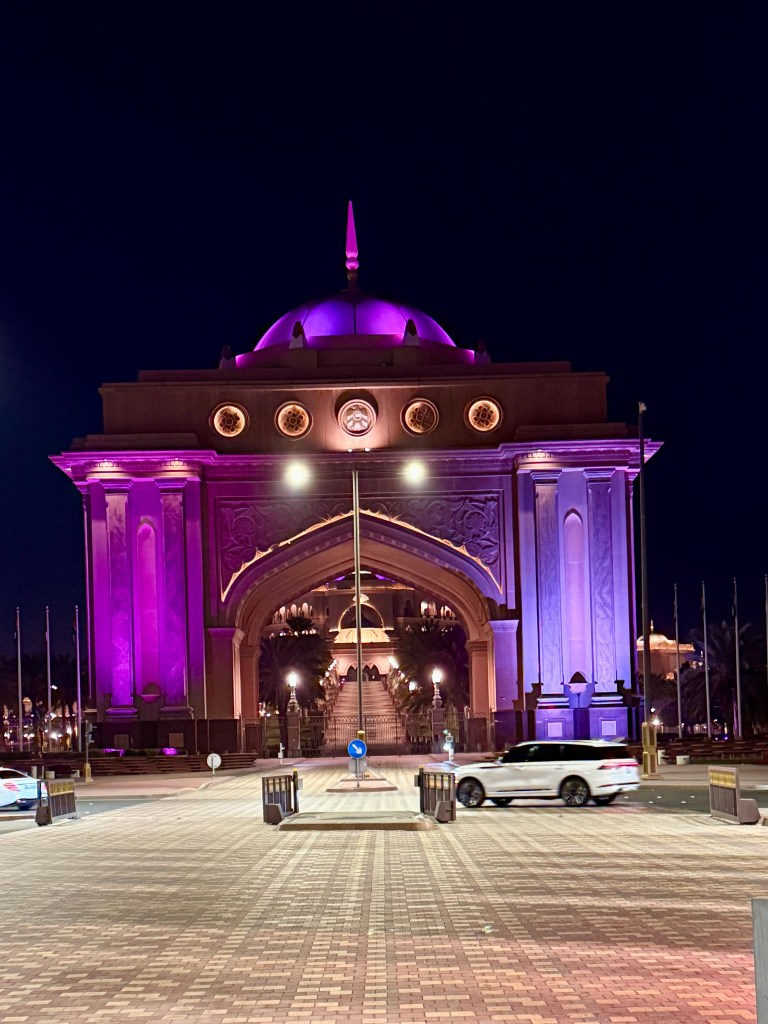
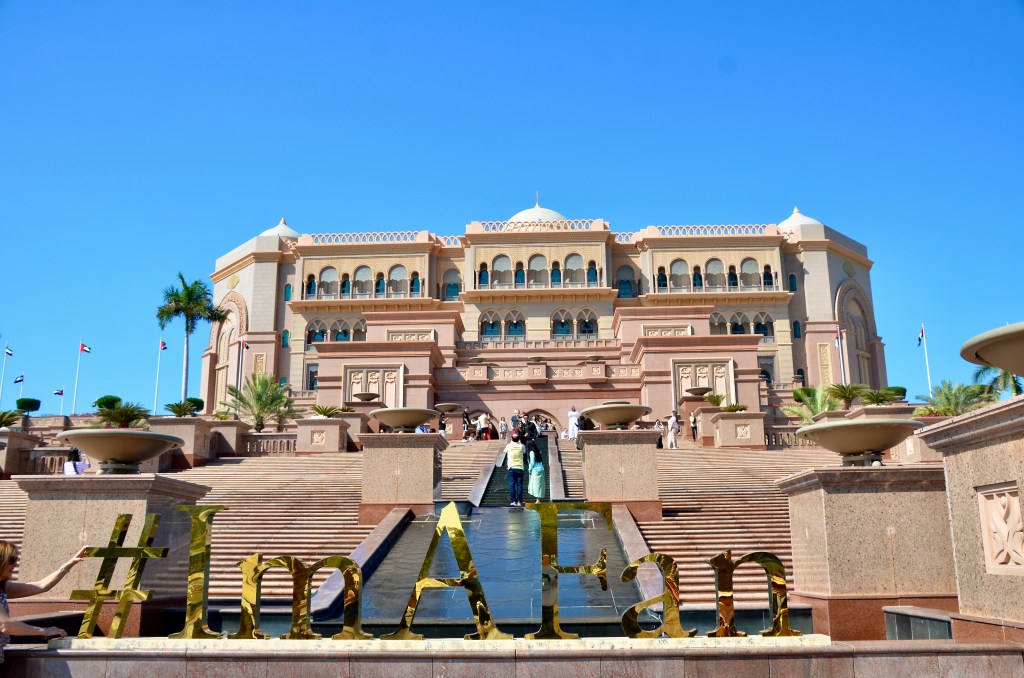
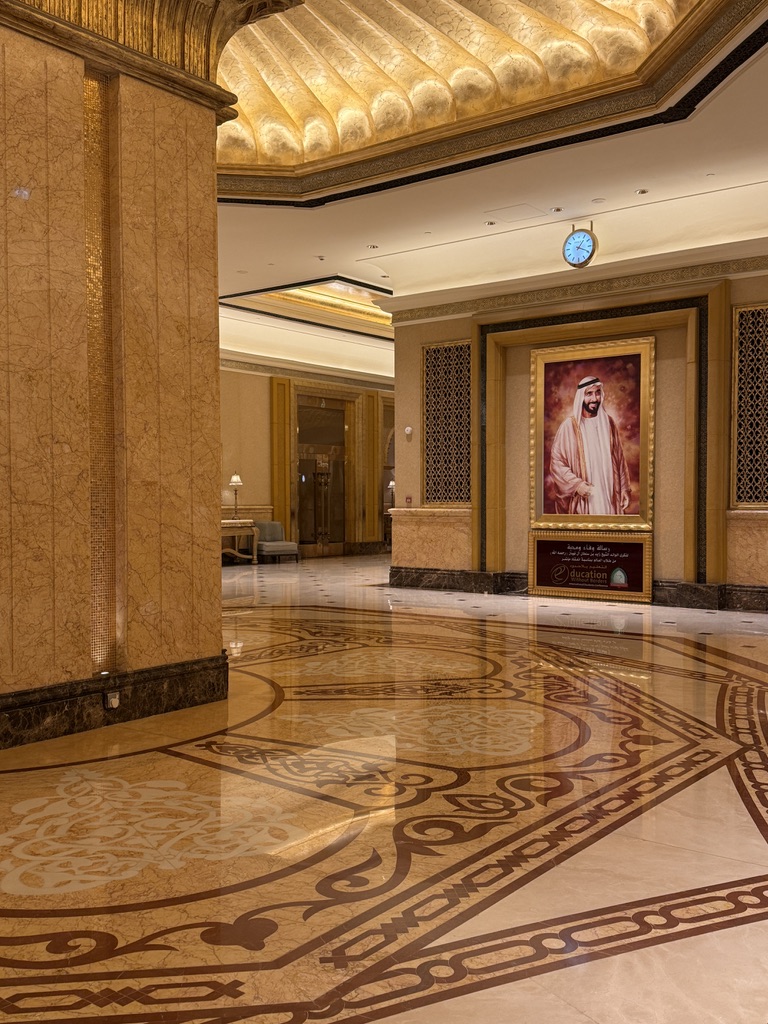
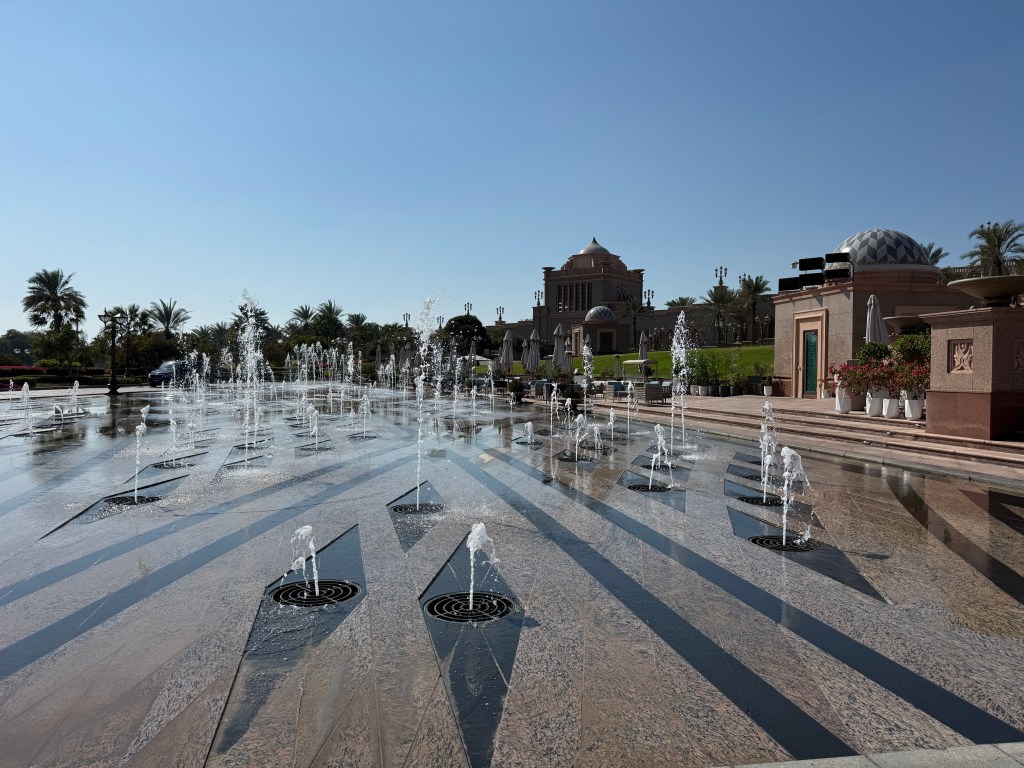
Emirates Palace Hotel

Emirates Palace, a Mandarin Oriental hotel, is located right by the Corniche, which is Abu Dhabi’s long waterfront promenade that runs along the coast of the Arabian Gulf.

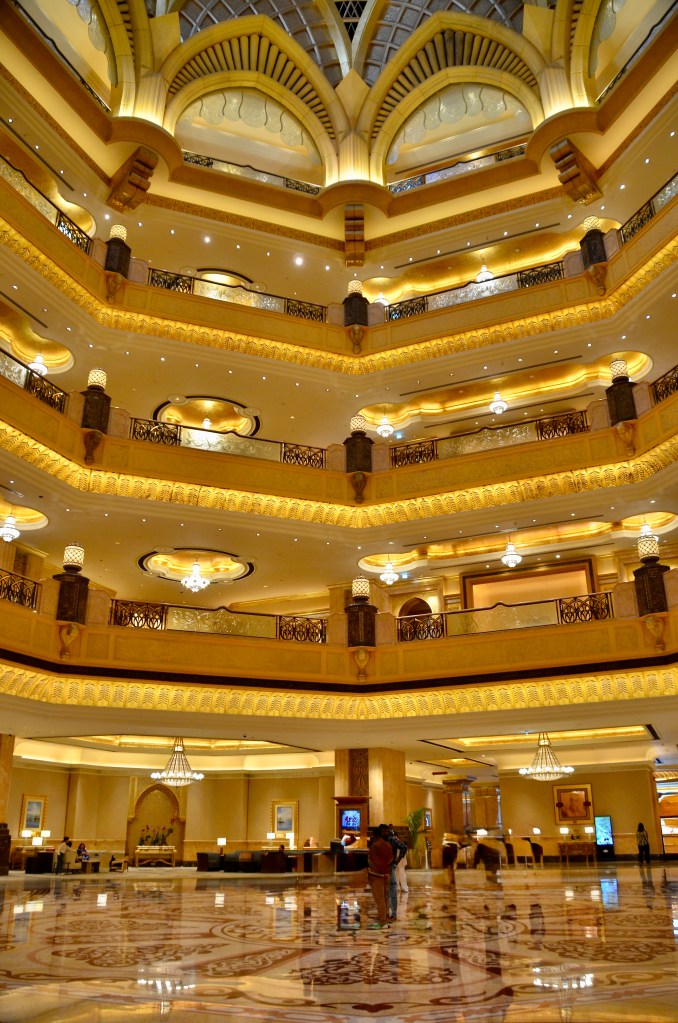
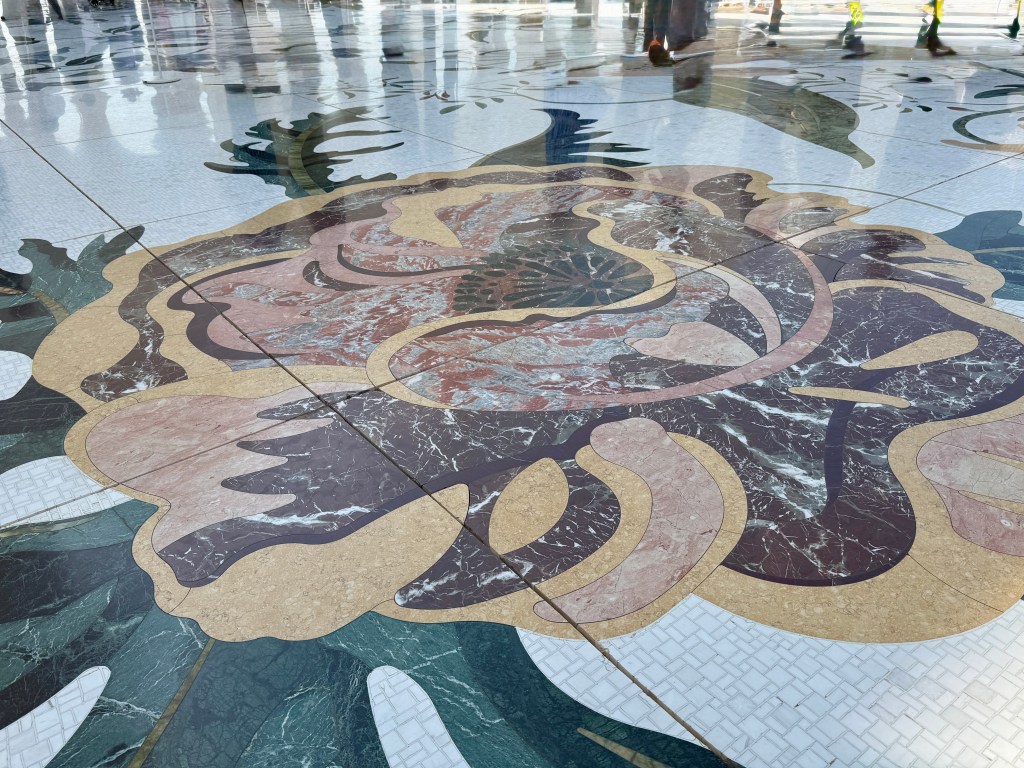
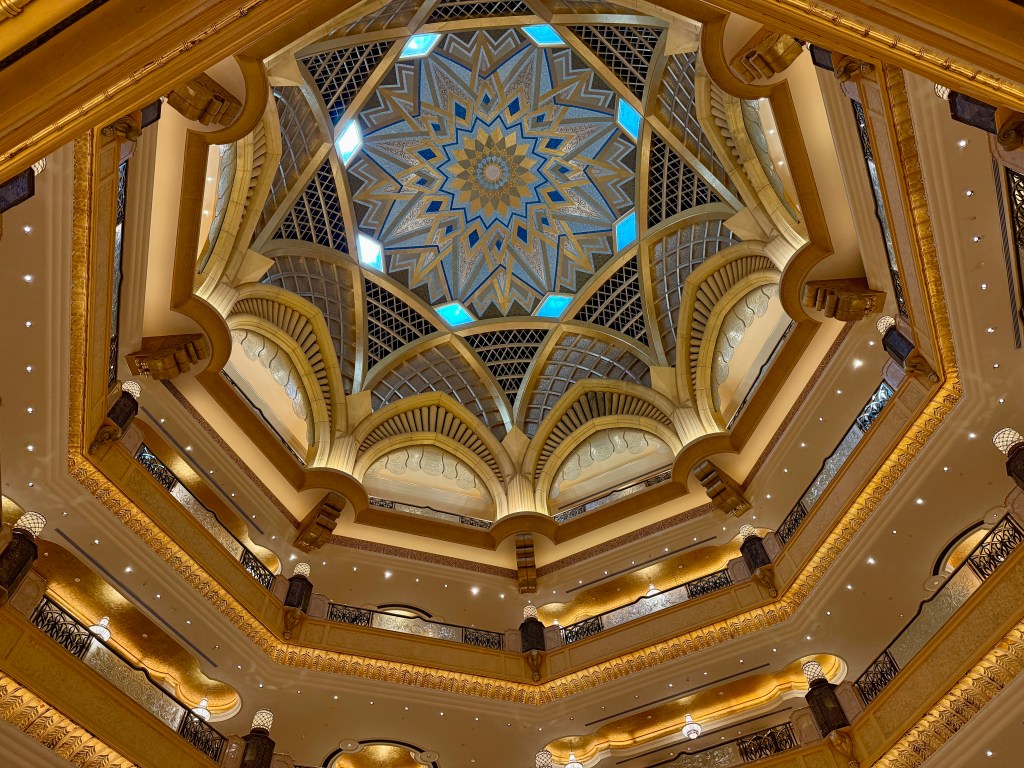
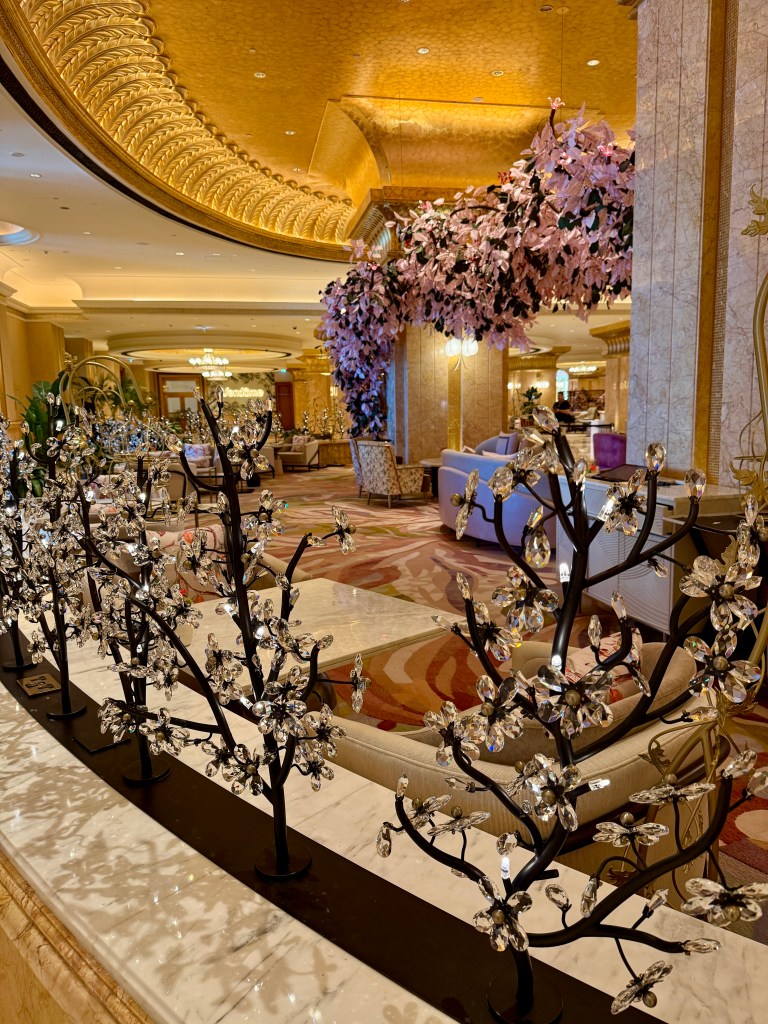
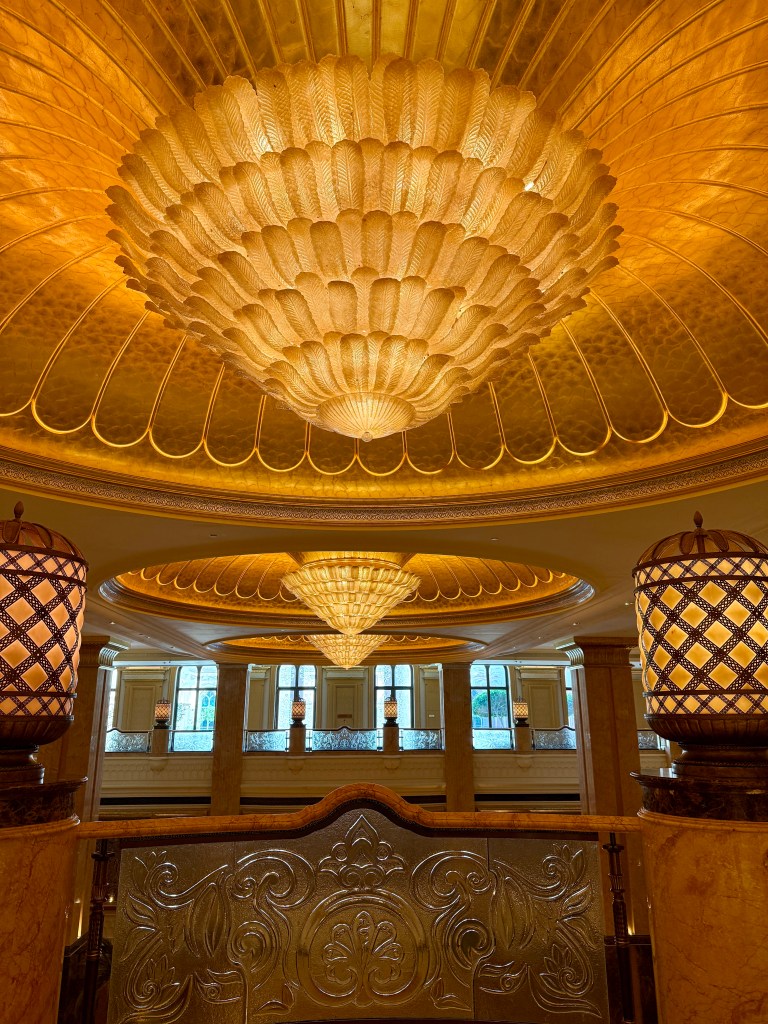
The hotel itself is massive and looks more like a palace than a hotel. What really stands out is the scale of it all—the amount of marble, the huge open spaces, and the manicured gardens.

We were curious what the room rate would be at the Emirates Palace. In February, a standard room runs roughly $730–$790 CAD per night. For comparison, the Burj Al Arab in Dubai—an all-suites hotel often referred to as a “7-star” hotel — comes in at about $3,300–$3,500 CAD per night for a basic suite, or roughly four times the price. It’s hard to imagine paying that much for a single night in a hotel room.
Sheikh Zayed Grand Mosque

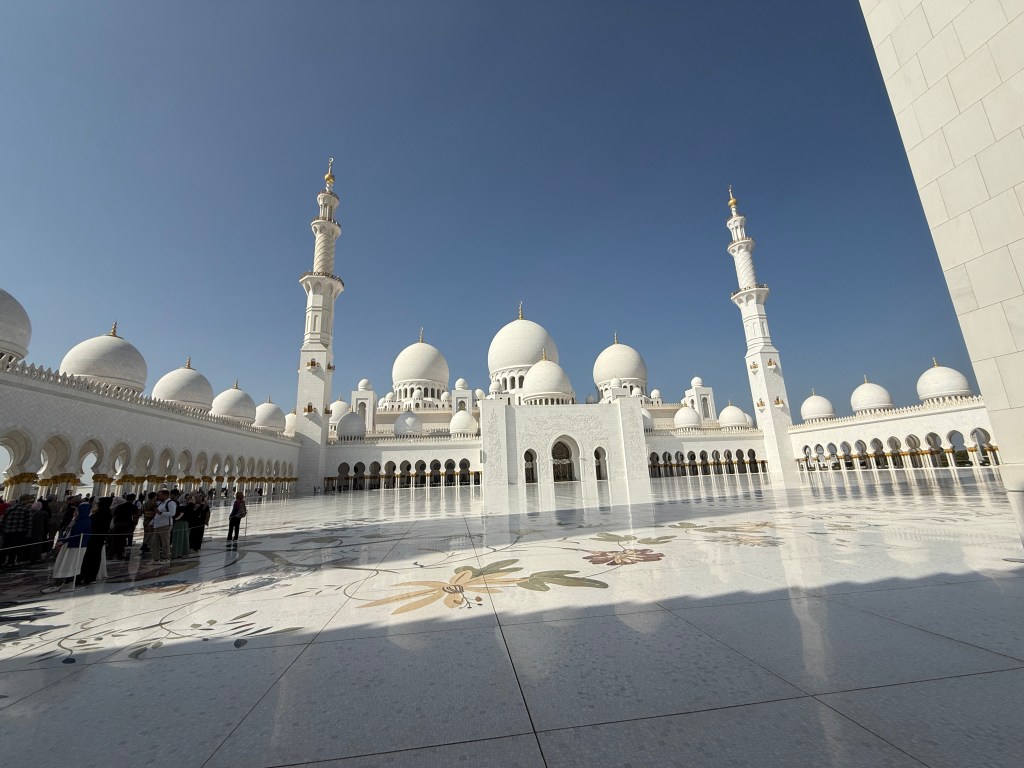
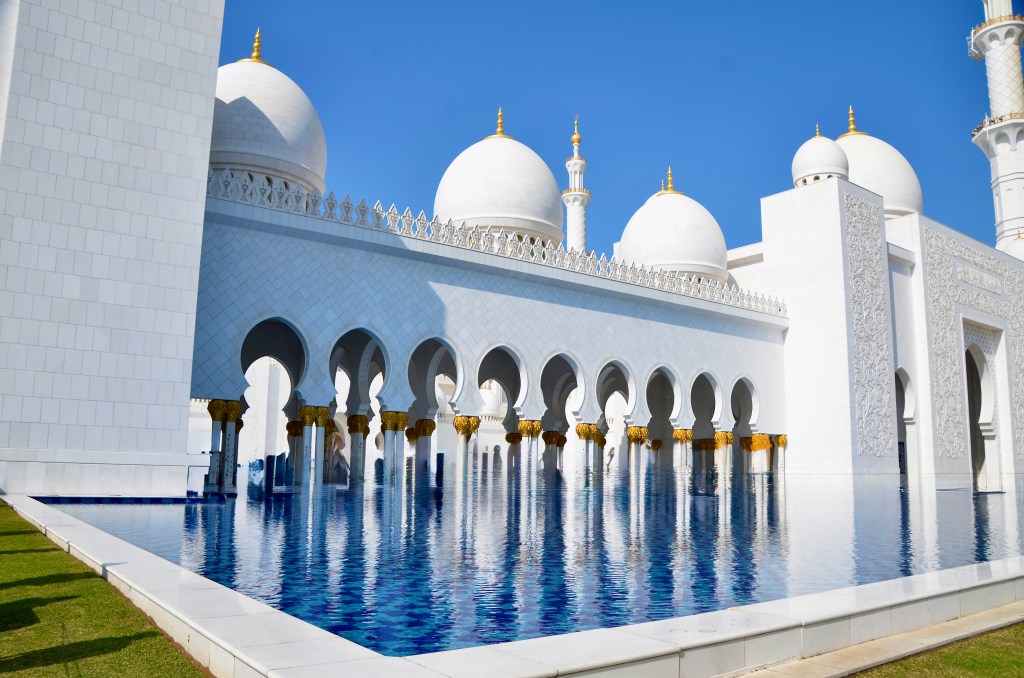
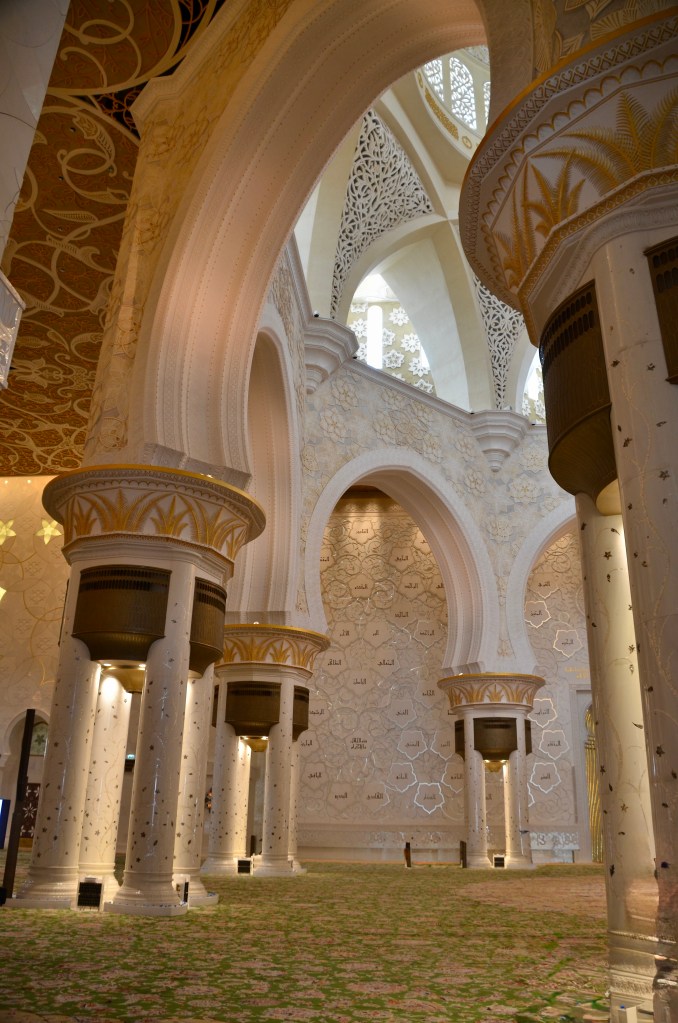
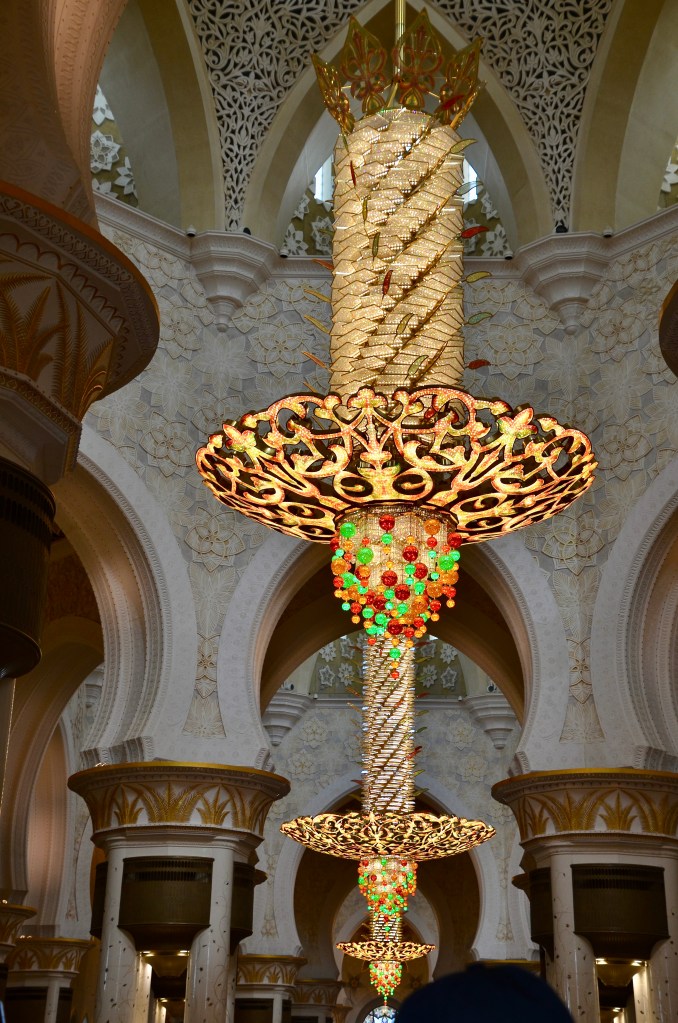
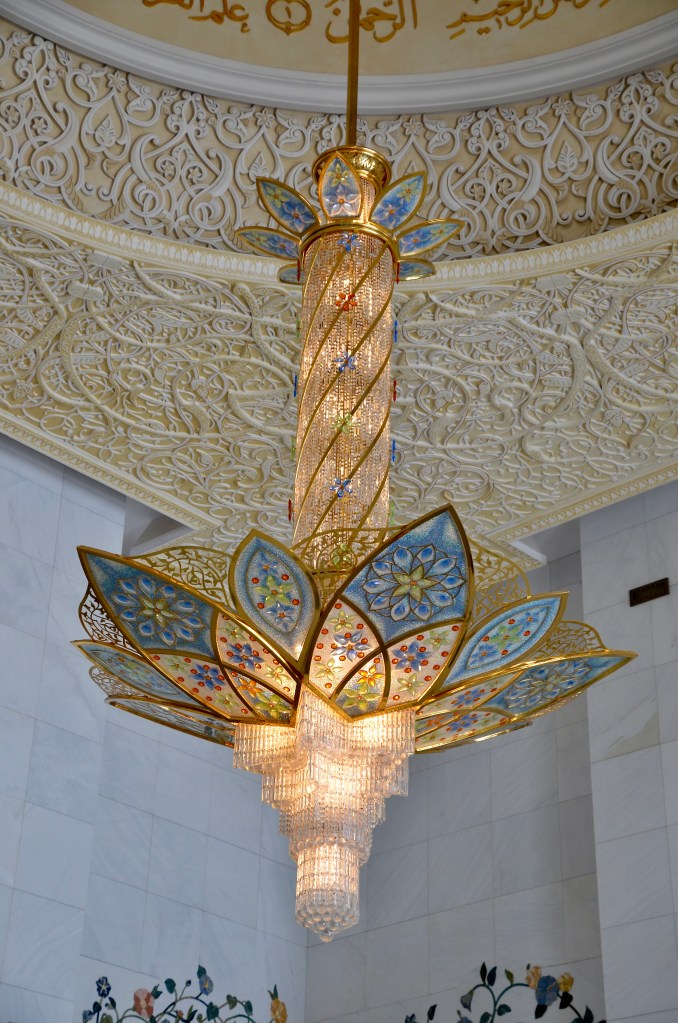
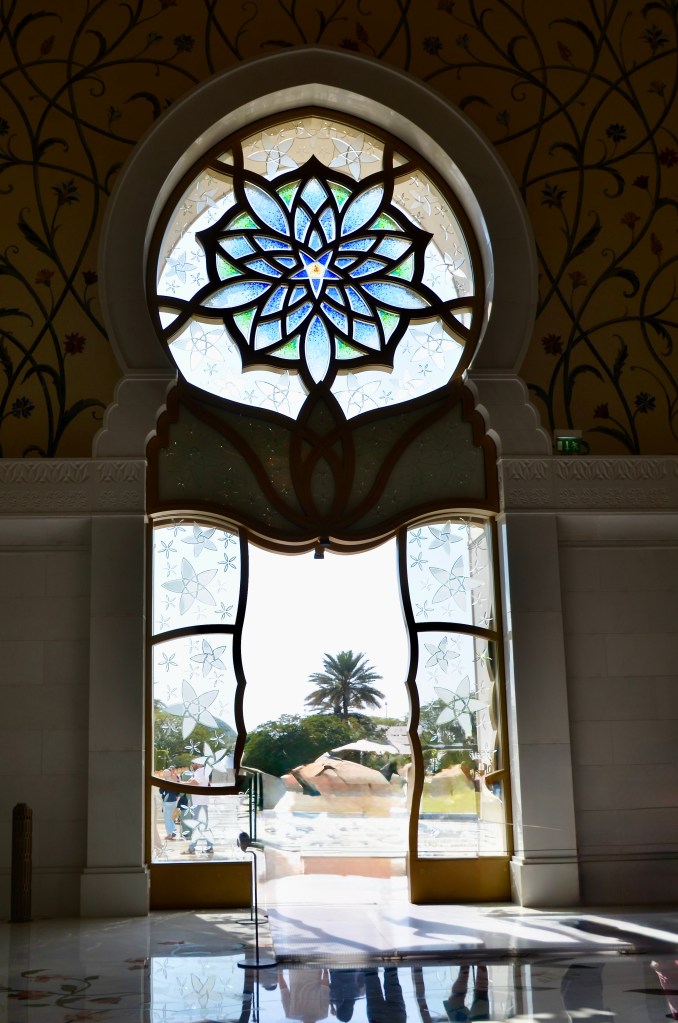
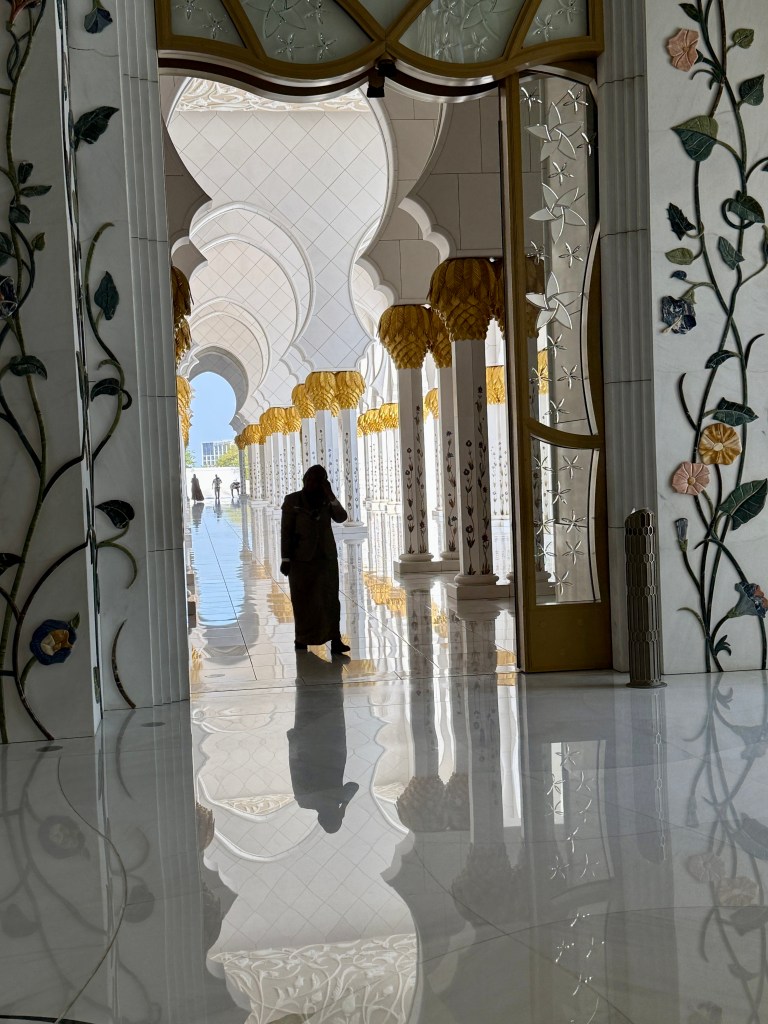
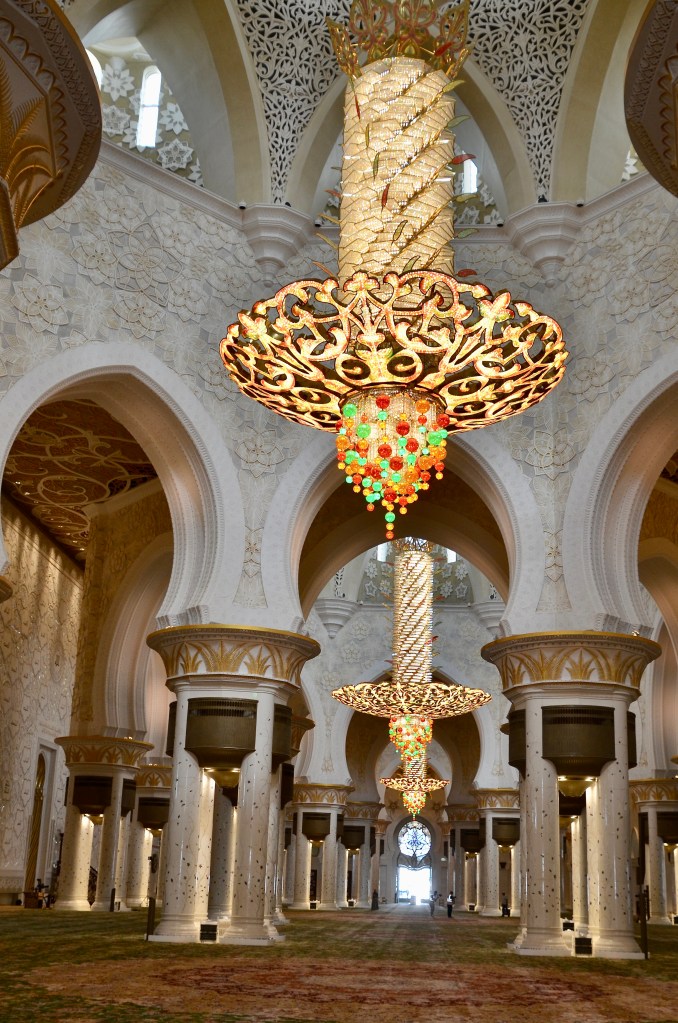
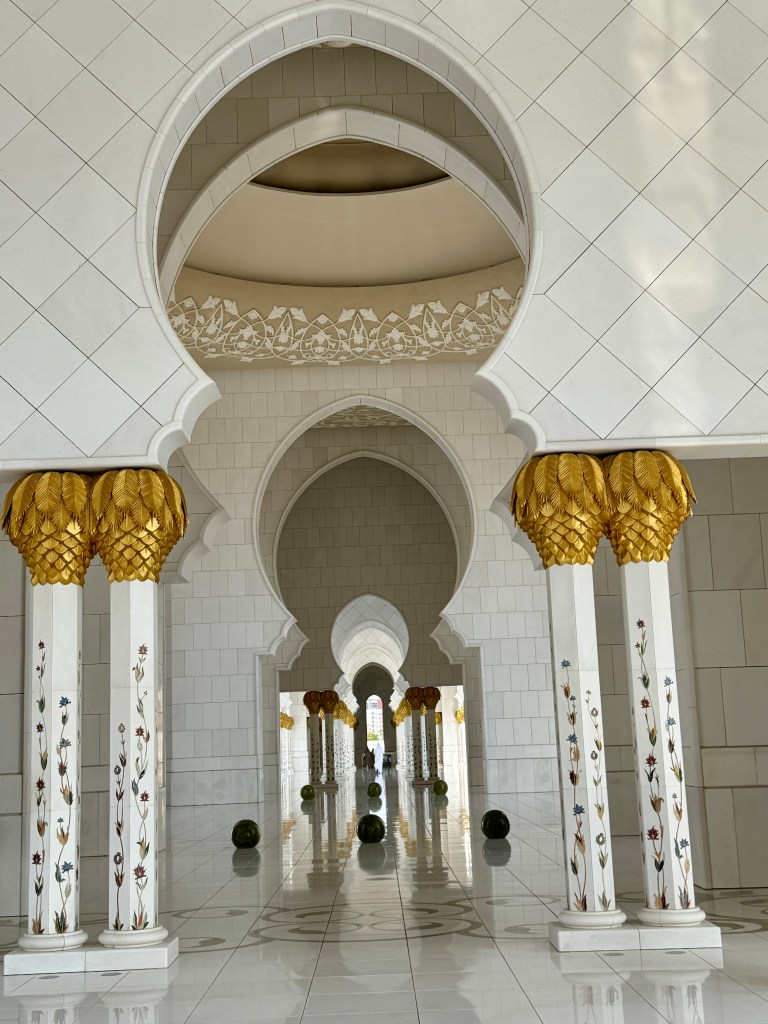
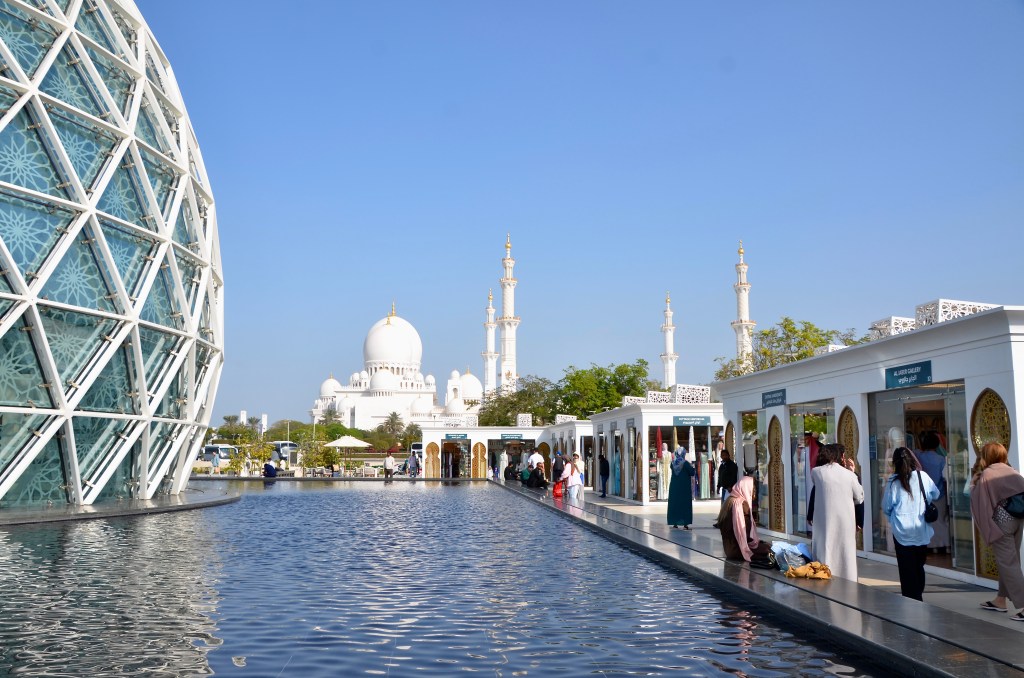
Sheikh Zayed Grand Mosque is one of the largest mosques in the world. It was completed in 2007, and can accommodate more than 40,000 worshippers at once. The mosque is renowned for its white marble exterior, impressive domes, and one of the world’s largest hand-knotted carpets in the main prayer hall.

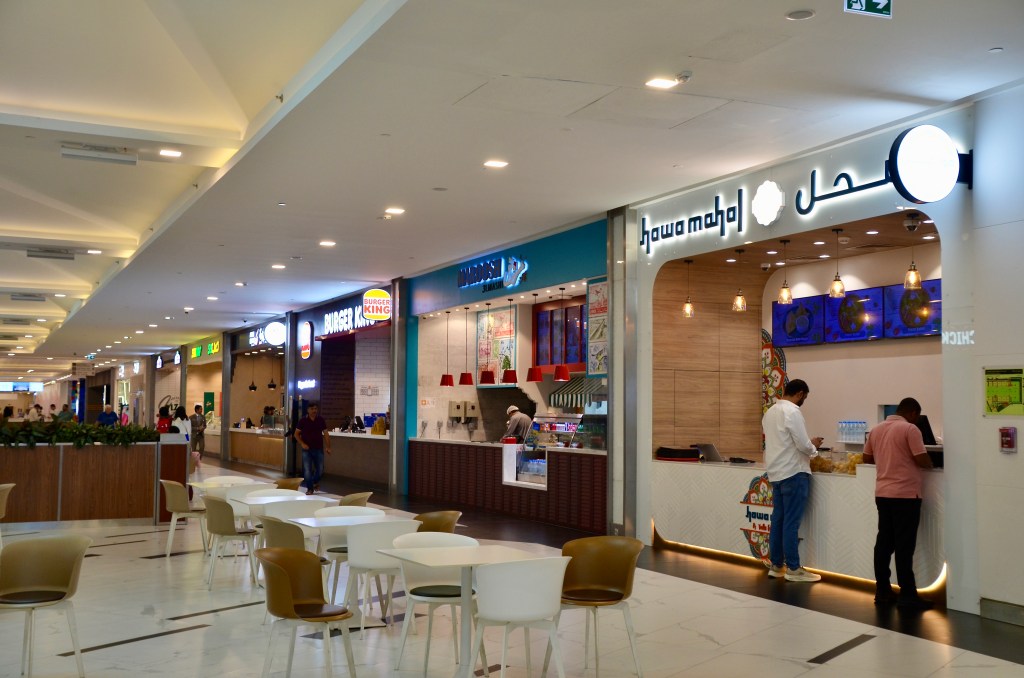
One surprising feature for us was the retail area below the mosque, which includes a fast food court.

While visitors may wear shoes in the mosque courtyard, women are required to cover their hair, wear long sleeves to the wrists, and long pants. These requirements do not apply to men.

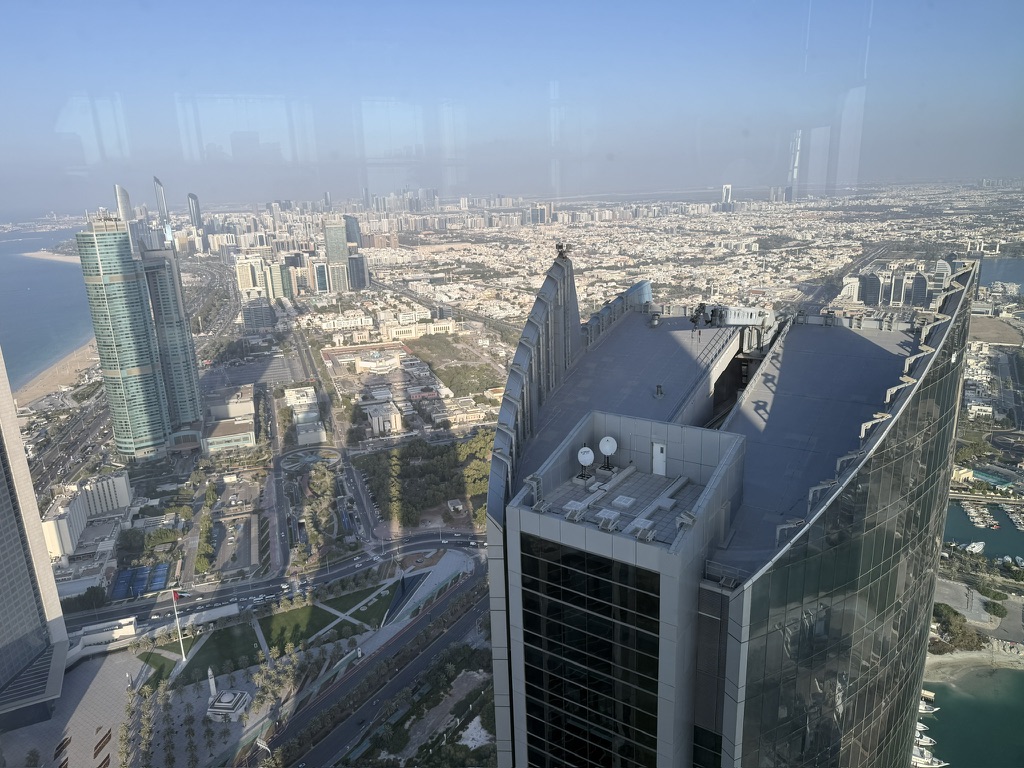
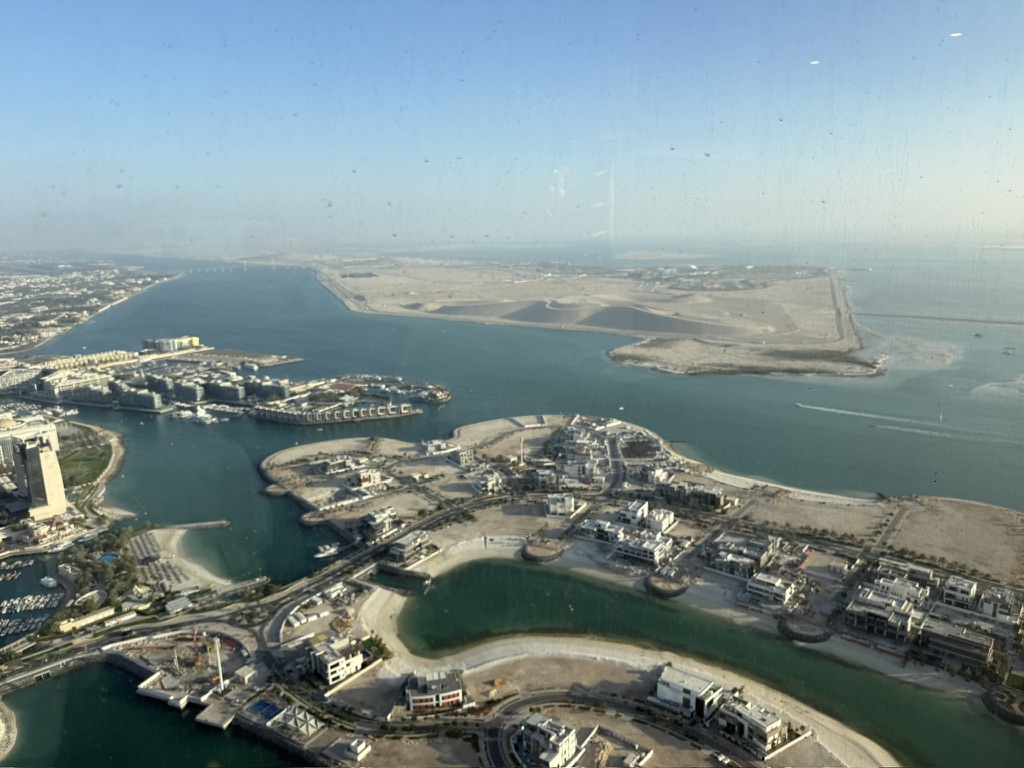
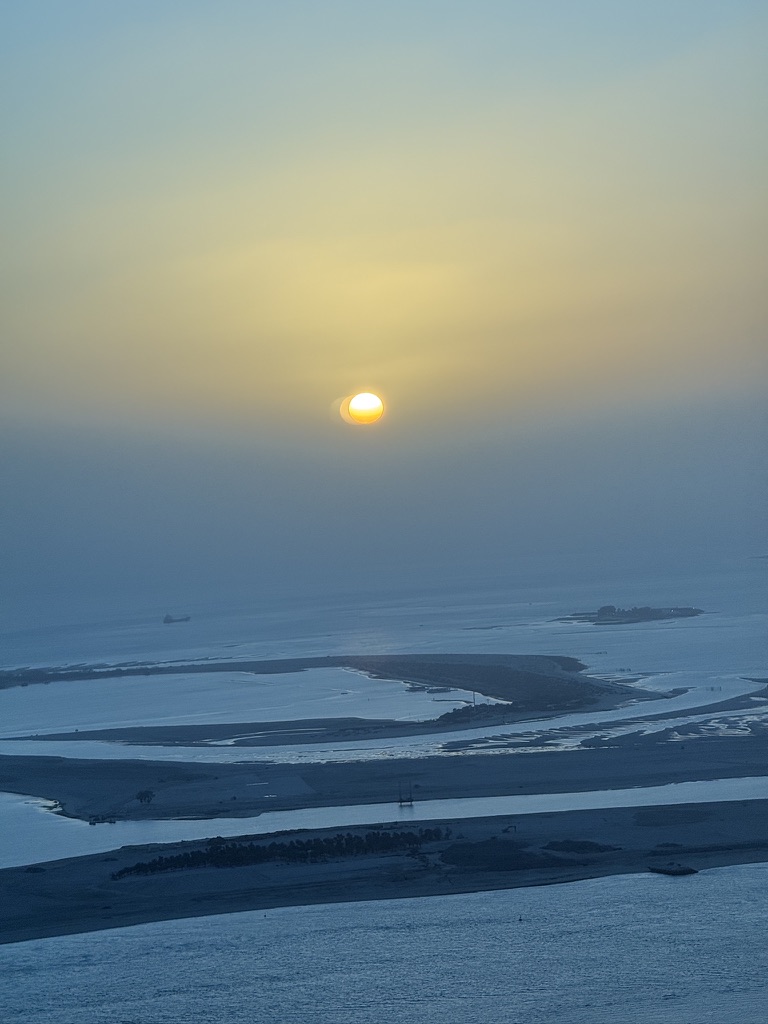
Before we headed to the airport, we went to Etihad Towers hotel for a view of Abu Dhabi from the 74th Floor. Very different from Dubai, as there are far fewer high rise buildings.

As our time in the UAE came to an end, we were glad we’d managed to see the Liwa desert, Dubai, and Abu Dhabi. Liwa desert was our favourite, and we’re looking forward to heading back into the desert again at the end of our trip.

Next stop Johannesburg for a few days and then off to our Safari in Sabi Sands.