
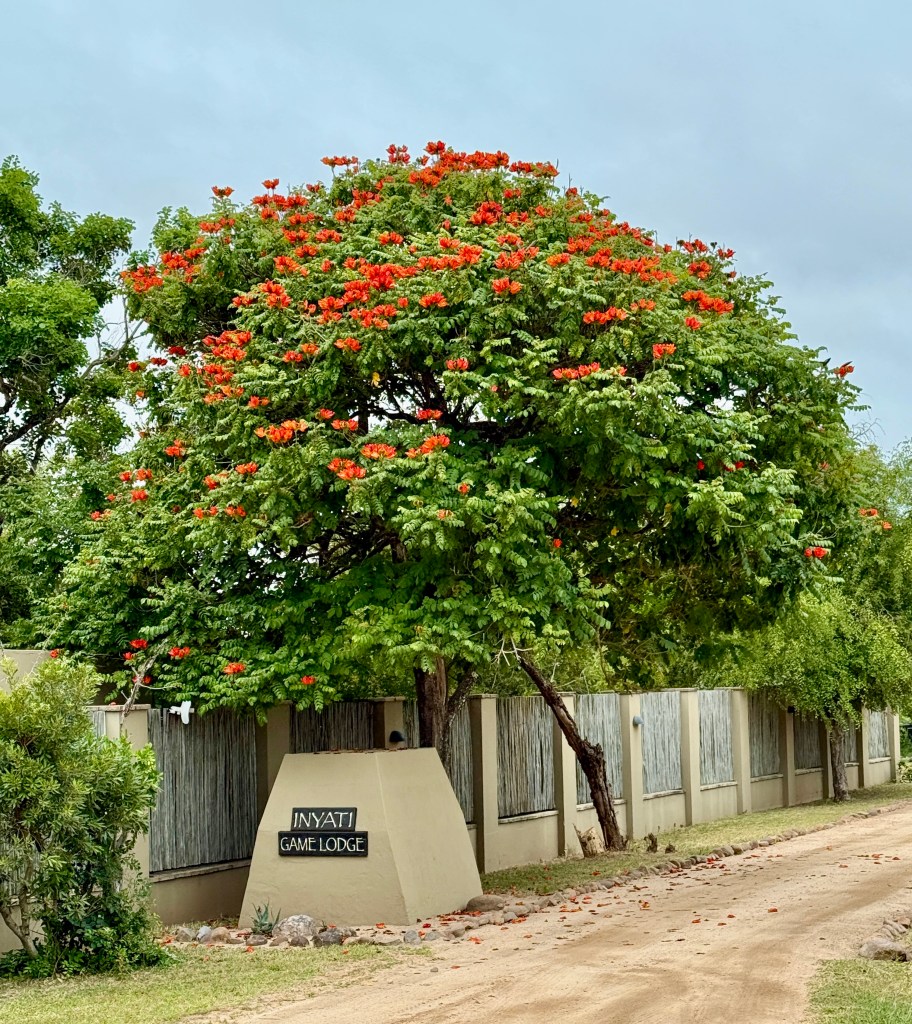
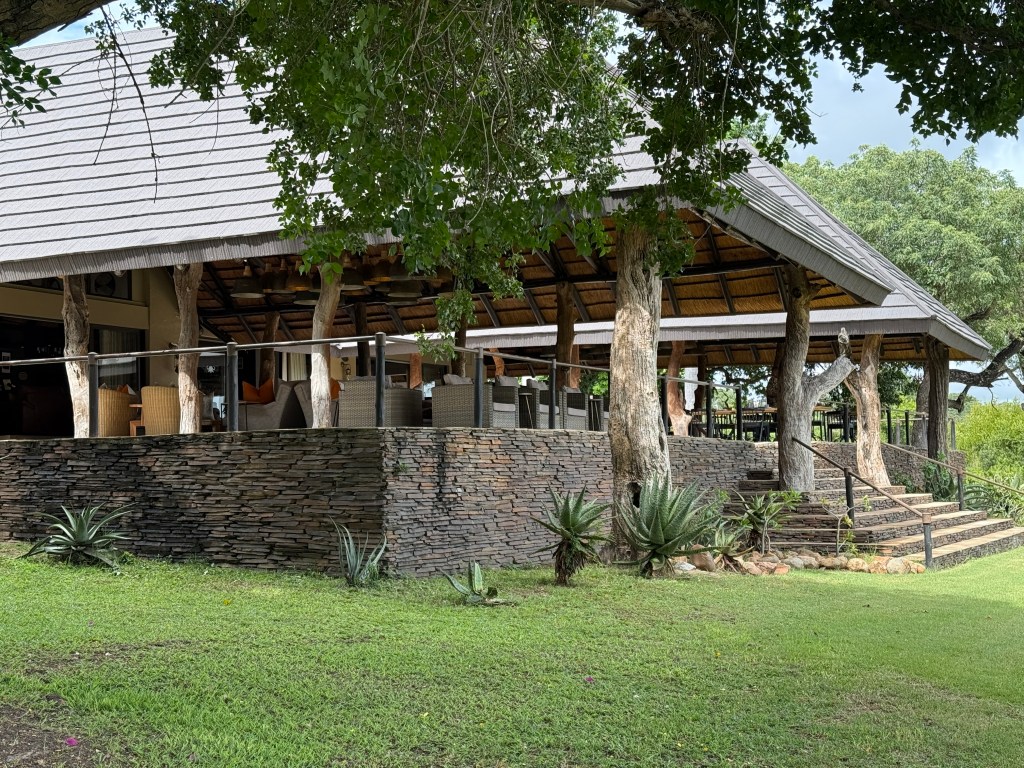
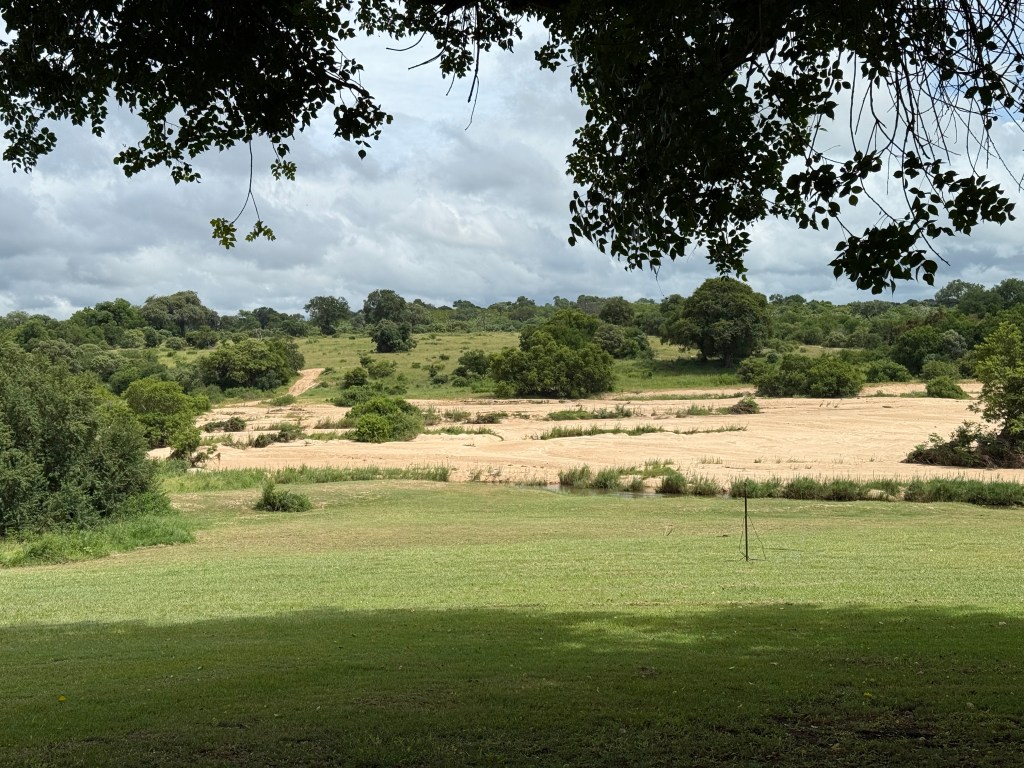
Inyati Game Lodge is set within 65,000 hectares of one of the world’s largest private conservation areas, Sabi Sand, which shares a border with Kruger National Park. The lodge overlooks the Sand River and has 11 chalets scattered throughout the lodge grounds.
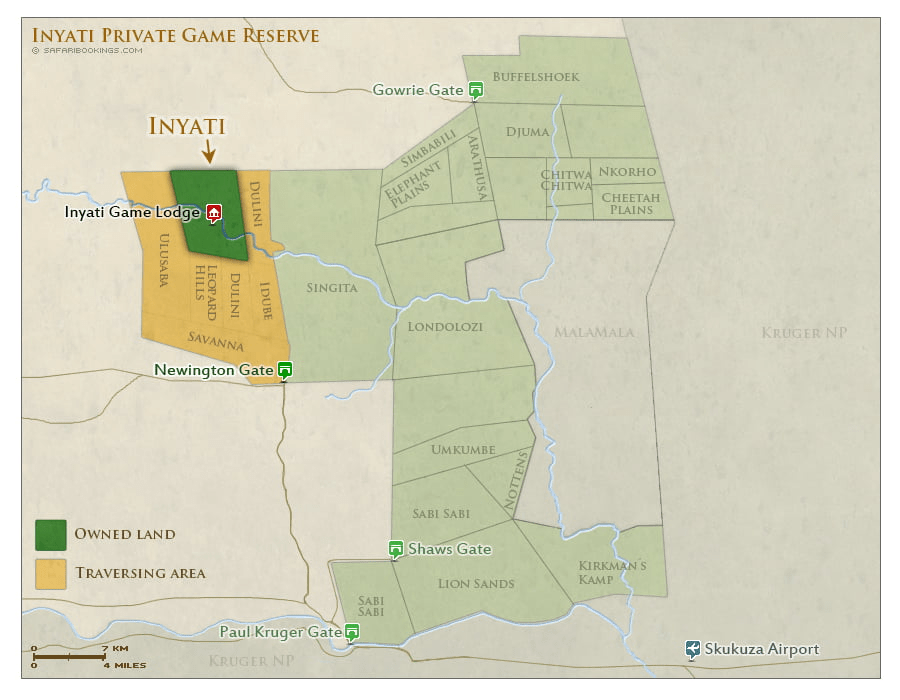
As shown on the map below, Inyati is one of seven smaller properties located in the western part of Sabi Sand. These properties share traversing rights, which makes the drives much more interesting. Rangers stay in contact via radio and “call in” sightings which increases the chances of seeing wildlife, especially the illusive leopards. With a two vehicle limit at a sighting, it is less intrusive for the animals and great for viewing.
Inyati is pricier than Umkumbe but much less expensive when compared to high-end lodges like Singita and Londolozi. With its extensive traversing rights, Inyati is similar in property size to these luxury lodges, which is important for the safari drives.
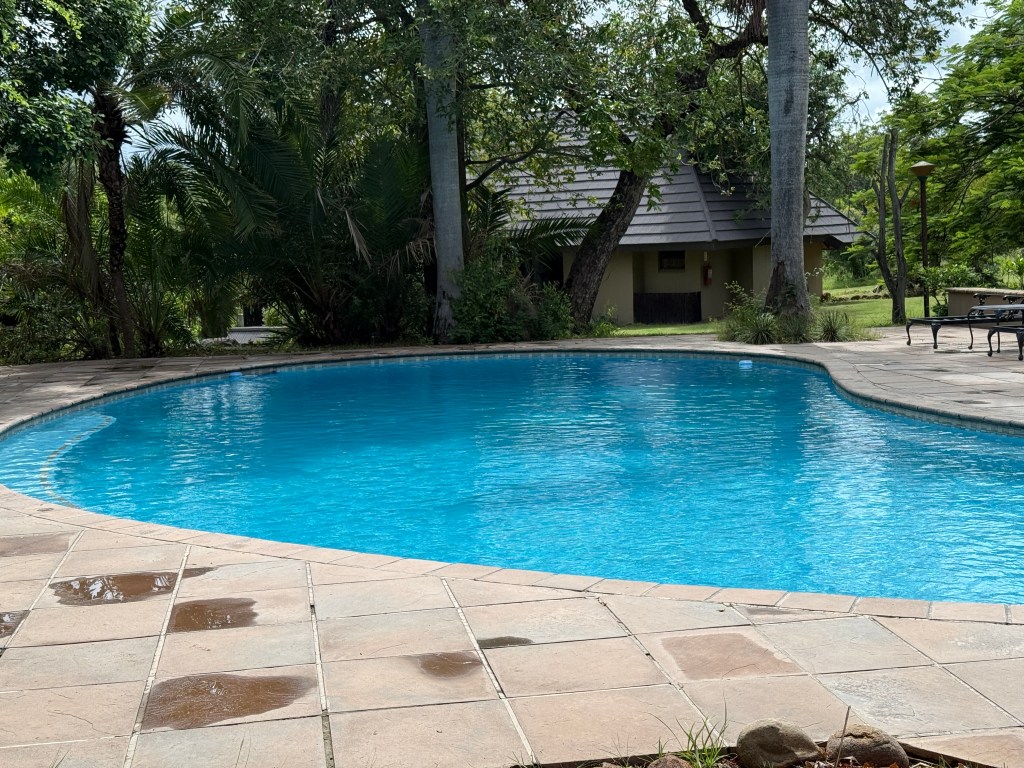
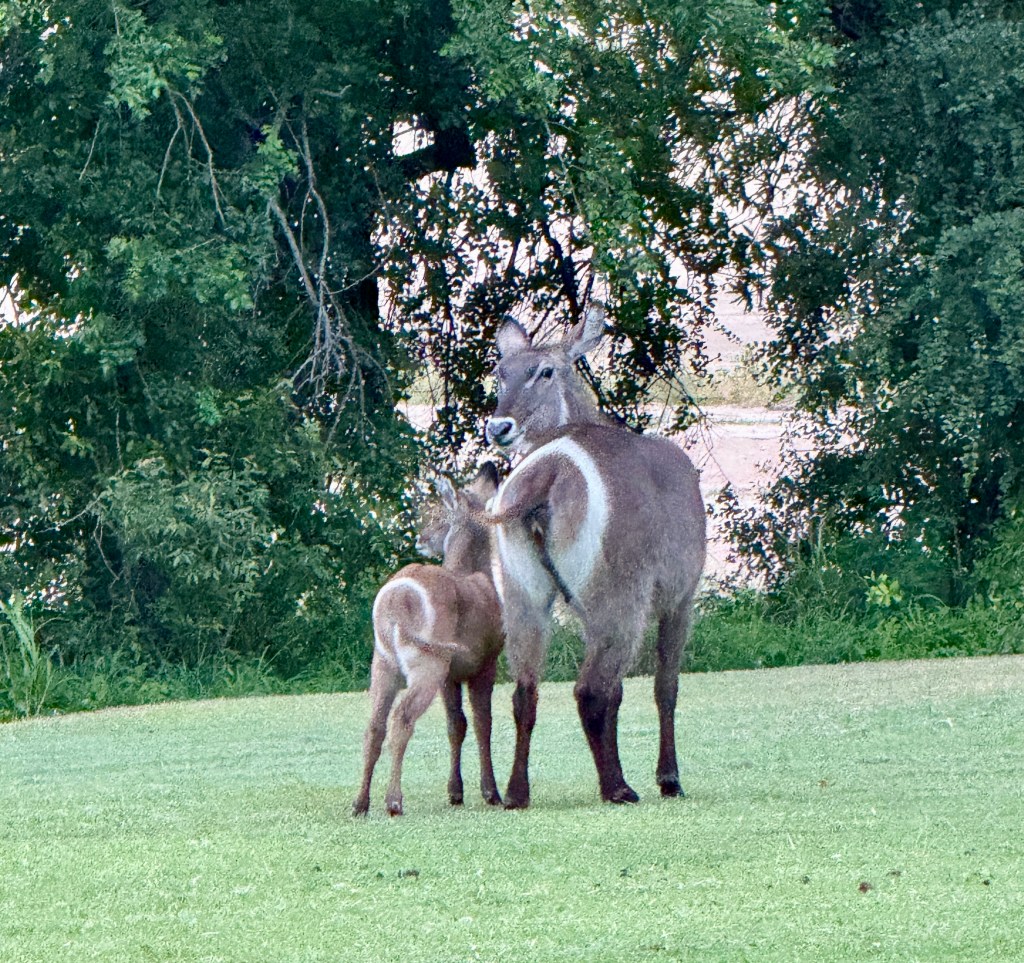
We first visited Inyati 10 years ago, and at that time, we were with Wendy and Gord. This year, we had the chance to return for a 4-day safari, and having them join us again made the trip even more special. Throughout our stay, we all agreed that Inyati really is a unique place, and we had an unforgettable time together.
While we don’t usually request a specific ranger, last year’s experience with Roger and Qolani was so exceptional that we asked for them again this time. They didn’t disappoint and once again gave us an incredible safari experience!
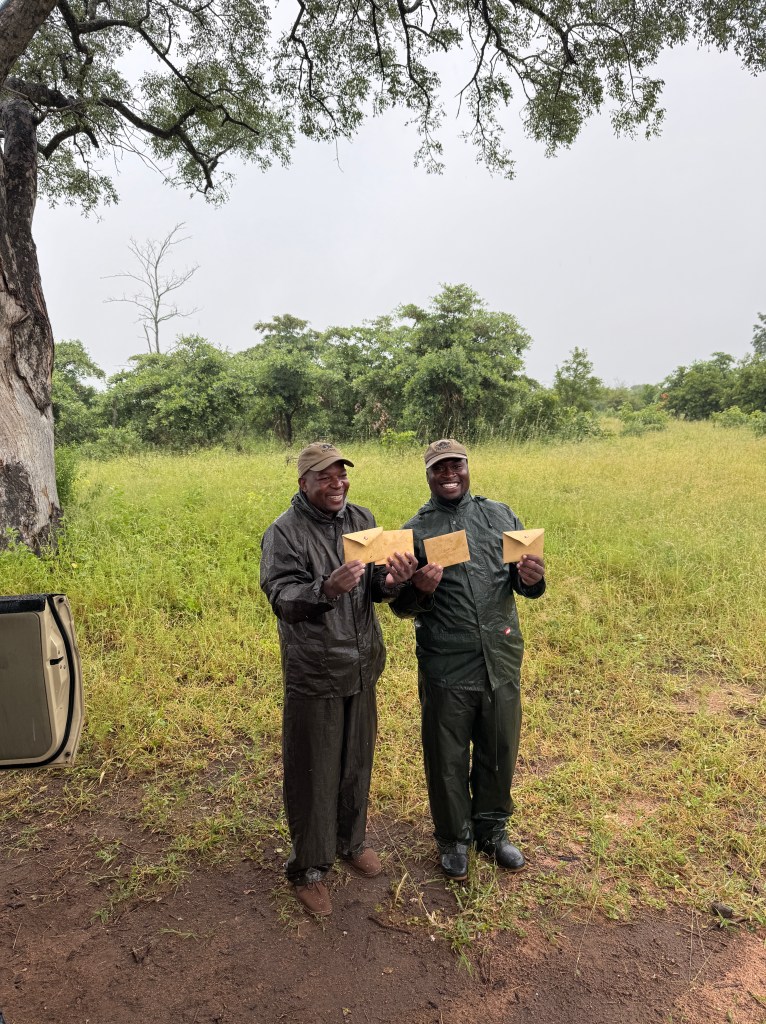
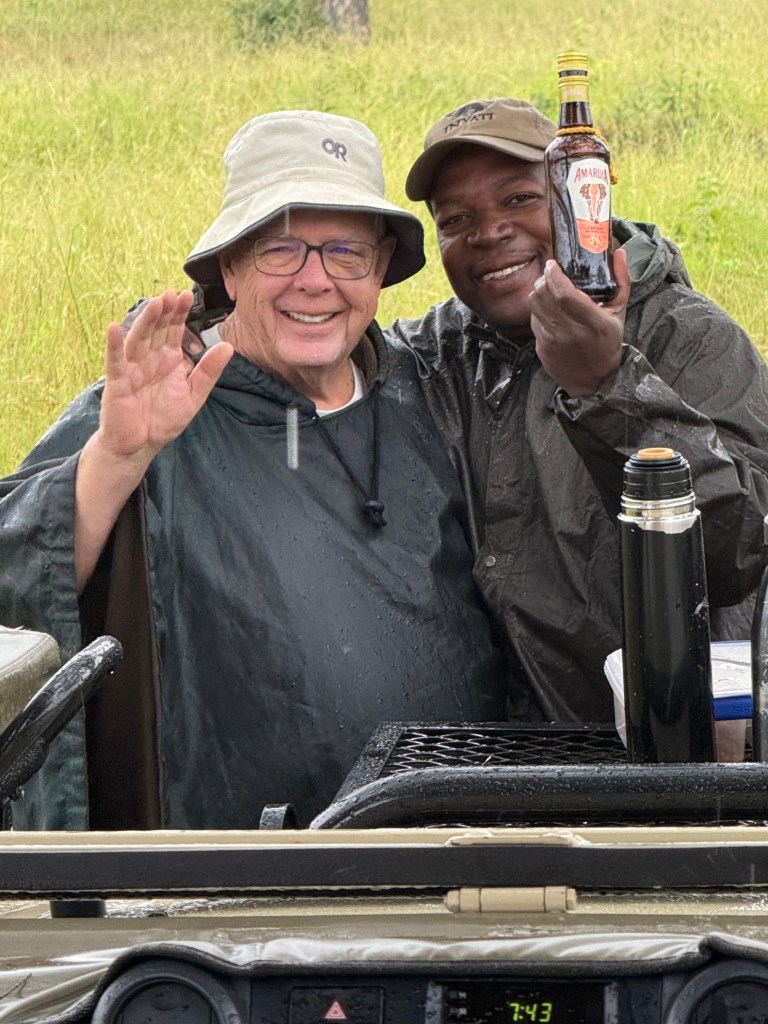
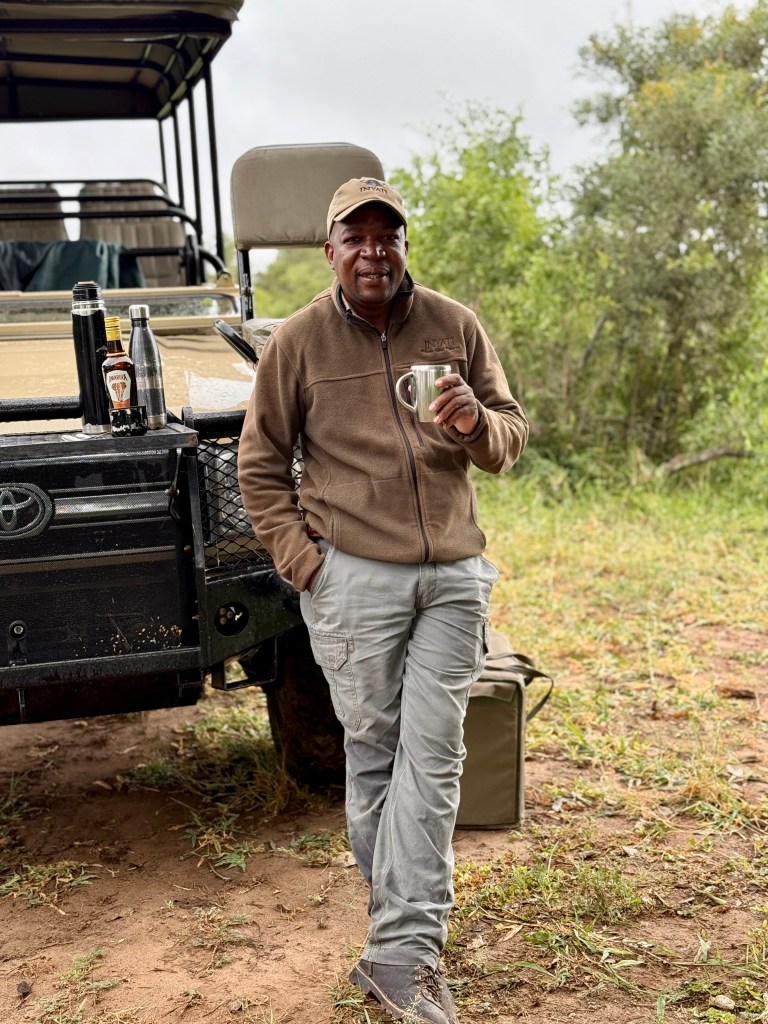
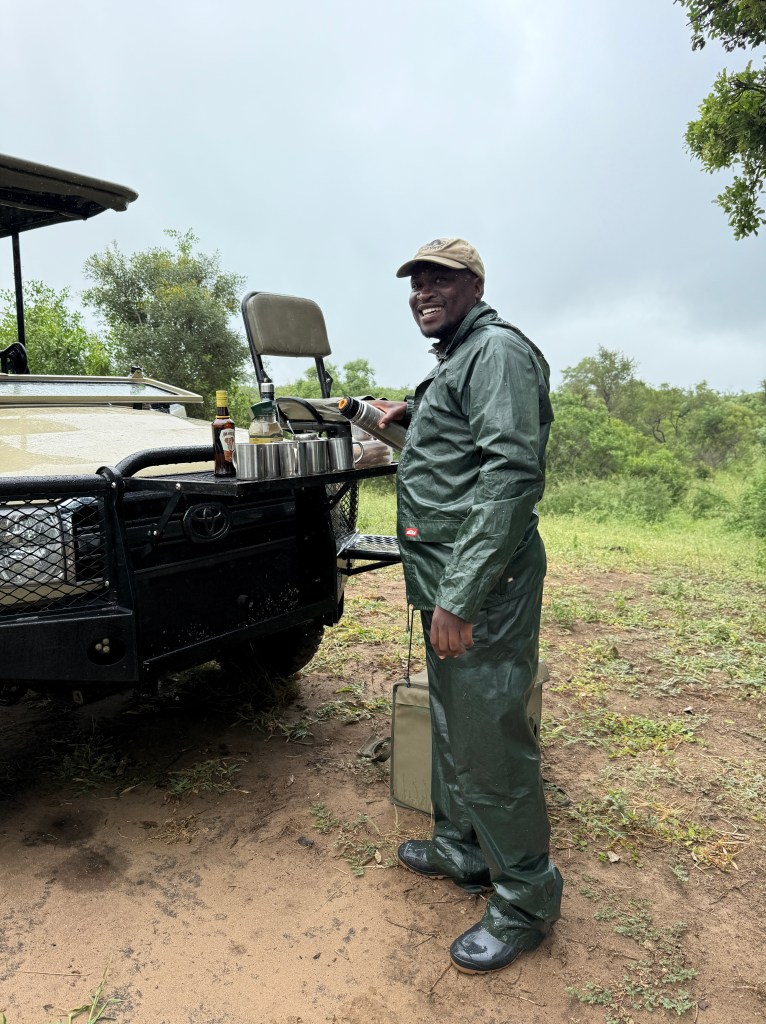
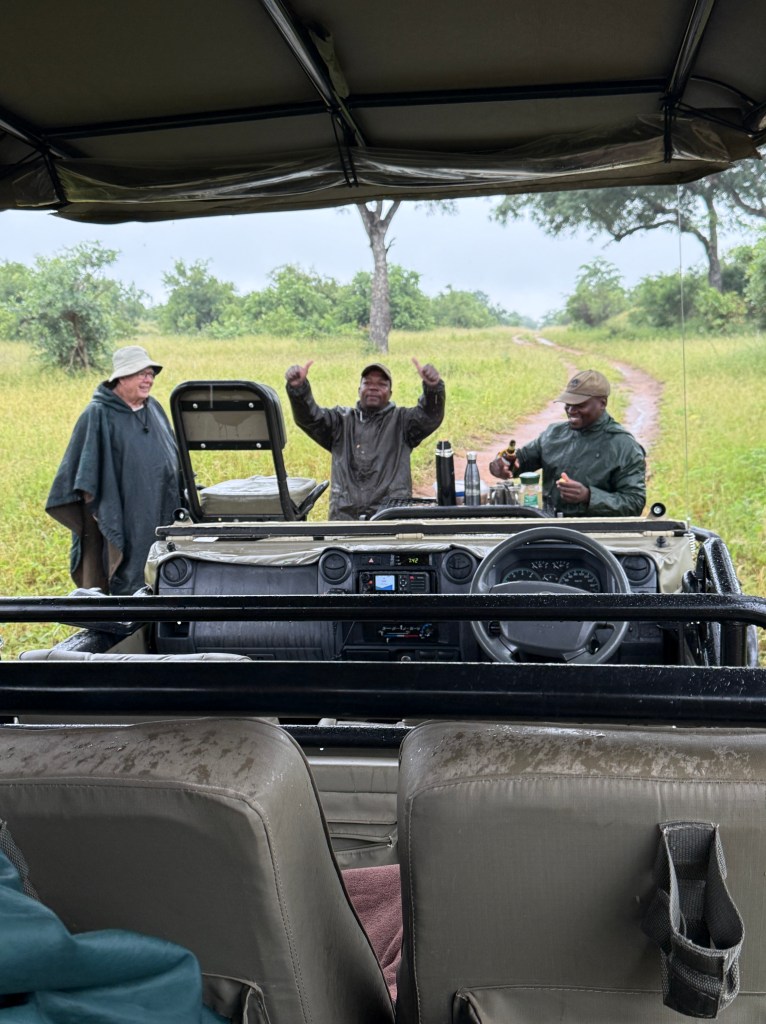
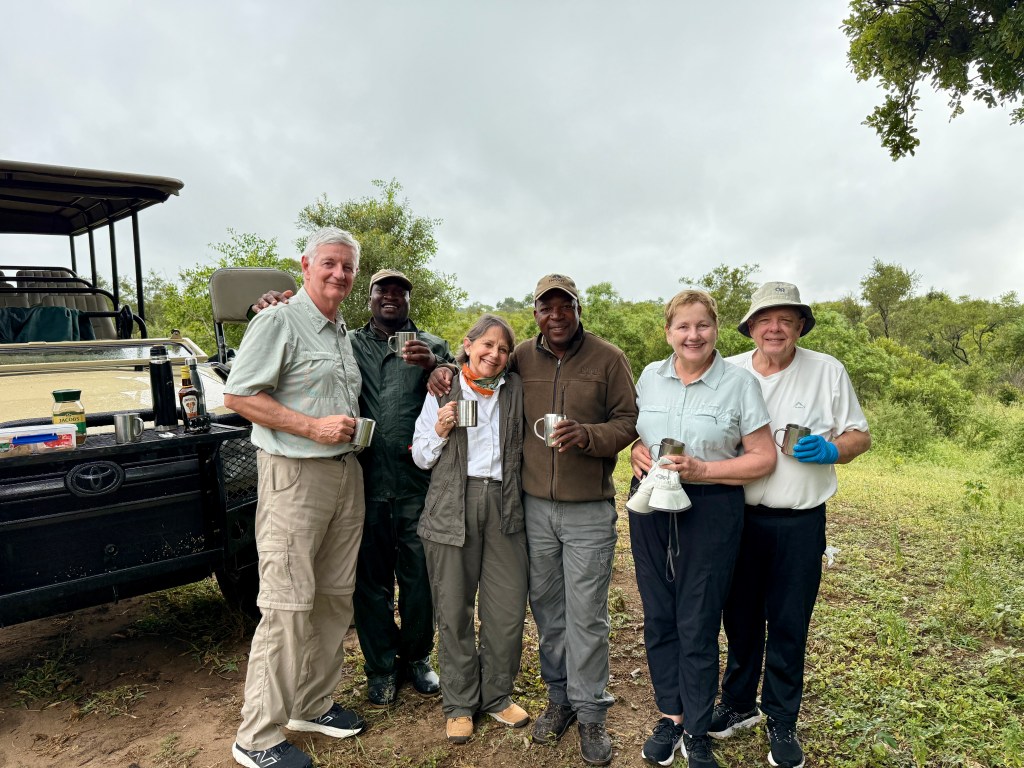
On a few of our drives, there were six of us in the vehicle, but most of the time it was just four of us which was ideal. Roger and Qolani are excellent at spotting wildlife, and often we were the only vehicle at a sighting, which gave us plenty of time with the animals. Roger would only radio in the sighting once we were finished viewing.
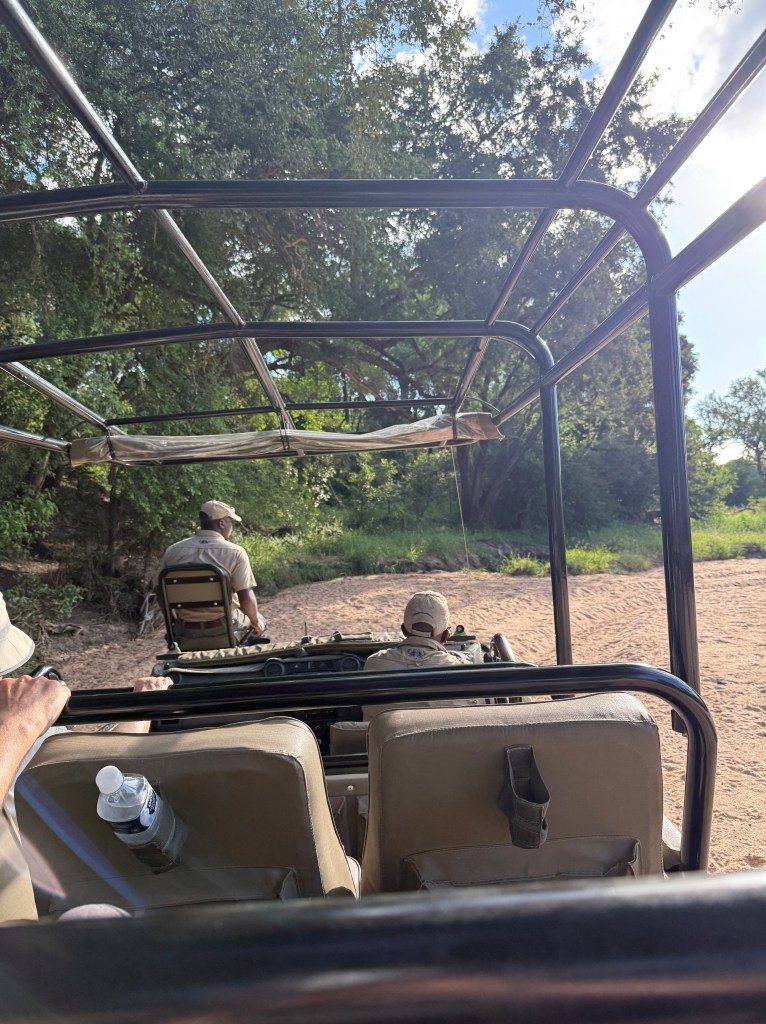
Since there are no fences between the private reserves and Kruger National Park the animals roam freely. As mentioned earlier, leopards are notoriously elusive, which means that sightings can be rare. You could go for days, or even the entire duration of your safari, without spotting one. Also, their territories can vary in size from 10 square kilometres, to several hundred square kilometres, thus it is difficult to find them.
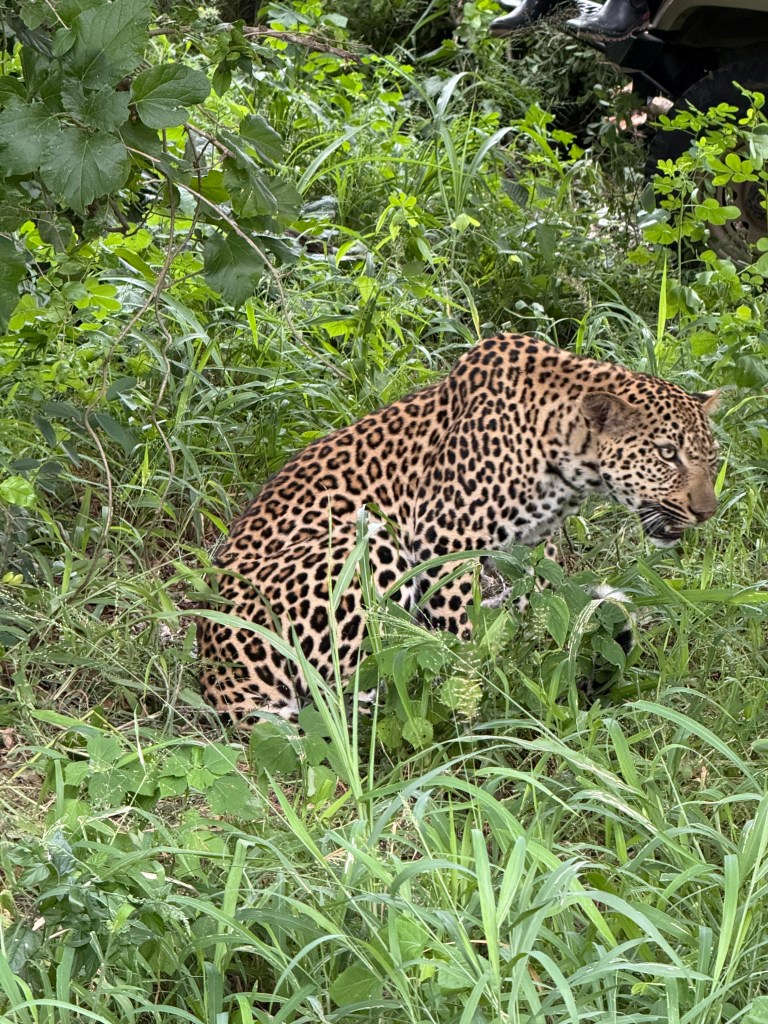
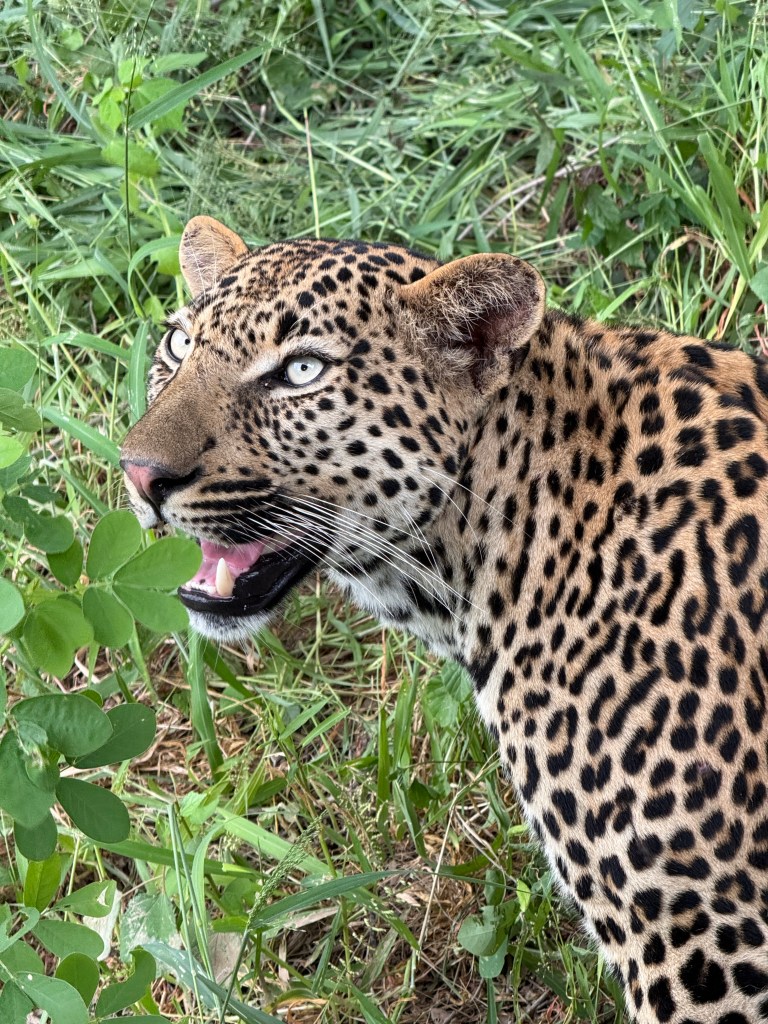
On our first drive Qolani spotted a young male leopard in the brush. No other trackers had spotted this young male, so we had ample time with him.
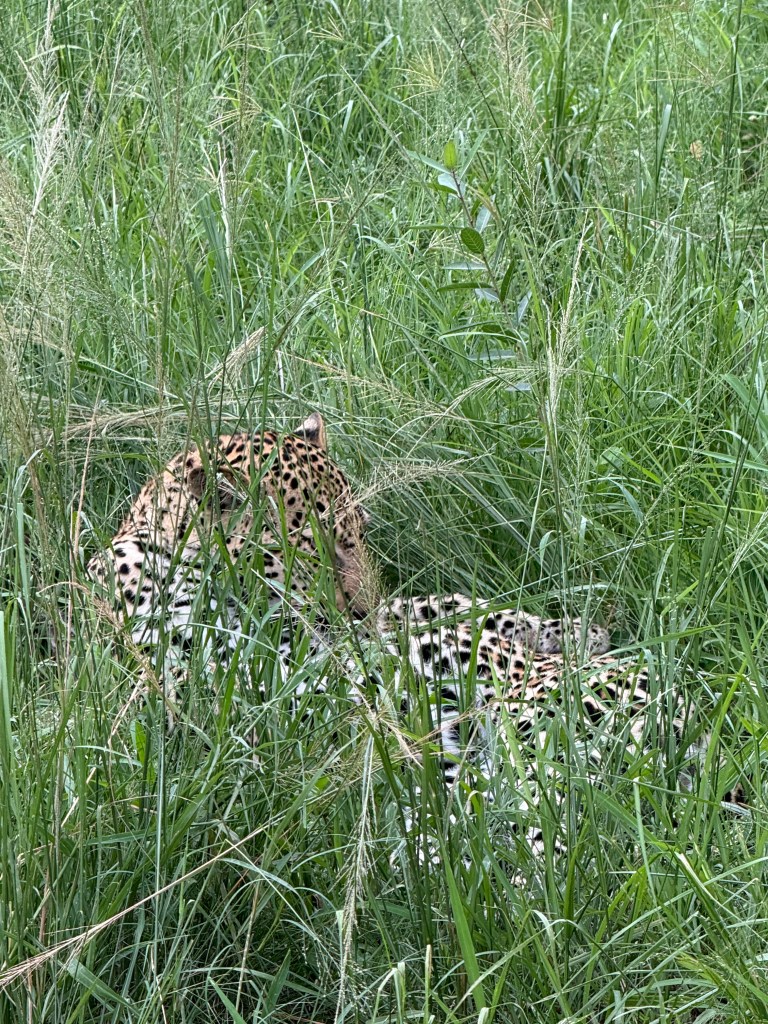
A male leopard will defend his territory against other males, even his own offspring, but will share it with females. This young male leopard was old enough to be independent, but not yet strong enough to fight for his own territory. Roger explained that this is a vulnerable time for him, as his father or other male leopards could kill him if they found him in their territory. This made him even more elusive.
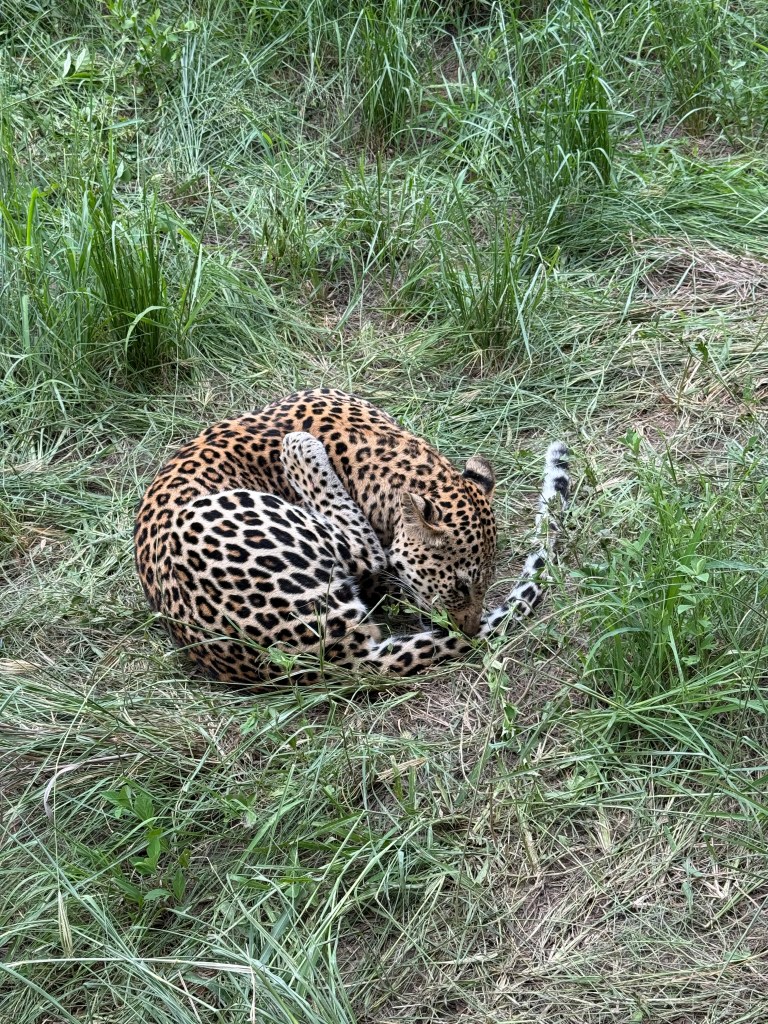
We were fortunate that this fellow decided to find a new spot which made it much easier for us to see him, yet he was still in the bush.
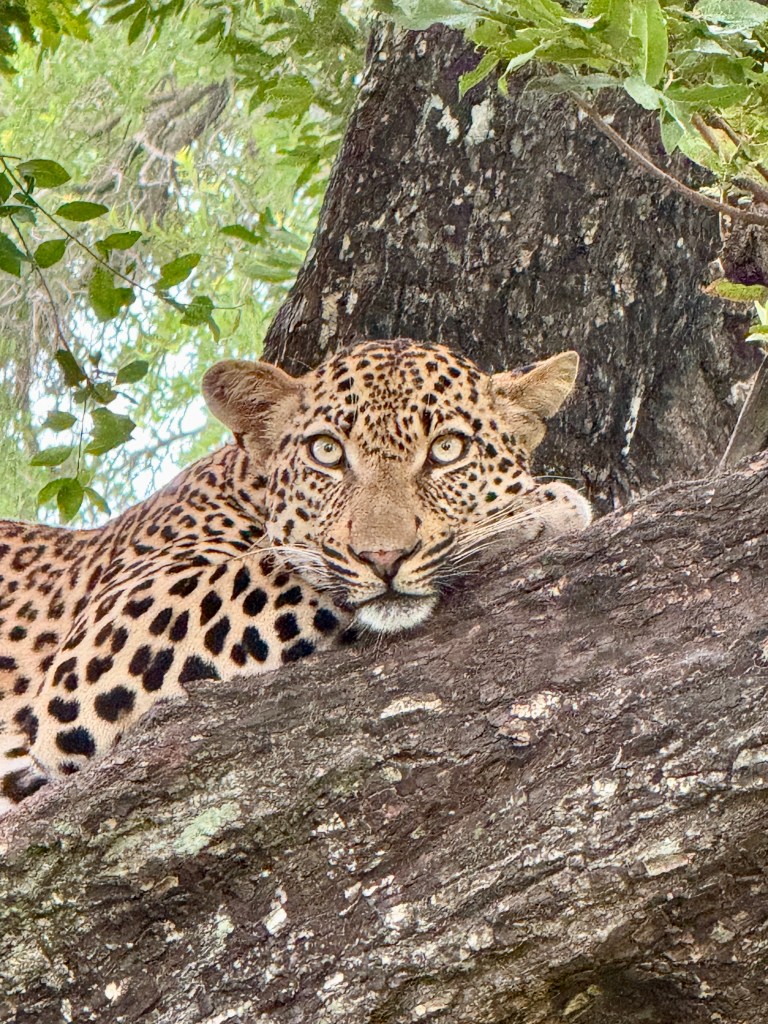
We didn’t see the young male leopard the next day, but the following day Qolani spotted it, this time resting in a tree. From the look of his full belly, it was clear he’d had a big meal the night before. We couldn’t have asked for a better backdrop to capture this moment.
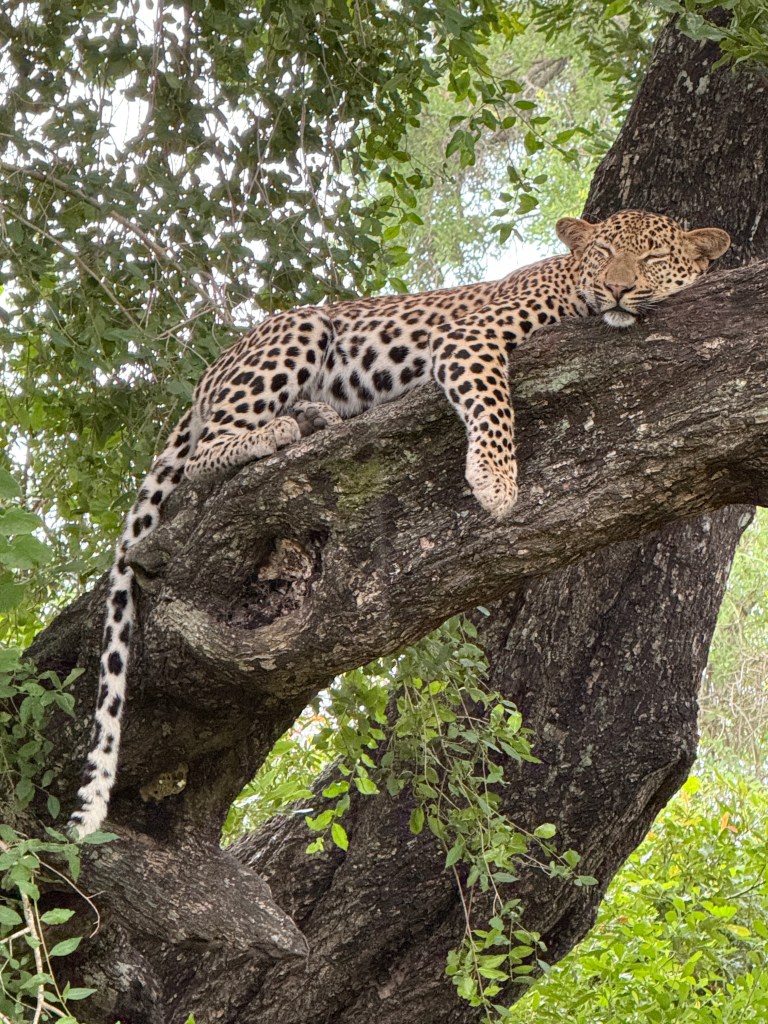
The leopard would open his eyes periodically but he was just too full to move much.
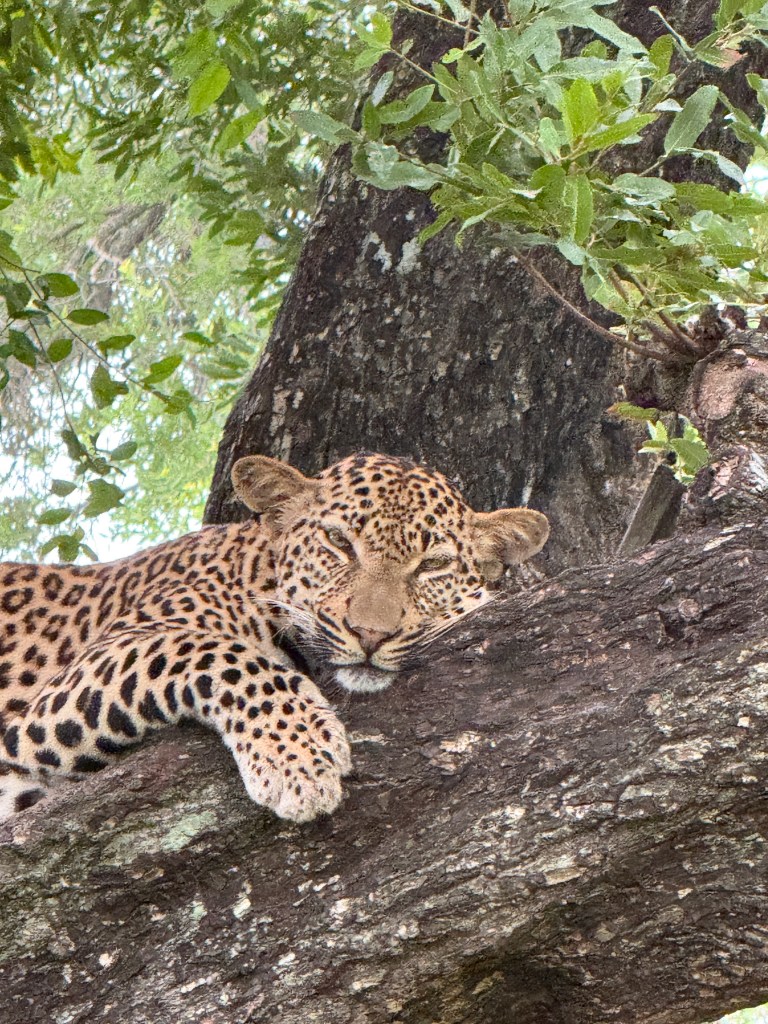
If we had to pick a favourite animal of all of the ones we see on safari, it would be the Leopard – such beautiful animals.
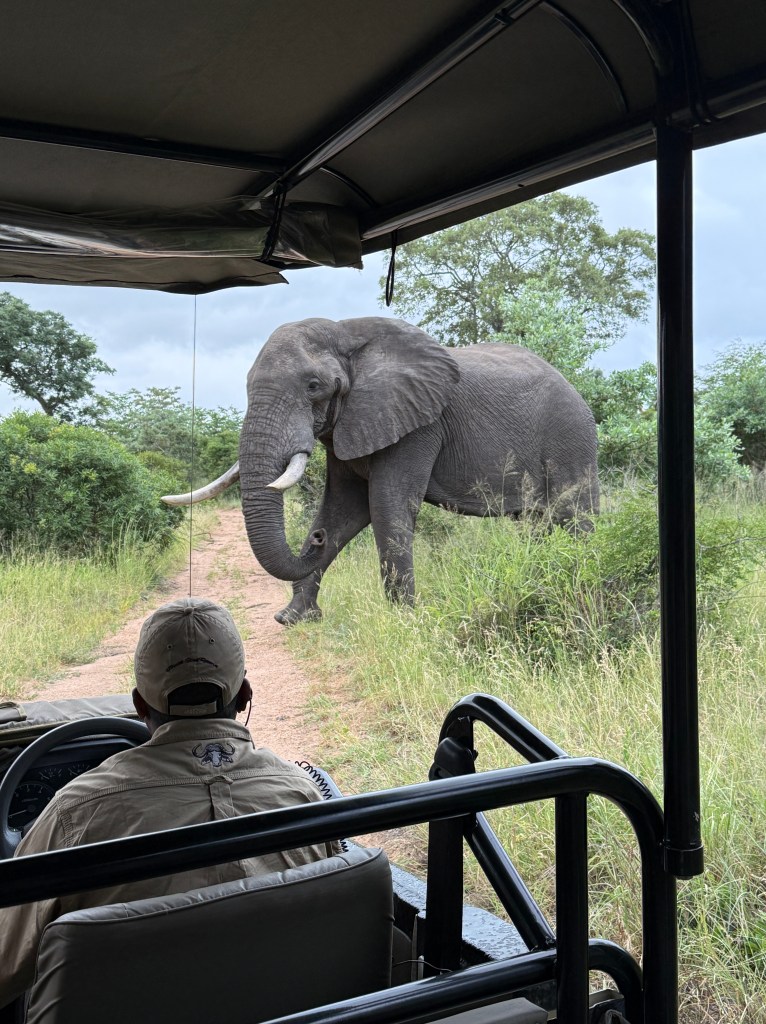
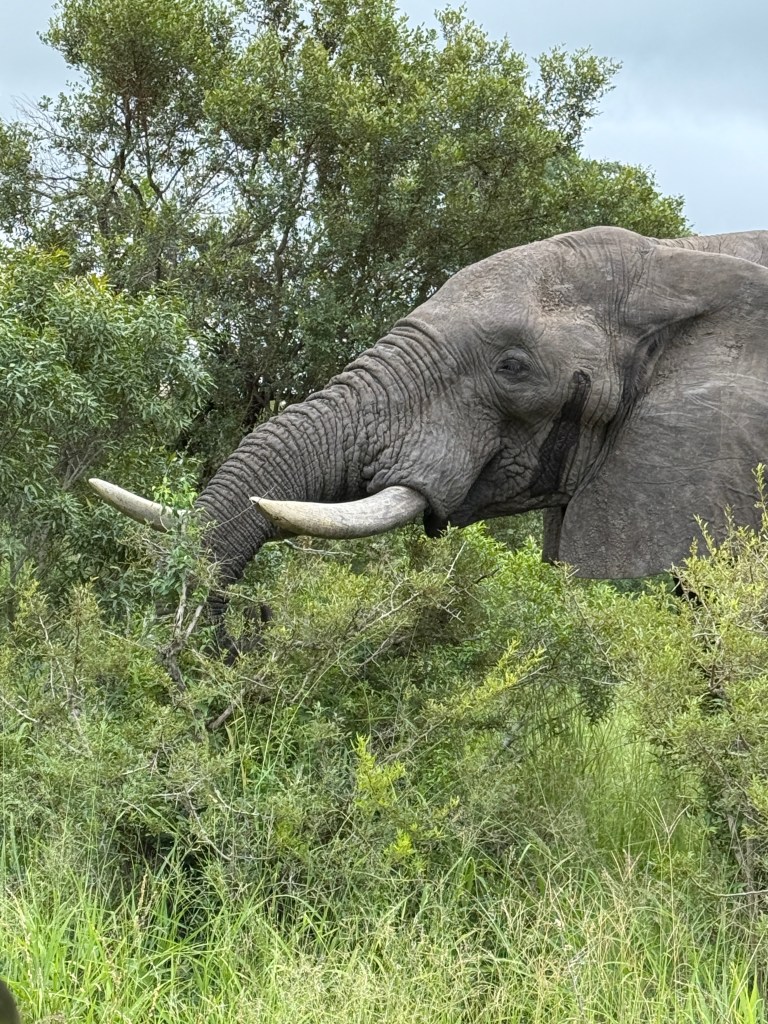
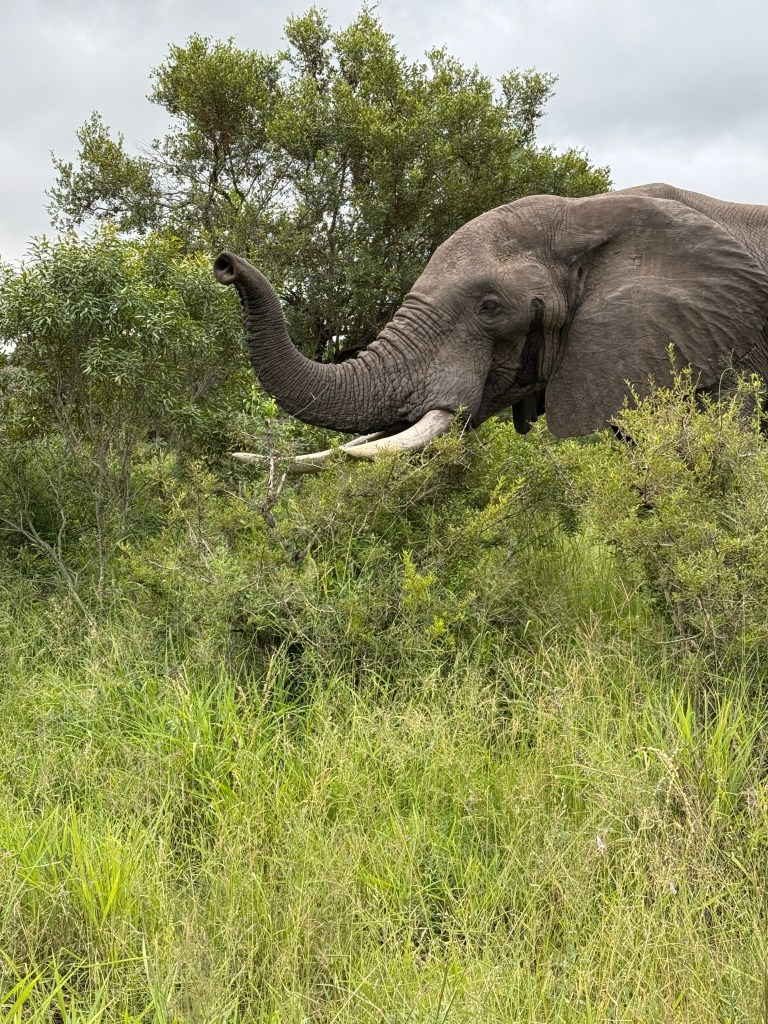
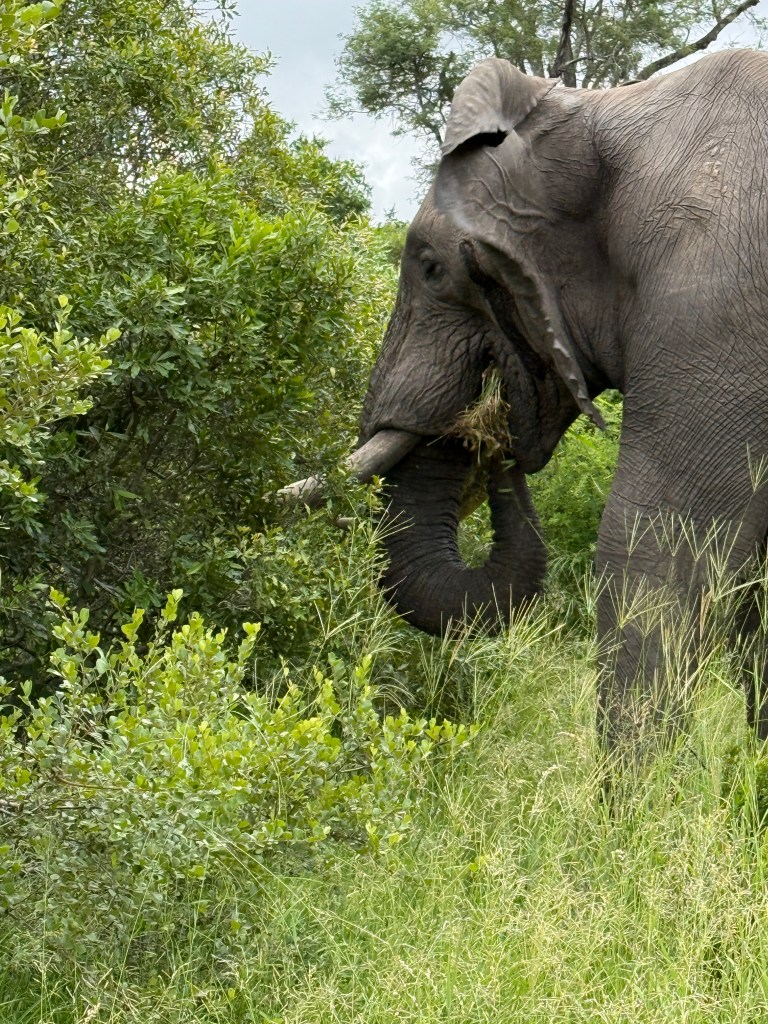
Numerous times we came across a herd of elephants and Roger would stop so that we could spend some time with them. Elephants can be intimidating because of their size and how close they can get to the safari vehicle.
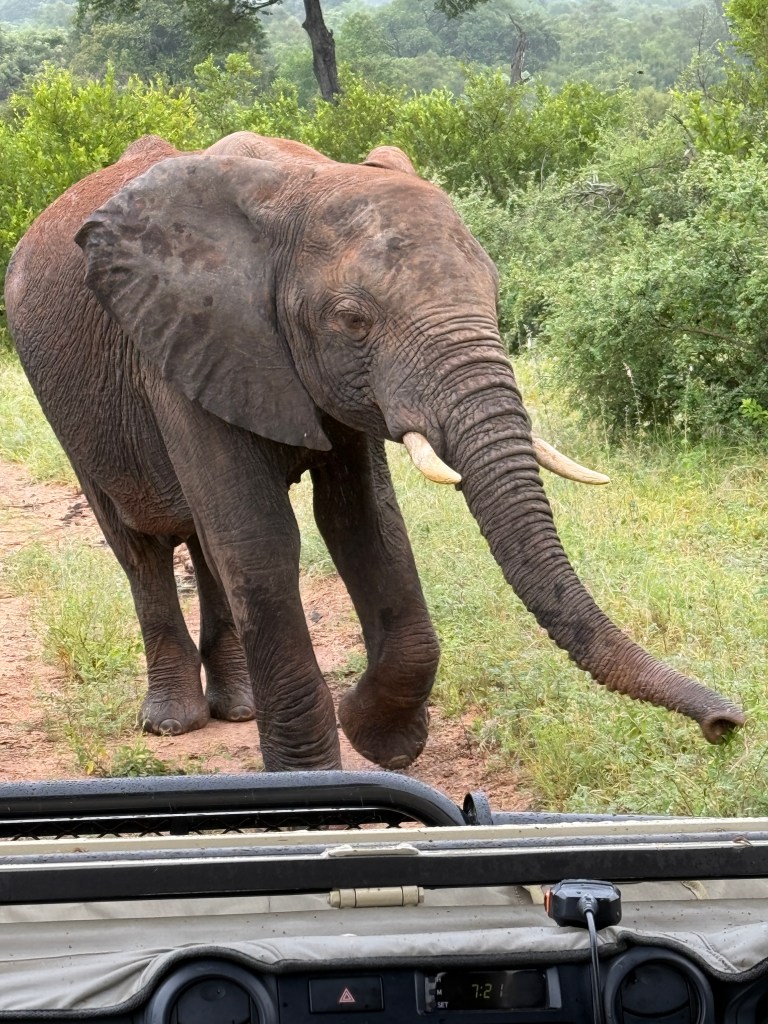
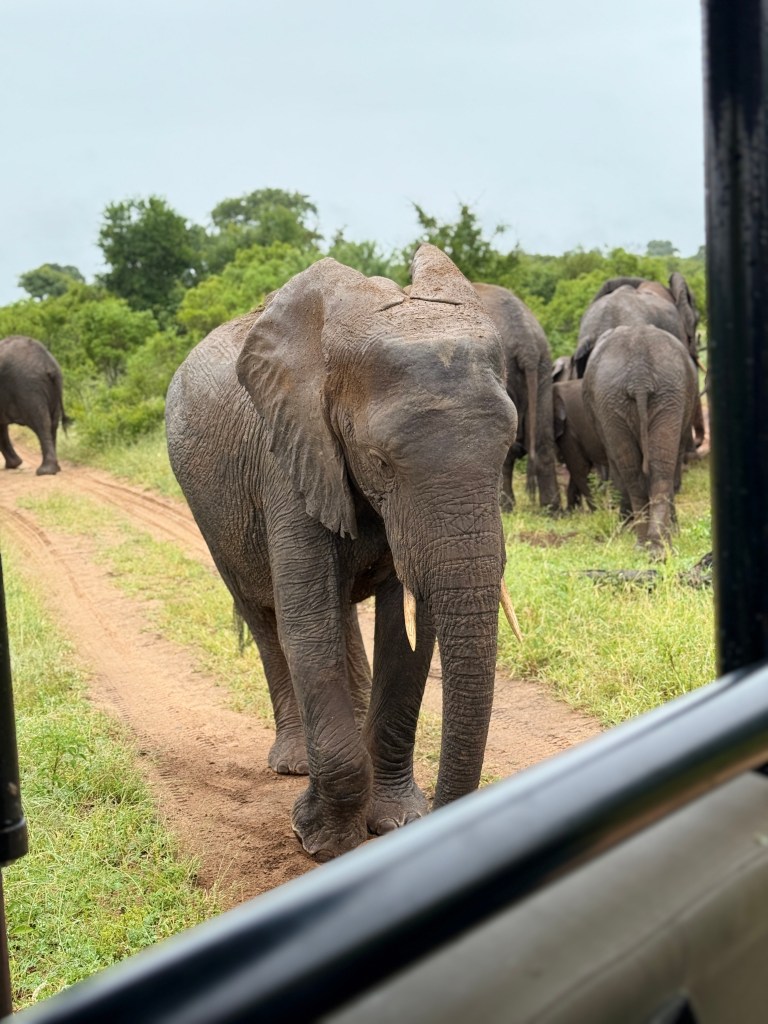
The African elephant is the largest land mammal, weighing up to 7 tonnes and standing up to 3.3 meters (~10 feet) at the shoulder. They can live to around 70 years. The tusks of older bulls are massive, often weighing between 50 and 60 kilograms.
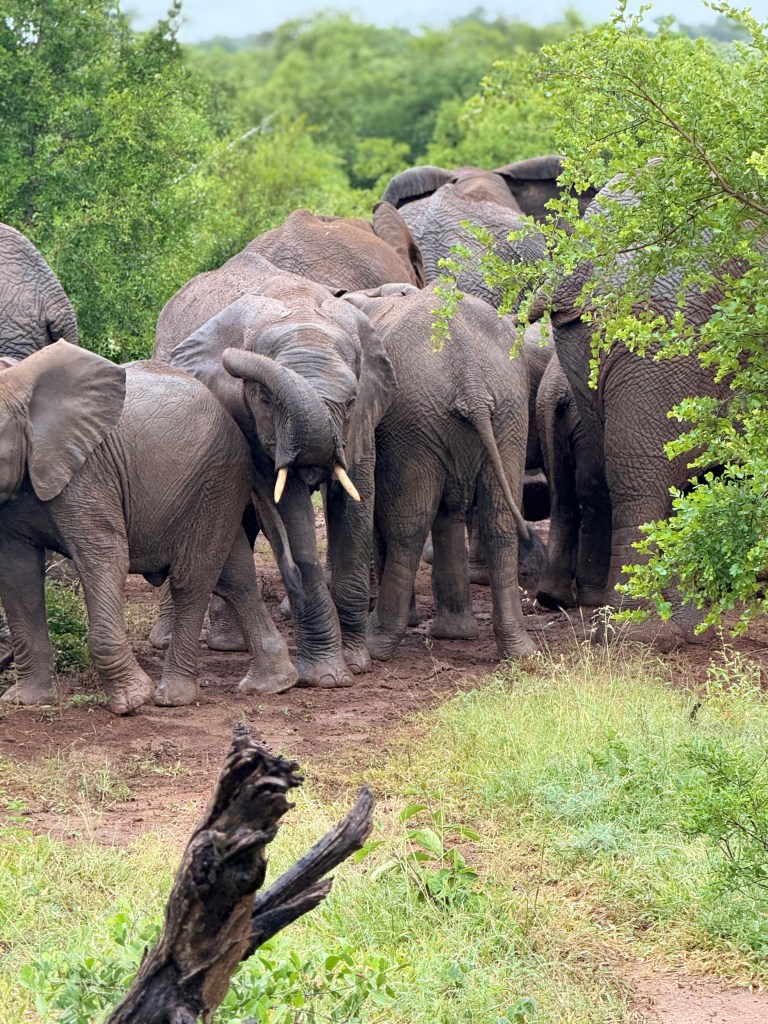
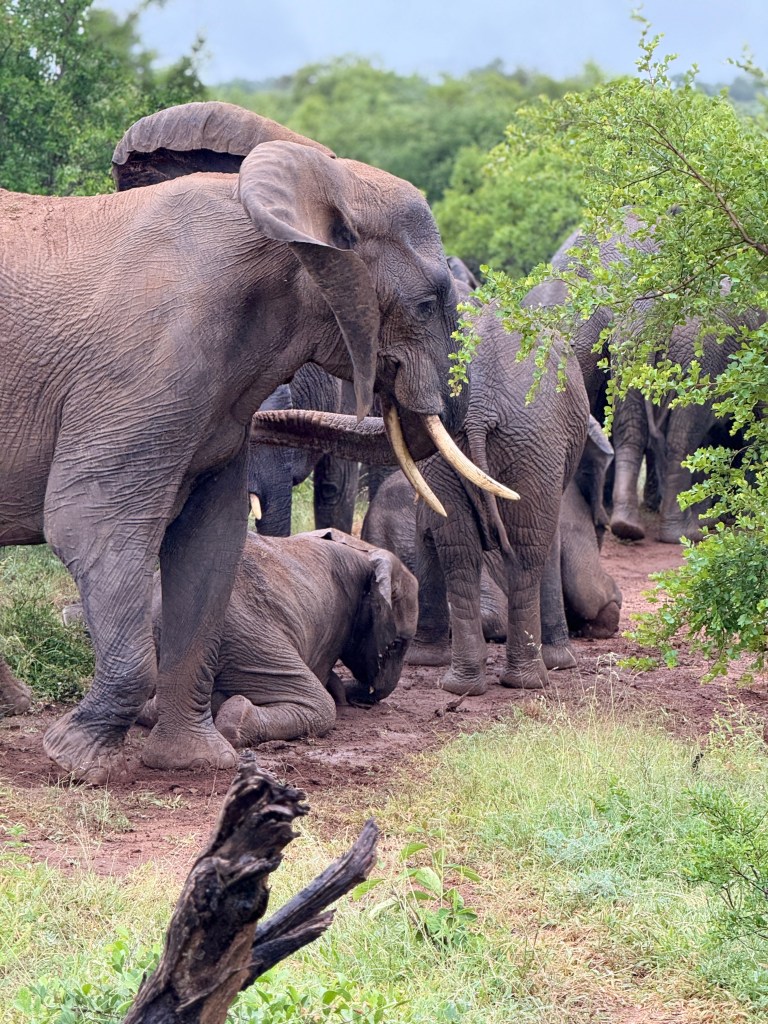
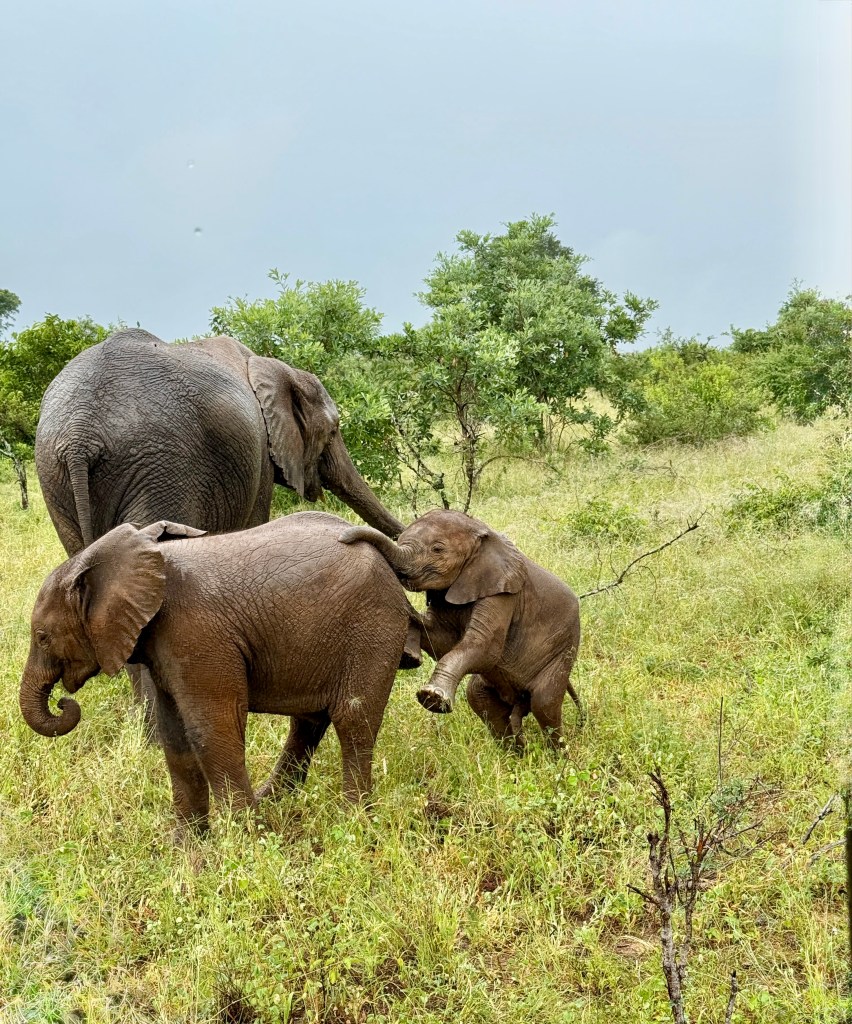
The elephants were cooling off by throwing dirt over their bodies. The big fellow below was too close for Larry to take a photo so this photo is with my iPhone. He was not bothered by us, nor did he care that some of the dirt was coming our way. It was so amazing to spend time with the elephants.
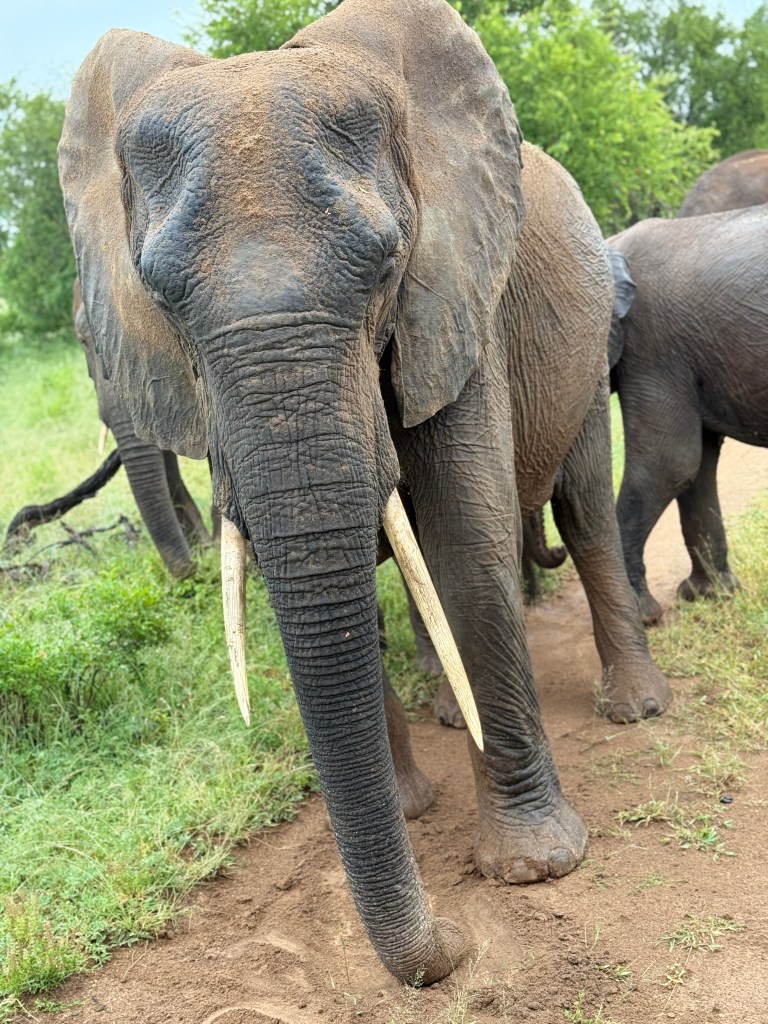
Elephants appear to be eating non-stop. We read that in a day an elephant consumes up to 272 kg (600 pounds) of grass, tender shoots and bark from trees. An adult Elephant can drink up to 200 litres of water in a single session.
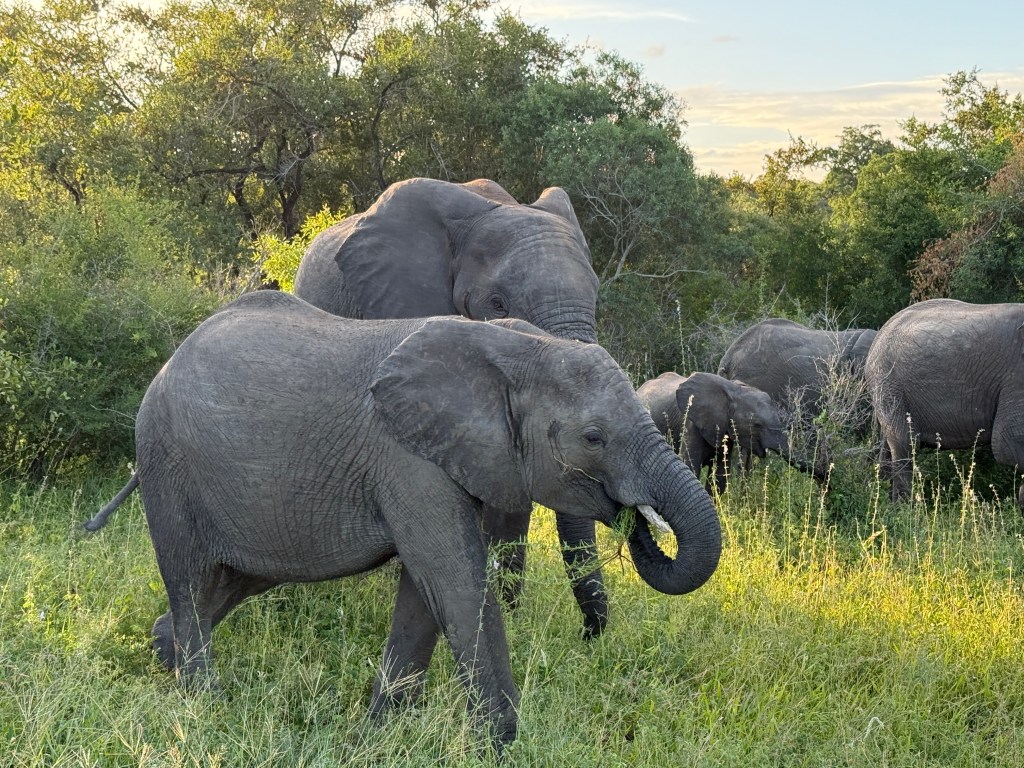
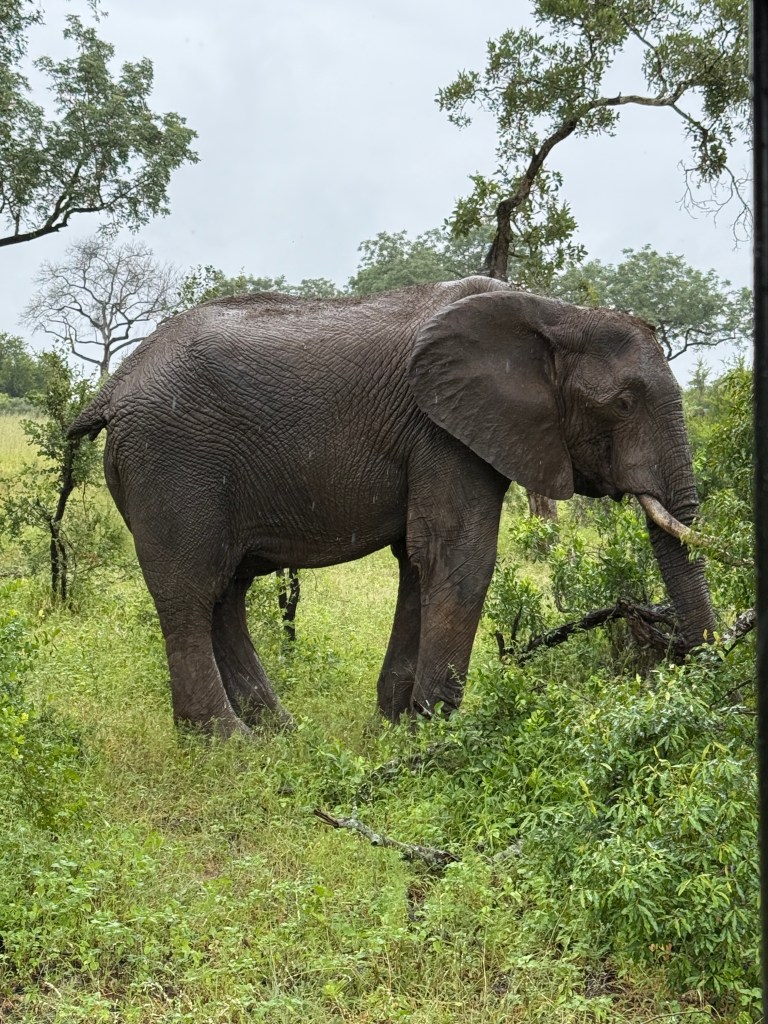
The young elephants love to play.
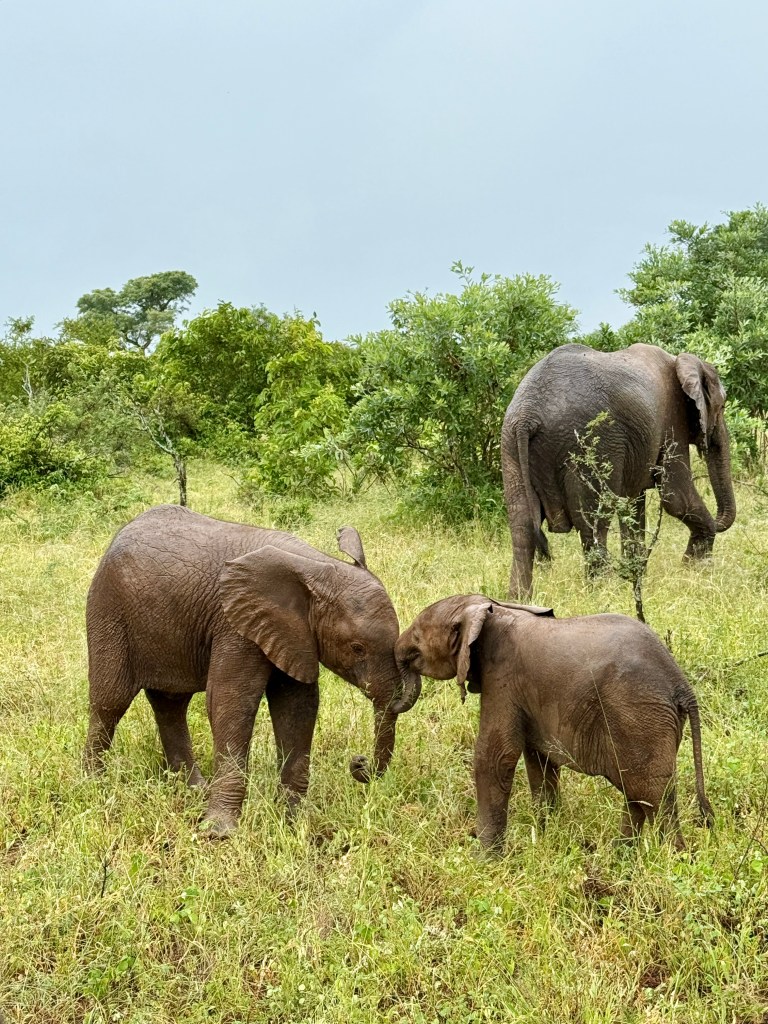
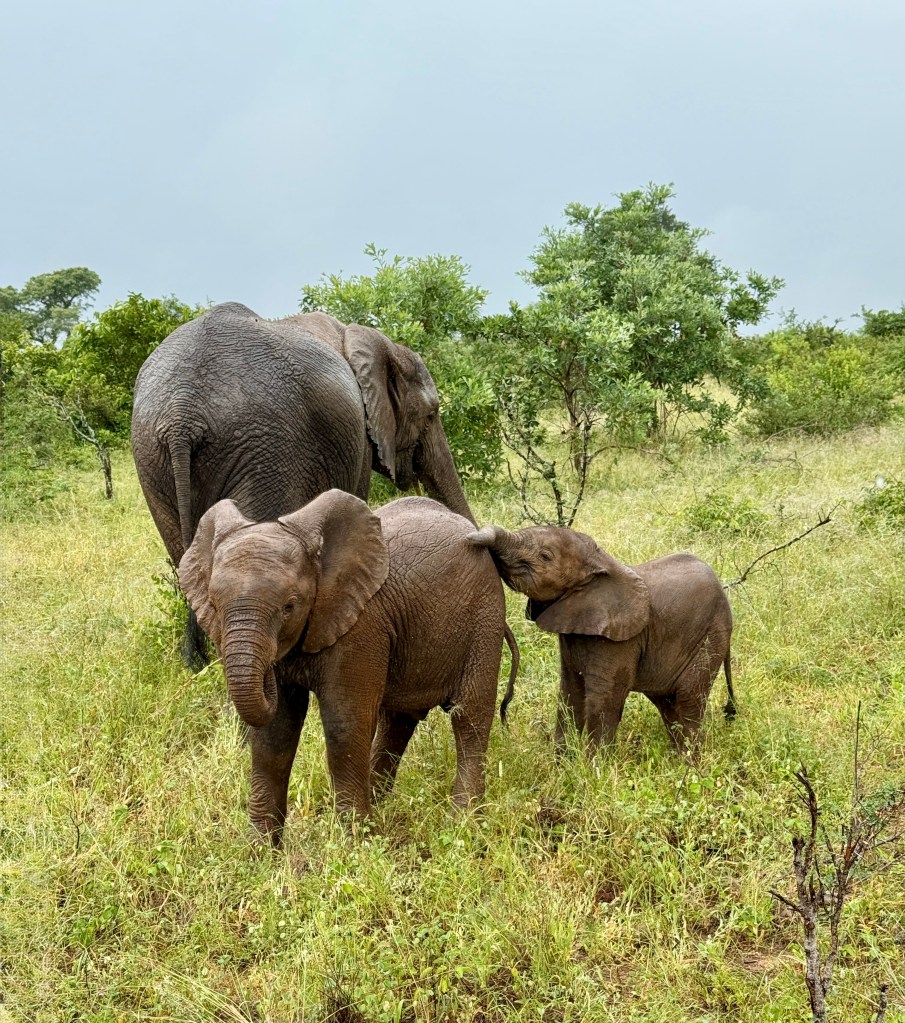
The hardest part of creating the blog is deciding which of the hundreds of photos we have to include.
I will dedicated several posts to Inyati so that I can post more regularly.
 ELF Travel To ...
Dear Ev
Your blog is not only beautiful but also very informative. Thank you so very much for taking the time to write, and keep them coming please!
LikeLike
Thanks Marie-Helen – your comments are much appreciated.
LikeLike
Gorgeous thank youSent from my iPhone
LikeLike
Thanks Anne. I think Joan would have enjoyed viewing the blog with you.
LikeLike
So close to nature. Pics are amazing.
LikeLike
So close – and often so close that the telephone is not needed. We are so fortunate to be able to experience the safari.
LikeLike
love the baby elephants but my favourite is always the leapard. Keep posting please.
LikeLike
Thanks Margaret!
LikeLike