Feb. 27 – 28, Day 4 & 5: Sapa lies 350km north west of Hanoi and is one of the major excursion destinations from Hanoi (the other popular one is Halong Bay). Sapa was much more touristy than we had expected with some bars and restaurants having their signs and menus in English only. Also, there were many local village women and children trying to sell us trinkets – they were persistent and followed us around. Sapa was so different than anywhere we have travelled in Vietnam thus far.
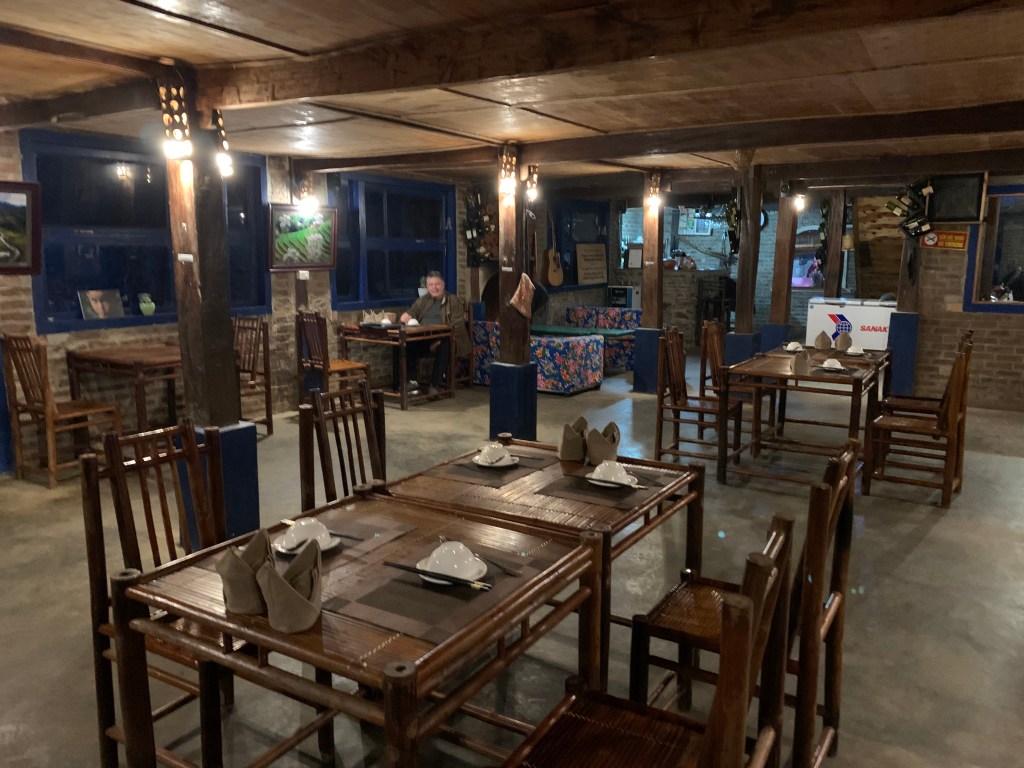
Our hotel, Aira, was out of the main tourist area and was more a “North American” style hotel with nice rooms and a good restaurant. We were able to get our laundry done and catch up on emails and our blog while we were there.
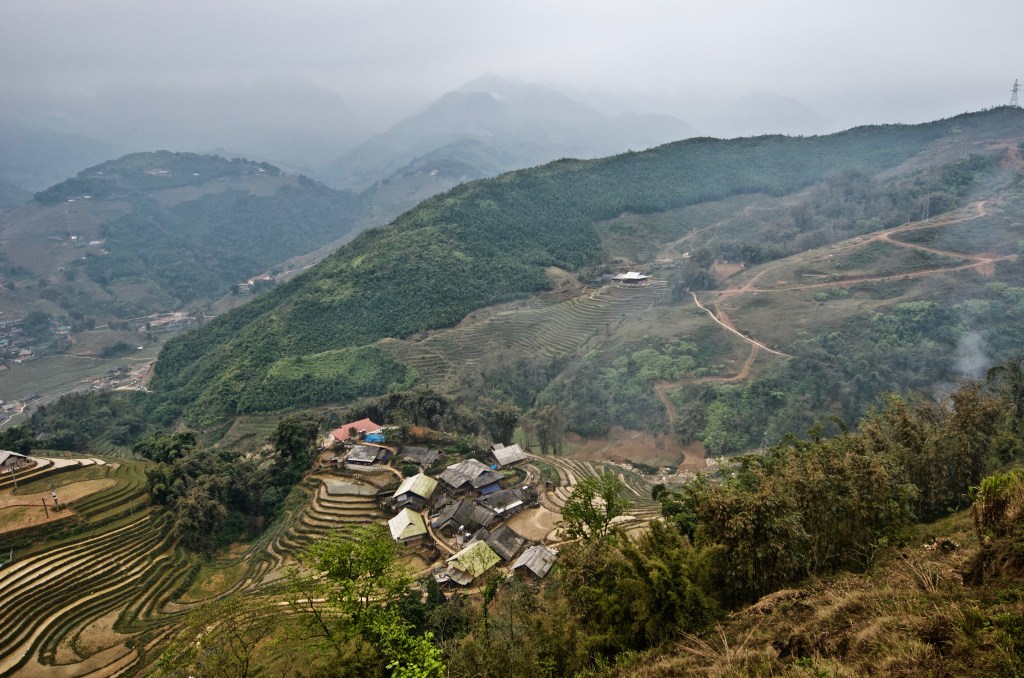
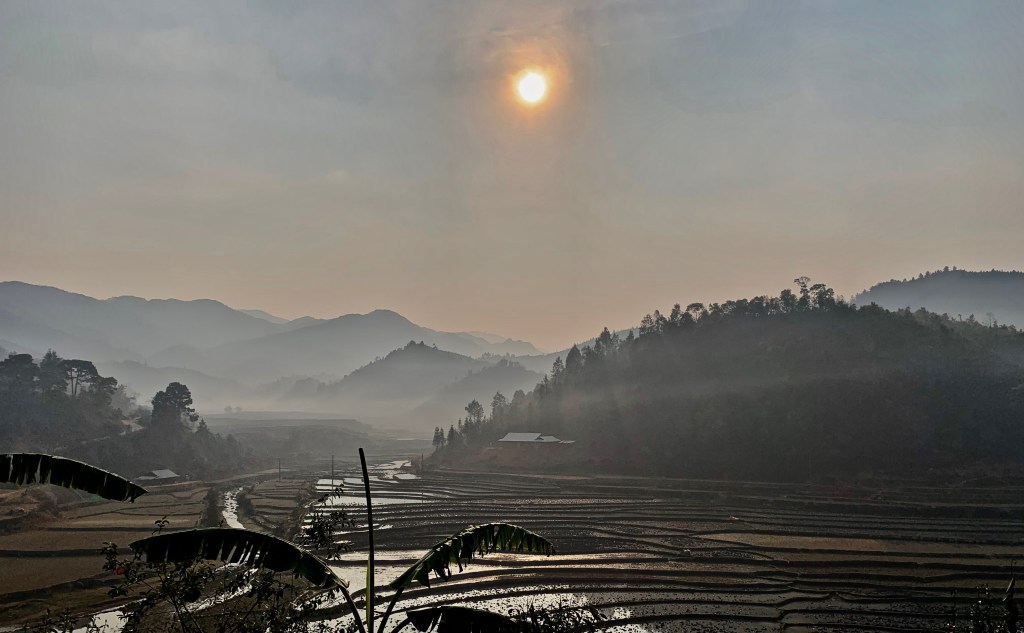
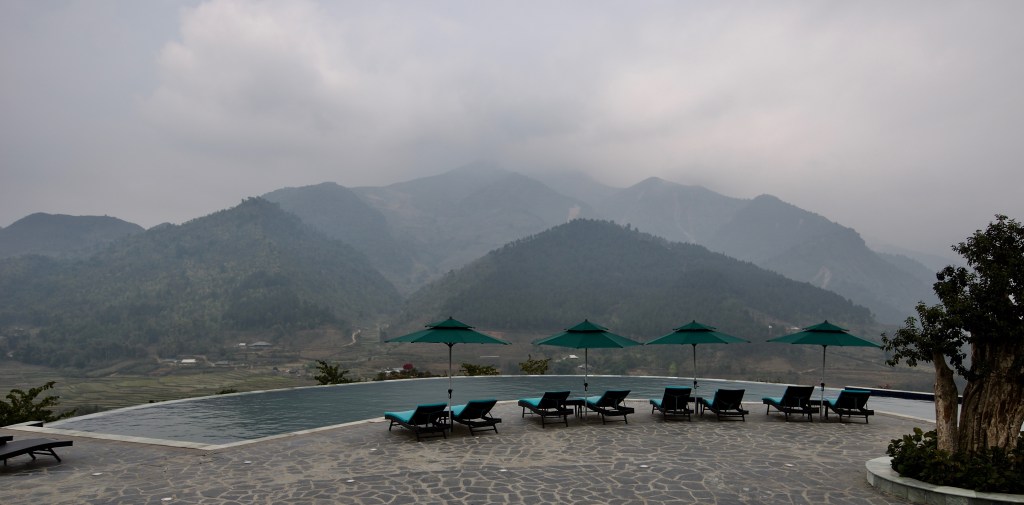
Sapa has the highest peak in Vietnam – Fan Si Pan, which 10,311 feet above sea level. Although the terraced rice paddies are the main attraction, often you can’t see them for the thick fog because of the high altitude. We had a balcony facing the mountains and the view is said to be beautiful, but we could barely see across the road which was a bit disappointing, but not a surprise for Sapa.
It was interesting to see Sapa as we have heard so much about it, but we were glad to once again head out to the “roads less travelled”.
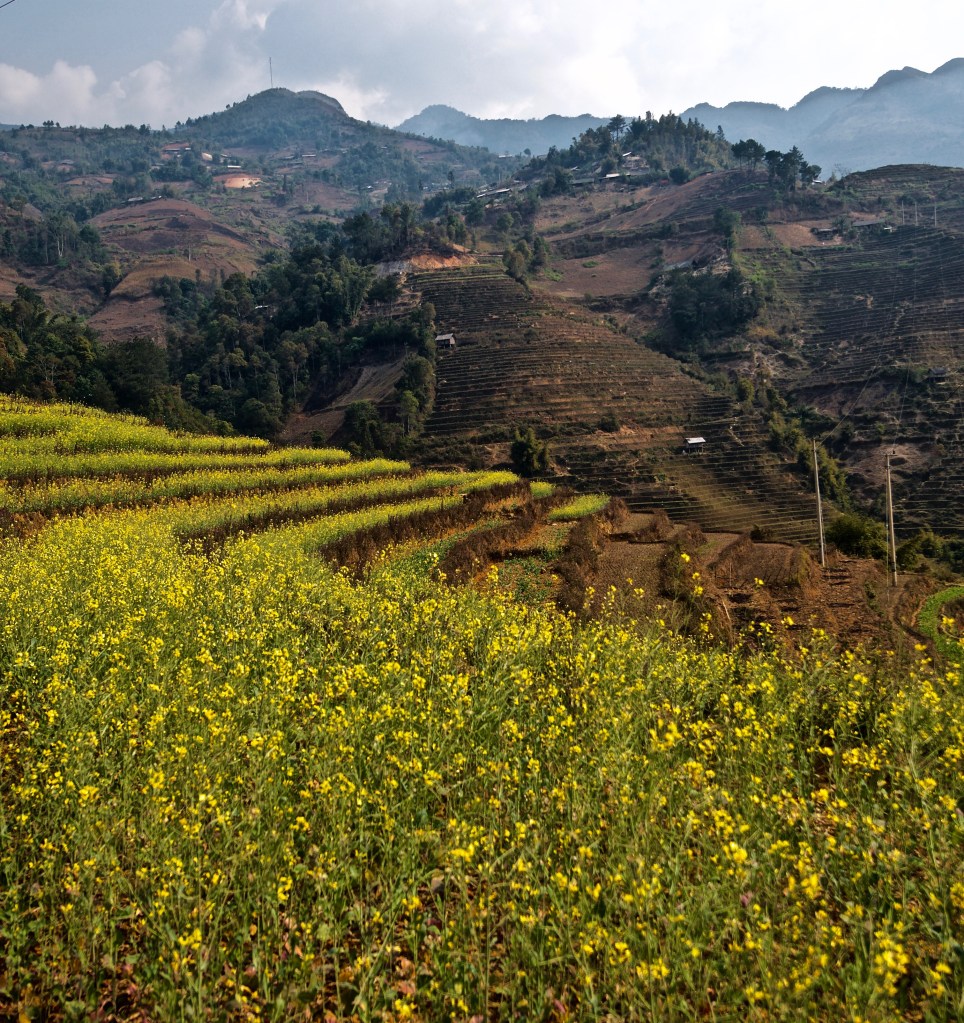
Our pictures include a few more stops we made in the Mu Cang Chai area before we headed to Sapa as well as our favourite spots in Sapa and the nearby village of Tavan.
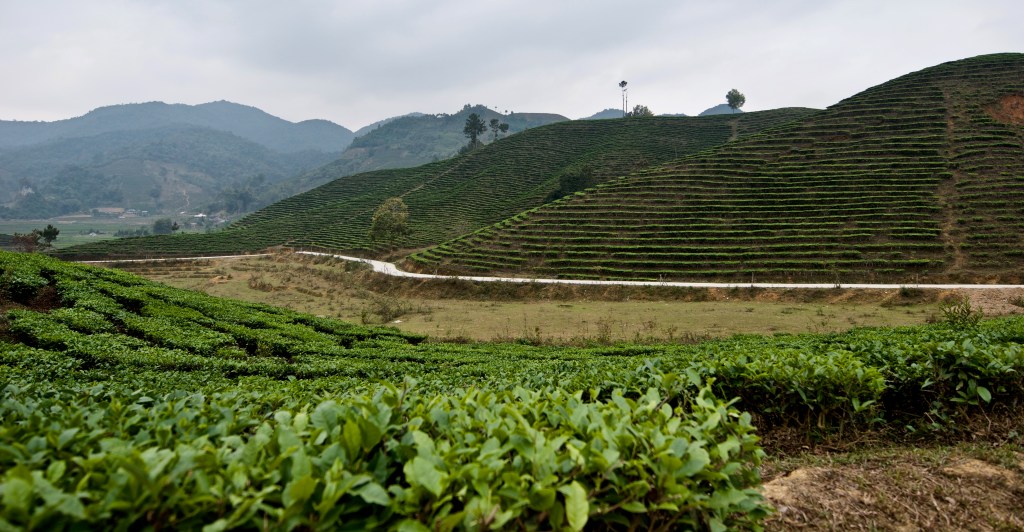
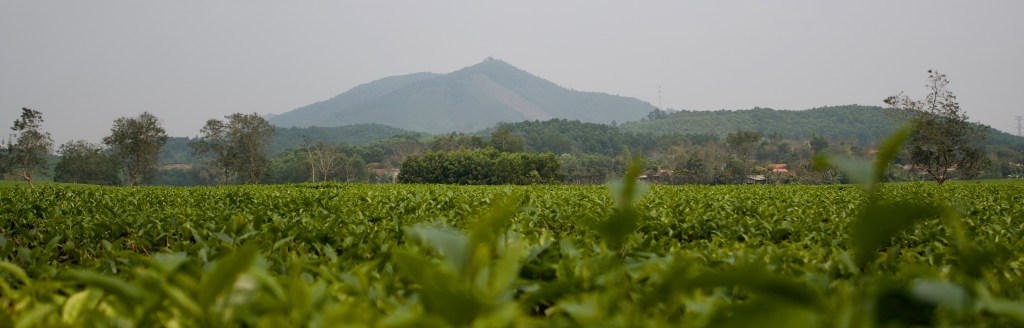
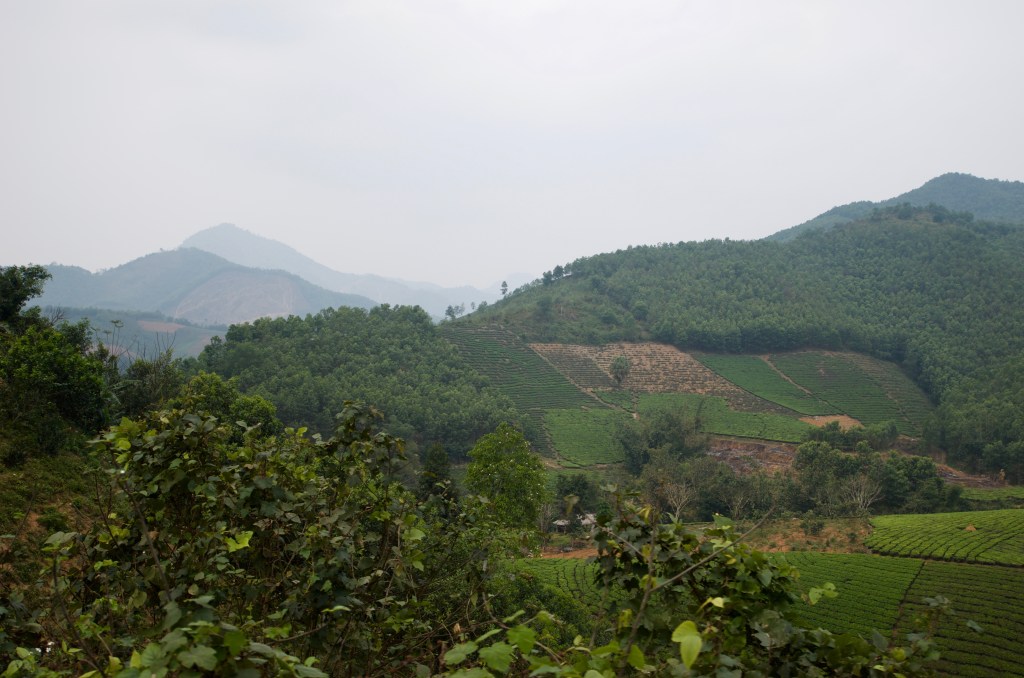
Leaving Mu Cang ChaiLeaving Mu Cang ChaiTea farm on the way to Sapa
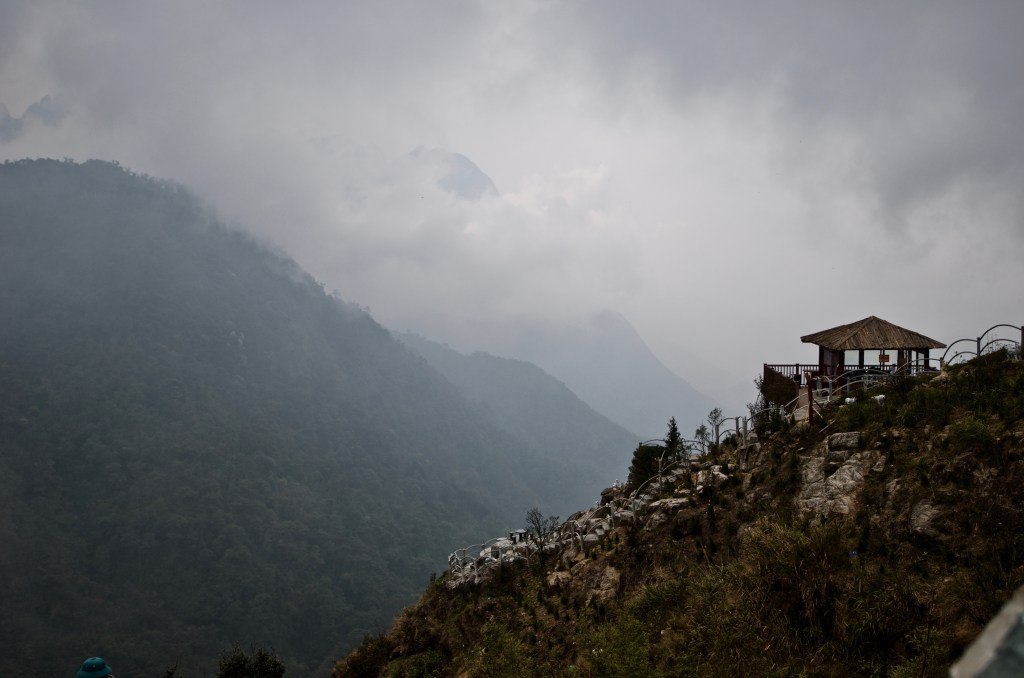
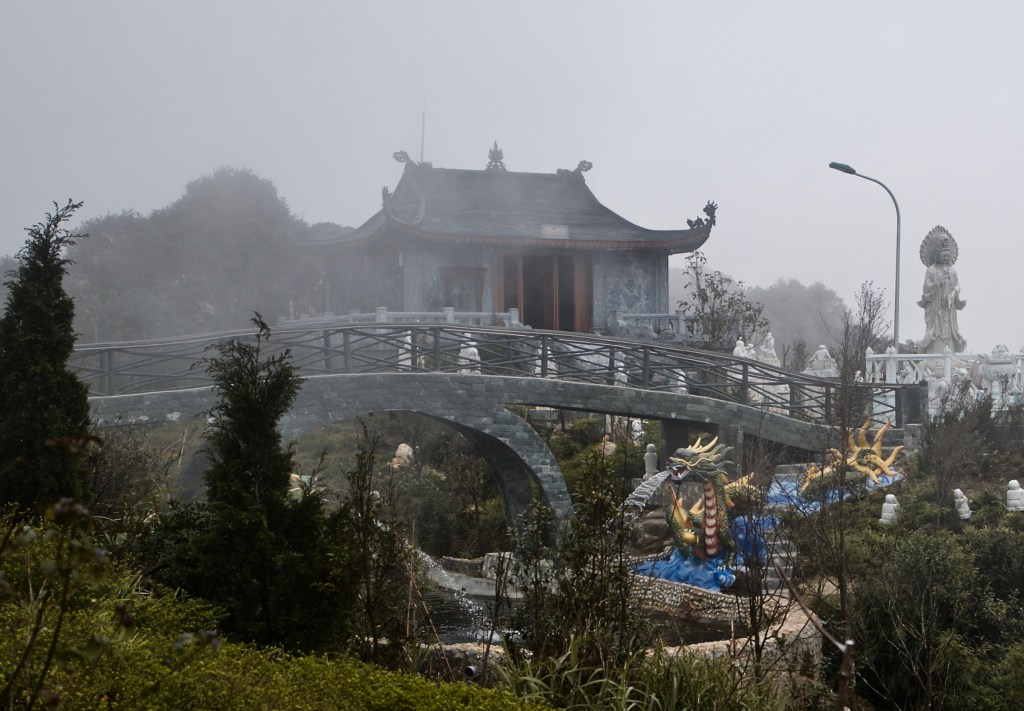
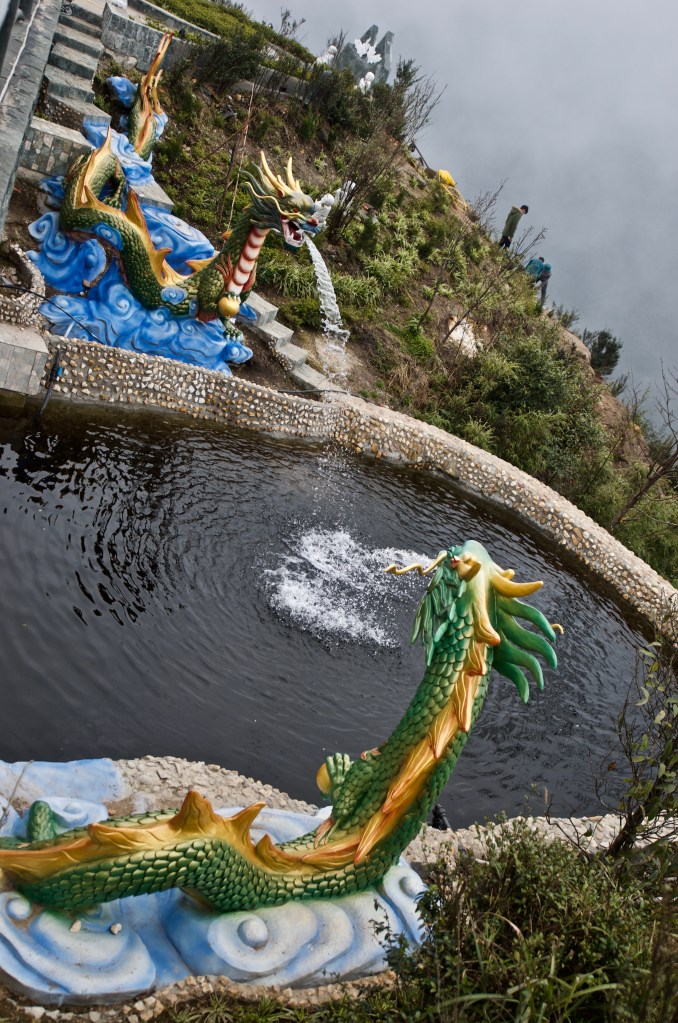
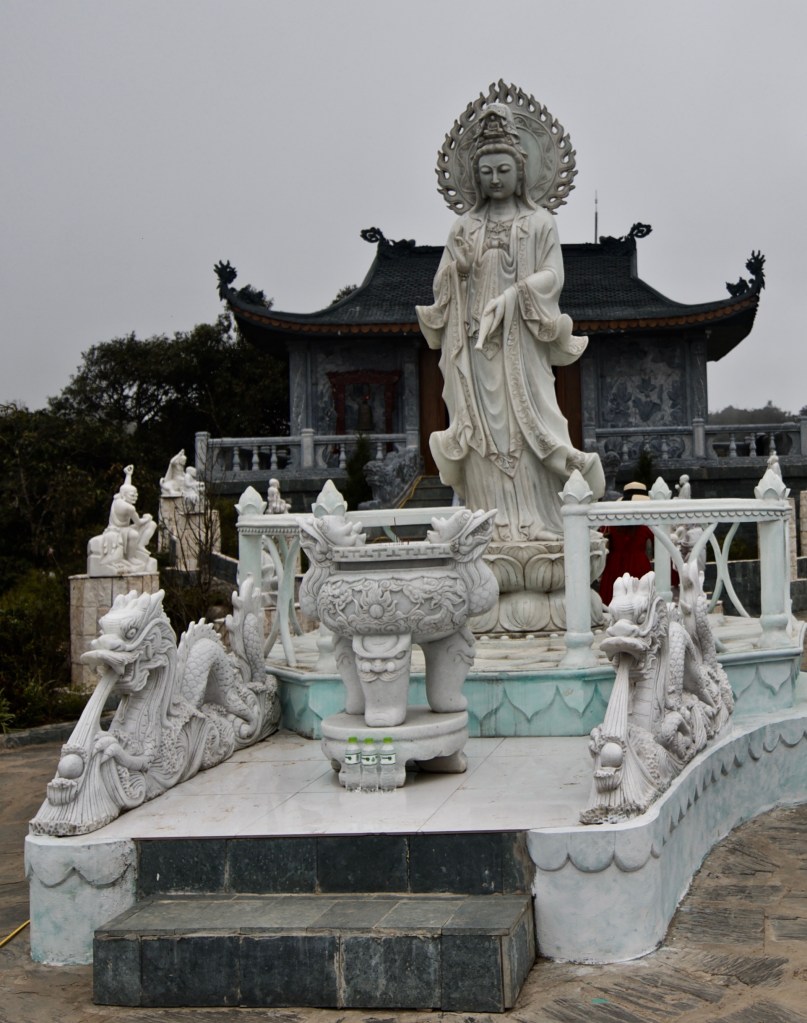
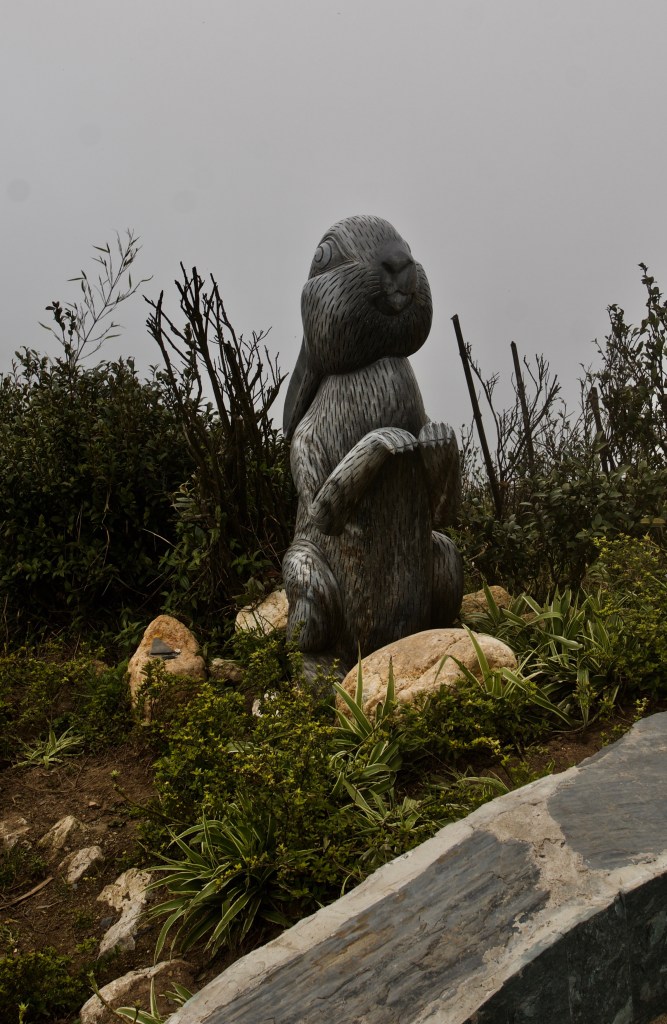
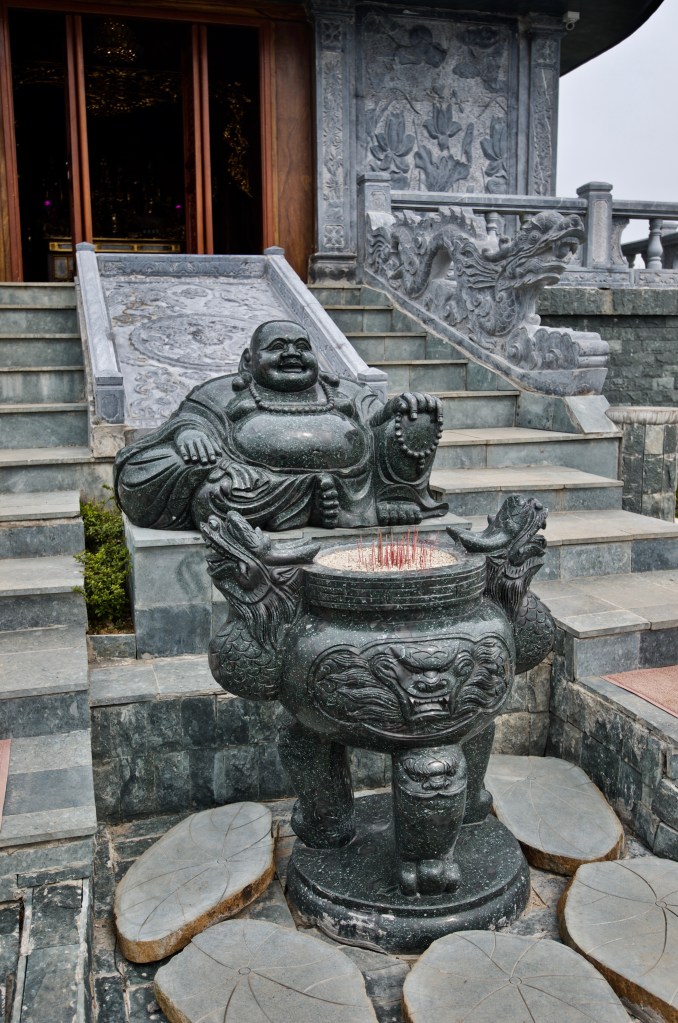
On the outskirts of Sapa is Heaven’s Gate – a lookout with an Asian garden. On a clear day the views from the lookout are said to be beautiful. Unfortunately it was foggy when we were there so most of our pictures are of the gardens.
Heaven’s Gate – part way up to the lookoutAsian garden at Heaven’s GateI loved this rabbit in the gardens at Heaven’s GateOn the road to Sapa
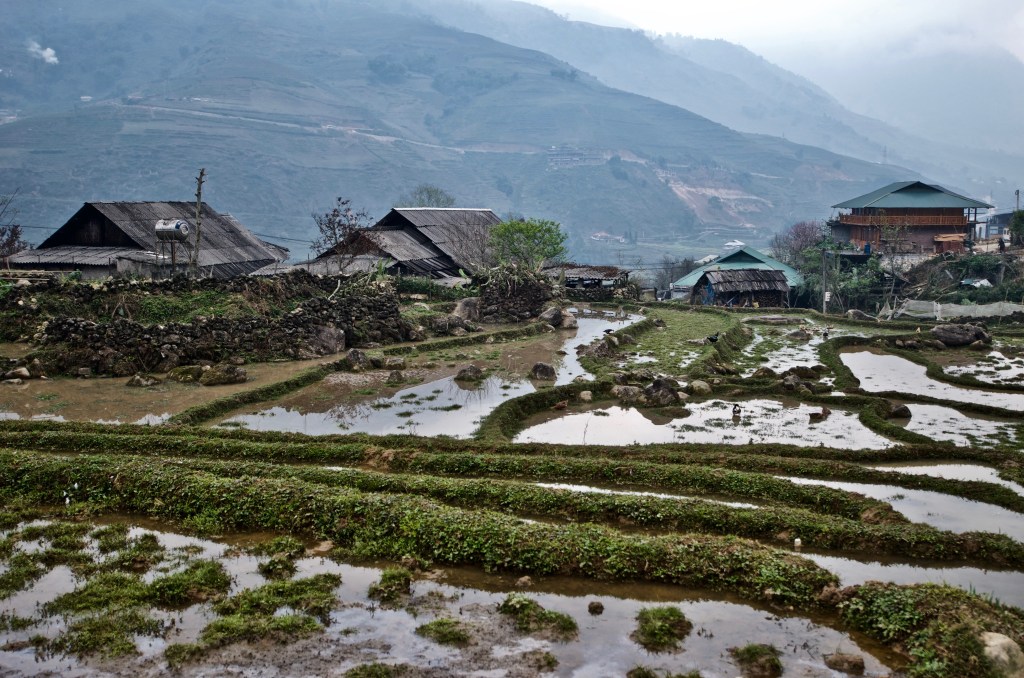
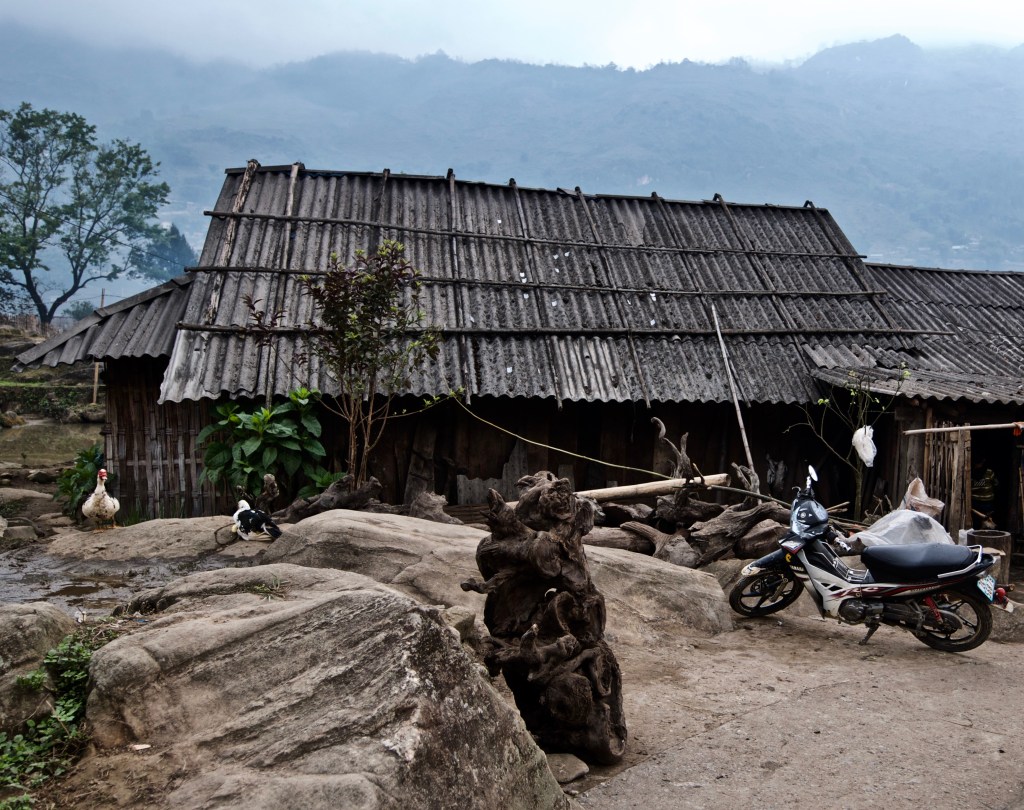
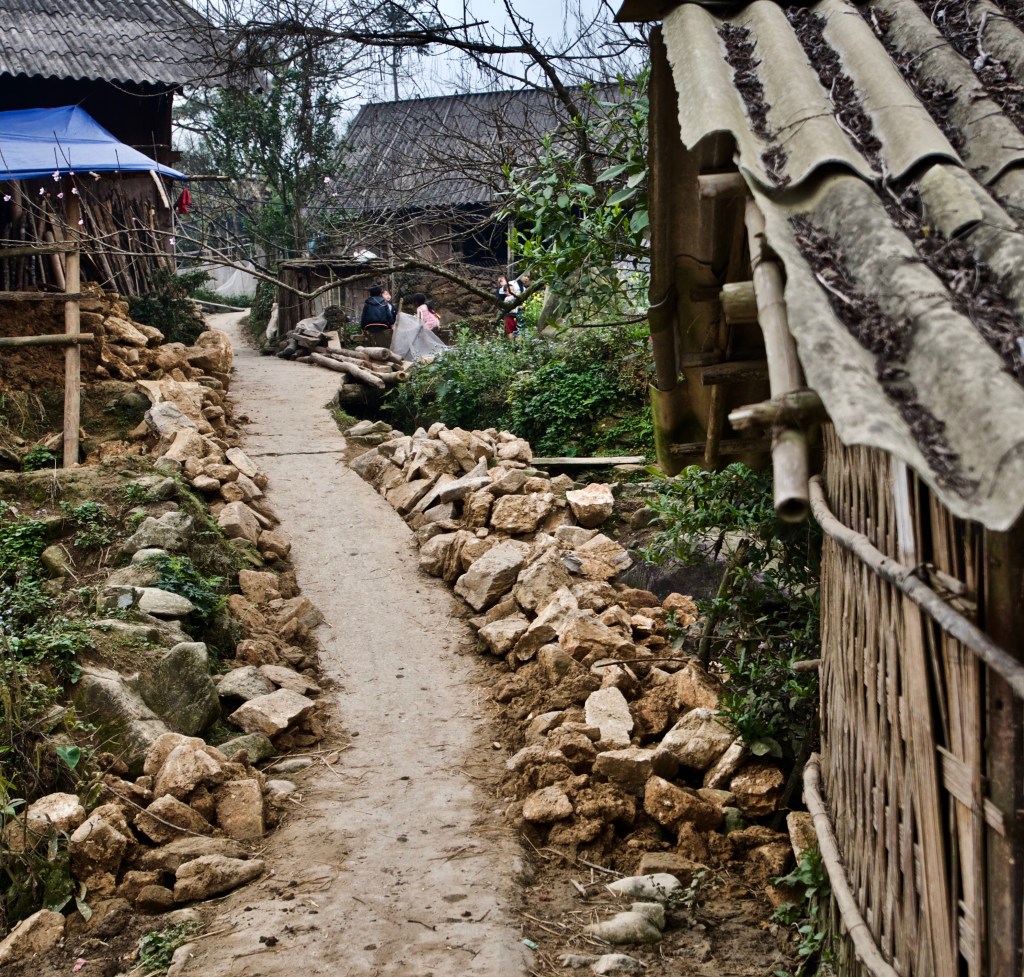
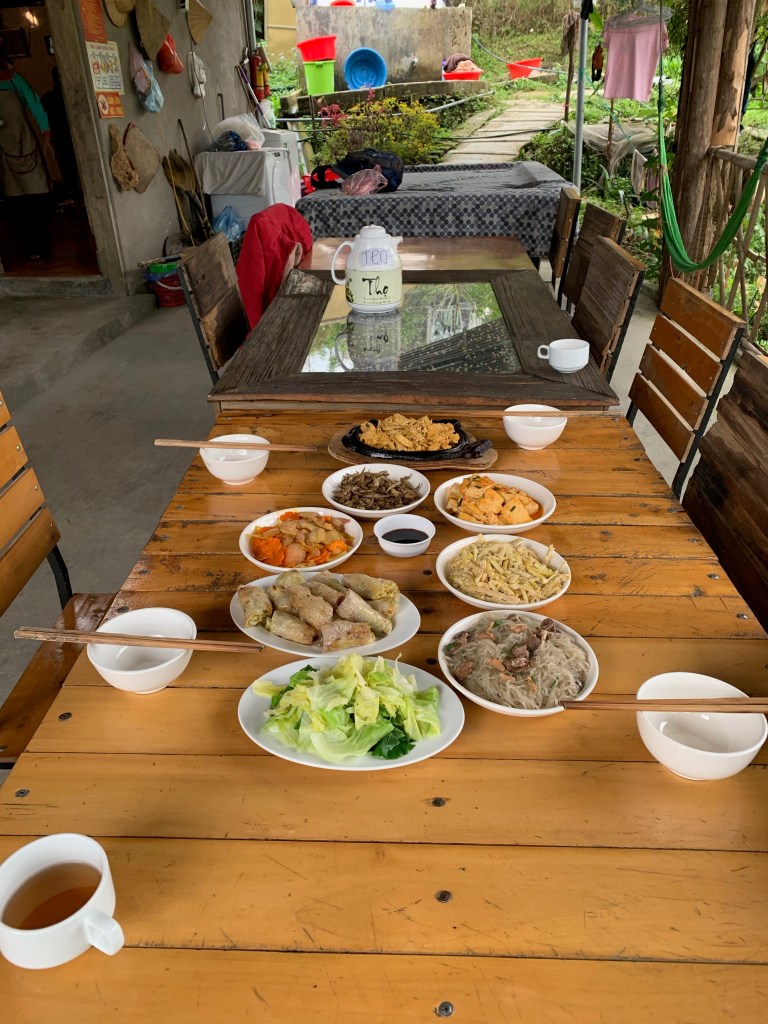
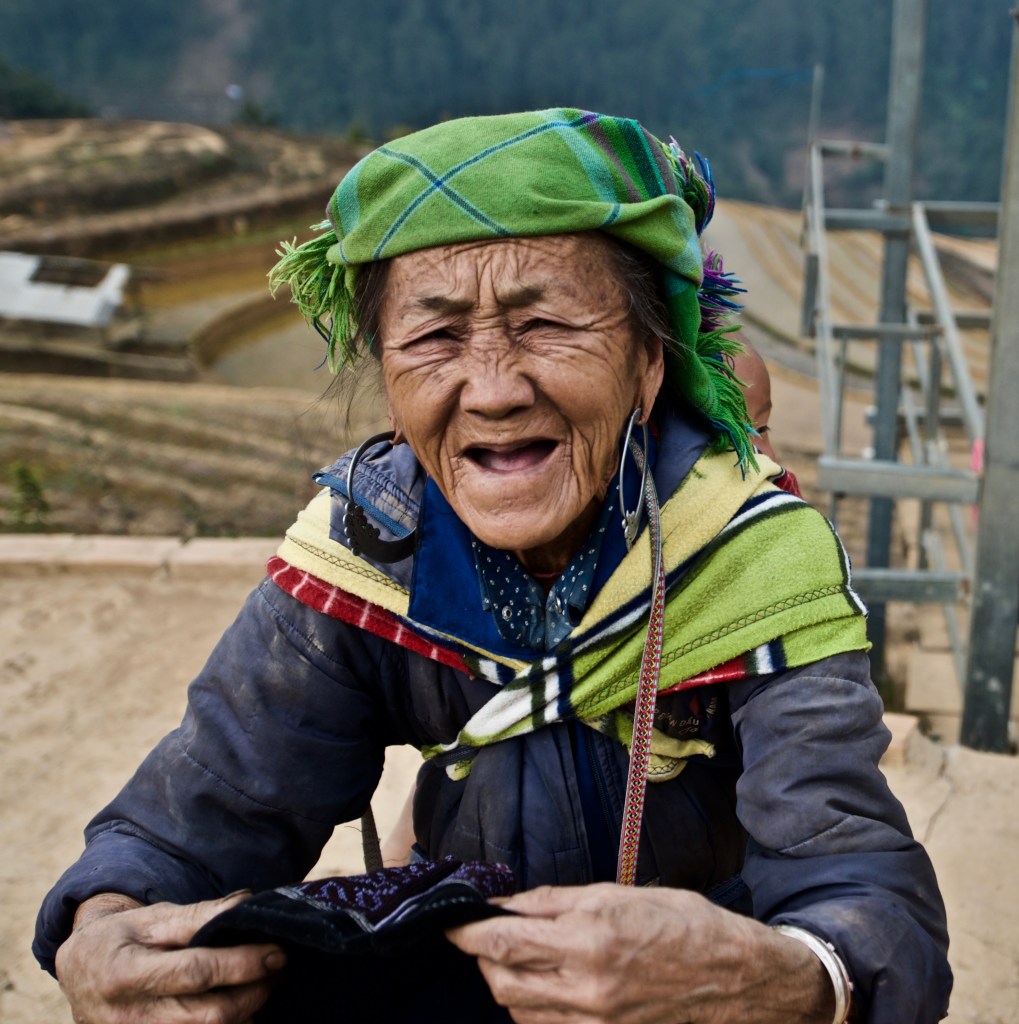
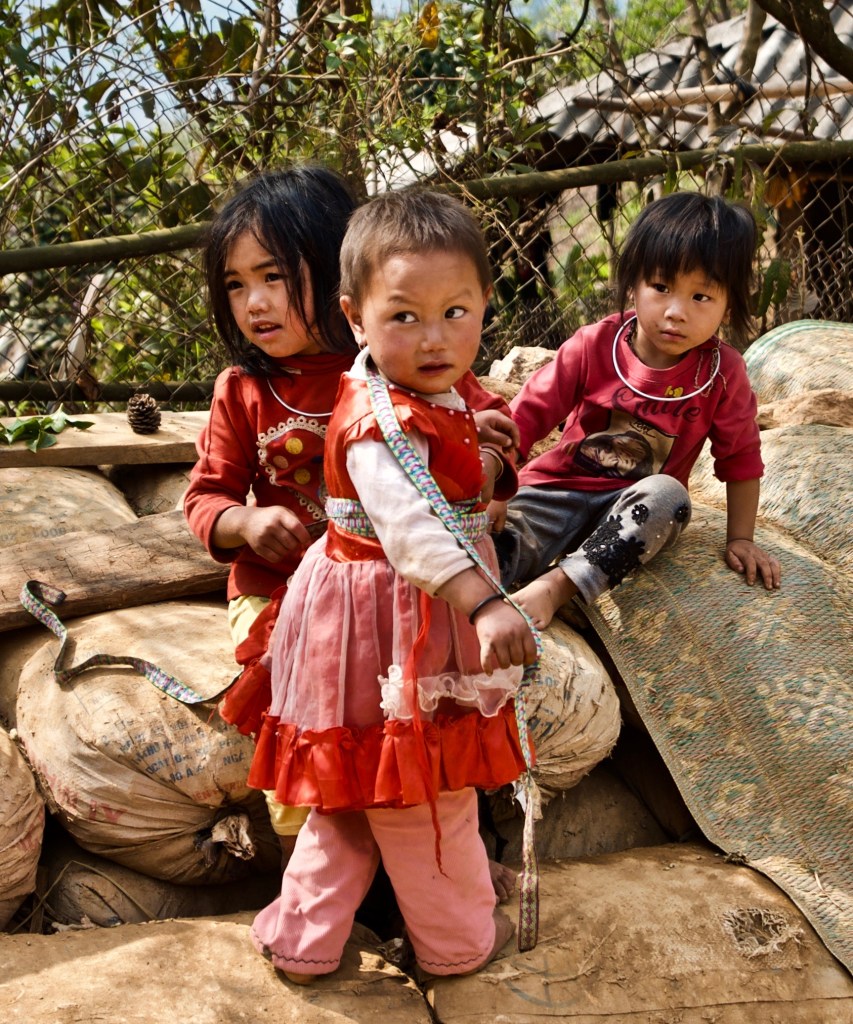
We visited Tavan Village on the outskirts of Sapa – it is the village of the Giay minority. It was a mix of traditional homes and tourist restaurants, bars and homestays. We enjoyed lunch at a Homestay.
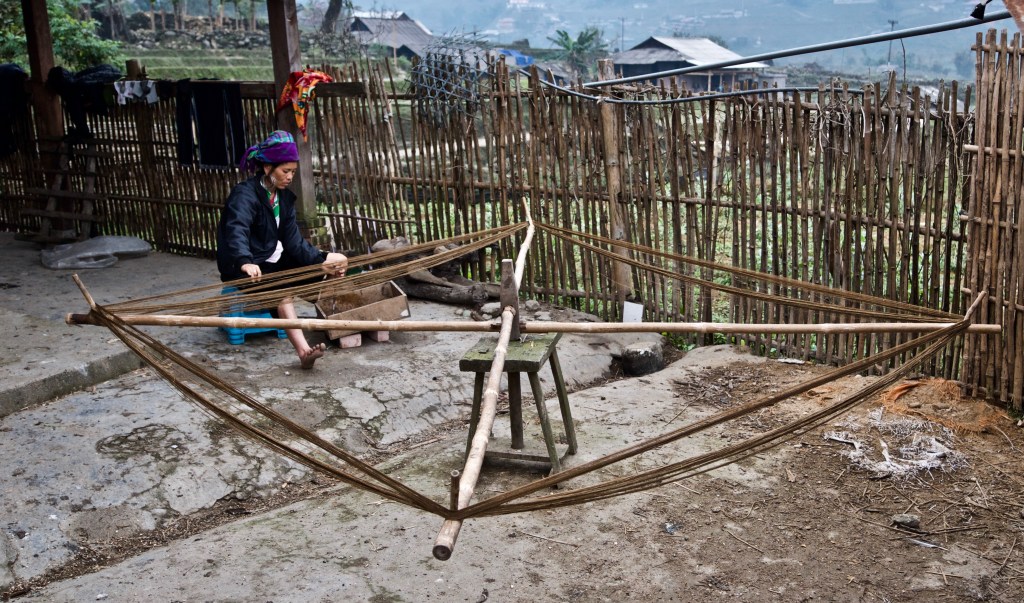
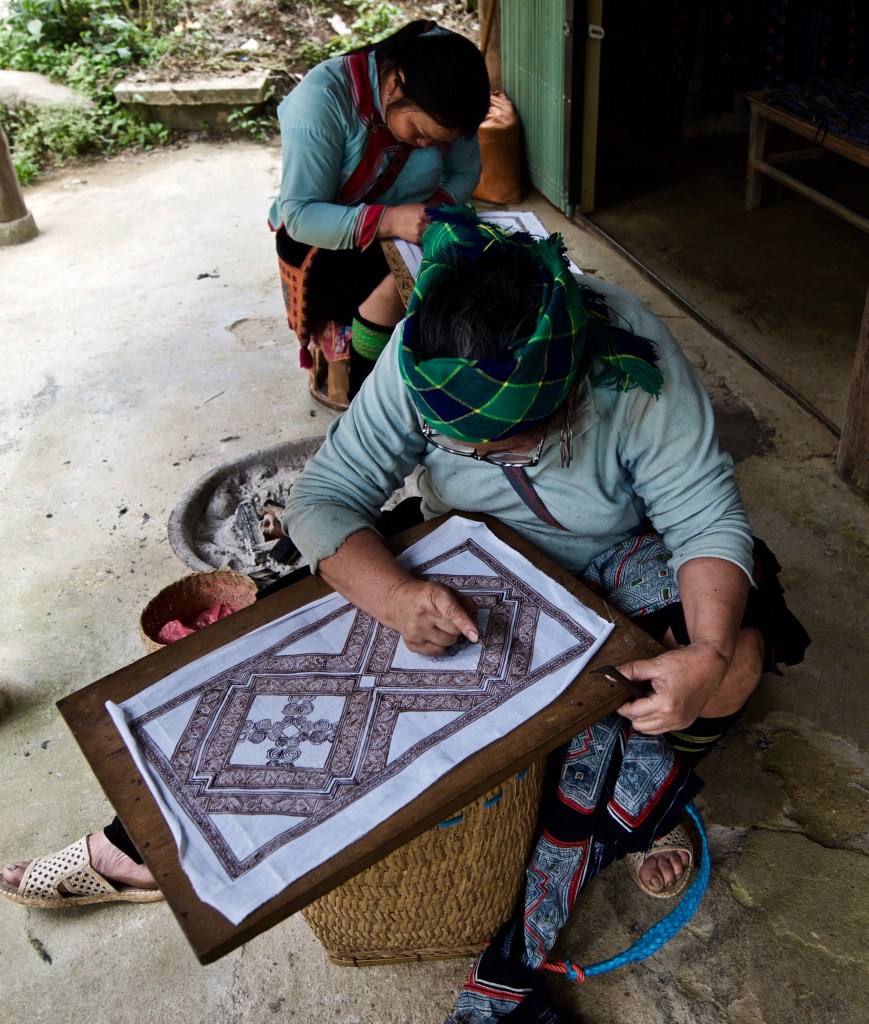
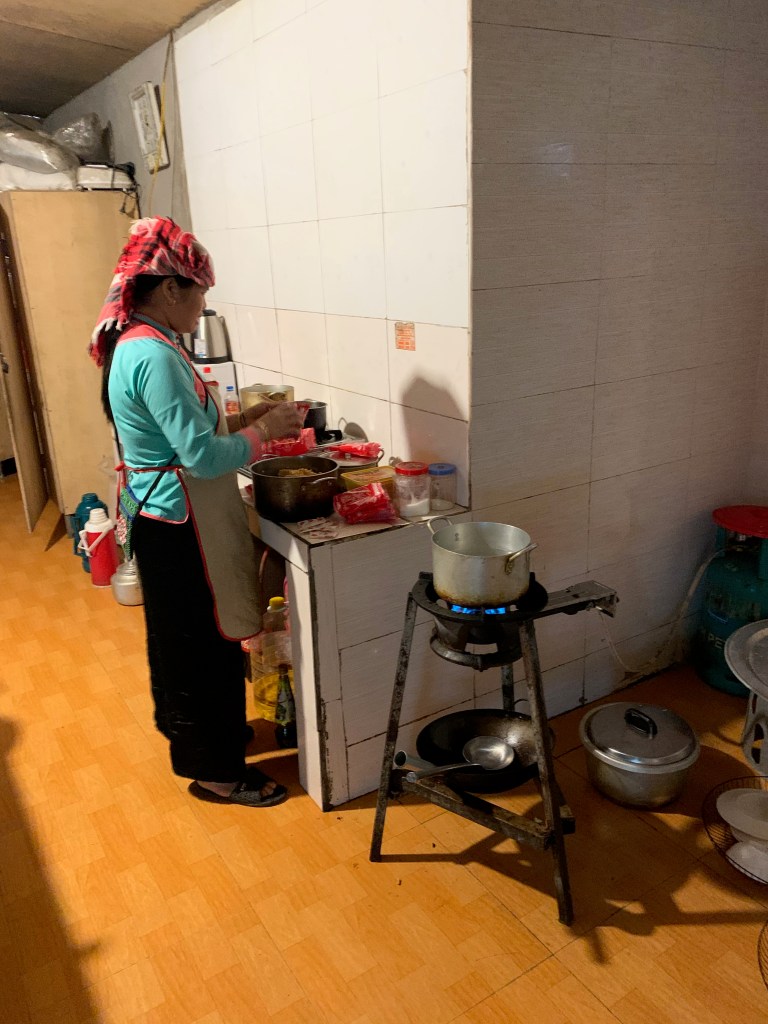
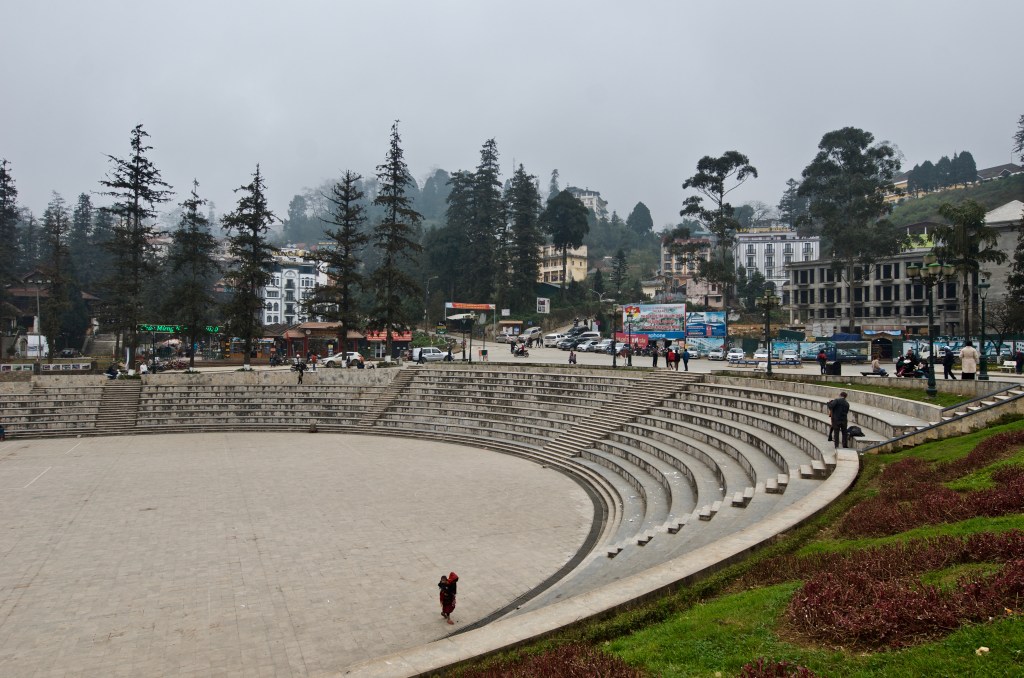
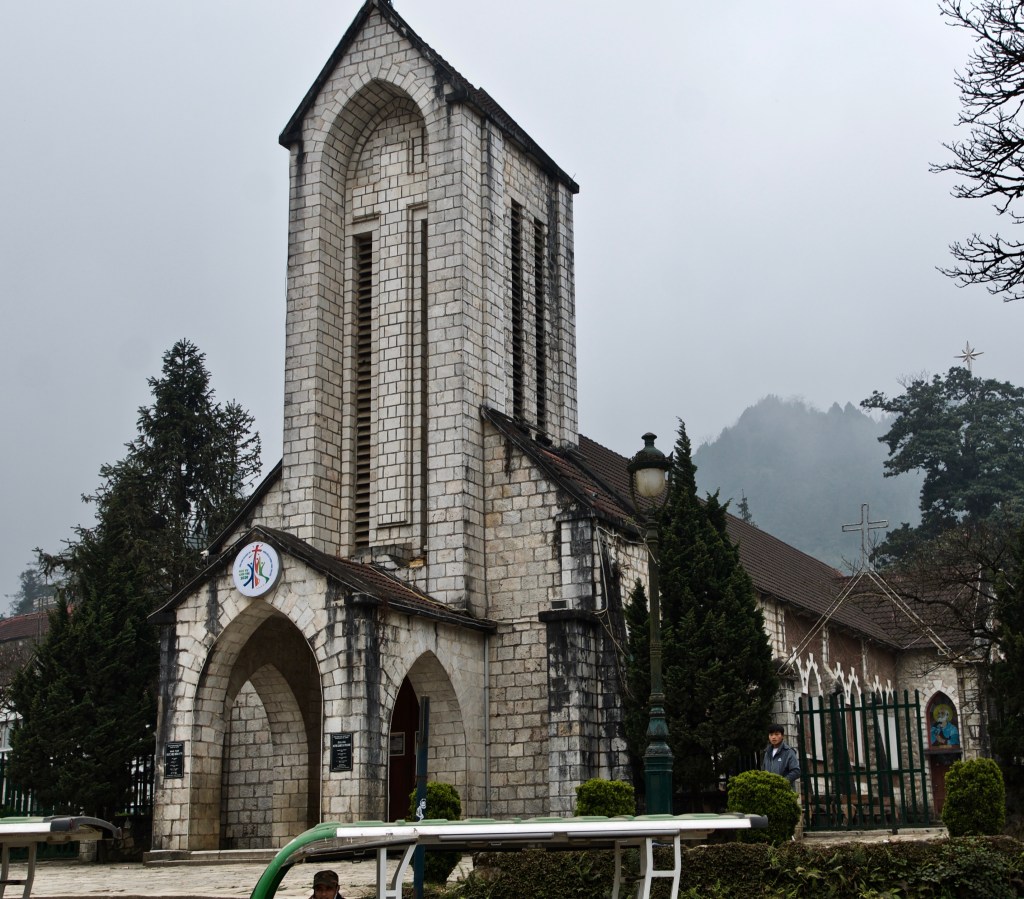
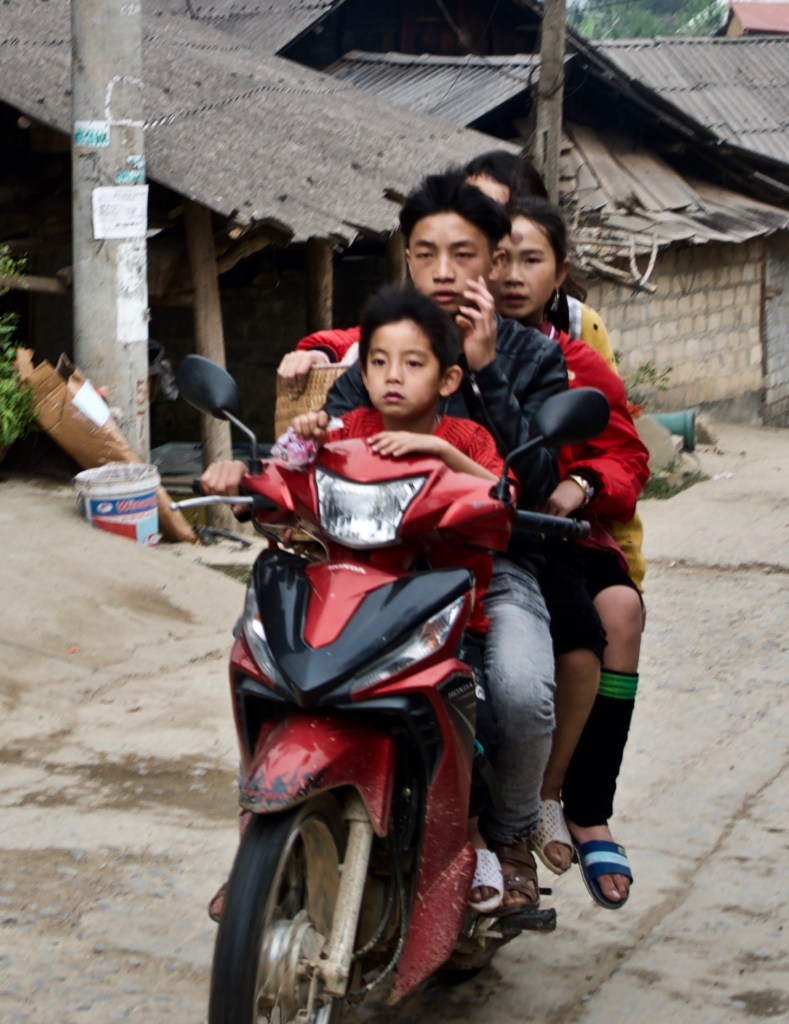
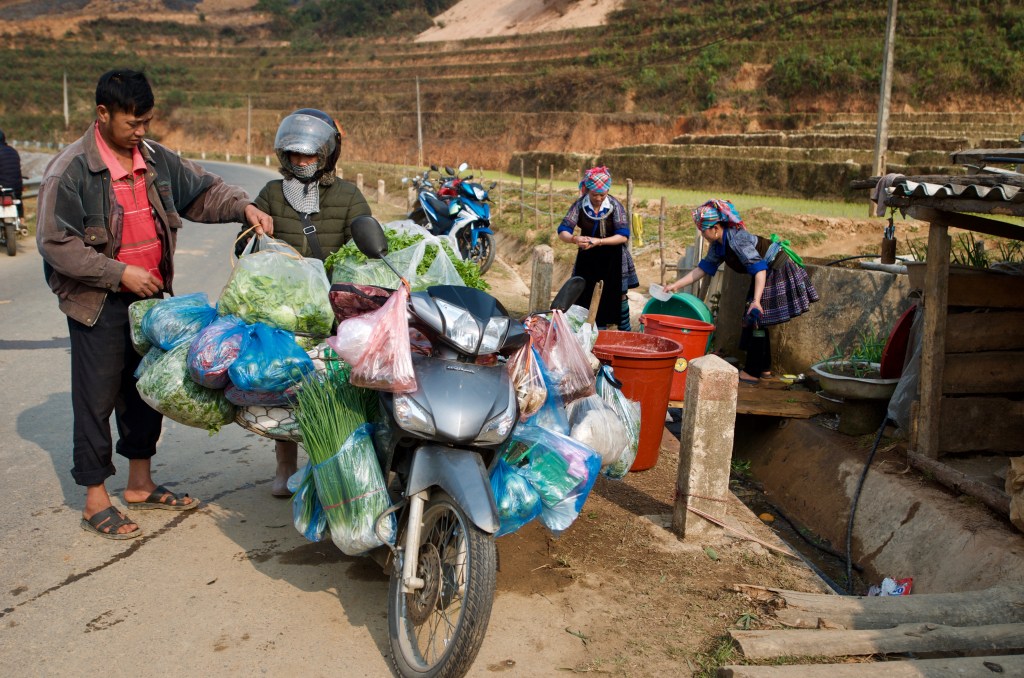
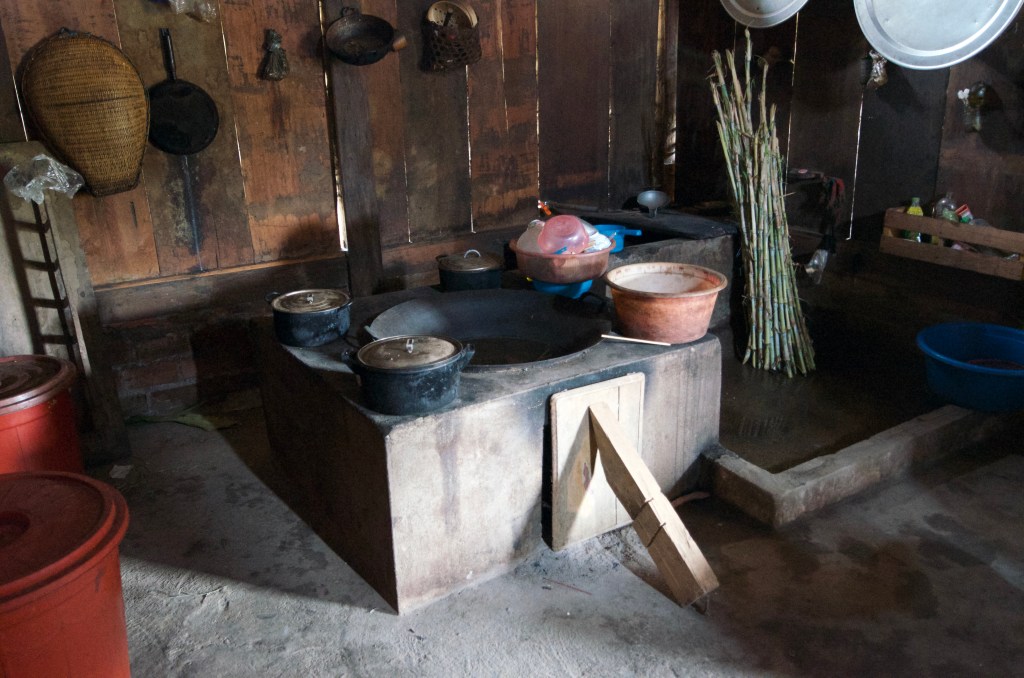
In Tavan Village – traditional home where the lady was making yarn.Tavan Village – The women heated bee’s wax to make their designs.Amazing the lunch that was prepared from this small kitchenSo much food for just the 3 of us. It was very good.Meeting area and below is the Sapa Catholic Church, which is also known as the Stone Church – it was built in 1902Four on a bike, plus a box and he is talking on his phone.Shopping with the family
Feb.26th: It is a sunny day with temperatures 18-20C which is perfect for exploring. We were up early and once again travelling on motorbikes with the 3 staff from the lodge.
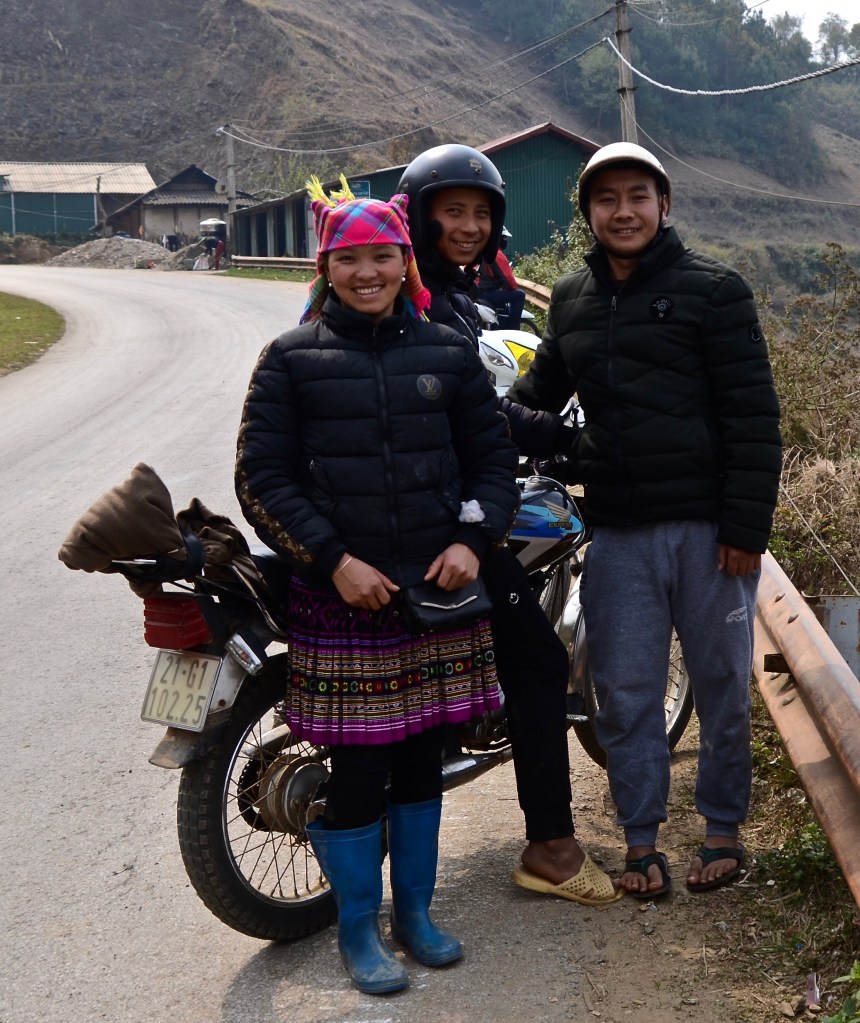
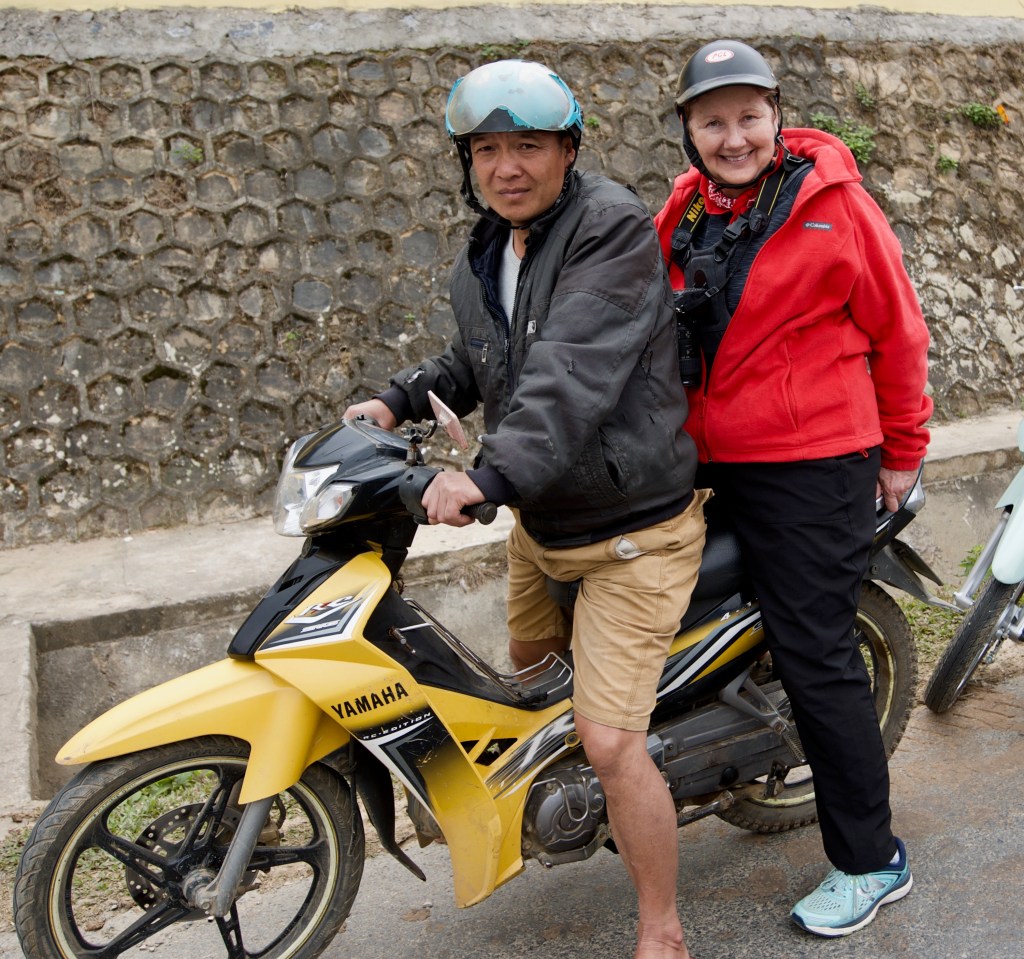
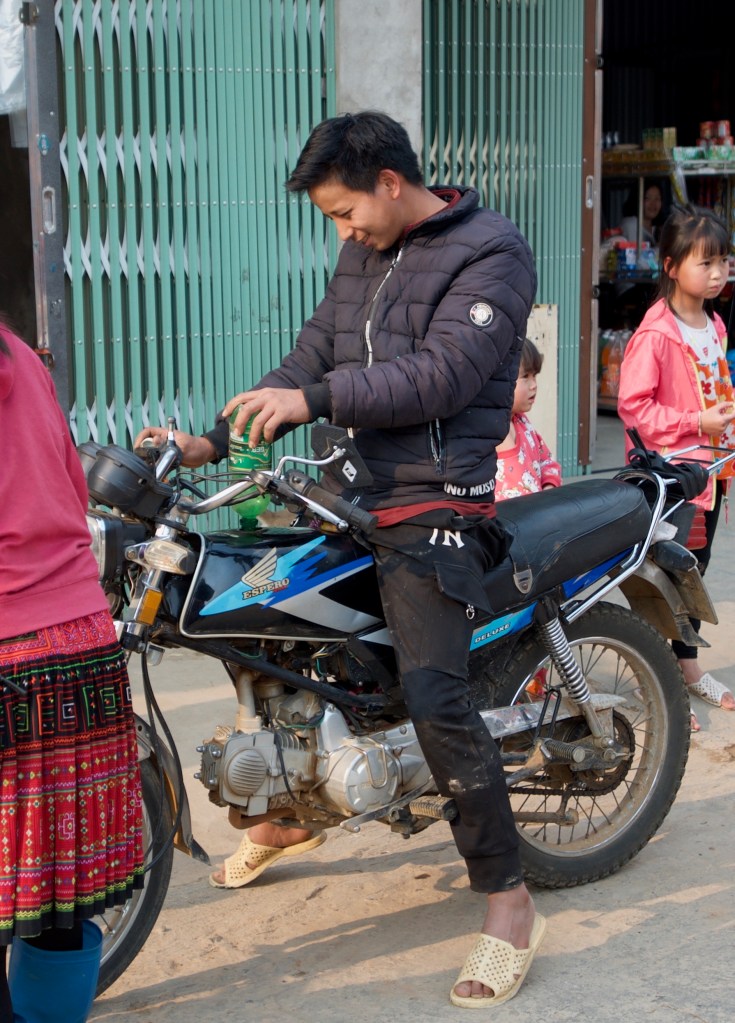
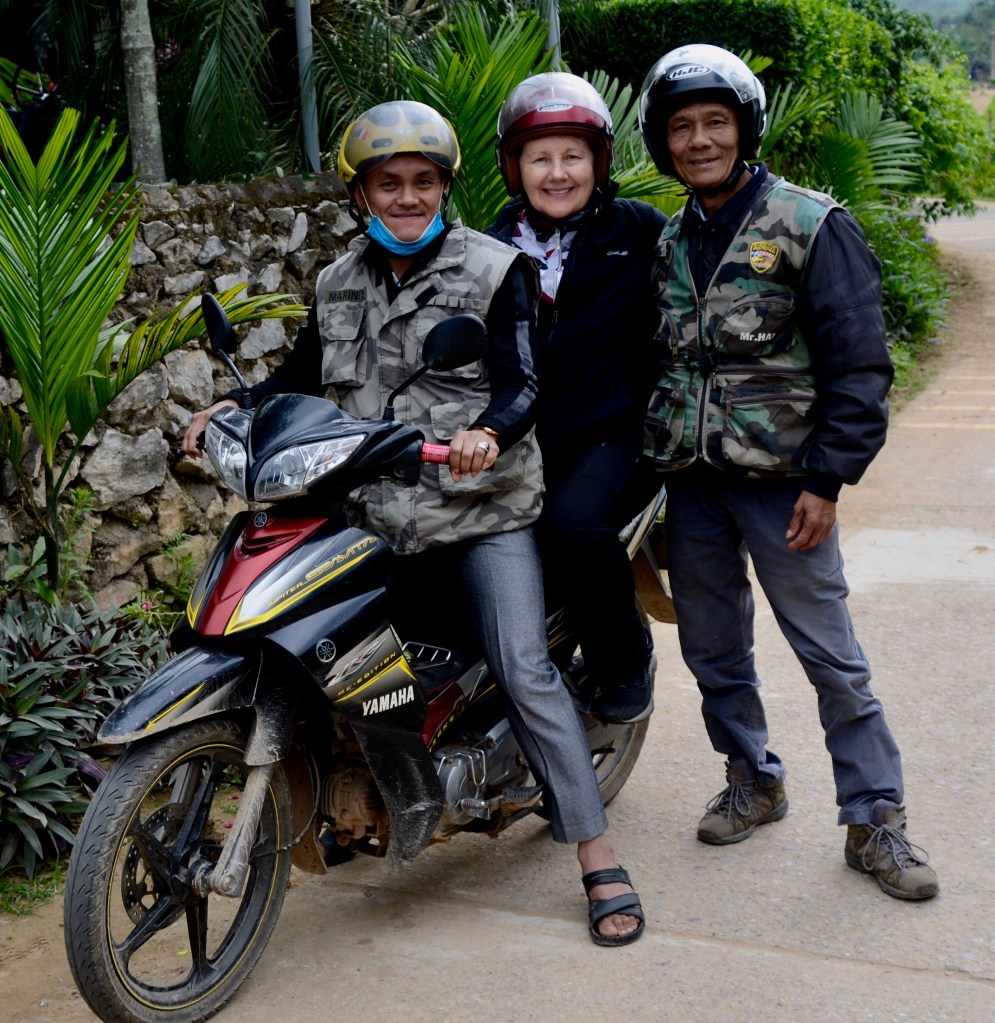
Cua, De and Hu – our amazing drivers and H’Mong guides. They also served tables, brought our bags to our room and gardened on the property. They spoke very little English, but with the help of Josie our guide and charades we had no difficulty communicating and we had a great time with them.
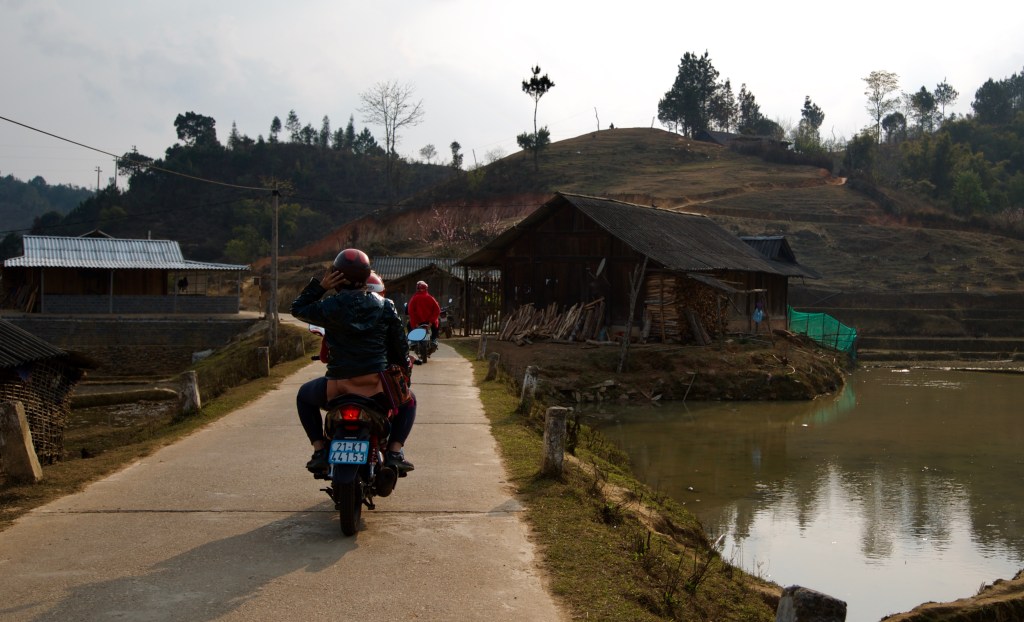
We rode for more than 4 hours – much of the time along narrow, winding mountain paths (just wide enough for 2 motorbikes) that connect the H’Mong villages. We also travelled along the mountain roads that lead to the towns. We made many stops along the way to take in the scenery – breathtaking. Normally I would be nervous (well actually scared) to drive along paths that snake through the mountains, of course with no railings, and at times steep drops to the rice paddies below, but our drivers were so good and the scenery so stunning that nervous was the last thing on my mind. I was thinking how incredibly lucky we were to experience this.
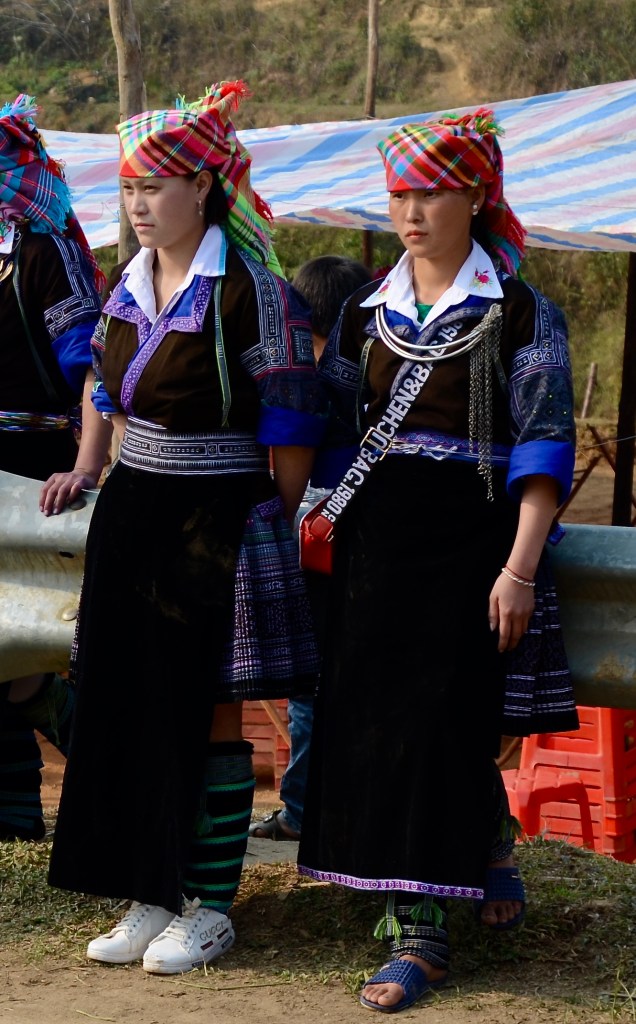
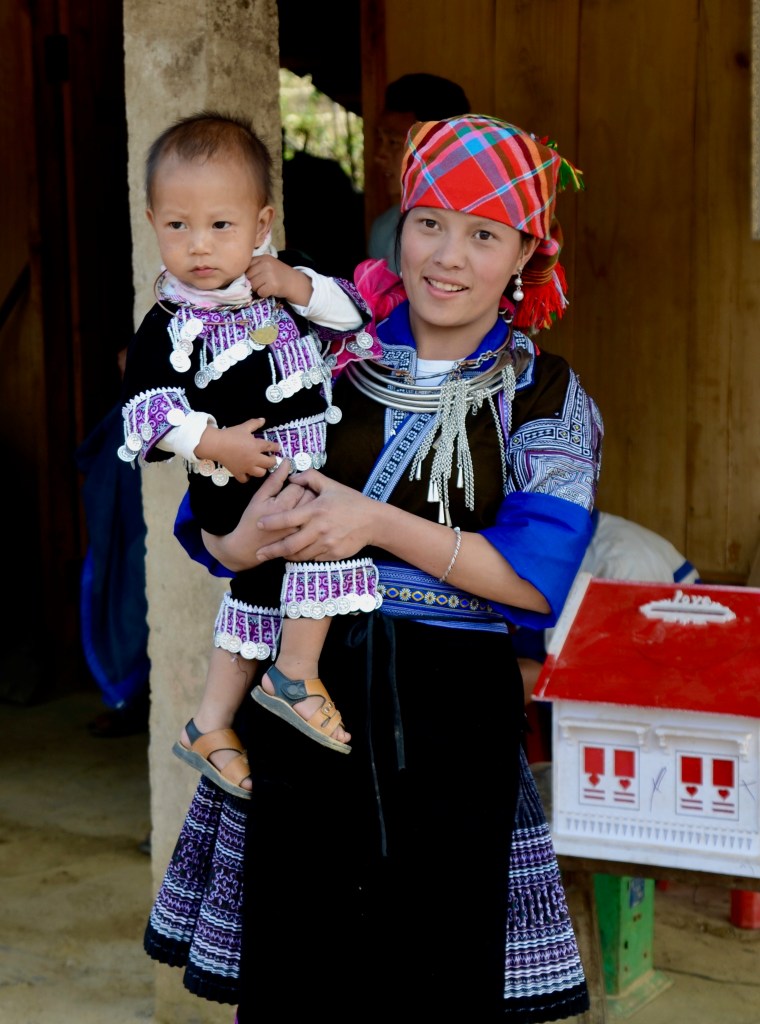
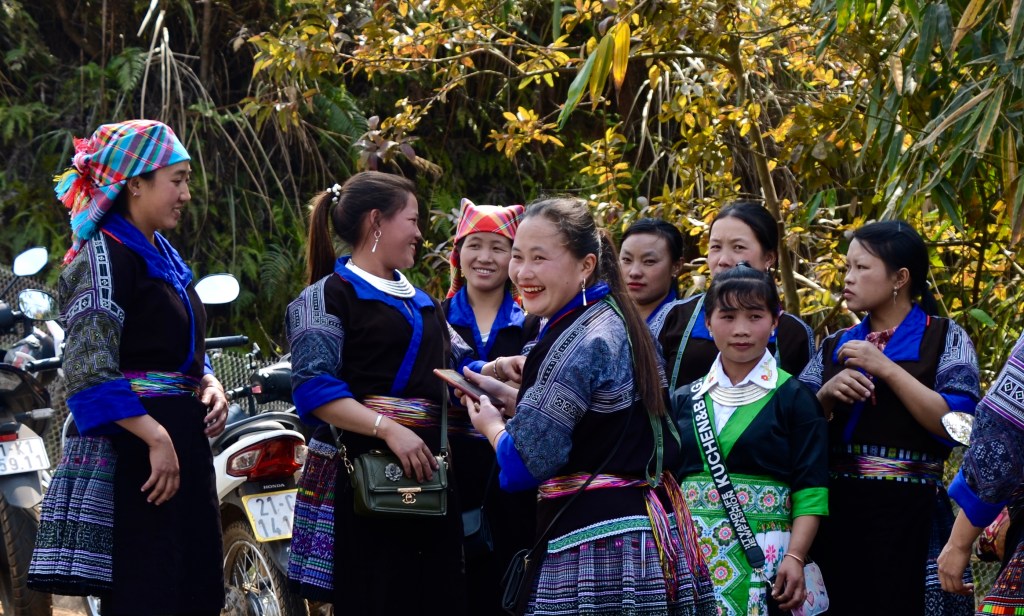
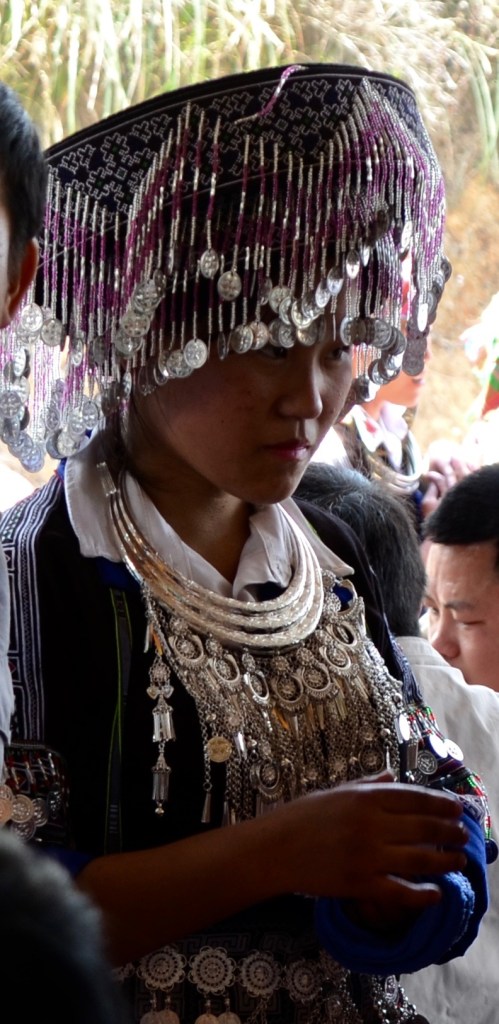
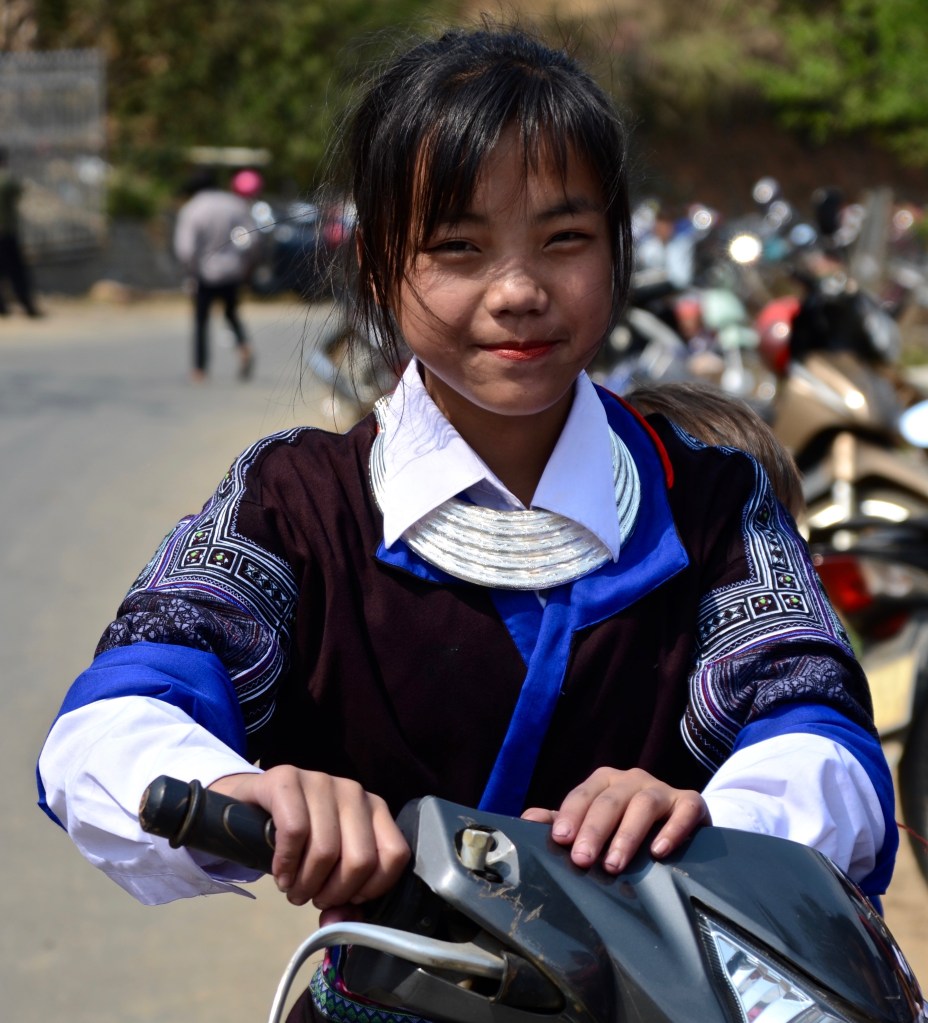
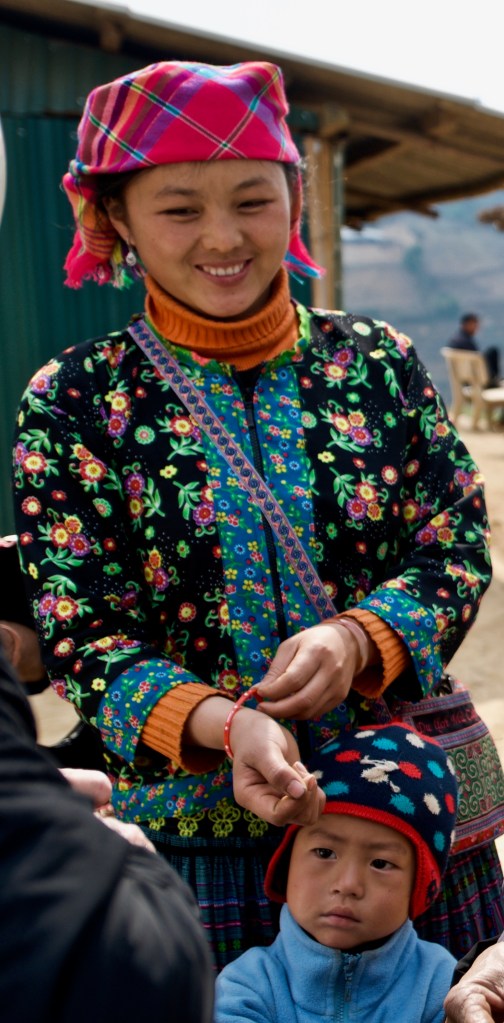
The H’Mong minority people were so friendly and curious. There were two weddings along the way – one was just setting up and the other was in full celebration mode. You will see from the pictures that we had some very special interactions with the wedding guests, family and with the bride and groom.
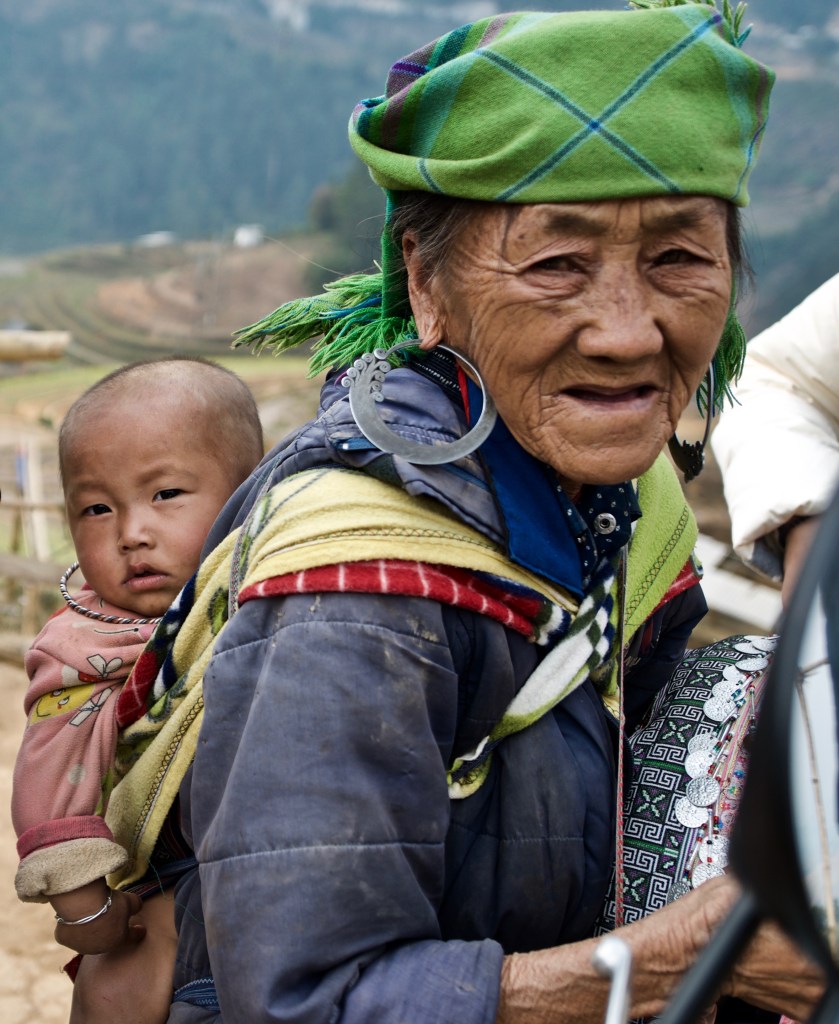
Josie told us that the minority H’Mong in these villages are very frightened that the Chinese and majority H’Mong would take away their minority culture – make them comply with the majority way. This is why they live in the mountains and stay to themselves with their only interaction outside of their community being with the Thai minority. We learned many things about the H’Mong culture during our 2 days.
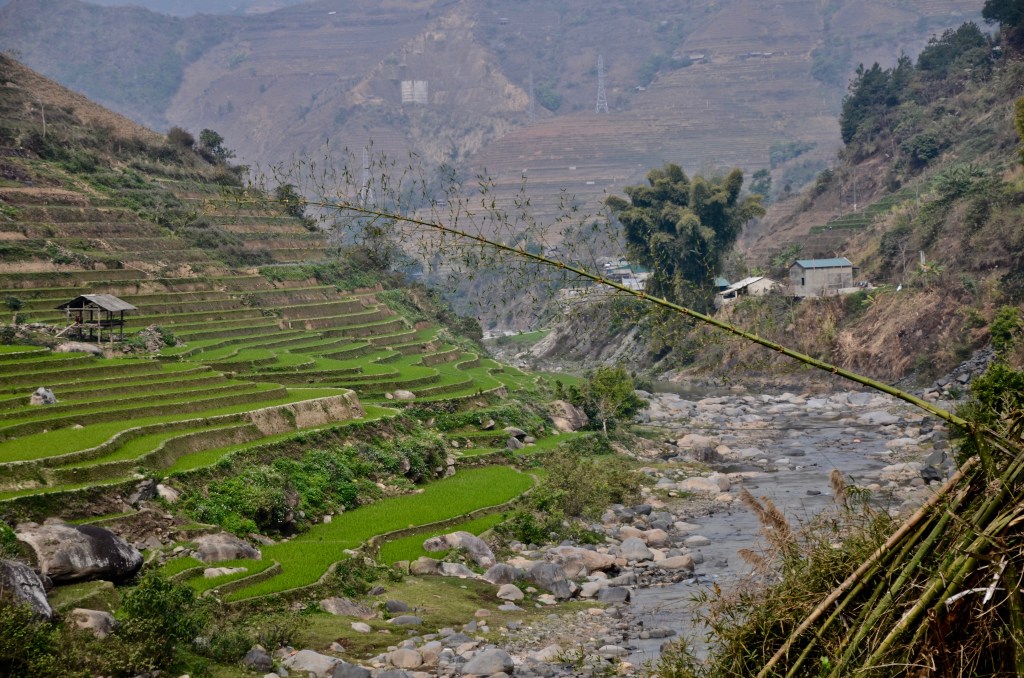
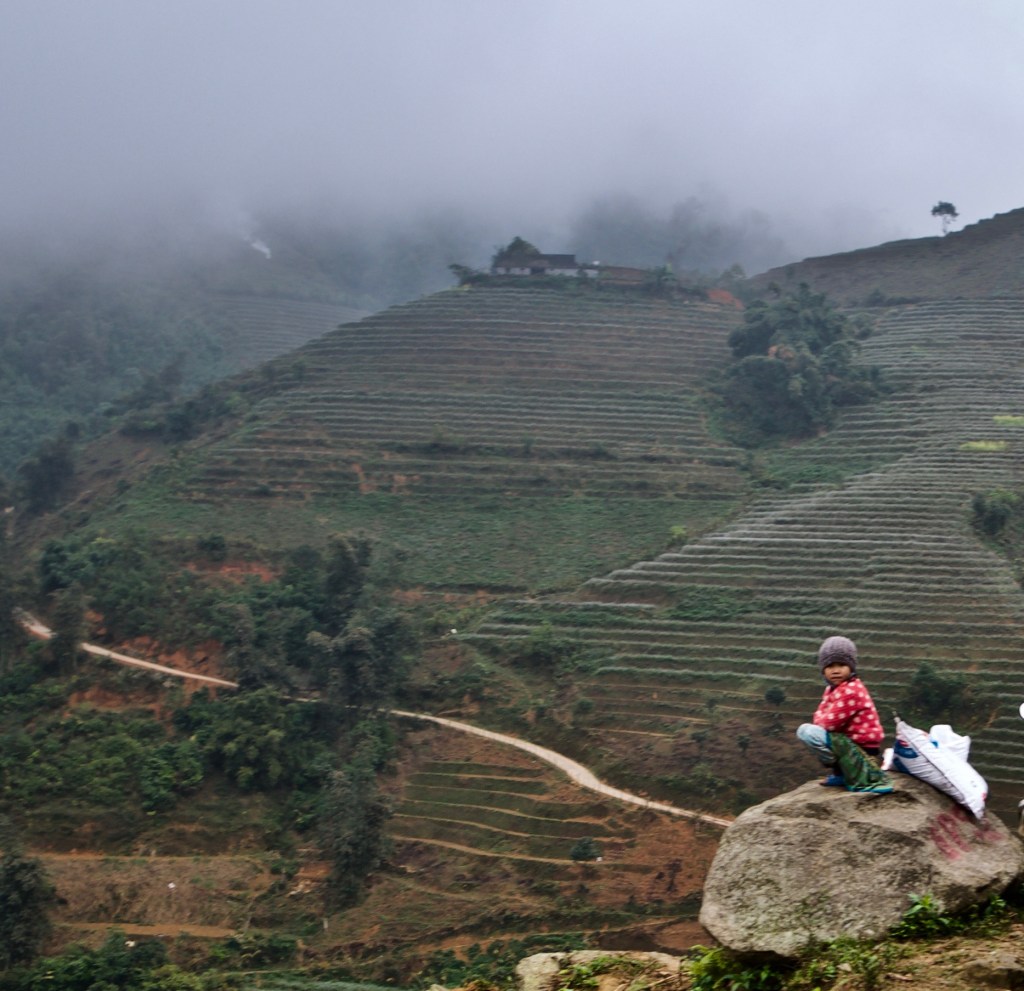
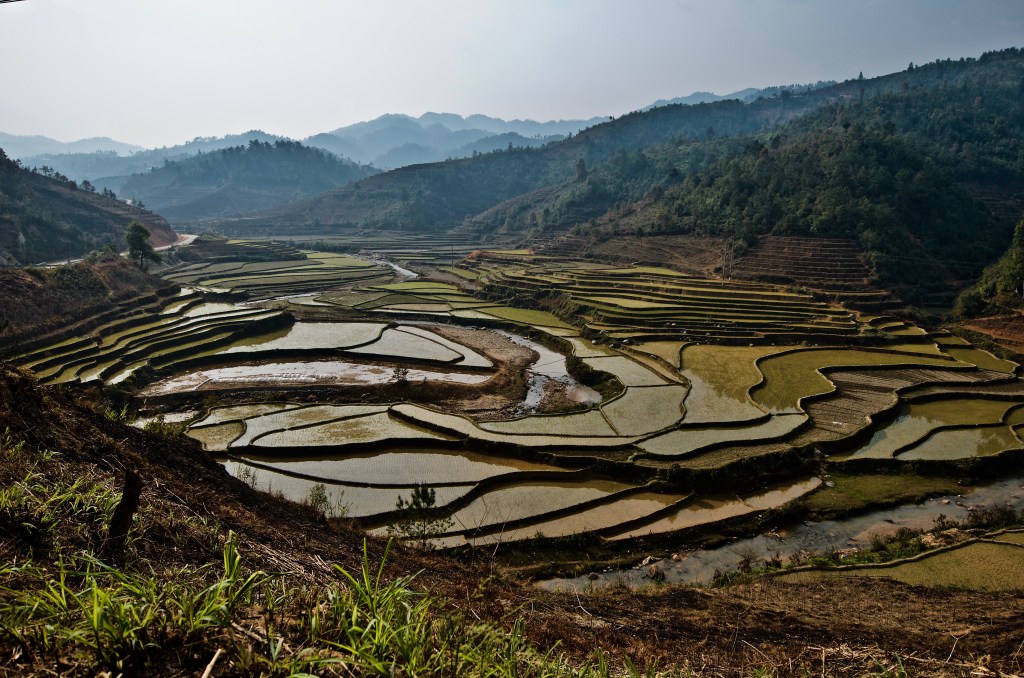
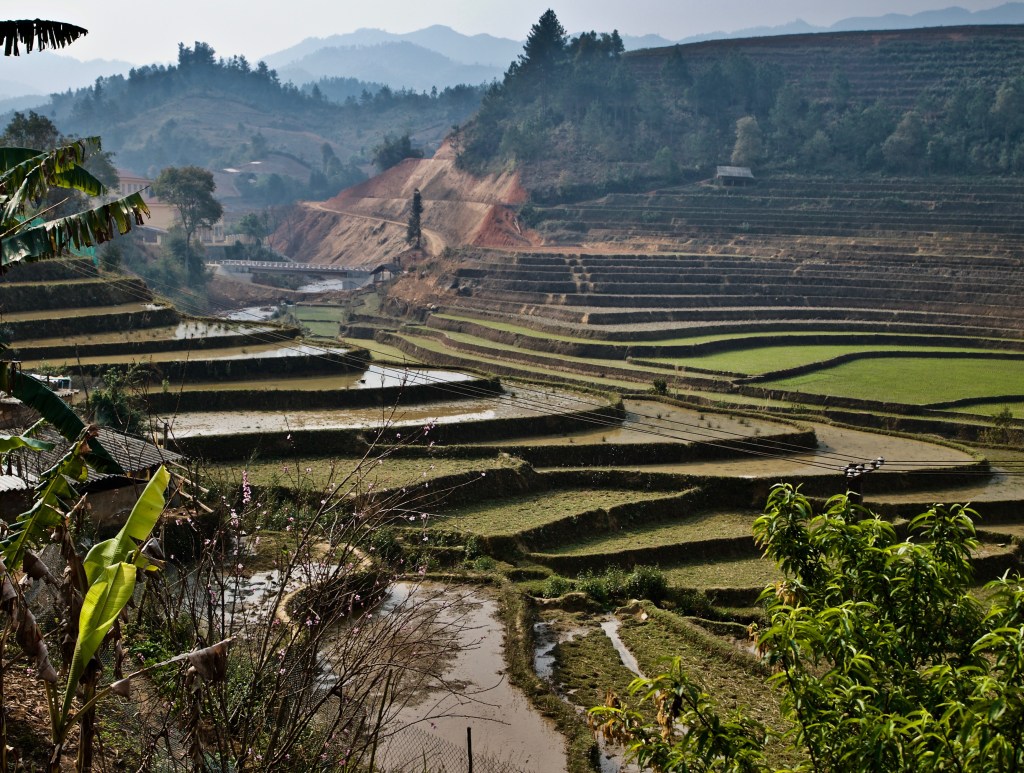
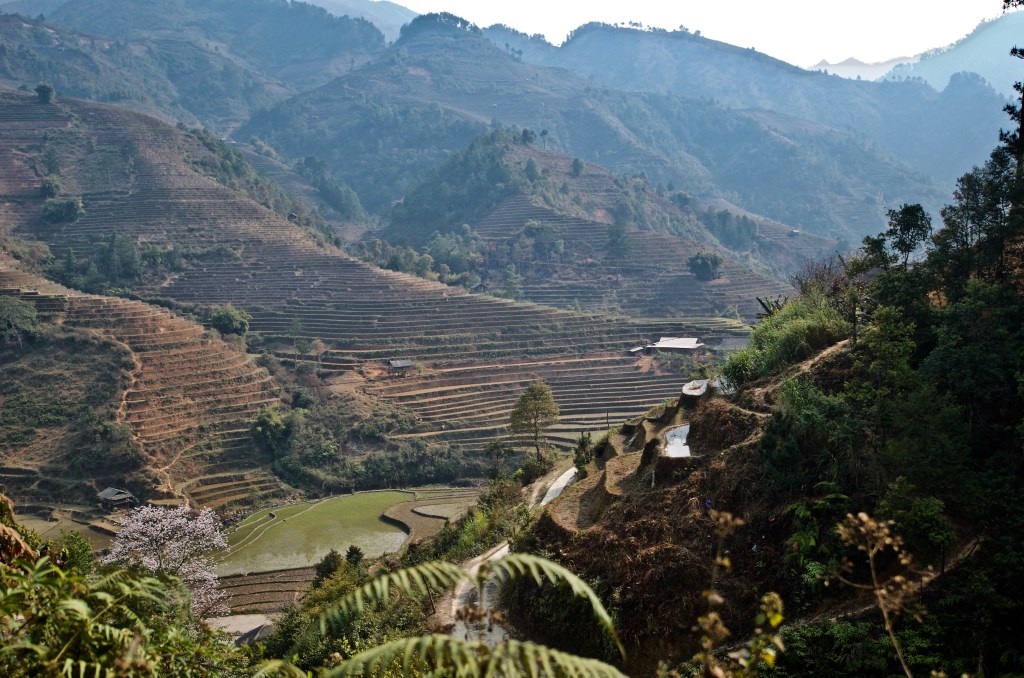
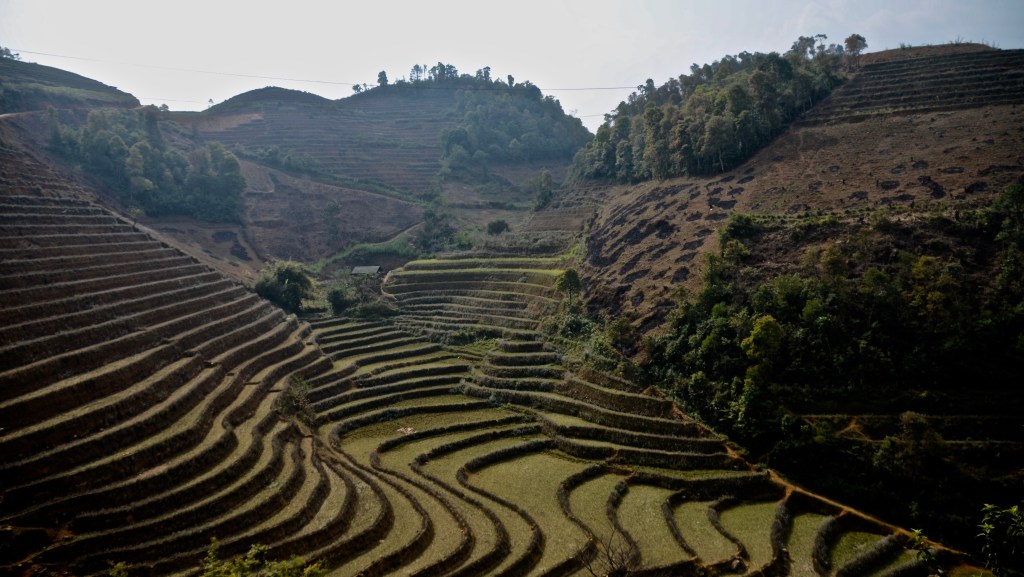
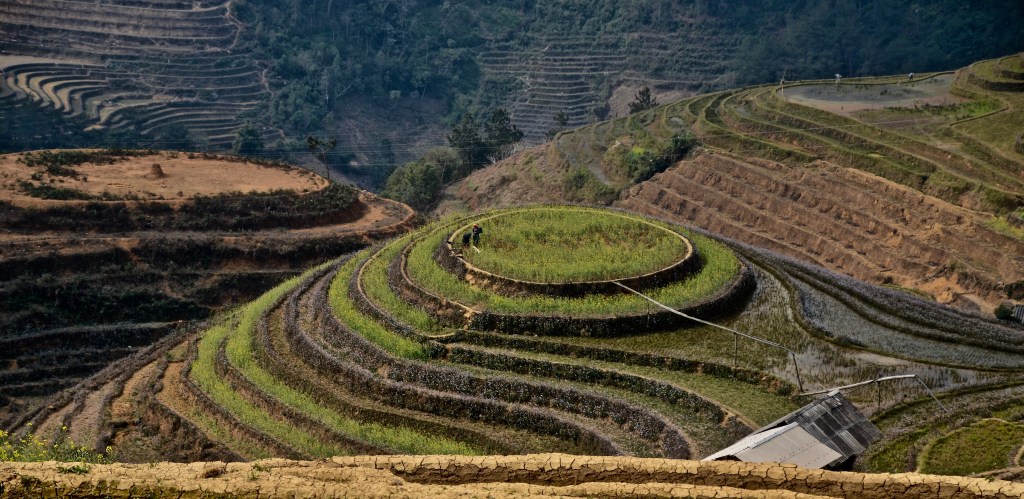
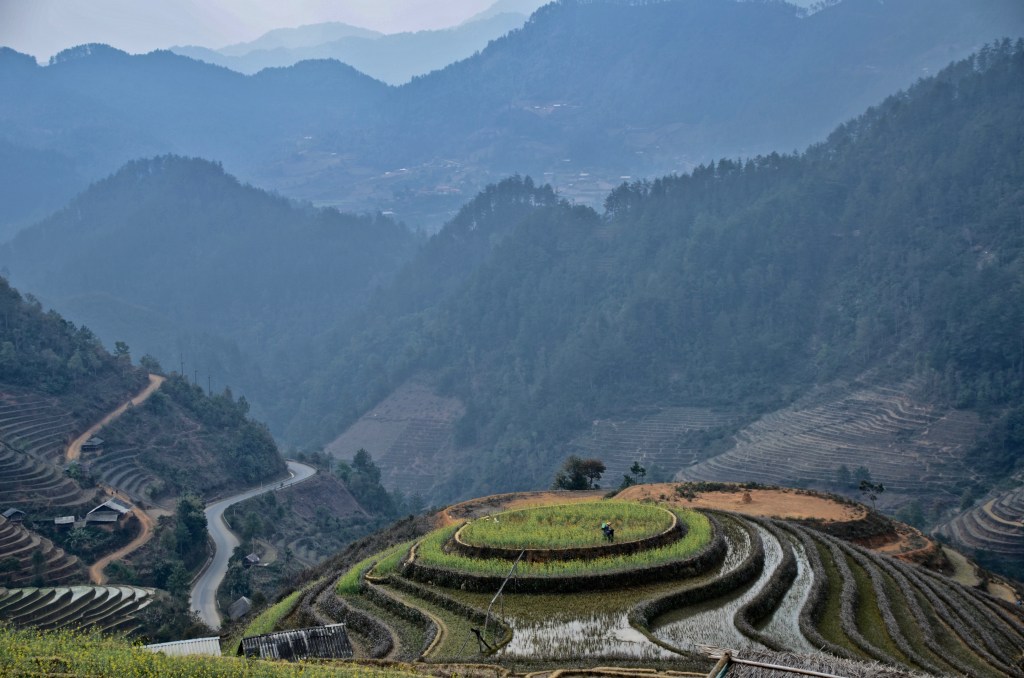
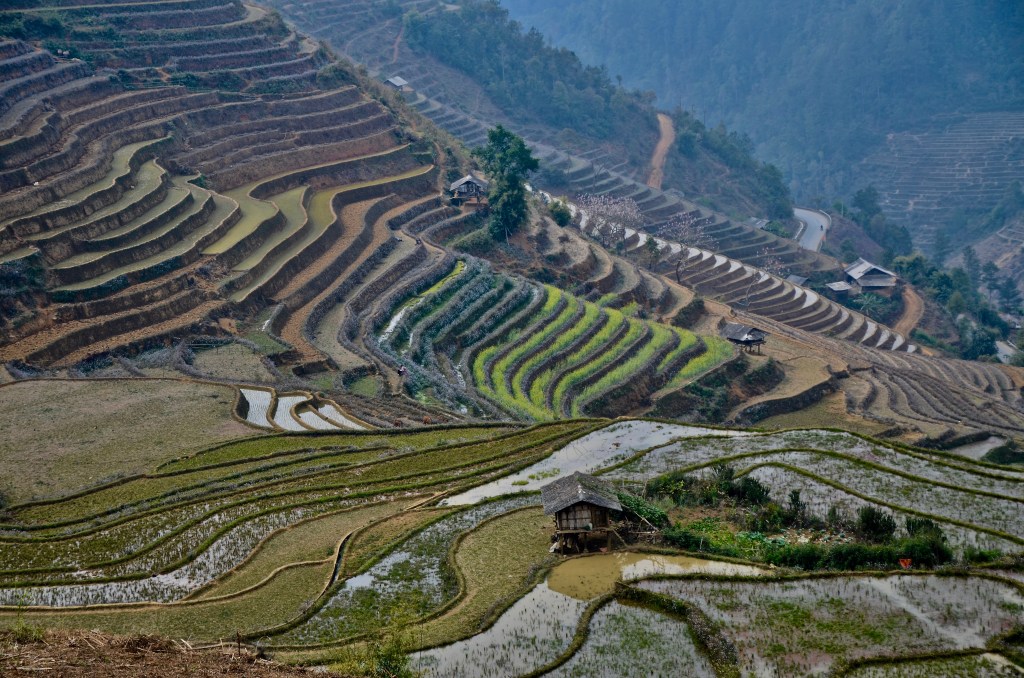
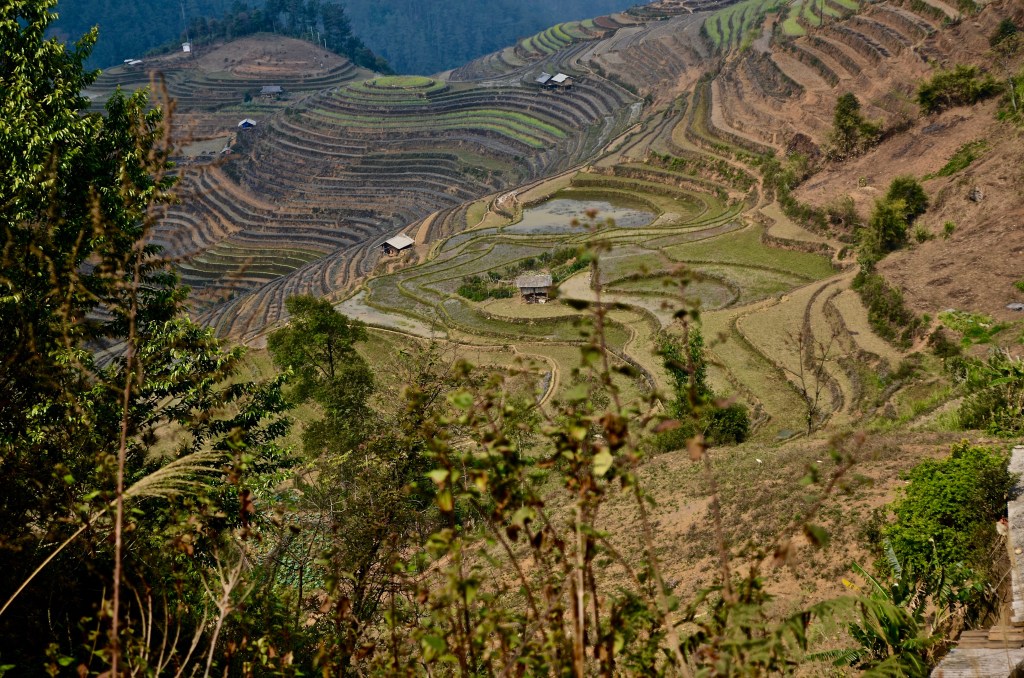
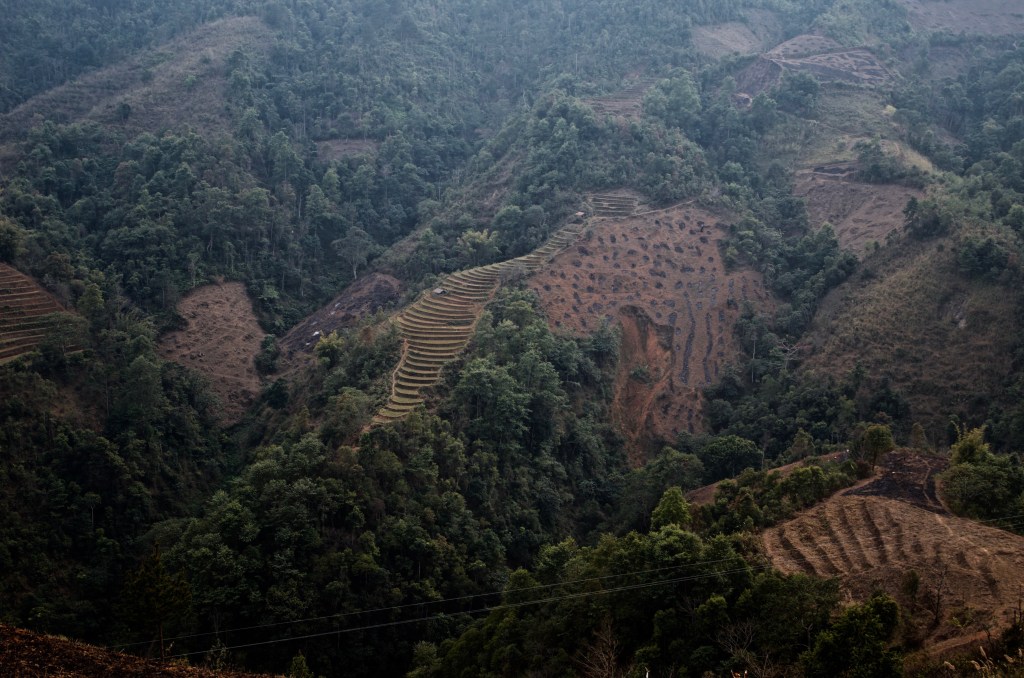
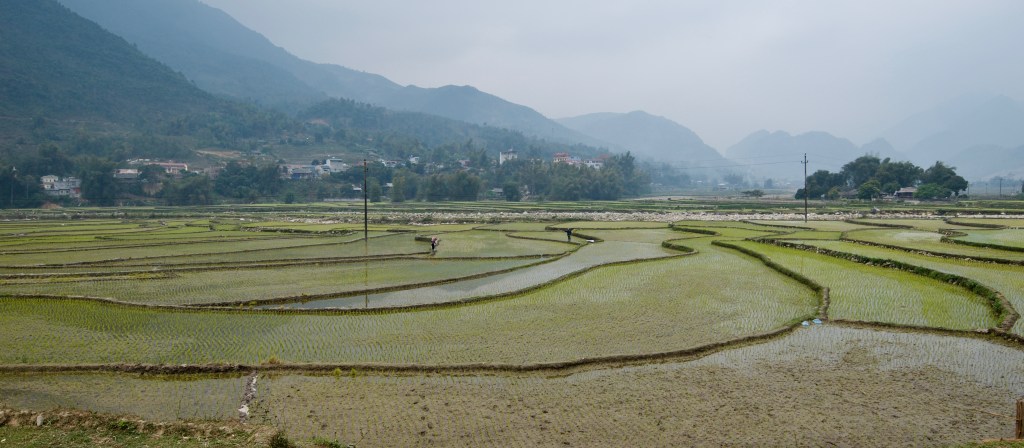
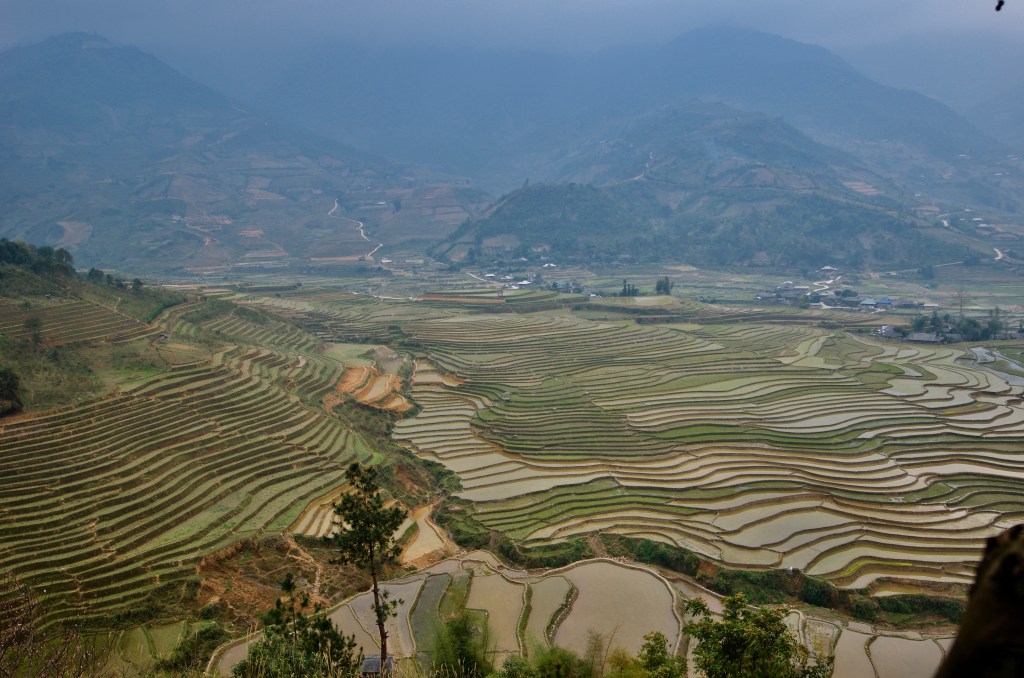
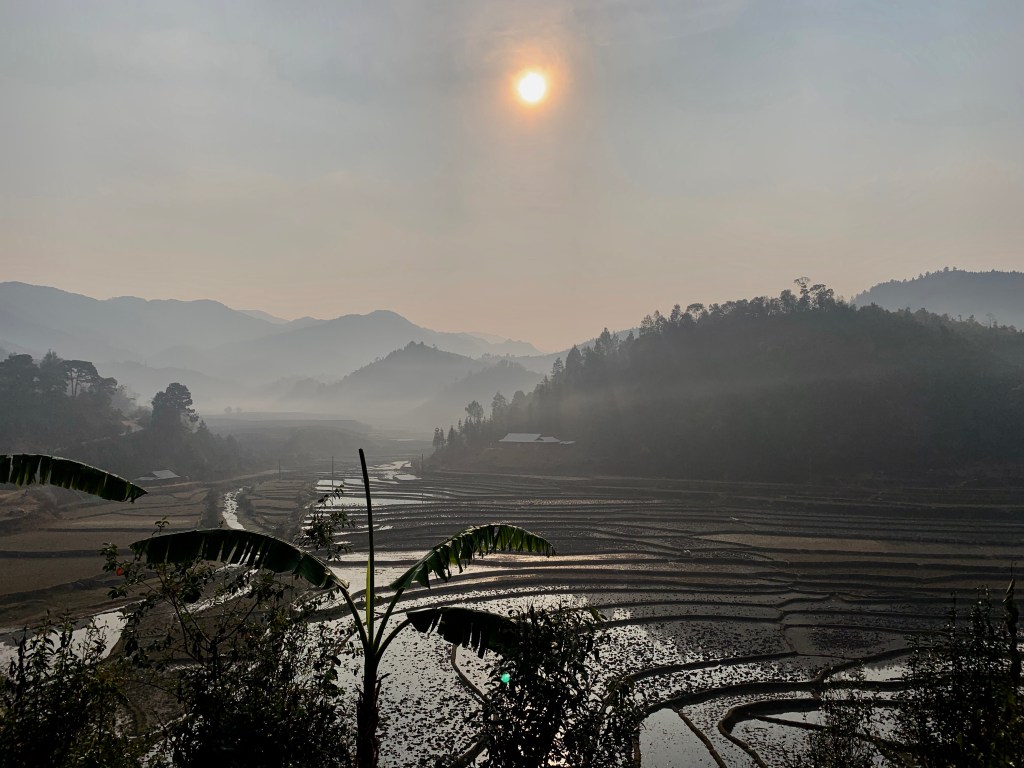
The Mu Cang Chai area is known for its terraced rice paddies and we found it much more scenic than Sapa, and much less touristy.
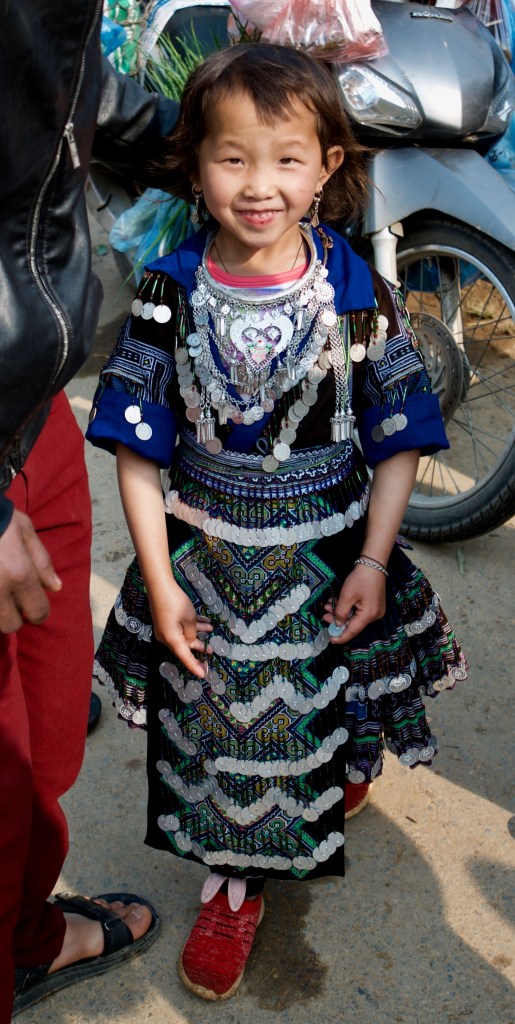
Josie said that this is the round rice paddy they often use for Sapa advertisements, but it is actually in Mu Cang Chai.The brownish path to the left is where we travelled on the bikes as the paved road did not go through the villages.Hu, my driver, introduced us to some H’Mong families from his village who were gathered to prepare for a wedding.Food for the weddingEven the little children dressed in the traditional outfitsThis little girl was so proud of her dress. Her dad wanted us to take a picture.
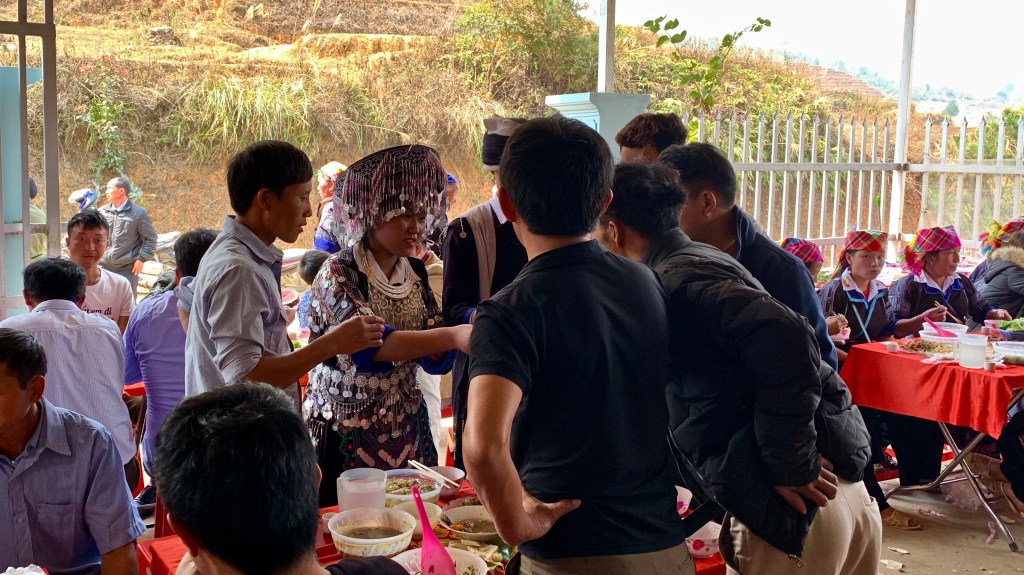
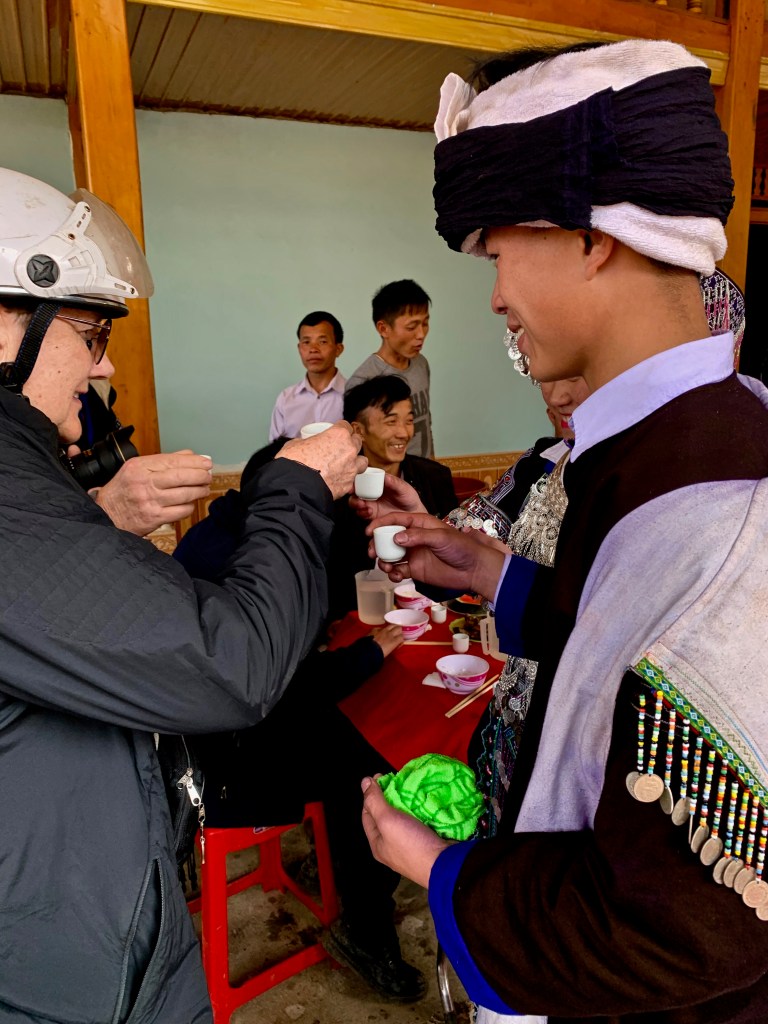
We passed by a second wedding – the reception was underway. When we stopped they insisted that we join in. They invited us to eat with them – Josie was able to say no but told us that we had to take the wine they offered….but warned us that it was super strong so beware. Then they wanted us to meet the bride and groom and offer a toast which we did with Josie’s help (hard to pretend we were drinking the wine). As you will see from the pictures, it was such a whirlwind that we didn’t even have time to take our helmets off. Hu, Cua and De stayed up the road as they knew they would not be able to say no to the wine (it would be an insult) and the wedding party would expect them to have many glasses..not so good for driving us around.
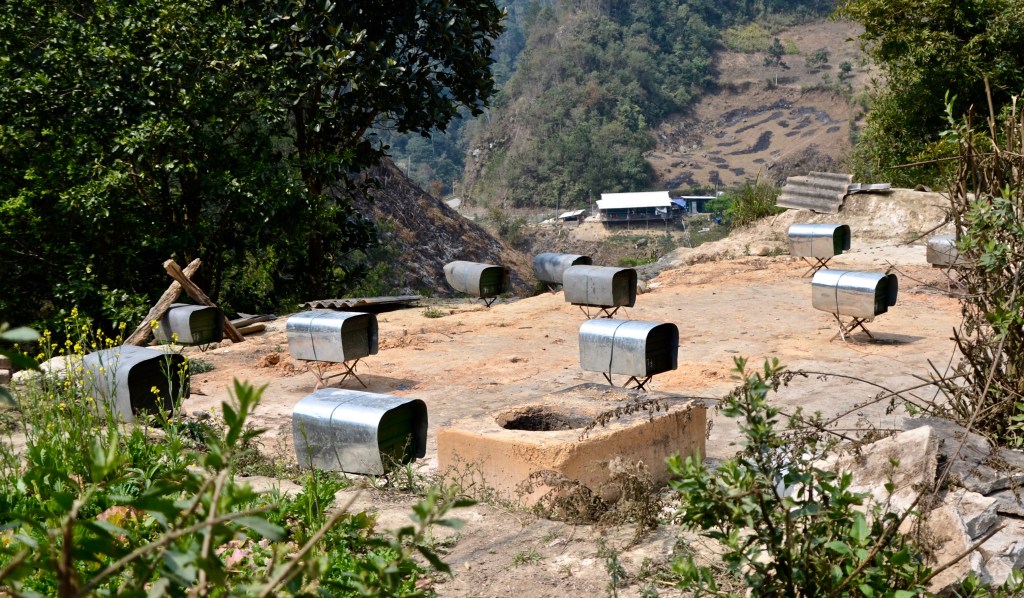
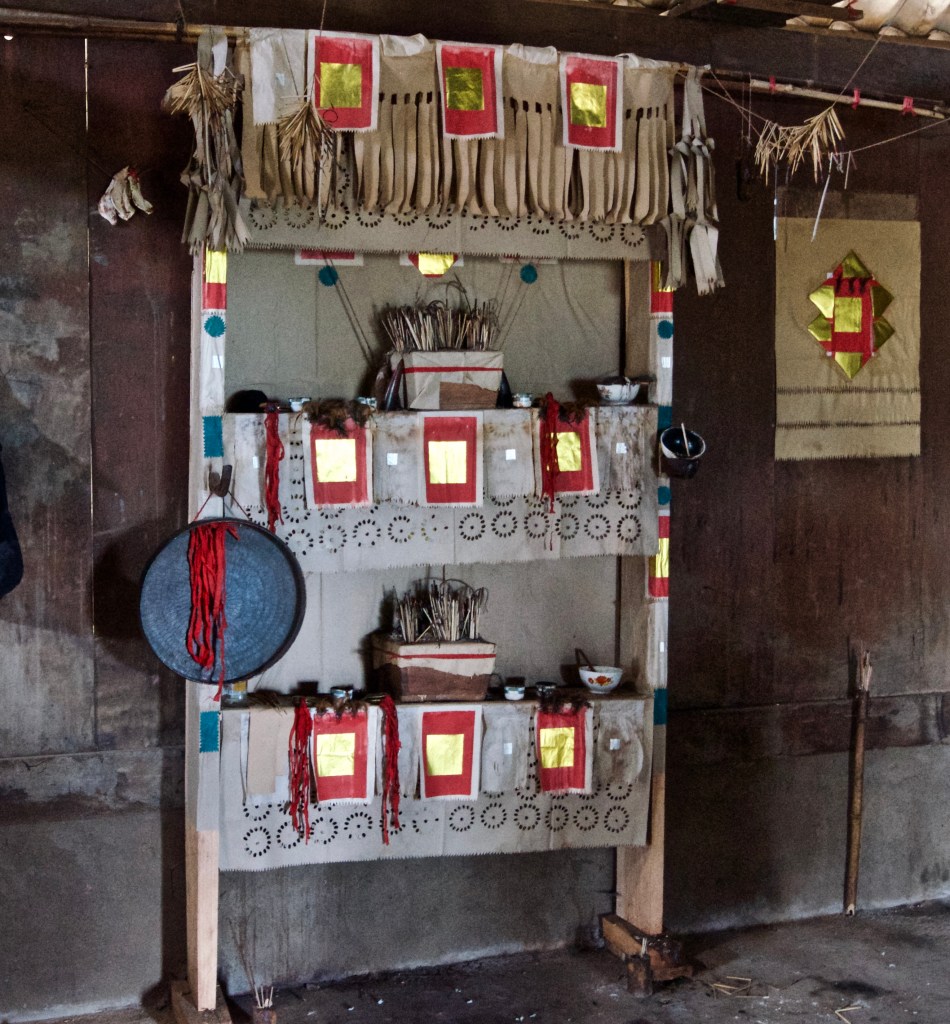
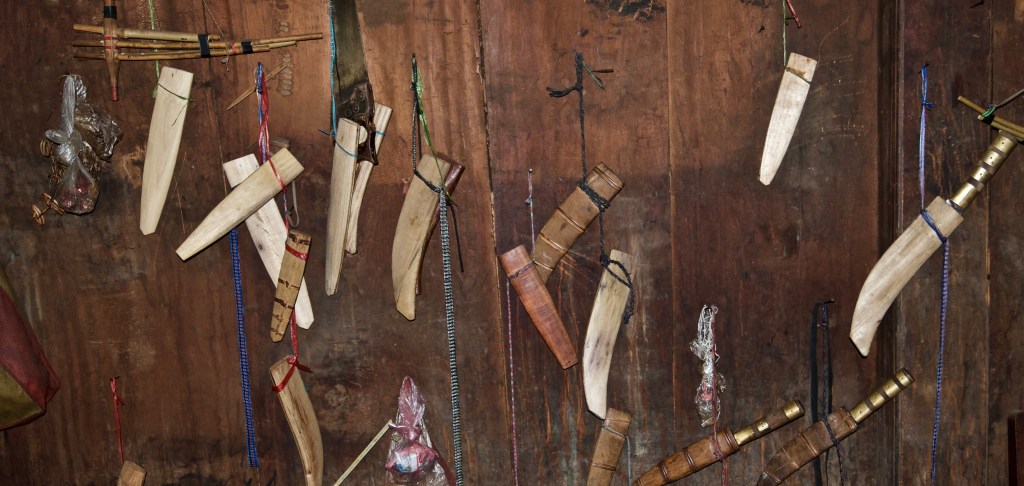
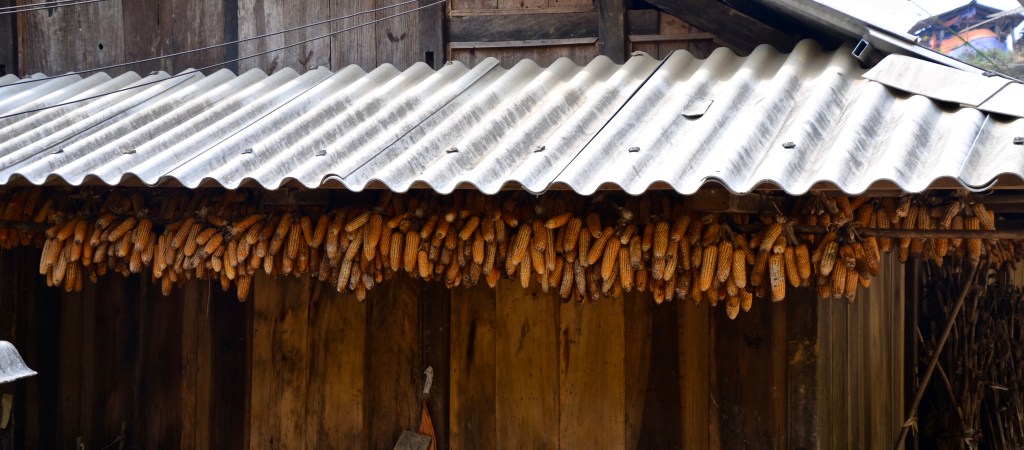
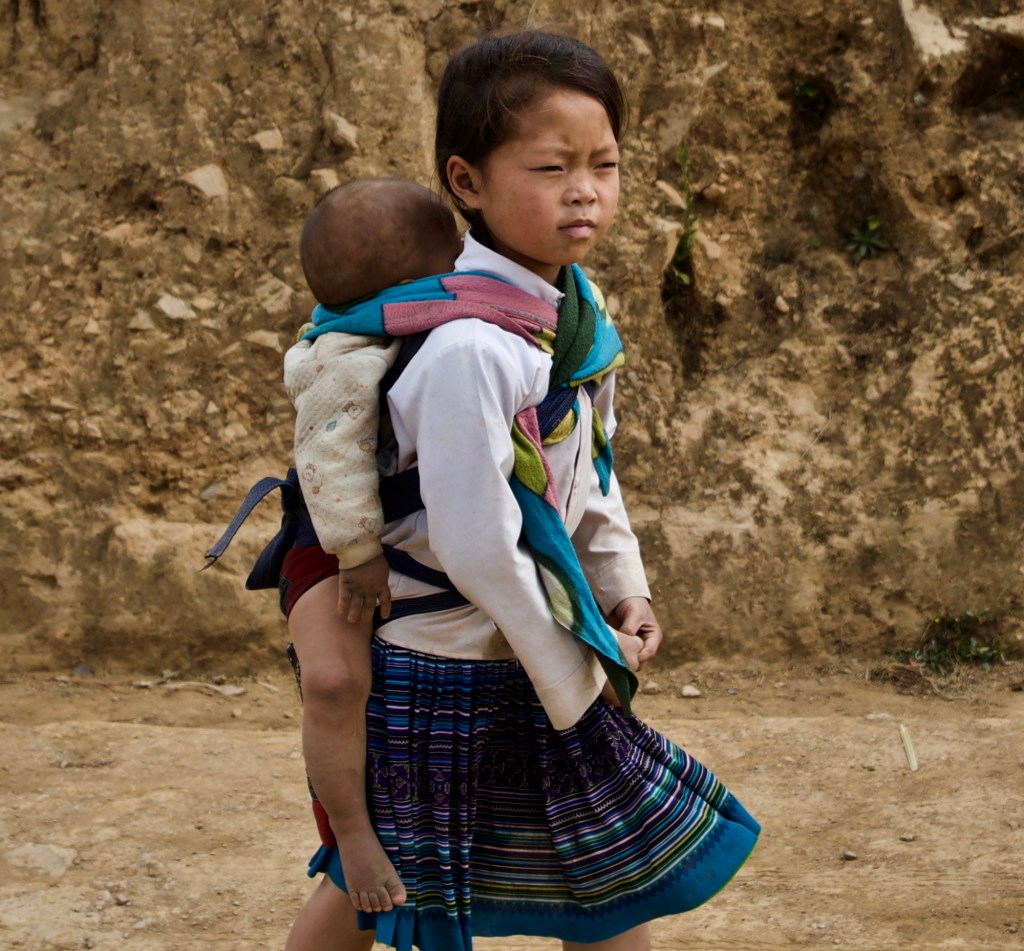
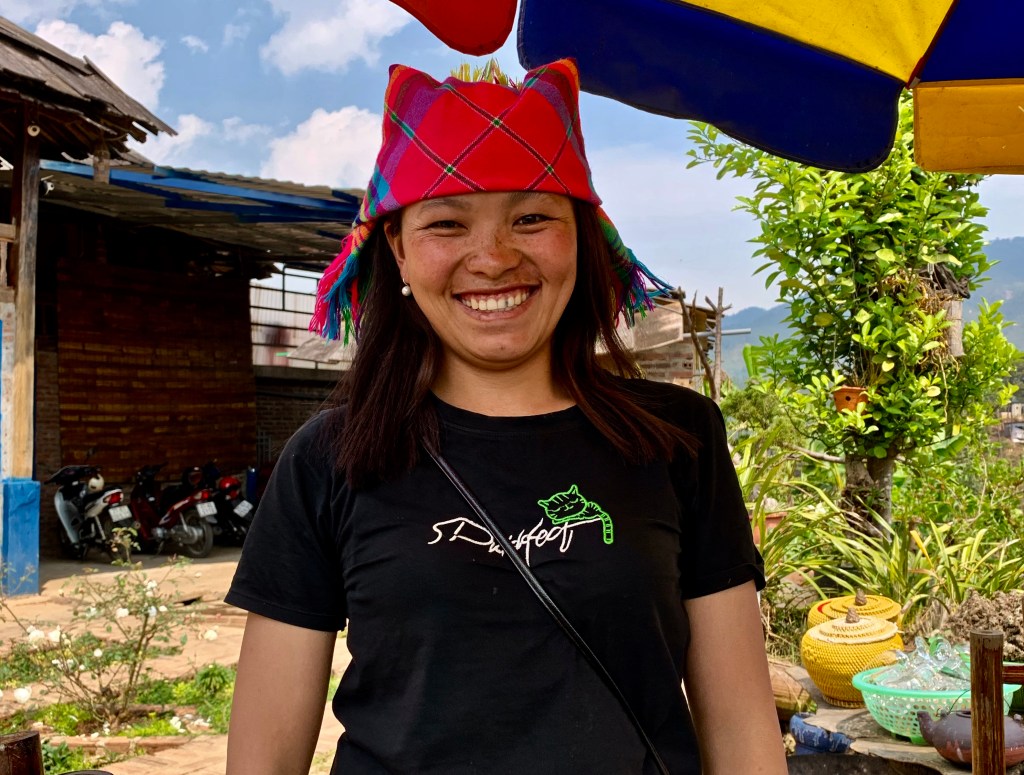
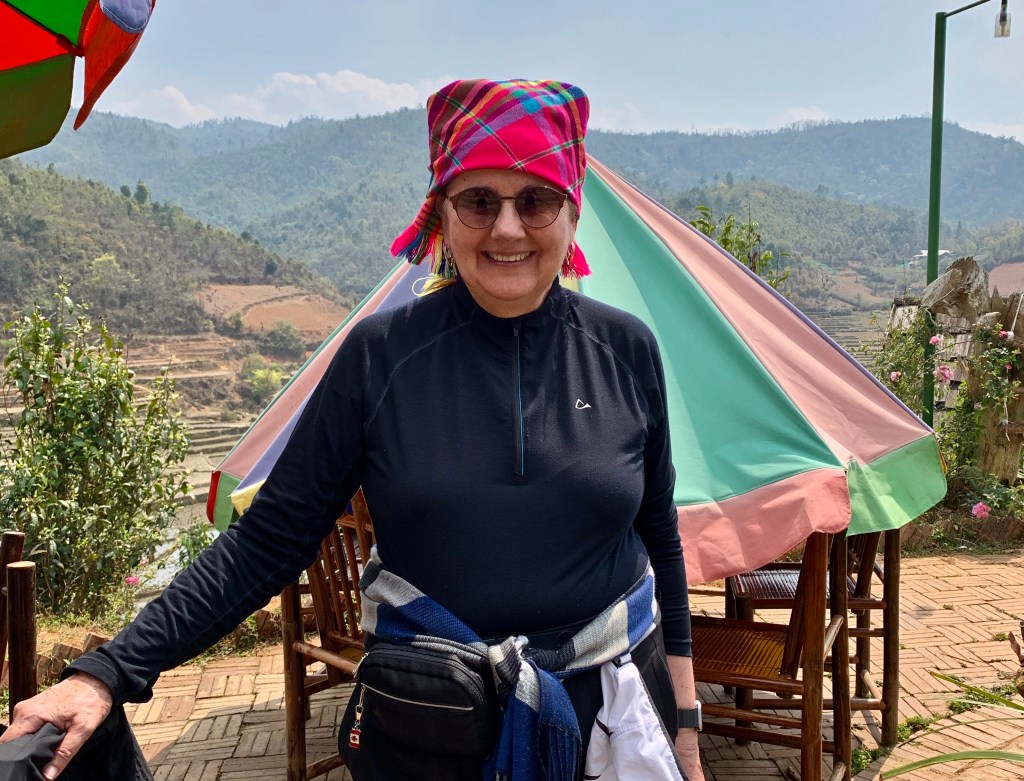
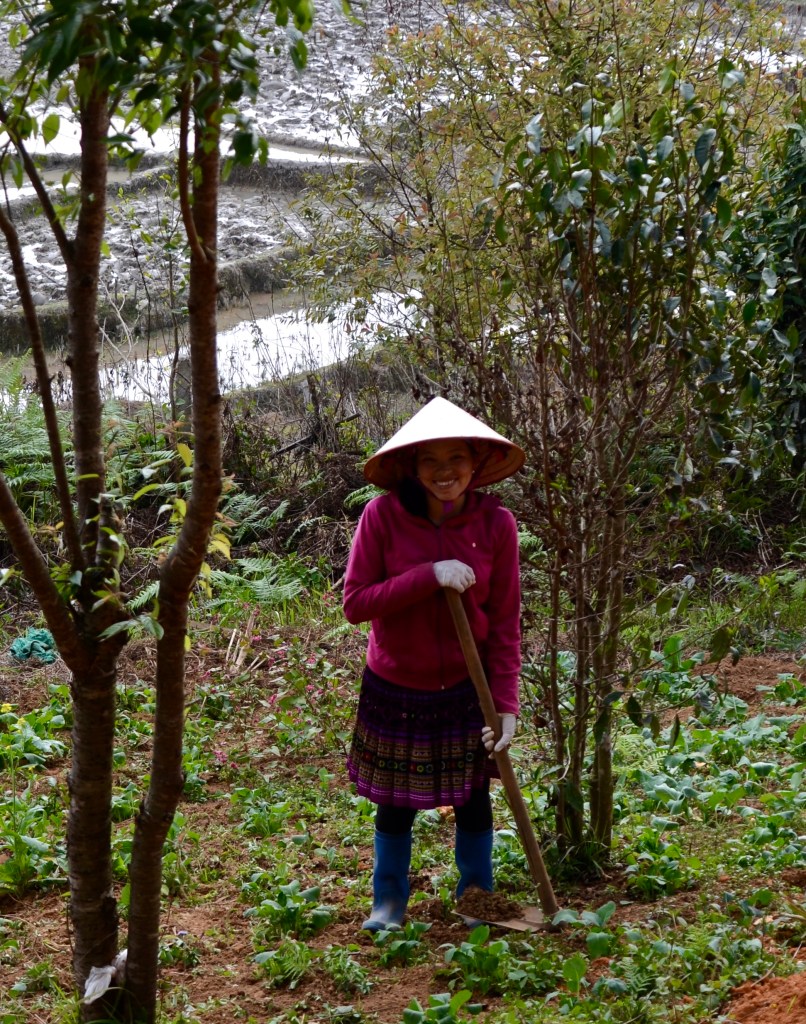
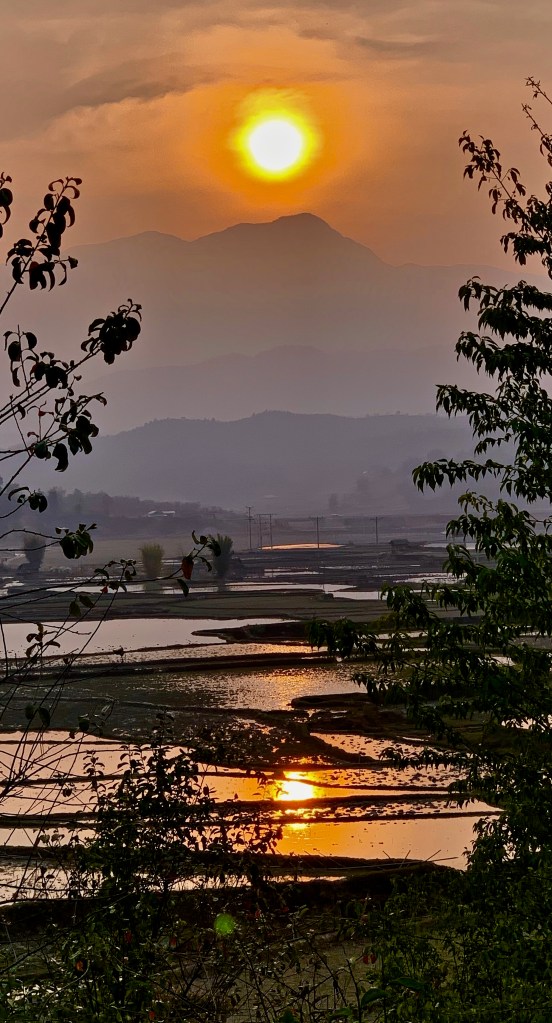
Bride and Groom receive a toast from all guests – the wine is so strong we were surprised they were still standingNot dressed for a wedding but the family made us feel so welcome and through Josie asked us to do a toast to the bride and groom.Amazing how they farm the rice on such steep elevations.Bee “farm”Hu, De and Cua took us to their Shaman’s home. Shamanism involves faith healing, spiritualism and traditional medicine.Corn drying – they use the corn for feeding the animalsChildren caring for children as their parents worked.Cua – always a smileCua taught me how to fold and wear the H’Mong scarf and wanted a picture of me.Cua – gardening is one of her many jobsShe liked the Canada braceletA beautiful sunset to end an amazing day exploring Mu Cang Chai.
Feb. 24 – 25: We are on day 2 of our 13 Day Far North Loop which we arranged through Far East Tours. We are travelling with a driver who speaks no English and our guide/ translator Josie whose English is quite good. Most of our travels will be in areas where few foreign tourists travel so a guide who speaks Vietnamese is essential.
The first day was more of an “in-transit” day with few stops along the way to Nghia Lo, where we stayed overnight. We left at 11:00 a.m. for the 188 km (3 1/2 hour) drive. Unfortunately there were no appropriate lunch places en route so in hindsight we should have left earlier and taken a “picnic lunch” to eat along the way. Our hotel in Nghia Lo was fine but it would be worth driving an hour longer and staying at Le Champ in Tu Le. This is a much more scenic and interesting village.
Day 2 from Nghia Lo to Mu Cang Chai (2 1/2 hour drive) was very scenic as we travelled through the Hoang Lien Son range, which has some of the highest mountains in Indochina. We made many short stops for pictures along the way and extended stops so we could visit the ethnic minority villages.
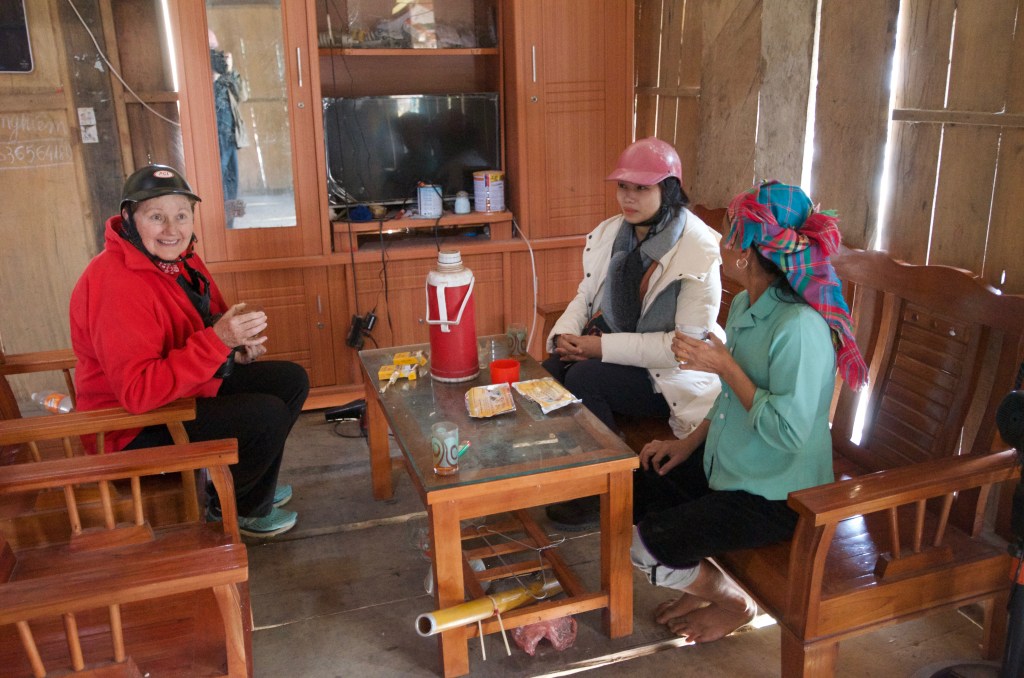
Our stop in the valley of Tu Le was one of our extended stops. Tu Le is home to the HMong and Thai ethnic minority communities. Our guide was able to arrange for 3 local Thai fellows to take us on their bikes through the countryside and into a Thai minority village. As you will see from the pictures we had some wonderful interactions with the Thai people.
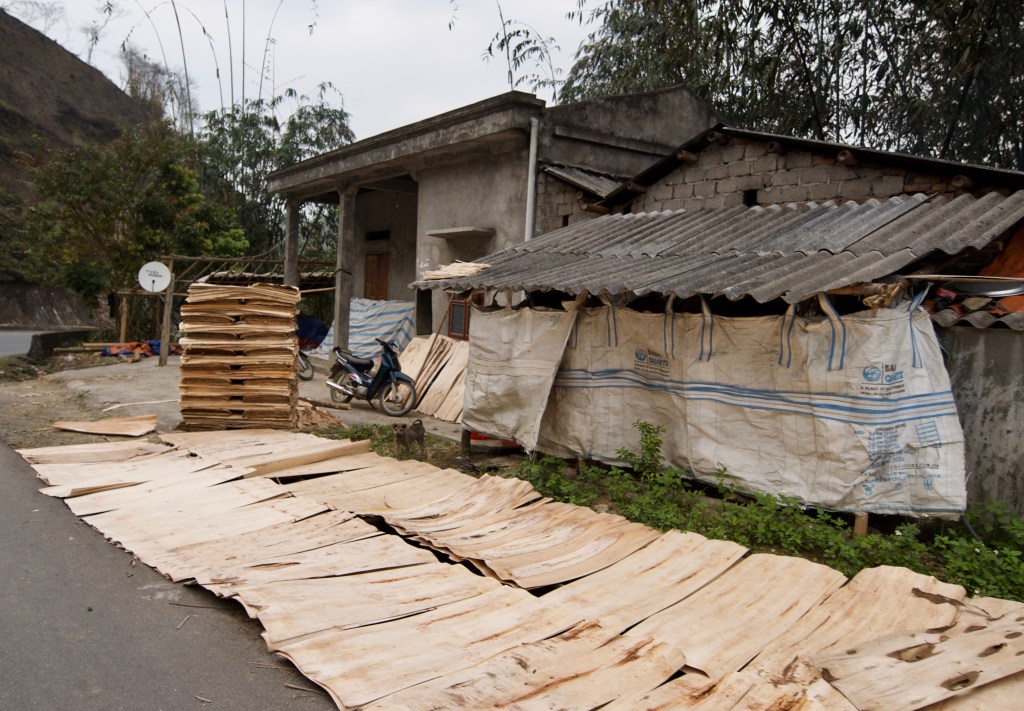
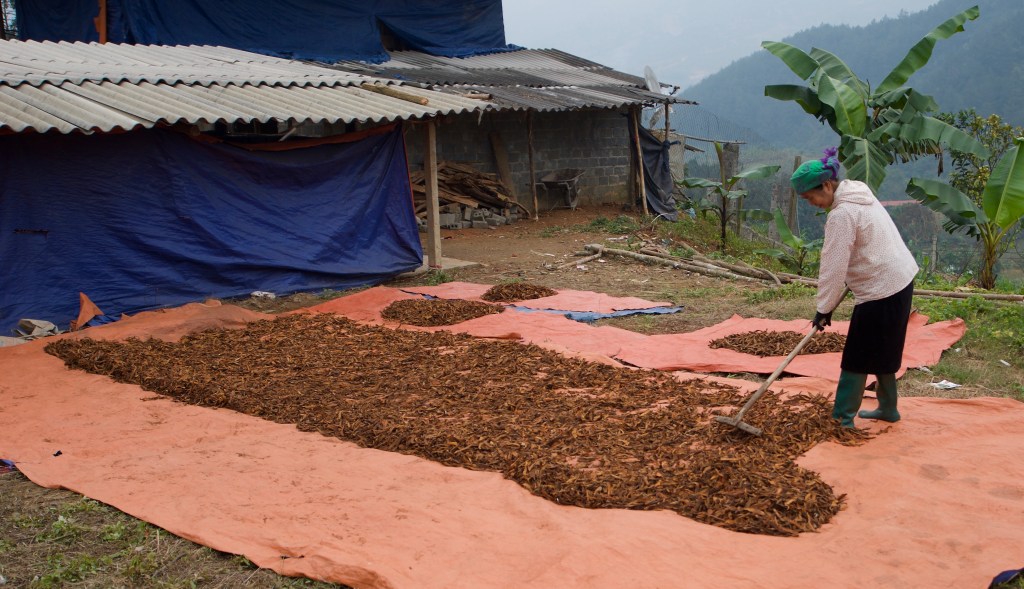
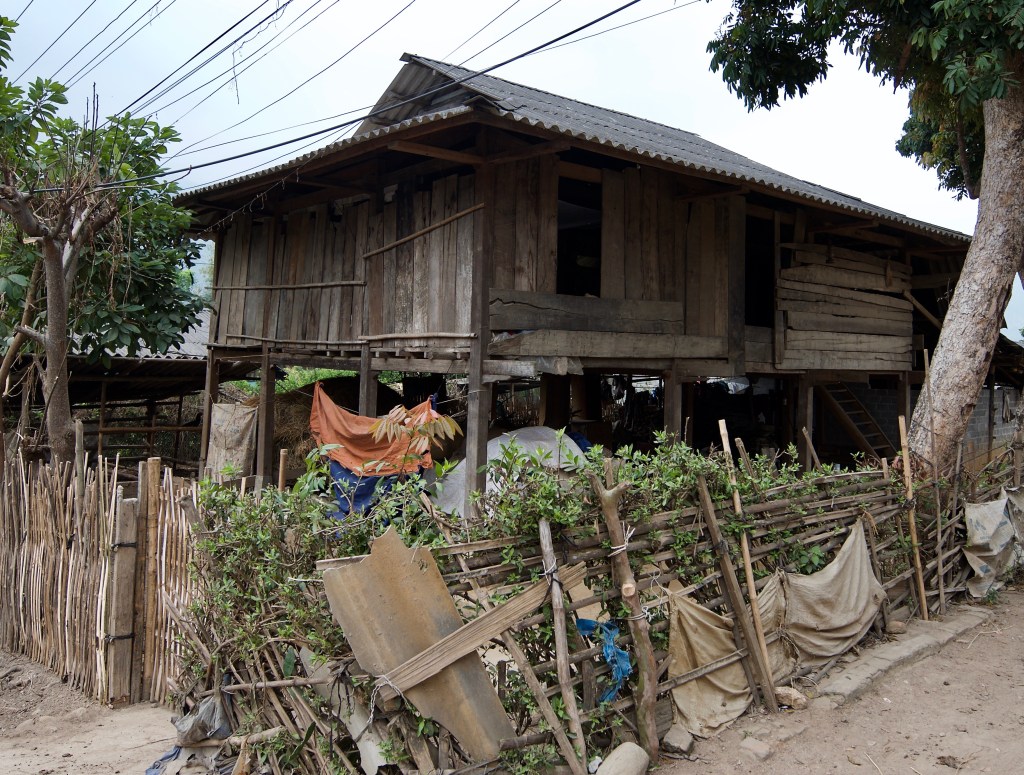
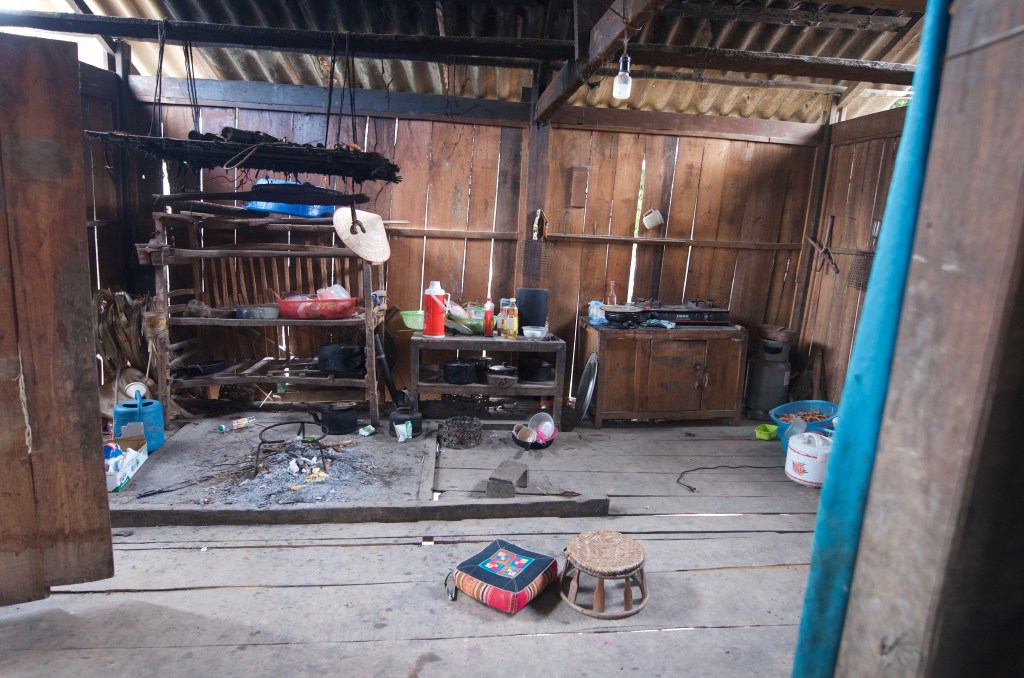
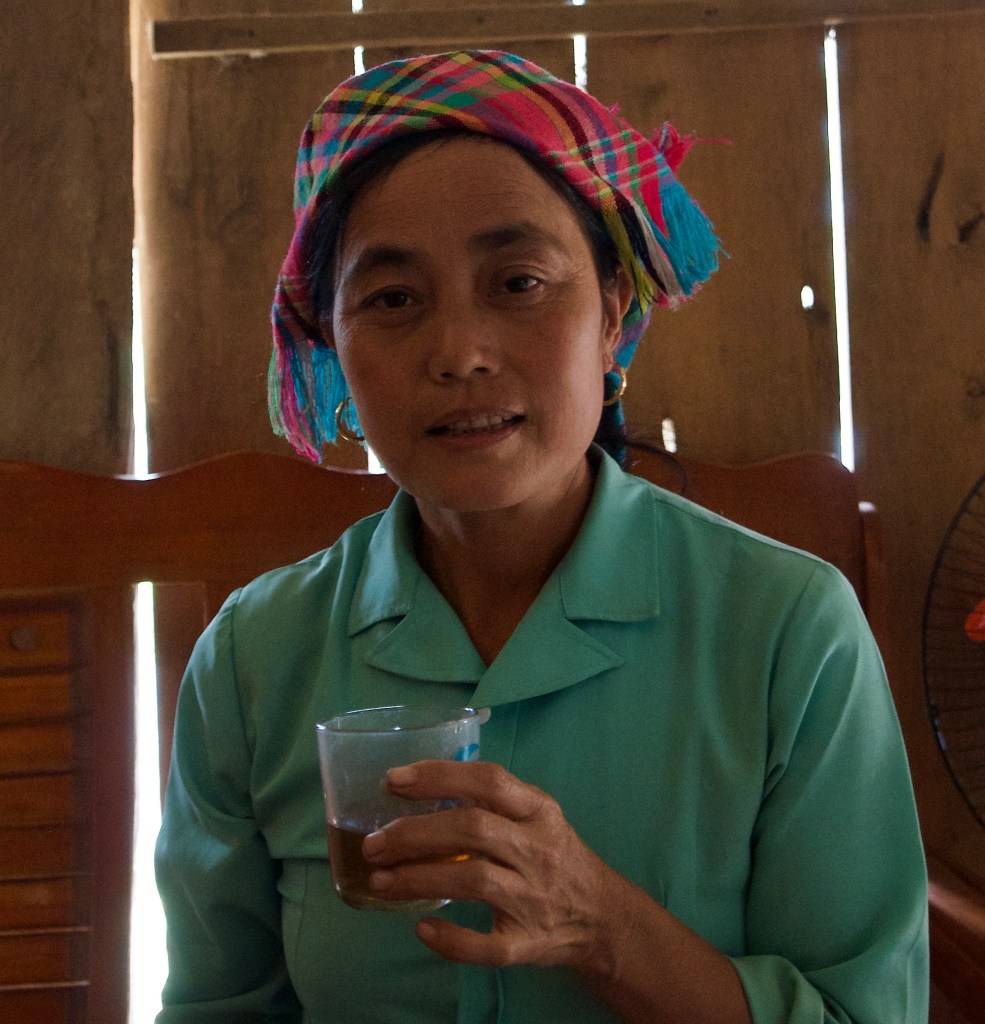
Suoi Giang Commune on the way to Nghia Lo- Tea San Snow is grown hereOn our way to Nghia LoWood veneer drying and then it will be used for furnitureDrying HerbsTu Le – we headed into the minority Thai area with some fellows from a home stay in Tu Le.Rice fields in Tu LeMinority Thai normally have their communities in the valleys and most homes are on stilts. We were invited in for tea by the owner.We felt so lucky to have tea with this lovely lady.The kitchenWith Josie’s help, I chatted with this lovely lady. She was so welcoming and curious.Picture taken from Le Champ Lu Le where we had lunch – a new resort that a local Majority Thai leader built. It was a very modern complex for this area.Le Champ seemed out of place in this very small ethnic village. The owner is hoping to attract international travellers who normally go to the popular destination of Sapa.
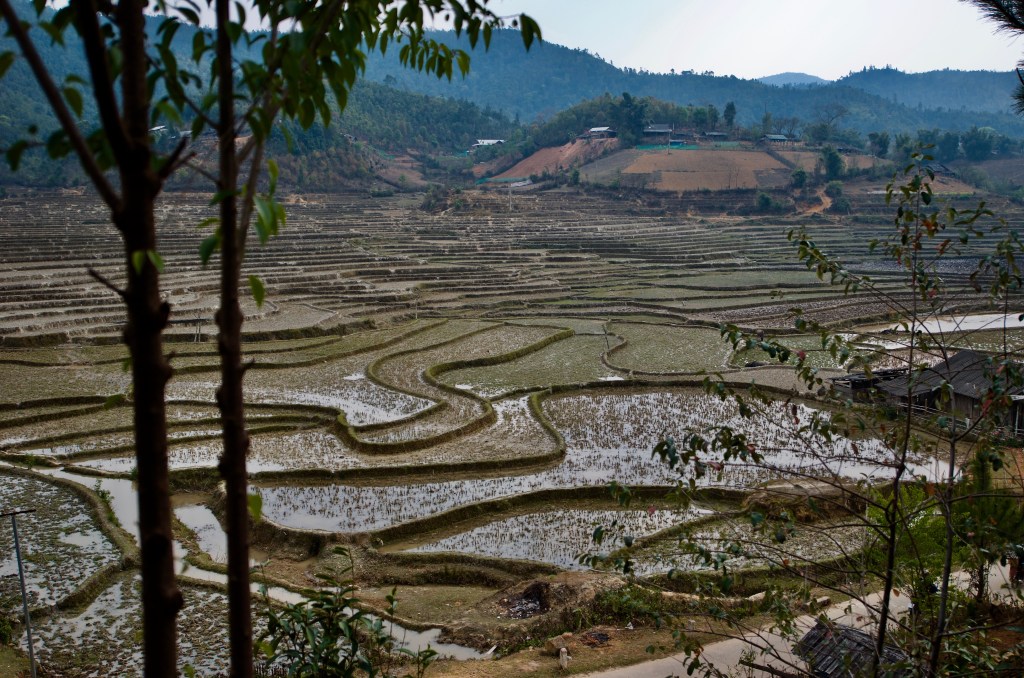
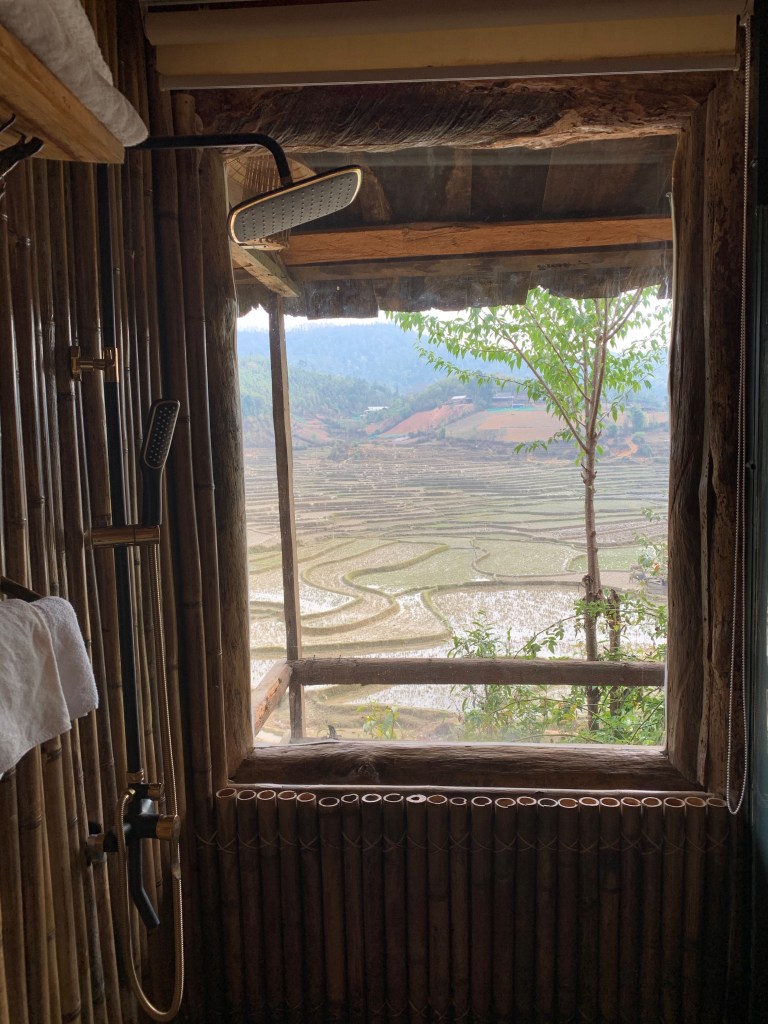
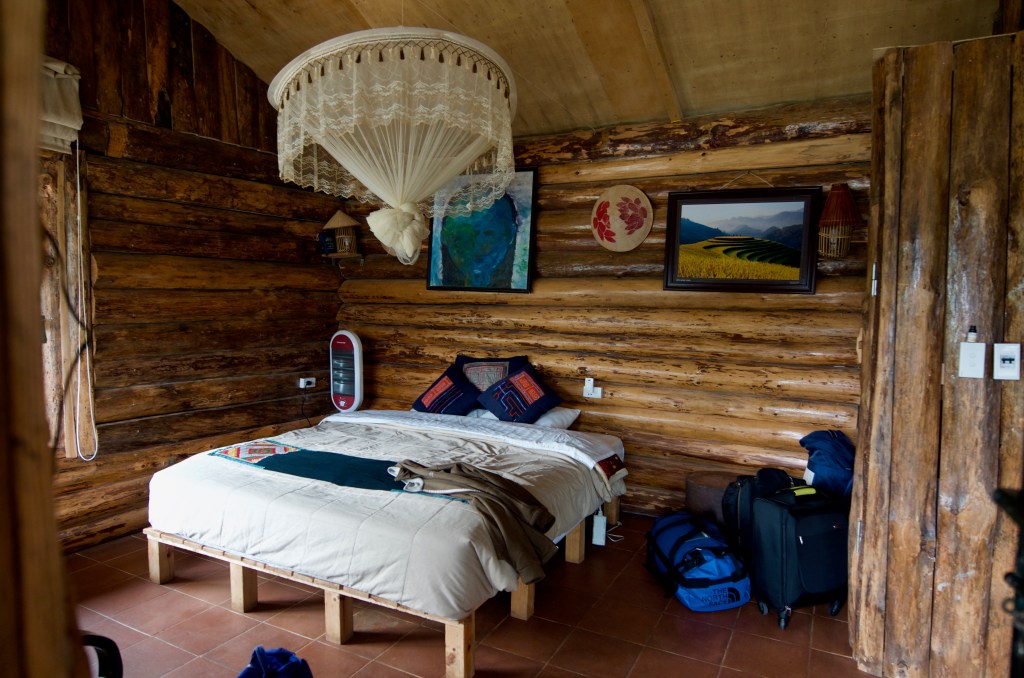
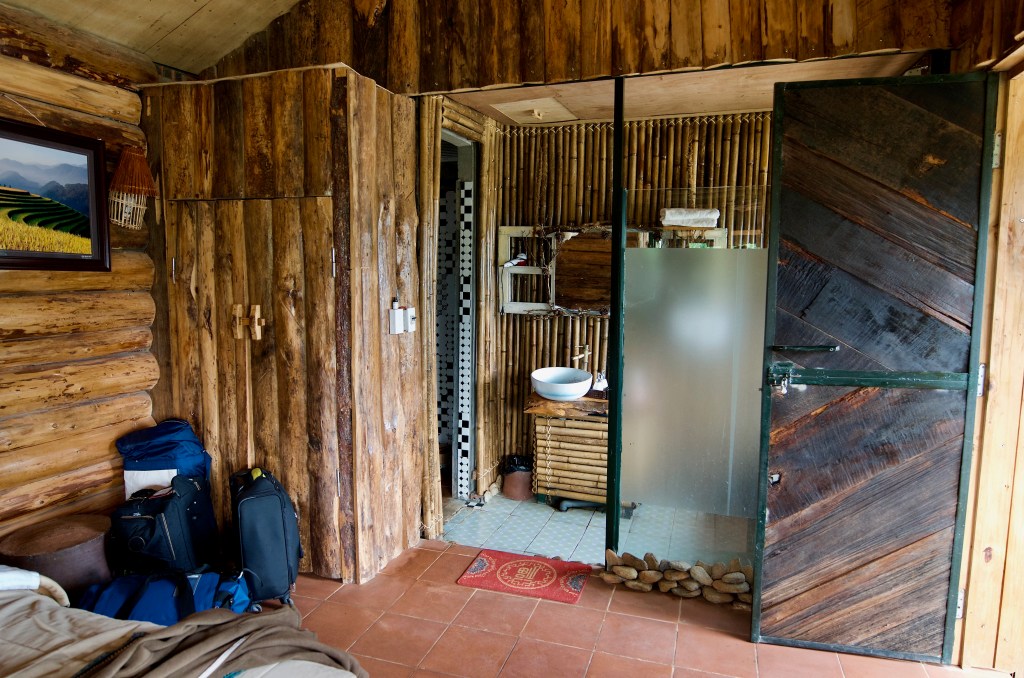
Mu Cang Chai Ecolodge, where we are staying for 2 nights, is even more basic and rustic than the farmstay. All is good though as the bed is comfortable and we have our travelling pillows. We have a great view from our room ….Mu Cang Chai has 700 hectares of terraced rice fields and in harvest season it would be stunning – the fields are “resting” right now and will not be planted until May/June.
View from our room # 3 at Mu Cang Chai EcolodgeGreat view from our showerVery few guests at the lodge.
We reached Mu Cang Chai Ecolodge early afternoon which gave us time to visit a couple of the Hmong villages close by. It was great as a few of the young HMong staff (Hu, Cua and De) from our Ecolodge took us around the local villages on the back of their motorbikes. Being with locals from the village, we were able to see in some homes and once again interact with the people.
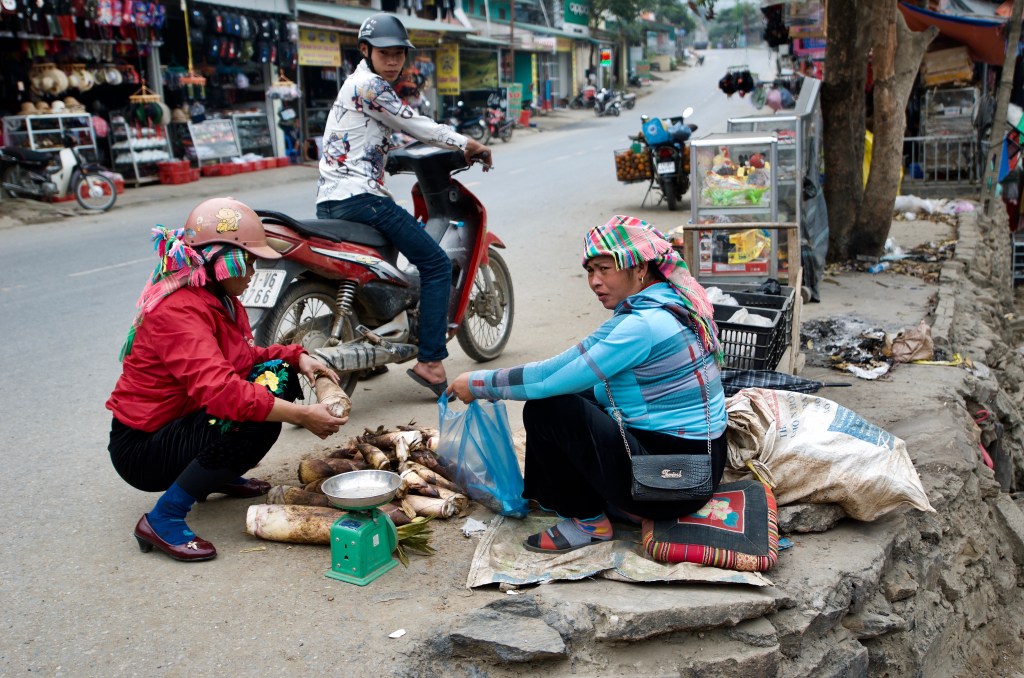
Hmong communities are normally in the mountains.They eat a lot of bamboo root. This is the local village in Mu Cang ChaiDe, Larry’s driver, is filling up for the trip.This lady does not have electricity in her home, so she sews out-of-doors when the sun is bright enough for her to see.
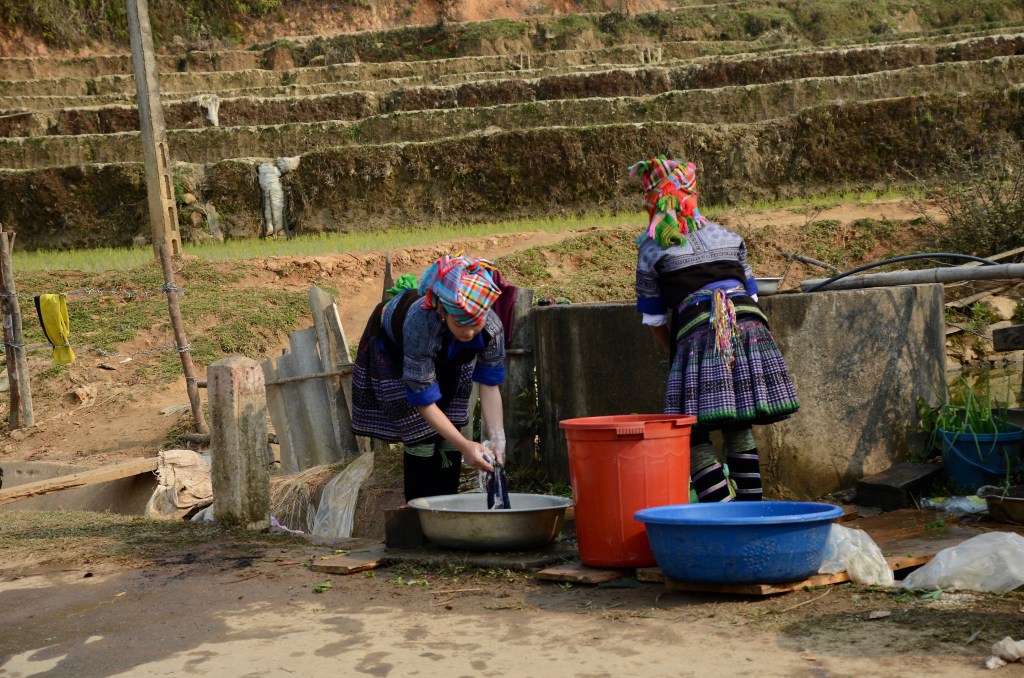
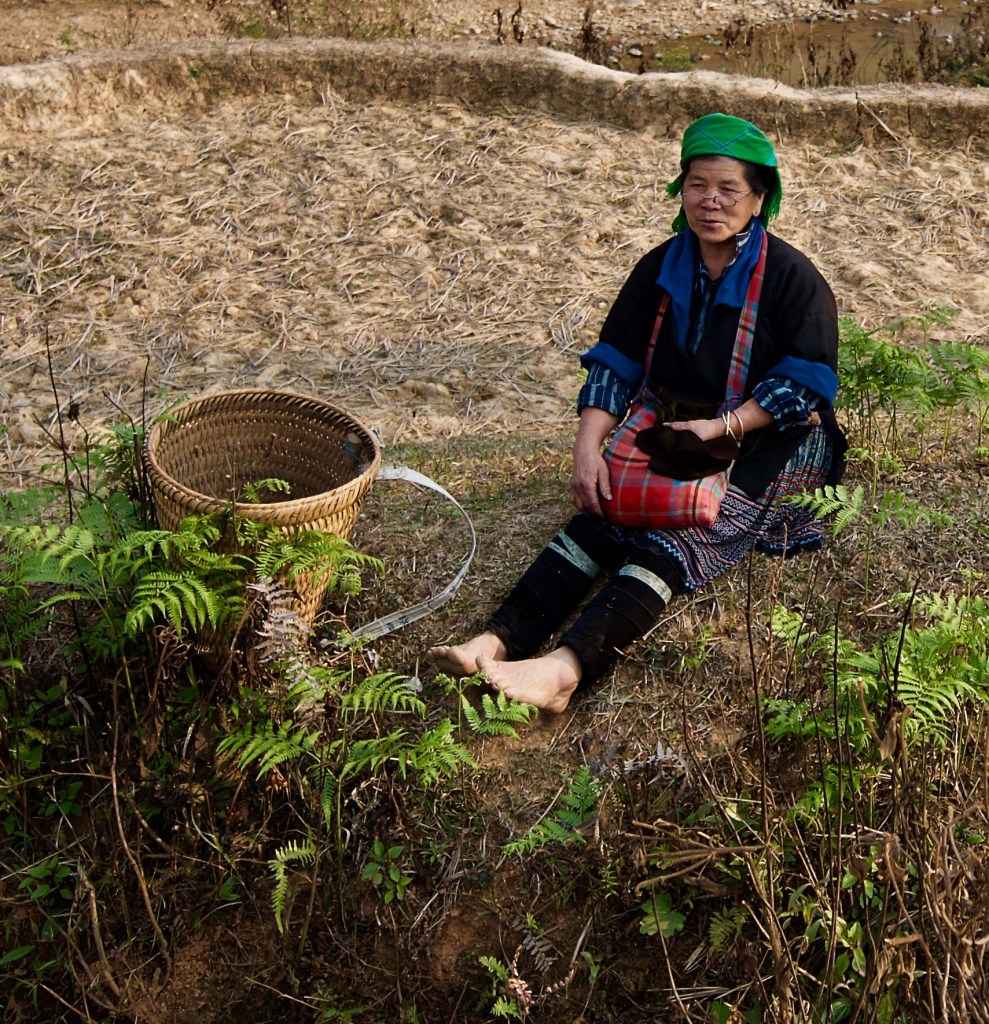
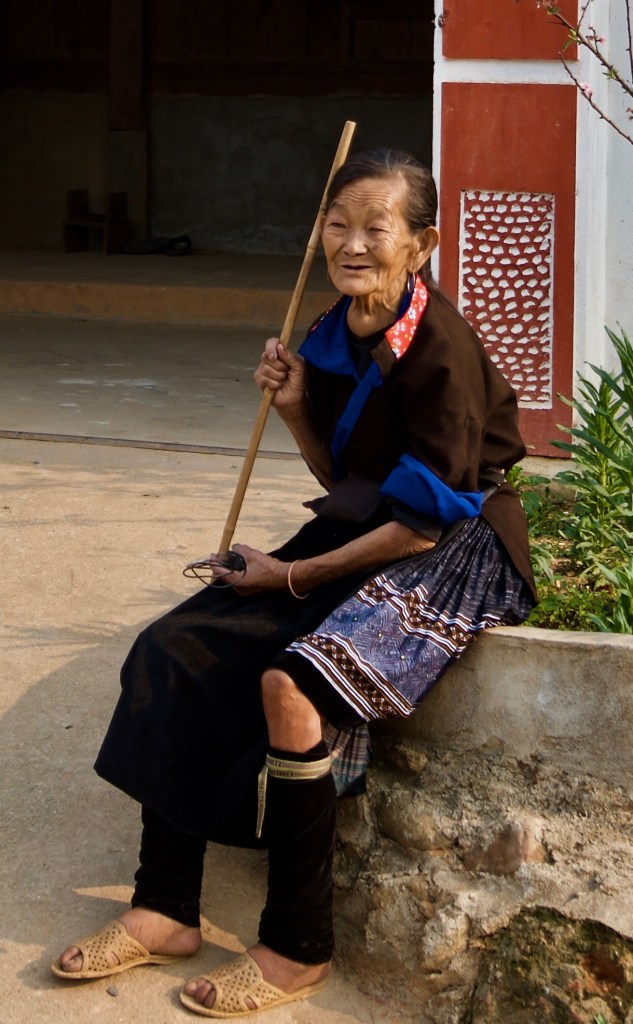
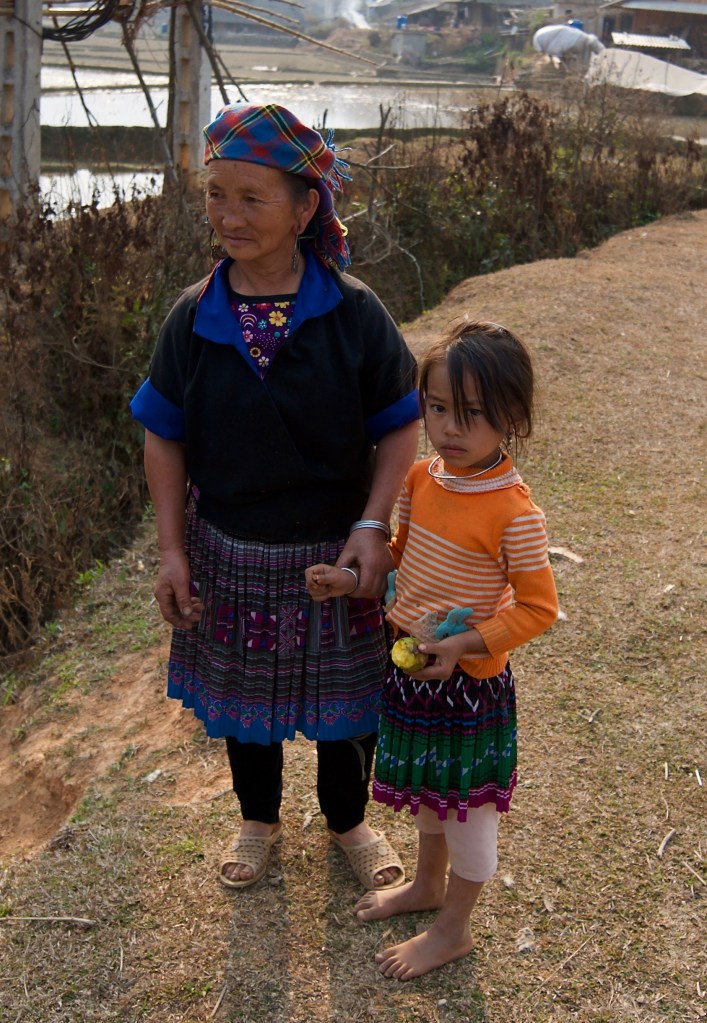
The HMong ladies wear the same head scarf as the Thai, but the Hmong normally wear the colourful skirt. Thai wear a black skirt or pants.
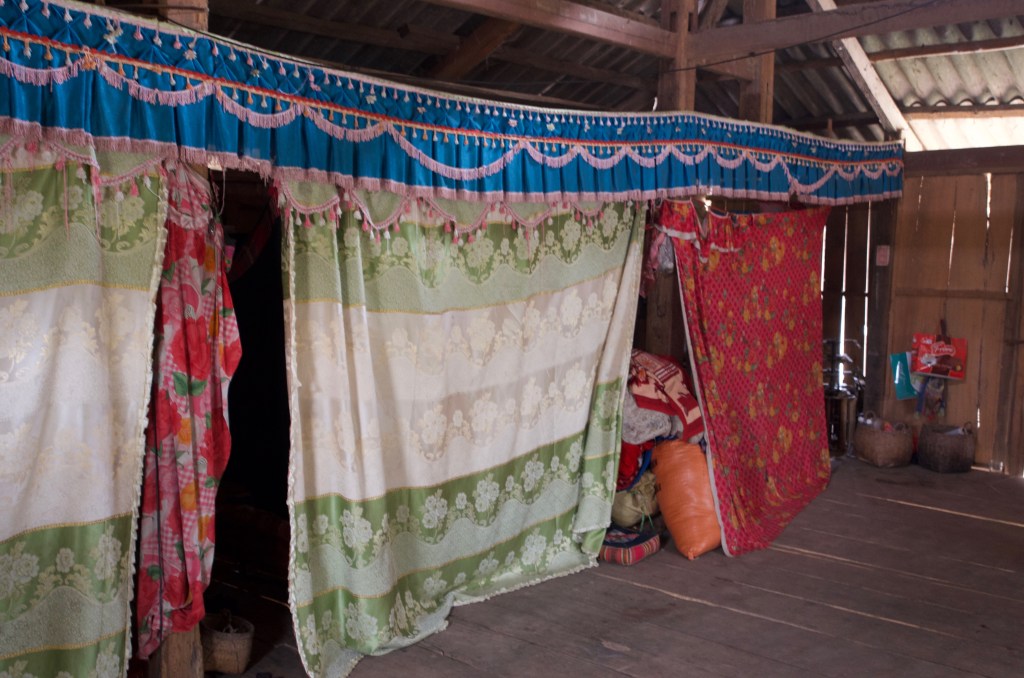
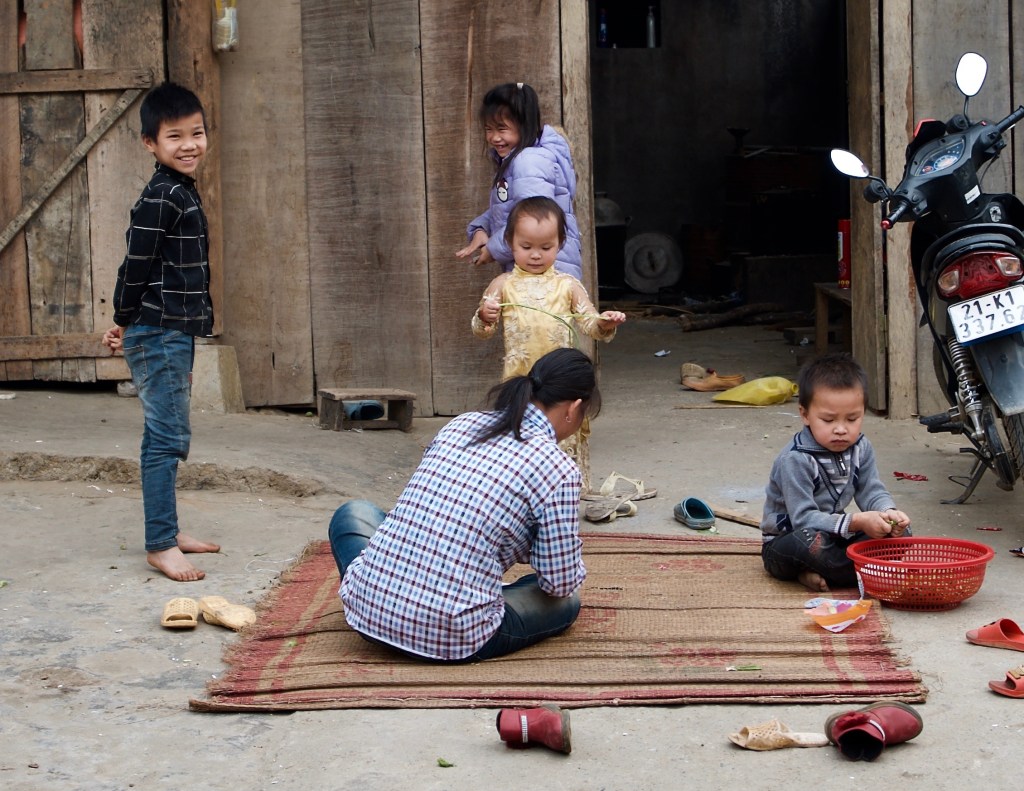
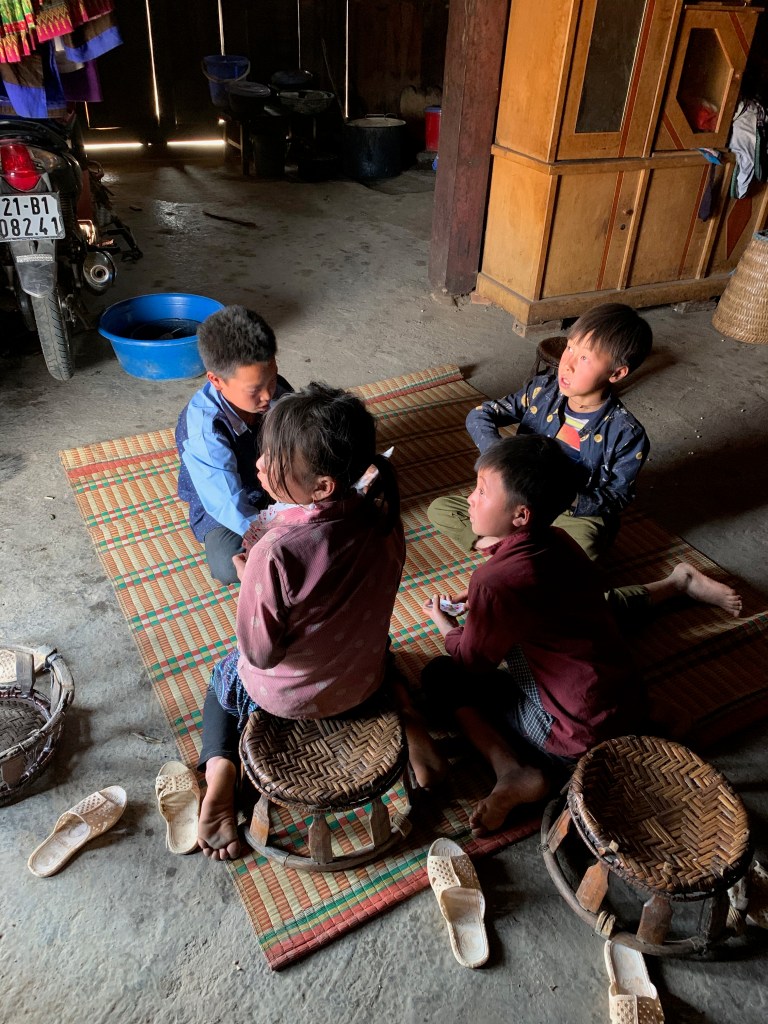
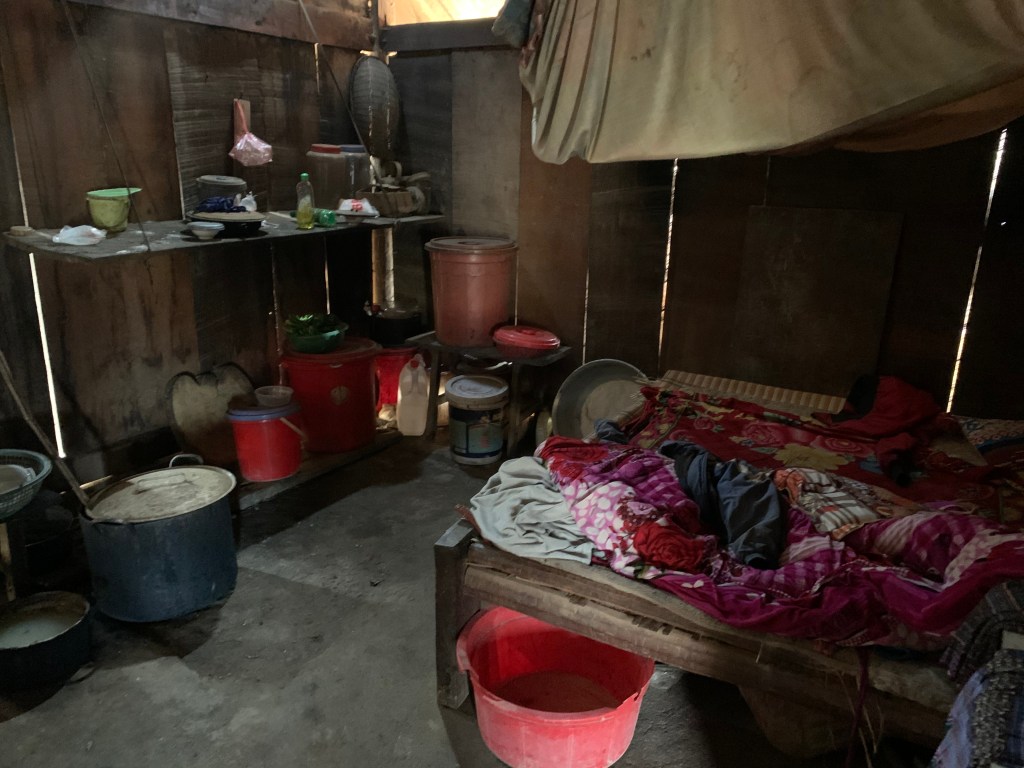
Hu, my driver, took us into one of the HMong homes. Since school was cancelled because of the coronavirus, the children were at home while the parents worked.Kitchen and bedroom
February 20th: This was our second full day at the Phong Nha Farmstay. From what I had read, Paradise Cave (Thiên Đường) was a “must see” as it was even more impressive than Phong Nha cave (the cave we visited yesterday)….so a visit to Paradise Cave was our priority for the day. Paradise cave is located in Phong Nha Ke Bang National Park and is a 45 minute drive from the farm stay. We decided to go by motorbike with Phong Nha Easyriders. This way we could enjoy the scenery along the way.
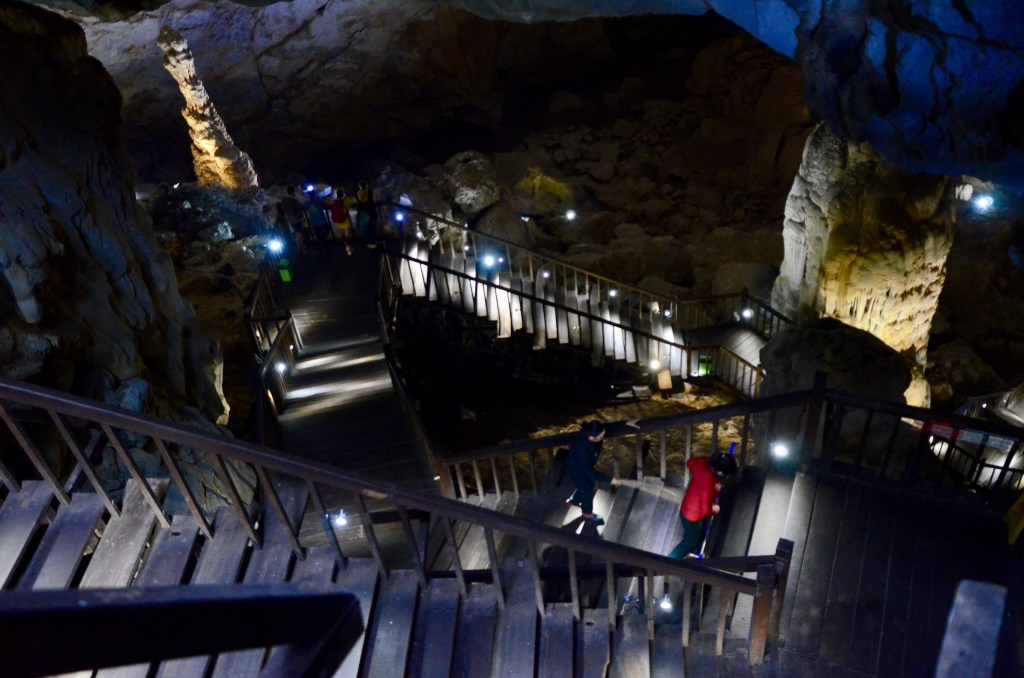
Once at Paradise Cave, we took a cart the 1.5 Km to the bottom of the mountain, then we took the winding path rather than climb up the 500 rocky steps (the path was the longer route but more scenic).
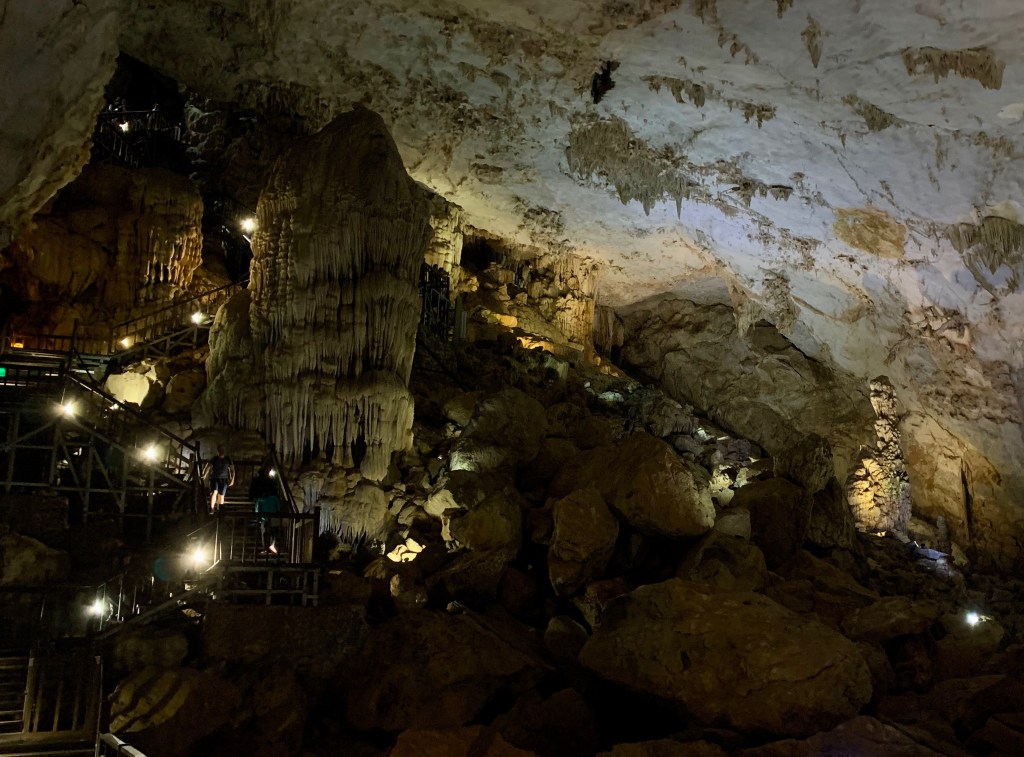
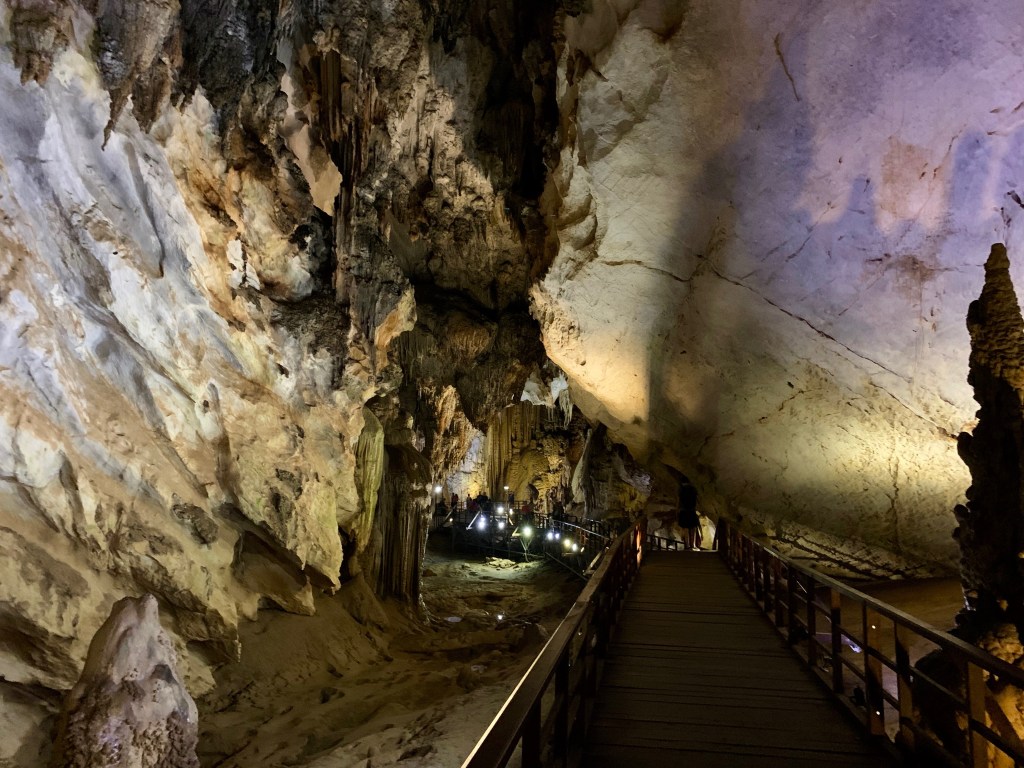
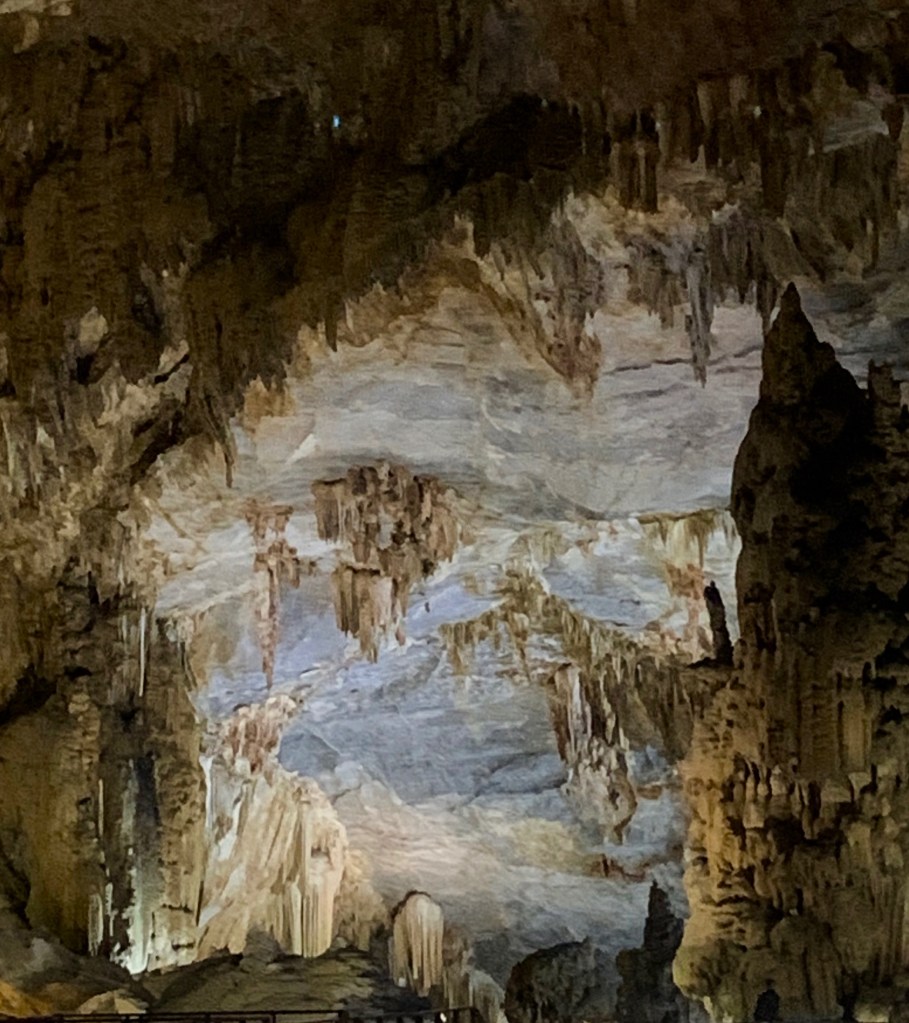
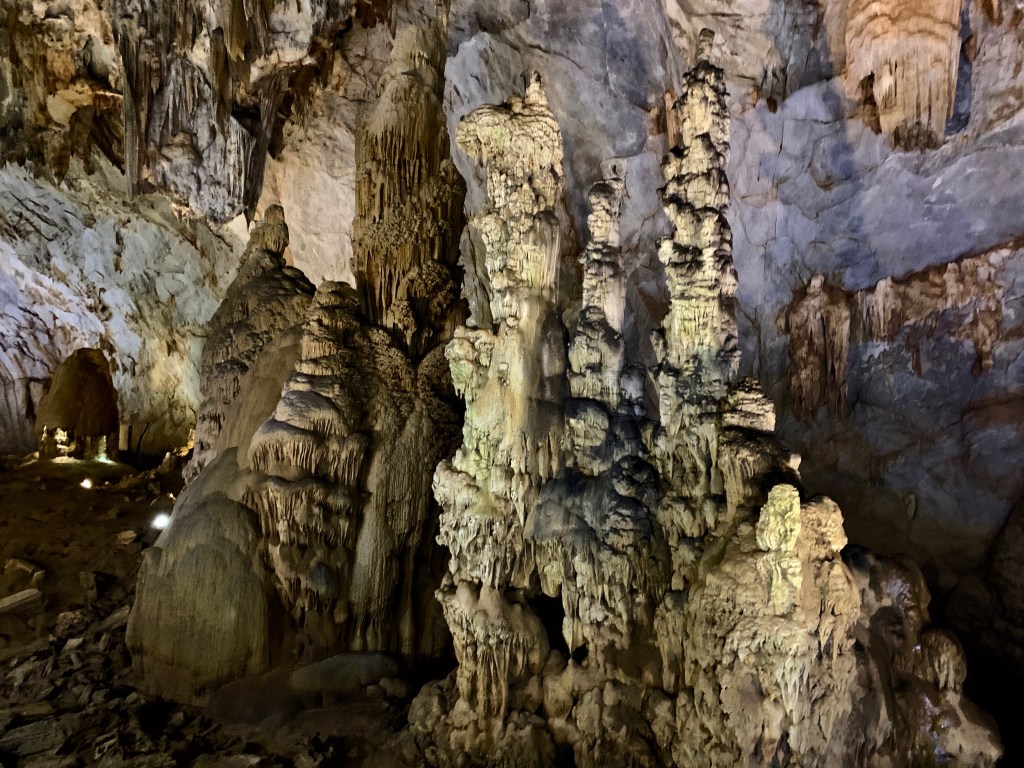
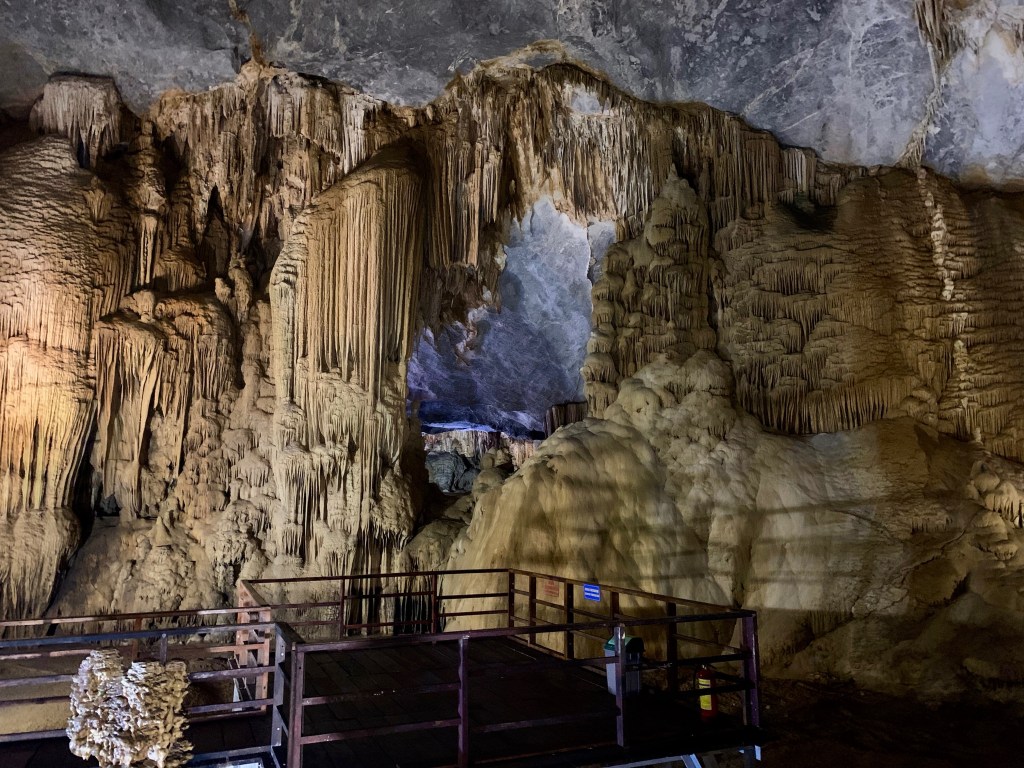
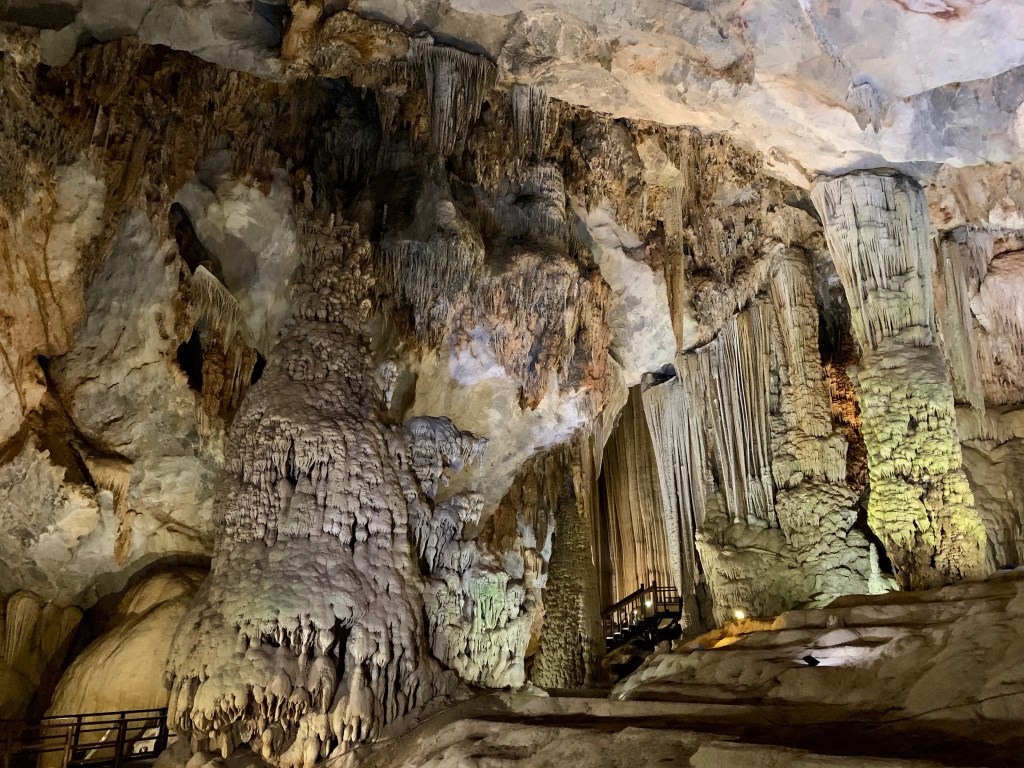
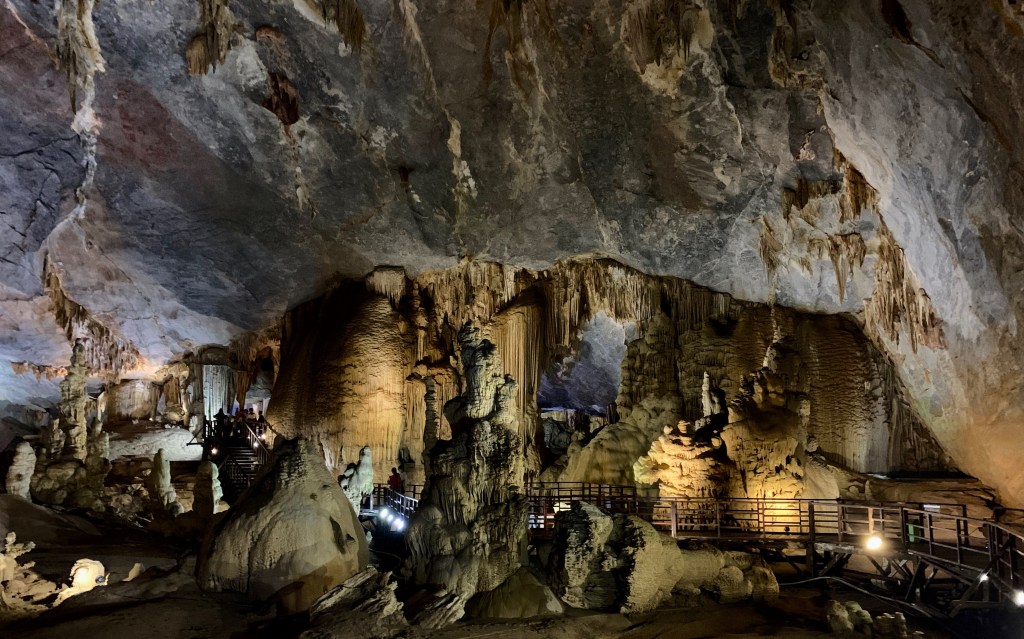
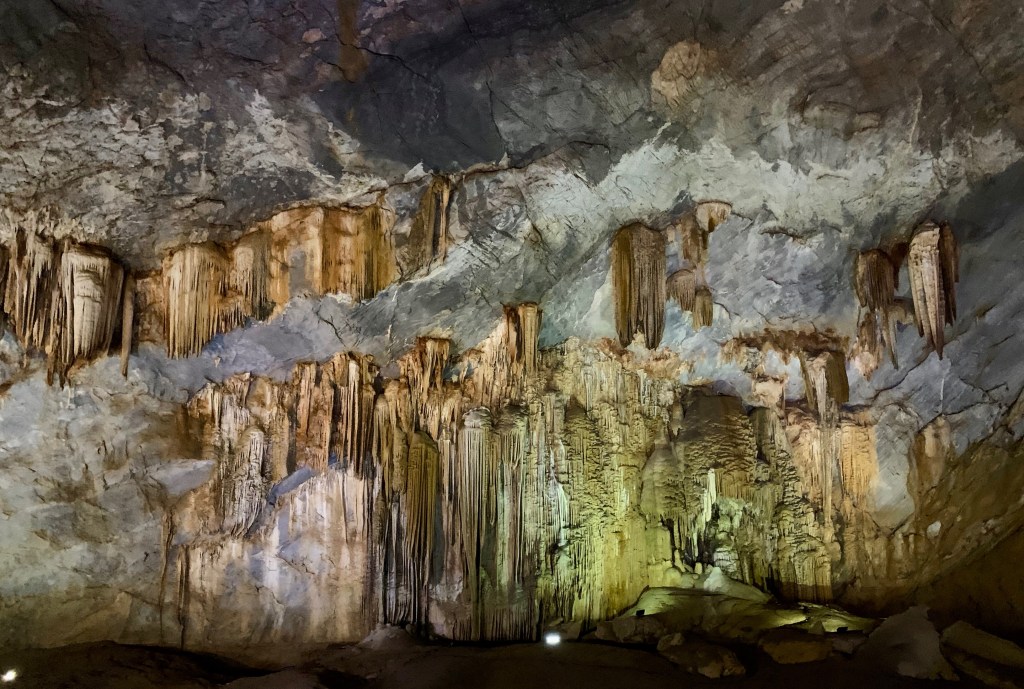
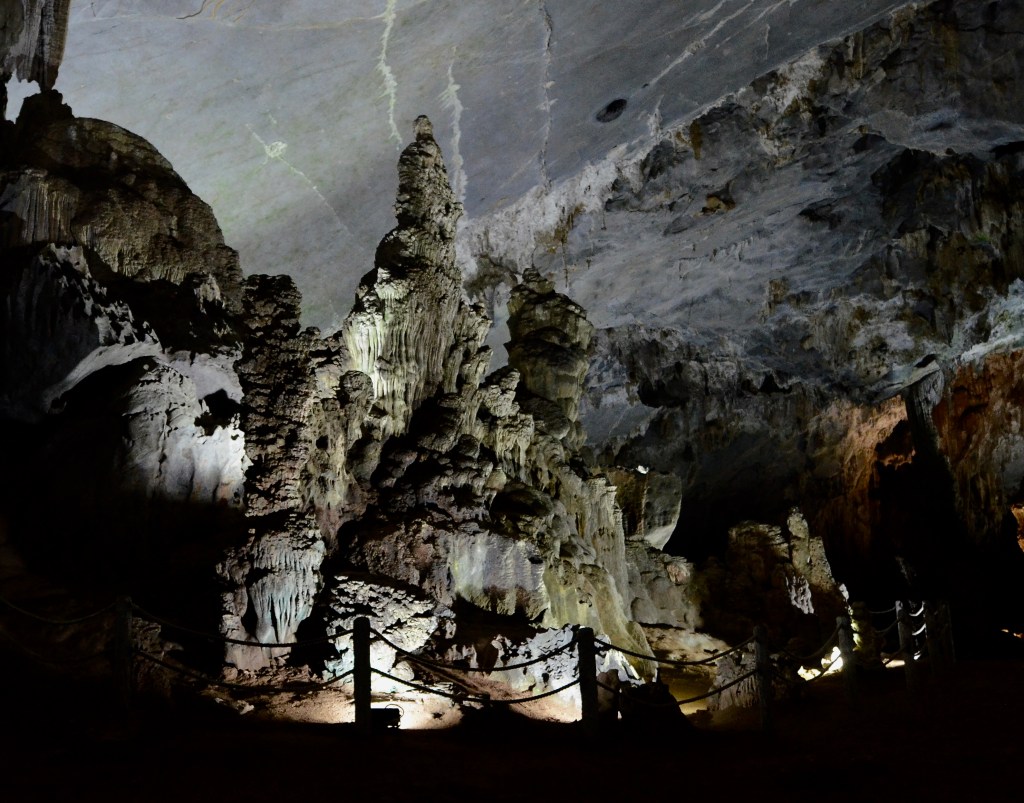
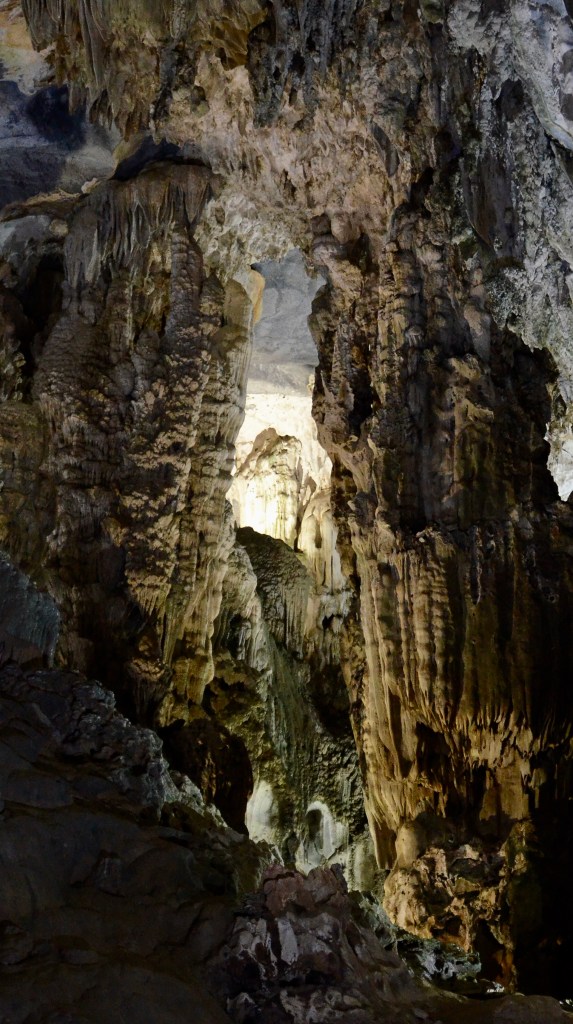
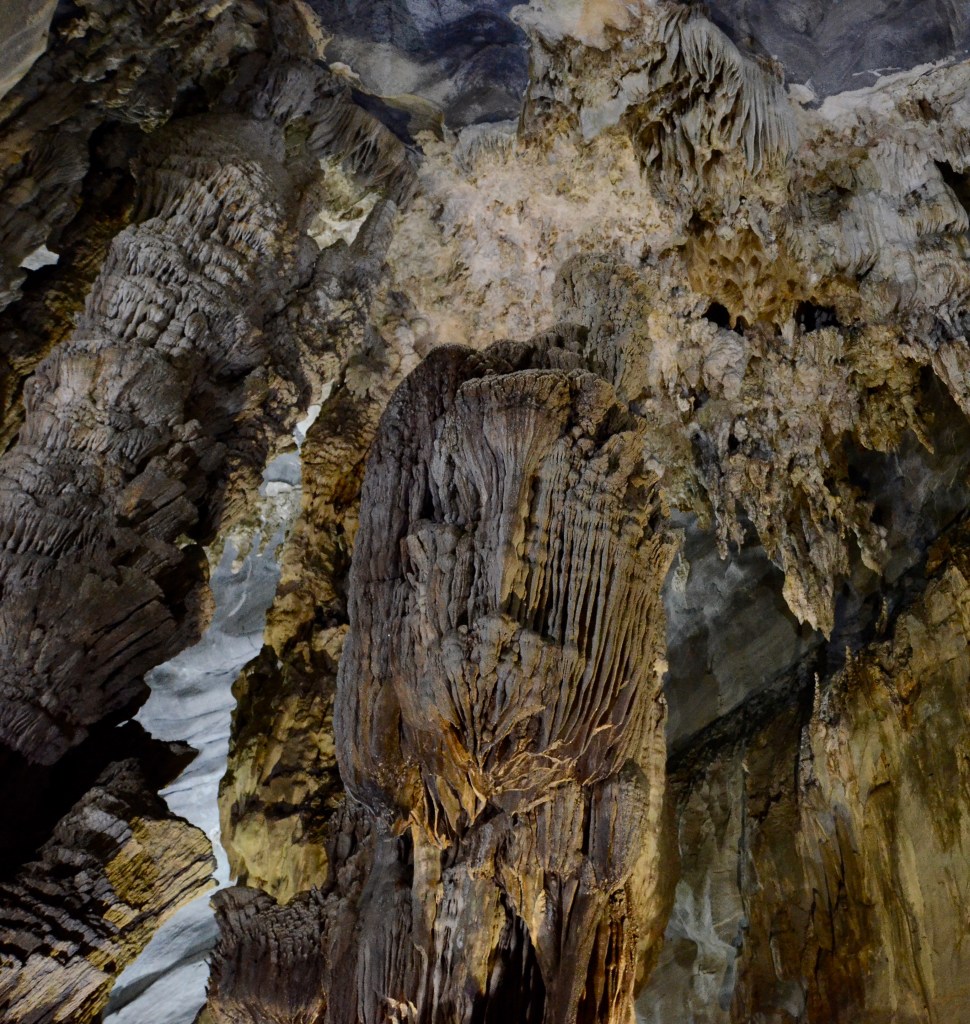
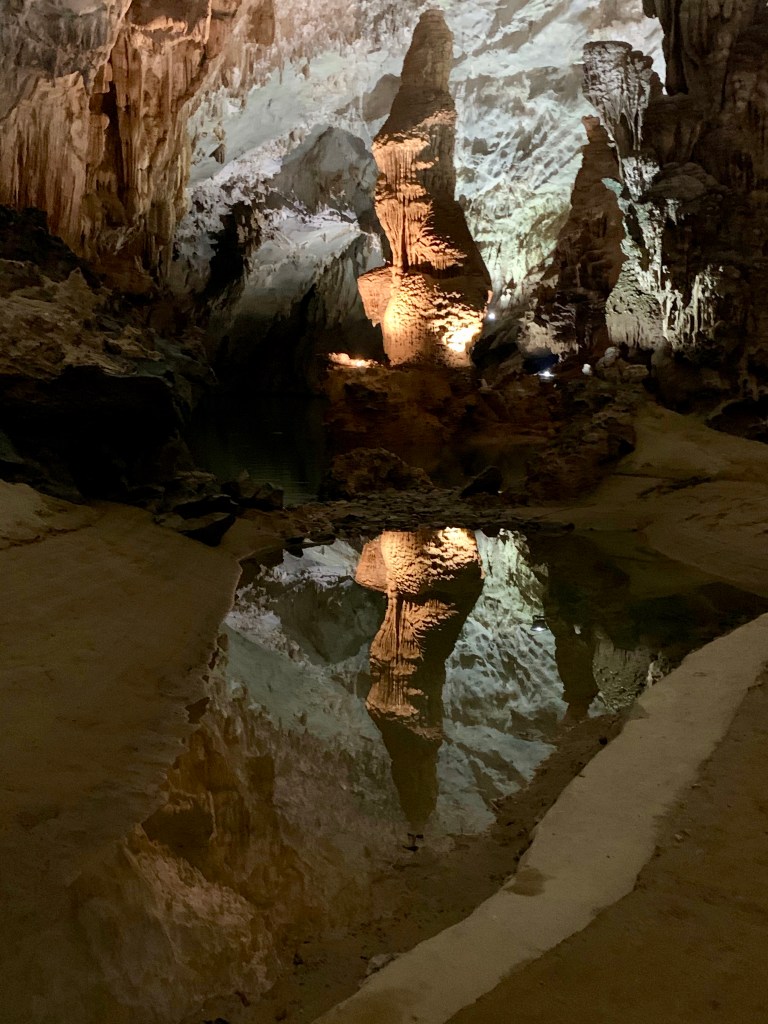
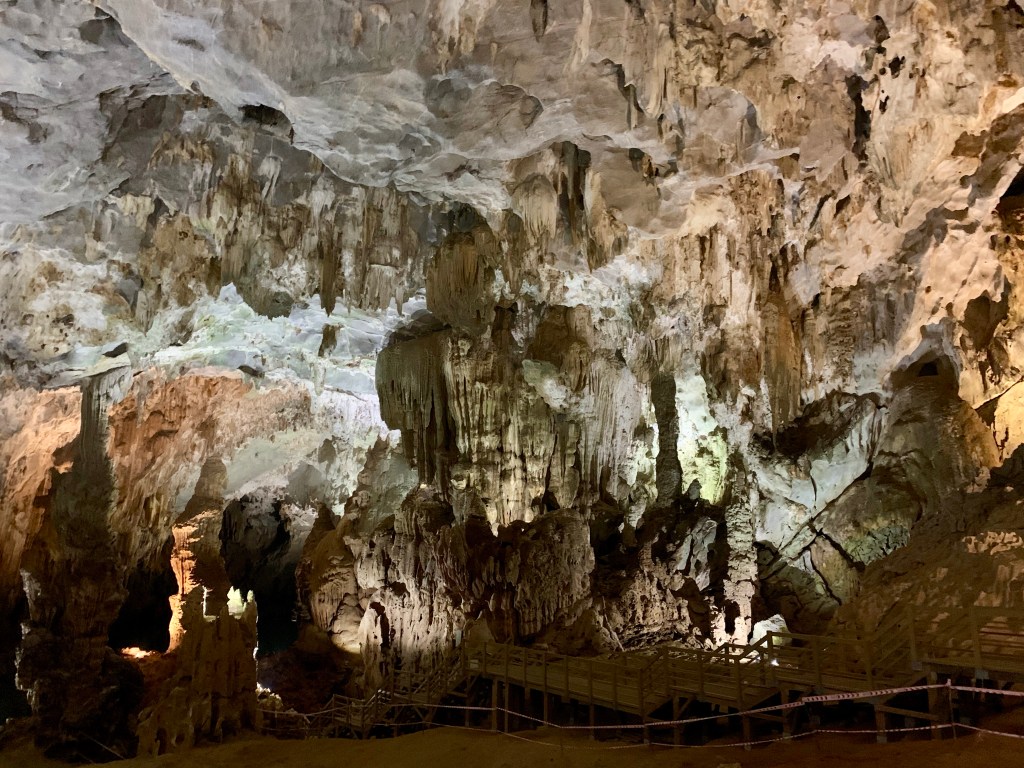
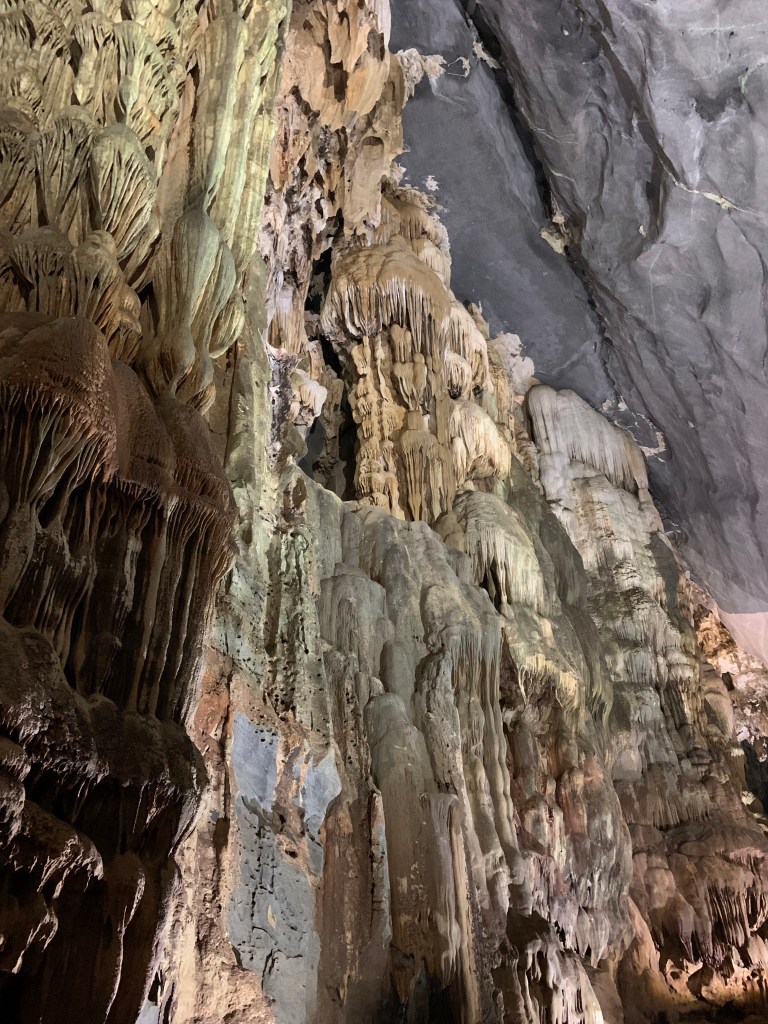
As we walked down the staircase into the cave, we were amazed at the cave’s vastness – there are stalactites and stalagmites as far as the eye can see. The following statistics will give an idea of its size: 31 km in length, although only 1 km is open to the public, the width ranges from 100m, up to 150m at its widest point; the height from the bottom up to the ceiling is about 60-80m which makes it very dramatic. We were told that Paradise Cave was first discovered in 2005 by a local man named Ho Khanh and then explorers from British Cave Research Association continued to discover the cave. It is considered the largest complex of caves in the world.
We took our time wandering through the cave as it was so magnificent. It was impossible to capture the cave’s grandeur in pictures. It really is a “must see to believe”.
Phong Nha Easy Riders – although they didn’t speak English, between Google Translator and charades we did wellWe walked down hundreds of steps from the entrance to the bottom of the cave. The picture only shows a bit of the distance we descended. Once at the bottom, the paths meandered through the formations.The pictures don’t show the depth and beauty of the cave, but hopefully it will give you an idea of what we saw.Paradise Cave is the largest dry cave in Asia and is known as one of the most beautiful caves in the world. It is by far the most beautiful that we have ever seen.There were few people so we always had an unobstructed view. There were so many different colours.
After the cave, the Easyriders took us to the Botanical Gardens – which are really paths through the jungle to a waterfall.
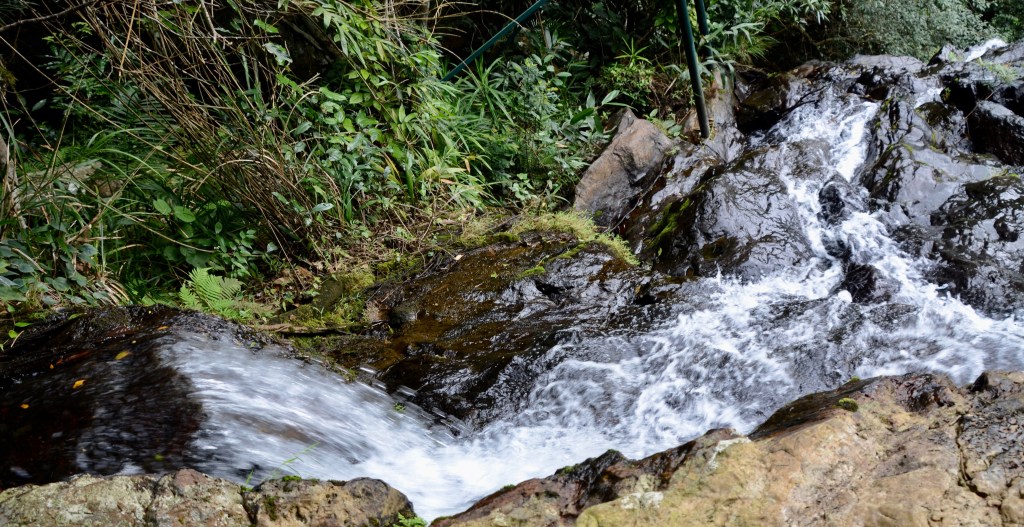
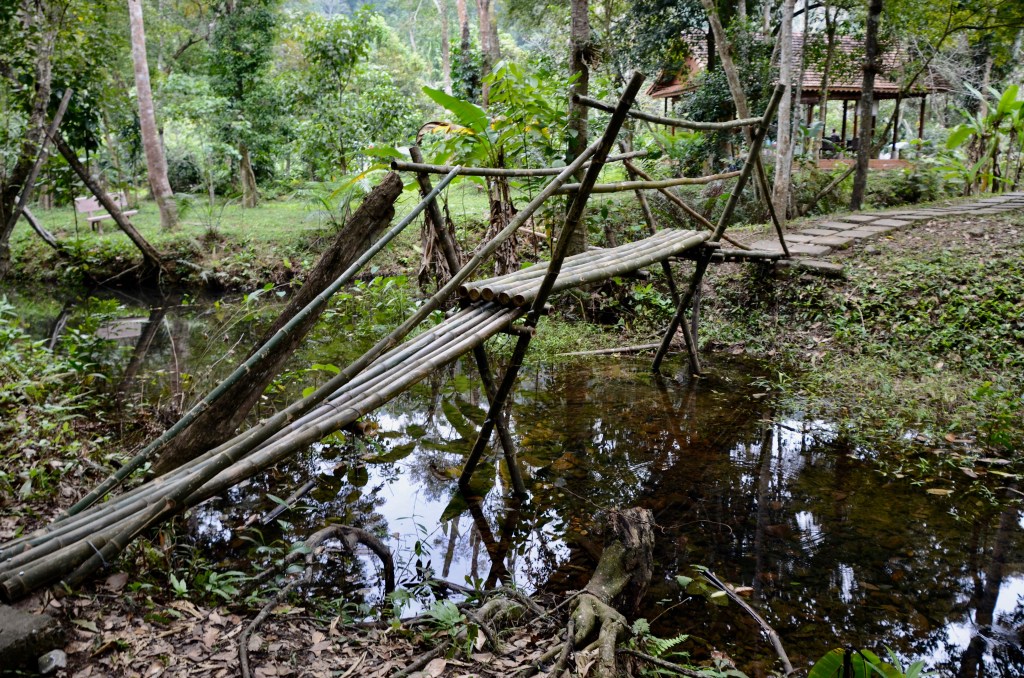
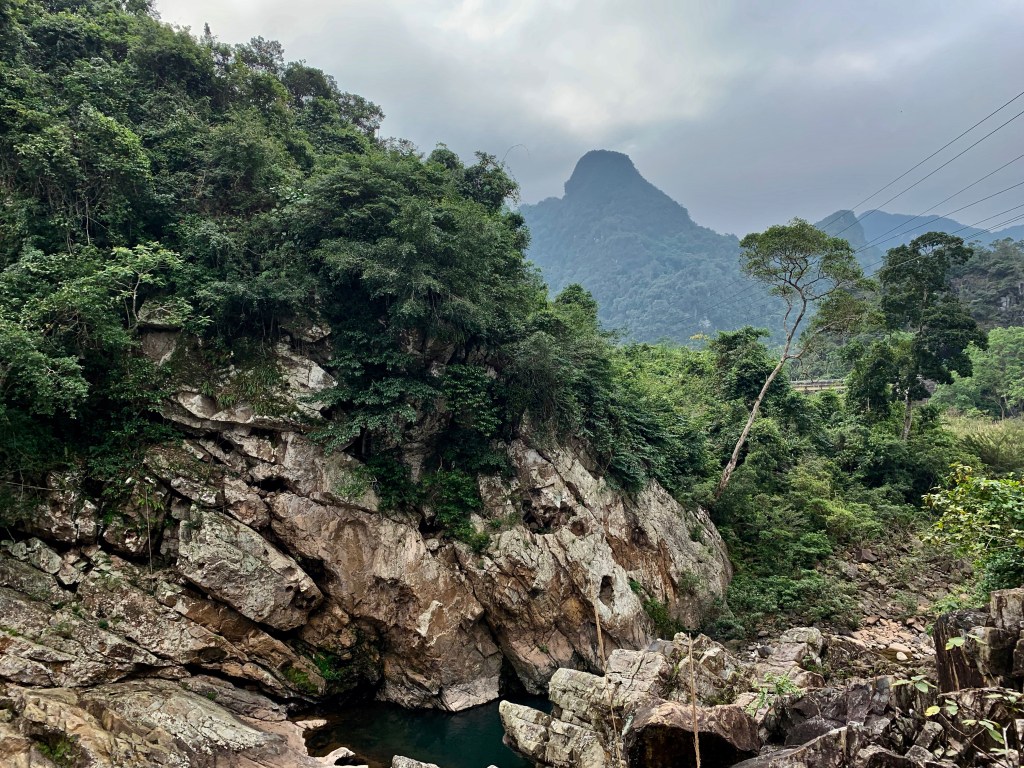
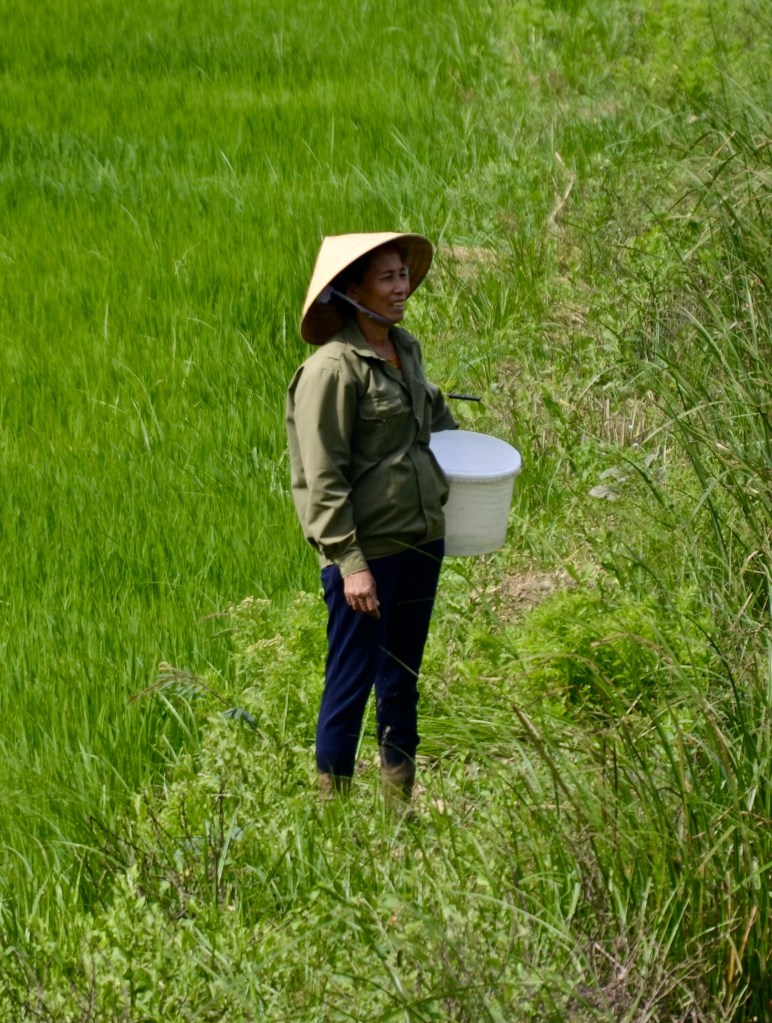
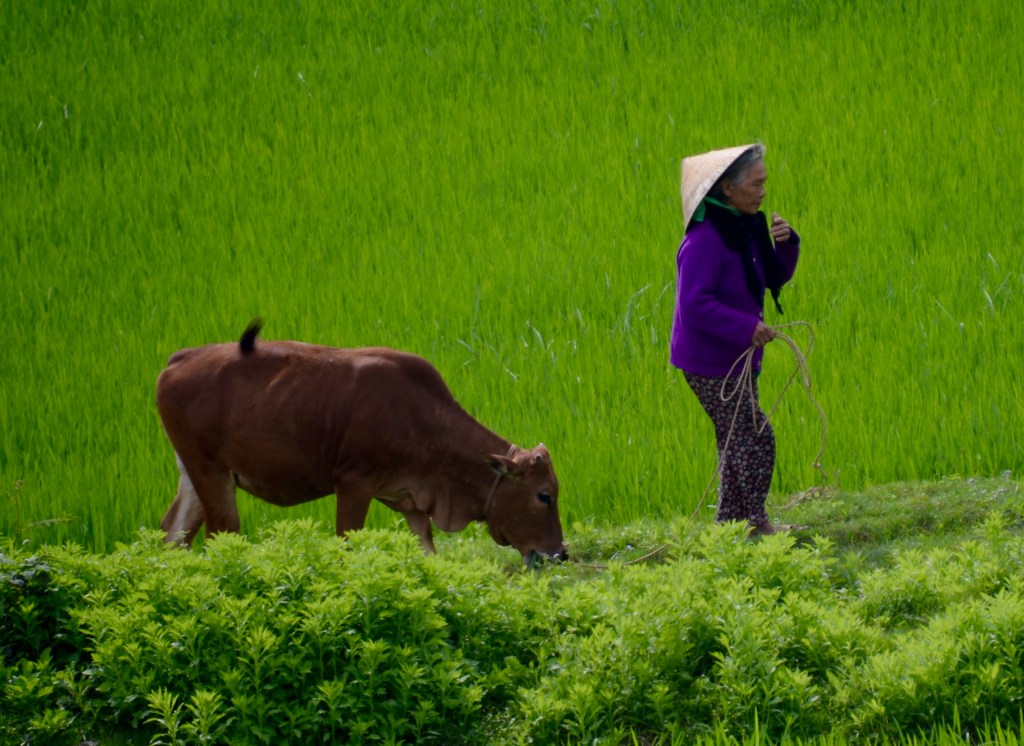
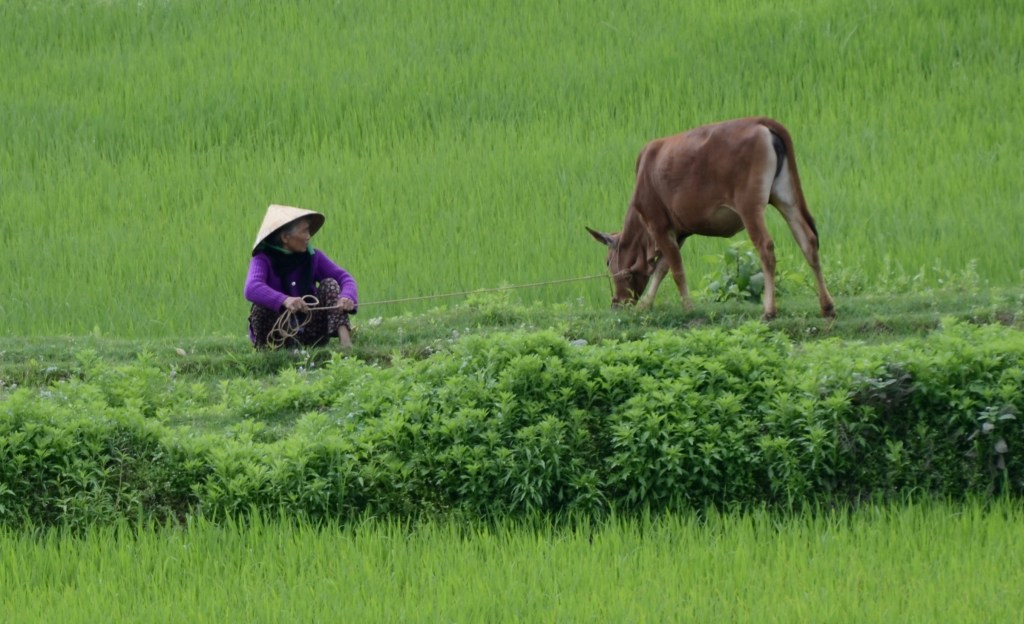
On the way to the gardensAt the gardensWaterfall at the gardensThe bridges at the gardens were a bit challenging for me. Spreading seed by handShe walked her cow for hours.Finally she sat down for a rest.
We arrived back at the farmstay around 3:00. The farm stay chef made me a beautiful cake and they announced and sang Happy Birthday over the loud speaker – yes embarrassing – but a special way to celebrate my birthday.
Phong Nha, a small village on the banks of the Son River, is 340 km north of Hoi An and 500 km south of Hanoi. We came by car via Hue (we overnighted in Hue to break up the trip).
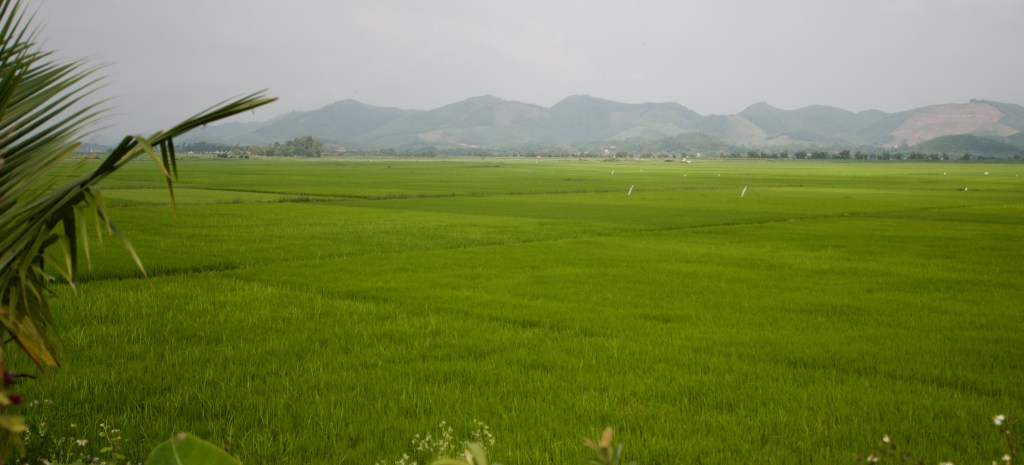
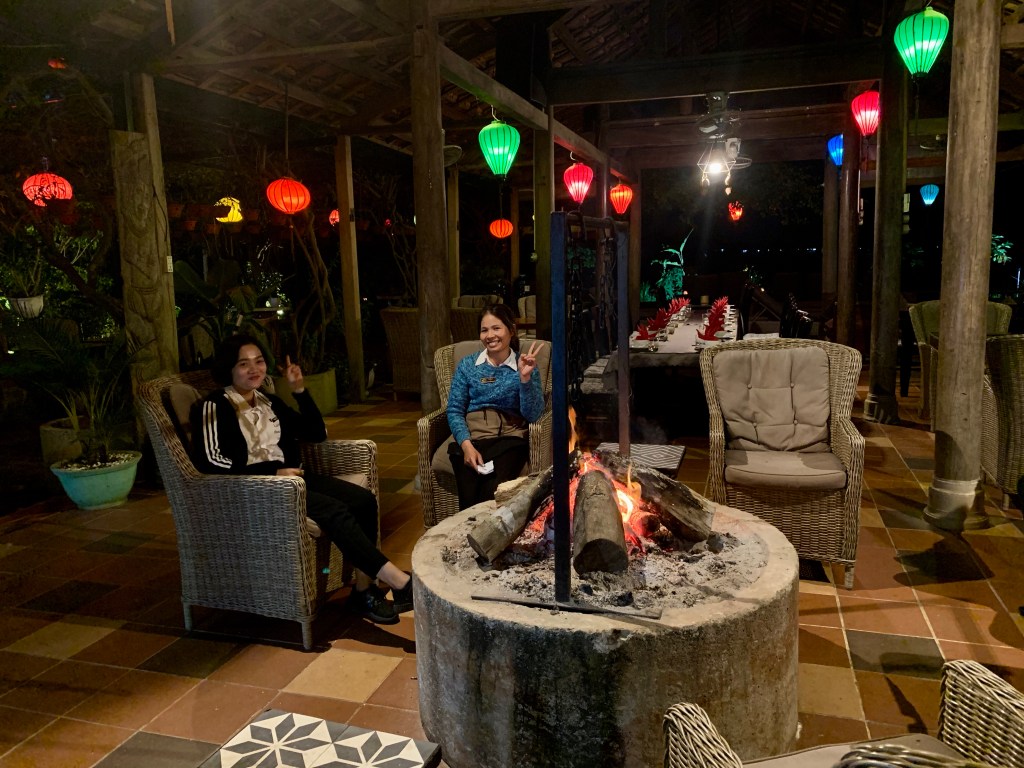
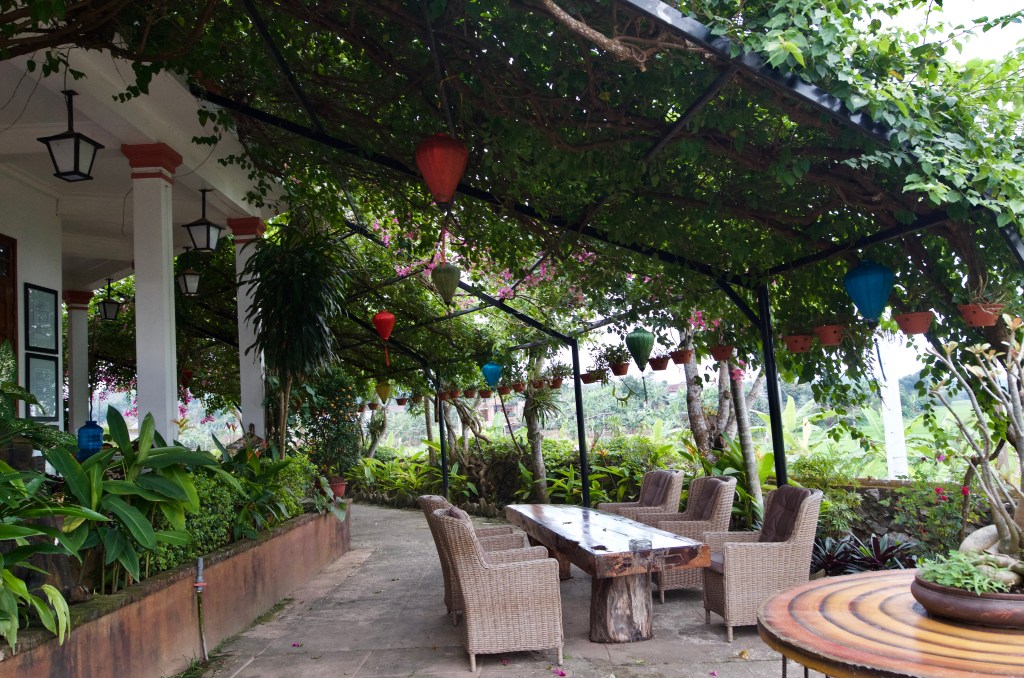
We are staying at Phong Cha Farmstay – which is nestled in the rural countryside on the outskirts of Phong Nha. The Farmstay is rustic, eclectic and oh so unique. As we come out of our room, we look onto the rice paddies. With the rooms being small and basic, the guests congregate in the central lounge areas. It is cooler so they have a roaring fire in the lounges which adds to the ambience. Dinner is in a rustic outside area with views of the rice paddies. They have outdoor movies a few times a week (Tracie May you would love this) as well as a traditional family style dinner. The food has been very good. Tony, the farm stay manager, said they use to have just “backpacker” food, but 6 months ago they had a master chef come in and train their staff.
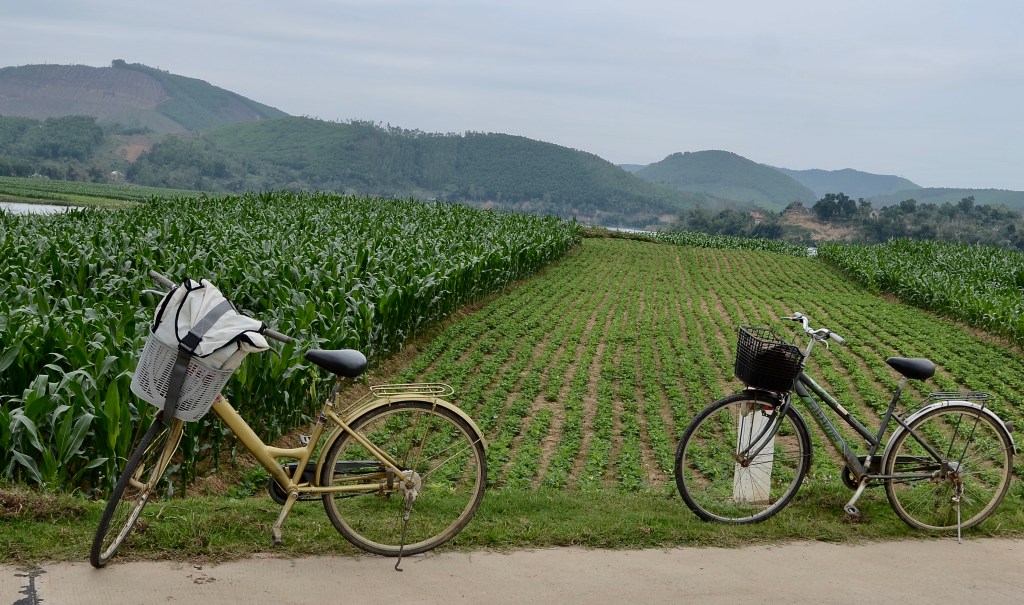
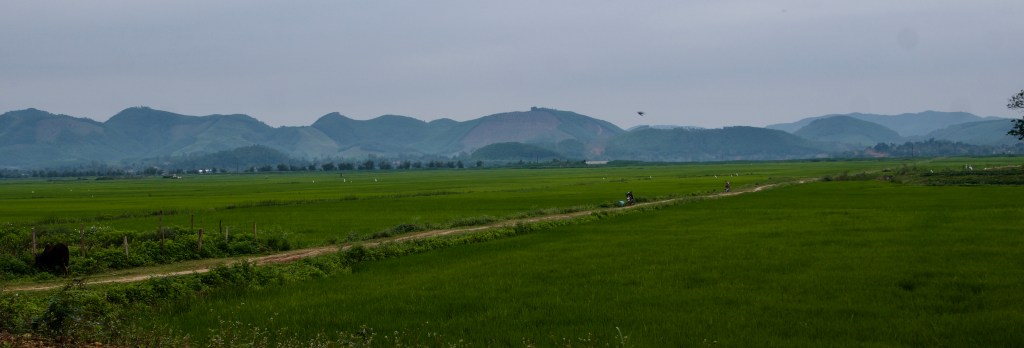
We bicycled to Phong Nha which is normally 9km ride from the farm stay. It is a straightforward route, but somehow we managed to make a wrong turn which added another 5 km to our route. The bikes and our recovering monkey bums were not meant for the distance but we made it….and we saw so much along the way.
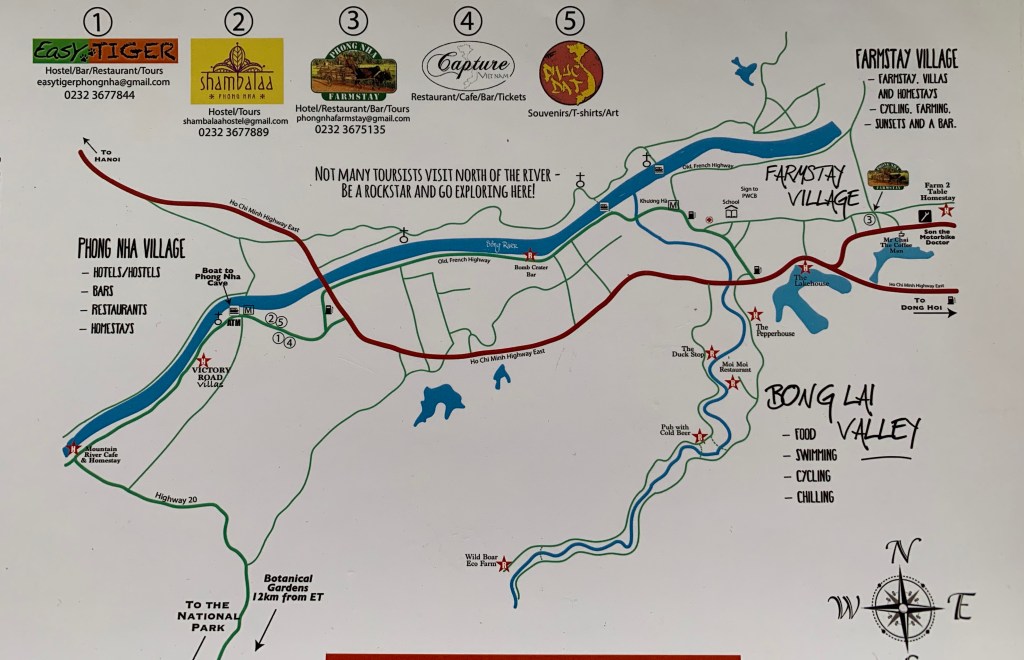
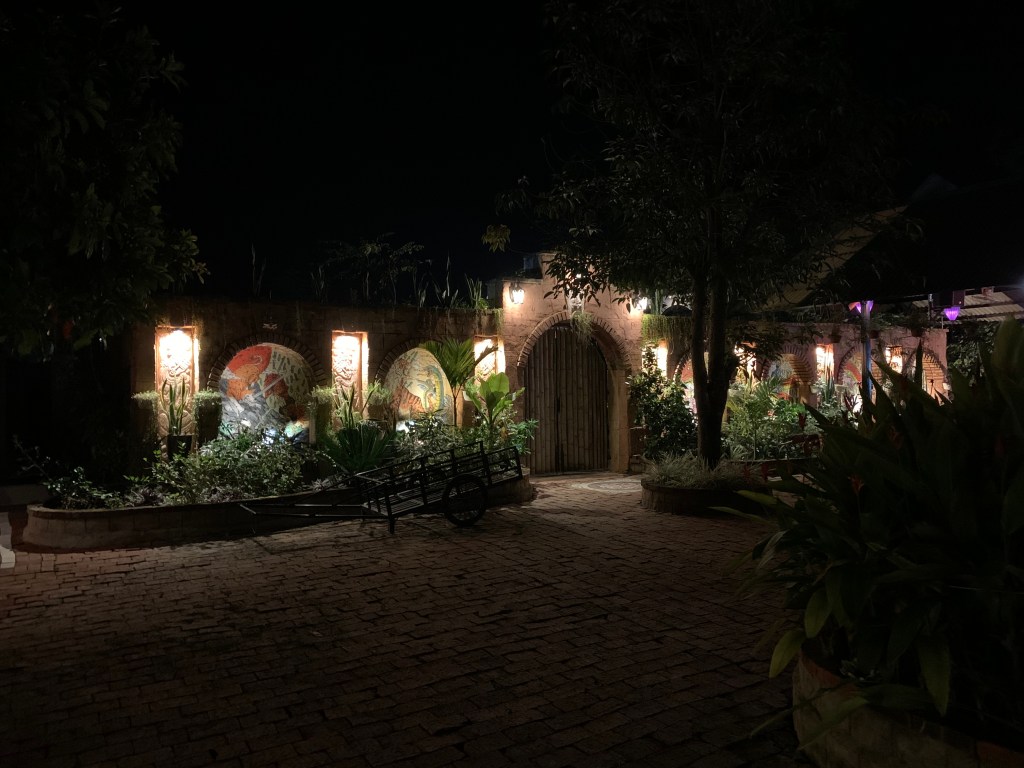
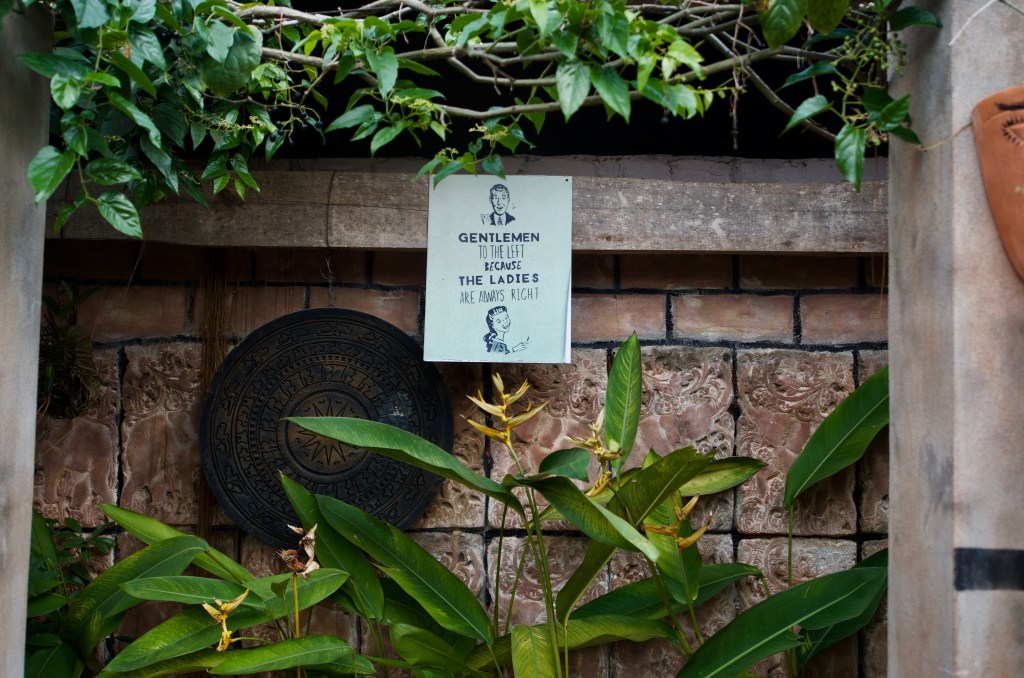
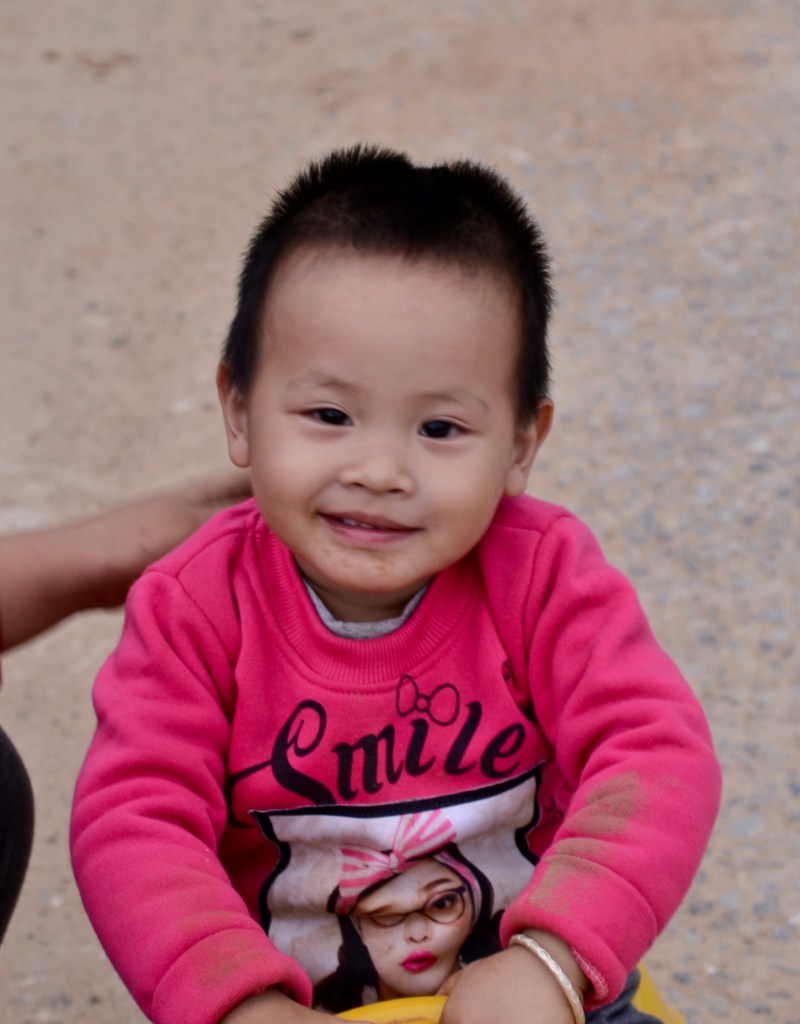
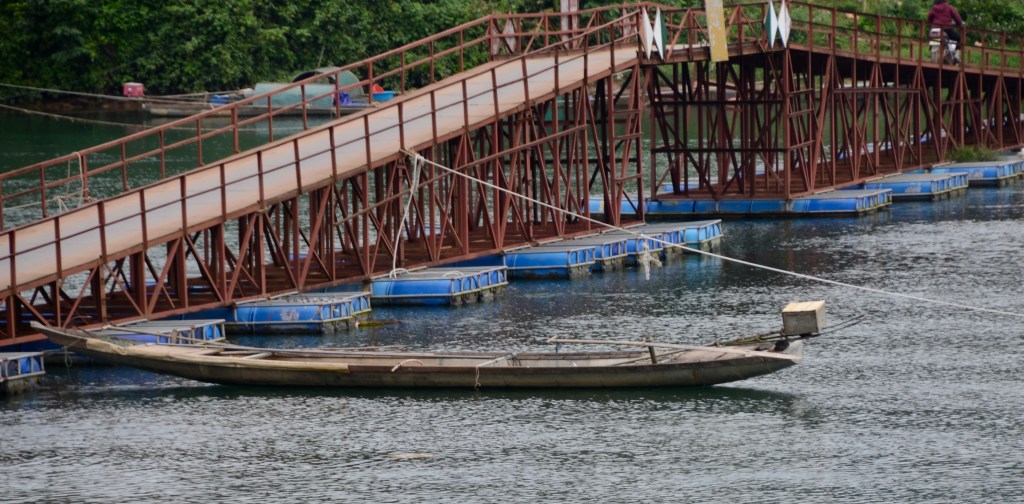
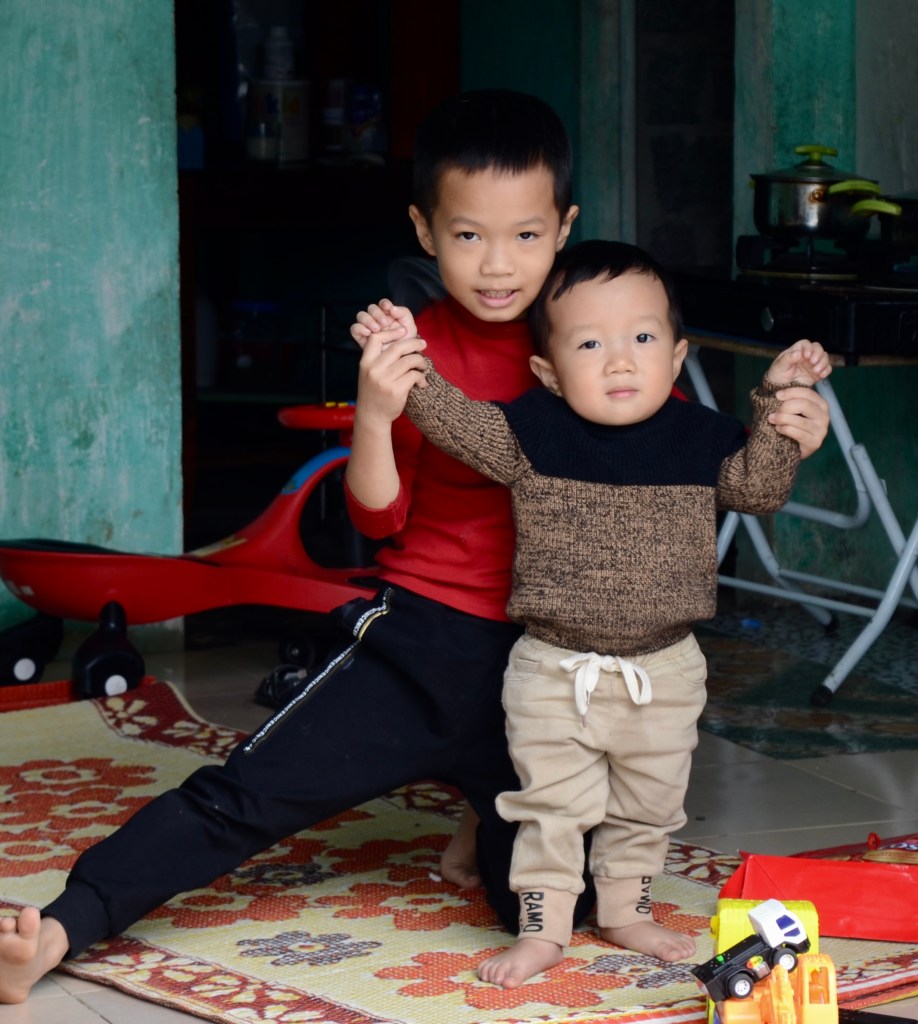
Our BikesThe route looks so straightforward – crazy that we turned the wrong way.Path through the rice fields – on our way to town by bike. This is one of the dining/lounging areas – our favourite place for dinner.Entrance to the restaurantLove the washroom signFloating bridgeChildren from the local villageWonderful spot in the main lodge to relax
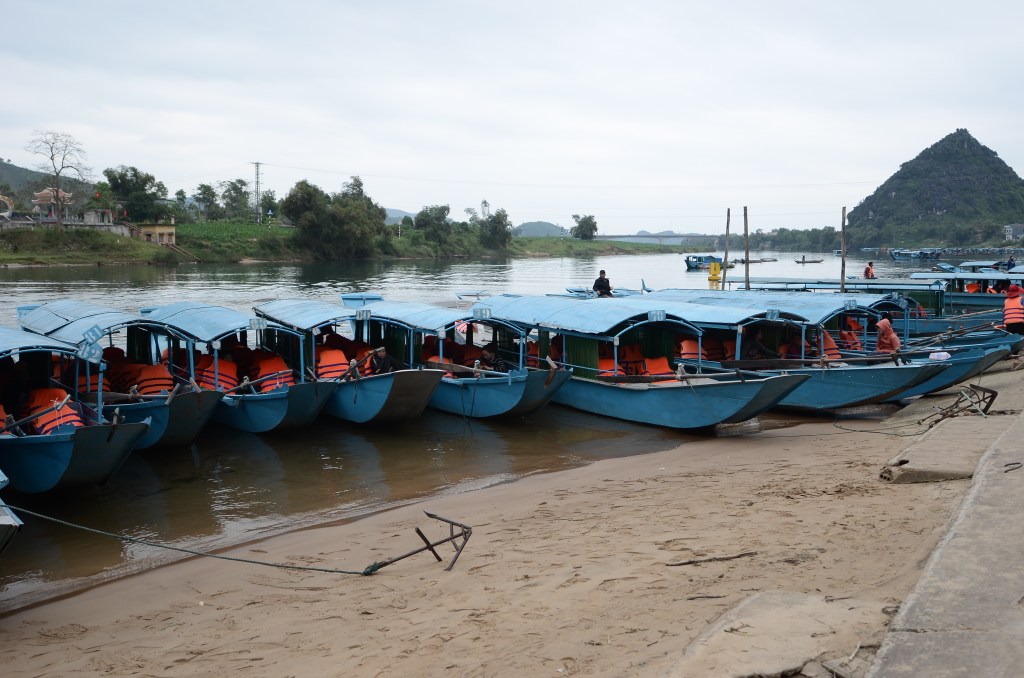
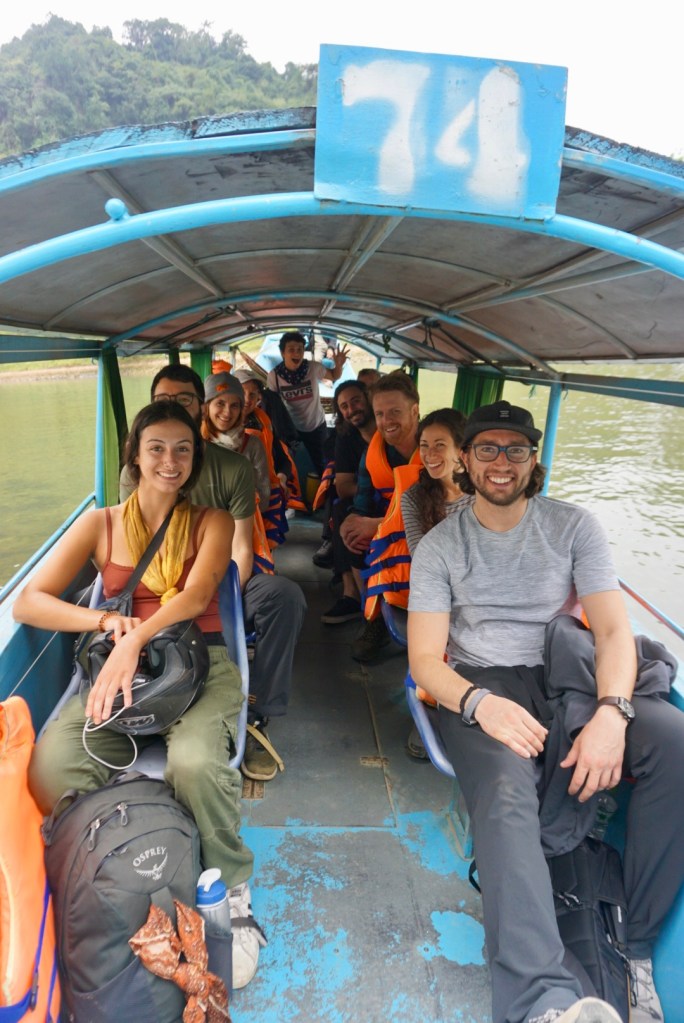
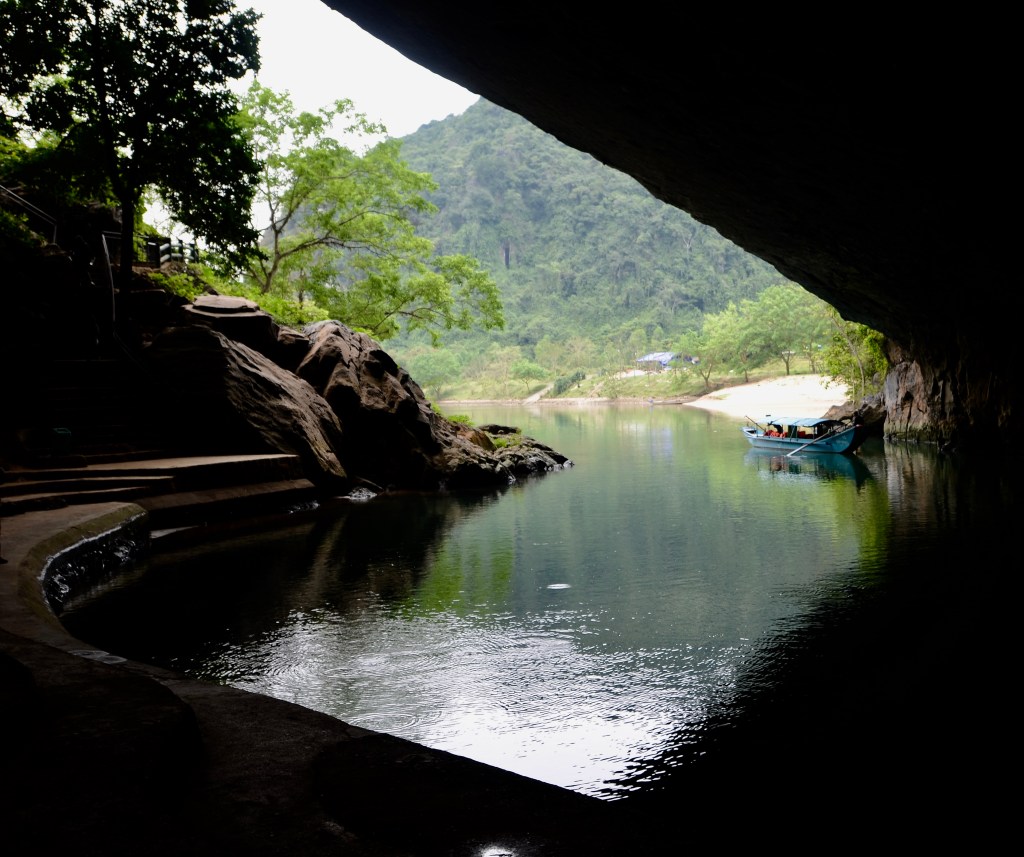
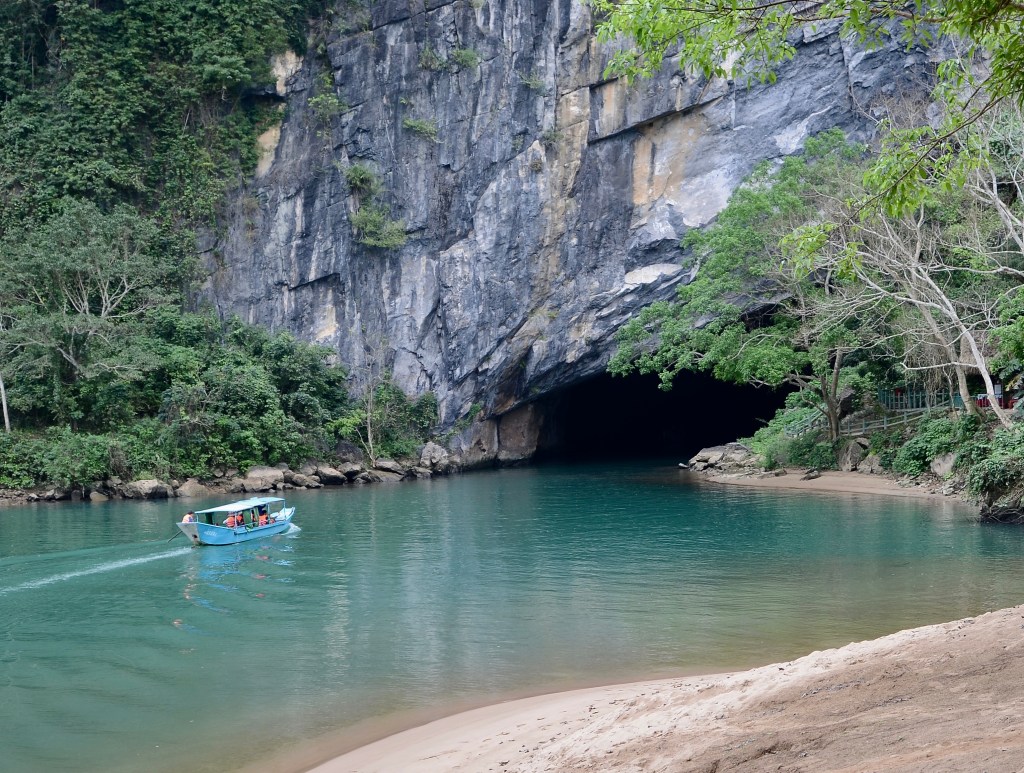
The Phong Nha caves, in the Karst Mountains, were the first caves in the area opened to tourists in 1997. During the Vietnam war the cave was used during the day to hide the floating bridges that the Vietnamese used to move supplies along the Ho Chi Minh trail. This area, which is the narrowest part of Vietnam, was the most bombed during the war as the US troops tried to stop supplies. We hooked up with 9 other people in the Cave Ticket line to take a dragon boat to the Phong Nha caves. Our boat mates were “30-somethings”, from 3 different countries, so it was fun to hear about their travels.
Such an interesting and friendly group of young peopleReflections
Wonderful day exploring the caves – we went part of the way by boat, and they then dropped us off and we walked back.
As I mentioned in my last blog, there were challenges – I hadn’t anticipated the food being one of the challenges but it was, especially for me. We now know the difference between local food in a tourist area and local food in non-tourist ethnic area. Much of the food looked or smelt unusual (even chicken didn’t look/taste like our chicken). Their spices and method of cooking were also so different. Thank goodness we brought a lot of hand sanitizer as soap was seldom available in the places we ate. The thought of diarrhea on a bike, in remote areas where “happy rooms” were few and far between, was a great incentive to eat light and clean our hands often. We mostly ate rice and freshly baked crusty bread – and we managed fine for the 3 days.
Initially we thought that we would be staying at home stays, but of course there are no home stays in non-tourist areas. We stayed in “guest houses” as there were a few towns along the way. We had our own private room and the “happy room” had a flush toilet so life was good. We brought our own pillows (which we purchased at La Siesta) which made all the difference. I now know that as long as I have a good pillow, I can sleep on a rock hard bed. On day 3, Lar declared that he loved his pillow. This was all part of the adventure.
Our hotel the 2nd night and the restaurant to the left of it was the “best in town”.
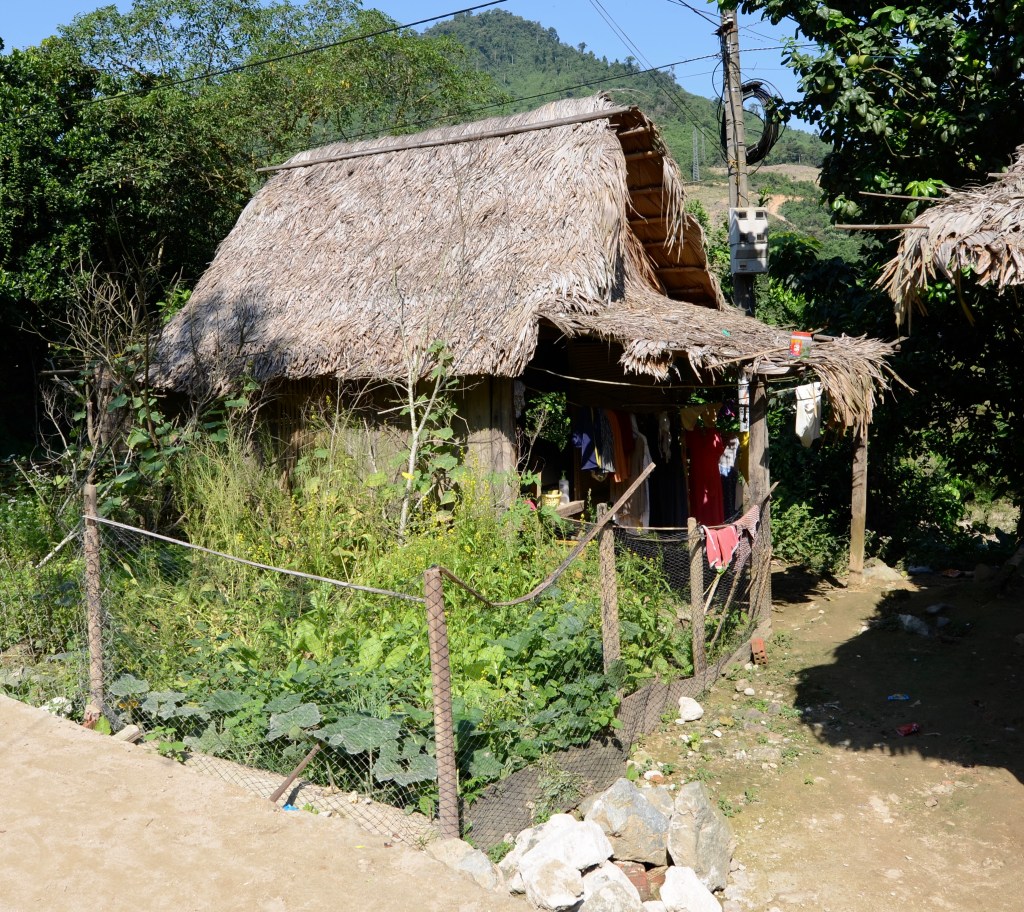
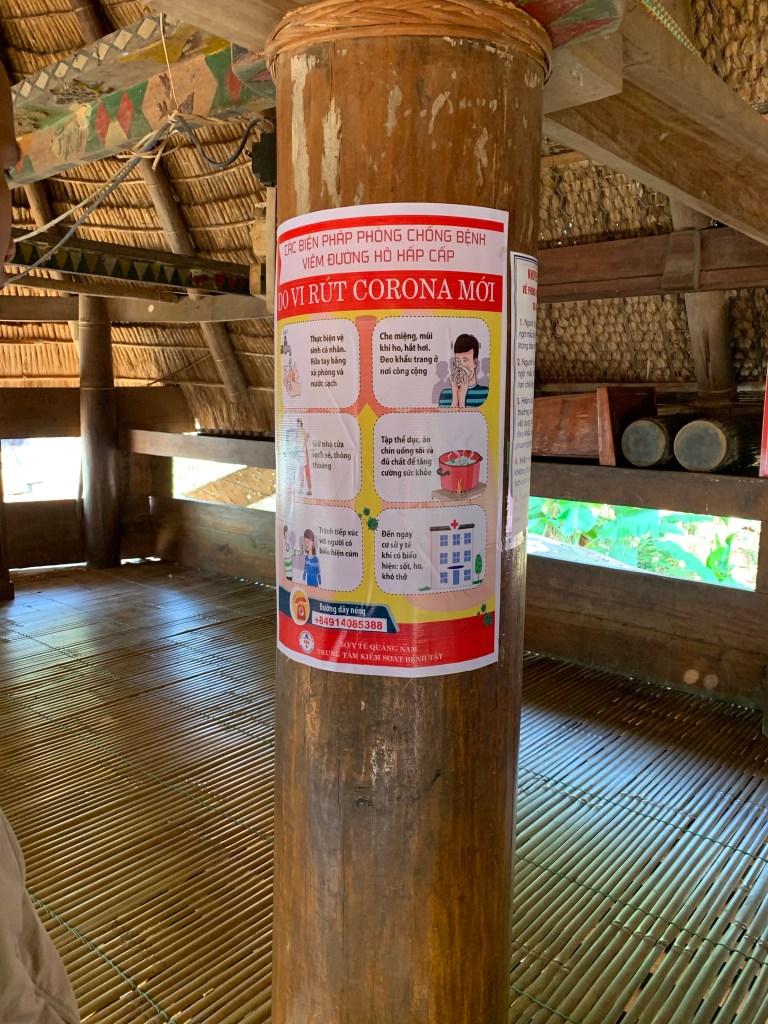
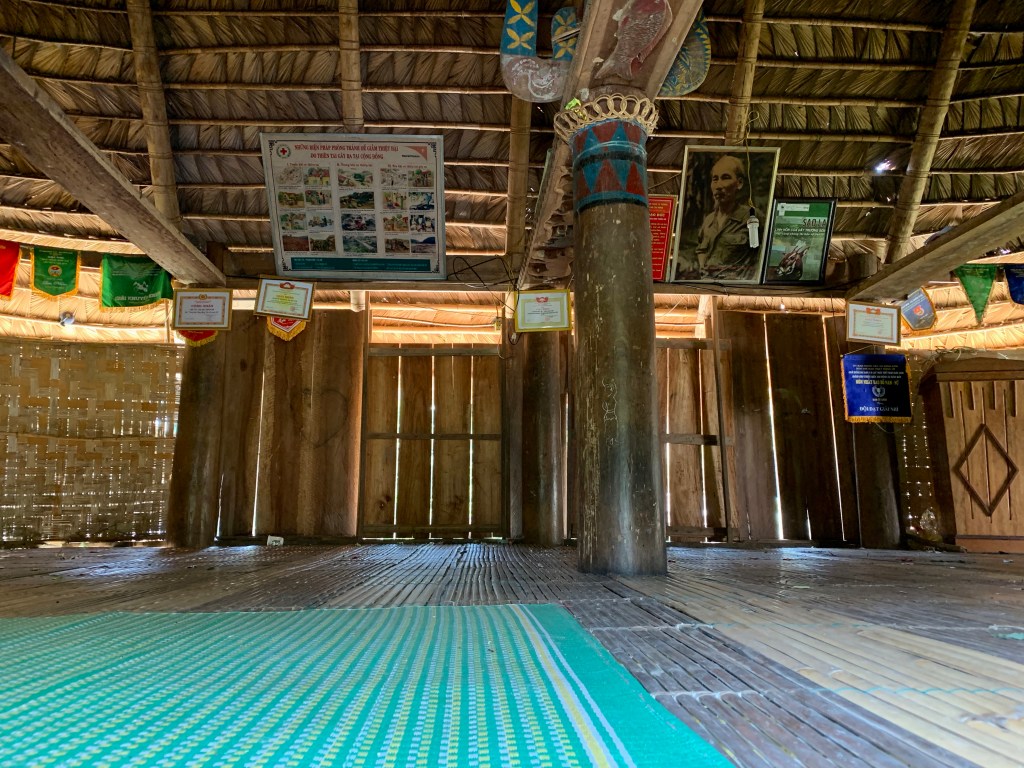
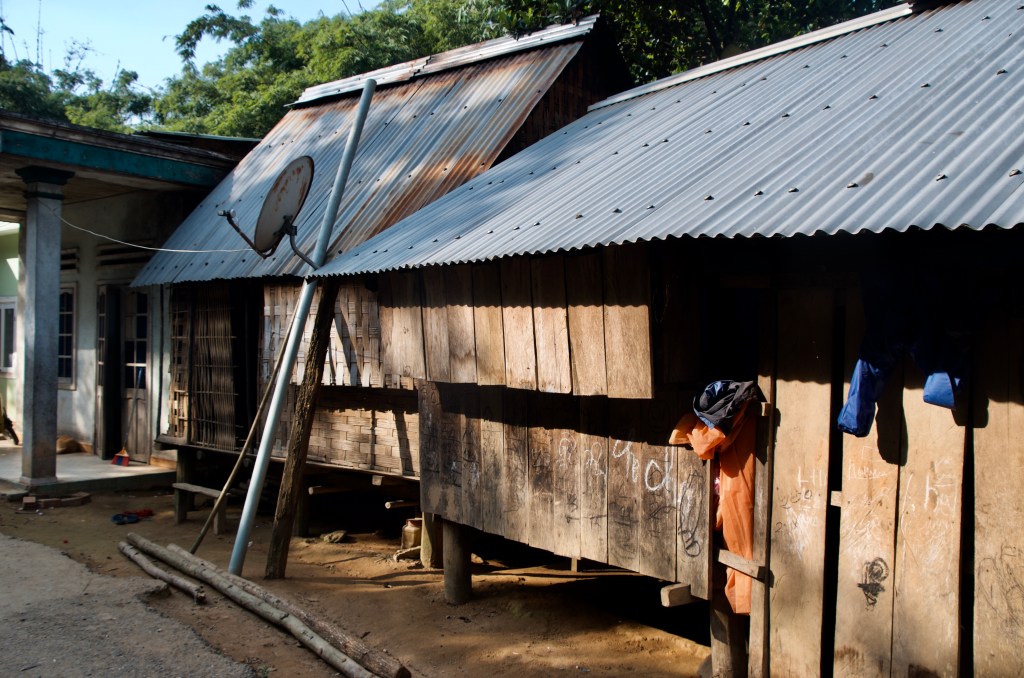
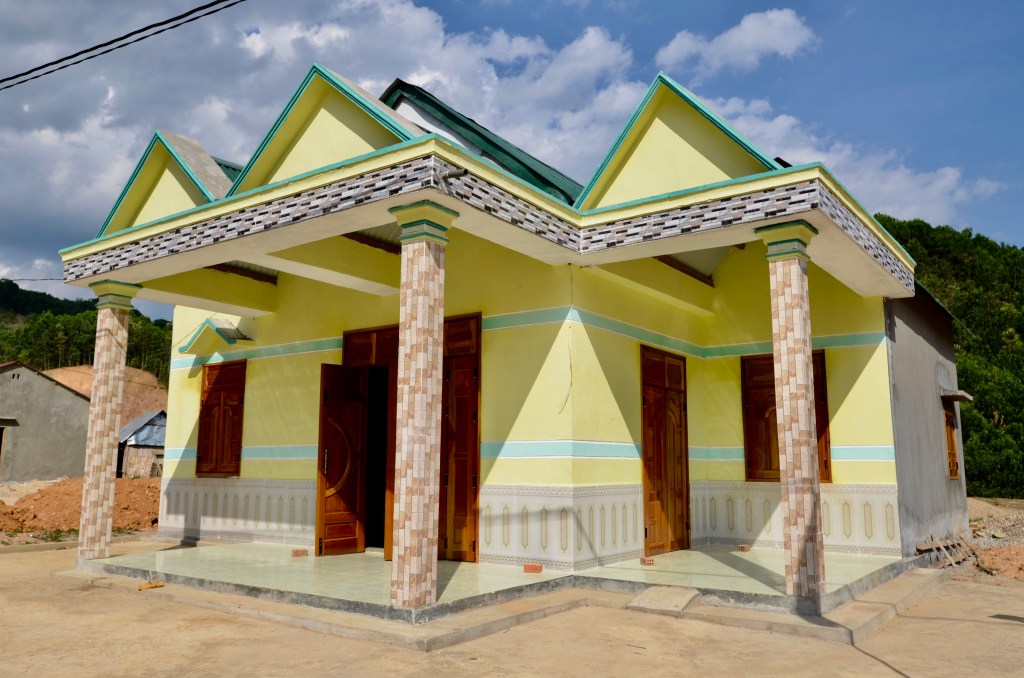
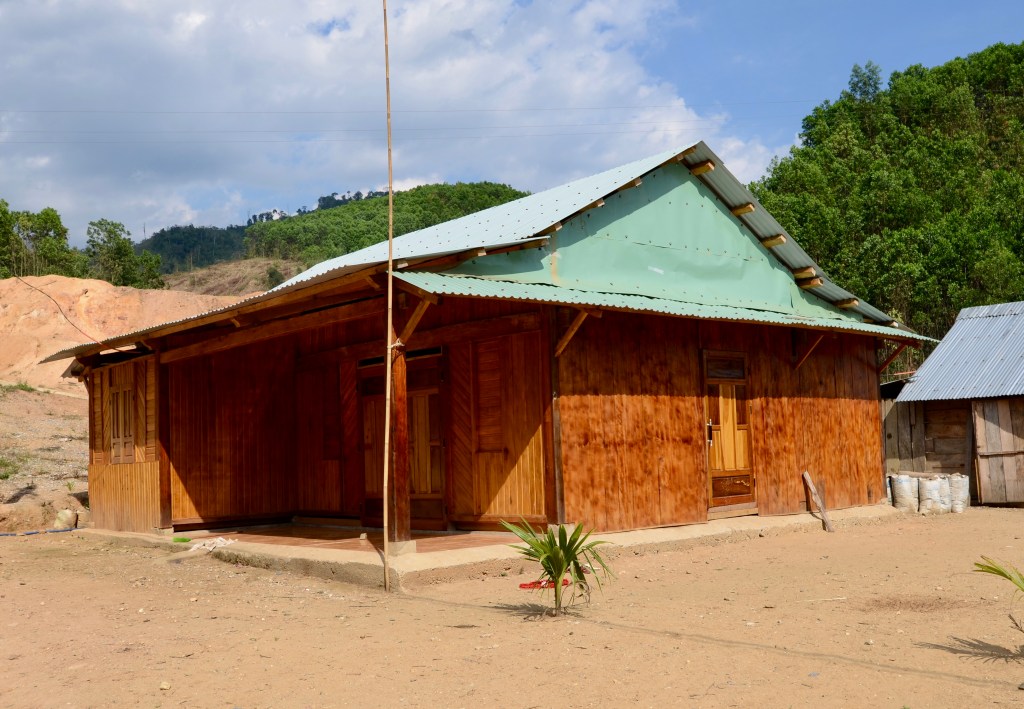
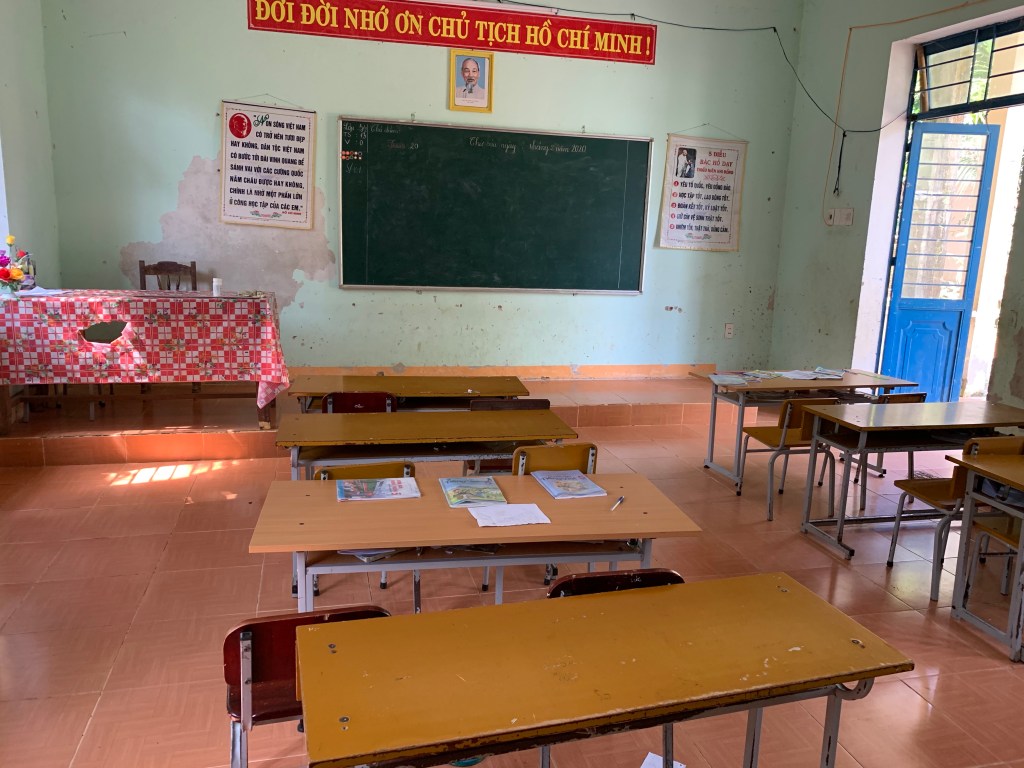
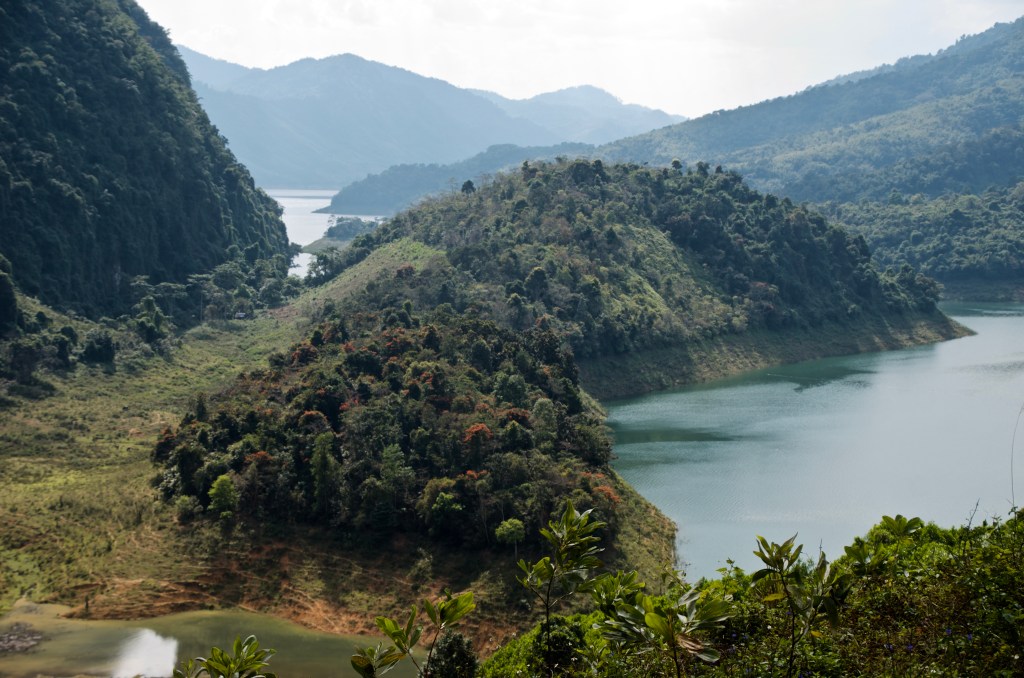
We visited many small ethnic villages over the 3 days. Most of the villages had less than 30 homes and in many cases the families spoke only their own dialect. From the pictures you’ll see that most homes are made of wood. There were also some cement homes that the government built – they did this when they needed the existing village property to build a new hydro electric dam. The government homes were made of poured cement so the village people couldn’t move the homes if they didn’t like their new location. There was always a central meeting house – a large wood structure raised above the ground with a thatched roof. There were schools, but we never saw children in the schools. Phu explained that although the government builds the school and primary school education is free, they can’t get teachers to come to these remote villages. At best a teacher would come a few days a month. We seldom saw the adults in these villages as they would be working in the mountains. Very little litter in the villages – most of their food and water comes from the mountains so no packaging to dispose of which helps.
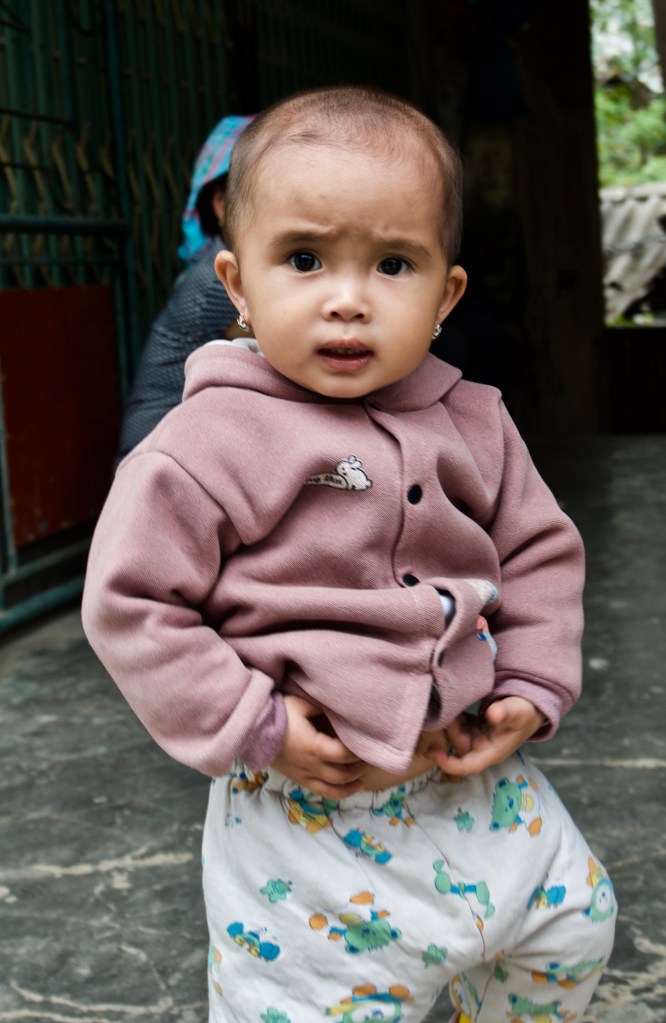
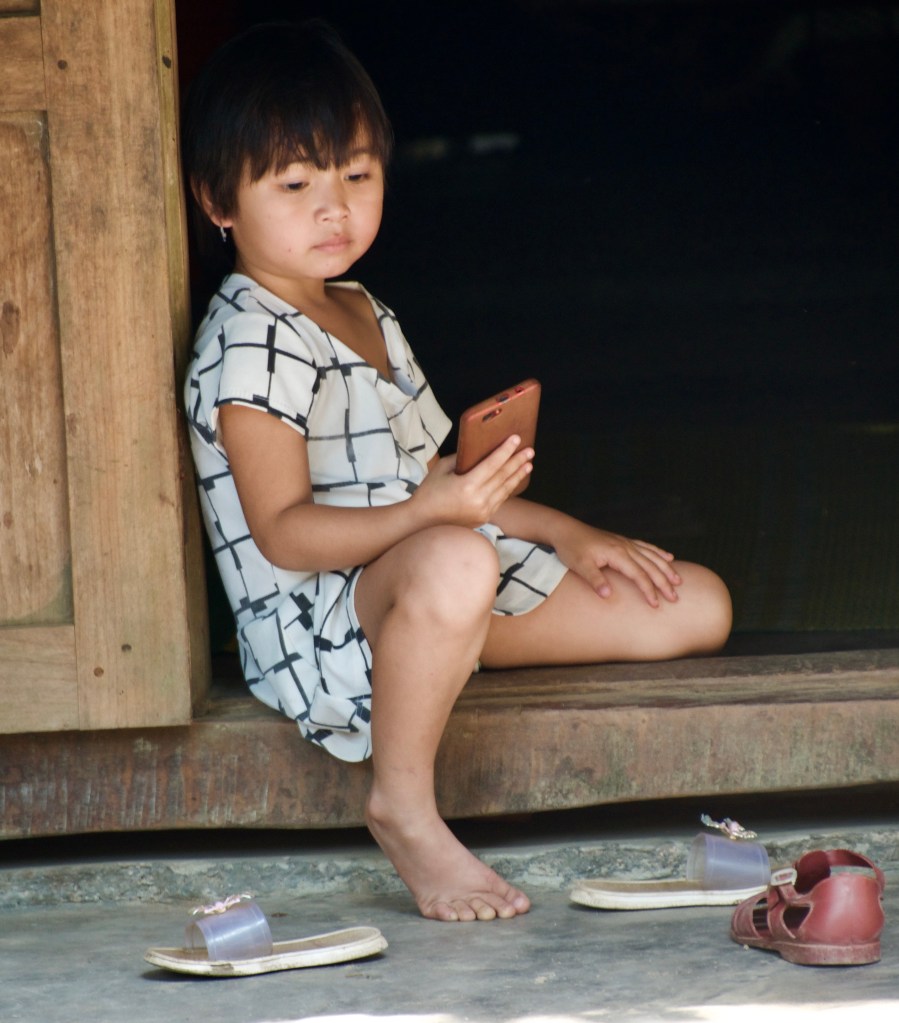
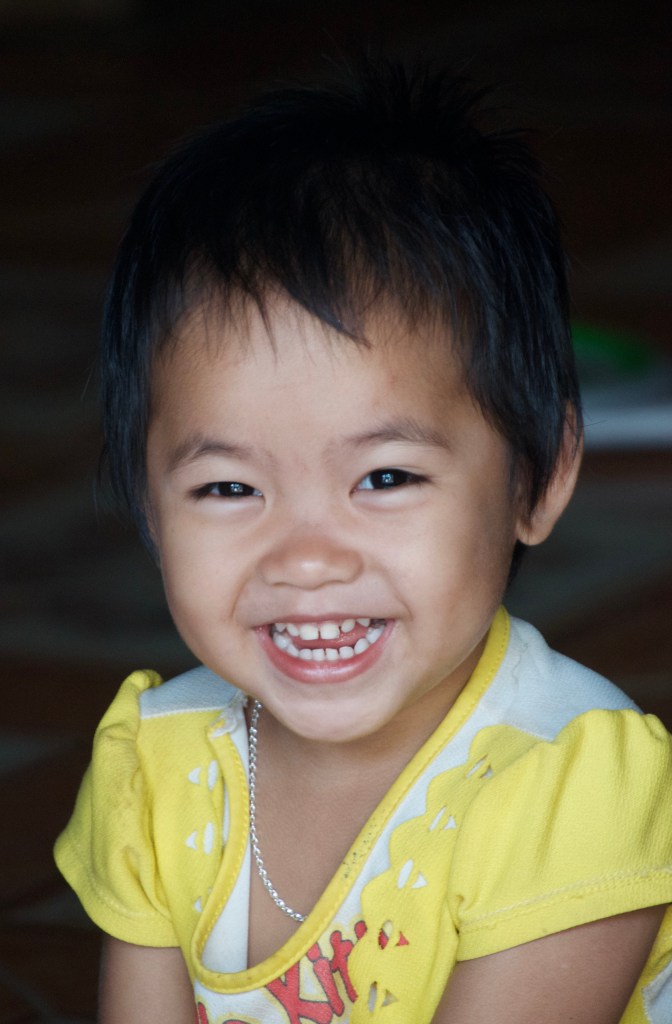
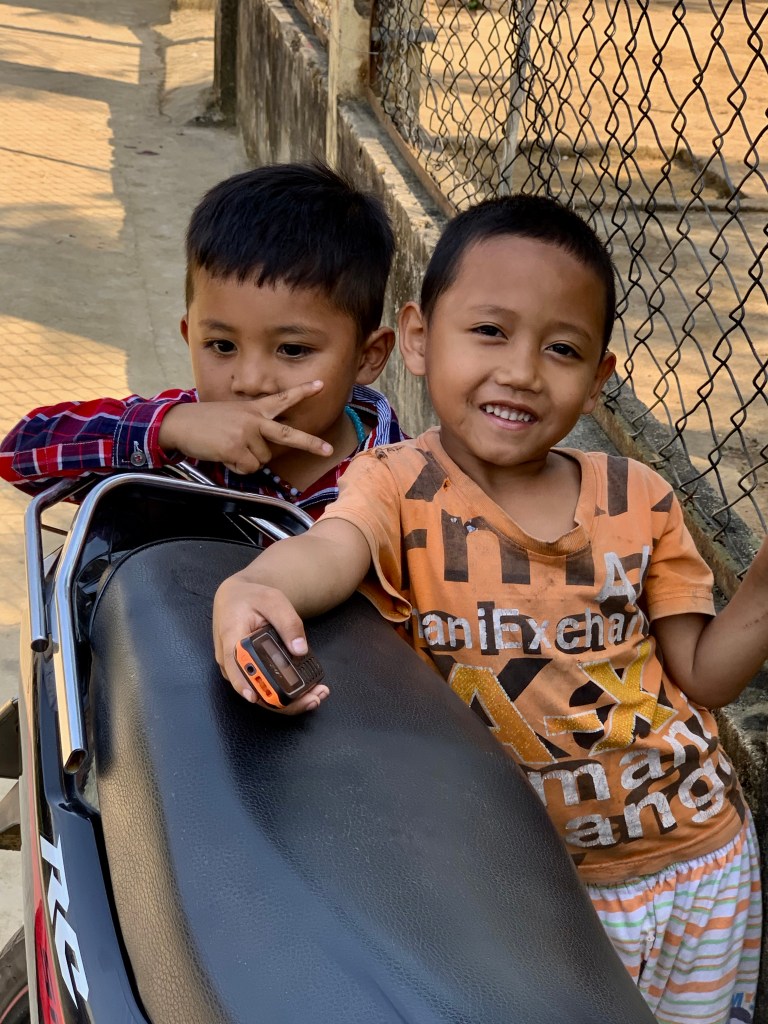
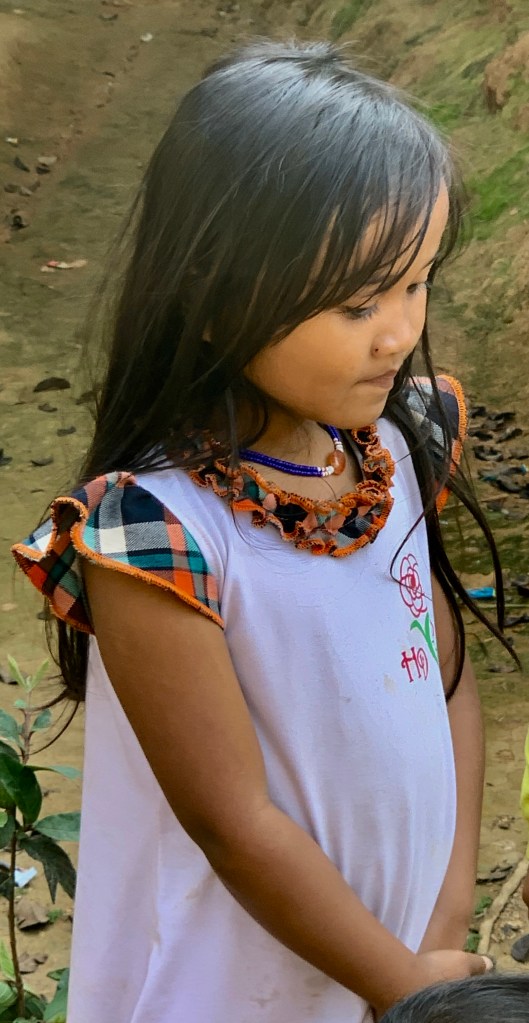
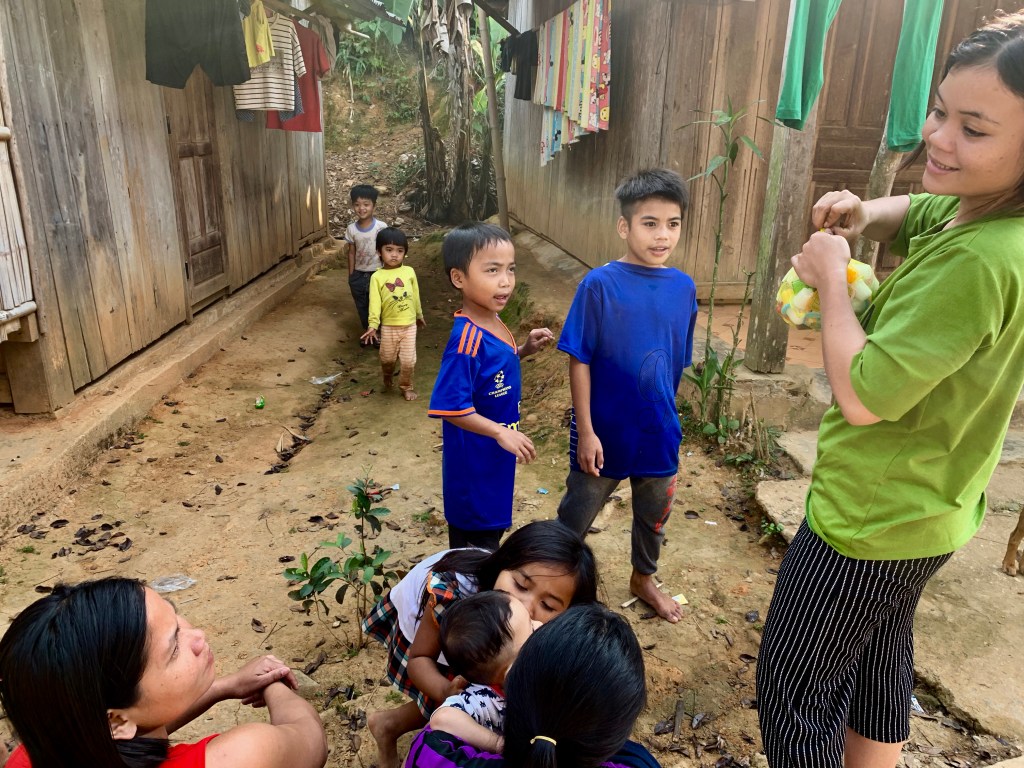
We loved interacting with the children and people we met along the way. The children were very timid at first – Phu explained that they most likely had not seen “white face” people before. Phu was so good with the children..and the fruit snacks he brought also helped.
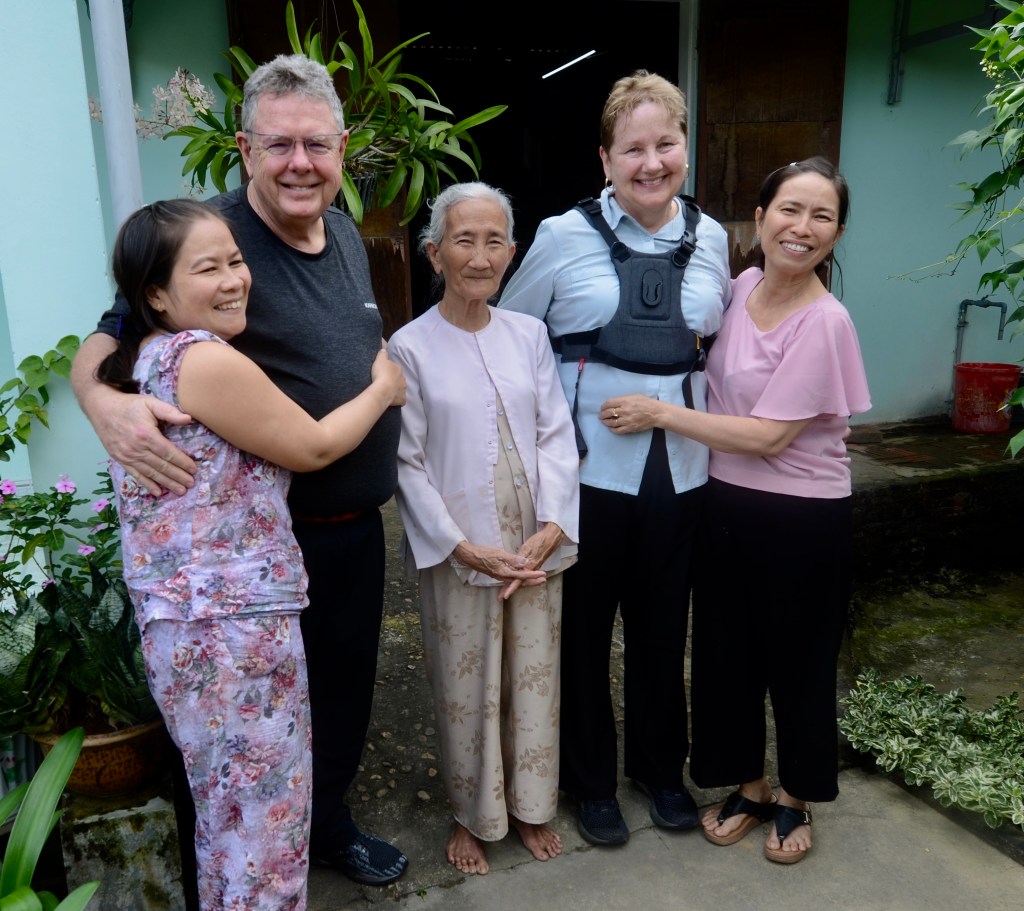
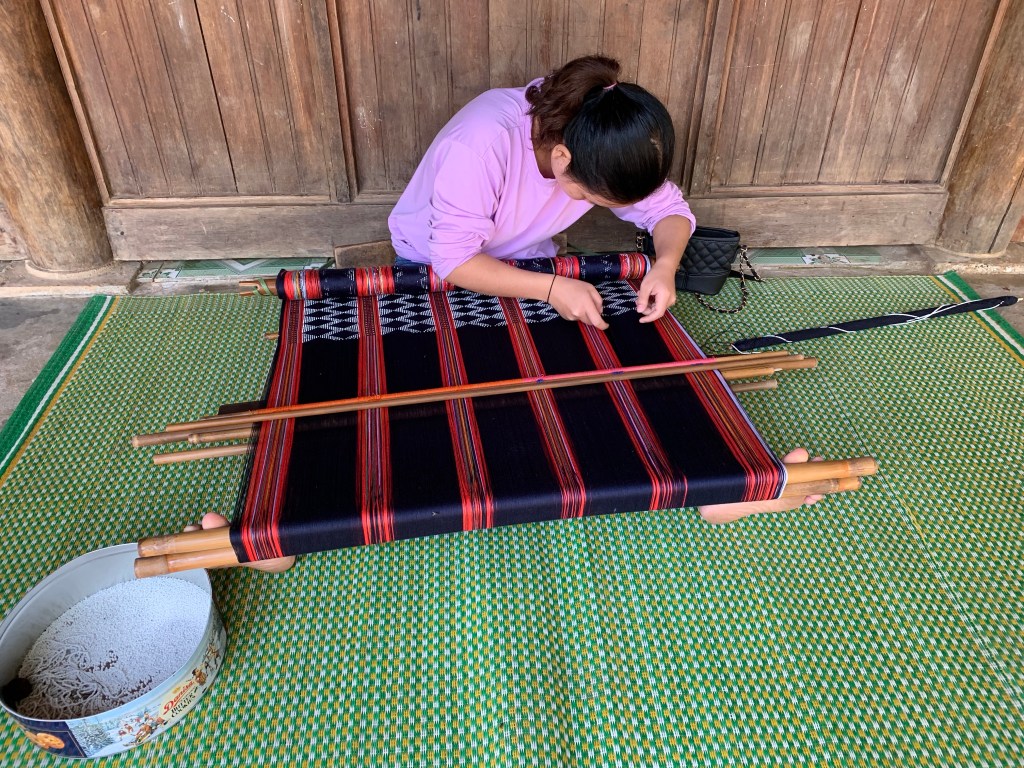
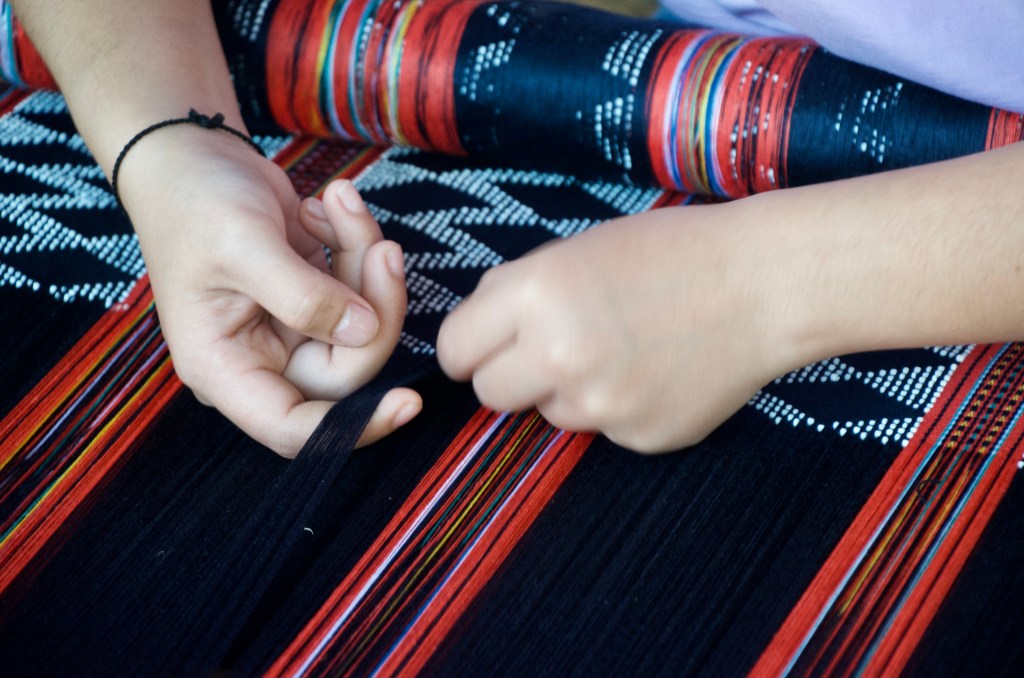
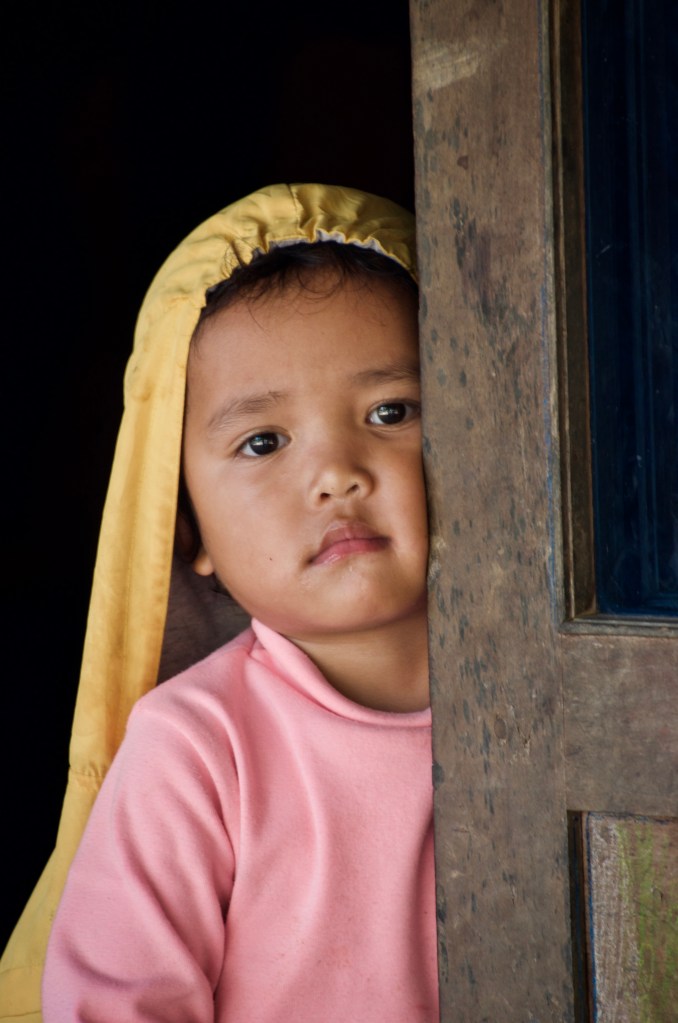
This 82 year old lady was so sweet and asked many questions about us (through Phu of course).A few neighbours came by to also be in the picture. They were so much fun.She liked Larry’s belly !It will take months for this young lady to finish this material and then she will make it into an outfit or purses.Curious but timid.This little one had a cell phone. Phu said they are very cheap Chinese phones that have no internet but a few games for the kidsLove the smiles.
Community Center where the Elder holds meetings.The villages had a single wire line providing electricity to each of the homes. A few had satellite television dishes.One of the Government built homes in a new village that was just finished 3 months ago. They moved this village from the mountains as they wanted the land to develop a hydro dam. Even though the new homes were nicer, many villagers relocated their old wooden shack behind the new home. Trees were taken from Laos, and floated down the river to Vietnam to be used for homes, windows, doors etc. The craftsmanship was excellent.This school was closed down months ago and there is little chance it will reopen as they can’t find a teacher who speaks the village dialect and is willing to live in this remote village. Vietnamese must pay for high school so there were none in the villages.Our last lunch spot “on the road”. This was one of the nicer ones.Thank you Phu for showing us the mountain villages.
Our 10 days in the Hoi An area have come to an end. We will miss the staff at La Siesta (especially our very special Hien and Phuong) – they took such good care of us – “cam on”…thank you. We got to know Phu after spending 3 days with him – he gave us a great adventure and always made sure that we were “ok”. It is sad to leave this area.
We met Phu from Hoi An Motorbike Tour Adventures in 2018 when we did a 1 day motorbike tour of the Hoi An area. Although I was a bit hesitant on the motorbike to begin with, Larry and I both ended up loving this way of touring as we had an unobstructed view of our surroundings, we went into the rice fields and small villages where cars couldn’t go and we could stop almost anywhere for pictures. So from this 1 day, easy travelling tour, we decided it would be interesting to do a 3 day trip with Phu into the mountains along the border of Laos (in the central highlands).
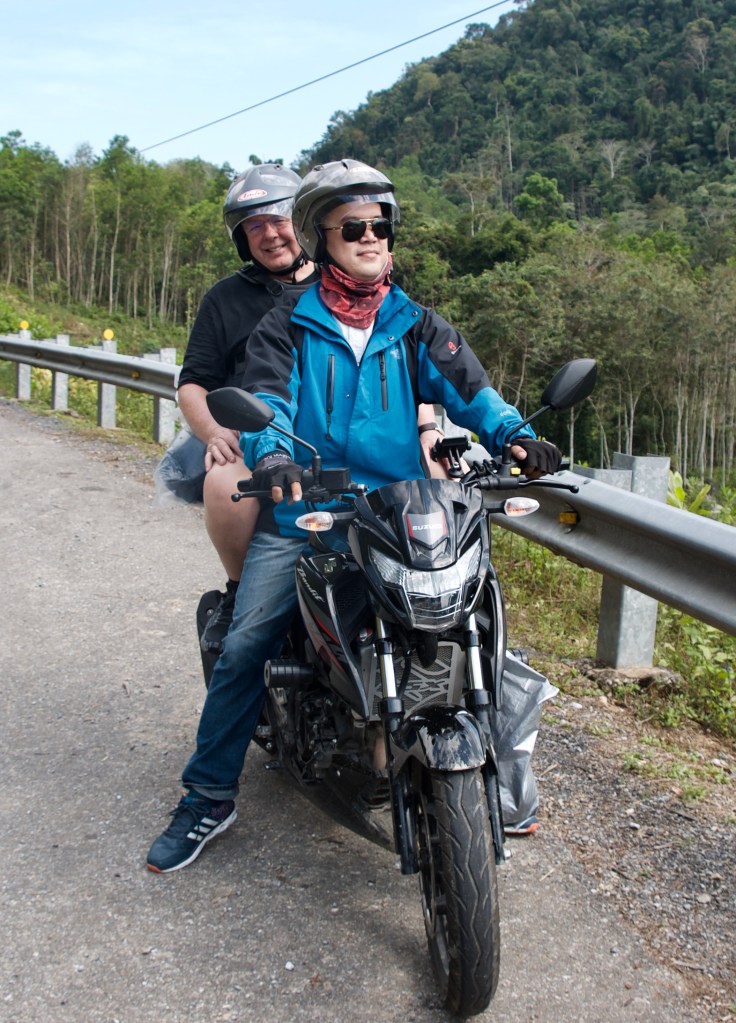
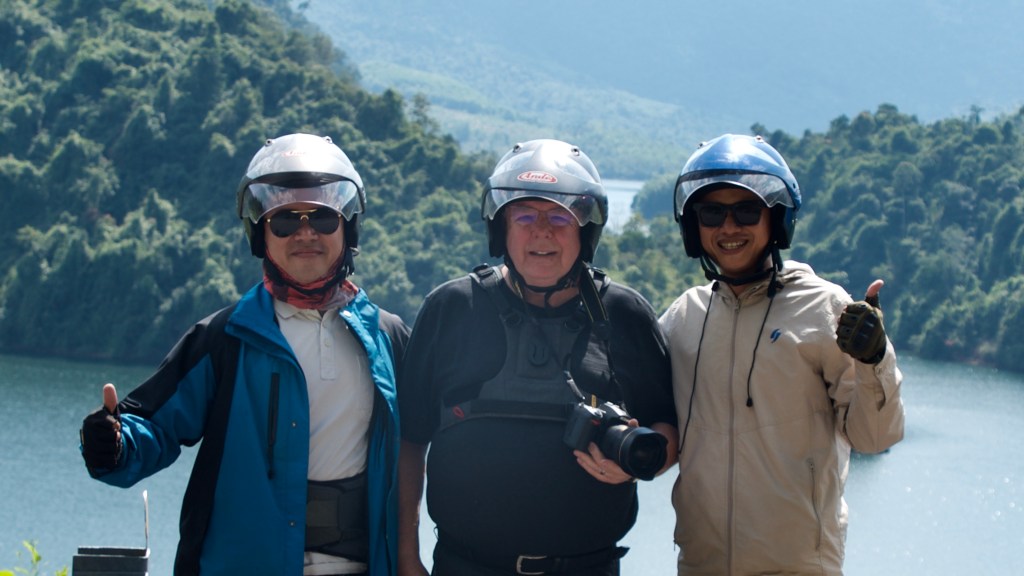
Phu and Ca were great to travel with. Always watching out for us. They are dressed in “Fall wear” and we were so hot.
We quickly learned that this would be a very different tour. Phu explained that we needed more powerful bikes and experienced drivers who could handle the mountain roads and the less travelled portions of the Hoi Chi Minh trail. I rode with Phu and Larry rode with Ca. Phu explained that Ca didn’t speak English but that wasn’t important as he was very experienced and very strong. Ca was so much more than that – he was amazing with Larry.
And so it began, our monkey bum adventure. Was it a difficult 3 days – absolutely. Did we have an amazing tour – absolutely. This write-up and our pictures just touch the surface of our time with Phu and Ca. The pictures were taken when we stopped, but there was so much more that we saw and experienced along the way.
Now to set the stage for our tour. We travelled almost 500 km in 3 days, we were “on the road” by 8:30 each day and we would stop around 4:30. Before dinner we would do a walking tour of the town we stayed in. The many stops that Phu arranged along the way not only helped with monkey bum, but also gave us insight into the central highlands (past and present) and the people of the minority villages. We were not travelling in tourist areas – Phu indicated that some bikers travel this part of the Ho Chi Minh trail but they move through quickly with few stops along the way. There were challenges travelling in these non-tourist areas, but we saw and learned so much – but more about that in our next blog.
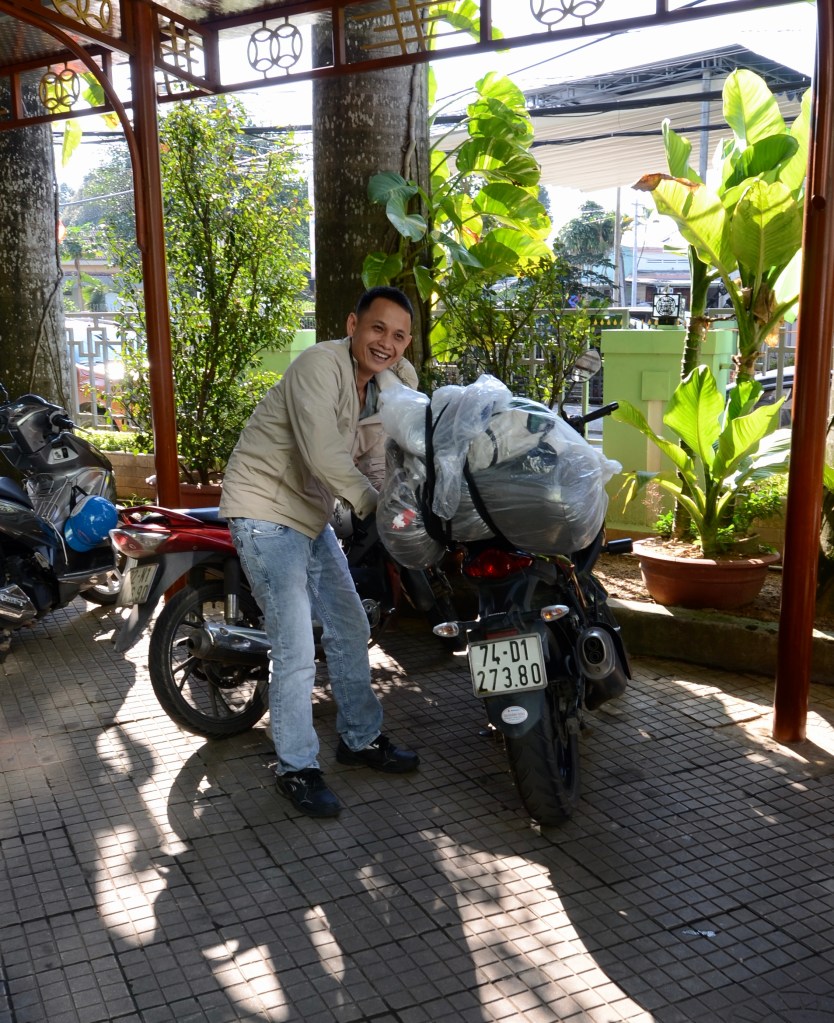
As expected, monkey bum set in big time on day 3, especially for Lar. Phu made more “comfort stops” along the way which helped a lot. What we didn’t expect was the challenge of getting on the bigger motorbike, with our duffle bags pilled high at the back – this meant less room to maneuver around the driver, the higher seat and the gear. We were truly pathetic getting on and off the first day, but by day 3 we almost looked like we knew what we were doing. I soon learned that hands on the knees was the easiest way to ride – gripping the side or holding onto Phu for that many hours were not options.
Rather than try to cover everything in a single blog, I will write a second blog with more commentary on what we experienced and the many faces of the highland people.
A special thank you to Daniel Gibson who introduced us to the camera vest – it was the only way to carry the camera safely on the bikes, and to have ready access to our cameras when we stopped.
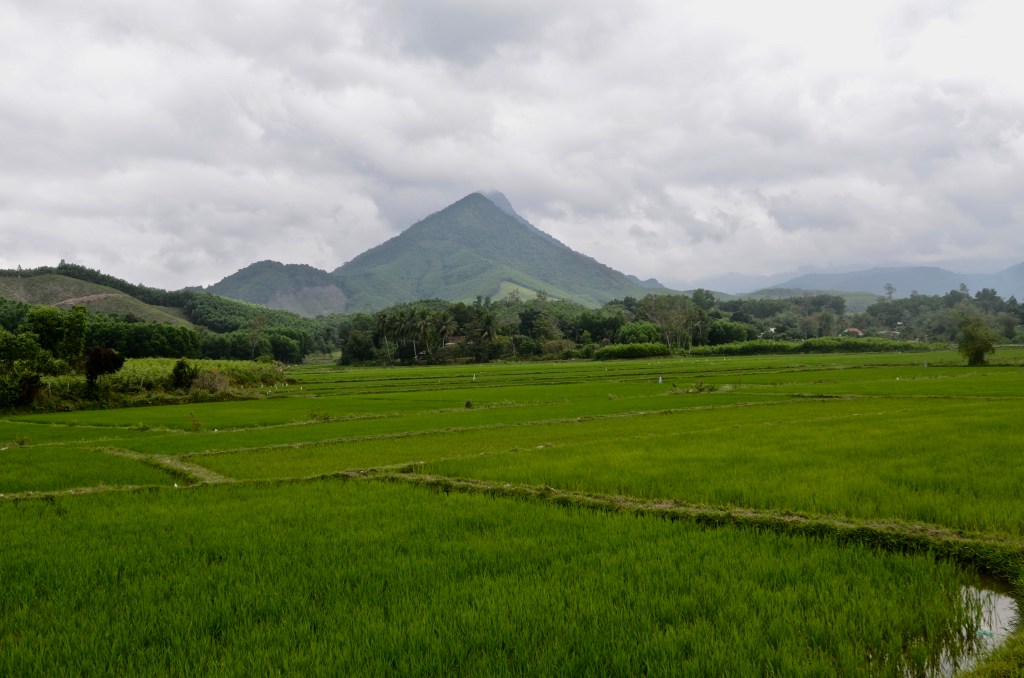
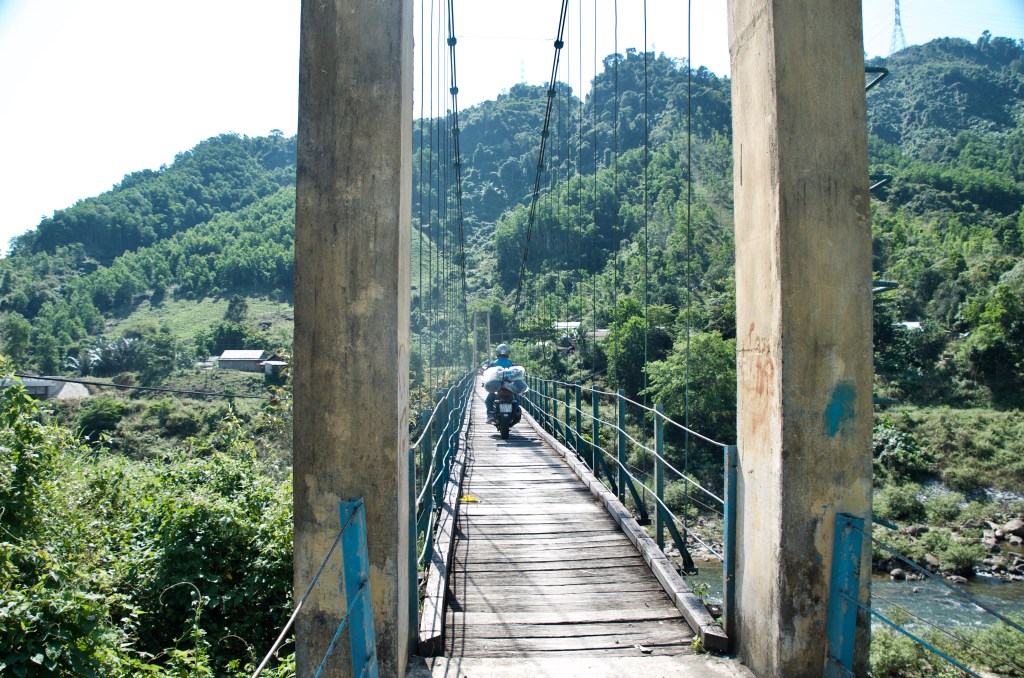
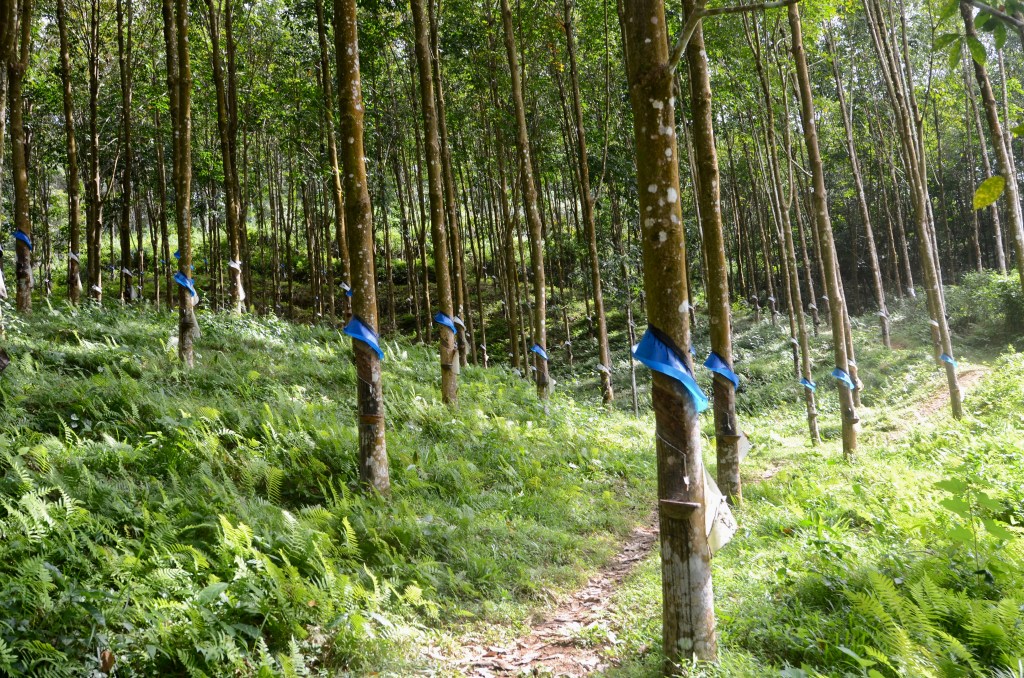
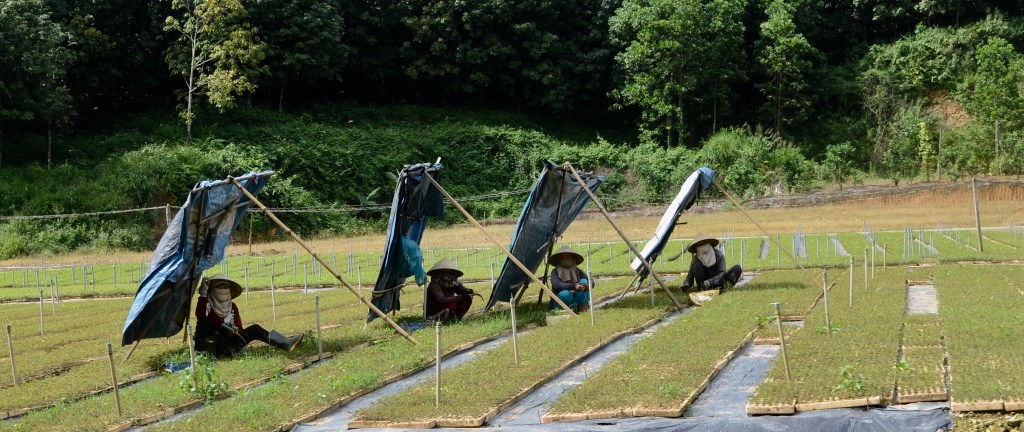
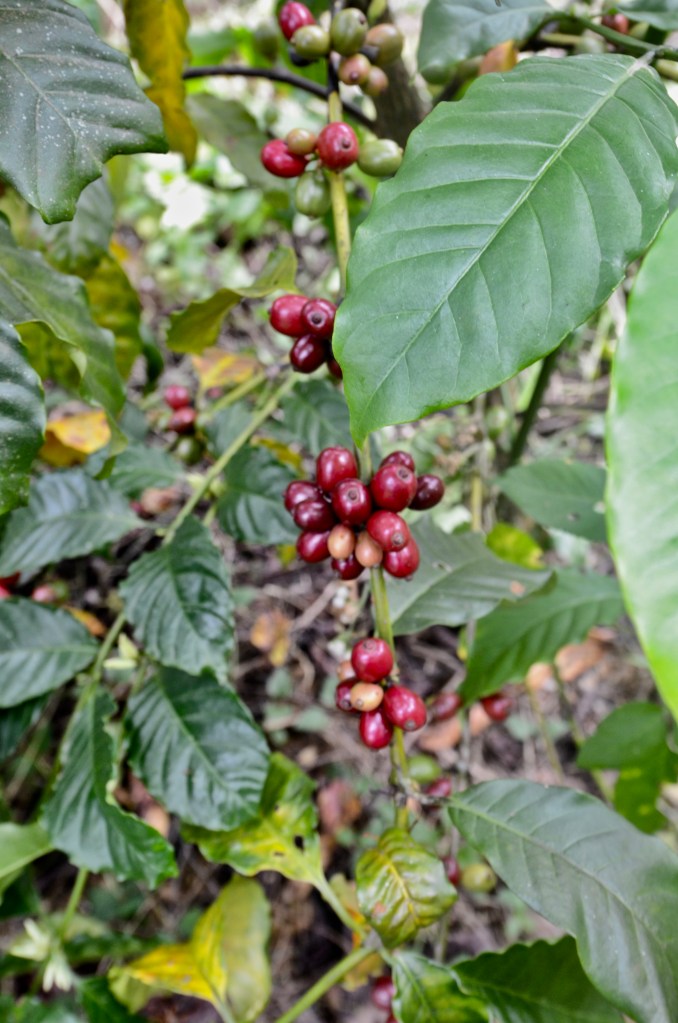
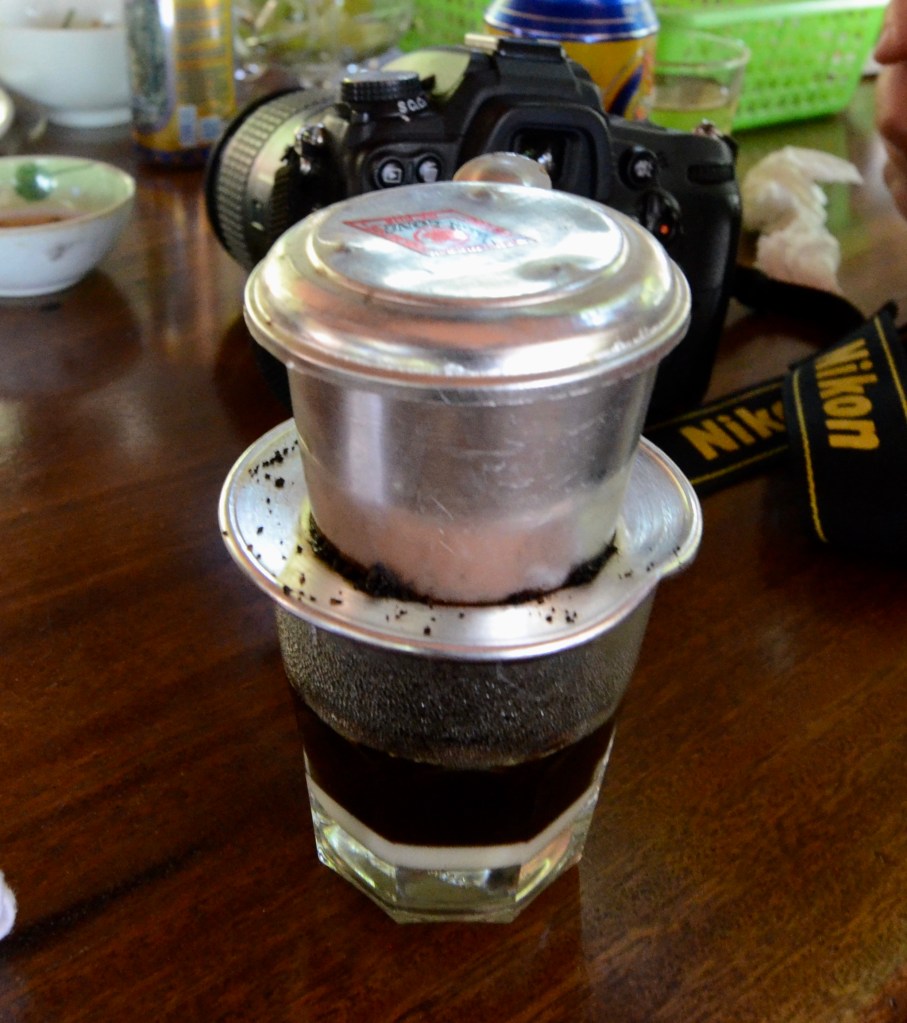
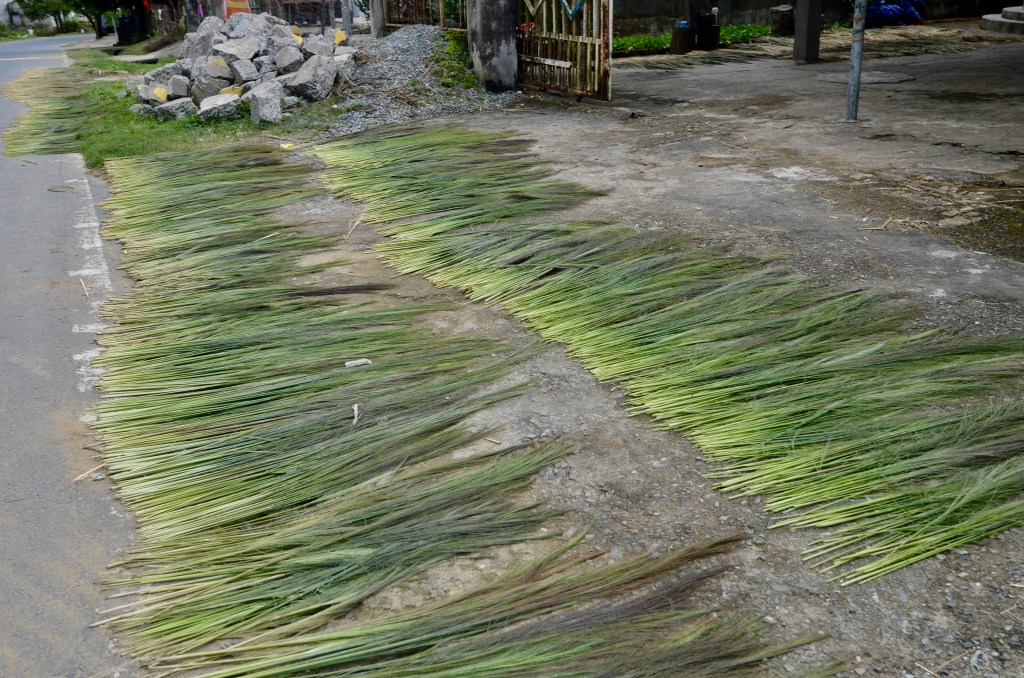
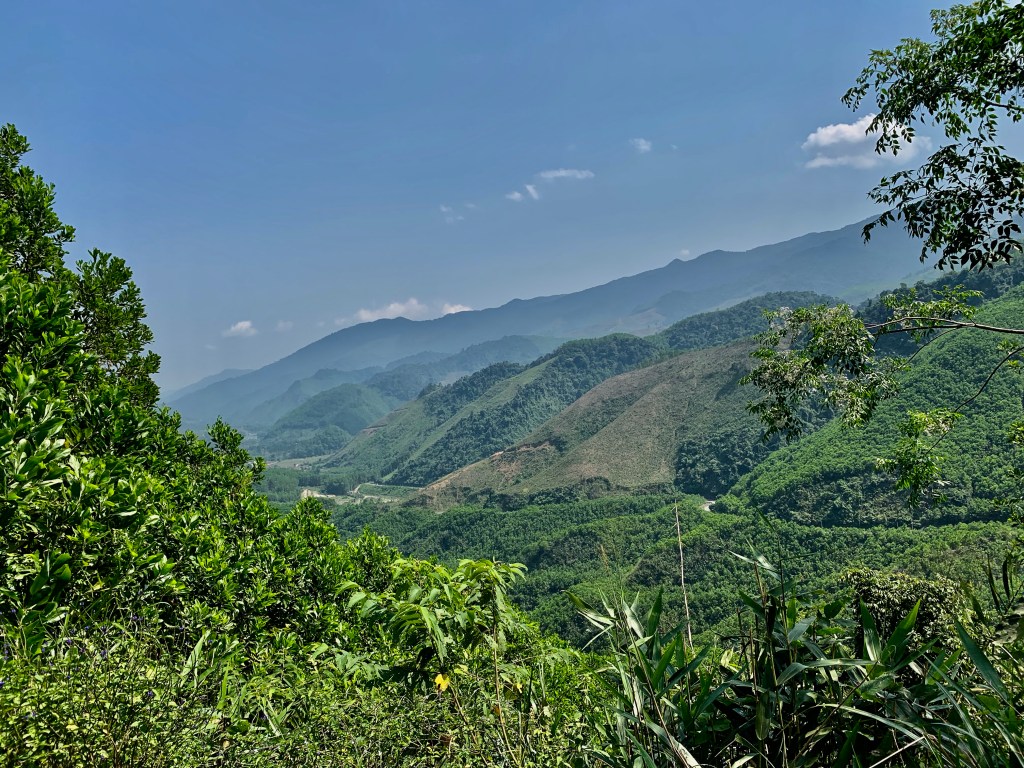
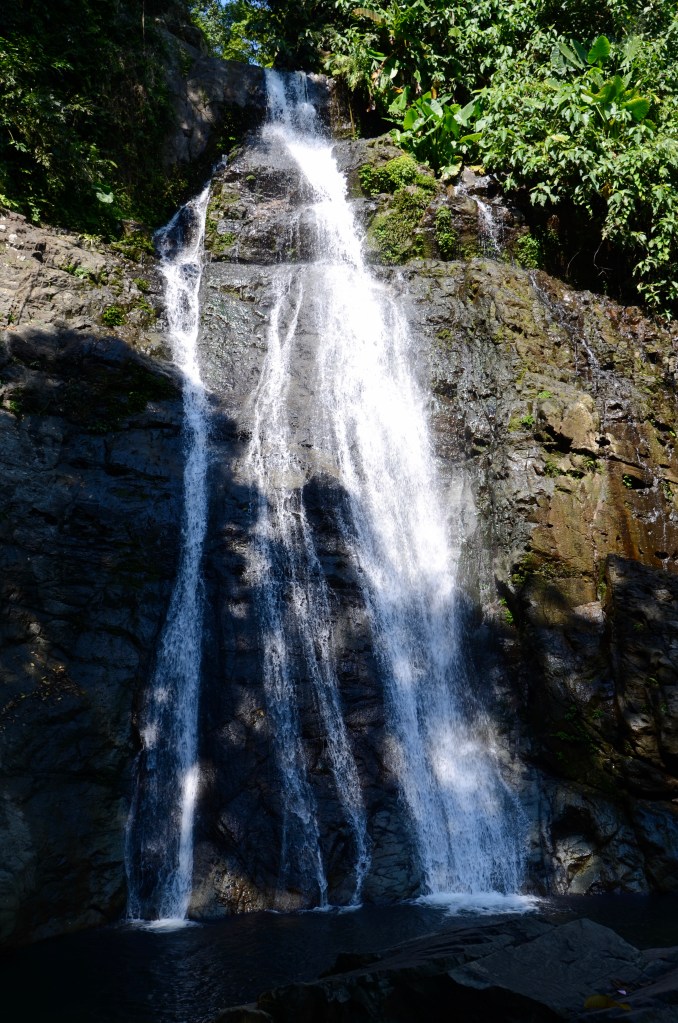
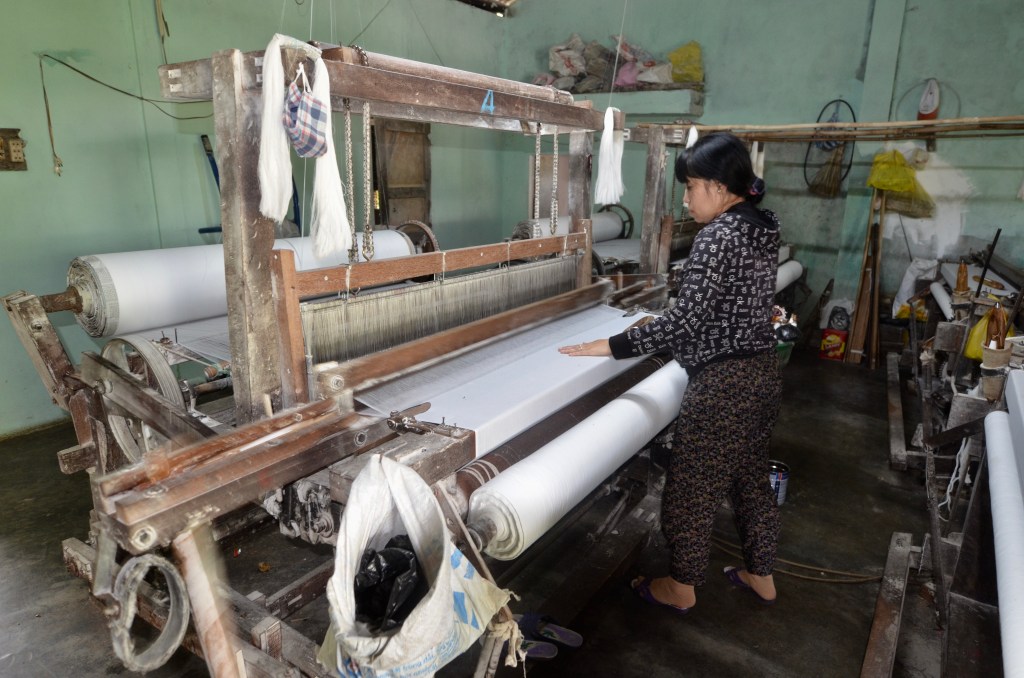
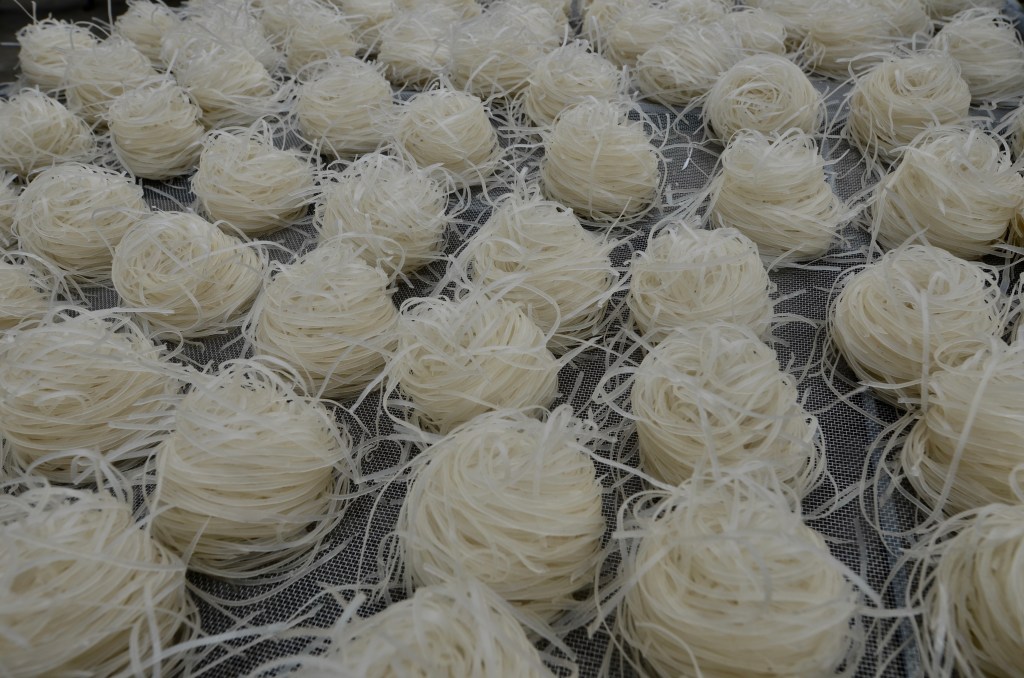
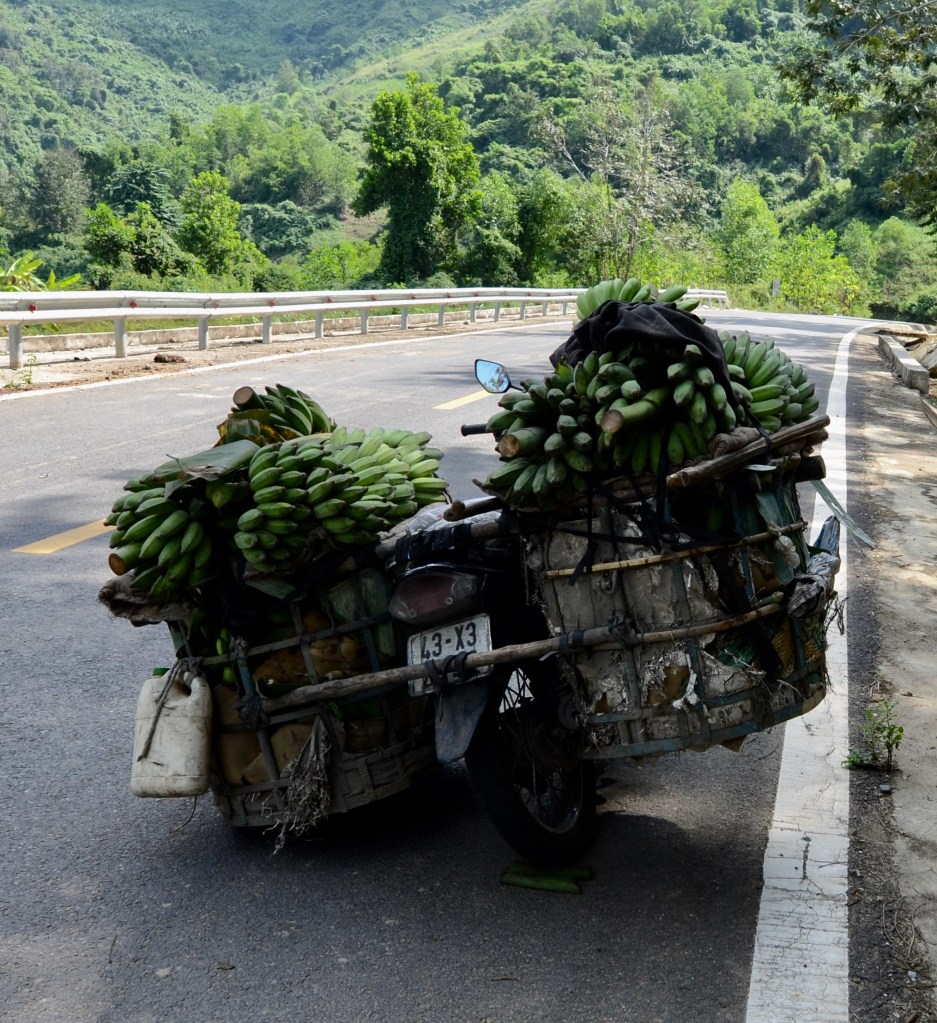
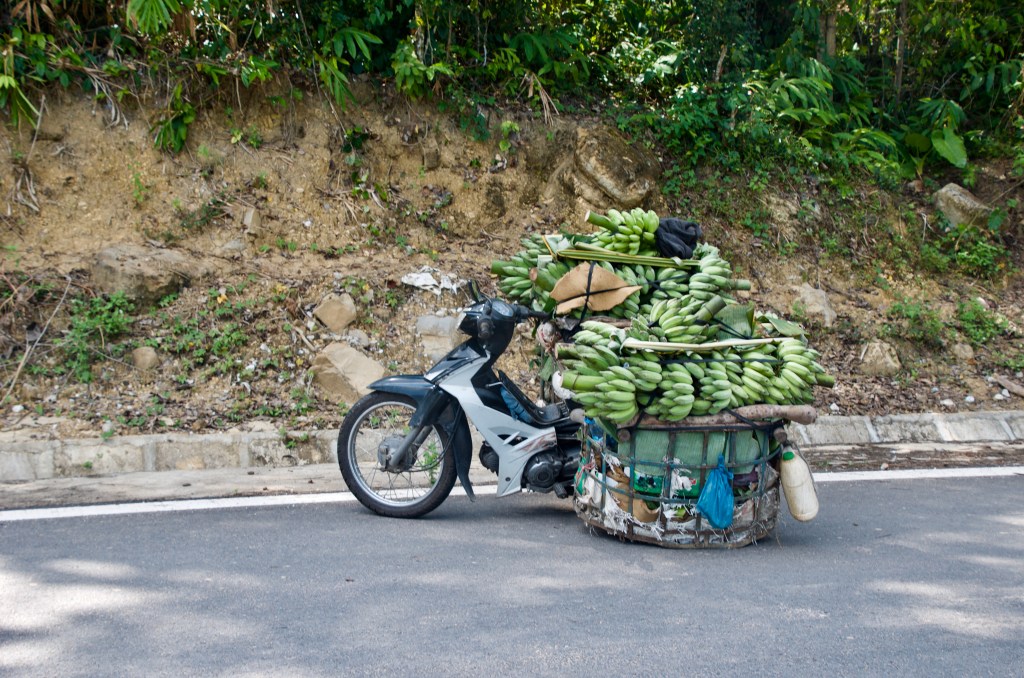
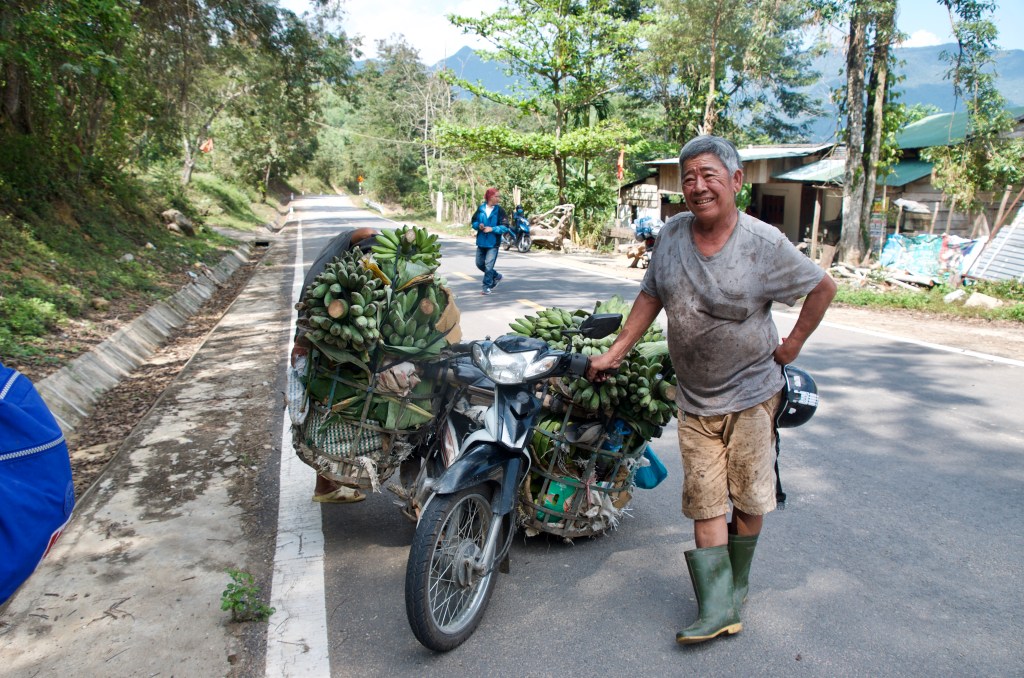
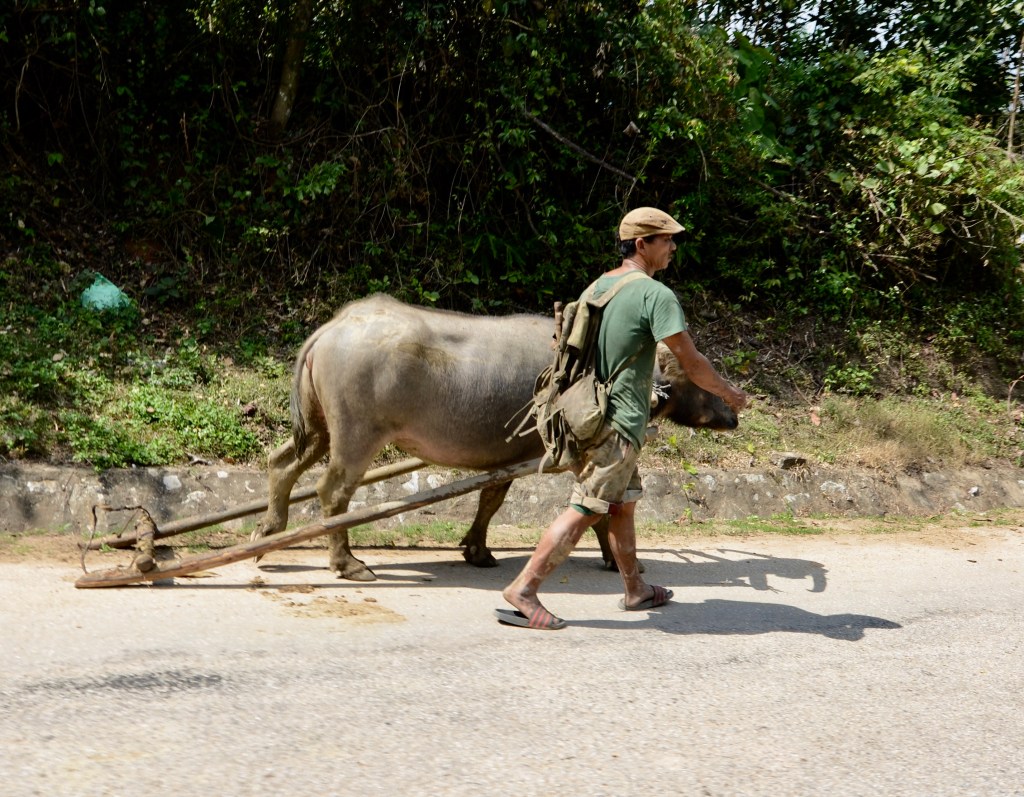
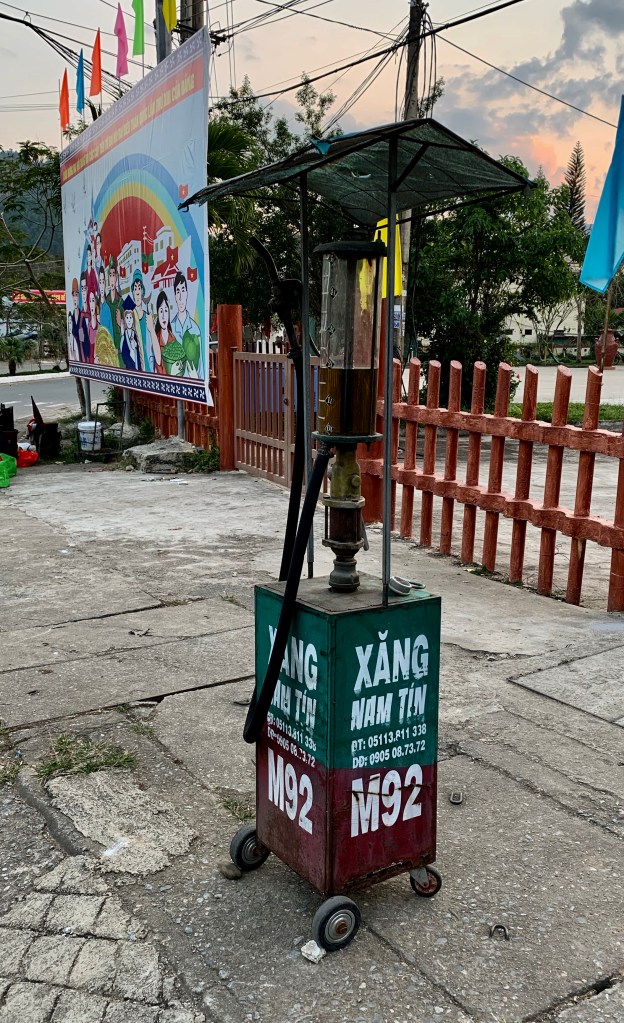
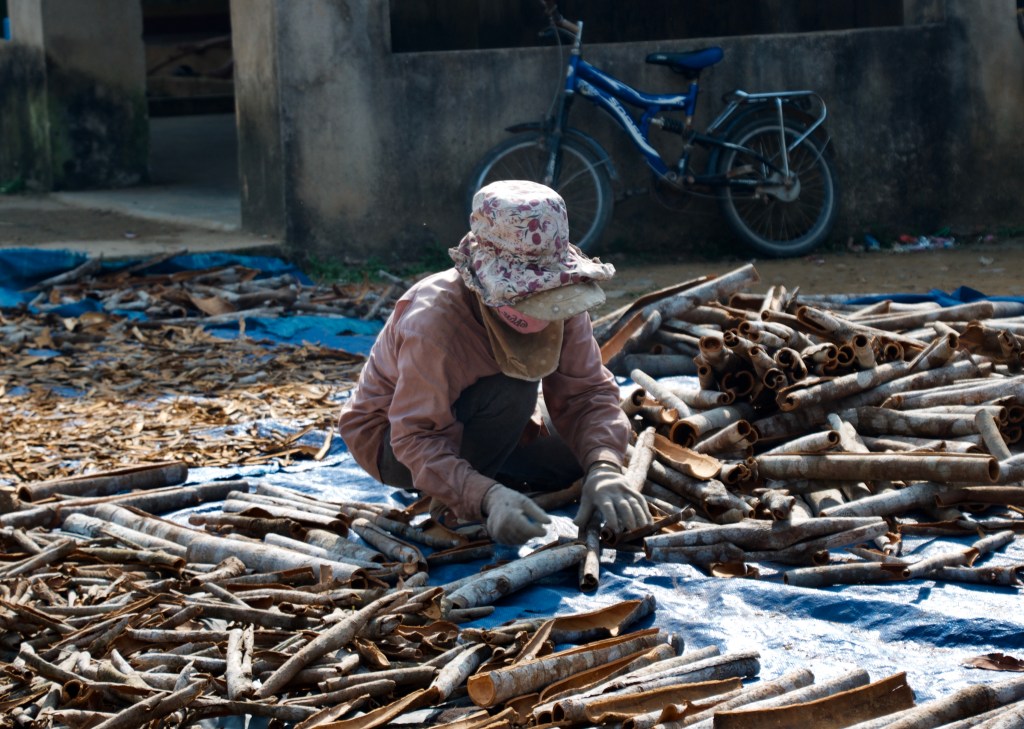
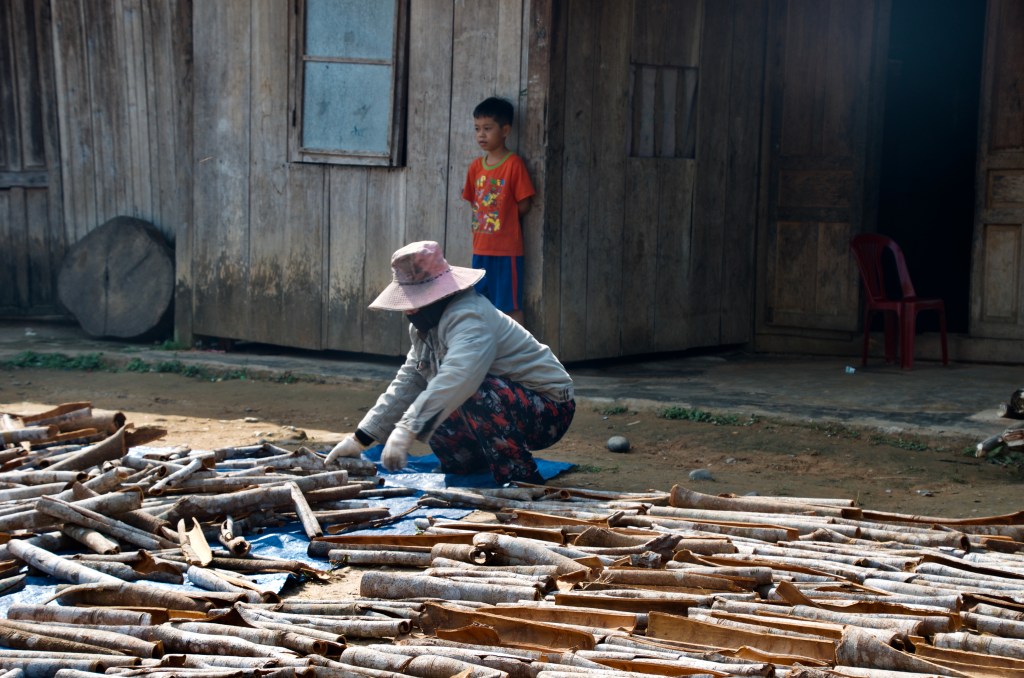
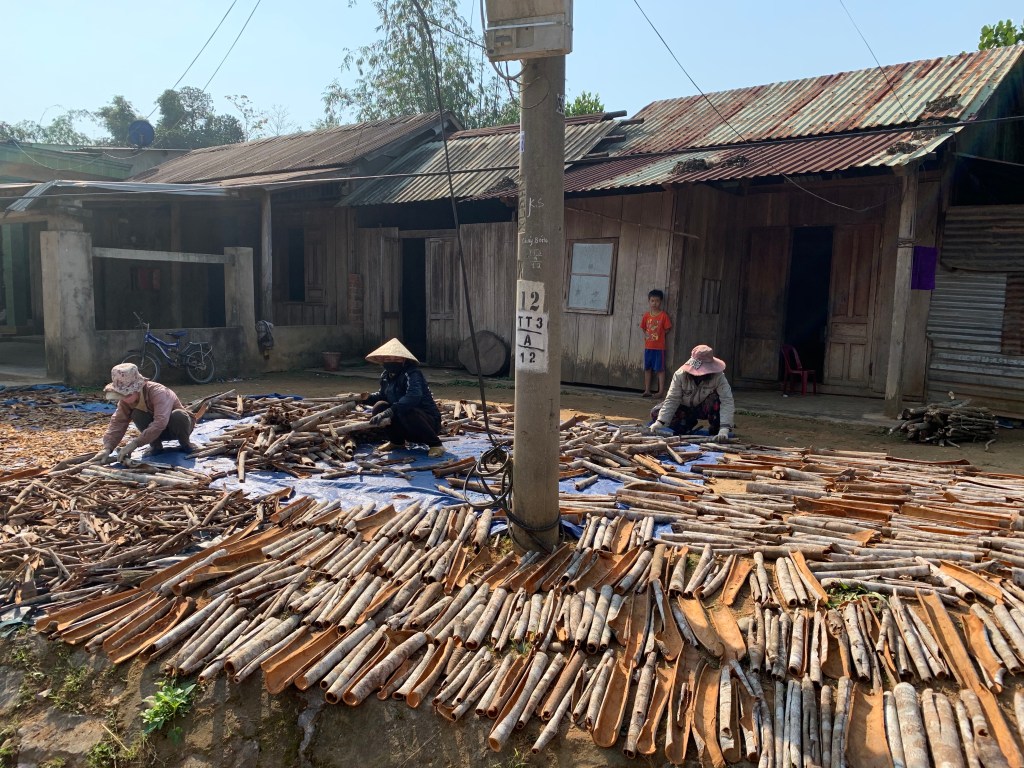
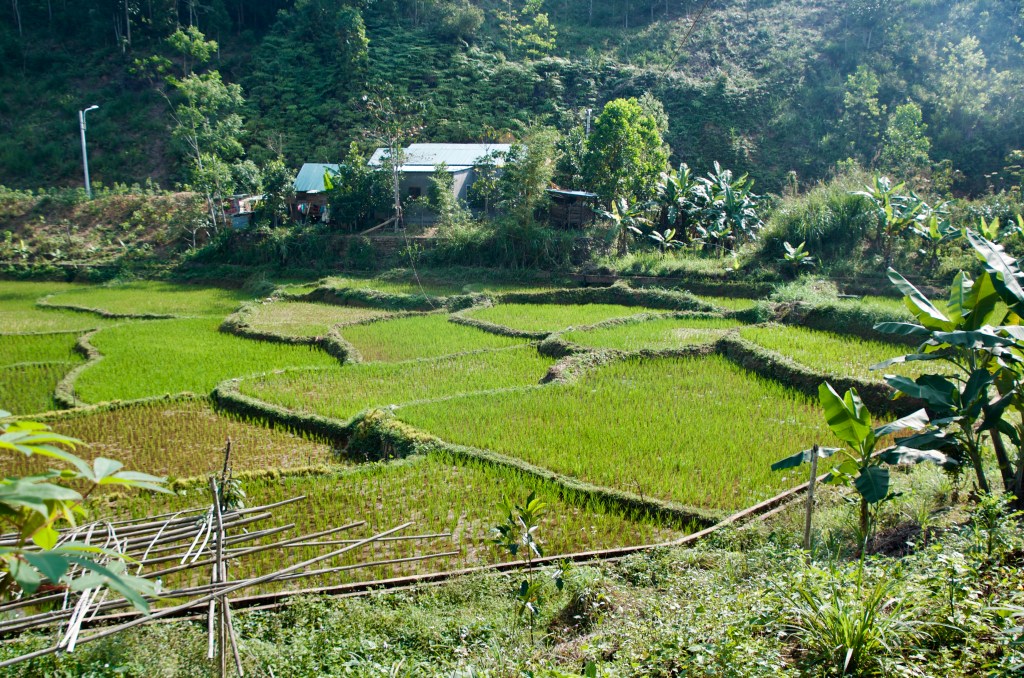
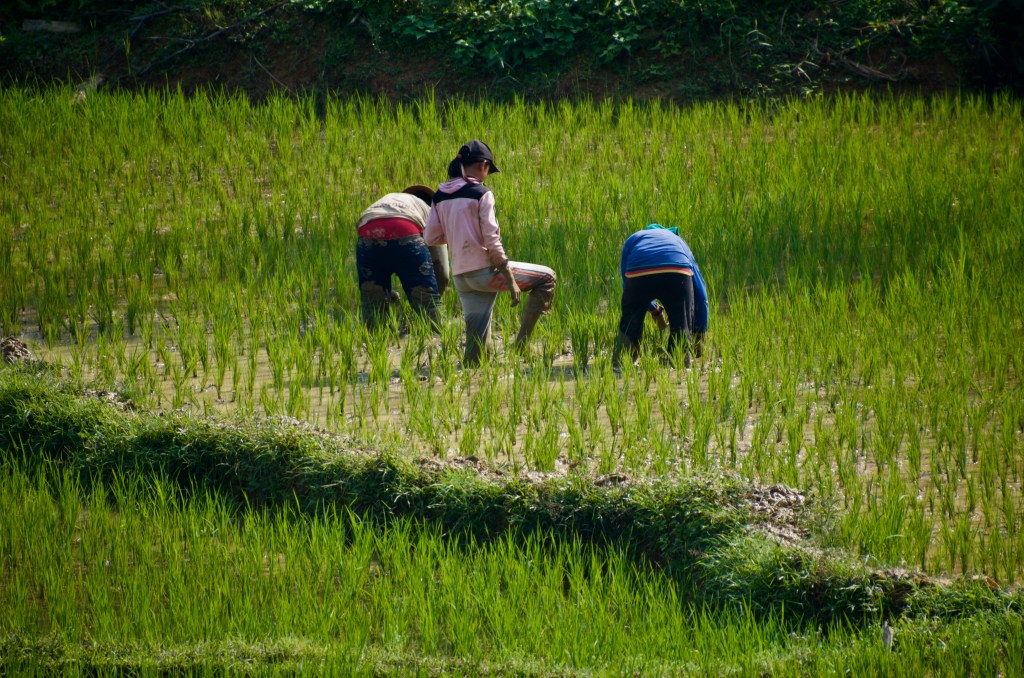
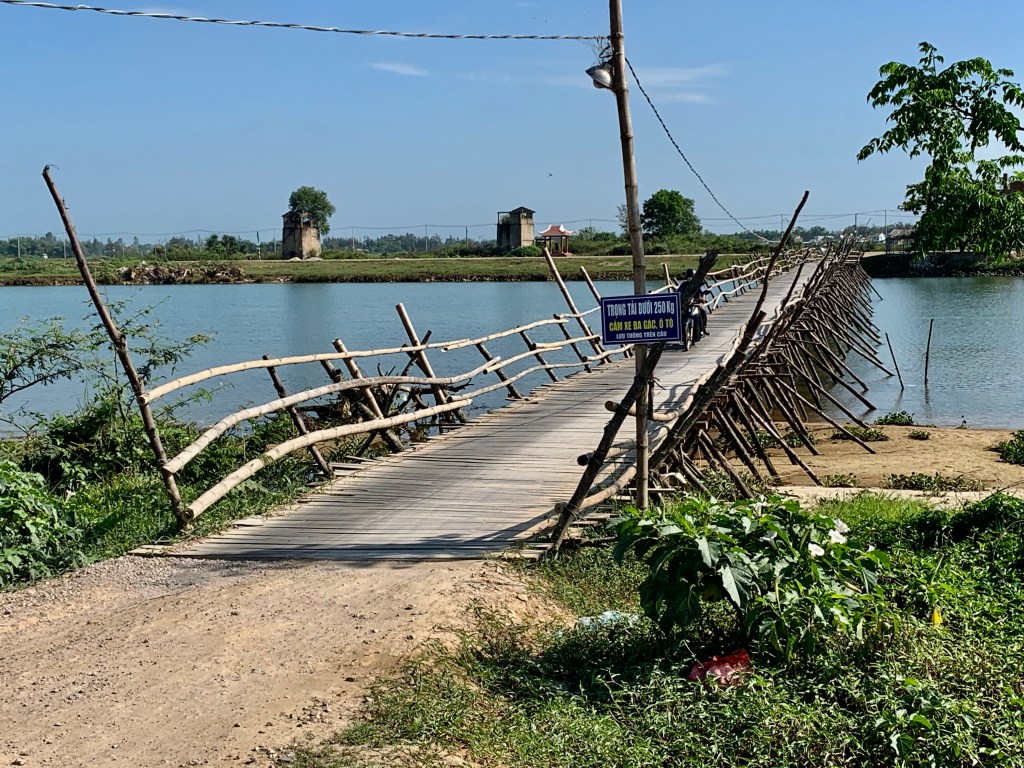
Many Rice fields along the waySome of the bridges were too narrow or too unstable for 2 on a bike, so we gladly walked to the other side (only 1 bike at at time, and there were boards missing in many places as we walked across).There were many rubber trees being farmed in the area (used mostly for bike/scooter tires).Planting rubber plantsVietnam is one of the leading producers of coffee.You have to be very patient for your coffee – takes about 1/2 hour to drip through – but it is worth the wait. A bit of condensed milk in the bottom – even better.Grasses drying along the side of the road – these will be made into brooms and dusters.very lush vegetation . We had sunny skies very day.It was hard to get the legs moving after being on the bike for many hours and the path to the waterfall was very rough, but we made it.They make the white cloth and then send it to Hoi An for dying. Amazing what they can do with these machines.We stopped at a small village where they make rice paper and rice nests.Rice NestPicking bananas to take to the market in Hoi An (which is hours away from the highlands).“Gas Station”There were many places along the road where women were separating and drying cinnamon.Even the very small villages have rice paddies.Many bridges, but you had to know if it was safe for 2 on a bike on the bridge. This one didn’t look sturdy, but we were good to go on this one.How Phu started his day
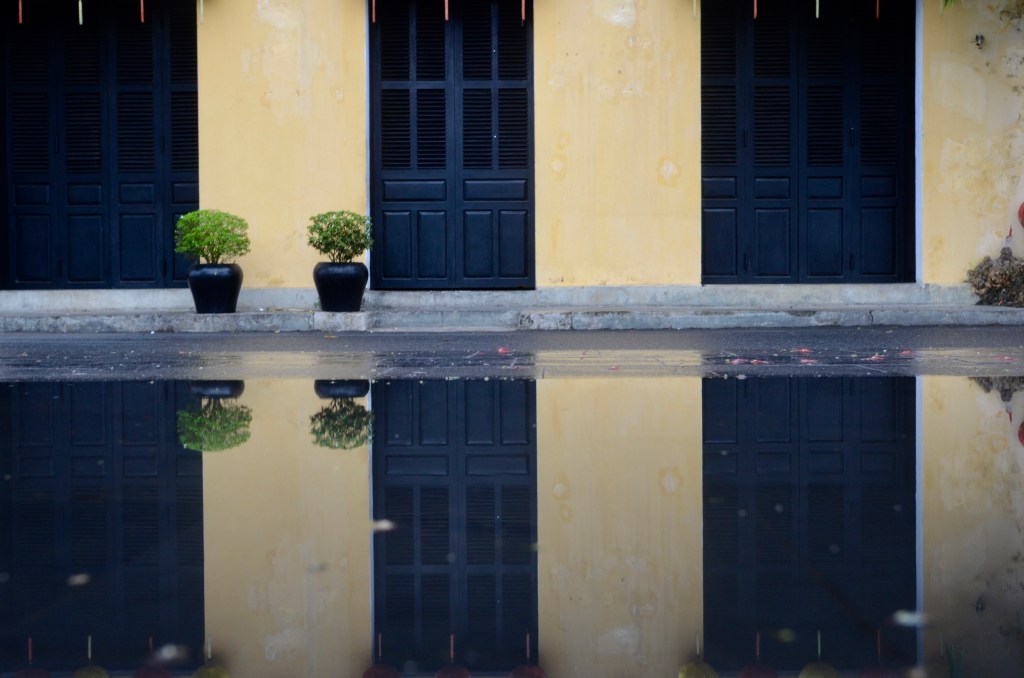
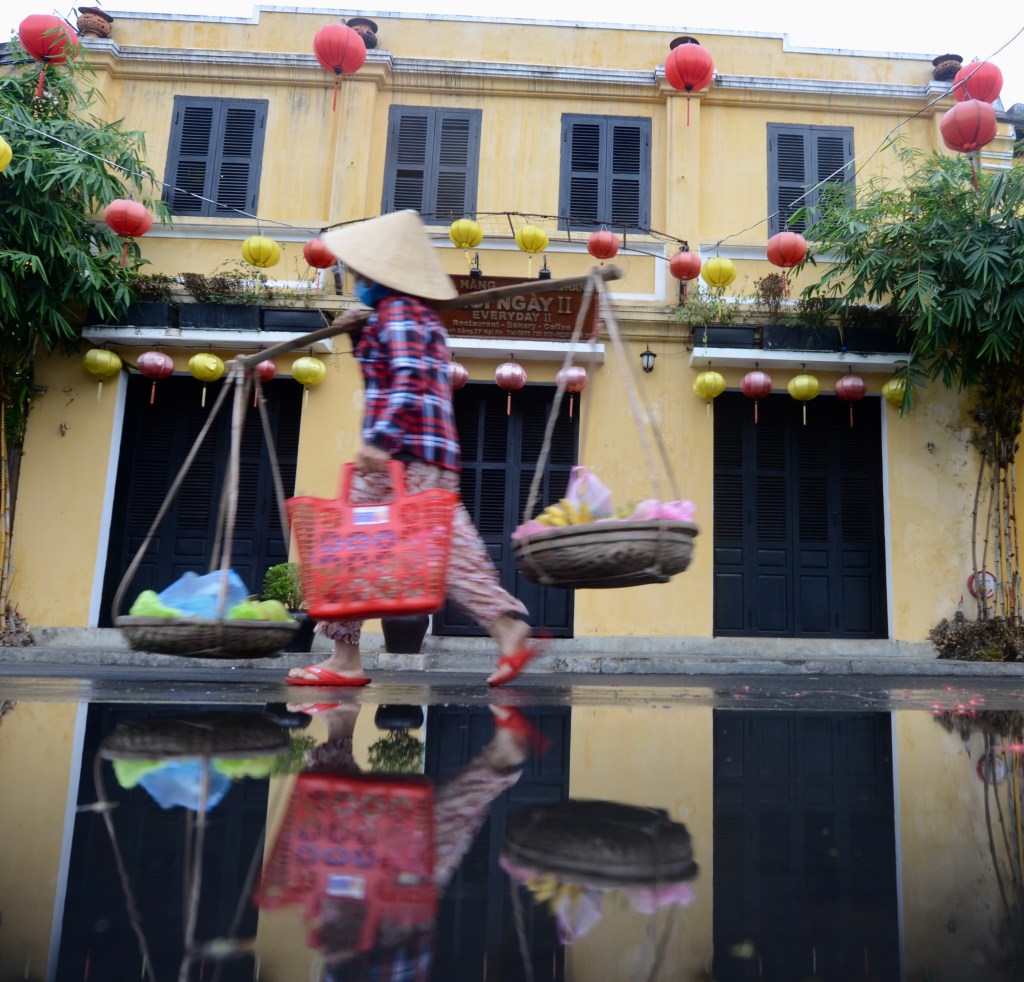
Today we decided to experience old town in the early morning so we were up at 5:00 a.m. to meet up with Fred from Travel Photography Workshop. We thought having a professional photographer as our guide would be informative and interesting. Fred is Canadian, has lived in Vietnam for 13 years, and speaks fluent Vietnamese. He has such a special way of interacting with the locals which made it even more enjoyable. Fred made changes to our camera settings to make it simpler for us, while at the same time taking advantage of key features of our cameras. As we wandered through old town he gave us so many great ideas for the composition of our pictures. Since it had rained during the night, there were many puddles and we now know how to use puddles to create an interesting picture. We’ll have lots of opportunity to practice what we learned over the next few months.
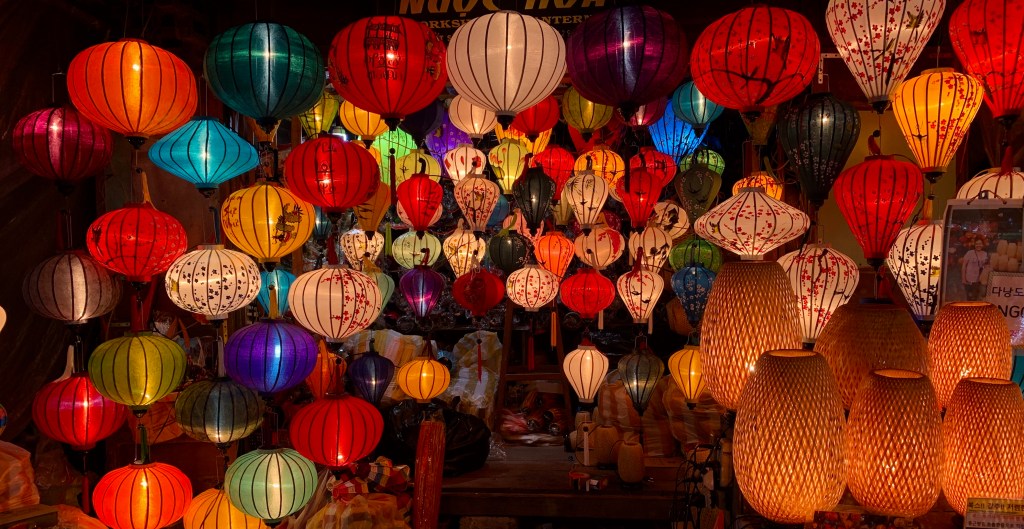
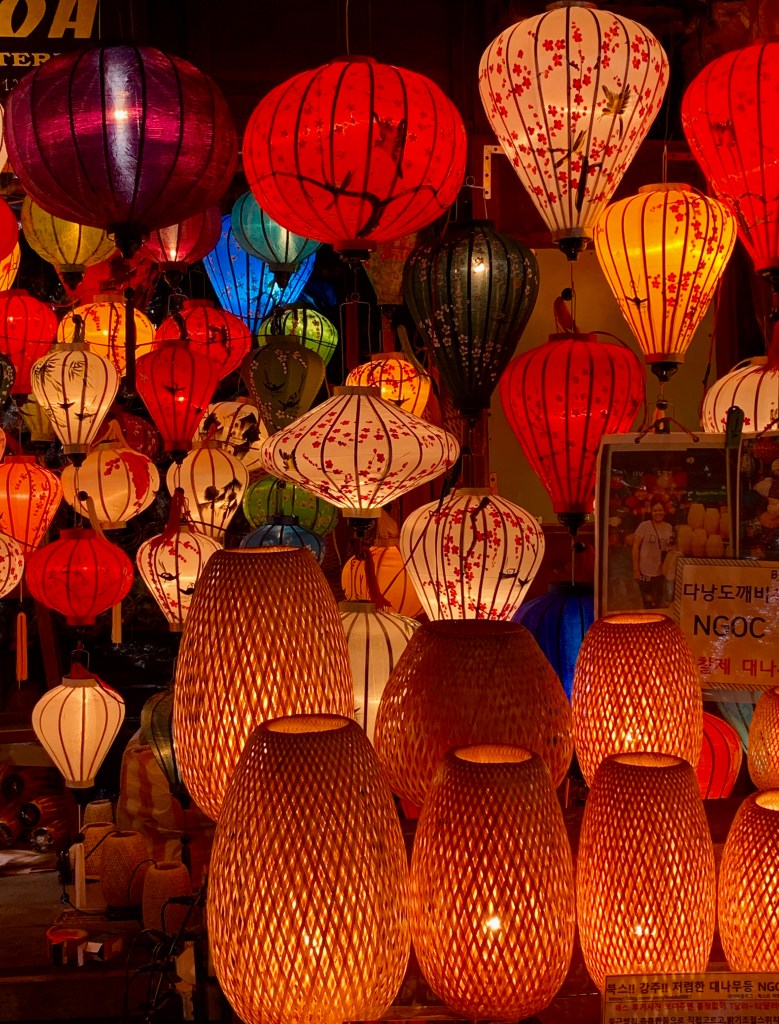
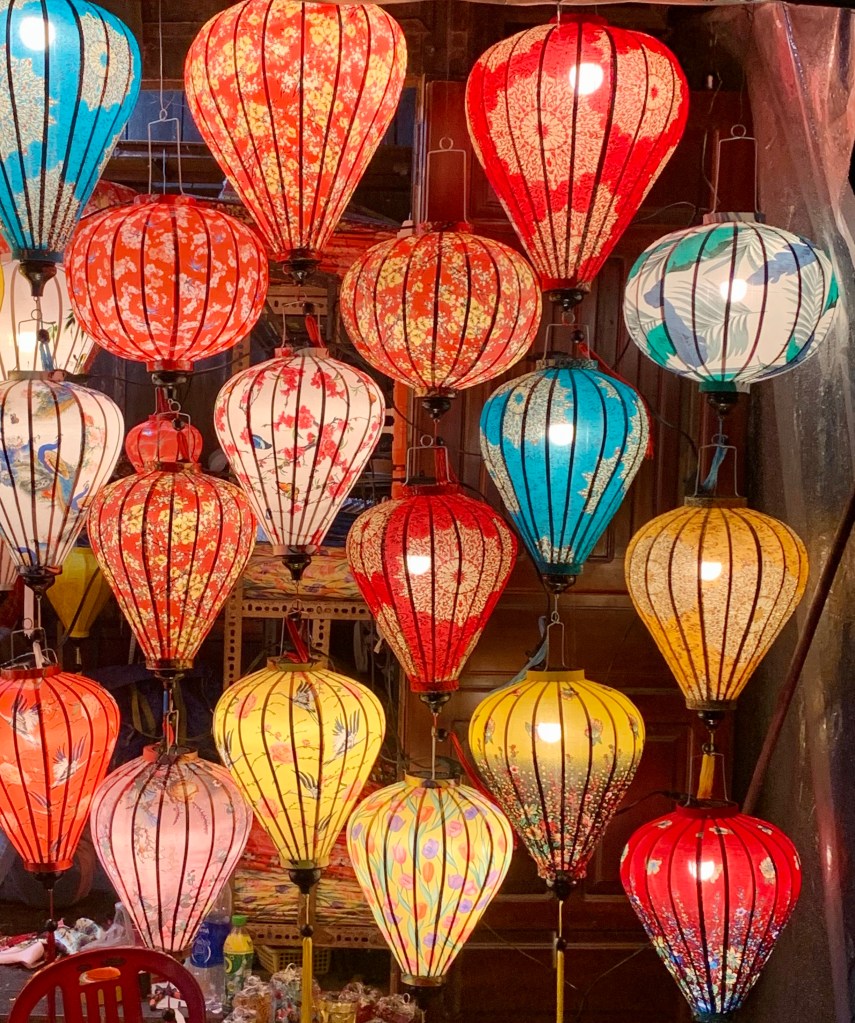
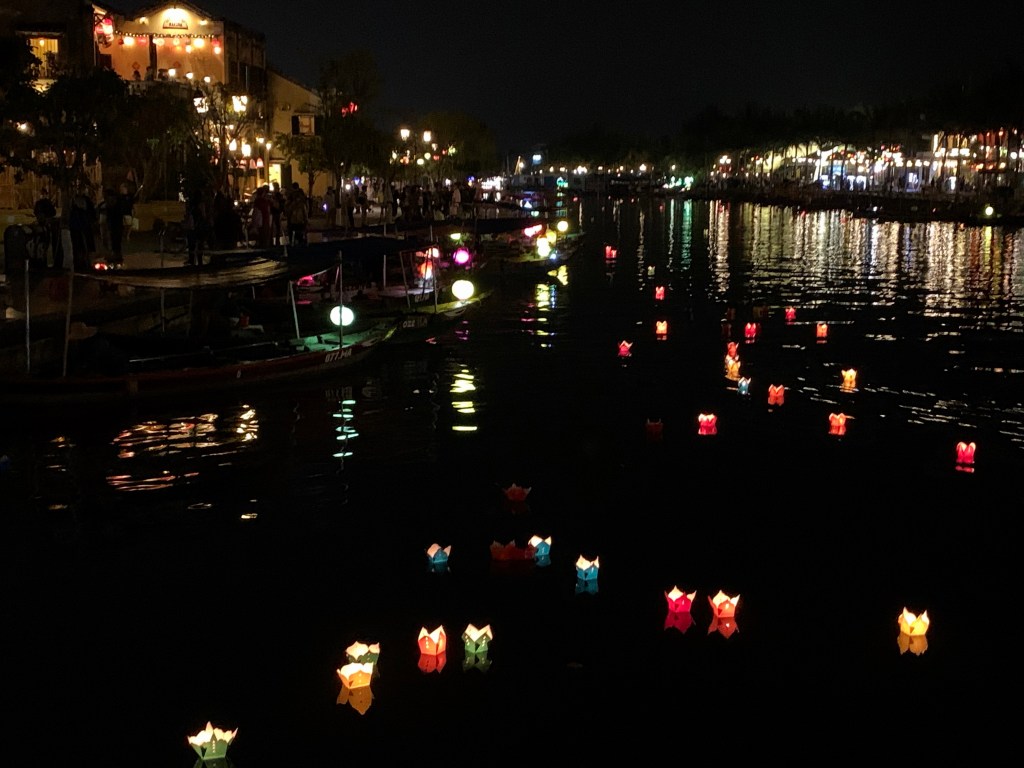
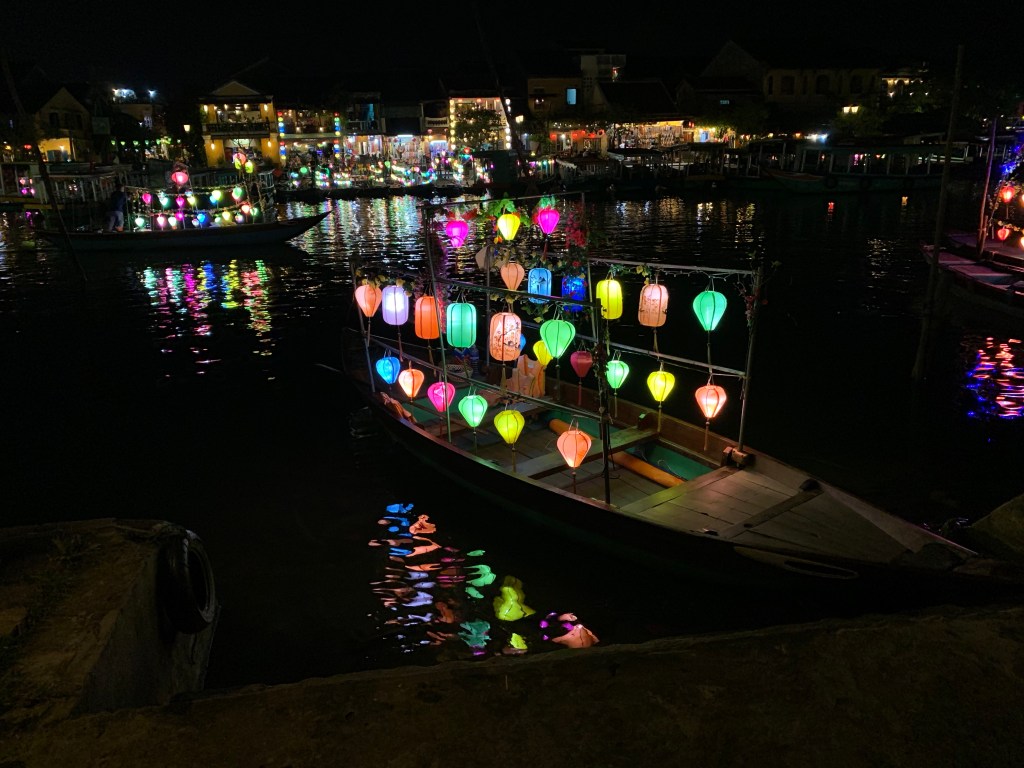
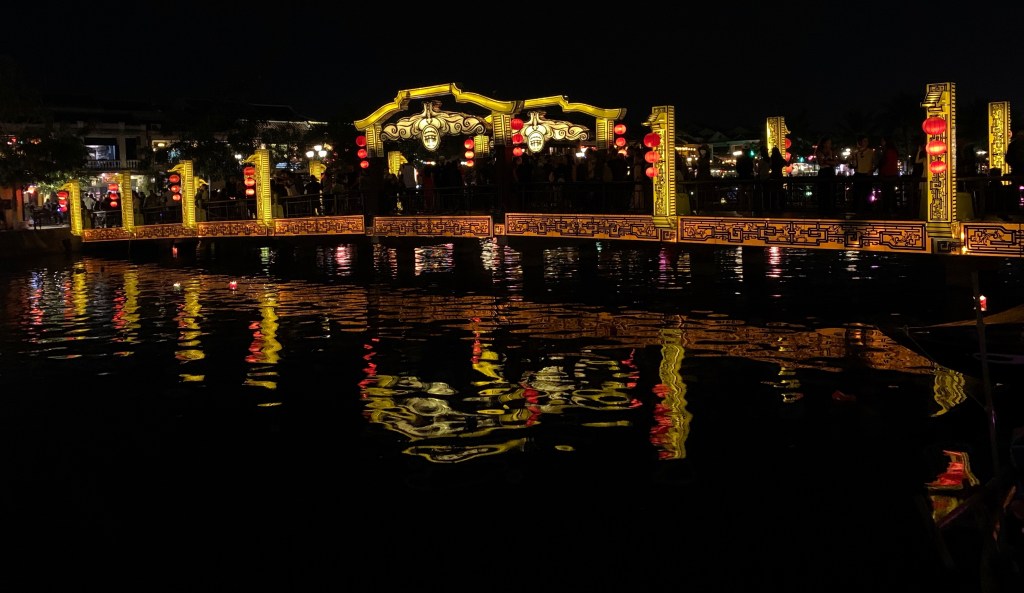
When the sun sets, the streets of Hoi An’ old town transform into a vibrant display of traditional lanterns and lit candles floating down Thu Bon River. There are so many restaurants to chose from – our favourite restaurant so far is Morning Glory. After dinner we enjoy the night life before we head back to our hotel – last night we listened to a younger couple perform at one of the local restaurants.
Before dinner tonight, we went to the Lune Performing Center to see the AO Show – the name ‘A O’ means ‘village and city’ which is the story line of the show. The work songs were in Vietnamese and the story was acted out using a mix of acrobatic acts and contemporary dance. The high energy group of youth (probably 16 – 18 years old) made it very entertaining. It was a perfect way to end the day.
Tomorrow we head out with Mr Phu at 8:30 a.m. so it’s time to pack the essentials: padded underwear, monkey bum powder, pee style, pillow, cameras and a change of clothes. Monkey bum here we come!
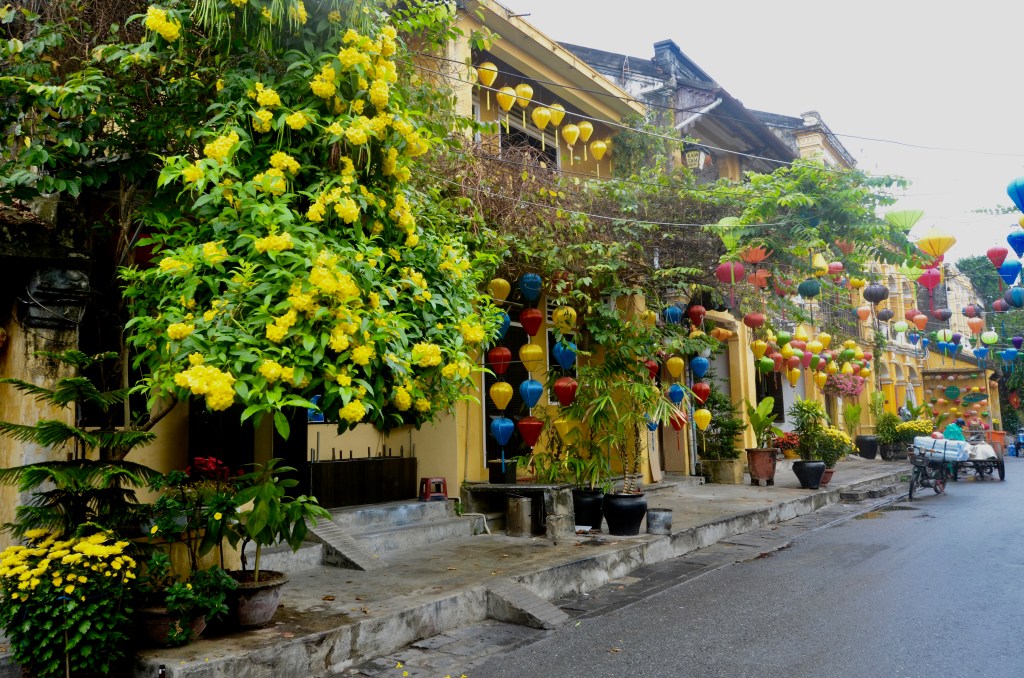
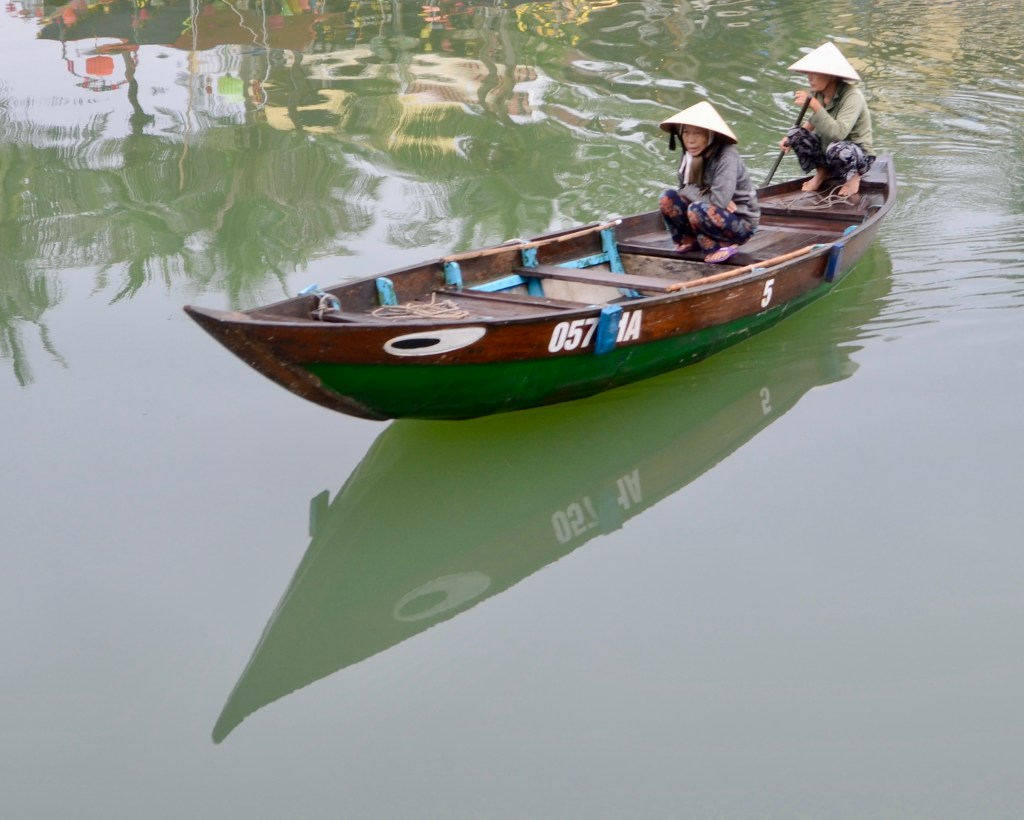
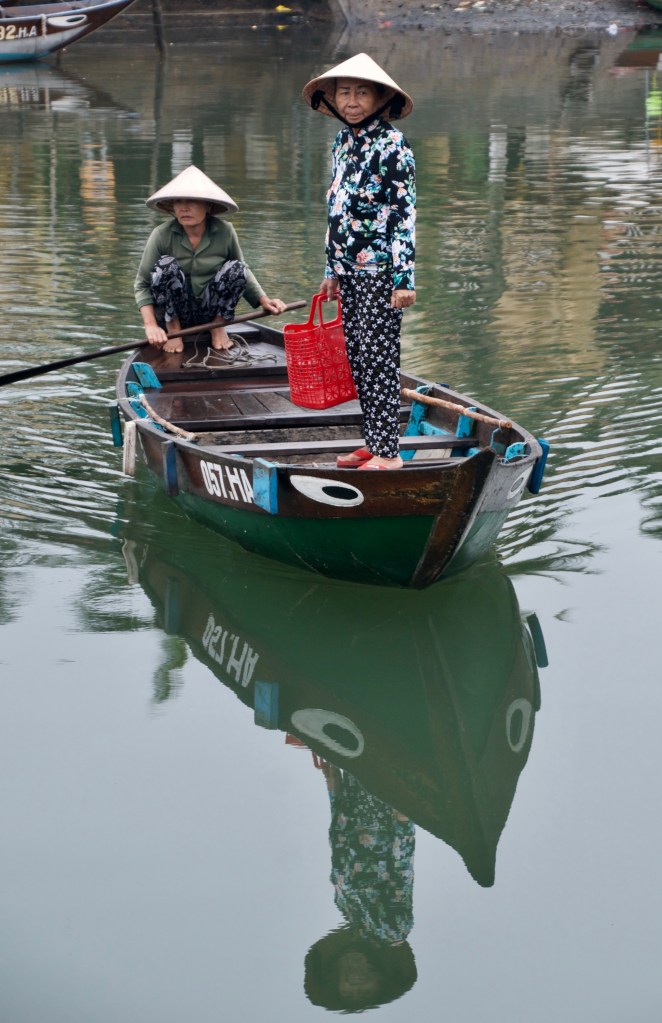
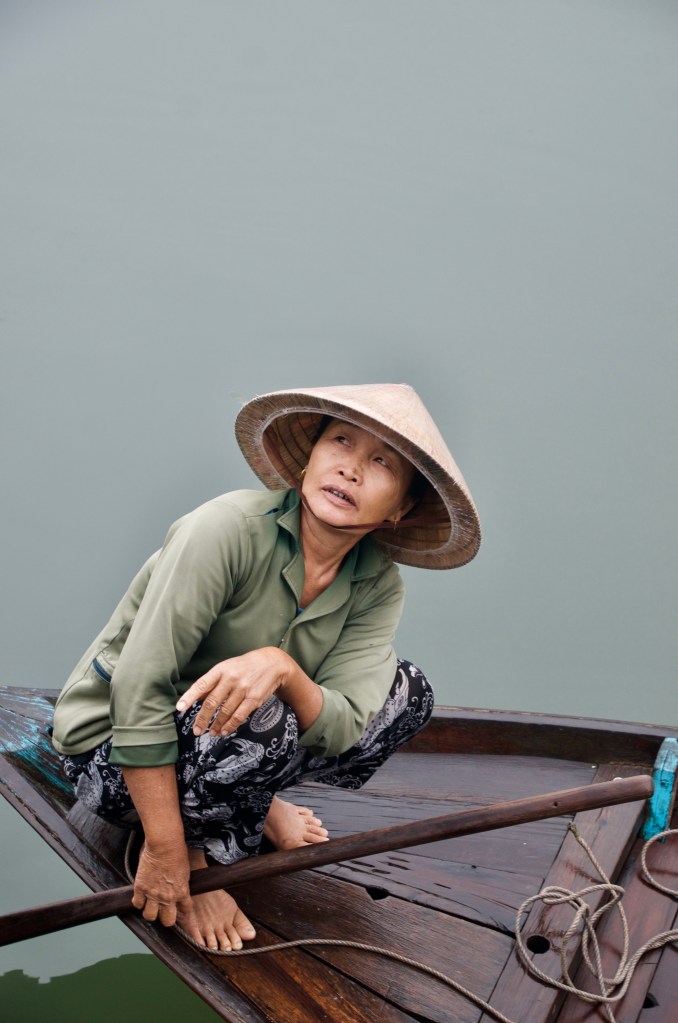
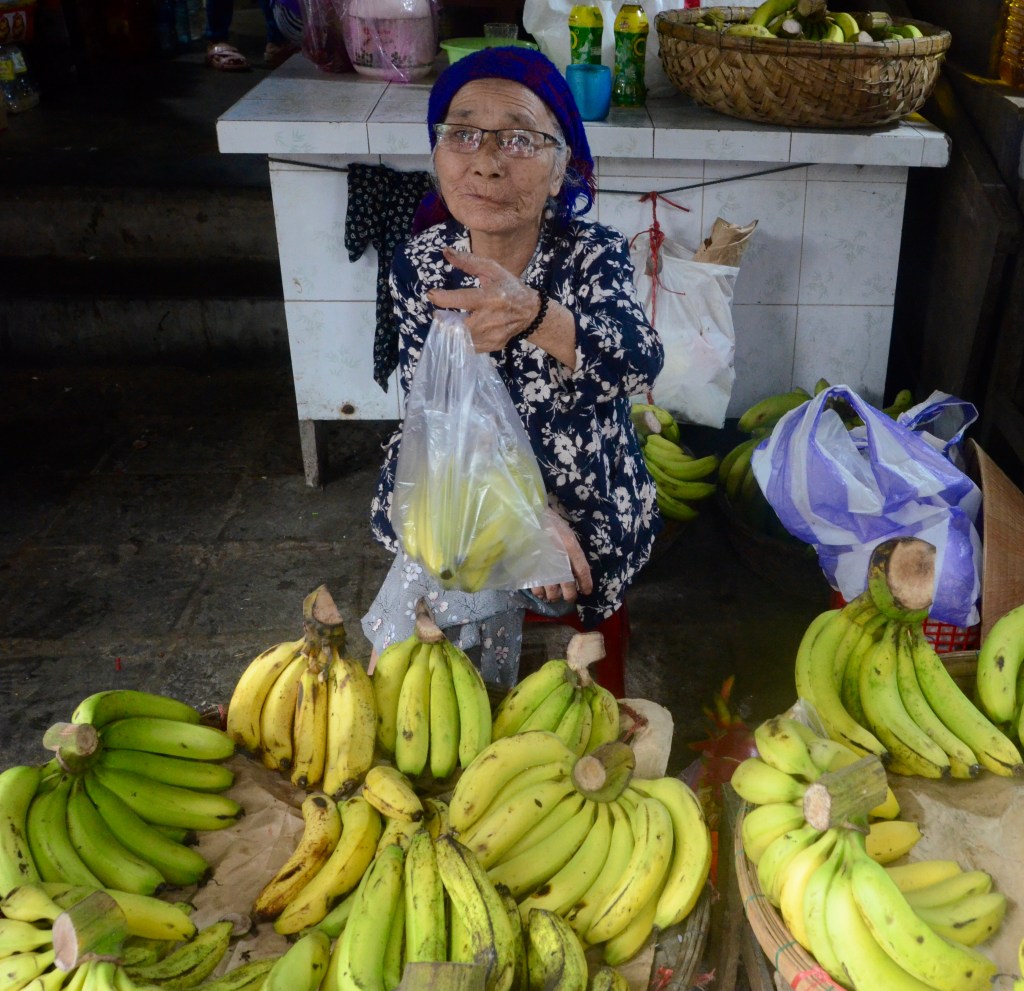
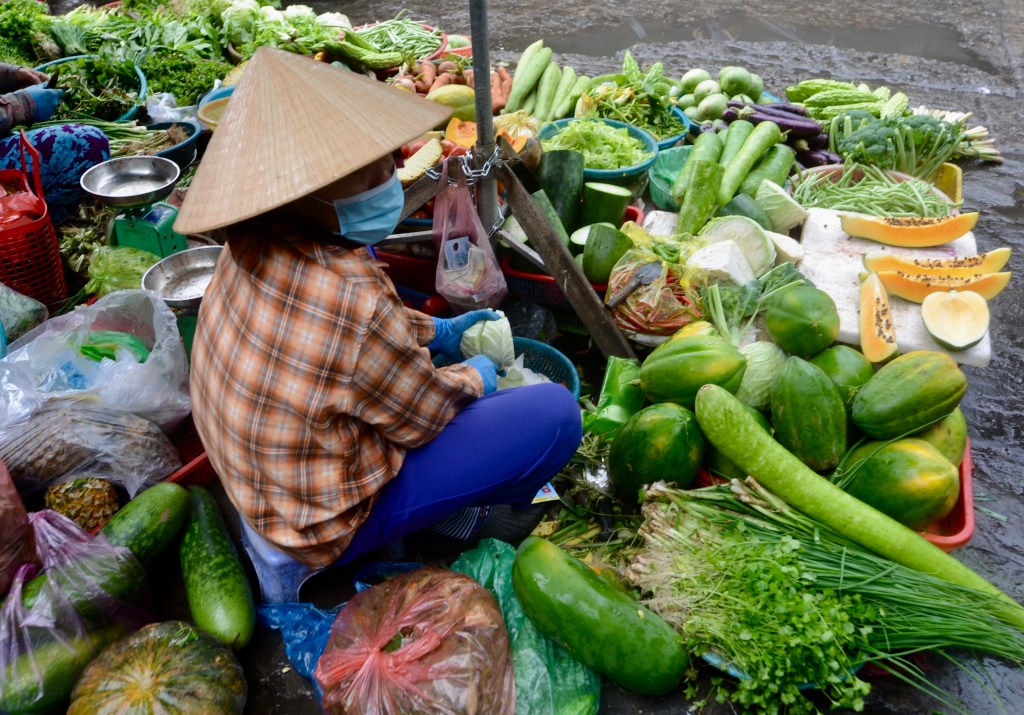
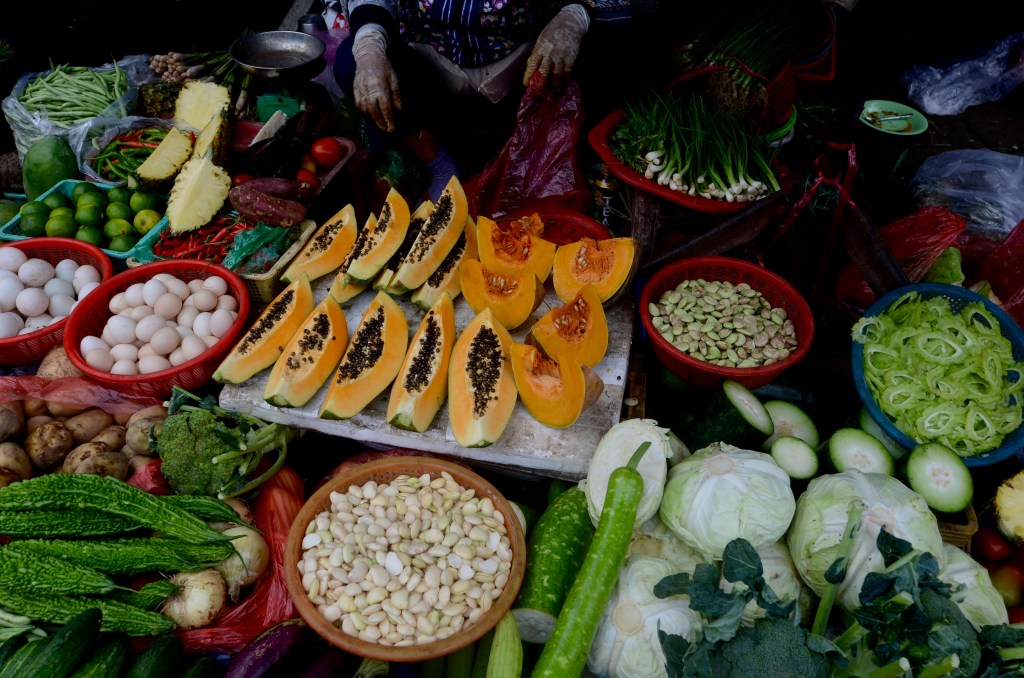
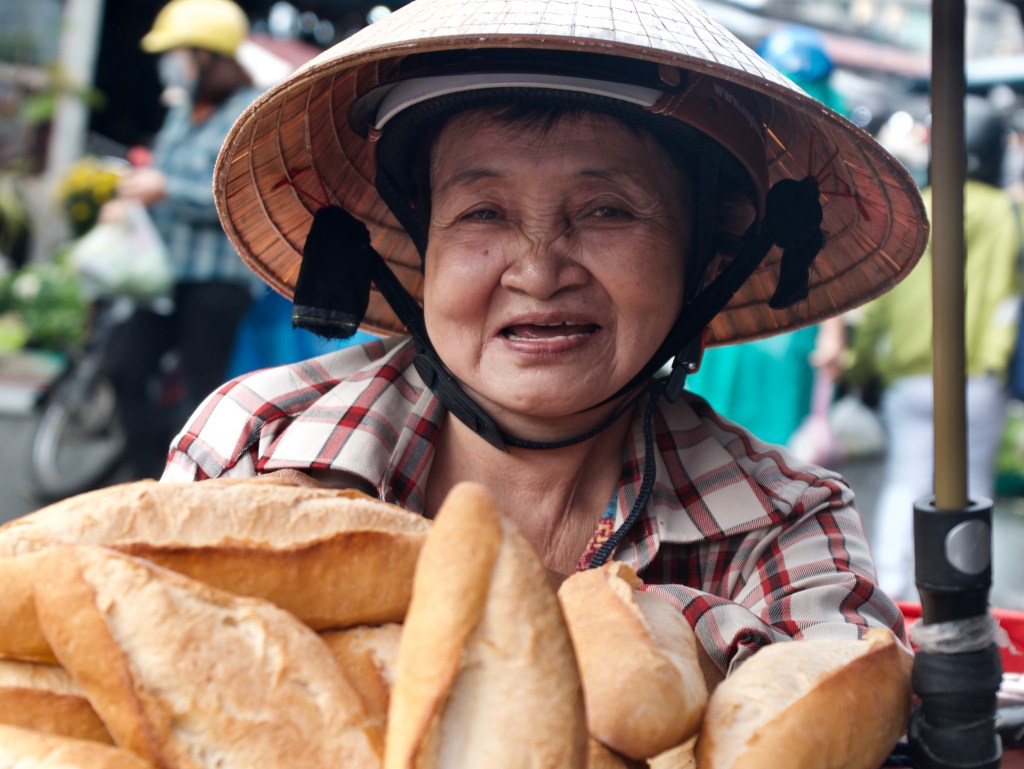
Colourful streets in Hoi AnPuddle ReflectionThis lady transports the older women (60 is old here) from the island so they don’t have to walk across the bridge.As a general rule, Vietnamese love to have their picture taken, but you have to show them afterwards (just 1 picture if you’ve taken many) as they like to see what they look like “in your camera”. Start with “”Xin Chao’ (hello) and end with “Cam on” (thank you) and you get a smile like this.Another “puddle picture”Hoi An morning marketFreshly baked and it smelt so good. Fred picked up bananas and bread for breakfast (he is 6.6 feet and super thin so he is trying to gain weight – a problem we don’t have)Candles floating down the Thu Bon River
When we were in Hoi An in 2018, we did day trips to sites outside of town. As a result, we didn’t spend much time in old town. We are enjoying our walks to town and exploring the streets and alleys of this ancient town.
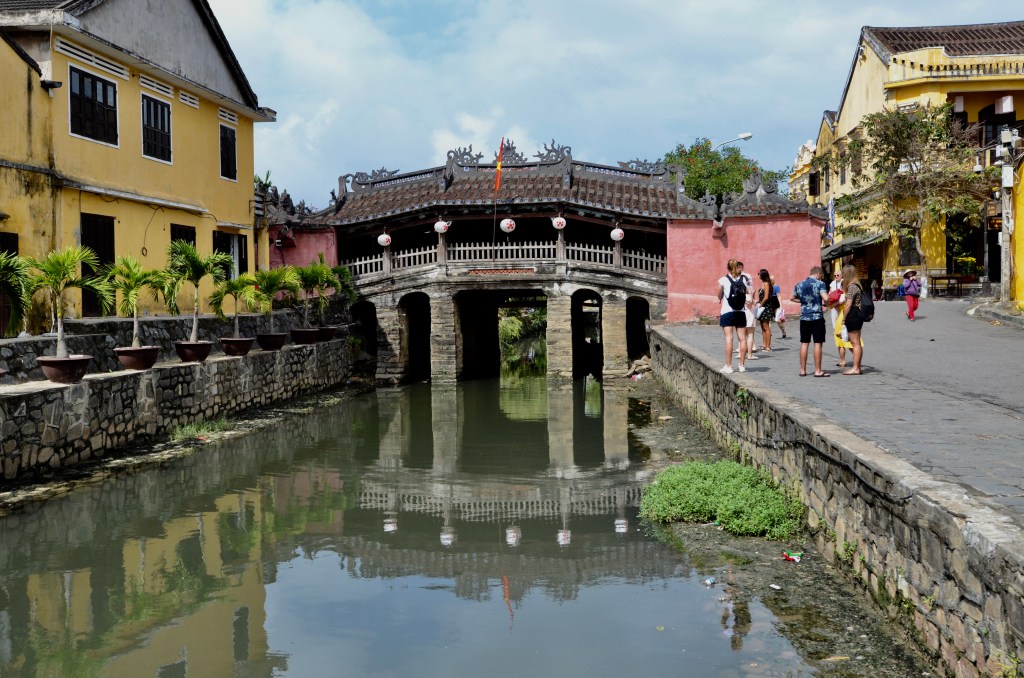
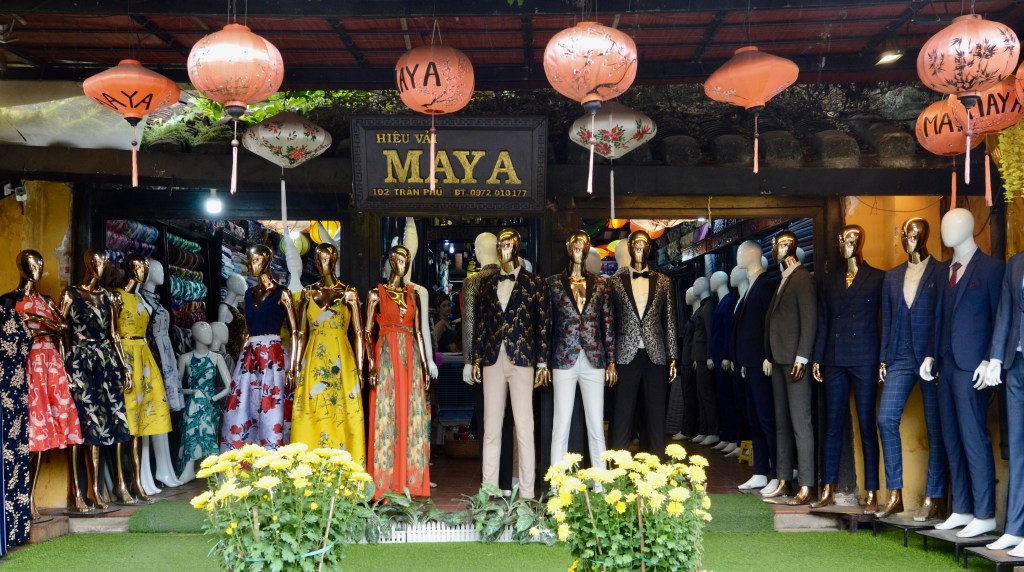
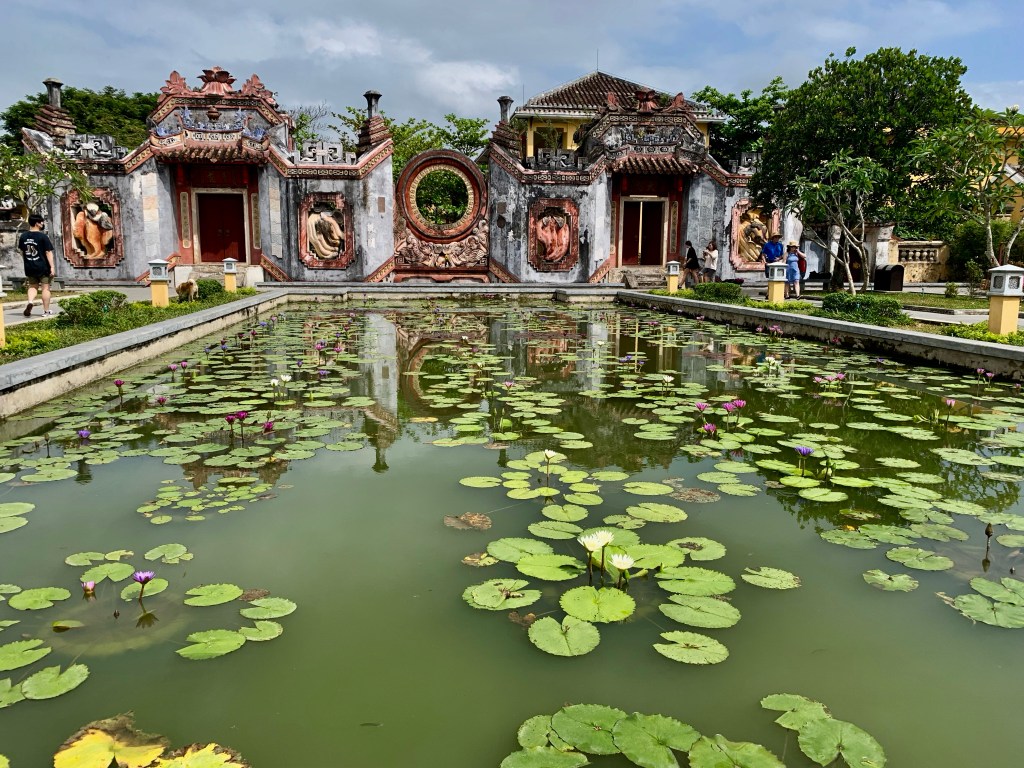
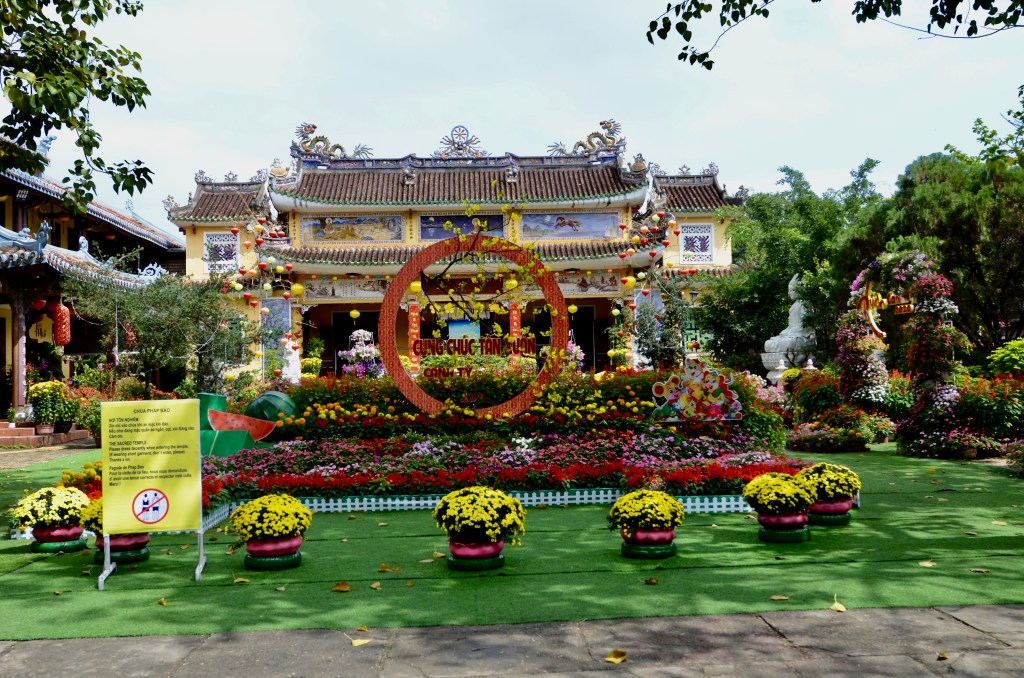
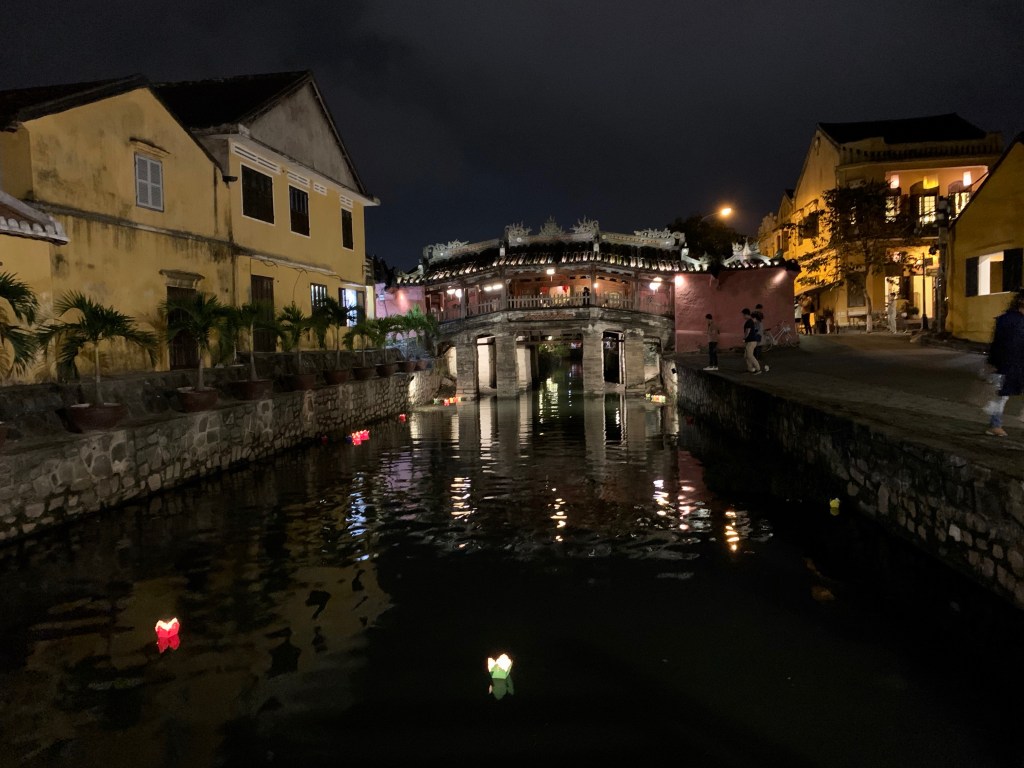
Hoi An was a major trading port between the 15th and 19th centuries and in 1999 it became a UNESCO World Heritage Site. The buildings in old town are a mix of traditional Japanese, Chinese and Vietnamese architecture and there are still historical and cultural sites, like the Japanese Covered Bridge, along the river. There is also a myriad of restaurants/cafes, souvenir shops and tailors where you can have anything you want custom made.
Tonight we ate at Mate Cafe https://matehoian.com, a small family restaurant on the outskirts of town. A very nice meal (spring rolls, sweet & sour chicken, chicken with noodles, 2 beer and a complimentary banana crepe with a sprinkling of chocolate) and the bill was $21 CAD. We didn’t realize they didn’t take credit cards, so we are going back tomorrow for lunch, and to pay the balance on tonight’s dinner (we gave them the small amount of cash that we had). They were so trusting and nice about it – their only concern was whether we had enough money for our cab fare back to our hotel.
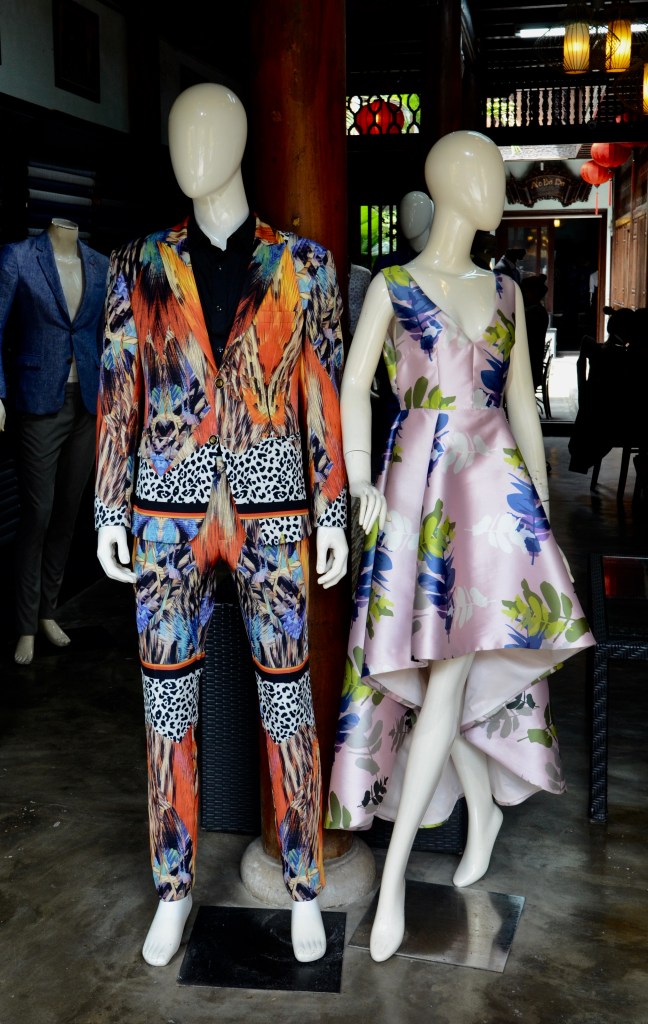
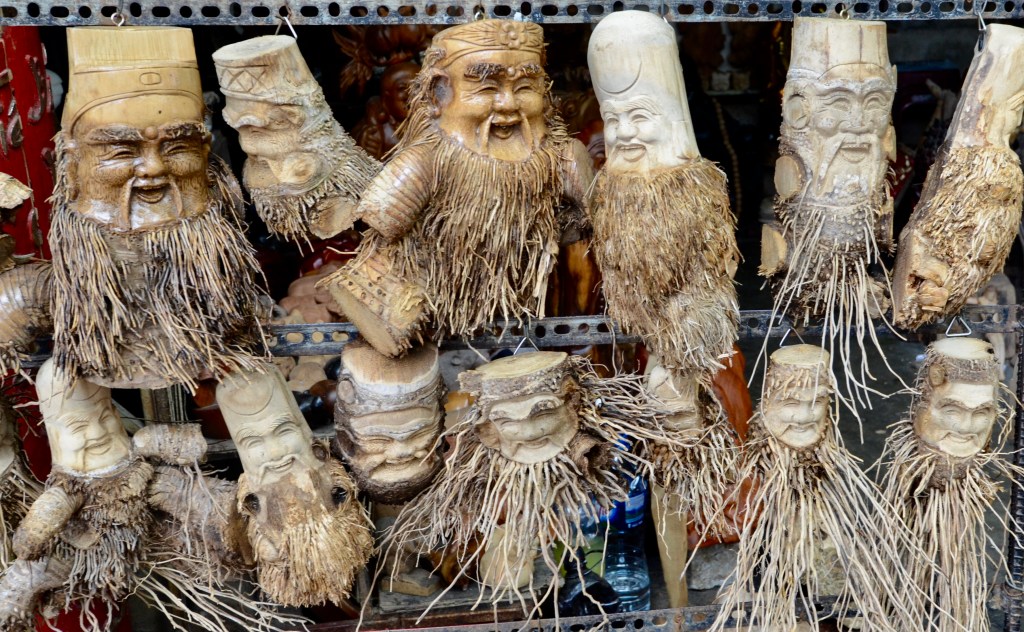
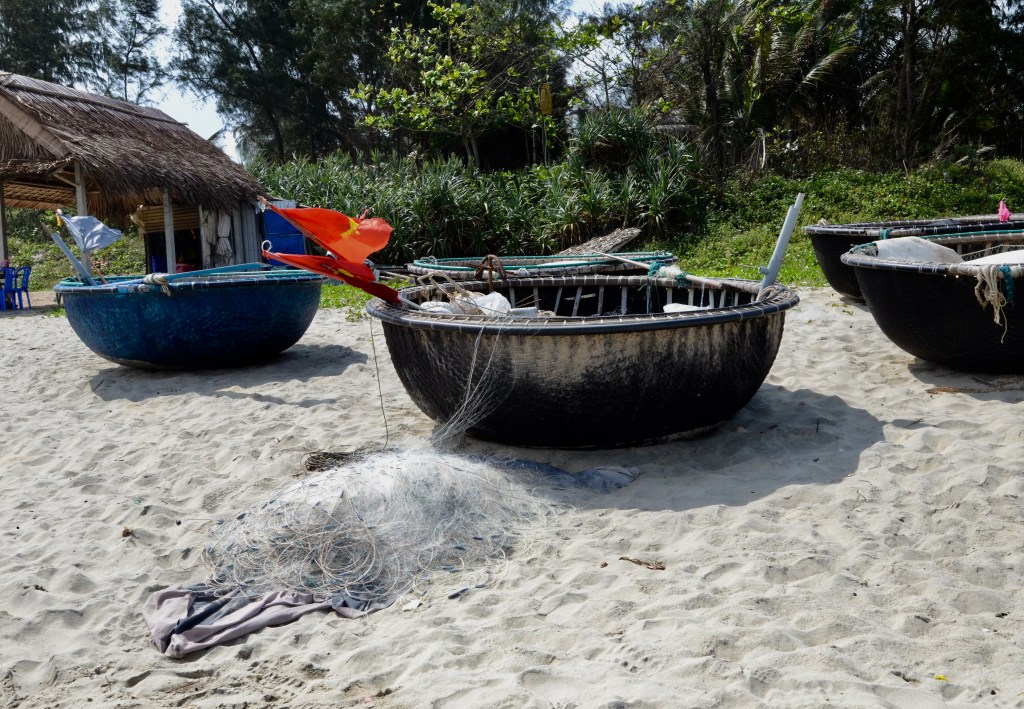
The Japanese Covered Bridge was originally constructed to connect the Japanesecommunity with the Chinese quarter, which were separated by a small stream of water, as a symbolic gesture of peace.You really can have anything made at the Taylor shops. This is just one example of the many wild suits on display.There are still flowers on display from their New Year’s celebrationInteresting wood carvings in one of the shops along the river frontLovely spot for lunch today – Brother’s Cafe riversideBeautiful gardens at Brothers Cafe. We are really enjoying the Viennese cuisine.Round fishing boat made of bamboo – also called a basket boat – is widely used by fisherman as they are light so easy to move and can be used in shallow water. It is interesting to watch them “row” these boats.Japanese bridge at night
Feb 5th – 7th: This was our fastest ever movement through the Toronto airport. There were few people in Terminal 3 when we arrived at 11:00 a.m., no line-up for check-in and we were actually the only people going through security. Our Cathay Pacific flight, on a large airbus, was less than 1/4 full so boarding was very quick. The 15 hour flight went by fairly quickly (5 movies, 2 meals and a bit of sleep). When we arrived in Hong Kong the impact of the coronavirus was very evident – there were no line-ups for customs/passport control and there were few people in the airport and even fewer at Novotel. At hotel check-in they did a “temperature check” and this was also done at the entrance to the restaurants. Most people (including us) wore masks (thank you Rich for the masks).
When we arrived at the Hong Kong airport for our flight to Da Nang, they were only allowing passengers to enter the airport (no family/friends to see people off). A temperature check was done at entry to the airport and again at security. Also, many announcements on the coronavirus. We’re glad to see these precautionary measures and glad we are flying to Vietnam today.
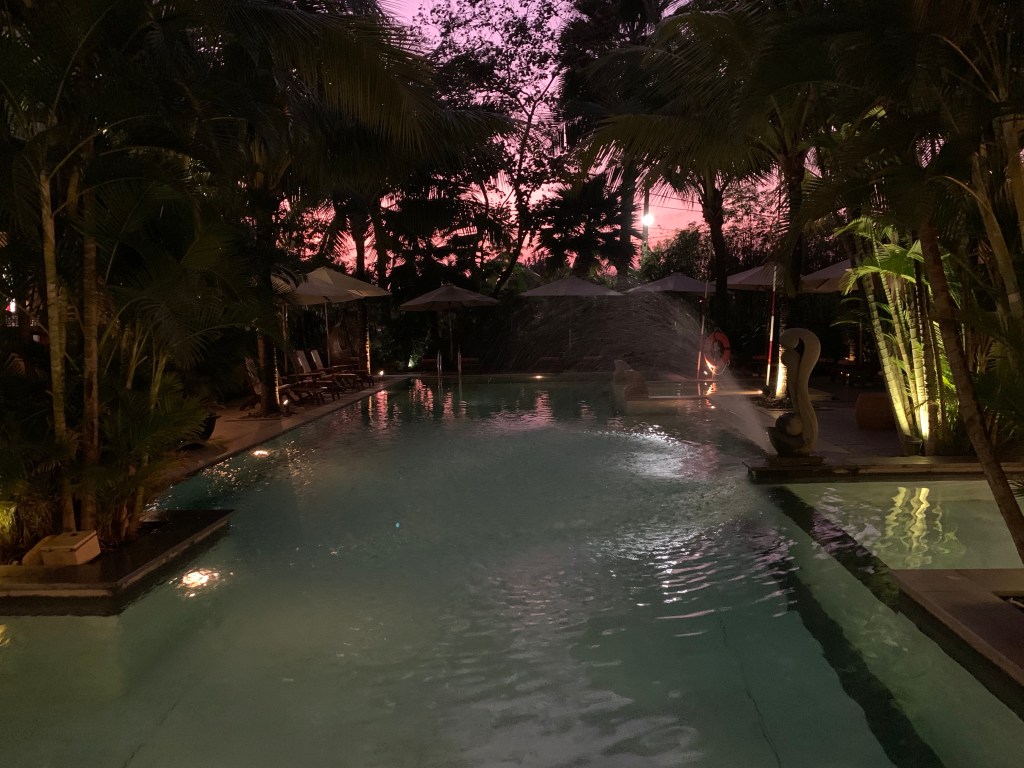
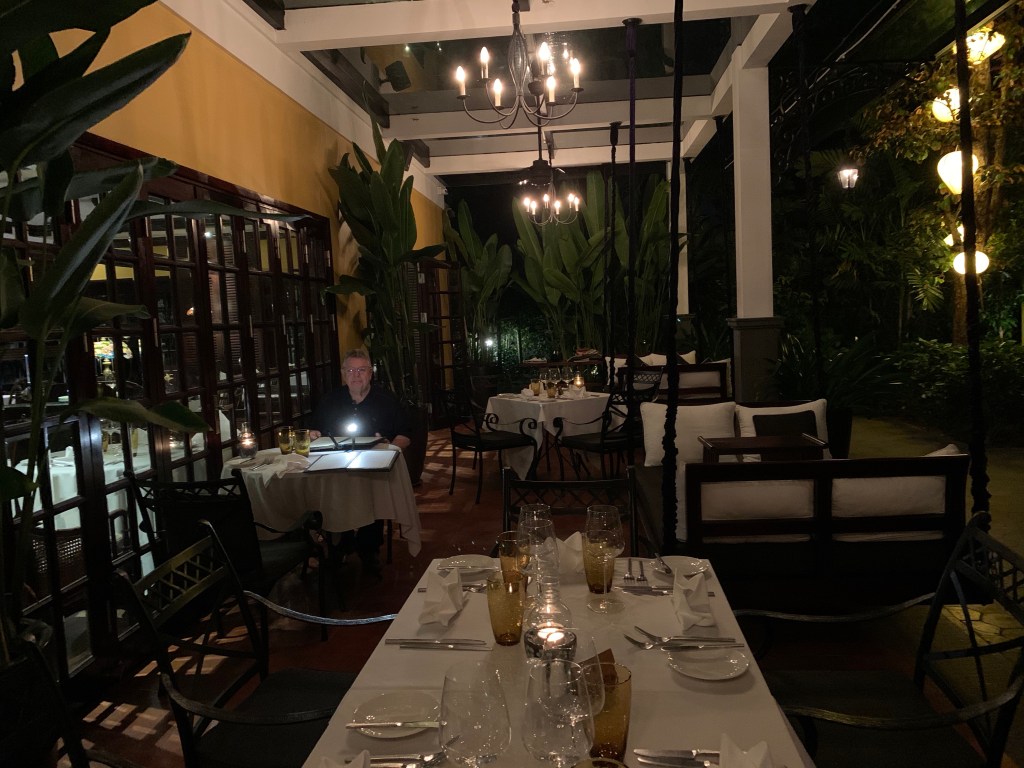
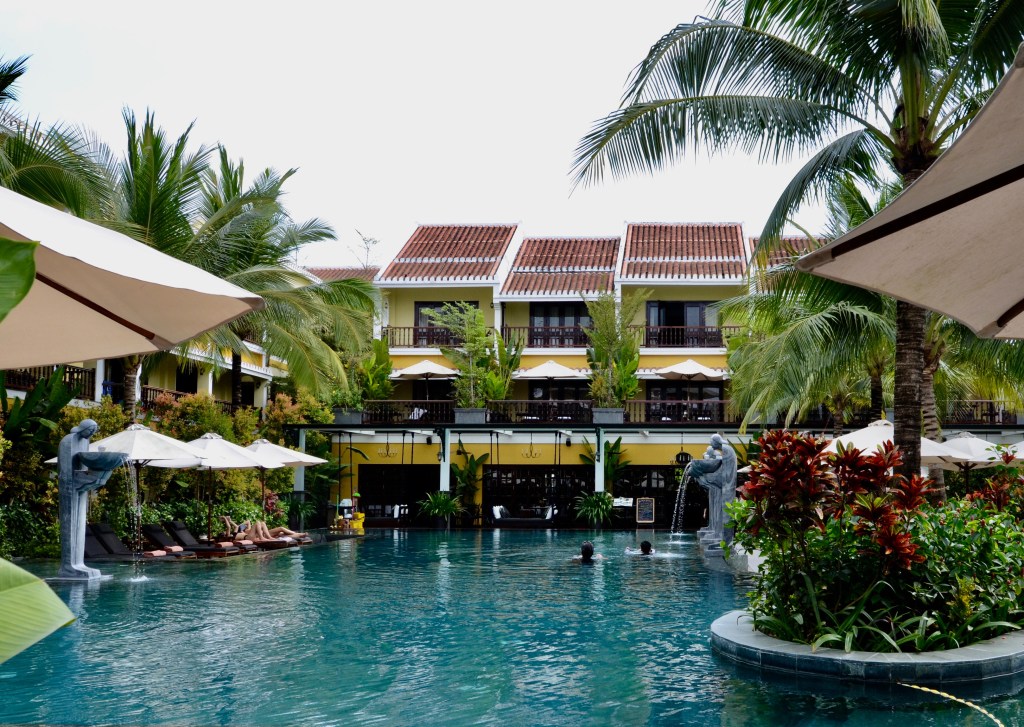
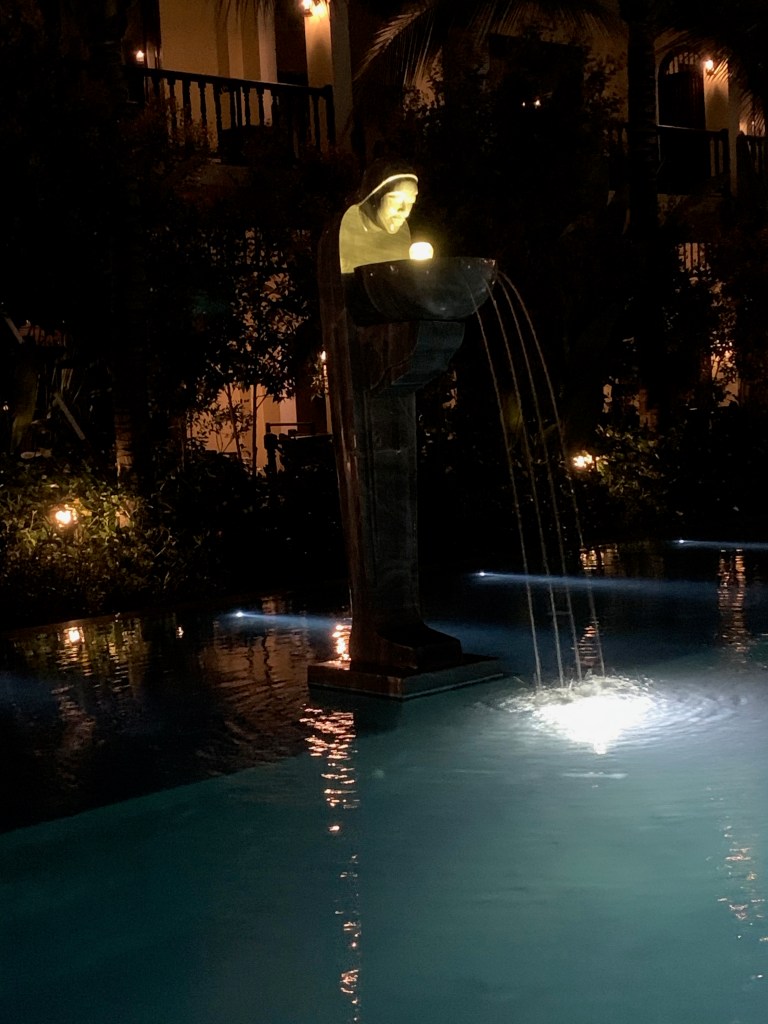
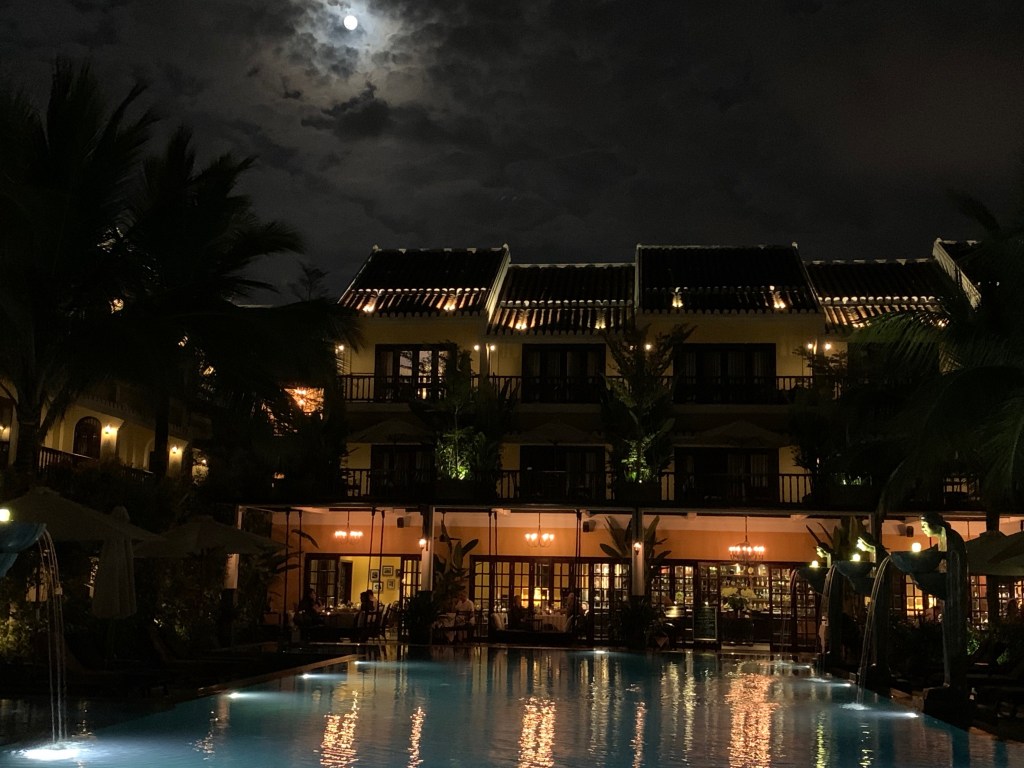
Our flight to Da Nang and transfer to La Siesta, Hoi An worked out well. It was so nice to be “welcomed home” with a note on our bed and a special drink at diner. It is 18C so we enjoyed a lovely meal outside. Lois/Phil, Don/Deb, Sherry/Glen, you will recognize the pictures taken around the hotel this evening (we are 12 hours ahead).
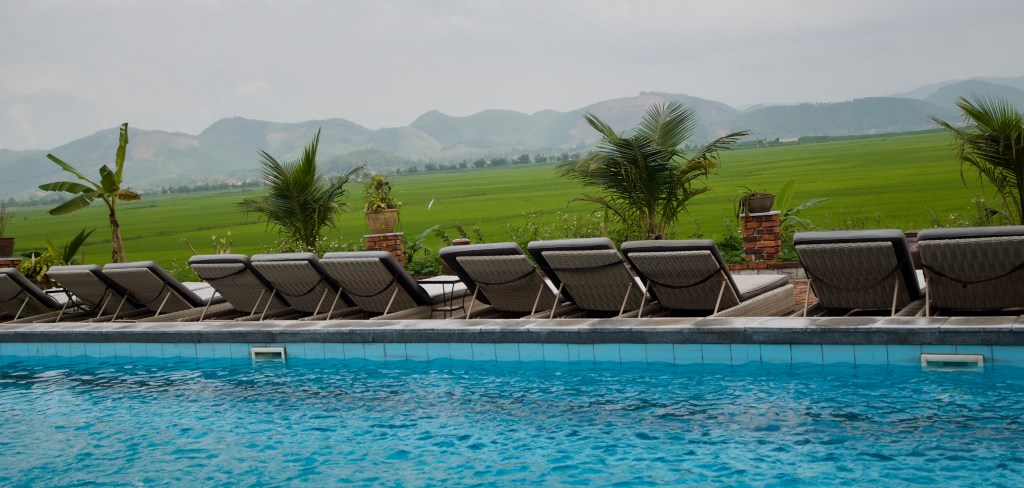
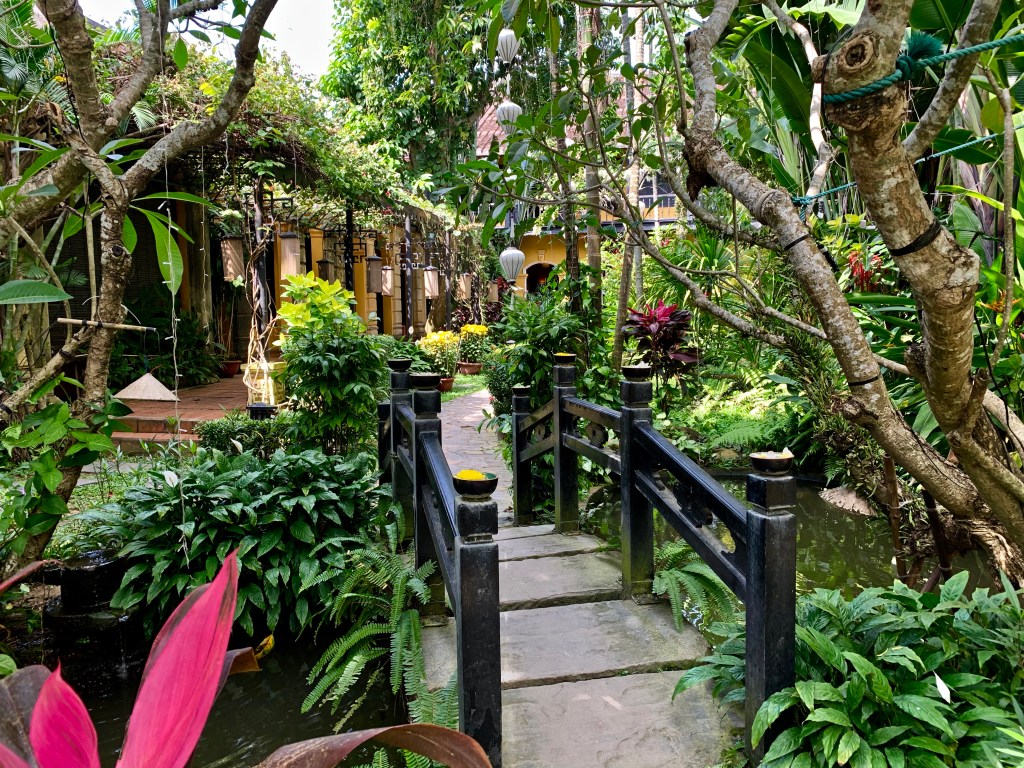
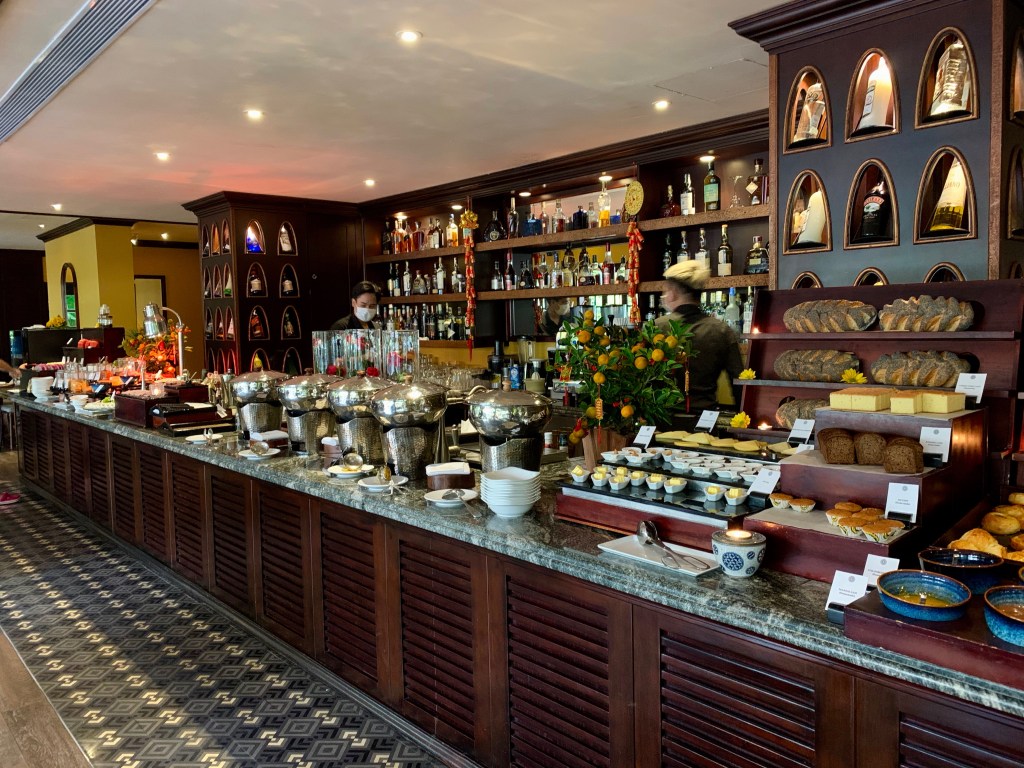
La Siesta pool in the first buildingOutside at La Siesta Temple restaurant – very relaxing dinner tonight.Breakfast at The Temple at our hotel
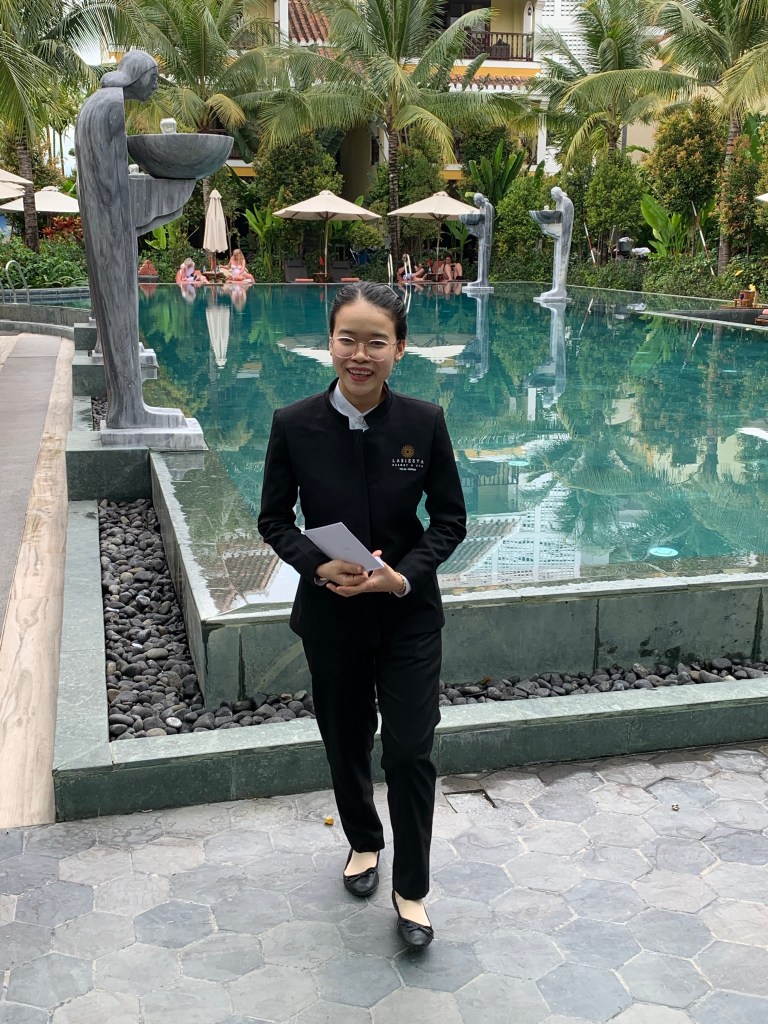
Hien
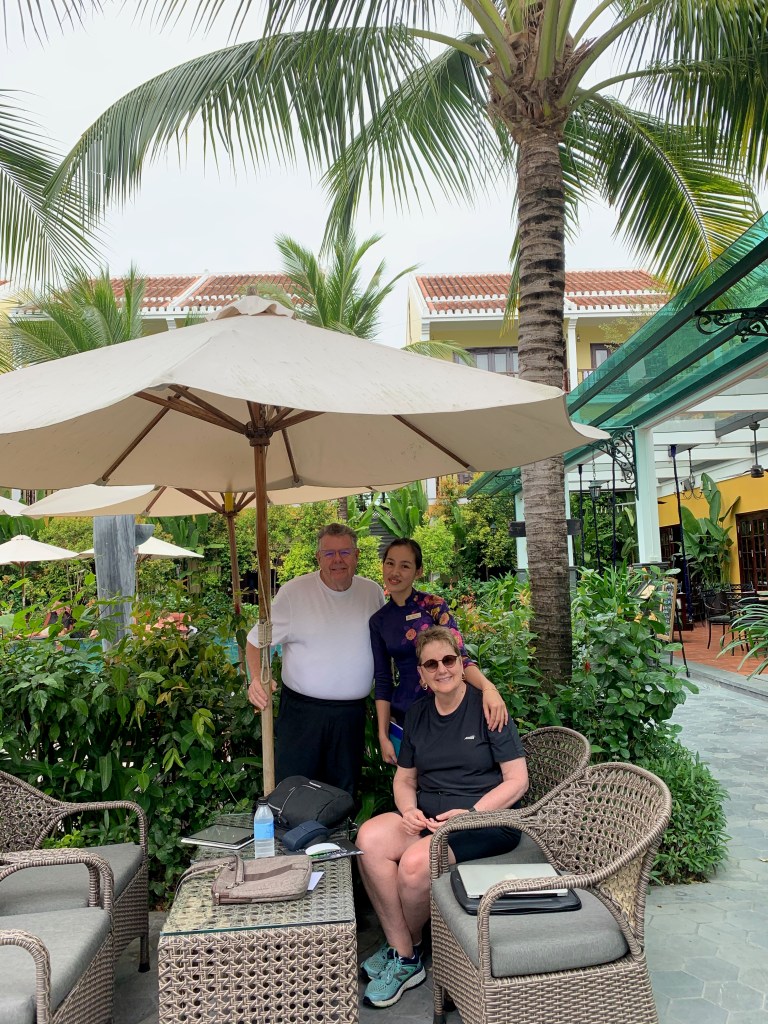
Phuong
We met Hien and Phuong in 2018. What a wonderful surprise to see them again. Hien was just starting at The Temple Restaurant when we met her in 2018. She was very shy and we spent time chatting with her so she could practice her English. She remembered us right away and she took such good care of us (including giving us a gift when we left).

 ELF Travel To ...